
载人登月

Search documents
马斯克向NASA局长“开炮”,称其智商“只有两位数”
Zhong Guo Xin Wen Wang· 2025-10-23 02:28
Core Viewpoint - Elon Musk criticized NASA's acting administrator Sean Duffy, claiming he is trying to "kill NASA" and questioning his intelligence, which he described as "two digits" [1][3]. Group 1: NASA's Lunar Program - Sean Duffy announced that NASA will open the bidding for the crewed lunar landing program, moving away from sole reliance on SpaceX's Starship system [3]. - SpaceX won a $2.9 billion contract in 2021 to use its Starship system for NASA's Artemis 3 mission, which aims to land two astronauts on the Moon by 2027 [3]. Group 2: Competition and Industry Dynamics - Duffy expressed a desire to not wait for a single company, indicating that other companies, including Blue Origin founded by Jeff Bezos, could provide technical support for NASA [3]. - Musk's response highlighted the competitive nature of the lunar race, emphasizing that great companies should not fear challenges [3].


美媒:NASA局长职位之争陷恶斗
Xin Hua She· 2025-10-21 13:53
Core Points - The competition for the NASA Administrator position is intensifying, with acting Administrator Sean Duffy and billionaire Jared Isaacman both vying for the role [1][2] - Duffy's acting term is set to expire at the end of the year, and NASA has significant missions planned for next year, including the delayed crewed lunar flight, necessitating a formal appointment [2][4] Group 1: Candidates and Their Backgrounds - Sean Duffy, currently the acting Administrator, has been pushing new policies, including ambitious lunar goals such as establishing a nuclear reactor on the Moon by 2030 [2] - Jared Isaacman, founder and CEO of Shift4 Payments, has a close relationship with Elon Musk and has previously invested in Musk's SpaceX, although his nomination was withdrawn earlier due to perceived lack of support for Trump's agenda [2][3] - Other potential candidates for the NASA Administrator position include retired Air Force officer Joseph Guastella and former Republican Congressman Mike Garcia [3] Group 2: Current Developments and Challenges - Duffy has publicly criticized SpaceX for falling behind on the lunar mission and is seeking other private companies to develop the lunar lander for the Artemis 3 mission, which has a current contract value of $4.4 billion [5] - NASA has requested proposals from SpaceX and Blue Origin by the end of the month for accelerated lunar landing plans, with Blue Origin developing the "Blue Moon" lander for later Artemis missions [5] - Elon Musk has countered Duffy's criticisms, asserting that SpaceX is progressing rapidly compared to other aerospace companies and that the Starship will ultimately handle all lunar missions, with Artemis 3 expected to be completed by 2027 [5]
载人登月“进度条”持续刷新
Ren Min Wang· 2025-10-10 22:11
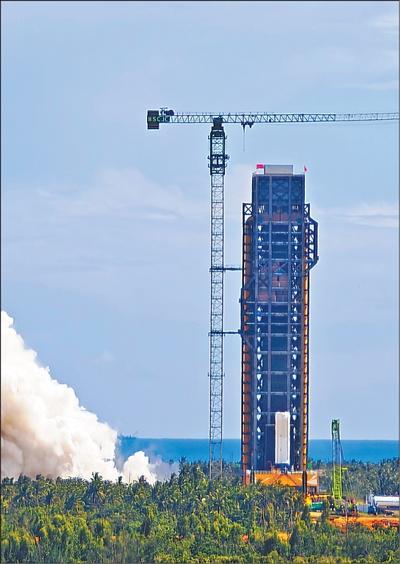
Core Points - China successfully conducted the second tethered ignition test of the Long March 10 series launch vehicle at the Wenchang Space Launch Site, completing all planned tethered ignition tests [2] - The Long March 10 series is designed for manned lunar exploration, with plans to achieve China's first manned moon landing by 2030 [2] - The ignition test lasted 320 seconds and focused on assessing the performance of the rocket's first stage seven-engine parallel configuration under low working conditions and secondary ignition capabilities [2][3] Summary by Sections Tethered Ignition Test - The tethered ignition test is a crucial step in the rocket development process, allowing for short-term testing of the propulsion system while securely fixed to the test platform [2] - The first tethered ignition test primarily evaluated the launch phase working conditions, simulating nearly 1,000 tons of thrust and assessing system coordination and compatibility [4] - The second test focused on the return and landing phases, simulating various engine working sequences for deceleration [4] Long March 10 Series Overview - The Long March 10 series includes two configurations: Long March 10 and Long March 10A, which will support manned lunar missions and space station applications [2] - The Long March 10 will launch the crewed "Dream Chaser" spacecraft and lunar lander, while the Long March 10A will support the "Dream Chaser" and cargo spacecraft launches [2] Future Applications - The successful completion of the tethered ignition tests marks a significant milestone in the development of the Long March 10 series, confirming the performance of the first stage seven-engine propulsion system and the reliability of the recovery phase design [4] - The Long March 10 series will play a key role in updating China's manned space transportation system in conjunction with the "Dream Chaser" spacecraft [4]
在中国式浪漫中续写新传奇(今日谈)
Ren Min Ri Bao· 2025-10-05 21:36
Core Viewpoint - The article highlights China's advancements in space exploration, particularly the successful tests of the new generation manned spacecraft "Dream Boat" and the lunar lander "Moon Catcher," moving closer to the goal of manned lunar landing by 2030 [1] Group 1: Achievements in Space Exploration - The "Jade Rabbit" mission was completed in 2016, leaving a lasting legacy on the Moon, and continues to inspire public interest and support for China's space endeavors [1] - The successful zero-height escape flight test of the "Dream Boat" spacecraft and the comprehensive verification test of the "Moon Catcher" lunar lander mark significant milestones in China's lunar exploration program [1] Group 2: National Pride and Innovation - The achievements in space exploration reflect the Chinese spirit of self-reliance and innovation, showcasing the nation's commitment to mastering its own development and technological advancements [1] - The recent recognition of the Chang'e 6 mission team with the 2025 International Astronautical Federation World Space Award serves as motivation for various sectors to strive for greater heights [1]
屡次推迟的登月计划可能提前 NASA哪来的自信?
Xin Hua Wang· 2025-09-24 23:28
Core Points - NASA announced that the first crewed lunar flyby mission, Artemis 2, is scheduled for April 2026, with a possibility of an earlier launch in February 2026, marking a shift from previous delays [1][3] - Safety remains the top priority for NASA as they aim to meet the new timeline for the Artemis 2 mission [1] - The Artemis program, initiated in 2019, aims to return humans to the Moon, with Artemis 1 having already completed an unmanned test flight [3] Summary by Sections Mission Timeline - The original plan for Artemis 2 was to complete it by 2024, followed by Artemis 3 in late 2025. However, both missions have faced multiple delays, with the latest schedule pushing Artemis 2 to April 2026 and Artemis 3 to mid-2027 [3][4] - NASA's adjustments to the timeline were influenced by technical issues, particularly concerning the Orion spacecraft's heat shield and life support systems [4] Technical Challenges - The Artemis program has encountered significant technical difficulties, with at least eight out of thirteen critical items falling behind schedule [4] - The Orion spacecraft, developed in collaboration with Lockheed Martin, faces design flaws, while the Space Launch System (SLS) rocket, developed with Boeing, has been criticized for delays and high costs [4] - The Starship, developed by SpaceX, is expected to replace the SLS in the future due to its ongoing development challenges [4][7] Space Suit Development - The development of new space suits for astronauts is another hurdle, as the current suits are outdated and do not meet the requirements for the Artemis 3 mission [7] - The company tasked with creating the new suits, Axiom Space, has indicated that a redesign is necessary to incorporate emergency life support systems [7] Future Prospects - Experts suggest that even if the Artemis 2 mission is successful, the timeline for Artemis 3 may still be optimistic, given the current state of the Starship and its readiness for lunar missions [7]

NASA时间表提前,计划最早明年2月载人绕月
Guan Cha Zhe Wang· 2025-09-24 08:45
Core Points - NASA has announced an accelerated schedule for the "Artemis 2" crewed lunar flyby mission, aiming for a launch as early as February 2026, following previous delays due to challenges in spacecraft development [1][6] - The mission will involve a crew of four astronauts, including three from NASA and one from Canada, who will fly aboard the "Orion" spacecraft for a ten-day mission [2][4] - The success of "Artemis 2" will be critical in determining the timeline for the subsequent "Artemis 3" mission, which aims for a crewed lunar landing [7] Mission Details - The "Artemis 2" mission will last ten days, with astronauts conducting a flyby of the Moon without landing [2][6] - The launch sequence includes the separation of solid rocket boosters two minutes after launch and the deployment of solar panels on the "Orion" spacecraft for power generation [4][6] - After a series of system checks and maneuvers, the crew will enter a lunar transfer phase, traveling approximately 380,000 kilometers from Earth [4][6] Health Monitoring - NASA will monitor the health of the astronauts during the mission, collecting blood samples and organoid tissue samples to study the effects of microgravity and radiation [6] - The research aims to provide insights into how space environments impact human health, without invasive procedures on the astronauts themselves [6] Future Considerations - Experts express skepticism about the feasibility of the proposed timeline for the "Artemis 3" lunar landing, citing dependencies on SpaceX's Starship development [7]

美国重返月球计划为何一拖再拖?
Huan Qiu Shi Bao· 2025-09-14 22:46
Group 1: Artemis Program Overview - The Artemis program aims to return humans to the Moon and establish a long-term presence, ultimately paving the way for Mars exploration [2][3] - The program's complexity involves multiple launches and in-orbit docking, contrasting with the direct launch method used in the Apollo program [2] - The first four missions of the Artemis program have been confirmed, with Artemis 1 successfully completing an uncrewed test in 2022 [3] Group 2: Mission Delays and Challenges - Artemis 2, originally scheduled for 2024, has been delayed to April 2026, raising concerns about the timeline for Artemis 3 [3][4] - Technical issues with the Space Launch System (SLS) rocket and Orion spacecraft have contributed to the delays, with SLS facing fuel leak problems [4][5] - The lunar lander, developed by SpaceX, is significantly behind schedule, impacting the overall timeline of the Artemis missions [4][5] Group 3: Lunar Lander and Technical Hurdles - The lunar lander requires advanced capabilities for landing and takeoff on the Moon, with significant engineering challenges due to the lunar environment [5] - SpaceX's plan involves launching multiple Starship rockets to create a fuel depot in low Earth orbit for the lunar lander, but this technology has not been tested [5] - The development of a backup lunar lander by Blue Origin is also lagging behind schedule, compounding the issues faced by the Artemis program [5] Group 4: Spacesuit Development Issues - The new generation of lunar spacesuits is facing delays, which are critical for astronaut safety and functionality during extended missions on the Moon [6][8] - NASA has outsourced spacesuit development to Axiom Space due to internal delays, with prototypes being tested but still requiring significant work [9][10] - The AxEMU spacesuit is expected to undergo critical design reviews and integration testing with the lunar lander, but this process has contributed to project delays [9][10] Group 5: Long-term Goals and Nuclear Power Plans - The Artemis program aims to establish a long-term presence on the Moon, including plans for a nuclear reactor to provide energy [10][11] - NASA is targeting the deployment of a 100-kilowatt nuclear reactor by 2030, but experts express skepticism about meeting this timeline due to technical challenges [11][12] - The development of a biological life support system is also critical for long-term lunar habitation, with current systems relying on supply missions [12]
不让中国先登月,美国有这个本事吗?
Guan Cha Zhe Wang· 2025-09-14 01:16
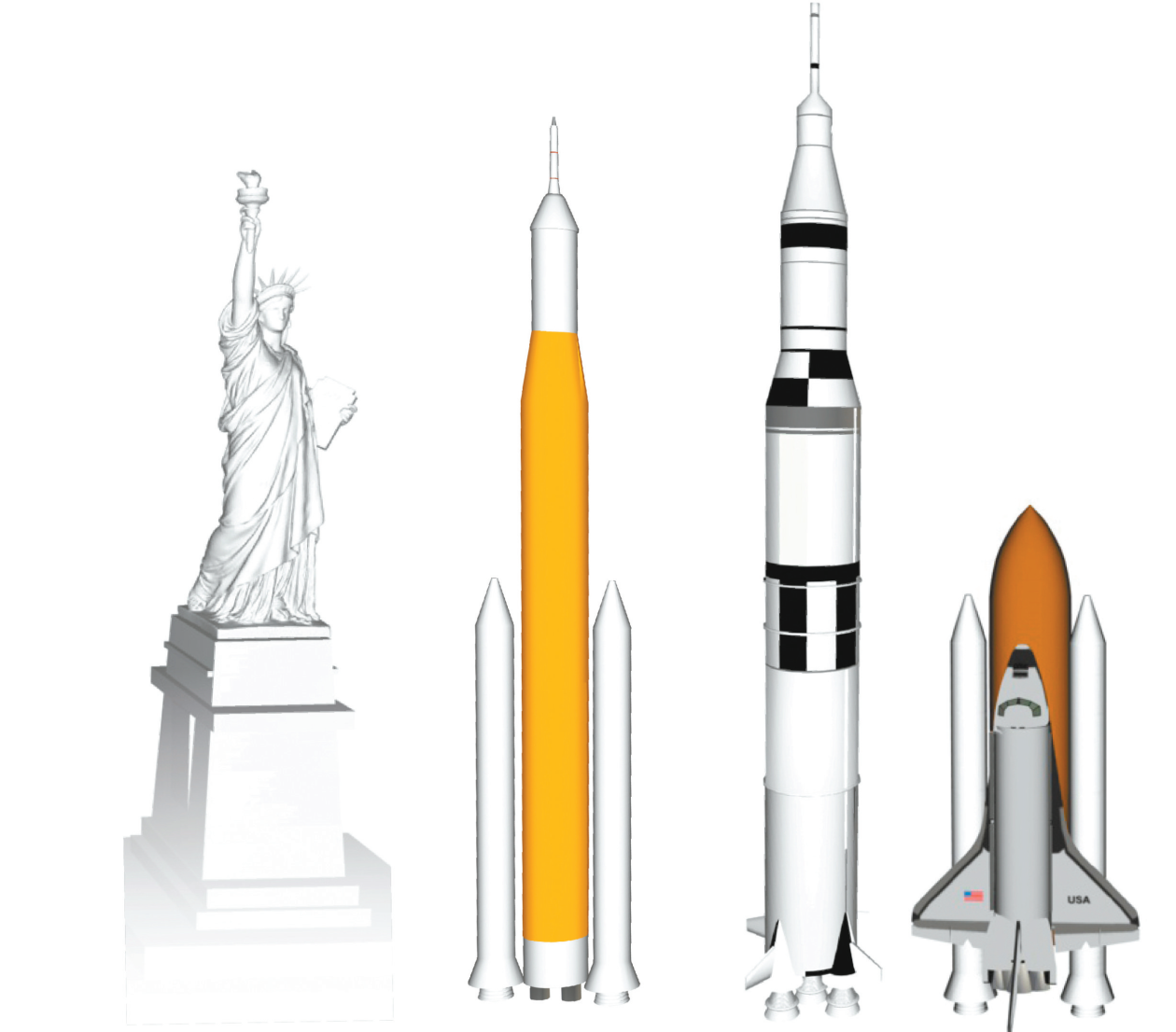
Core Viewpoint - The article discusses the renewed focus on the lunar exploration competition between the United States and China, highlighting the differences in their approaches and the implications for future space exploration [1][16]. Comparison of Lunar Exploration Plans - The U.S. relies on a complex system involving the SLS heavy-lift rocket and the Orion spacecraft, requiring multiple in-orbit refueling operations, which adds complexity and potential delays [4][8]. - In contrast, China's plan involves a simpler "dual rocket integration" approach using two Long March 10 rockets to send a crewed spacecraft and lunar lander into orbit, allowing for a more straightforward mission structure [7][12]. - The Apollo program was characterized by a single Saturn V rocket delivering all components in one go, which, while effective, was costly and limited in sustainability [6][10]. Progress and Risk Analysis - The U.S. aims to conduct the Artemis II mission in 2026 and Artemis III by 2027, but faces significant delays due to technical challenges and high costs, with each SLS launch exceeding $4 billion [10][14]. - China's timeline for a crewed lunar landing is set for before 2030, with steady progress on the Long March 10 and associated technologies, indicating a more manageable risk profile [11][12]. Cost and Sustainability - The Apollo program's limited missions highlight the financial unsustainability of high-cost lunar missions, while the Artemis program's complexity raises concerns about its long-term viability [14][16]. - China's approach, with lower costs and a clearer path to execution, suggests a potential for more frequent lunar missions and sustainable exploration efforts [12][16]. Future Implications - The competition is shifting from merely reaching the moon to establishing a sustainable presence, with China already planning for lunar base construction while the U.S. debates the necessity of a lunar gateway [16]. - The ability to transition from concept to reality in lunar base development will determine strategic advantages in future deep space exploration [16].

“若登月输给中国,太尴尬,美国人要绷不住了”
Guan Cha Zhe Wang· 2025-09-01 08:36
Core Viewpoint - The article discusses the ongoing space race between China and the United States, particularly focusing on the potential for China to land astronauts on the Moon before NASA, which could lead to significant embarrassment for the U.S. [1][2] Group 1: Space Race Dynamics - Eric Berger's article suggests that China may likely "defeat" NASA in returning humans to the Moon within this decade, raising concerns about U.S. competitiveness in space exploration [1] - The author, Mark Whittington, warns that if China successfully lands astronauts on the Moon first, it will lead to a significant debate in the U.S. about accountability for the loss in the space race [1][2] Group 2: NASA's Artemis Program - NASA's Artemis program aims to return humans to the Moon, with Artemis 2 scheduled to send astronauts to lunar orbit in early 2026, but the success of subsequent missions depends on the SpaceX Starship's ability to land astronauts on the Moon [4][6] - The timeline for the Artemis 3 mission, which plans to land astronauts on the Moon in 2027, is considered unrealistic by many independent space observers, with 2028 being a more likely target [6] Group 3: China's Lunar Ambitions - China has made significant progress in its lunar exploration program, with plans to achieve a crewed lunar landing by 2030 and to establish a lunar research station thereafter [10][11] - The Chinese lunar exploration program has successfully conducted multiple missions, laying the groundwork for future scientific exploration [10] Group 4: Technological and Strategic Considerations - The article highlights the importance of establishing a permanent lunar base as a key objective in the new space race, suggesting that the winner may not be the first to land on the Moon but the first to establish a sustainable presence [7] - NASA is exploring the construction of a nuclear reactor on the Moon to support future missions, although experts question the feasibility of this plan by the 2030 deadline [8]
中国人登月,要过几道关?
Ren Min Ri Bao· 2025-08-18 08:22
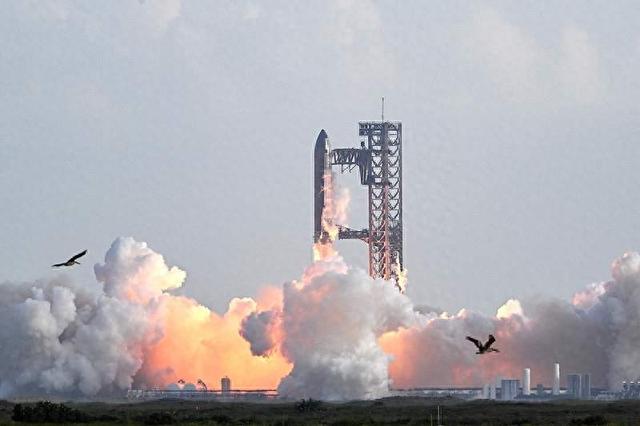
Core Viewpoint - China aims to achieve its first manned moon landing by 2030, with significant progress in the development of the "Dream Boat" spacecraft and the "Moon Catcher" lunar lander [1][10]. Group 1: Manned Moon Landing Mission Overview - The mission involves multiple stages, including launching to the moon, landing, and returning to Earth, with a focus on safety and technological advancements [3][13]. - The average distance to the moon is approximately 380,000 kilometers, presenting unique challenges for space travel [3]. - The investment in space exploration has a high return ratio, estimated at 1:15, benefiting various industries through technological advancements [3]. Group 2: Rocket and Spacecraft Development - The new Long March 10 series rockets are being developed to meet the required payload capacity of at least 27 tons for lunar missions, as current rockets fall short [5][6]. - The "Dream Boat" spacecraft is designed to accommodate up to seven astronauts and features advanced safety systems for emergency situations [9][12]. - The "Moon Catcher" lunar lander will serve as the operational center for astronauts on the moon, supporting their activities and scientific research [11]. Group 3: Challenges and Solutions - Astronauts will face extreme conditions on the moon, including temperature fluctuations and complex terrain, necessitating thorough preparation and technology testing [10][12]. - The return journey involves a "space skipping" technique to ensure safe re-entry into Earth's atmosphere, which requires precise navigation and control systems [15][16]. - Continuous advancements in technology and rigorous testing are essential to ensure the safety and success of the mission [16][17].