
采购经理指数

Search documents
国家统计局服务业调查中心首席统计师霍丽慧解读2025年10月中国采购经理指数
Guo Jia Tong Ji Ju· 2025-10-31 01:52
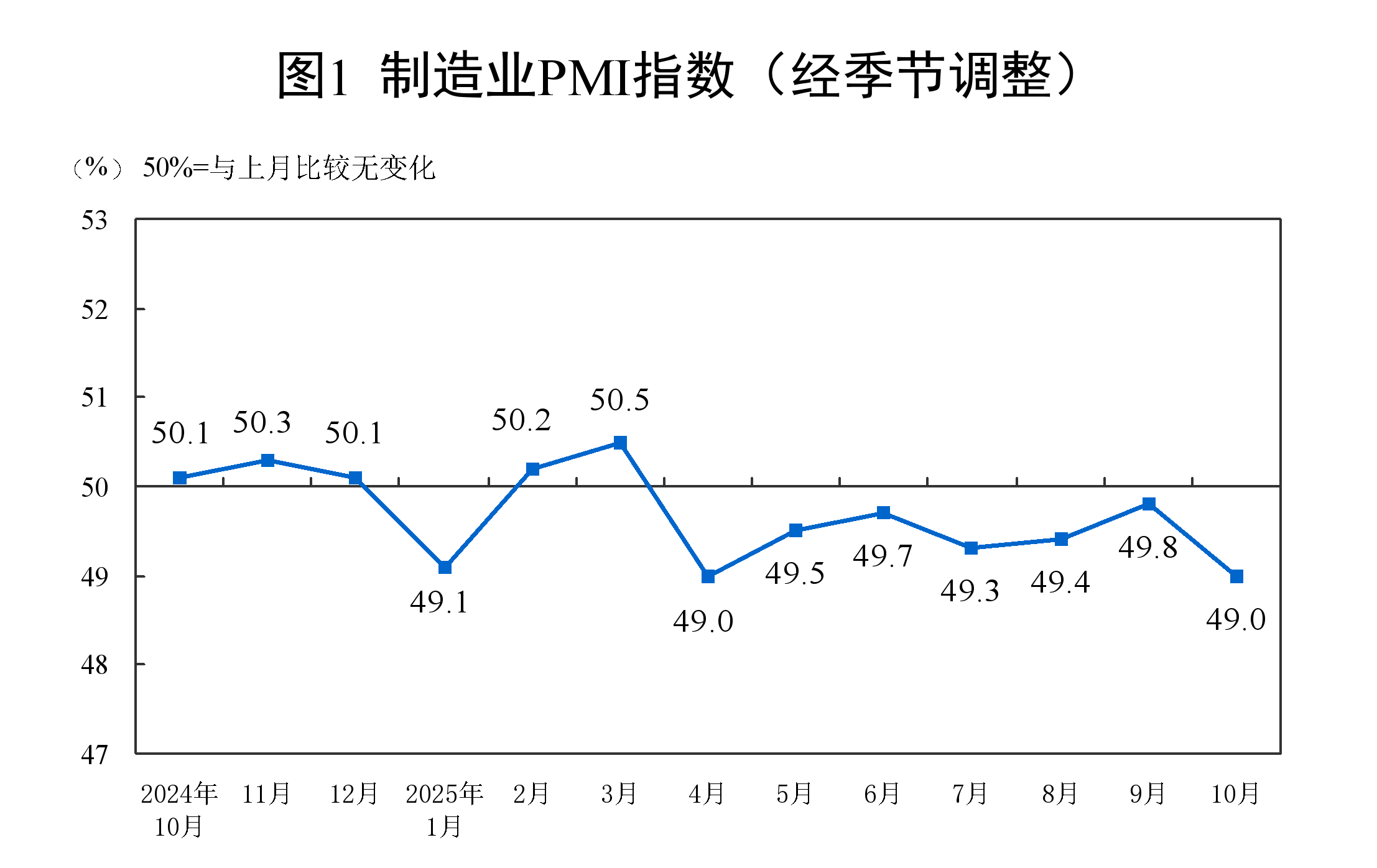
Group 1: Manufacturing PMI Insights - In October, the Manufacturing Purchasing Managers' Index (PMI) decreased to 49.0%, down 0.8 percentage points from the previous month, indicating a slowdown in manufacturing activity [2][3] - The production index and new orders index were reported at 49.7% and 48.8%, respectively, reflecting declines of 2.2 and 0.9 percentage points, suggesting weakened production and market demand [3] - Large enterprises maintained a PMI above the critical point, with large, medium, and small enterprises reporting PMIs of 49.9%, 48.7%, and 47.1%, respectively, indicating varying levels of economic activity [3] Group 2: Non-Manufacturing PMI Insights - The Non-Manufacturing Business Activity Index rose to 50.1%, an increase of 0.1 percentage points, indicating a slight expansion in the non-manufacturing sector [5] - The service sector's business activity index reached 50.2%, with significant growth in sectors closely related to consumer travel, such as rail and air transport, which exceeded 60.0% [5] - The construction sector's business activity index fell to 49.1%, down 0.2 percentage points, indicating a slight decline in construction activity, although the business activity expectation index improved to 56.0% [5] Group 3: Composite PMI Insights - The Composite PMI Output Index stood at 50.0%, indicating overall stability in production and business activities across sectors [7] - The manufacturing production index and non-manufacturing business activity index contributed to the composite index, reported at 49.7% and 50.1%, respectively [7]
国家统计局解读2025年10月中国采购经理指数
Guo Jia Tong Ji Ju· 2025-10-31 01:49
Group 1: Manufacturing PMI Insights - In October, the Manufacturing Purchasing Managers' Index (PMI) decreased to 49.0%, down 0.8 percentage points from the previous month, indicating a slowdown in manufacturing activity [1][2] - Both production index and new orders index fell to 49.7% and 48.8%, respectively, reflecting a decline in production and market demand [2] - Large enterprises maintained a PMI above the critical point, with indices at 50.9% for production and 50.1% for new orders, indicating sustained demand in this segment [2][3] Group 2: Non-Manufacturing PMI Insights - The Non-Manufacturing Business Activity Index rose to 50.1%, up 0.1 percentage points from the previous month, indicating expansion in the non-manufacturing sector [1][4] - The service sector's business activity index increased to 50.2%, with significant growth in sectors closely related to consumer travel, such as rail and air transport, which exceeded 60.0% [4] - The construction sector's business activity index slightly declined to 49.1%, but the business activity expectation index improved to 56.0%, suggesting a positive outlook for future market development [4] Group 3: Comprehensive PMI Insights - The Comprehensive PMI Output Index stood at 50.0%, indicating overall stability in production and business activities across sectors [1][5] - The manufacturing production index and non-manufacturing business activity index were recorded at 49.7% and 50.1%, respectively, contributing to the comprehensive index's position at the critical point [5]
10月PMI数据解读|宏观经济
清华金融评论· 2025-10-31 01:39
Group 1: Manufacturing PMI Analysis - In October, the Manufacturing Purchasing Managers' Index (PMI) decreased to 49.0%, down 0.8 percentage points from the previous month, indicating a slowdown in manufacturing activity [4] - Both production index and new orders index fell to 49.7% and 48.8%, respectively, reflecting a decline in production and market demand [4] - Large enterprises maintained a PMI above the critical point, with indices at 50.9% for production and 50.1% for new orders, indicating sustained demand in this segment [4] Group 2: Key Industry Performance - High-tech manufacturing, equipment manufacturing, and consumer goods industries continued to expand, with PMIs of 50.5%, 50.2%, and 50.1%, respectively, all above the overall manufacturing level [5] - Conversely, high-energy-consuming industries saw a PMI of 47.3%, indicating a decline in economic activity [5] - Market expectations remain optimistic, with a production and business activity expectation index of 52.8%, suggesting confidence among manufacturers [5] Group 3: Non-Manufacturing PMI Insights - The Non-Manufacturing Business Activity Index rose to 50.1%, up 0.1 percentage points, indicating a slight recovery in the non-manufacturing sector [6] - The service sector's business activity index increased to 50.2%, with significant growth in sectors related to consumer travel and spending, such as rail and air transport [6][7] - The construction sector's business activity index fell to 49.1%, indicating a slight decline, but the business activity expectation index improved to 56.0%, reflecting better future outlooks [7] Group 4: Composite PMI Overview - The Composite PMI Output Index stood at 50.0%, indicating overall stability in production and business activities across sectors [8] - The manufacturing production index was recorded at 49.7%, while the non-manufacturing business activity index was at 50.1%, contributing to the composite figure [8]


2025年10月中国采购经理指数运行情况
Guo Jia Tong Ji Ju· 2025-10-31 01:33
Group 1: Manufacturing PMI Overview - In October, the Manufacturing Purchasing Managers' Index (PMI) was 49.0%, a decrease of 0.8 percentage points from the previous month, indicating a decline in manufacturing activity [2][30] - The PMI for large, medium, and small enterprises was 49.9%, 48.7%, and 47.1% respectively, all below the critical point [4] - The production index was 49.7%, down 2.2 percentage points, suggesting a slowdown in manufacturing production [5] - The new orders index was 48.8%, a decrease of 0.9 percentage points, indicating a drop in market demand [6] - The raw materials inventory index was 47.3%, down 1.2 percentage points, showing a continued reduction in inventory levels [7] - The employment index was 48.3%, a slight decrease of 0.2 percentage points, reflecting a minor decline in employment levels in manufacturing [8] Group 2: Non-Manufacturing PMI Overview - In October, the Non-Manufacturing Business Activity Index was 50.1%, an increase of 0.1 percentage points, indicating expansion in the non-manufacturing sector [18] - The construction industry business activity index was 49.1%, down 0.2 percentage points, while the service industry index was 50.2%, up 0.1 percentage points [20] - The new orders index for non-manufacturing was 46.0%, unchanged from the previous month, indicating weak market demand [22] - The input prices index was 49.4%, up 0.4 percentage points, suggesting a narrowing decline in input prices for non-manufacturing enterprises [22] - The sales prices index was 47.8%, an increase of 0.5 percentage points, indicating that sales prices remained below the previous month [22] - The employment index for non-manufacturing was 45.2%, up 0.2 percentage points, indicating slight improvement in employment conditions [22] Group 3: Comprehensive PMI Overview - The Comprehensive PMI Output Index was 50.0%, a decrease of 0.6 percentage points, indicating overall stability in production and business activities across sectors [30]
冠通期货2025年9月PMI数据
Guan Tong Qi Huo· 2025-10-08 07:00
Group 1: Report Summary Report Industry Investment Rating - Not provided in the document Report's Core View - In September 2025, China's manufacturing PMI was 49.8%, up 0.4 percentage points from the previous month, indicating continued improvement in manufacturing sentiment; the non - manufacturing business activity index was 50.0%, down 0.3 percentage points from the previous month, with overall stable non - manufacturing business volume; the composite PMI output index was 50.6%, up 0.1 percentage points from the previous month, showing continued acceleration of overall expansion in Chinese enterprises' production and business activities [2][3] Summary by Category Manufacturing PMI - Overall: The manufacturing PMI in September was 49.8%, up 0.4 percentage points from the previous month. Large - scale enterprises had a PMI of 51.0%, up 0.2 percentage points; medium - scale enterprises had a PMI of 48.8%, down 0.1 percentage points; small - scale enterprises had a PMI of 48.2%, up 1.6 percentage points [2] - Classification Index: Among the 5 classification indexes, the production index and supplier delivery time index were above the critical point, while the new order index, raw material inventory index, and employment index were below the critical point. The production index was 51.9%, up 1.1 percentage points; the new order index was 49.7%, up 0.2 percentage points; the raw material inventory index was 48.5%, up 0.5 percentage points; the employment index was 48.5%, up 0.6 percentage points; the supplier delivery time index was 50.8%, up 0.3 percentage points [2] Non - manufacturing PMI - Overall: The non - manufacturing business activity index in September was 50.0%, down 0.3 percentage points from the previous month. The construction business activity index was 49.3%, up 0.2 percentage points; the service business activity index was 50.1%, down 0.4 percentage points [3] - Industry Details: Industries such as postal, telecommunications, radio, television, and satellite transmission services, and monetary and financial services were in a high - level boom range above 60.0%, while industries such as catering, real estate, and culture, sports, and entertainment were below the critical point [3] Composite PMI Output Index - In September, it was 50.6%, up 0.1 percentage points from the previous month, indicating continued acceleration of overall expansion in Chinese enterprises' production and business activities [3]
【环球财经】2025年9月标普全球澳大利亚综合PMI回落
Xin Hua Cai Jing· 2025-10-03 01:33
Core Insights - The S&P Global Australia Composite PMI decreased from 55.5 in the previous month to 52.4 in September 2025, marking the lowest level since June of the same year, indicating a slowdown in the growth of the private sector's overall output in Australia [1][2] Economic Indicators - The overall growth rate of new business in Australia's private sector slowed down in September due to a reduction in new export activities [2] - Employment levels continued to rise steadily, leading to a slight decrease in backlogs of work [2] - Business confidence experienced a slight decline compared to August [2] Price Dynamics - Companies have slowed the pace of increasing product sales prices, while the costs faced by businesses accelerated in September [2] - The services sector's business activity index fell from 55.8 in August to 52.4 in September, the lowest level since June, but remained above the 50-point threshold for 20 consecutive months, indicating ongoing expansion [2] Sector Analysis - Despite the slowdown in new business growth, the services sector continued to expand in September, supported by strong growth in new sales and business activity [2] - Service sector companies increased employment in response to sustained growth in new business, although the business activity index experienced its first decline in three months [2] - The decrease in the rate of increase in service product sales prices is seen as a positive development, supporting market demand and providing some room for the Reserve Bank of Australia to consider further monetary easing before the end of the year [2]

【宏观经济】一周要闻回顾(2025年9月24日-9月30日)
乘联分会· 2025-09-30 09:36
Group 1: Industrial Profit Growth - In the first eight months of 2025, the total profit of industrial enterprises above designated size reached 46,929.7 billion yuan, a year-on-year increase of 0.9% [2][4] - State-owned enterprises reported a profit of 15,156.5 billion yuan, down 1.7% year-on-year, while private enterprises saw a profit increase of 3.3% to 13,076.1 billion yuan [2][4] - The manufacturing sector achieved a profit of 35,233.5 billion yuan, reflecting a growth of 7.4% [4] Group 2: R&D Investment - In 2024, China's R&D expenditure reached 36,326.8 billion yuan, an increase of 8.9% compared to the previous year [6][7] - The intensity of R&D investment, measured as a percentage of GDP, rose to 2.69%, up by 0.11 percentage points [6] - Basic research funding grew by 10.7% to 2,500.9 billion yuan, while applied research funding increased by 17.6% to 4,305.5 billion yuan [6][7] Group 3: Electricity Market Transactions - In the first eight months of 2025, the total electricity market transaction volume was 43,442 billion kWh, a year-on-year increase of 7.0% [9] - By August 2025, the electricity market transaction volume reached 6,550 billion kWh, reflecting an 11.6% increase year-on-year [9] Group 4: Purchasing Managers' Index (PMI) - In September 2025, the manufacturing PMI was recorded at 49.8%, indicating a slight improvement in manufacturing sentiment [13][21] - The non-manufacturing business activity index stood at 50.0%, showing stability in the non-manufacturing sector [18][20] - The comprehensive PMI output index was 50.6%, suggesting continued expansion in production activities [21]

9月份制造业采购经理指数继续回升 供需两端表现良好
Yang Shi Wang· 2025-09-30 02:56
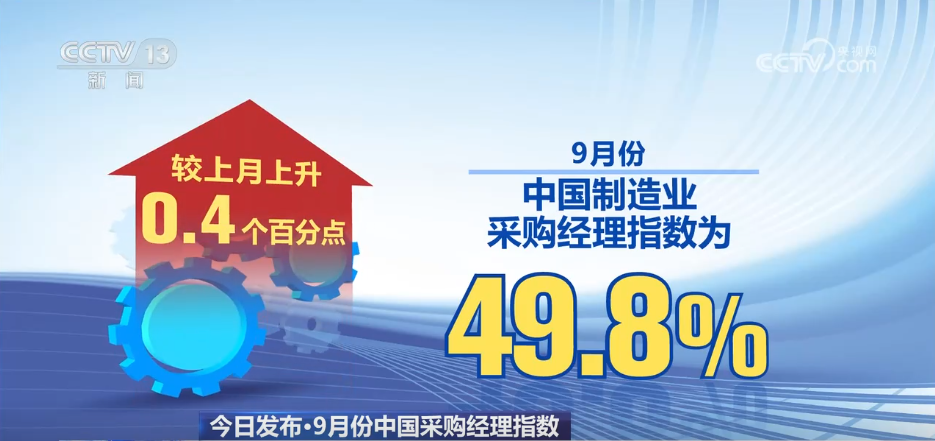
Core Insights - The Purchasing Managers' Index (PMI) for China's manufacturing sector in September is 49.8%, indicating a 0.4 percentage point increase from the previous month, marking two consecutive months of improvement in economic conditions [3] - The production index has reached a six-month high, reflecting increased manufacturing activity, supported by the easing of extreme weather conditions and ongoing domestic demand stimulation policies [3][5] - The employment index rose by 0.6 percentage points to its highest level since March, indicating an improving job market [5] Manufacturing Sector - The equipment manufacturing PMI is at 51.9%, up 1.4 percentage points from last month, while high-tech manufacturing remains stable above 51% for two consecutive months [7] - The consumer goods manufacturing PMI reached 50.6%, a 1.4 percentage point increase, driven by seasonal factors such as the upcoming holiday and back-to-school period [7] - Large enterprises continue to show growth, maintaining an expansion trend for five consecutive months, while small enterprises also saw a 1.6 percentage point increase in their PMI, indicating improved conditions [7] Market Expectations - The production and business activity expectation index is at 54.1%, up 0.4 percentage points, reflecting improved market sentiment [9] - Industries such as agricultural processing, automotive, and aerospace have high expectation indices above 57%, indicating strong confidence in future growth [9] Non-Manufacturing Sector - The non-manufacturing business activity index is at 50.0%, indicating stability, while the service sector continues to expand with a business activity index of 50.1% [10] - The construction sector's business activity index slightly increased to 49.3%, with a business activity expectation index of 52.4%, suggesting improved confidence among construction firms [12]
9月份制造业采购经理指数继续回升
Guo Jia Tong Ji Ju· 2025-09-30 02:27
Core Viewpoint - The Purchasing Managers' Index (PMI) data for September indicates a slight acceleration in overall economic output in China, with the manufacturing PMI showing improvement while the non-manufacturing index remains stable at the critical point of 50.0% [1] Group 1: Manufacturing PMI Insights - The manufacturing PMI rose to 49.8%, an increase of 0.4 percentage points from the previous month, indicating continued improvement in economic conditions [2] - The production index reached 51.9%, up 1.1 percentage points, marking a six-month high, while the new orders index increased to 49.7%, suggesting improved market demand [2] - Key industries such as food and beverage, automotive, and aerospace showed production and new orders indices above 54.0%, indicating robust activity, while sectors like wood processing and non-metallic mineral products fell below the critical threshold [2][3] - Small enterprises saw a PMI increase to 48.2%, up 1.6 percentage points, indicating a slight improvement in their economic conditions [2] Group 2: Non-Manufacturing PMI Insights - The non-manufacturing business activity index stood at 50.0%, a decrease of 0.3 percentage points, indicating stability in overall business volume [4] - The service sector maintained an expansion with a business activity index of 50.1%, supported by strong performance in postal, telecommunications, and financial services [4] - The construction sector's business activity index slightly improved to 49.3%, reflecting a small recovery in construction activity [4] Group 3: Comprehensive PMI Insights - The comprehensive PMI output index increased to 50.6%, up 0.1 percentage points, indicating continued acceleration in production and business activities across sectors [5] - The manufacturing production index and non-manufacturing business activity index contributed to the comprehensive PMI, standing at 51.9% and 50.0% respectively [5]
国家统计局:9月制造业PMI继续回升,我国经济总体产出扩张略有加快
Di Yi Cai Jing· 2025-09-30 02:01
Group 1: Manufacturing Sector - The manufacturing Purchasing Managers' Index (PMI) rose to 49.8% in September, indicating an improvement in economic conditions [2] - The production index reached 51.9%, the highest in nearly six months, reflecting active manufacturing activities [2] - New orders index increased to 49.7%, suggesting a slight improvement in market demand [2] - Key industries such as food and beverage, automotive, and aerospace showed production and new orders indices above 54.0%, indicating strong demand [2][3] - Small enterprises' PMI improved to 48.2%, while large enterprises maintained a stable expansion with a PMI of 51.0% [2] Group 2: Non-Manufacturing Sector - The non-manufacturing business activity index stood at 50.0%, down 0.3 percentage points from the previous month, indicating stability at the threshold [4] - The service sector's business activity index was 50.1%, remaining in the expansion zone, with strong performance in postal, telecommunications, and financial services [4] - The construction sector's business activity index slightly increased to 49.3%, showing a minor recovery in sentiment [4] Group 3: Composite PMI - The composite PMI output index rose to 50.6%, indicating a continued acceleration in overall production and business activities [5] - The manufacturing production index and non-manufacturing business activity index contributed to the composite PMI, standing at 51.9% and 50.0% respectively [5]