量化大数据

Search documents
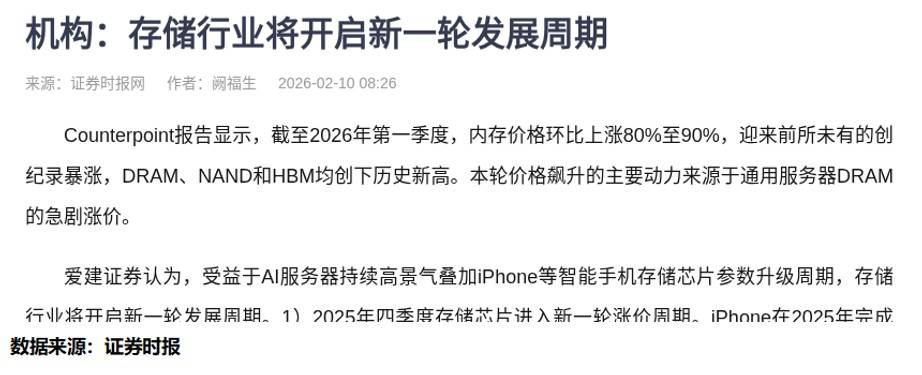
存储周期上行,数据看清新一轮炒作的龙头
Sou Hu Cai Jing· 2026-02-17 04:11
Group 1 - The core viewpoint of the article highlights that memory prices are expected to rise by 80%-90% quarter-on-quarter by Q1 2026, driven primarily by demand for general server DRAM, with DRAM, NAND, and HBM reaching historical highs [1] - Domestic securities firms validate the long-term bullish logic of the storage industry, with Aijian Securities suggesting that the high demand for AI servers and continuous upgrades in terminal storage parameters will extend the storage price increase cycle into 2026 [1] - Financial Street Securities points out that the combination of supply contraction and high-end demand creates a clear growth logic for domestic storage manufacturers to expand production and upgrade processes [1] Group 2 - The current market is characterized by a "long adjustment cycle and short upward cycle," stemming from a regulatory-driven slow bull market, which effectively suppresses large fluctuations [3] - Ordinary investors often confuse market trends with trading behavior, but trends are merely external manifestations of trading actions, and institutional funds can obscure their true trading intentions through fluctuating trends [3] - An example illustrates that from September 2024, a specific stock only saw price increases on a few trading days, while remaining in a fluctuating state for over 40 days, indicating that ordinary investors might exit prematurely due to impatience [3] Group 3 - Institutional inventory data reflects the active trading level of institutional funds, showing that even during periods of price fluctuation, institutions may still be actively participating in trading rather than passively holding [5] - In Q2 2024, a leading consumer stock saw an increase in state-level funding, but its price continued to adjust, which can be explained by the disappearance of institutional inventory data, indicating a lack of active trading support [5] - Another popular stock in 2025 demonstrated that institutional inventory had been present months before price increases, suggesting that institutional positioning occurred prior to visible market movements [7] Group 4 - In uncertain market conditions, the misleading nature of fluctuating trends can obscure risks, and institutional inventory data serves as a key verification indicator [9] - A specific stock that entered a horizontal phase after continuous adjustments in 2025 appeared to be at a price adjustment point, but the disappearance of institutional inventory indicated a lack of active trading support, leading to subsequent price declines [9] - The core value of quantitative data lies in its objectivity, as it does not reflect fund inflows or outflows but indicates whether institutional funds are actively trading [5] Group 5 - The core role of quantitative big data is to replace subjective judgment with objective data, breaking the cognitive biases associated with market trends [11] - In a slow bull market, the oscillatory behavior of institutional funds is essentially a process of selection and testing of stocks, allowing for strategic adjustments based on trading behavior [11] - Establishing a quantitative mindset involves understanding that "behavior determines results," shifting focus from short-term trends to the objective characteristics of trading behavior, which can enhance investment decision-making [11]

ETF份额剧变,量化数据看清新增量的偏爱
Sou Hu Cai Jing· 2026-02-17 01:53
Group 1 - The core message emphasizes the importance of understanding the underlying trading behaviors behind market movements rather than reacting to superficial price changes [1] - Many investors fall into the trap of making decisions based solely on market trends, leading to losses when they chase after rising stocks or sell off during declines [1][2] - Quantitative data can reveal four core trading behaviors: bullish dominance, profit-taking, bearish dominance, and short covering, which help in understanding the true market intentions [2][5] Group 2 - The article illustrates that even when a stock appears to be on an upward trend, it may be dominated by profit-taking behavior, indicating potential price adjustments ahead [5][11] - It highlights that profit-taking does not necessarily lead to a market decline, as large funds may realize profits during upward trends, similar to a store clearing inventory during a sale [6][12] - The article also points out that negative news does not always result in market downturns; sometimes, it can create opportunities for investors who recognize the underlying buying activity [12][14] Group 3 - The core value of quantitative thinking is to help investors avoid subjective judgments based on emotions and news, instead relying on objective data to understand market behaviors [15][17] - By utilizing quantitative data, investors can maintain a rational perspective and avoid making impulsive decisions based on market fluctuations [16][17] - The article encourages a shift from emotional trading to a more analytical approach, which is essential for responsible capital management [17]
看懂机构动作,避开走势陷阱
Sou Hu Cai Jing· 2026-02-16 21:25
最近市场波动频繁,不少朋友说拿不准节奏,看着股票涨了又跌、跌了又弹,像坐过山车一样揪心。其实这背后,市场的交易逻辑已经悄悄发生了变化:现 在每天上万亿的成交里,有一部分资金根本不关心公司是做什么的、赚不赚钱,就盯着价格的微小波动赚快钱,有点像菜市场里专捡别人掉的零钱的人,不 关心菜的好坏,只关心有没有人抢菜引发的价格起伏。这种情况让很多靠看走势做判断的朋友频频踩坑,要么卖早了错过行情,要么拿晚了被套牢。其实 啊,我们不用靠猜来做判断,用量化大数据就像给市场做体检,能直接看到真实的交易动作,今天就从零开始,教大家看懂最关键的「机构库存」数据。 一、入门第一课:「机构库存」到底是什么? 很多人刚听说「机构库存」,会以为是机构买了多少股票,其实完全不是这么回事,我给大家打个生活里的比方:把股票交易比作一场大型演唱会,「机构 库存」就像后台工作人员的忙碌程度——要是后台灯光、音响、道具组的人都在忙前忙后,那这场演唱会肯定是在正常推进,哪怕台下观众有点骚动,也不 用担心演出中断;要是后台工作人员都撤了,那不管台上演员怎么卖力表演,这场演出大概率要提前结束。 具体到交易里,「机构库存」的橙色柱状线,就是反映机构大资金有没 ...

牛市却难逃亏损厄运,原因很残酷
Sou Hu Cai Jing· 2026-02-16 17:41
最近刷到一组扎心的数据,国内2.5亿股市参与者中,90%都处于亏损状态。很多人把原因归为运气差、信息滞后,或是自己不够果断,但其实核心问题是 没看透市场的真实运行逻辑。大多数人以为走势是供需自然波动的结果,实则是大资金群体在利用人性的贪婪与恐慌,制造有规律的市场循环:先制造恐慌 让你放弃,再调整策略收集交易份额,最后制造贪婪让你接手,普通人靠感觉交易,每一步都踩在对方的预判里,最终陷入被动。但现在不用慌,量化大数 据能帮我们跳出这个困局,用客观数据还原市场的真实面目。 一、「获利回吐」行为的量化识别 「获利回吐」行为的持续出现,往往意味着市场交易特征在悄悄改变。比如这只标的,看图2,7个交易日里有5天呈现「获利回吐」主导特征,表面走势平 稳,实则资金行为已经发生变化,后续走势出现调整。 还有的标的表现更隐蔽,即便走势波动不大,「获利回吐」的特征也能被量化数据捕捉到。看图3,这种提前识别的能力,是普通投资者靠主观判断无法做 到的,它能帮我们避免在市场变化来临时措手不及,不用等走势明朗后才追悔莫及。 很多时候走势看似向上,但背后已经有资金在兑现利润,这就是「获利回吐」行为。这种行为是试探性的,并非真正的全面转向, ...

大佬点破行情关键,政策同频成最大助力
Sou Hu Cai Jing· 2026-02-16 16:01
Group 1 - The core viewpoint of the article emphasizes the synchronized resonance between the economic cycles and policies of China and the United States, highlighting the combined effects of "loose fiscal and monetary policies" domestically and overseas [1] - Experts identified key asset allocation directions, including the renminbi exchange rate, industrial products like non-ferrous chemicals, and the A-share market, supported by a weak recovery in the domestic economy and a mid-term decline in the US dollar index [1] - The article suggests that macroeconomic news serves as a catalyst for market fluctuations, but the true determinants of market trends are the underlying trading behaviors driven by capital flows [1] Group 2 - Quantitative analysis reveals four core types of trading behaviors: "bullish dominance," "profit-taking," "bearish dominance," and "short covering," each reflecting different characteristics of capital participation [3] - The article illustrates that despite positive market movements, quantitative data can indicate a prevailing "profit-taking" behavior, suggesting that the apparent upward trend may not be sustainable [5][7] - In contrast, during negative market expectations, quantitative data can uncover overlooked signals, such as "short covering," indicating that some capital is beginning to participate, which may lead to market recovery [11][14] Group 3 - The value of quantitative data lies in its ability to help investors avoid subjective emotional biases and establish an objective understanding of market dynamics based on data-driven insights [16] - In a complex macroeconomic environment, relying solely on news for decision-making can lead to misconceptions, while quantitative tools provide a more stable and objective perspective for maintaining rationality in investment strategies [16]

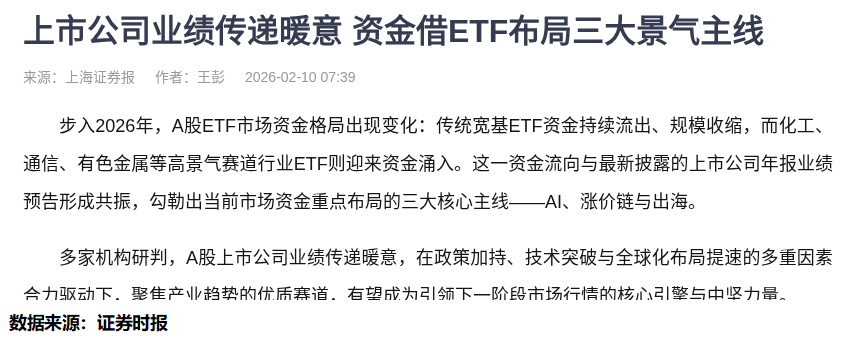
三条景气主线,量化数据看资金布局转向
Sou Hu Cai Jing· 2026-02-16 13:43
Core Insights - The A-share ETF market is undergoing a transformation as traditional broad-based ETFs shrink while sectors like chemicals, communications, and non-ferrous metals see significant inflows, driven by company earnings forecasts highlighting three main themes: AI, price increases, and overseas expansion [1][3] Group 1: Institutional Trading Behavior - The perception that stocks heavily held by institutions are guaranteed winners is misleading, as demonstrated by a stock that saw a 20% decline despite being favored by 31 funds, while the Shanghai Composite Index rose by 10% during the same period [3][6] - The real issue lies not in whether institutions are involved, but in their trading activity; stocks with short-lived institutional inventory indicate lack of sustained trading, leading to price declines [6][11] - Continuous institutional activity is crucial for market momentum; a stock that rose 30% in Q2 2025 and an additional 40% in July showed no signs of correction, highlighting the importance of active trading over mere price history [6][9] Group 2: Misinterpretation of Institutional Actions - Stocks that experience institutional selling can still rise if new institutions are actively buying, indicating a transition rather than a negative outlook on the stock's value [11][13] - Many investors misinterpret institutional selling as a bearish signal, leading to panic selling, while the underlying data may reveal ongoing active trading by new institutions [13][14] - The reliance on traditional metrics like "increased or decreased holdings" without understanding the actual trading dynamics can lead to poor investment decisions [14][15] Group 3: Data-Driven Investment Strategy - The use of quantitative data can enhance investment understanding, moving away from subjective speculation and towards a clearer view of actual trading behaviors [14][15] - The current market environment requires a shift from outdated strategies of holding stocks in anticipation of price increases to a more analytical approach that focuses on institutional trading activity [15]
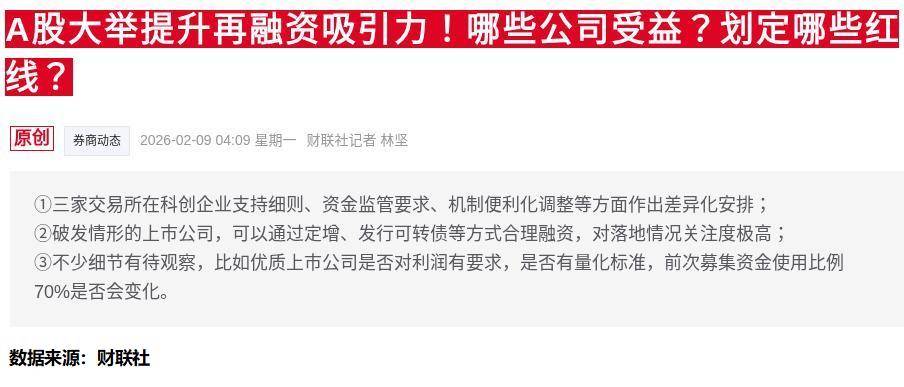
再融资优化一揽子措施出台,别被消息带偏
Sou Hu Cai Jing· 2026-02-16 12:37
深夜的书桌前,窗外没有交易时段的喧嚣,只有屏幕上还在滚动的市场讨论。春节前,沪深北交易所集中发布了再融资优化的一 揽子举措,这几天不管是股票论坛还是好友社群,全是关于新政的解读:有人说这是给优质企业松绑的利好,有人担心监管细节 收紧会影响市场流动性,吵得沸沸扬扬。前阵子和一位老友喝茶,他说年初就因为被一则利空消息影响,慌慌张张做出了决策, 结果没几天市场就反转,他拍着大腿懊悔了好久。其实我们都有过这种时刻:被消息牵着鼻子走,在犹豫、焦虑和侥幸里来回拉 扯,最后发现自己永远慢半拍。但其实,消息从来不是决定市场走向的核心,真正的关键,是那些主导市场的资金行为——而 这,恰恰是我们最容易忽略的盲区。 一、市场的"消息迷雾",我们总在踩坑 很多时候,我们会陷入一个惯性误区:把消息和市场的表面表现直接划上等号。比如看到某只标的出现连续回调,又配合着各种 利空传闻,第一反应就是"情况不对,赶紧跑",可往往事后才发现,这只是虚惊一场。就拿曾经关注的一只标的来说,那段时间 它的回调幅度不小,各种利空消息满天飞,身边不少人都慌了神,要么早早离场,要么不敢进场,只有少数人能沉得住气。后来 它的表现,让所有人都意外:它只用了很短的 ...
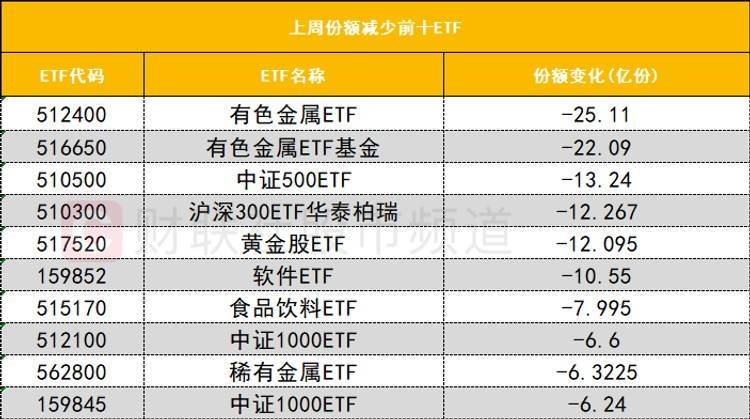
ETF遭遇巨量抛盘,大A有情况?
Sou Hu Cai Jing· 2026-02-16 05:17
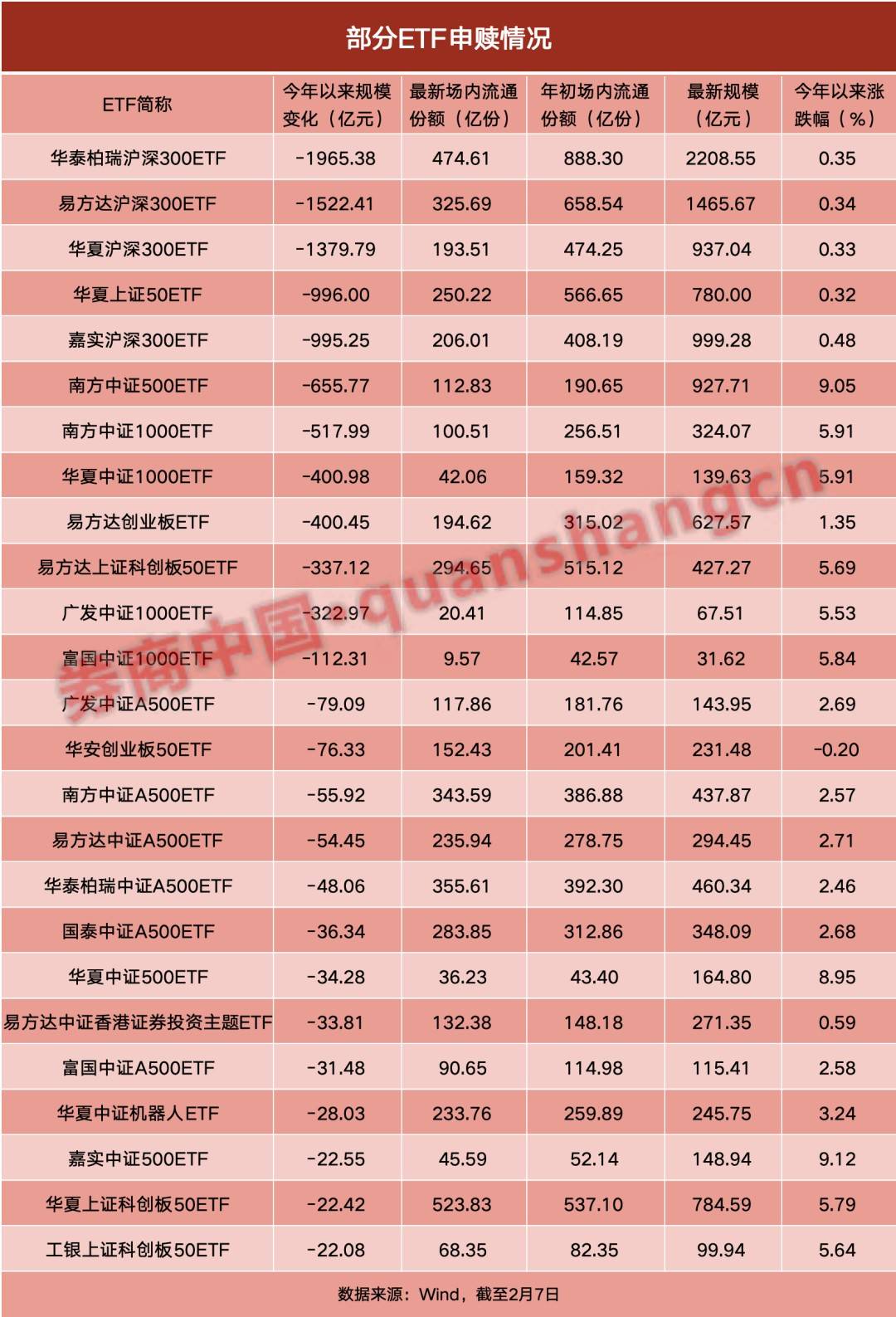
Core Viewpoint - The article discusses the significant outflows from broad-based ETFs since the beginning of the year, highlighting the importance of understanding the underlying behaviors of funds rather than reacting to market fluctuations [1] Group 1: ETF Fund Flows - Many ETFs have experienced substantial shrinkage in scale, with net outflows occurring for over ten consecutive trading days, peaking at over 130 billion [1] - Specific ETFs such as Huatai-PB CSI 300 ETF, E Fund CSI 300 ETF, and others have seen significant reductions in scale, with declines of 196.54 billion, 152.24 billion, and 137.98 billion respectively [2] Group 2: Institutional Participation - The article emphasizes the importance of identifying whether large institutional funds are actively participating in trading, as indicated by "institutional inventory" data [3] - Continuous participation from large funds suggests stability in the underlying asset, while a lack of participation can indicate potential volatility [5] Group 3: Market Adjustments - Market adjustments may not always indicate fund withdrawals; they can also reflect large funds engaging in "institutional shakeouts" to consolidate positions [8][10] - The presence of "institutional shakeouts" indicates that large funds are actively managing their positions, which can provide a foundation for future strategies [13] Group 4: Quantitative Analysis - Quantitative data offers a more objective perspective on market movements, helping to distinguish between panic and strategic adjustments by institutions [14] - Understanding the true motivations behind fund flows can lead to more rational investment decisions, moving beyond emotional reactions to market volatility [14]
IPO监管趋严,量化数据洞察炒作行为变化
Sou Hu Cai Jing· 2026-02-15 12:01
Group 1 - The core point of the article highlights a significant improvement in the regulatory environment, with a complete turnaround in the trend of companies withdrawing their IPO applications, achieving a zero withdrawal rate among the 20 companies inspected this year [1] - The on-site inspection termination rate has decreased from over 80% in previous years to 50%, indicating a stricter regulatory approach that emphasizes accountability from the moment of application [1] - Despite the improved regulatory landscape, ordinary investors still face confusion due to market volatility, where seemingly stable stocks may suddenly decline, and those expected to rebound may continue to weaken [1] Group 2 - The article discusses the phenomenon of visual bias in market trends, where investors often misinterpret price movements based on past performance, leading to incorrect predictions [3] - It illustrates two different stocks with contrasting outcomes despite similar high-level fluctuations, emphasizing the difficulty in predicting results based solely on visual trends [7] - The core reason for differing stock outcomes lies in the trading behavior of institutional investors, which is often not visible to ordinary investors but can be analyzed through quantitative data [9] Group 3 - By comparing the "institutional inventory" data of two stocks, it becomes clear that active participation from institutional funds correlates with positive price movements, while a lack of such participation leads to negative outcomes [11] - The article provides examples of two stocks with different trading behaviors, where one stock shows active institutional involvement despite frequent fluctuations, while the other lacks such participation during apparent rebounds [13] - The emphasis is placed on the importance of using quantitative data to establish an objective investment perspective, allowing investors to avoid being misled by superficial market movements [13]

新产业首股即将上市,新赛道又要被追捧?
Sou Hu Cai Jing· 2026-02-15 03:08
Group 1 - The core focus of the news is on Linping Development, a company specializing in the research and production of corrugated paper and boxboard, which is set to be listed on the Shanghai Stock Exchange. The company has established a strong reputation with 27 patents and has participated in drafting national industry standards, showcasing its commitment to quality and innovation [1] - Linping Development has automated its entire production process, resulting in a high product qualification rate and lower costs compared to competitors. The company has long-term stable partnerships with major downstream companies like Hexing Packaging, significantly exceeding the industry average in production and sales scale [1] - The company is pursuing a circular economy model through waste paper recycling and cogeneration, which not only enhances its environmental credentials but also provides cost advantages. It has previously received recognition as an advanced private enterprise in poverty alleviation in Anhui province [1] Group 2 - The news highlights the importance of understanding market dynamics beyond just news headlines. It emphasizes that institutional trading behavior is crucial for stock pricing, and relying solely on news can lead to poor investment decisions [3][5] - The article discusses how quantitative data tools can help investors discern the underlying market logic, allowing them to make more informed decisions rather than reacting emotionally to market fluctuations [11] - The narrative illustrates the contrast between stocks that are influenced by institutional trading versus those driven by retail investors, emphasizing the need for a data-driven approach to investment strategies [9][11]