
钢铁行业稳增长

Search documents
工信部:实施产能产量精准调控 促进钢铁产业减量发展和转型升级
智通财经网· 2025-09-22 03:14
Core Viewpoint - The Ministry of Industry and Information Technology and other departments have released the "Steel Industry Stabilization and Growth Work Plan (2025-2026)", focusing on precise control of capacity and output, promoting green low-carbon transformation, and enhancing industry management to achieve balanced supply and demand [1][5][19]. Group 1: Overall Requirements and Goals - The plan aims for an average annual growth of around 4% in the steel industry's added value from 2025 to 2026, with improved economic efficiency and a more balanced market supply and demand [7][20]. - The overall approach emphasizes quality and efficiency, integrating technological and industrial innovation, and enhancing supply-demand adaptability [6][26]. Group 2: Key Measures - Implementation of precise capacity and output control, including revising capacity replacement methods and supporting low-carbon steel production projects [8][9]. - Promotion of green low-carbon transformation, with a target to complete ultra-low emission modifications by the end of 2025 [12][19]. - Strengthening industry management through classification and evaluation of steel enterprises, guiding resources towards leading companies [9][10]. Group 3: Investment and Upgrading - Encouragement of effective investment to promote technological upgrades and digital transformation within the industry [11][22]. - Support for the construction of digital carbon management centers and the establishment of carbon footprint accounting standards for steel products [12][22]. Group 4: Expanding Consumption and International Cooperation - Exploration of steel application demands and fostering cooperation in key sectors such as shipbuilding [13][22]. - Promotion of international development by optimizing steel product export management and enhancing competitiveness in global markets [14][22]. Group 5: Implementation Guarantees - Emphasis on organizational support and collaboration among various levels of government and industry associations to ensure the effective implementation of the plan [23][24]. - Utilization of financial policies to support the steel industry's transformation and development [24][62].


工信部有关负责人解读《钢铁行业稳增长工作方案》出台背景
Zhi Tong Cai Jing· 2025-09-22 02:55
近年来,钢铁行业持续下行,稳增长压力较大。一是钢材消费达峰,需求持续下降。房地产用钢需求短 期难以回升,传统建筑用材需求减少,基础设施建设对需求贡献潜力降低,汽车、造船等制造业需求虽 有所增长,但难以弥补传统建材减量。贸易摩擦多发频发,钢材直接出口不确定性增加。供给能力仍然 处于高位,企业竞争进一步加剧。二是近年行业处于微利状态,企业经营压力不断加大。2024年,钢铁 行业利润662.9亿元,同比减少42.6%,行业亏损面较大。今年1-7月,钢铁行业虽然实现利润830.3亿 元,但行业稳增长的基础并不牢固。三是环保和双碳约束进一步趋紧,绿色低碳转型更趋紧迫。2025年 底前全国80%以上的钢铁产能将完成超低排放改造,今年也是钢铁行业纳入全国碳排放权交易市场的第 一年。钢铁企业持续推进绿色低碳技术改造,以及后期运维均需要增加投入,带来较大资金需求。 ...
工业和信息化部有关负责人解读《钢铁行业稳增长工作方案(2025—2026年)》
Zheng Quan Shi Bao Wang· 2025-09-22 02:51
人民财讯9月22日电,工业和信息化部有关负责人解读《钢铁行业稳增长工作方案(2025—2026年)》, 《方案》坚持问题导向、目标导向,聚焦强治理、优供给、促转型、扩消费、增合作等,共提出5个方 面10条具体举措:一是聚焦消费达峰、需求下行突出矛盾,提出加强行业管理,实施产能产量精准调 控,推进钢铁企业分级分类管理,促进供需动态平衡、优胜劣汰。二是聚焦提升供给质量,提出强化产 业科技创新,增强高端产品供给能力,促进大宗产品质量升级,稳定原燃料供给,提升有效供给能力。 三是聚焦行业改造升级,提出扩大有效投资,推进工艺设备更新改造,加快数字化转型,推进绿色低碳 发展,促进行业转型升级。四是聚焦扩大有效消费,提出挖掘钢材应用需求,深化钢铁与船舶等重点用 钢领域的上下游合作,积极推广钢结构在住宅、公共建筑、中小跨径桥梁等领域应用,激发释放消费潜 力。五是聚焦深化开放合作,提出强化钢铁产品出口管理,维护出口竞争秩序,优化钢铁出口产品结 构,依法依规开展钢铁产品国际贸易,引导钢铁产品与装备、技术、服务等协同走出去,提高国际化发 展水平。 ...
五部门:落实好废钢铁回收“反向开票”政策,推动废钢铁回收行业规范健康发展
Sou Hu Cai Jing· 2025-09-22 02:51
工业和信息化部等五部门印发《钢铁行业稳增长工作方案(2025-2026年)》的通知。其中提到,加强 政策支持。利用科技创新和技术改造专项再贷款、超长期特别国债等政策,重点支持钢铁行业减污降碳 协同增效改造、数字化转型改造、资源综合利用等。落实好废钢铁回收"反向开票"政策,推动废钢铁回 收行业规范健康发展。引导金融机构按照市场化、法治化、有扶有控的原则,针对钢铁行业特点,综合 运用各类金融工具,为钢铁企业提供优质金融服务。加大人才培养力度,围绕新材料新工艺研发创新和 数字化转型需求,培育一批高端复合型人才。 ...
钢铁股早盘普涨 钢铁行业稳增长工作方案发布 反内卷背景下供给侧变革有望加速
Zhi Tong Cai Jing· 2025-09-22 02:23
Group 1 - Steel stocks experienced a broad increase in early trading, with Chongqing Steel rising by 2.92% to HKD 1.41, Maanshan Steel up by 1.61% to HKD 2.52, and China Hanking increasing by 1.1% to HKD 3.67 [1] - The Ministry of Industry and Information Technology and other departments issued the "Steel Industry Growth Stabilization Work Plan (2025-2026)" on September 22, setting an annual growth target of around 4% for the steel industry's added value over the next two years [1] - The plan emphasizes "stabilizing growth and preventing internal competition" as its core, guiding structural adjustments and high-quality development in China's steel industry [1] Group 2 - The work plan proposes precise control of capacity and output, promotes graded management of steel enterprises, prohibits new capacity, and guides resource allocation towards competitive enterprises to achieve dynamic balance between supply and demand [1] - Experts indicate that "equipment upgrading" and "low-carbon transformation" will be the two core competitive issues in the future, with a requirement for steel companies to accelerate the elimination of outdated equipment [1] - By the end of 2025, over 80% of steel production capacity is expected to complete ultra-low emission transformations [1] Group 3 - CICC anticipates that in the second half of 2025, production control is likely to be implemented against the backdrop of preventing internal competition, with an expected recovery in market sentiment leading to improved supply and demand in the industry [2] - The current steel industry is at the left side of a major cycle bottom reversal, with the bottom of the cycle becoming increasingly clear, indicating a potential upward resonance in the industry cycle [2]
钢铁行业未来两年目标确定:年均增长4% 严禁新增产能
财联社· 2025-09-22 02:21
Core Viewpoint - The Ministry of Industry and Information Technology, along with other departments, has issued the "Steel Industry Growth Stabilization Work Plan (2025-2026)", setting an average annual growth target of around 4% for the steel industry's added value over the next two years [1] Group 1 - The plan emphasizes "stabilizing growth and preventing internal competition" as its core focus, guiding the structural adjustment and high-quality development of the Chinese steel industry [1] - It proposes precise control of capacity and output, promotes graded and classified management of steel enterprises, prohibits new capacity additions, and encourages resource allocation towards advantageous enterprises [1] - The plan aims to achieve dynamic balance between supply and demand through output regulation, facilitating the survival of the fittest [1] Group 2 - Experts indicate that "equipment upgrading" and "low-carbon transformation" will be the two core competitive issues in the future [1] - The plan mandates that steel enterprises must accelerate the elimination of outdated equipment, particularly old blast furnaces and converters that restrict production [1] - By the end of 2025, the plan requires that over 80% of steel production capacity must complete ultra-low emission transformation [1]
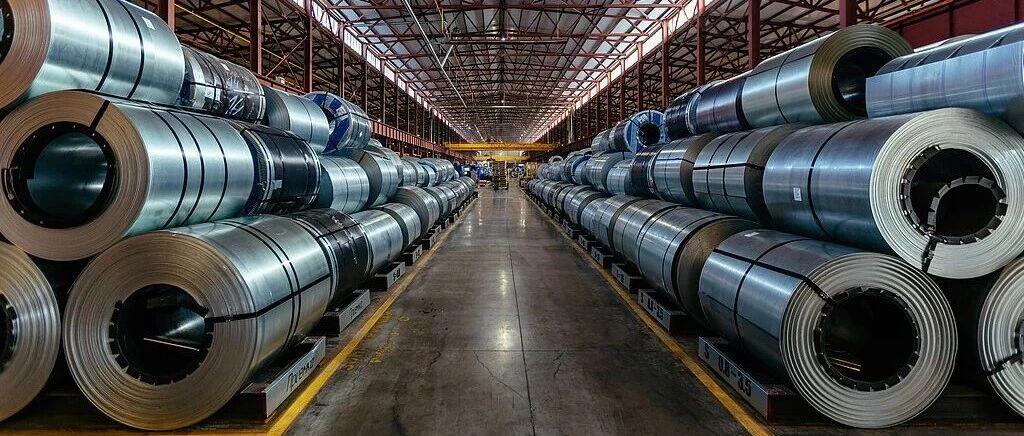
港股异动 | 钢铁股早盘普涨 钢铁行业稳增长工作方案发布 反内卷背景下供给侧变革有望加速
智通财经网· 2025-09-22 02:15
Group 1 - Steel stocks experienced a broad increase, with Chongqing Steel rising by 2.92% to HKD 1.41, Maanshan Steel up by 1.61% to HKD 2.52, and China Hanking increasing by 1.1% to HKD 3.67 [1] - The Ministry of Industry and Information Technology and other departments issued the "Steel Industry Growth Stabilization Work Plan (2025-2026)" on September 22, setting an annual growth target of around 4% for the steel industry's added value over the next two years [1] - The plan emphasizes "stabilizing growth and preventing internal competition," guiding structural adjustments and high-quality development in China's steel industry [1] Group 2 - The work plan proposes precise control of capacity and output, prohibits new capacity additions, and encourages resource allocation towards leading enterprises to achieve dynamic balance between supply and demand [1] - Experts highlight that "equipment upgrading" and "low-carbon transformation" will be the two core competitive issues for the future, with a requirement for steel enterprises to accelerate the elimination of outdated equipment [1] - By the end of 2025, over 80% of steel production capacity is expected to complete ultra-low emission transformations [1] Group 3 - CICC anticipates that in the second half of 2025, production control is likely to be implemented against the backdrop of preventing internal competition, with an expected recovery in market sentiment and improvement in industry supply and demand [2] - The steel industry is currently at the left side of a major cycle bottom reversal, with the bottom of the cycle becoming increasingly clear, indicating a potential upward trend in the industry cycle [2] - The deteriorating raw material landscape is expected to enhance the certainty and elasticity of profit cycle recovery [2]
钢铁行业未来两年目标确定:年均增长4%
Yang Shi Xin Wen Ke Hu Duan· 2025-09-22 02:10
Core Insights - The Ministry of Industry and Information Technology, along with other departments, has issued the "Steel Industry Growth Stabilization Work Plan (2025-2026)", setting an average annual growth target of around 4% for the steel industry's added value over the next two years [1] - The plan emphasizes "stabilizing growth and preventing internal competition" as its core focus, providing a clear implementation path for structural adjustments and high-quality development in China's steel industry [1] Summary by Sections - **Production Control and Management** - The plan proposes precise control of production capacity and output, promotes graded and classified management of steel enterprises, prohibits the addition of new production capacity, and guides resource allocation towards competitive enterprises [1] - It aims to achieve dynamic balance between supply and demand through output regulation, facilitating the survival of the fittest [1] - **Core Competitive Issues** - Experts indicate that "equipment upgrading" and "low-carbon transformation" will be the two main competitive issues in the future [1] - Steel enterprises are required to accelerate the elimination of outdated equipment, particularly old blast furnaces and converters, which are considered restrictive production equipment [1] - **Environmental Standards** - The plan specifies that by the end of 2025, over 80% of steel production capacity must complete ultra-low emission transformations [1]

《黑色》日报-20250916
Guang Fa Qi Huo· 2025-09-16 01:49
免责声明 本报告中的信息均来源于被广发明货有限公司认为可靠的已公开资料,但广发明货对这些信息的准确性及完整性不作任何保证。本报告反映研究人员的不同观点、见解及 分析方法,并不代表广发明货或其附属机构的立场。在任何情况下,报告内容仅供参考,报告中的信息或所袁达的意见并不构成所述品种买卖的出价或狗价,投资者撰此 投资,风险自担。本报告旨在发送给广发期始特定客户及其他专业人士,版权归广发期货所有,未经广发期货节面授权,任何人不得对本报告进行任何形式的发布、复制 。如引用、刊发,需注明出处为"广发期货"。 回發落:1回 | 钢材产业期现日报 | | | | | | | --- | --- | --- | --- | --- | --- | | 投资咨询业务资格:证监许可 [2011] 1292号 2025年9月16日 | | | 問敏波 | Z0010559 | | | 钢材价格及价差 | | | | | | | 品种 | 现值 | 町自 | 张庆 | 某差 | 单位 | | 螺纹钢现货(华东) | 3240 | 3220 | 20 | 104 | | | 螺纹钢现货(华北) | 3210 | 3200 | 10 | ...
钢矿周报:旺季及长假特征或更趋明显叠加稳增长政策或加码发力,钢矿期价或震荡偏强-20250915
Chang An Qi Huo· 2025-09-15 11:13
Report Industry Investment Rating No relevant information provided. Core View of the Report - Both steel and iron ore futures prices may fluctuate with a bullish bias. For steel, although the terminal demand in August was under pressure, the "Golden September and Silver October" peak season characteristics may become more obvious in mid - to late September, and the replenishment demand before the National Day holiday may be released. The strengthening of counter - cyclical adjustment policies may also support the demand. For iron ore, despite the long - term pressure on demand due to the upcoming steel industry stability - growth plan, the short - term demand may remain resilient due to the peak season and policy support [1][2][3]. Summary According to the Directory 1. Fundamental Production, Sales, and Inventory Changes Lead to Differentiated Performance of Steel and Iron Ore Futures Prices - Last week, affected by fundamental production, sales, and inventory changes, the futures prices of steel and iron ore main contracts showed differentiation. The futures price of the rebar main contract fluctuated weakly, down 0.51% for the week, while the futures prices of hot - rolled coil and iron ore main contracts fluctuated strongly, up 0.72% and 1.27% respectively for the week. The decline of rebar was due to weak consumption and inventory accumulation, while the rise of hot - rolled coil was due to increased consumption and inventory destocking. The rise of iron ore was supported by tight supply caused by a sharp drop in overseas ore shipments and increased demand from the resumption of production of steel mills in North China [4]. 2. The Pressure of Inventory Accumulation of Steel and Iron Ore May Be Limited Due to the Improvement of Supply - Demand, Peak Season Characteristics, and Policy Support (1) Steel: The Peak Season and Holiday Characteristics Become More Obvious, and the Strengthening of Stability - Growth Policies May Lead to a Bullish Bias in Futures Prices - **Terminal demand may be supported**: Although the terminal demand for steel in August was under pressure, in mid - to late September, the "Golden September and Silver October" peak season characteristics may become more obvious, and the replenishment demand before the National Day holiday may be released. The strengthening of counter - cyclical adjustment policies, such as the possible restart of Fed rate cuts, the adequacy of fiscal policy space, and the implementation of relevant policies, may support the demand for steel [10][11]. - **Steel production may be under pressure**: Although the profitability of steel mills is in doubt and the "Golden September and Silver October" peak season is approaching, the improvement of steel mill profits still faces challenges due to the uncertain terminal demand and supply disturbances of raw materials. The upcoming steel industry stability - growth plan may also put pressure on steel production, especially for building materials [22][23]. - **The pressure of inventory accumulation of rebar and hot - rolled coil may be limited**: Although the terminal demand in August was under pressure and the apparent demand for rebar continued to decline last week, the peak season characteristics and policy support may lead to marginal improvement in demand, and the overall inventory accumulation pressure of rebar and hot - rolled coil may be limited [37]. (2) Iron Ore: Steel Mill Profits Are Still Supported, and the Strengthening of Stability - Growth Policies May Lead to a Bullish Bias in Futures Prices - **Iron ore demand may be resilient in the short term but under pressure in the long term**: Although the upcoming steel industry stability - growth plan may suppress iron ore demand in the long term, in the short term, the peak season characteristics, the release of replenishment demand before the National Day holiday, and policy support may keep the iron ore demand resilient. However, the uncertain terminal demand and supply disturbances of raw materials may still pose challenges to steel mill profits and iron ore demand [40][42]. - **The pressure of tight supply of iron ore may be limited**: Overseas ore shipments are entering the peak season, and the new production capacity of overseas mines and domestic "Cornerstone Plan" may increase the supply of iron ore, so the pressure of tight supply may be limited [48]. - **The short - term inventory accumulation of iron ore ports may be limited**: Although there is long - term pressure on iron ore demand and inventory accumulation, the short - term demand may remain resilient due to the peak season and policy support, so the short - term inventory accumulation amplitude of iron ore ports may be limited [53]. 3. The Peak Season and Holiday Characteristics Become More Obvious, and the Strengthening of Stability - Growth Policies May Lead to a Bullish Bias in Steel and Iron Ore Futures Prices - **Steel**: The futures price may fluctuate with a bullish bias. Steel producers and traders with high inventory levels are advised to speed up the sales rhythm, while traders with low inventory levels and downstream and terminal procurement enterprises can slow down the procurement rhythm or establish short - term buying hedging positions on the futures market. Investors are advised to take short - term long positions on dips, and arbitrageurs can try to go long on the rebar - to - iron - ore ratio, all with attention to stop - profit and stop - loss [55][56]. - **Iron Ore**: The futures price may fluctuate with a bullish bias. Steel mills or traders with low inventory levels are advised to slow down the procurement rhythm or establish short - term buying hedging positions on the futures market, while traders with high inventory levels can speed up the sales rhythm. Investors are advised to use a range - trading strategy of high - selling and low - buying, and arbitrageurs can try to go long on the rebar - to - iron - ore ratio, all with attention to stop - profit and stop - loss [57].