门罗主义

Search documents
《环球时报》【悦读(一)】:三本书起底美国霸凌拉美真相
Huan Qiu Shi Bao· 2026-01-13 22:54
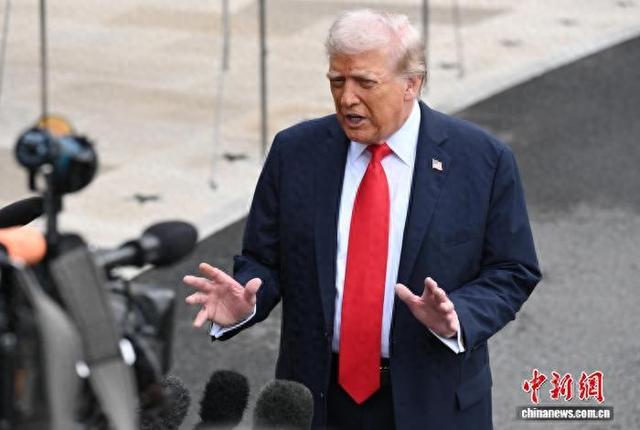
Core Viewpoint - The recent large-scale military attack by the U.S. on Venezuela and the capture of President Maduro has sparked strong international condemnation, revealing the underlying political logic of U.S. actions in Latin America and its historical role as a hegemon [1]. Group 1: Historical Context - The book "The Collected Speeches of American Presidents" illustrates how the U.S. has intervened in Western Hemisphere affairs under the guise of being an "international police" force, using ideals of freedom and democracy to justify military actions [2]. - The "Monroe Doctrine," articulated by President James Monroe in 1823, established that the Americas should not be considered for colonization by European powers, marking the beginning of U.S. foreign policy aimed at limiting European influence in the region [2][3]. Group 2: Evolution of U.S. Policy - By the end of the 19th century, the U.S. had become the world's largest economy, leading to a shift in the interpretation of the Monroe Doctrine, emphasizing U.S. influence over the entire Americas and justifying military intervention when necessary [3]. - Theodore Roosevelt's 1904 annual message introduced the concept of "international police powers," stating that the U.S. would intervene in cases of governmental incapacity in the Western Hemisphere, which resonates with the current U.S. actions in Venezuela [4]. Group 3: Ideological Justifications - Roosevelt's speeches reflect a belief that the U.S. must not be a passive observer in global affairs, suggesting that failure to act could lead to greater powers dominating the world [5]. - The establishment of "American-style peace" post-World War II was not only due to military and economic strength but also the promotion of ideals like freedom and democracy, which served as justifications for U.S. military actions [6]. Group 4: Contemporary Analysis - "The Open Veins of Latin America" by Eduardo Galeano critiques the historical exploitation of Latin America, arguing that a structure of modern-day plunder has led to persistent poverty and underdevelopment in the region [7]. - The book has been influential in academic discussions and has been widely translated, highlighting the ongoing relevance of its themes in understanding U.S.-Latin America relations [8]. Group 5: Recent Scholarly Work - "America's Backyard: From Monroe Doctrine to the War on Terror" by Grace Livingstone reveals the darker aspects of U.S. involvement in Latin America, including support for military coups and interventions under the pretext of combating terrorism [9]. - The book discusses the failures of U.S. drug policies and their environmental impacts, as well as the economic interests that drive U.S. actions in the region [9].
刚对中俄划下红线,48小时后,特朗普反手就清理自家国库,美联储行长收到战书
Sou Hu Cai Jing· 2026-01-13 16:38
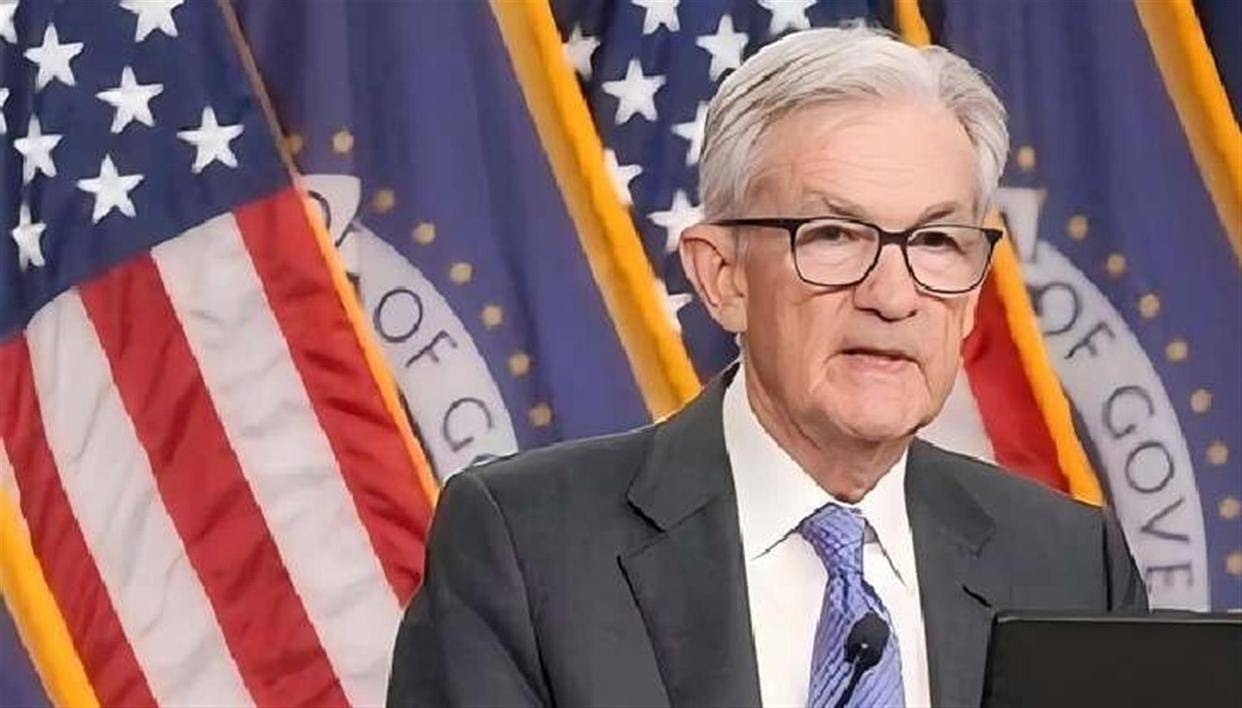
Core Viewpoint - The article discusses the simultaneous domestic and foreign policy actions taken by President Trump, highlighting a strategic approach to consolidate power both internationally and within the U.S. government, particularly targeting the Federal Reserve and its leadership [1][3][11]. Foreign Policy Actions - The U.S. government has adopted aggressive measures against the Maduro regime in Venezuela, signaling a strong stance against Chinese and Russian influence in Latin America, which is perceived as a threat to U.S. geopolitical interests [3][4]. - Trump's declaration that the Western Hemisphere is the U.S.'s "exclusive playground" reflects a modern interpretation of the Monroe Doctrine, aimed at preventing foreign powers from encroaching on U.S. interests in the region [4][6]. - The U.S. military strategy appears to be a "fake withdrawal" from Germany while simultaneously expanding military presence in the Middle East and increasing naval operations in the Asia-Pacific region [4][6]. Domestic Policy Actions - Trump initiated a significant purge of federal prosecutors shortly after taking office, aiming to eliminate obstacles within the judicial system, particularly those involved in investigations related to the Capitol riots [6][7]. - A criminal investigation into a $130 million renovation project at the Federal Reserve was launched, coinciding with the Fed's refusal to lower interest rates, indicating a political maneuver to exert pressure on Fed Chairman Powell [7][9]. - The investigation's focus on a relatively small budget item within a larger project is seen as a tactic to leverage political influence over the central bank's monetary policy decisions [9]. Implications for Institutional Independence - Powell's response to the investigation highlights concerns over the political motivations behind it, suggesting a serious threat to the independence of the Federal Reserve, which could undermine the credibility of U.S. institutions [9][10]. - The ongoing political pressure on the Fed and the judicial system raises alarms about the erosion of the rule-based multilateral trade system and the independence of international financial institutions [10][11]. - The decline in the dollar's share of global foreign exchange reserves to 58% in 2023, the lowest in 25 years, reflects growing international skepticism towards U.S. monetary policy and a shift towards alternative currencies in global trade [10][11].

特朗普让世界陷入黑暗森林,中国要完成统一复兴才能匡复国际正义
Sou Hu Cai Jing· 2026-01-13 09:49
Group 1 - The core argument suggests that Trump's actions, including the potential targeting of Greenland, reflect a shift in U.S. foreign policy that prioritizes American strength over traditional alliances and international norms [1] - Trump's approach is compared to historical precedents, indicating a strategy that may destabilize international order and provoke conflicts, similar to tactics used by historical figures like Hitler [1] - The article posits that Trump's focus on Latin America and the Middle East is part of a broader strategy to counter China's influence, particularly regarding energy resources and rare earth materials [3] Group 2 - Trump's dual strategy involves providing a facade of concession on Taiwan while simultaneously pushing for its militarization, indicating a complex approach to U.S.-China relations [5] - The narrative suggests that Trump's populist agenda is not a fleeting trend but rather a sustained movement that could lead to increased global tensions and conflicts, reminiscent of the interwar period in the early 20th century [5] - The article concludes that the future of global cooperation may hinge on China's initiatives, such as the Belt and Road Initiative, as the traditional Western-led order faces challenges under Trump's policies [5]
跟着美国混,三天饿九顿!特朗普施压无效,阿根廷总统已宣布访华
Sou Hu Cai Jing· 2026-01-13 05:53
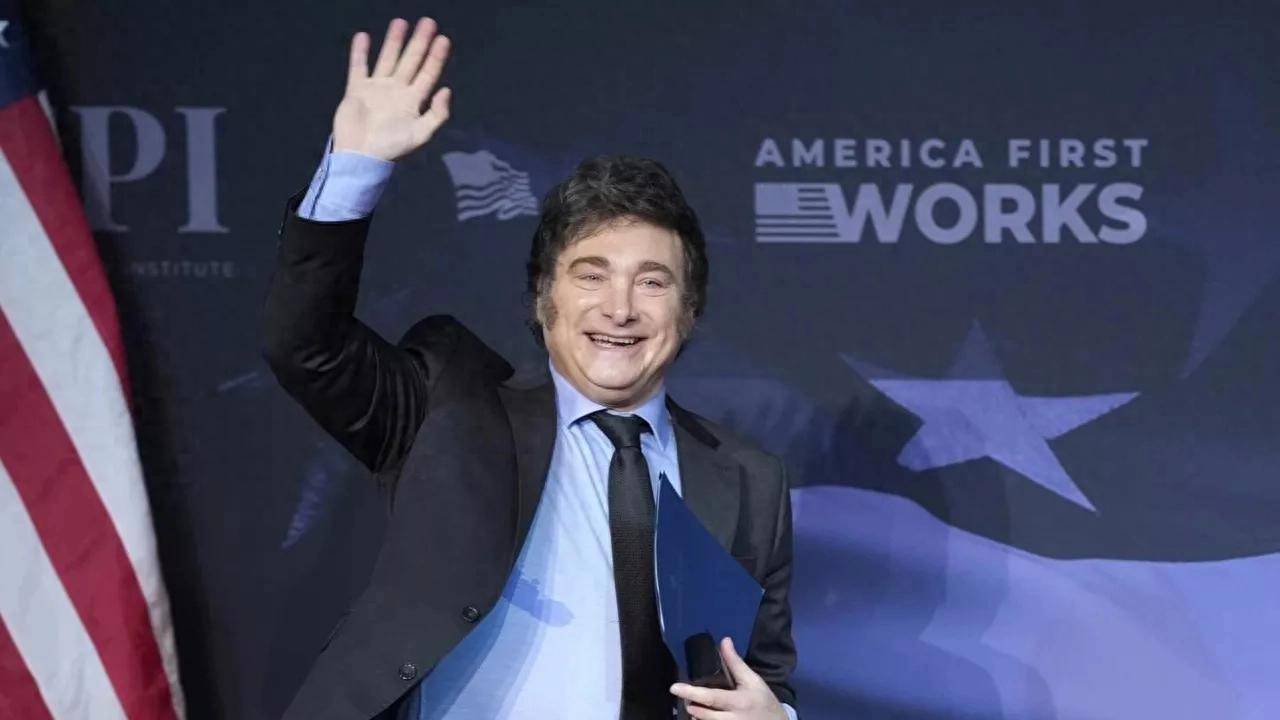
Core Viewpoint - Argentine President Milei plans to visit China, emphasizing China's role as an excellent trade partner, which counters the U.S. pressure on Latin American countries [2][4] Group 1: Economic Motivations - Argentina's agricultural exports, particularly soybeans, corn, and shrimp, heavily depend on the Chinese market, making China its most important trade partner [5] - The urgency of Argentina's economic recovery drives Milei's decision to strengthen ties with China, as losing China as a stable buyer would severely impact agricultural exports [7] - Milei's visit to China is a strategic move for economic self-rescue and a subtle resistance against U.S. hegemony, aiming to balance relations between the U.S. and China [7][9] Group 2: Political Context - The U.S. government's aggressive tactics, including the detention of Venezuelan President Maduro, aim to curb China's influence in Latin America, but have not achieved the desired effect [2][4] - Milei's declaration to visit China disrupts U.S. plans to reassert dominance in the region, highlighting the ineffectiveness of U.S. coercive diplomacy [10] - The growing dissatisfaction among Latin American countries towards U.S. pressure indicates a shift towards favoring cooperation with China for development opportunities [9][10] Group 3: Implications for Latin America - If Milei's visit is successful, it could deepen agricultural trade and infrastructure cooperation between Argentina and China, injecting new momentum into Argentina's economy [9] - Milei's decision may serve as a model for other Latin American countries, encouraging them to strengthen ties with China, as evidenced by the success of Chilean cherries and Brazilian coffee in the Chinese market [9] - The essence of China-Latin America cooperation is mutual benefit, contrasting with the U.S. approach of coercion and dependency [10]
格陵兰岛自治政府称无法接受美国接管!北约盟友已发声明支持
Nan Fang Du Shi Bao· 2026-01-13 02:49
南都此前报道,美国总统特朗普曾多次扬言要得到格陵兰岛,并称将会向该岛派驻更多美军。2025年3 月底,美国副总统万斯率代表团访问位于格陵兰岛北部的美国皮图菲克太空基地一事饱受各方批评和抗 议。 当地时间1月12日,格陵兰岛自治政府发布声明说,格陵兰岛自治政府在任何情况下都无法接受美国接 管格陵兰岛。南都N视频此前报道,格陵兰岛自治政府总理办公室曾回应南都记者称,格陵兰岛的主权 必须得到充分尊重,杜绝任何外来势力的干预。有国际问题专家曾向南都记者分析,特朗普不尊重他国 主权,想要扩大美国的版图和势力范围,将周边地区都纳入掌控,这是典型的扩张主义思维。 声明说,格陵兰岛是丹麦王国的一部分,也是北约的一部分,格陵兰岛的防务应通过北约来实现。格陵 兰岛自治政府在声明中表示,他们正在与六个北约国家就格陵兰岛的防御问题进行对话。"鉴于六个北 约成员国对格陵兰岛发表了非常积极的声明,格陵兰岛政府将加大力度,确保格陵兰岛的防御在北约的 主持下进行。" 声明称,格陵兰岛在未来任何时候都将是西方防务联盟的一部分。包括美国在内的所有北约成员国在格 陵兰岛防务问题上拥有共同利益。格陵兰岛自治政府将与丹麦一道,推动在北约框架内开展格陵 ...
美国单边干预加剧全球动荡 武力霸权凌驾国际规则之上
Yang Shi Wang· 2026-01-12 09:31
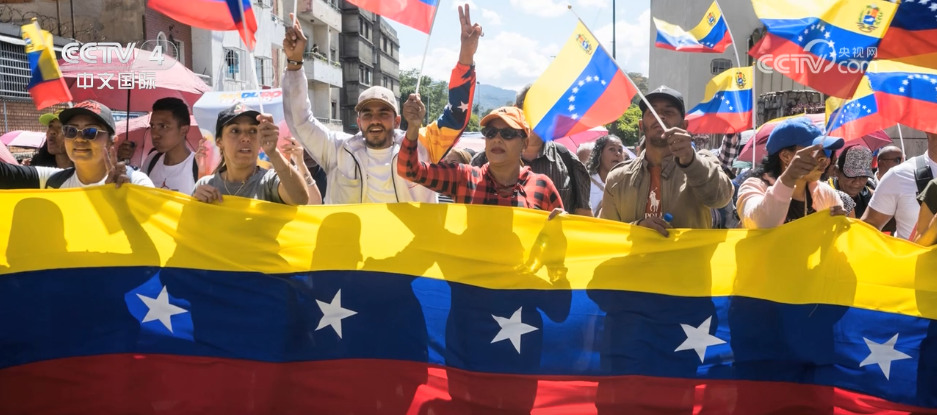
央视网消息:特朗普政府对委内瑞拉实施军事干预并意图攫取其石油资源后,又对多国发出威胁。一系列行动在全球引发担忧, 强权政治卷土重来,世界正面临规则失序与冲突升级的严峻风险。 俄罗斯今日俄罗斯:武力霸权凌驾国际规则之上 德国巴伐利亚广播公司:"美国优先"无视国际规则 文章指出,特朗普当前的举动违背了其避免外交风险的竞选承诺。从将拉美视为"后院"到扬言夺取格陵兰岛,特朗普打着维护国 家安全的旗号,大行门罗主义,企图控制整个美洲。美国以"美国优先"为绝对导向,试图通过主导全球格局来"让美国再次伟大"。在 特朗普看来,国际规则、组织与联盟关系均成了这一进程的阻碍,与"美国优先"相悖,因而被系统性无视或抛弃。 新加坡《联合早报》:危及全球稳定 过去数十年,以联合国为核心的多边体系与基于规则的全球化,为世界带来了总体和平与繁荣。美国单方面军事干预委内瑞拉, 甚至不再以外交辞令掩饰其控制石油资源的意图,意味着美国政策发生重大转变。这将产生深远影响,地区武力冲突风险骤增。文章 强调,各国必须坚定维护国际法,因为在规则缺失的世界里,无论国家大小,最终都将沦为受害者。 CTV / 4 中文国际 CCTV rom - a it y ...
美联储独立性受损风险提升,金银大幅拉涨
Zhong Xin Qi Huo· 2026-01-12 09:05
Report Summary 1. Industry Investment Rating No specific industry investment rating is provided in the report. 2. Core Viewpoints - On January 12, gold and silver prices rose significantly, with Shanghai gold up 2.57% and Shanghai silver up 14.42%. London gold spot exceeded $4,600 per ounce, and London silver spot exceeded $84 per ounce [4]. - The expectation of the Fed's impaired independence dominated the market. The threat of a subpoena to Powell and the uncertainty of the new Fed chairman nominee increased concerns, driving up precious metal prices [5]. - The unannounced result of the 232 investigation on critical minerals and the "Monroe Doctrine" expectation led to the overall strength of the metal sector. The spot shortage logic of silver may persist [6]. - Looking ahead, gold and silver are expected to maintain an overall upward - trending oscillation, with silver's high - volatility state likely to continue in the short term. London gold may reach $4,900 - $5,000 per ounce, and silver may challenge new highs of $90 - $100 per ounce [6]. 3. Summary by Related Factors Fed - related Factors - The Fed chairman is about to change, and the new nominee has not been disclosed. Trump said he had made a decision but refused to reveal it. As of January 12, Kevin Warsh had a 41% chance of being elected, Kevin Hassett 40%, and Christopher Waller 9% [5]. - The Justice Department's subpoena threat to Powell increased market concerns about the Fed's impaired independence, driving up precious metal prices despite the delayed expected interest - rate cut time shown by FED NATOH [5]. Geopolitical and Trade - related Factors - On January 3, the US attacked Venezuela and made remarks about Greenland, increasing the expectation of geopolitical conflicts and the "Monroe Doctrine" - style US foreign policy. This led to resource security concerns and the overall strength of the metal sector [6]. - The result of the US 232 investigation on critical minerals has not been announced, and the hoarding demand may keep squeezing the floating inventory, making the silver spot shortage logic likely to repeat [6]. Market Performance and Outlook - After the negative impact of the Bloomberg Commodity Index weight adjustment last week, gold and silver rebounded. Driven by multiple factors, they are expected to remain strong in the short term [6].
有色全面上行,重视板块配置
Changjiang Securities· 2026-01-12 01:07
Investment Rating - The report maintains a positive investment rating for the metal and mining industry, indicating a favorable outlook for investment opportunities [8]. Core Insights - The report highlights a significant increase in industrial metals driven by "Monroeism" sentiment, alongside expectations of interest rate cuts by the Federal Reserve and a trend of copper hoarding in the U.S. [2][5]. - Precious metals, particularly gold and silver, are experiencing a recovery phase, with a focus on the resilience of gold stocks amid geopolitical tensions and fluctuating interest rate expectations [4][5]. - The report emphasizes the importance of sector allocation, particularly in copper and aluminum, as they are expected to benefit from macroeconomic trends and supply-demand dynamics [5][6]. Summary by Sections Precious Metals - Gold stocks are showing signs of recovery, with a notable shift from a previous stagnation in performance relative to gold prices. The report anticipates continued upward pressure on gold prices due to ongoing recession fears and weak inflation and employment data [4]. - Silver is expected to outperform due to macroeconomic conditions and a favorable trading structure, with a recommendation to focus on silver stocks for their potential elasticity [4]. Industrial Metals - The report notes a strong performance in copper and aluminum, with copper prices rising by 4.3% and aluminum by 3.8% during the week. This is attributed to increased inventories and a favorable macroeconomic backdrop [5][24]. - The report suggests that the copper and aluminum sectors are well-positioned for a spring rally, driven by expectations of interest rate cuts and supply disruptions due to geopolitical factors [5][6]. Energy and Strategic Metals - The report identifies lithium as a key area for investment, with expectations of a supply-demand turning point and strong pricing trends. The strategic value of rare earths and tungsten is also highlighted, particularly in light of export controls and geopolitical tensions [6]. - The report emphasizes the importance of positioning in cobalt and nickel, with expectations of long-term price increases due to supply constraints and rising demand [6].
后院抓人、前院买岛,还想吞并邻居……美国邻居的生存困境
Xin Lang Cai Jing· 2026-01-11 16:13
Core Viewpoint - The article discusses the shift in U.S. foreign policy from the Monroe Doctrine to a more aggressive approach termed "Tangroism," characterized by unilateral actions and disregard for international law, particularly in Latin America and the Arctic region [1][7]. Group 1: U.S. Actions in Latin America - The U.S. has escalated its approach towards Venezuela, exemplified by the operation "Absolute Resolve," which involved the direct abduction of President Maduro and his wife for investigation [3]. - President Trump has made aggressive statements regarding military actions against Colombia and threats towards Cuba and Mexico, indicating a broader strategy of intervention in the region [3][6]. - The situation in Venezuela is seen as a precursor to potential actions against other Latin American countries, as noted by Chilean President Boric [3]. Group 2: U.S. Interests in Greenland - The U.S. is pursuing the acquisition of Greenland, a territory rich in rare earth resources, despite previous rejections from Denmark [5]. - Internal discussions within the U.S. government include offering cash incentives to Greenland residents to encourage independence from Denmark and potential U.S. annexation [5]. - A significant majority (85%) of Greenland's residents oppose U.S. acquisition, while many support independence from Denmark [5]. Group 3: Regional Reactions and Implications - The aggressive stance of the U.S. has caused concern in Canada, with Trump referring to Canada as the "51st state," which has heightened Canadian national identity and urgency in response to U.S. actions [6]. - The article notes a growing solidarity among Latin American countries in support of Venezuela, as well as European military planning in response to U.S. actions [7][8]. - The emergence of a cooperative security order among nations is highlighted as a counter to U.S. unilateralism, reflecting a shift towards multilateralism in international relations [8].
后院抓人、前院买岛,还想吞并邻居,美国邻居生存“指难”!
Xin Lang Cai Jing· 2026-01-11 15:10
Group 1 - The article discusses the shift in U.S. foreign policy from a defensive "Monroe Doctrine" to a more aggressive "Trump Doctrine," characterized by unilateral actions and disregard for international law [1][7] - The U.S. has escalated its approach in South America, exemplified by the operation to detain Venezuelan President Maduro and threats against Colombia and Cuba, indicating a potential for military intervention [3][6] - The U.S. is also pursuing territorial ambitions in Greenland, seeking to acquire the island for its rich resources, despite strong opposition from Greenland's residents [4][5] Group 2 - The rhetoric surrounding Canada becoming the "51st state" reflects a pressure tactic rather than a feasible political move, highlighting the complexities of national sovereignty and political balance [6][7] - The article notes a growing solidarity among Latin American countries in response to U.S. actions, suggesting a shift towards multilateralism and collective security in the region [8] - The emergence of a new order in international relations is indicated, where the aggressive stance of the U.S. is prompting neighboring countries to strengthen their cooperation and defense strategies [8]