
防风险

Search documents
交易所,重磅出手!
Zheng Quan Shi Bao· 2025-12-24 04:23
广期所再出手,铂、钯、碳酸锂期货同步收紧风控。 12月23日晚间,广期所发布多项风控措施公告,涉及铂、钯、碳酸锂及多晶硅等多个活跃品种,通过上 调手续费、保证金、涨跌停板幅度及收紧交易限额等方式,进一步强化市场风险管理。 市场人士普遍认为,在部分品种价格波动显著放大的背景下,广期所密集出手,释放出"强监管、防风 险"的明确信号。 铂、钯、碳酸锂风控同步加码 根据公告,经研究决定,对铂、钯、碳酸锂期货相关合约的交易手续费标准、涨跌停板幅度和交易保证 金标准作如下调整: 自2025年12月25日交易时起,铂期货PT2606合约、钯期货PD2606合约的交易手续费标准调整为成交金 额的万分之二点五,日内平今仓交易手续费标准调整为成交金额的万分之二点五;碳酸锂期货LC2605 合约的交易手续费标准调整为成交金额的万分之三点二,日内平今仓交易手续费标准调整为成交金额的 万分之三点二。 自2025年12月25日结算时起,铂、钯期货合约涨跌停板幅度调整为10%,交易保证金标准调整为12%。 如遇上述涨跌停板幅度、交易保证金标准与现行执行的涨跌停板幅度、交易保证金标准不同时,则按两 者中幅度大、标准高的执行。 广期所在公告中 ...
交易所,重磅出手!
证券时报· 2025-12-24 04:15
Core Viewpoint - The Guangxi Futures Exchange has implemented multiple risk control measures for platinum, palladium, lithium carbonate, and polysilicon futures to strengthen market risk management in response to significant price volatility [1][2]. Group 1: Risk Control Measures - The trading fees for platinum futures (PT2606) and palladium futures (PD2606) will be adjusted to 0.25% of the transaction amount, while lithium carbonate futures (LC2605) will have a fee of 0.32% starting from December 25, 2025 [2]. - The daily price fluctuation limit for platinum and palladium futures will be set at 10%, with a trading margin requirement of 12% [2]. - For polysilicon futures, the daily opening position limit for non-futures company members or clients will be restricted to 200 lots starting from December 25, 2025 [4]. Group 2: Market Reactions and Trends - As of December 23, platinum futures closed at a limit-up of 10% at 619.95 CNY per gram, while palladium futures rose by 5.52% to 532.55 CNY per gram, and lithium carbonate futures surged by 5.67% to 120,360 CNY per ton [3]. - The trading sentiment in the polysilicon market has cooled, with the main contract closing down 0.91% at 59,225 CNY per ton, and trading volume and open interest have declined for three consecutive trading days [6]. - The new energy consumption standards for polysilicon production may lead to approximately 15.1% of existing production capacity facing exit or consolidation, affecting around 517,300 tons per year [6]. Group 3: Market Functionality and Price Discovery - Since its listing in December 2024, polysilicon futures have effectively reflected supply and demand changes in the photovoltaic industry, with spot prices rising from approximately 35 CNY per kilogram to over 50 CNY per kilogram [7]. - The correlation between polysilicon futures and spot prices has reached 0.94, indicating a high degree of alignment with authoritative industry price trends [7].


深圳:稳妥做好重点企业风险处置
证券时报· 2025-12-16 02:30
最新部署。 12月15日,深圳市委金融办召开全体大会,深入学习贯彻习近平总书记在中央经济工作会议上的重要讲话和中 央经济工作会议精神,传达学习全国金融系统工作会议精神,传达学习广东省委常委会会议、深圳市委常委会 会议、深圳市政府党组会议精神,研究部署贯彻落实举措。 会议认为,这次中央经济工作会议是党的二十届四中全会后党中央召开的一次十分重要的会议,对于我们坚定 信心、奋发有为,实现"十五五"良好开局具有重大而深远的意义。习近平总书记在中央经济工作会议上的重要 讲话举旗定向、统揽全局,思想深邃、内涵丰富,全面总结今年和"十四五"时期经济工作,深刻分析当前国内 外形势,深化提出"五个必须"的规律性认识,系统部署明年经济工作的总体要求、政策取向和重点任务,为做 好明年和今后一个时期的经济工作指明了方向、提供了根本遵循。 会议强调,2026年是"十五五"开局之年,做好深圳金融工作意义重大,必须把思想和行动统一到党中央对形势 的科学判断上来,不断增强做好深圳金融工作的责任感使命感,深入学习贯彻习近平总书记在中央经济工作会 议上的重要讲话和中央经济工作会议精神,坚决落实全国金融系统工作会议部署要求,牢牢坚持防风险、强监 ...

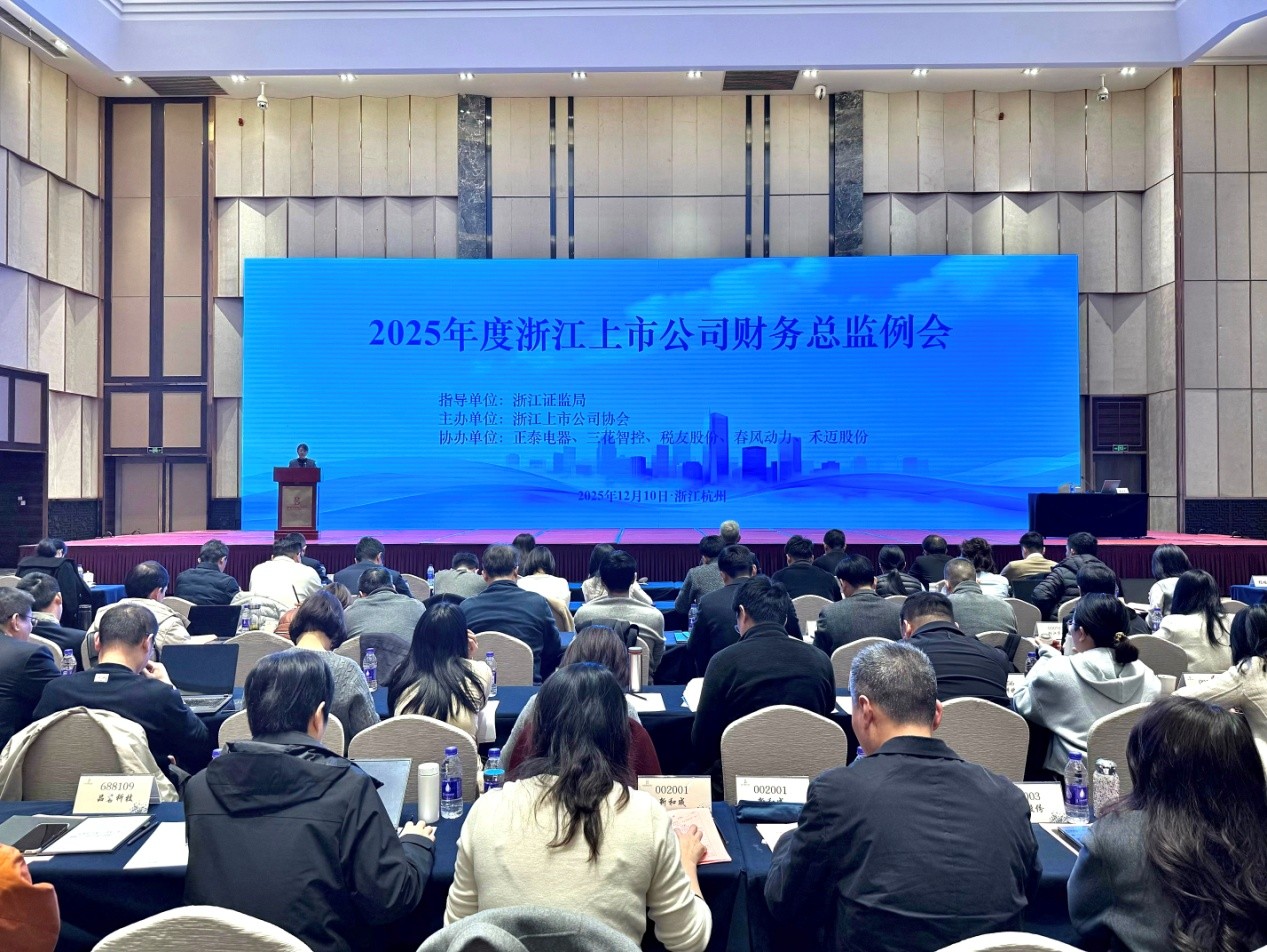
强监管防风险促发展 浙江辖区举办财务总监例会
Zheng Quan Ri Bao Wang· 2025-12-15 14:08
Core Viewpoint - The Zhejiang Securities Regulatory Bureau held a meeting to discuss the financial management of listed companies in the region, focusing on the implementation of the spirit of the 20th National Congress and the current state of the capital market [1][3]. Group 1: Regulatory Focus and Market Conditions - The Zhejiang Securities Regulatory Bureau emphasized a strong regulatory approach, focusing on risk prevention and development promotion amid a complex economic environment [3]. - The bureau reported that listed companies in the region have shown a recovery in operational performance, with cash dividends reaching a record high in both amount and number [3]. Group 2: Responsibilities of Financial Executives - Financial executives are urged to enhance the quality of financial information, ensuring compliance and timely disclosure of accurate financial data [3]. - There is a call for improved internal and external communication, particularly in collaboration with independent directors and audit committees for performance forecasts and annual report preparation [3]. Group 3: Training and Development Initiatives - The meeting included expert discussions on annual report disclosure rules, common errors, and key focus areas to improve the quality of information disclosure [4]. - Various topics such as financial governance, digital finance, and industry-specific mergers and acquisitions were covered, with practical sharing and discussions from experts [4]. - The event aimed to strengthen the financial management capabilities of listed companies, enhancing their accounting foundations and overall financial quality to support high-quality development [4].


金融监管总局党委召开会议传达学习中央经济工作会议精神
Jin Rong Shi Bao· 2025-12-15 02:41
12月12日,金融监管总局党委召开会议,传达学习中央经济工作会议精神,结合全国金融系统工作 会议部署要求,研究贯彻落实措施。金融监管总局党委书记、局长李云泽主持会议。 会议认为,这次中央经济工作会议是在"十四五"即将圆满收官、"十五五"即将开启的历史节点上召 开的一次重要会议。习近平总书记的重要讲话,统揽全局、视野宏阔、思想深邃、内涵丰富,具有很强 的政治性、思想性、指导性,为做好明年和今后一个时期的经济工作指明了方向、提供了根本遵循。李 强总理就贯彻落实习近平总书记重要讲话精神、做好明年经济工作提出明确要求。 会议要求,金融监管总局系统要以习近平新时代中国特色社会主义思想为指导,全面贯彻党的二十 大和二十届历次全会精神,认真落实中央经济工作会议决策部署,深刻领悟"两个确立"的决定性意义, 坚决做到"两个维护",坚持稳中求进工作总基调,树立和践行正确政绩观,因地制宜、分类施策,统筹 推进防风险、强监管、促高质量发展各项工作,全力支持完成2026年经济社会发展目标任务,为"十五 五"开好局、起好步提供有力金融支撑。 一是有力有序防范化解重点领域风险。坚定履行风险防控首位主责,着力化解存量风险,坚决遏制 增量风险 ...
房地产开发与服务25年第50周:年底两次会议定调,着力稳定房地产市场
GF SECURITIES· 2025-12-14 13:49
Core Insights - The report emphasizes the need to stabilize the real estate market, with the central government updating its stance to "focus on stabilizing the real estate market" during the recent economic work meeting, marking a shift from previous passive responses to the industry's downturn [5][16][19] - The report indicates a significant decline in transaction volumes, with new home sales in 50 cities down by 10.1% month-on-month and 33% year-on-year, while second-hand home sales also saw a decline of 1.2% month-on-month and 31.7% year-on-year [5][11][20] - The new housing supply has decreased, with a 7.4% drop in new housing area launched, reflecting weak market demand and a declining trend in market prices [5][11][20] - Land supply has increased for five consecutive weeks, with a total land transfer revenue of 112.83 billion yuan, indicating a 28.1% rise in supply area but stable transaction volumes [5][11][20] - The report notes a significant drop in the performance of the real estate sector, with a 2.6% decline in the SW real estate index, underperforming the CSI 300 index by 2.5 percentage points [5][11][20] Policy Insights - The central government has reiterated its commitment to "risk prevention" as a core principle, with a focus on controlling inventory and optimizing supply, while local governments are continuing to implement existing policies related to housing funds and purchase subsidies [5][20] - The report highlights various local policy initiatives aimed at stabilizing the market, including subsidies for first-time homebuyers and measures to support the purchase of new homes [20][21] Market Performance - The report provides a detailed analysis of the performance of key companies in the real estate sector, with several companies rated as "Buy" based on their financial metrics and market positioning [6] - The report includes a valuation table for major real estate companies, indicating their latest stock prices, reasonable values, and key financial ratios such as EPS and PE [6] C-REITs Insights - The C-REITs sector has shown a slight decline, with the comprehensive yield index down by 0.12%, while the market remains stable with an average turnover rate of 0.37% [5][11][20] - The report notes that certain segments within the C-REITs market, such as data centers and rental housing, have seen positive performance, indicating potential investment opportunities [5][11][20]
国家金融监督管理总局党委召开会议,传达学习中央经济工作会议精神 努力提升经济金融适配性 高效服务扩大有效需求
Zheng Quan Shi Bao· 2025-12-12 17:57
Group 1 - The meeting emphasized the need to balance risk prevention, strong regulation, and promoting high-quality development to support the achievement of economic and social development goals by 2026 [1] - Key areas of focus include effectively preventing and resolving risks in critical sectors, particularly by addressing existing risks and preventing new ones, while ensuring no major financial failures occur [1] - The meeting highlighted the importance of stabilizing the real estate market and enhancing the role of urban real estate financing coordination mechanisms to support a new development model in real estate [1] Group 2 - Financial institutions are encouraged to increase support for major national strategies, key sectors, and vulnerable areas to enhance economic and financial adaptability [2] - The meeting called for the continuous development of innovative financial services, particularly in technology finance, and the expansion of pilot programs to improve efficiency [2] - There is a strong emphasis on political construction and the need to strengthen the regulatory team's integrity, professionalism, and combat readiness [2]
金融监管总局部署明年工作重点:防风险、强监管、促高质量发展
2 1 Shi Ji Jing Ji Bao Dao· 2025-12-12 15:03
12月12日,国家金融监督管理总局党委召开专题会议,传达学习中央经济工作会议精神,结合全国金融系统工作 会议部署,研究贯彻落实具体措施。金融监管总局党委书记、局长李云泽主持会议。 2025年中央经济工作会议于2025年12月10日至11日在北京举行,会议总结了2025年经济工作,分析了当前经济形 势,并对2026年经济工作进行了部署。 其中对金融工作作出明确指引,提出要引导金融机构加力支持扩大内需、科技创新、中小微企业等重点领域,继 续发挥新型政策性金融工具作用,创新科技金融服务,并深入推进中小金融机构减量提质。 一是有力有序防范化解重点领域风险。坚定履行风险防控首位主责,着力化解存量风险,坚决遏制增量风险,严 守不"爆雷"底线。巩固拓展改革化险成果,深入推进中小金融机构减量提质。支持稳定房地产市场,进一步发挥 城市房地产融资协调机制作用,助力构建房地产发展新模式。指导银行保险机构按照市场化法治化原则,积极化 解地方政府融资平台金融债务风险。 二是着力提升强监管严监管质效。加快健全金融法治,精准规范高效执法,不断提高监管能力。引导银行保险机 构树牢正确的经营观、业绩观、风险观,降本增效、苦练内功,努力实现差异 ...
何立峰在全国金融系统工作会议上强调 深入学习贯彻中央经济工作会议精神 有力有序有效做好2026年金融重点工作|政策与监管
清华金融评论· 2025-12-12 10:20
新华社北京1 2月1 2日电 全国金融系统工作会议12月1 2日在京召开。中 共中央政治局委员、中央金融委员会办公室主任何立峰出席会议并讲话。 他强调,金融系统要深入学习贯彻中央经济工作会议精神,准确把握经济 工作面临的形势和主要目标任务,坚定做好金融工作的信心和决心,坚持 防风险、强监管、促高质量发展工作主线,有力有序有效做好20 26年金 融重点工作。 全国金融系统工作会议12月12日在京召开。中共中央政治局委员、中央金融委员会办公室主任何立峰出席会议并讲话。他强调,金融系统要深入学习贯彻 中央经济工作会议精神,准确把握经济工作面临的形势和主要目标任务,坚定做好金融工作的信心和决心,坚持防风险、强监管、促高质量发展工作主 线,有力有序有效做好2026年金融重点工作。 要继续着力做好防范化解地方中小金融机构风险、房地产企业涉金融风险、地方政府融资平台金融债务风险工作,严控增量、妥处存量、严防"爆雷",严 厉打击非法金融活动。 要进一步巩固和强化金融监管,完善重点领域监管制度体系并严格落实,持续强化金融机构合规意识和风险意识,不断提升监管能力,严肃开展金融风险 追责问责。 要全力以赴推动高质量发展,继续实施好 ...

田轩解读2025中央经济工作会议:真抓实干“十五五”
Xin Lang Cai Jing· 2025-12-12 02:43
Core Viewpoint - The Central Economic Work Conference has established a clear policy blueprint for the beginning of the 14th Five-Year Plan, emphasizing a systematic and practical approach to economic policy, focusing on targeted and effective measures to address existing challenges and stimulate economic growth [1][17][18]. Group 1: Economic Policy Focus - The conference highlighted the need for a shift from broad policy coverage to targeted and practical measures, integrating existing and new policies to enhance effectiveness [1][18]. - It emphasized the importance of addressing long-standing issues while recognizing new challenges, aiming to stabilize expectations and release internal economic momentum [2][20]. Group 2: Key Economic Strategies - The conference identified five essential strategies for economic governance: maximizing economic potential, balancing policy support with reform innovation, ensuring effective regulation, combining investments in physical and human capital, and strengthening internal capabilities to face external challenges [3][21]. - It focused on three main areas: expanding domestic demand, fostering innovation and reform, and managing risks in key sectors such as real estate and local government debt [4][22]. Group 3: Policy Implementation - The conference called for a combination of proactive fiscal policies and moderately loose monetary policies, ensuring policy continuity while optimizing implementation methods [6][23]. - It stressed the importance of coherent policy evaluation and management mechanisms to enhance market confidence and ensure effective execution [6][23]. Group 4: Domestic Demand and Investment - The conference proposed dual strategies to boost domestic demand through consumption and investment, including specific actions to increase central budget investments and stimulate private investment [7][24]. - It emphasized the need for a policy framework that supports consumer spending and investment in infrastructure, education, and healthcare to solidify the foundation for domestic demand growth [8][26]. Group 5: Innovation and Reform - The conference outlined plans to establish major international technology innovation centers and enhance intellectual property protection to drive innovation [9][27]. - It called for comprehensive reforms in various sectors, including the establishment of a unified national market and the promotion of private sector rights [10][28]. Group 6: Social Welfare and Risk Management - The conference highlighted the importance of social welfare measures, focusing on employment stability and improving living standards for vulnerable groups [11][29]. - It proposed targeted risk management strategies for the real estate market and local government debt, emphasizing a structured approach to prevent systemic risks [12][30].