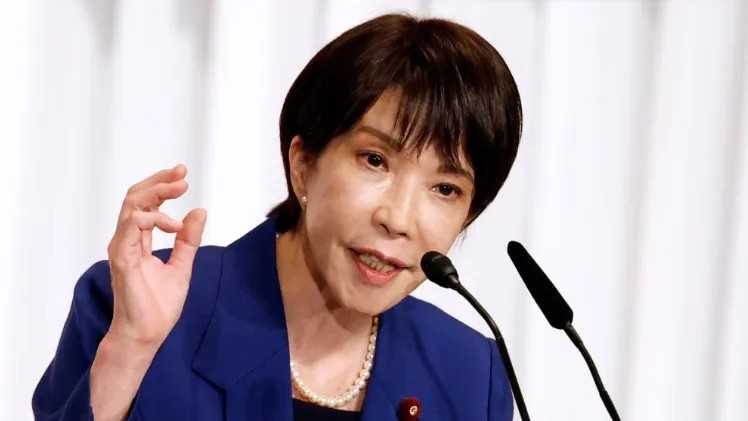
高市交易

Search documents
高市早苗“涉险过关”成日本首位女首相 “早苗经济学”能否奏效
2 1 Shi Ji Jing Ji Bao Dao· 2025-10-21 14:29
Core Points - Japan's first female Prime Minister, Sanae Takaichi, has been elected as the 104th Prime Minister after overcoming significant political challenges [1][2] - Takaichi's election has led to a surge in the Nikkei 225 index, reaching historical highs, while the yen continues to depreciate against the dollar [1][7] - The coalition between the Liberal Democratic Party (LDP) and the Japan Innovation Party is seen as a strategic move to ensure governance and policy implementation amid a minority government situation [3][5] Group 1: Political Landscape - Takaichi's election was marked by a tumultuous path, including the collapse of the ruling coalition and opposition from rival parties [1][2] - The LDP's alliance with the Japan Innovation Party is crucial for maintaining a majority in the Diet, as the LDP lost stable support from its traditional ally, Komeito [3][5] - The coalition's agreement is not fully settled, indicating potential uncertainties in governance and policy direction [5] Group 2: Economic Policies - Takaichi aims to continue and strengthen "Abenomics," focusing on aggressive fiscal and monetary policies, which she refers to as "Sanae Economics" [8][10] - The market has reacted positively to Takaichi's proposed policies, anticipating significant fiscal stimulus and investment in strategic sectors like semiconductors and AI [8][11] - However, there are concerns about the long-term sustainability of these policies, including rising national debt and potential inflationary pressures [9][10][11] Group 3: Market Reactions - The "Takaichi trade" phenomenon has emerged, characterized by a bullish stock market response to her election, with the Nikkei 225 index hitting record highs [7][8] - The yen's depreciation against the dollar reflects market expectations of increased monetary easing and fiscal expansion under Takaichi's leadership [7][8] - Analysts caution that the current market optimism may be short-lived if Takaichi faces challenges in implementing her economic agenda [11]
日本首位女首相,将面临一系列严峻考验
21世纪经济报道· 2025-10-21 13:52
Core Viewpoint - The election of Sanna Takichi as Japan's first female Prime Minister marks a significant political shift, with her expansionary fiscal policies expected to impact the economy and markets positively in the short term, but raising concerns about long-term risks such as debt and inflation [1][12][13]. Political Landscape - Sanna Takichi was elected as Japan's 104th Prime Minister on October 21, 2023, after overcoming challenges including a fractured ruling coalition and opposition from rival parties [1][4]. - The alliance between the Liberal Democratic Party (LDP) and the Japan Innovation Party was formed to secure political power and facilitate policy advancement in the Diet, following the exit of the Komeito party from the coalition [6][8]. - The new coalition faces uncertainties, particularly regarding political funding reforms and the potential for internal conflicts that could destabilize the government [8][9]. Economic Policies - Takichi's economic agenda, termed "Sanna Economics," aims to continue and strengthen the "Abenomics" approach, focusing on aggressive monetary easing and fiscal stimulus, particularly in strategic sectors like semiconductors and AI [12][13]. - The market reacted positively to her election, with the Nikkei 225 index reaching historical highs, driven by expectations of increased government spending and economic growth [11][12]. - However, experts warn that while short-term growth may be stimulated, long-term risks include heightened national debt and inflationary pressures, which could undermine economic stability [12][13]. Market Reactions - Following Takichi's election, the Japanese stock market experienced significant gains, reflecting investor optimism about her proposed policies, while the yen continued to depreciate against the dollar [11][12]. - The phenomenon known as "Takichi trading" indicates a speculative market response to anticipated policy changes that could enhance corporate profitability and economic performance [11][12]. Future Challenges - Takichi's administration will likely face challenges in implementing policies due to a minority government status, which may hinder the passage of key legislation and budgets [9][10]. - The potential for political instability remains high, with the risk of coalition breakdowns and the possibility of early elections if support wanes [9][10].


高市早苗“涉险过关”成日本首位女首相,“早苗经济学”能否奏效
2 1 Shi Ji Jing Ji Bao Dao· 2025-10-21 12:41
Core Points - Japan has elected its first female Prime Minister, Sanae Takaichi, who won the election on October 21, becoming the 104th Prime Minister of Japan [1][2] - Takaichi's election was marked by challenges, including a fractured ruling coalition and opposition from rival parties, but she secured support from the Japan Innovation Party [1][2] - The election results have led to a significant market reaction, with the Nikkei 225 index reaching historical highs, while the yen continues to depreciate against the dollar [1][6] Political Landscape - Takaichi's political stance is characterized by a strong conservative approach, closely aligned with former Prime Minister Shinzo Abe's policies, particularly in economic and security matters [2][7] - The coalition between the Liberal Democratic Party (LDP) and the Japan Innovation Party is seen as a strategic move to maintain political power and facilitate policy implementation in a context of reduced parliamentary majority [3][4] - The partnership is not without its challenges, as there are unresolved issues regarding political funding reforms, which could lead to tensions between the coalition partners [4][5] Economic Policies - Takaichi aims to continue and enhance "Abenomics," focusing on aggressive monetary easing and fiscal expansion, which she refers to as "Sanae Economics" [7][8] - The market has reacted positively to her proposed policies, anticipating increased government spending in key sectors like semiconductors, AI, and defense, which could stimulate economic growth [7][8] - However, there are concerns about the long-term sustainability of these policies, particularly regarding Japan's rising national debt and potential inflationary pressures [8][9] Market Reactions - The stock market has shown optimism, with the Nikkei 225 index hitting record highs, driven by expectations of Takaichi's expansionary fiscal policies [6][7] - The yen has depreciated against the dollar, reflecting market sentiment regarding the anticipated economic policies and their implications for inflation and currency stability [6][9] - Analysts caution that the current market enthusiasm may be short-lived if Takaichi faces significant obstacles in implementing her agenda due to her minority government status [9]
科技主线回归!全球市场“万物普涨”,亚太股市嗨了
Sou Hu Cai Jing· 2025-10-21 07:05
Core Viewpoint - The global financial markets are experiencing a broad rally, with a resurgence of the "everything is rising" trend, driven by easing trade tensions and strong third-quarter earnings reports [1][2]. Group 1: Market Performance - U.S. stocks are once again challenging historical highs, with a notable focus on technology stocks, particularly Apple [3]. - The MSCI Asia-Pacific index (excluding Japan) has reached a new high not seen in over four and a half years, with Japan and South Korea's markets also hitting record levels [4]. - The Nikkei 225 index approached the 50,000-point mark, while the Korean Composite Stock Price Index surged over 2%, marking its sixth consecutive day of new highs [4]. - Hong Kong and A-shares have seen significant rebounds, with the Shanghai Composite Index recovering above 3,900 points and trading volumes exceeding 1 trillion yuan for 98 consecutive days [4]. Group 2: Political Developments - The recent election of Fumio Kishida as Japan's Prime Minister has reduced political uncertainty, contributing to market optimism [6][8]. - The market's expectations have shifted from merely anticipating inflationary policies to focusing on political stability and economic reforms under the new government [10]. Group 3: Trade Relations - Positive sentiment in the markets is also bolstered by ongoing trade negotiations between the U.S. and South Korea, with expectations of a trade memorandum being signed during President Trump's upcoming visit [12][14]. - Trump's recent comments about a potential fair trade agreement with China have further enhanced market confidence regarding U.S.-China relations [17][18]. Group 4: Economic Outlook - UBS has upgraded the global stock market rating to "attractive," raising the global earnings growth forecast for 2025 from 6.5% to 8% [27]. - The firm continues to favor the technology sector as its "global preferred industry," particularly highlighting Chinese tech stocks as highly attractive [27][28].
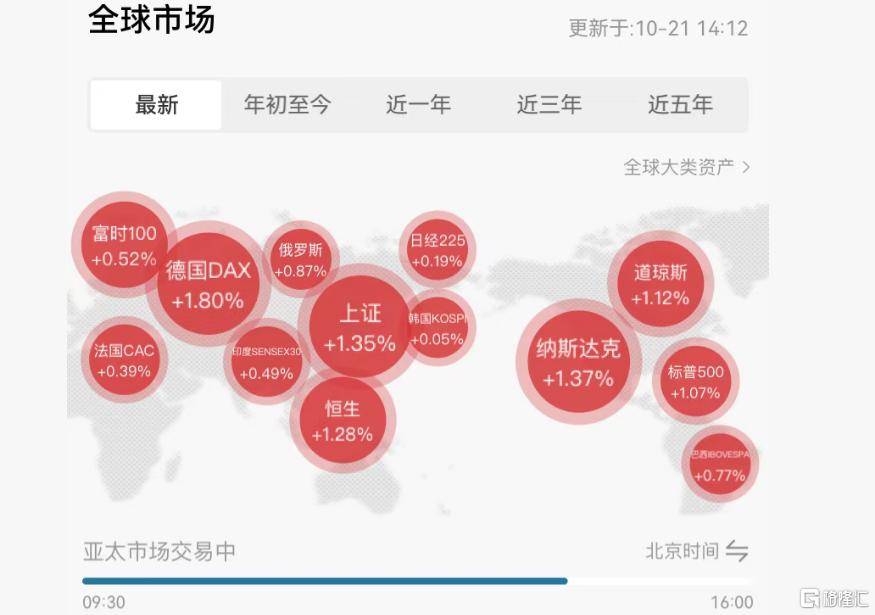
日股再创新高,野村:日股的关键在于高市早苗能撑多久
美股IPO· 2025-10-21 03:37
Core Viewpoint - The Japanese stock market is experiencing a strong upward trend, driven by expectations of stable government and economic reforms under the leadership of new Prime Minister Kishi Sanae, rather than solely relying on inflationary policies [1][5][6]. Group 1: Market Performance - On October 21, the Japanese stock market opened strong, rising by 1% to reach 49,675.43 points, setting a new historical high [2]. - The Tokyo Stock Exchange index also followed suit, approaching its historical peak [2]. Group 2: Market Dynamics - The driving force behind the market's momentum is the strong expectation that Kishi Sanae's government will maintain an expansionary fiscal policy [5]. - The concept of "Kishi trading" is evolving from a focus on inflationary measures and weak yen to a greater emphasis on political stability and structural economic reforms [6]. Group 3: Political Support and Market Stability - Political support rates are critical for the sustainability of the stock market's upward trend. A recent poll indicated a support rate of 44% for Kishi Sanae's cabinet, significantly higher than previous administrations, while the Liberal Democratic Party (LDP) support stands at only 20% [7]. - Analysts suggest that a weak government may rely more on inflationary measures, which could undermine the foundation of "Kishi trading" [7]. Group 4: Cautious Investor Sentiment - Despite the market's enthusiasm, some investment managers express caution regarding the new coalition government's stability and its ability to implement expansive policies [8]. - Concerns have been raised about the political and economic limitations that may hinder Kishi's ability to pursue a large-scale expansion agenda [8].

高市早苗基本锁定胜局,“日元弱、日股强”交易卷土重来
2 1 Shi Ji Jing Ji Bao Dao· 2025-10-20 13:42
Group 1 - The core viewpoint of the articles is that the market is reacting positively to the likelihood of Kishi Sanae becoming Japan's Prime Minister, leading to a "weak yen, strong stock market" phenomenon [1][2] - The Nikkei 225 index has risen by 3.37% to a record high of 49,185.5 points, with a year-to-date increase of 23.29% [1][2] - The weakening of the yen against the dollar, reaching 150.69 yen per dollar, is attributed to expectations of monetary easing and reduced interest rate hike prospects [2][3] Group 2 - Analysts suggest that Kishi's policies are expected to favor fiscal expansion and industrial development, particularly in sectors like semiconductors and local infrastructure, which could boost corporate earnings and stock market performance [3][4] - The anticipated fiscal stimulus from Kishi's cabinet may attract speculative funds, potentially leading to further increases in the stock market and additional depreciation of the yen [4] - The yen is projected to trade within the 150-155 range against the dollar in the short term, with potential for appreciation if the Bank of Japan raises interest rates or if the Federal Reserve accelerates its rate cuts [4]
关键帮手出现,日本首位女性首相,稳了?日本股市飙升,再创新高
Mei Ri Jing Ji Xin Wen· 2025-10-20 10:54
Group 1 - The core point of the article is the substantial agreement reached between Japan's ruling Liberal Democratic Party (LDP) led by Sanna Takichi and the Japan Innovation Party represented by Hirofumi Yoshimura regarding a coalition government, with a formal signing of the agreement expected on October 20, 2025 [1][3]. - The LDP holds 196 seats in the House of Representatives out of 465, while the Japan Innovation Party has 35 seats. In the House of Councillors, the LDP has 100 out of 248 seats, and the Japan Innovation Party has 19 seats. This coalition will secure a majority in both houses of the National Diet, ensuring Takichi's victory even in a potential second round of voting [3][4]. - Sanna Takichi is poised to become Japan's 104th Prime Minister and the first female Prime Minister in Japanese history, having been elected as the LDP president on October 4, 2025 [4]. Group 2 - Takichi's economic policies are expected to focus on expanding fiscal stimulus and easing monetary policy, which may boost market confidence and drive up risk asset prices in the short term [4]. - Following the announcement of Takichi's leadership, the Nikkei 225 index rose by 1,603.35 points, a 3.37% increase, closing at 49,185.5 points, marking a new historical high. The Topix index also increased by 78.01 points, or 2.46%, closing at 3,248.45 points [4]. - Notable stock performances included Kioxia Holdings surging by 9.0%, SoftBank Group climbing by 8.5%, and Yaskawa Electric rising by 7.2% [4].

日股大跌,政坛地震威胁“高市交易”
Guo Ji Jin Rong Bao· 2025-10-14 09:18
Political Turmoil - The ruling coalition partner, Komeito, unexpectedly announced its withdrawal from the 26-year-long coalition with the Liberal Democratic Party (LDP) due to disagreements over political donation regulation reforms [2] - The Constitutional Democratic Party (CDP) is coordinating with the Democratic Party for the People and the Japan Innovation Party to propose a unified candidate for the prime minister election, with Yuichiro Tamaki emerging as a popular candidate [2][3] - If the opposition parties unite, they could surpass the LDP's current seat count in the House of Representatives, potentially leading to a new prime minister [3] Market Impact - The political uncertainty has led to a significant sell-off in the Japanese stock market, with the Nikkei 225 index dropping by 2.58% to 46,847.32 points [1] - The previous optimism surrounding "high market trading," which was fueled by expectations of Abenomics being revived under new leadership, is now facing severe challenges [4] - Analysts warn that political uncertainty is becoming a focal point for investors, leading to a reduction in risk assets and potential negative impacts on the yen and stock market [4]
日本政坛地震埋葬“高市交易”?
第一财经· 2025-10-13 15:39
Core Viewpoint - The recent political developments in Japan, particularly the dissolution of the ruling coalition between the Liberal Democratic Party (LDP) and Komeito, have created significant uncertainty in the market, impacting the "Kishida trade" that had previously driven stock prices up [2][3]. Group 1: Political Developments - The LDP, led by new president Sanae Takaichi, saw a surge in stock prices, with the Nikkei index reaching historical highs above 48,000 points, but this was abruptly challenged by the announcement of the coalition's dissolution [2]. - The formal dissolution of the "self-Komeito alliance" on the 12th has obscured Takaichi's prospects of becoming Japan's first female Prime Minister [3]. - The current composition of the Japanese Diet shows the LDP holding 196 seats, Komeito with 24, and the largest opposition party, the Constitutional Democratic Party (CDP), with 148 seats, indicating a shift in political dynamics [6]. Group 2: Market Reactions - Following the dissolution of the coalition, the Japanese yen rebounded significantly, and Nikkei futures dropped by 5%, reflecting market volatility and uncertainty [9]. - Analysts suggest that Takaichi's previous hardline economic stance has softened, which may have contributed to the market's initial positive reaction, but the current political instability could reverse these gains [9]. - Concerns about the potential impact of political uncertainty on Japan's economic stimulus measures and budget proposals have been raised, with warnings that failure to secure a new Prime Minister could delay critical economic policies [10].
日本政坛地震埋葬“高市交易”?
Di Yi Cai Jing· 2025-10-13 06:14
Core Viewpoint - Political uncertainty has become a focal point for the market, particularly following the dissolution of the ruling coalition in Japan, which has led to volatility in the stock market and currency exchange rates [1][8]. Group 1: Market Reactions - Following the rise of the Japanese stock market, which reached historical highs above 47,000 and 48,000 points with a peak increase of 5%, the situation changed dramatically after the announcement of the dissolution of the ruling coalition [2][3]. - The Nikkei index futures experienced a significant drop of 5% on the day of the coalition's dissolution, indicating a sharp market reaction to the political developments [7]. Group 2: Political Landscape - The formal dissolution of the "Self-Public Coalition" has created uncertainty regarding the prospects of Sanna Takachi becoming Japan's first female Prime Minister, as the election process involves a two-round voting system in the National Diet [3][5]. - The current seat distribution in the House of Representatives shows the ruling Liberal Democratic Party (LDP) holding 196 seats, while the now-independent Komeito Party has 24 seats, and the largest opposition party, the Constitutional Democratic Party, has 148 seats [5]. Group 3: Implications for Economic Policy - Analysts suggest that if Takachi fails to secure the Prime Minister position, it could delay the submission of the supplementary budget to the National Diet, significantly impacting economic stimulus policies planned for the fourth quarter [8]. - The market's perception of Takachi's economic policies has shifted, with concerns about extreme fiscal expansion being deemed overstated, as her stance has moved towards a more moderate and conservative approach [7].