
AI存储

Search documents
雷克沙牵手阿根廷国家队引爆CES 江波龙幕后驱动中国存储品牌全球跃迁
Xin Lang Cai Jing· 2026-01-06 06:18
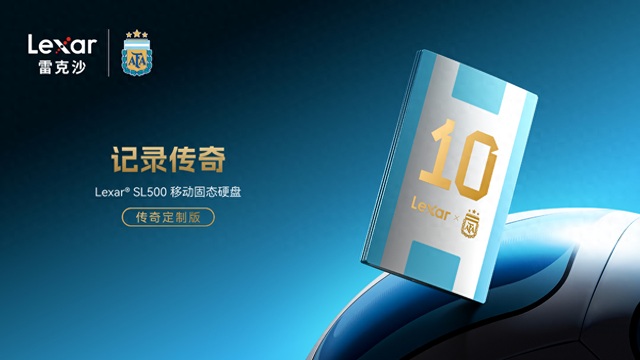
Group 1 - Lexar announced an official global partnership with the Argentina national football team at CES 2026, marking it as the first official global partner for the team in 2026 [1] - The partnership will feature co-branded products, including the Air portable SSD and the SL500 SSD, which combine practical performance with commemorative value [1] - The Argentina national football team, a three-time World Cup champion, has a rich history and emotional connection with millions of fans, enhancing the partnership's global appeal [3] Group 2 - Lexar, founded in 1996 in Silicon Valley, has a history of innovation in the storage industry, including setting the first CF card read speed standard and launching the first 1TB microSD Express card [5] - At CES, Lexar showcased several flagship storage products, including the world's first 2TB UHS-I microSD card with a read speed of 255MB/s, and introduced AI-Grade storage products [6] - Lexar's parent company, Jiangbolong, has expanded Lexar's sales network globally since acquiring it in 2017, with revenue growth from 864 million yuan in 2019 to an expected 3.525 billion yuan in 2024, reflecting a compound annual growth rate of 32.48% [7]

CES 2026:雷克沙签约阿根廷国家队,推出联名存储产品
Huan Qiu Wang· 2026-01-06 03:42
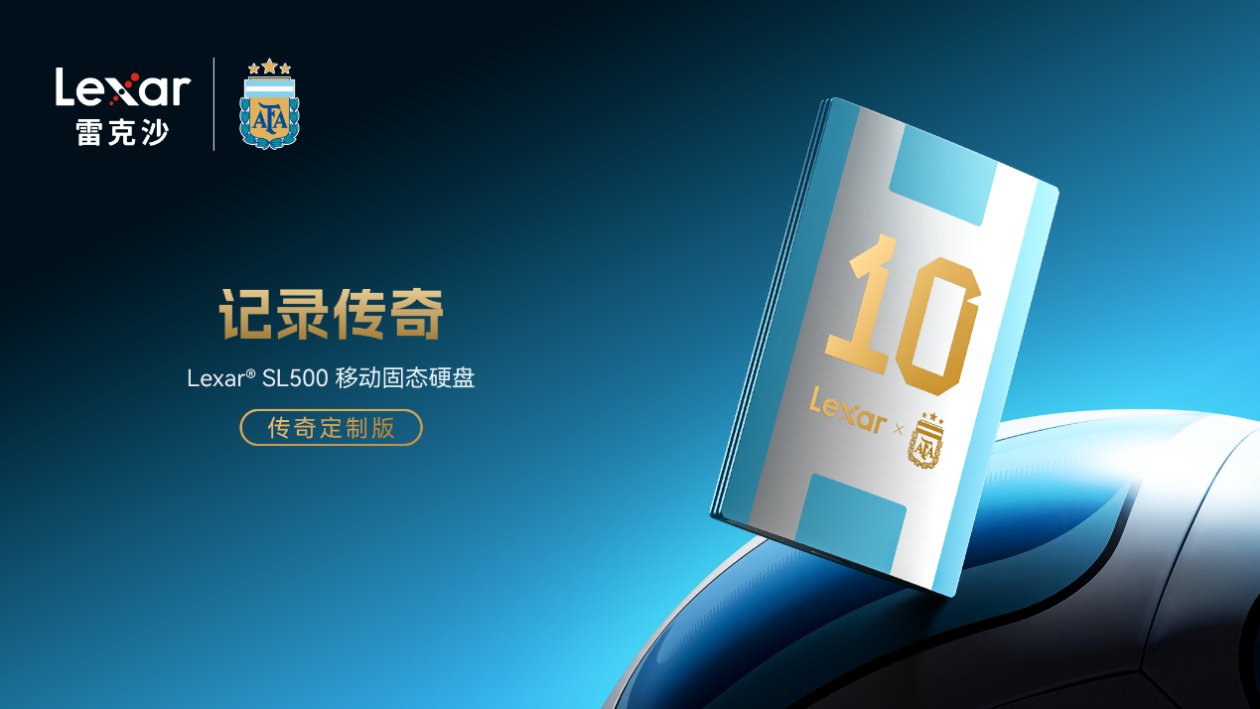
其中, 雷克沙 SL500 移动固态硬盘阿根廷联名版 尤为吸睛。这款产品不仅拥有超薄的一体化金属机身,更在设计中巧妙植入了阿根廷队徽与冠军元素,兼具 极高的实用性与收藏价值 。对于计划前往2026世界杯现场观赛,或是热衷于收藏比赛珍贵影像的球迷来说,这不仅是一个存储工具,更是一枚随身携带 的"球迷勋章"。 此外,主打便携的 雷克沙 Air 小轻块移动固态硬盘 也同步推出了传奇定制版,轻巧的体积适配各种出行场景,无论是拷贝赛事集锦还是备份旅途照片,都能 轻松应对 。 【环球网科技综合报道】美国当地时间1月5日,在距离美加墨世界杯日益临近的关键节点,国际高端消费类存储品牌雷克沙(Lexar)于CES 2026展会现场 正式宣布,与阿根廷国家足球队达成官方全球合作伙伴关系 。 对于此次合作,阿根廷足球协会首席营销官Leandro Petersen评价:"阿根廷足协与雷克沙共同秉持着对领导力、专业性和全球卓越品质的追求,雷克沙三十 年来在高可靠性存储领域的深厚积淀,使其成为支持全球创作者、专业人士和球迷记录与庆祝足球激情的理想伙伴。" 官方表示,对于球迷而言,这次合作最令人期待的莫过于能够将"主队元素"融入日常生活。 ...
新股消息 | 全球独立存储巨头宏芯宇冲刺港交所 深挖AI存储万亿蓝海
智通财经网· 2026-01-02 09:48
Core Viewpoint - Shenzhen Hongxin Yu Electronics Co., Ltd. (referred to as Hongxin Yu) has submitted a listing application to the Hong Kong Stock Exchange, with CITIC Securities International as its sole sponsor [1]. Company Overview - Since its establishment in December 2018, Hongxin Yu has focused on storage products, including embedded storage, solid-state drives (SSDs), DRAM, and mobile storage [3]. - The company has developed a full-stack platform covering four core technologies: main control chip design and development, firmware algorithm development, testing system development, and storage medium characteristic analysis, enabling it to offer customized storage products [3]. - According to Frost & Sullivan, based on 2024 revenue, Hongxin Yu ranks as the fifth largest independent memory manufacturer globally and the second largest in mainland China [3]. Product Offerings - Embedded storage is the core product, with a diverse product line including eMMC, UFS, ePOP, and uMCP, applicable in smartphones, tablets, and AI cameras [3]. - The SSD product line supports multiple generations of interface specifications, including SATA 3.0, PCIe 3.0, and PCIe 4.0, expanding from consumer-grade to automotive and enterprise applications [3]. - The DRAM product portfolio includes various categories such as DDR4, DDR5, LPDDR4X, and LPDDR5X low-power memory [3]. Market Trends - The semiconductor market is experiencing rapid growth driven by the surge in global data volume and the commercialization of AI technology [4]. - The global storage products market is projected to grow from USD 263.3 billion in 2025 to USD 407.1 billion by 2029, with a compound annual growth rate (CAGR) of 11.5% [4]. - The semiconductor industry is entering a strong upward cycle, with the storage chip market exhibiting "super cycle" characteristics, particularly for DRAM and embedded storage, with monthly price increases exceeding 30% for some DRAM products [4]. Competitive Position - Hongxin Yu is the largest independent memory manufacturer in the smartphone sector globally, maintaining strong partnerships with well-known companies in the consumer application space, including Xiaomi, Transsion, OPPO, Vivo, TCL, and Baidu [5]. - The company has begun supplying storage products for automotive applications and has successfully entered the Tier 1 supplier chain for automotive manufacturers [5]. - Hongxin Yu anticipates mass production of storage products for enterprise applications by 2026 [5]. Financial Performance - Hongxin Yu's revenue for 2023 and 2024 is projected to be approximately RMB 8.78 billion and RMB 8.72 billion, respectively [6]. - For the nine months ending September 30, 2025, the company reported a year-on-year revenue growth of 14.6%, reaching approximately RMB 7.74 billion [5]. - The company is expected to achieve profitability in 2024, with an estimated annual profit of approximately RMB 480 million, driven by significant revenue increases in product lines such as DRAM [5].
longsys江波龙,中国存储企业在AI存储领域的创新突破
Quan Jing Wang· 2025-12-30 05:28
Core Insights - The rapid development of AI technology is significantly transforming various industries, with storage technology being a fundamental component for AI applications [1] - Jiangbolong, a leading Chinese storage company, demonstrates exceptional innovation and market insight in the AI storage sector, providing robust support for the proliferation and application of AI technology [1] Group 1: End-Side AI Storage - End-side AI devices such as AI PCs, workstations, and AI robots are becoming market hotspots, necessitating higher storage requirements for fast data transmission, flexibility, and reliability [2] - Jiangbolong has over 20 years of experience in enterprise-level storage, successfully building a comprehensive storage matrix that covers all scenarios of AI training and inference [2] - The SOCAMM2 memory product, launched in September 2025, features a transmission speed of 8533 Mbps, low power consumption (one-third of standard DDR5 RDIMM), and compact size (14×90mm), enhancing capacity and bandwidth for AI model training and inference [2] Group 2: mSSD Innovation - Jiangbolong has introduced the integrated packaging mSSD, which serves as a new engine for end-side AI development, integrating multiple components into a single package [3] - The mSSD, as a core medium of the "AI Storage Core" category, offers high integration and flexible expansion, making it an ideal storage solution for end-side AI devices [3] - The company plans to continue its innovation-driven strategy, focusing on mSSD and other core mediums, while enhancing collaboration with industry partners to advance end-side AI storage technology [3]

AI抢光内存,手机被迫涨价
21世纪经济报道· 2025-12-29 12:37
Core Viewpoint - The article discusses the unexpected trend of rising smartphone prices, which contradicts Moore's Law that suggests prices should decrease as technology improves. This price increase is attributed to significant cost hikes in memory components, driven by supply shortages and increased demand from AI servers [1][2]. Group 1: Price Increases in Smartphones - Xiaomi's new model, the Xiaomi 17 Ultra, has a starting price of 6,999 yuan, which is an increase of 500 yuan from the previous model. The price hike is attributed to substantial increases in the costs of key components such as processors, cameras, and memory [2]. - Other major smartphone manufacturers like OPPO and vivo have also raised prices for their flagship models compared to previous generations, indicating a broader trend in the industry [2]. Group 2: Memory Supply Shortages - The supply of LPDDR4X memory has seen a shortage of approximately 15%-20% due to a shift in production lines, particularly affecting low-capacity products [4]. - The demand for LPDDR5X memory has surpassed 50% penetration in global smartphones, while LPDDR4X is primarily used in mid-range devices. The tightening supply of LPDDR4X is expected to drive prices up and accelerate the transition to LPDDR5X in the smartphone industry [4]. Group 3: Impact of AI on Memory Supply - AI servers are increasingly consuming memory production capacity that was previously allocated to smartphones and computers, leading to supply constraints in the non-server market [6][7]. - OpenAI's partnership with Samsung and SK Hynix for AI data centers is expected to significantly increase memory demand, with projections of up to 900,000 DRAM wafers needed monthly [7]. Group 4: Domestic Manufacturers' Opportunities - The shift of major manufacturers towards high-margin AI storage has created opportunities for domestic DRAM manufacturers, with the storage index rising over 70% this year [9][11]. - Domestic firms are positioned to fill the supply gap in standard DDR5/RDDR5, with expectations of a 15%-20% supply shortfall by 2026. They can leverage lower technical barriers and cost advantages to provide competitive solutions in the PC and server markets [11][12].



全球大公司要闻 | 英伟达否认200亿美元收购AI芯片初创Groq
Wind万得· 2025-12-24 22:50
Group 1 - Nvidia's robot business director, Jim Fan, stated that Tesla's FSD v14 has passed the "physical Turing test," which was acknowledged by Elon Musk, who believes Tesla AI is currently the strongest real-world AI [2] - Nvidia has not acquired AI chip startup Groq but has reached a non-exclusive licensing agreement to integrate Groq's products into future offerings, while Groq will continue to operate independently [2] - Tesla is under investigation by the NHTSA for defects in approximately 179,000 Model 3 vehicles due to mechanical door lock issues that could lead to accidents [2] Group 2 - UBTECH has signed a share transfer agreement to acquire 29.99% of Shenzhen-listed Fenglong Co. for 1.161 billion yuan, with plans to make a partial tender offer for an additional 13.02% stake [3] - Intel was reported to have tested Nvidia's use of its 18A process technology for chip manufacturing but subsequently halted the plan [3] Group 3 - Jiahen Home's controlling shareholder is planning a change in control, which may lead to a change in the actual controller, resulting in a temporary stock suspension [5] - Nanshan Aluminum has established a wholly-owned subsidiary in Hainan Free Trade Port to enhance its business layout in South China [5] - Springlight Technology received a 43.26 million yuan order for robot products, indicating market recognition of its offerings [5] - Enhua Pharmaceutical signed a $20 million exclusive commercial cooperation agreement to expand its market share in related drug fields [5] - Wankai New Materials' subsidiary signed a procurement contract worth 10 million yuan for humanoid robot components, marking a significant breakthrough in the application of new materials [5] Group 4 - Hansi Aitai listed on the Hong Kong Stock Exchange, raising 531 million HKD from the global offering, and received approval for clinical trials of its innovative drug HX111 [6] - SMIC announced a price increase of approximately 10% for its 8-inch BCD process platform, which is expected to enhance profitability [6] - Jiangxi Copper agreed to acquire SolGold Plc for slightly over $1 billion, aiming to expand its copper resource reserves [6] Group 5 - Apple CEO Tim Cook invested approximately $2.95 million in Nike stock and plans to focus on "post-Cook era" transformations by opening third-party app stores and payment systems in various countries [8] - Meta is appealing a regulatory requirement to open WhatsApp to competitor AI chatbots and has paused a third-party VR headset project to focus on its own Quest 4 [8] - Microsoft plans to transition to Rust language and AI technologies by 2030, gradually phasing out C/C++ code [8] - Amazon's cloud technology division released an AI strategy focused on enterprise solutions and intercepted over 1,800 North Korean IT job seekers to prevent money laundering [8] Group 6 - Samsung Electronics experienced a fire at its Hwaseong factory but reported no impact on production, while planning to launch a new wide-fold smartphone [11] - Toyota is recalling over 55,000 vehicles in the U.S. due to safety concerns and plans to sell U.S.-made models in Japan for the first time in 20 years [11] - LG Energy is selling its Ohio battery plant assets to Honda for $2.9 billion due to cooling demand [11] - SK Hynix and Samsung are raising HBM3E memory prices by nearly 20% and collaborating on AI SSD development [11] - YKK plans to acquire 80% of a Panasonic subsidiary for approximately 200 billion yen, aiming to gain control [11] Group 7 - Porsche is reducing its 4S stores in China from 150 to 80 by the end of 2026 and halting operations of 200 self-built charging stations [15] - Mercedes-Benz acquired a 3% stake in Qianli Technology to enhance its digital development in China [15] - Volkswagen is terminating its direct sales of electric vehicles in Europe and shifting to traditional dealership models [15] - BMW is advancing new product development, including a pure electric M3 and a new X5 model [15] - Nestlé's new CEO is restructuring its China team to revive growth and correct previous strategic missteps [15]





中金 • 联合研究 | AI存储新周期:NAND的攻城与HDD的守疆
中金点睛· 2025-12-21 23:36
Core Viewpoint - The report analyzes the recent doubling of NAND contract prices since Q1 2025, assessing the sustainability of this cycle through historical NAND cycles, supply-demand calculations under AI scenarios, and the impact on the HDD industry [2] Demand Side - The resonance between cloud and edge AI is driving a significant increase in SSD demand, with higher requirements for write speed, IOPS, capacity, and durability due to AI model training and inference [4] - Global NAND Flash shipments are expected to approach 2000EB by 2028, maintaining nearly 30% high growth over the next three years [4][19] Supply Side - Cautious capacity expansion is expected to support prolonged price increases, with a stable yet evolving oligopoly in the NAND market [4] - Major manufacturers are adopting a cautious approach to NAND capacity expansion, focusing on high-density and high-capacity technology transitions [21] - Supply tightness is anticipated to last at least until the end of 2026, with NAND prices likely to remain high [22][23] HDD Market - HDD remains a cost-effective choice for cold storage in cloud computing, with a projected market growth rate of approximately 15% over the next three years [5] - The cost advantage of HDDs is expected to diminish as NAND technology advances, with current price differences between HDDs and SSDs ranging from 4 to 6 times [5] NAND Cycle Review - The NAND market exhibits long cycles with significant price volatility, characterized by severe supply-demand mismatches and differentiated expansion strategies among manufacturers [8] - The current cycle is marked by a supply contraction driving price recovery, followed by structural demand growth driven by AI [14][23] AI Demand - AI is significantly boosting SSD demand, with specific requirements for high-speed writing, IOPS, and large capacity in various training and inference scenarios [15][16] - The anticipated growth in AI applications is expected to sustain high demand for SSDs over an extended period [16] Current Cycle Position - NAND prices are expected to remain elevated in 2026, with data centers and enterprise-level applications showing the highest price tolerance [22] - The demand from data centers is projected to be the largest source of future SSD demand, with long-term supply agreements already in place with major cloud service providers [22][23]
内存涨价背后:AI存储正在“吃掉”手机、PC
3 6 Ke· 2025-12-18 11:17
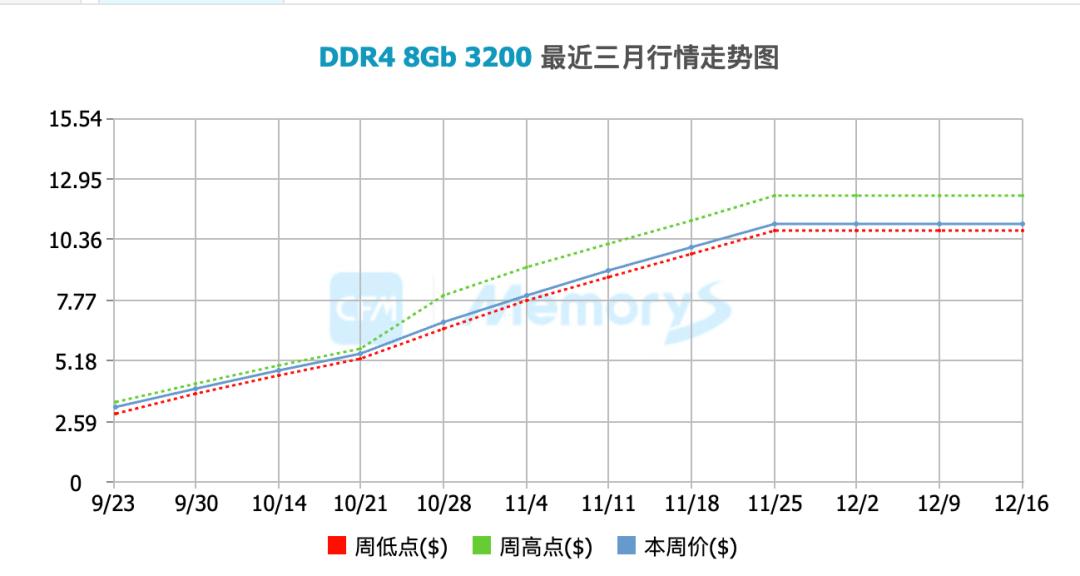
Group 1 - The core issue in the PC DIY market is the significant price increase of memory and storage components, leading to higher overall system costs and discouraging potential customers [1][5][10] - The price of DDR4 memory has surged dramatically, with an increase of approximately 280%, from an average of 70 to 350 per unit [5][8] - The rising costs have resulted in a higher entry barrier for building PCs, with the minimum cost for a basic setup increasing from over 2000 to 3000 [10] Group 2 - The demand for high-bandwidth memory (HBM) is driving a shift in production capacity among major storage manufacturers, as they respond to the needs of cloud service providers [2][16] - The current market is characterized as a "seller's market," with significant price increases across various hardware products, including PCs and smartphones [3][16] - Major manufacturers like SK Hynix and Micron are transitioning production lines to focus on HBM, indicating a strategic shift in response to market demands [21][22] Group 3 - The ongoing price increases are expected to continue, with predictions of DRAM shortages lasting until Q1 2027 and NAND shortages until Q3 2026 [25][26] - The transition to DDR5 memory is being accelerated, with plans to phase out DDR4 production by the end of 2025, further contributing to the price surge [22][23] - Consumer electronics companies are already feeling the impact, with some brands announcing price hikes for their products due to increased storage costs [29][31]

广发证券:推理驱动AI存储快速增长 建议关注存储产业链相关标的
智通财经网· 2025-12-16 08:13
Core Insights - The report from GF Securities highlights the significant growth potential in the AI storage sector driven by advancements in AI models and capital expenditures (CAPEX) [1] - AI-driven storage prices are on the rise, leading to improved gross margins for manufacturers, with DRAM and NAND architecture upgrades creating new equipment demand [1] - The storage foundry model is poised for transformative opportunities within the industry, with new interface chips like MRDIMM and VPD opening up additional market space [1] Group 1: AI and Storage Growth - Storage serves as the "tokens" for AI, with inference driving rapid growth in AI storage [2] - AI servers utilize storage types such as HBM, DRAM, and SSD, characterized by decreasing performance, increasing capacity, and lowering costs [2] - The demand for storage capacity is expected to surge to hundreds of exabytes (EB) due to the rapid growth in AI inference requirements [2] Group 2: Market Opportunities - The eSSD market for AI and storage servers is expanding due to the increasing demand for high bandwidth and large capacity driven by long-context inference and RAG databases [2] - MRDIMM is anticipated to enhance large model inference by providing deterministic gains and optimizing CPU-GPU memory orchestration [2] - The DDR5 SPD market is rapidly developing, driven by higher specifications and prices compared to the DDR4 generation, while SSD upgrades are expected to create growth opportunities for VPD [2] Group 3: CXL Technology Impact - CXL technology facilitates storage pooling, significantly enhancing computational efficiency and providing a total cost of ownership (TCO) advantage in KVCache-intensive inference [3] - Companies like NVIDIA and Alibaba Cloud are investing in CXL capabilities to improve inference throughput and performance [3] - The CXL protocol is increasingly penetrating the AI sector, driving demand for chips and positioning CXL interconnect technology as a key player in AI applications [3]

存储是Tokens的积分,产业链空间广阔
GF SECURITIES· 2025-12-14 05:49
Investment Rating - The industry investment rating is "Buy" with a previous rating of "Buy" as well [2]. Core Viewpoints - The storage sector is crucial for AI inference, driving rapid growth in storage demand, particularly for HBM, DRAM, and SSD, characterized by decreasing costs and increasing capacities [5][13]. - AI-driven storage demand is expected to surge, with projections indicating a need for hundreds of exabytes (EB) of storage capacity in the near future [5][24]. - The report emphasizes the broad space within the industry chain, highlighting opportunities in eSSD, MRDIMM, SPD, and VPD chips, as well as CXL storage pooling [5][79]. Summary by Sections 1. Storage as Tokens for AI Inference - AI servers utilize various storage types, including HBM, DRAM, and SSD, with a focus on high bandwidth and large capacity to support efficient data processing [13][17]. - The demand for SSD and HDD is projected to grow significantly, with estimates suggesting a requirement of 49 EB for ten Google-level inference applications by 2026 [24]. 2. AI-Driven Storage Demand Growth - eSSD is identified as a core demand area for AI and storage servers, with increasing needs for high bandwidth and large capacity due to long-context inference and RAG databases [25][26]. - The market for AI server eSSD is expected to expand, with theoretical maximum capacities of 59 EB, 89 EB, and 120 EB for 2024, 2025, and 2026 respectively [27][34]. 3. MRDIMM Applications - MRDIMM is anticipated to enhance performance in large model inference, providing significant bandwidth improvements and capacity expansions [38][39]. 4. SPD and VPD Chip Opportunities - The transition to DDR5 memory modules presents growth opportunities for SPD and VPD chips, driven by increased specifications and demand [45][46]. 5. CXL Storage Pooling - CXL technology facilitates storage pooling, enhancing computational efficiency and enabling better resource allocation for AI applications [53][54]. - The report notes significant TCO advantages in KV Cache performance when utilizing CXL in high-concurrency, long-context workloads [56][59]. 6. Investment Recommendations - The report suggests focusing on storage industry chain-related entities, as AI-driven storage prices are expected to rise, leading to improved profit margins for manufacturers [79].




