
国产化替代

Search documents
骏鼎达(301538) - 骏鼎达:投资者关系活动记录表(2025年9月10日)
2025-09-10 09:48
Group 1: Market Position and Competition - The company operates in a fragmented market with numerous competitors, including multinational corporations, domestic leaders, and small-scale producers [2][3] - The company has become one of the leading domestic enterprises in the polymer modified protective materials industry, with product technology and service capabilities comparable to foreign competitors [3][4] - The company's direct competitors are mainly multinational and domestic leading enterprises [3] Group 2: Product Performance and Pricing Strategy - The company's self-rolling protective sleeve has an impact resistance performance of 65J, classified as E-level, while foreign competitors have a performance of 50J [3] - The pricing strategy is determined through negotiations with downstream customers based on industry conditions, competition, and procurement scale [3] Group 3: Competitive Advantages and Barriers - Competitive advantages include technological and R&D capabilities, vertical integration, and a strong customer resource base [3][4] - Industry barriers consist of technological, qualification certification, scale, and talent barriers [3] Group 4: Raw Materials and Cost Structure - Main raw materials include PET, PA, PP, PE, and others, with material costs accounting for 65.20% of the main business costs in the first half of 2025 [3][4] - Raw material prices are influenced by fluctuations in upstream oil and copper prices [3] Group 5: Emerging Markets and Applications - The humanoid robot industry presents new application scenarios for the company's products, although current projects are still in testing and validation stages [4] - The company has established connections with well-known clients in the humanoid robot sector, but specific names cannot be disclosed due to confidentiality agreements [4] Group 6: International Expansion - The company has invested in Mexico with a total investment of $1 million, including an additional $600,000 this year [4] - Plans for further international expansion include potential investments in Morocco and Southeast Asia based on customer demand [4] Group 7: Revenue and Growth - The company's revenue from the automotive industry accounts for approximately 68%, with overall revenue growth of 31.67% year-on-year in the first half of 2025 [5] - Revenue contributions from engineering machinery and communications electronics are also growing, with respective year-on-year increases of 14% and 32% [5]
我国市域列车关键润滑材料 实现国产化替代
Jing Ji Wang· 2025-09-08 02:42
近日,中国石油润滑油公司攻关研制的牵引电机轴承润滑脂自主化方案正式获得行业认可。这一成 果标志着我国市域列车关键润滑材料成功实现国产化替代,打破了国外品牌在该领域的长期垄断,向国 家轨道交通核心部件自主可控迈出关键一步。 市域列车具有高速运行、启停频繁、工况温差大等特点,其牵引电机轴承作为核心传动部件,需要 在零下40摄氏度至150摄氏度的极端工况下,保持连续运转120万公里以上。这对润滑脂的剪切安定性、 氧化安定性、极压抗磨性提出了苛刻的技术要求。 在此之前,我国该类高端轴承脂长期100%依赖进口,不仅采购成本高、交付周期长,更因核心技 术与供应渠道受制于人,成为掣肘市域列车整车自主化率提升的"卡脖子"环节。为突破困境,2023年9 月,包括润滑油公司兰州研发中心在内的3家国内顶尖油脂科研机构组成联合攻关团队,历经18个月技 术攻坚,完成了从基础油分子结构设计、复合皂基改性到极限工况验证的全流程自主研发,成功研制出 具有完全知识产权的"高铁品质·市域专用"润滑脂产品。经检测,产品关键性能指标达到国际先进水 平,且具备批量稳定供应能力,彻底打破了高端轴承脂依赖进口的被动局面,也为后续市域列车全寿命 周期运维降 ...

全球光学巨头高端产能“中国化”:逆向操作实现营收翻番
Di Yi Cai Jing· 2025-09-06 08:41
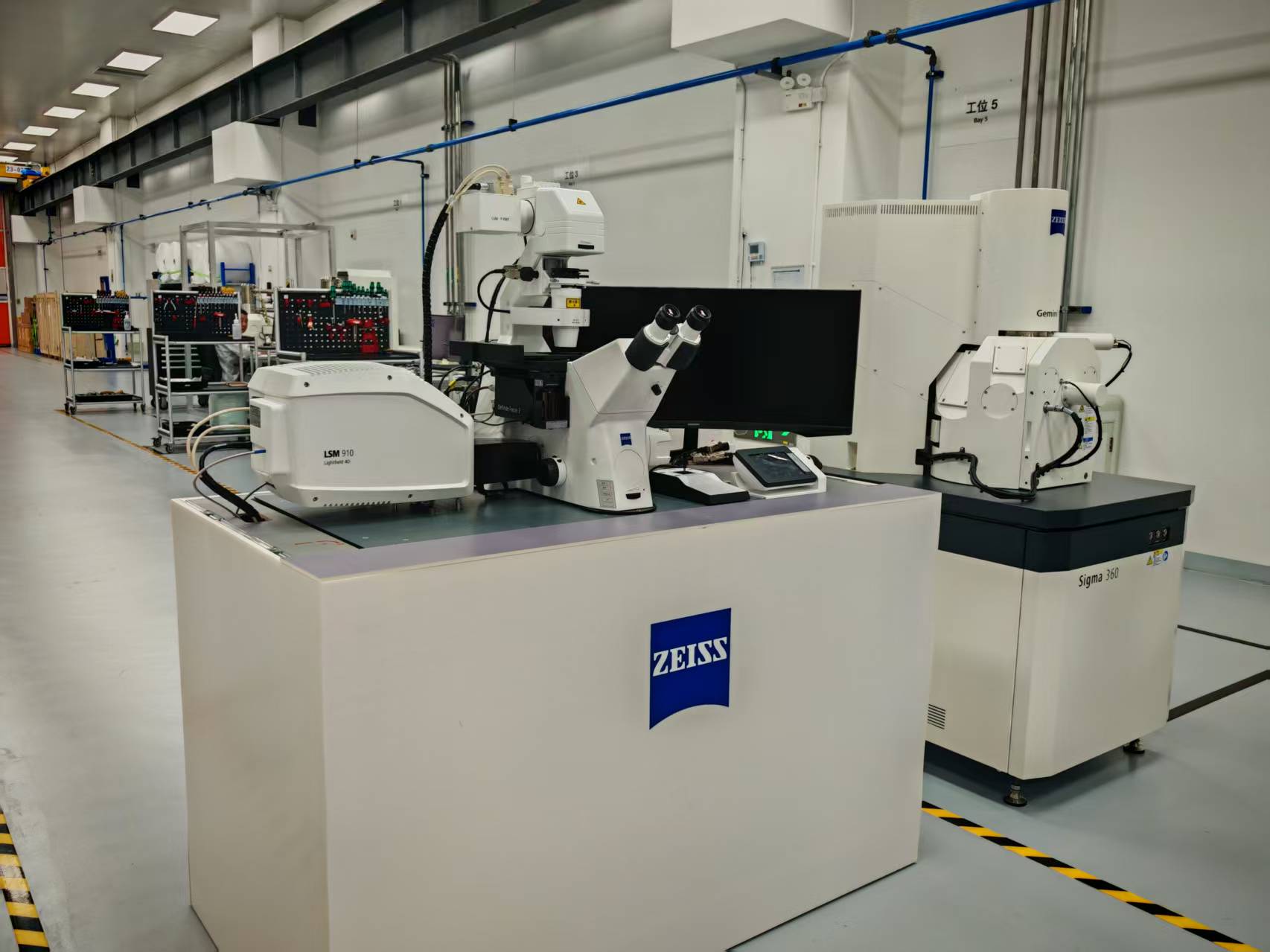
Core Insights - The article highlights the increasing trend of foreign companies, particularly Zeiss, deepening localization and R&D investments in China despite global economic uncertainties and geopolitical tensions [1][4][9] Group 1: Localization and Investment - Zeiss has established a manufacturing and R&D base in Suzhou, which has seen its revenue double to 760 million RMB within a year, becoming the largest microscope factory globally [2][4] - The Suzhou facility has successfully localized the production of three high-end microscope models, marking Zeiss as the first international manufacturer to achieve this in the laser confocal and field emission scanning electron microscope sectors [2][4] - The commitment to localization is evident as Zeiss chose to purchase land for factory construction rather than leasing, indicating a long-term strategy in China [4][5] Group 2: Market Dynamics and Competitive Landscape - China is recognized as Zeiss's largest market globally, with growth rates leading the world, which directly influences the company's global performance [4][5] - The local supply chain in China is robust, providing a competitive edge for high-end manufacturing, which Zeiss leverages to enhance its product offerings [5][6] - The competition from local suppliers is viewed positively, as it drives technological advancements across the industry [5][6] Group 3: Quality and Standards - The quality control standards in China are reportedly more stringent than in Germany, with local customers often preferring products manufactured in China for their reliability [8][6] - The localization of high-end production is seen as a continuous process, with key production steps being transferred to China to reduce costs and improve market familiarity [6][8] Group 4: Broader Foreign Investment Trends - Despite a decline in actual foreign direct investment (FDI) globally, many foreign companies, including Bosch, are committing to significant investments in China, with Bosch planning to invest over 3 billion RMB in R&D over the next six years [9][10] - Surveys indicate a strong willingness among German and American companies to continue investing in China, with many considering it a top investment destination [10]

下周解禁股名单出炉
Zheng Quan Shi Bao Wang· 2025-09-06 06:27
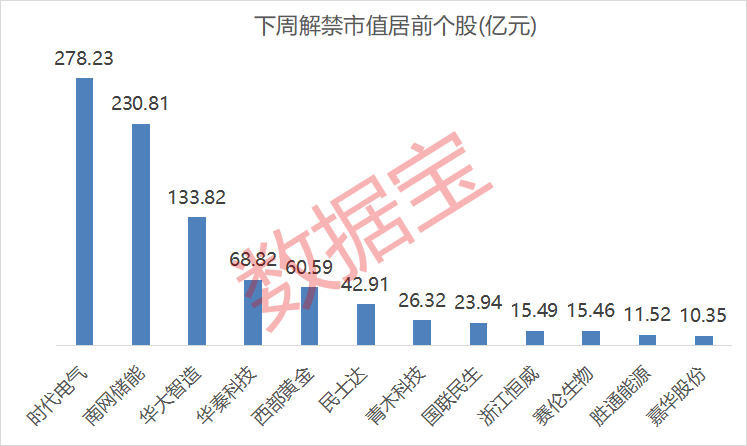
Summary of Key Points Core Viewpoint - The A-share market will see a significant unlock of restricted shares next week, with a total market value exceeding 96 billion yuan, which may impact stock prices of the affected companies [2]. Group 1: Unlock Scale and Impact - A total of 40 stocks will have their restricted shares unlocked from September 8 to 12, with a combined market value of 966.01 billion yuan [2]. - Among these, 12 stocks have an unlock market value exceeding 1 billion yuan, with notable companies like Times Electric, Southern Power Storage, and BGI Genomics having unlock values of 278.23 billion yuan, 230.81 billion yuan, and 133.82 billion yuan respectively [2][4]. Group 2: Unlock Proportions - Thirteen stocks have an unlock ratio exceeding 10%, indicating a potentially significant impact on their stock prices. Companies such as Minshida, Southern Power Storage, and Sailun Bio have unlock ratios above 50% [5]. - The highest unlock ratio is seen in Minshida at 66.23%, followed by Southern Power Storage at 65.30% and Sailun Bio at 59.00% [7]. Group 3: Company Performance - Times Electric's major shareholder, CRRC Zhuzhou Electric Locomotive Research Institute, will unlock approximately 590 million shares, accounting for 43.42% of its total share capital. The company reported a revenue of 12.214 billion yuan for the first half of 2025, a year-on-year increase of 17.95%, and a net profit of 1.672 billion yuan, up 12.93% [4]. - Minshida, listed on the Beijing Stock Exchange, achieved a revenue of 237 million yuan in the first half of 2025, reflecting a year-on-year growth of 27.91%, with a net profit of 63.03 million yuan, up 42.28% [8]. Group 4: Institutional Investment Returns - Institutions that participated in the private placements of stocks like Western Gold and Southern Power Storage are expected to see positive returns from the unlock, with Western Gold's return exceeding 180% and Southern Power Storage's over 70% [8].




研判2025!中国车规级SOC芯片行业产业链、发展现状、细分市场、企业布局及发展趋势分析:舱驾融合驶入快车道,多企业布局加速SOC芯片国产化替代[图]
Chan Ye Xin Xi Wang· 2025-09-06 00:50
Core Insights - The automotive-grade SoC (System on Chip) chips are essential for vehicle intelligence, covering smart cockpit and autonomous driving, and are becoming key replacements for traditional ECUs as automotive electronic architectures upgrade [1][2] - The smart cockpit market is expected to double globally from $33.16 billion in 2021 to $70.63 billion by 2024, with China experiencing a growth rate exceeding 31% [1][8] - The penetration rate of cockpit domain controllers in China is projected to reach 29.37% by 2024, highlighting the potential in lower-tier markets [1][8] - Autonomous driving is accelerating towards L3 level, with significant penetration expected by 2025, and L4 level projected to reach 4.4% by 2027 [1][9] Industry Overview - Automotive-grade SoC chips are integrated circuits designed for automotive electronic systems, combining processors, memory, interfaces, and sensors into a single chip to enable functionalities like autonomous driving and smart cockpit [2][3] - The industry is characterized by a clear upstream and downstream collaboration, with upstream relying on imported IP cores and semiconductor materials, while the midstream chip design is active with companies like Horizon Robotics and Black Sesame [6][7] Market Segmentation - The automotive-grade SoC chips are primarily divided into two categories: smart cockpit SoCs focusing on CPU/GPU performance and multimedia processing, and autonomous driving SoCs emphasizing AI computing power and functional safety [3][5] - The smart cockpit market is rapidly growing, with a projected compound annual growth rate (CAGR) of 28.66% from 2021 to 2024, and expected to reach $148.41 billion by 2030 [8] - The autonomous driving sector is transitioning from ADAS to higher-level autonomous driving, with L3 technology expected to be implemented in 2024 [9] Competitive Landscape - The smart cockpit chip market is currently dominated by foreign companies, with Qualcomm, AMD, and Renesas holding 85% of the market share by 2024, while domestic suppliers have increased their market share from less than 3% to over 10% [12][13] - The autonomous driving SoC market is primarily led by Nvidia, Tesla, and Mobileye, but domestic companies like Huawei and Horizon Robotics are gaining traction [13] Future Trends - The automotive-grade SoC industry is evolving towards high computing power, low power consumption, and increased localization, with a target of achieving over 70% localization by 2028 [14][15] - The demand for high-performance SoC chips is expected to grow significantly as autonomous driving capabilities penetrate lower-tier vehicle markets [16] - The integration of chip technology with algorithms and tools is expected to enhance the competitive edge of domestic manufacturers, fostering a collaborative ecosystem [15][16]





佛塑科技拟100%收购河北金力,切入锂电池隔膜领域
鑫椤锂电· 2025-09-05 07:46
Core Viewpoint - Foshan Fospower Technology Group Co., Ltd. is responding to the Shenzhen Stock Exchange's inquiry regarding its application for issuing shares to purchase assets and raise supporting funds, indicating a strategic move into the lithium battery separator sector [1]. Group 1: Acquisition Details - Fospower Technology plans to acquire 100% of Hebei Jinli New Energy Technology Co., Ltd., entering the lithium battery separator market [2]. - The acquisition will allow for the integration of procurement needs due to overlapping suppliers, enhancing bargaining power and reducing costs while expanding the downstream market [2]. Group 2: Production and Technology Synergies - Both companies have similar production processes, which can be optimized collaboratively to improve production efficiency and product quality [3]. - The main equipment suppliers for both companies are polymer film equipment manufacturers, allowing for consolidated procurement to enhance equipment performance [4]. - There is a commonality in core technologies at the raw material, production, and equipment levels, enabling technological integration to optimize product performance and promote domestic substitution [4].

寒武纪反弹,芯片调整结束了?科创50ETF东财(589850)上涨4%!
Xin Lang Cai Jing· 2025-09-05 07:10
Group 1 - The recent market adjustment for Cambrian has seen a nearly 20% drop, but it has rebounded with a 4.1% increase in the Sci-Tech 50 ETF as of September 5, 2025 [1] - The Sci-Tech 50 Index has shown strong performance from several component stocks, including Tianyue Advanced and Aters, which hit the daily limit up of 20%, indicating a recovery in the semiconductor sector [1] - Positive news in the chip industry includes Nvidia's plan to replace materials in its CoWoS substrate with silicon carbide by 2027, which has contributed to the rise of related stocks [1] Group 2 - The Sci-Tech 50 ETF reflects a strong "hard technology" characteristic, with over 60% weight in the semiconductor industry, suggesting high elasticity and potential for excess returns in bullish markets [2] - The Chip ETF tracks the performance of companies involved in various aspects of the chip industry, including design, manufacturing, and testing, with the top ten weighted stocks including Cambrian and SMIC [2]

电信ETF基金(560690)单日涨1.4%领跑通信板块,中移动携手盐业龙头布局5G+AI
Xin Lang Cai Jing· 2025-09-05 03:24
Group 1 - China Salt Group and China Mobile signed a strategic cooperation agreement on September 4, focusing on digital infrastructure, AI, and 5G applications in the salt industry, which may positively impact market expectations for the telecommunications industry chain [1] - As of September 5, the Telecom ETF (560690.SH) rose by 1.40%, and the related index, CSI Telecom (931235.CSI), increased by 1.81%, indicating a positive market reaction [1] - Key component stocks such as New Yisheng, Zhongji Xuchuang, and Tianfu Communication saw significant increases of 7.01%, 6.38%, and 4.22% respectively, reflecting investor confidence in the telecommunications sector [1] Group 2 - Changjiang Securities noted that reforms in satellite communication access will accelerate the development of China's satellite industry, with new applications emerging in smart driving and interstellar communication [2] - Guoxin Securities highlighted that while the semiconductor industry's domestic substitution process faces uncertainties due to technological gaps, opportunities in AI and domestic substitution remain long-term themes [2] - These factors may influence the technological evolution and valuation logic of related component stocks in the telecommunications industry chain [2]
20亿元!“加仓”南京
Nan Jing Ri Bao· 2025-09-04 23:06
Core Viewpoint - Huada Technology, a leading company in the domestic semiconductor packaging and testing sector, has announced an investment of 2 billion yuan to establish Nanjing Huada Advanced Packaging Co., Ltd. in the Pukou Economic Development Zone, marking its seventh consecutive year of significant investment in Nanjing [1][17]. Group 1: Company Developments - Huada Technology is focusing on advanced packaging technologies such as 2.5D/3D packaging, which enhances performance by stacking chips to reduce power consumption and improve efficiency [6][10]. - The company has successfully established an import line and is set to complete the domestic line setup and testing by the end of the year, aiming for small-scale sample testing [7]. - The Pangu Semiconductor Advanced Packaging Project, which has recently completed its first phase, aims to revolutionize traditional packaging with higher automation and lower costs [8][10]. Group 2: Industry Context - The Pukou Economic Development Zone has developed a complete industrial chain for integrated circuits, with over 300 companies and a reported output value of 13.988 billion yuan in the first half of the year, reflecting an 8.55% year-on-year growth [3]. - The domestic integrated circuit industry is experiencing rapid growth, transitioning from a "follower" to a "leader" in the global market, with Huada Technology positioned as the sixth largest globally and third in China [4][17]. - The establishment of Huada Advanced is expected to create new business growth opportunities and positively impact the semiconductor packaging and testing industry, enhancing the overall competitiveness of China's semiconductor sector [17]. Group 3: Future Prospects - Huada Technology has made significant investments in Nanjing, totaling 34 billion yuan, with plans to develop a comprehensive industrial city [13]. - The company is collaborating with leaders in the "AI + robotics" sector to implement robotic solutions in high-precision packaging processes, aiming to replace manual labor in nearly 40 scenarios [11]. - The ongoing expansion of Huada Technology is indicative of the rapid growth and ecosystem development within the Nanjing integrated circuit industry, with other companies following suit [15].


新材料研究框架 - 以钨为例
2025-09-04 14:36
Summary of Tungsten Industry Research Industry Overview - The global tungsten resource reserves are approximately 4.6 million tons, with China accounting for about half, contributing 83% of the annual production of around 80,000 metal tons [1][4] - The domestic tungsten industry is highly concentrated, with major players like China Minmetals, China Tungsten and Hightech, Xiamen Tungsten, and Jiangxi Tungsten Group holding 60% of the national capacity [1][6] Key Points and Arguments - **Production Control**: China implements total control over tungsten mining, with a 6% decrease in the first half of 2025 compared to the previous year due to small mines not requiring quotas and underutilization of quotas [1][5] - **Cost Structure**: The complete cost for leading domestic companies ranges from 60,000 to 70,000 RMB per ton, while some companies have costs between 90,000 to 110,000 RMB per ton [1][8] - **Export and Import Dynamics**: China prohibits the export of raw tungsten but allows limited imports, with imports in the first half of 2025 reaching 7,306 tons, a 65% increase year-on-year [1][9] - **Demand Growth**: National tungsten consumption is expected to reach 70,000 metal tons in 2024, a 3.5% increase, with hard alloys accounting for 60% of this demand [1][10] Market Trends - **Hard Alloy Applications**: The hard alloy sector is projected to grow, with production nearing 60,000 tons in 2024, reflecting a 10% year-on-year increase [1][11] - **High-frequency Tracking Indicators**: Demand for hard alloys is tracked through macro indicators such as PMI index, machine tool production, and excavator output [1][12] - **Domestic Market Dynamics**: The domestic hard alloy tool market is expanding, with significant market share held by companies like China Tungsten and Xiamen Tungsten, although foreign companies still dominate revenue [1][13] Future Projections - **Supply-Demand Gap**: A projected supply-demand gap of 2,600 tons in global tungsten supply is expected to persist into 2026 due to delays in new project launches and a recovery in global manufacturing [1][16] - **Strategic Developments**: Xiamen Tungsten plans to increase tungsten concentrate production by 3,200 tons and is exploring new reserves, aiming for a total capacity of 22,000 tons by 2026 [1][18] Company-Specific Insights - **Xiamen Tungsten**: This leading company is expanding its tungsten mining capacity and downstream processing, with a focus on increasing tungsten wire penetration in the photovoltaic sector [1][3][14] - **Dongwu High-Tech**: The company is enhancing its tungsten mining operations and has plans to increase production capacity significantly by 2027 [1][19][20] Investment Considerations - **Stock Correlation**: The stock performance of tungsten industry companies is closely linked to tungsten concentrate prices and downstream demand, particularly in integrated companies like China Tungsten and Hightech [1][21]
