
全国统一大市场建设

Search documents
核心CPI重回1% 9月物价数据透出哪些信号?
Xin Hua Wang· 2025-10-16 00:38
Group 1 - The consumer price index (CPI) in September showed a slight month-on-month increase of 0.1%, with the core CPI rising by 1% year-on-year, marking the first return to a 1% increase in 19 months [1] - Food prices contributed to the CPI increase, with a 0.7% rise in food prices month-on-month, particularly in seasonal items like fresh vegetables, eggs, and meats [1] - The year-on-year CPI decline of 0.3% was primarily due to base effects, with the tail effect contributing approximately -0.8 percentage points [2] Group 2 - The producer price index (PPI) decreased by 2.3% year-on-year in September, but the decline was less severe than the previous month, indicating positive changes in industrial pricing [3] - Improvements in supply-demand structures and the ongoing development of a unified national market have contributed to a narrowing of price declines in various industries [3] - Certain industries, such as coal processing and black metal smelting, have shown price increases, with coal processing prices rising by 3.8% month-on-month [3] Group 3 - Emerging industries are thriving, with new consumption patterns and business models driving positive price changes in related sectors [4] - The modernization of the industrial system is leading to high-end, intelligent, and green development, which is expanding market demand and causing price increases in sectors like aircraft manufacturing and electronic materials [8] - Consumer demand is shifting from quantity to quality, with significant price increases in sectors such as arts and crafts, sports equipment, and nutritional foods, reflecting a trend towards quality consumption [9]

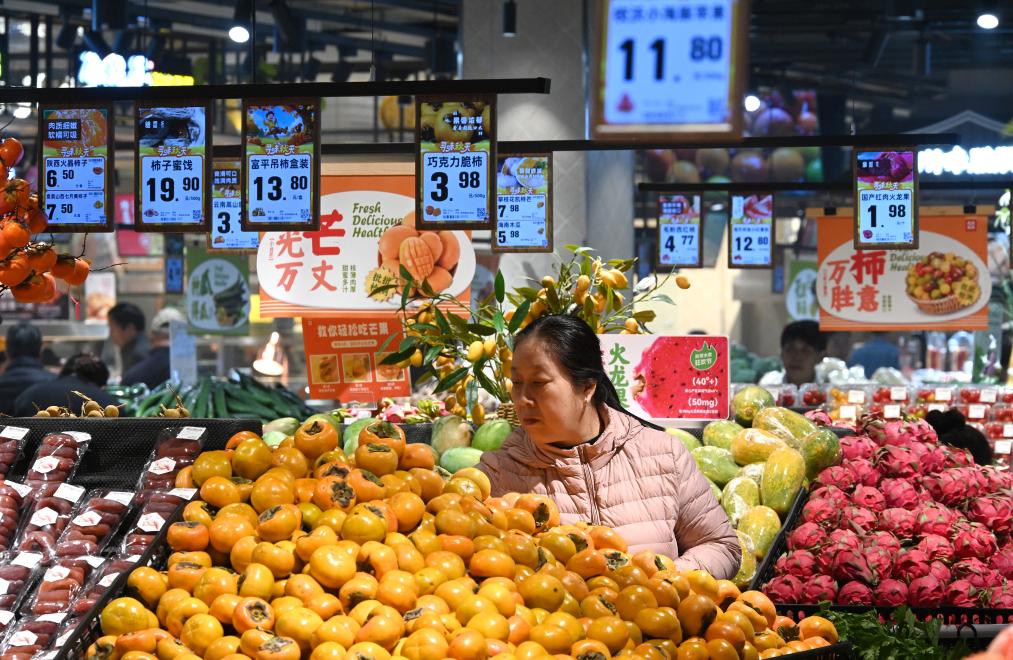
9月份核心CPI同比涨幅近19个月以来首次回到1% 部分领域市场供求关系逐步改善
Jing Ji Ri Bao· 2025-10-16 00:27
Core Insights - The consumer price index (CPI) showed a slight increase in September, with a month-on-month rise of 0.1%, marking a shift from the previous month where it was flat. The core CPI, excluding food and energy, rose by 1% year-on-year, the highest increase in 19 months, indicating a recovery in consumer prices [1][2][3] Group 1: CPI Analysis - The year-on-year CPI decreased by 0.3%, but the decline was less severe than the previous month, narrowing by 0.1 percentage points. The drop was primarily due to the "carryover effect" from previous price changes [2] - Food prices fell by 4.4% year-on-year, contributing approximately 0.83 percentage points to the CPI decline. However, the core CPI's increase of 1% reflects a more stable underlying price level [2][3] - The rise in CPI was supported by government policies aimed at boosting consumption, with significant price increases in home appliances and mobile phones [2] Group 2: PPI Analysis - The producer price index (PPI) remained flat month-on-month for two consecutive months, with a year-on-year decline of 2.3%, which is a reduction of 0.6 percentage points from the previous month. This indicates some stabilization in industrial prices [3][4] - Certain industries, such as coal processing and black metal smelting, have shown price increases for two months, reflecting improved supply-demand dynamics [3][4] - The overall decline in PPI is influenced by last year's low comparison base and the positive effects of macroeconomic policies [3] Group 3: Market Dynamics - The construction of a unified national market has led to a reduction in year-on-year price declines across various sectors, with notable improvements in market competition and order [4] - Upgrading industrial structures and releasing consumer potential have contributed to price increases in specific sectors, such as aircraft manufacturing and nutritional food production [4]
部分领域市场供求关系逐步改善
Jing Ji Ri Bao· 2025-10-16 00:07
Group 1 - The consumer price index (CPI) showed a slight increase in September, with a month-on-month rise of 0.1%, marking a shift from the previous month where it was flat [1][2] - The core CPI, excluding food and energy, rose by 1% year-on-year, the highest increase in 19 months, indicating a steady recovery in consumer prices [1][3] - Food prices increased by 0.7% month-on-month, with seasonal price rises observed in fresh vegetables, eggs, fresh fruits, lamb, and beef, while pork and aquatic product prices decreased due to sufficient supply [1][2] Group 2 - The producer price index (PPI) remained flat month-on-month for two consecutive months, with a year-on-year decline of 2.3%, but the rate of decline has narrowed by 0.6 percentage points compared to the previous month [3][4] - Improvements in supply-demand structure have led to price stabilization in certain industries, such as coal processing and black metal smelting, with some prices showing an upward trend [3][4] - The construction of a unified national market has contributed to a reduction in the year-on-year decline of prices in various sectors, with notable improvements in industries like coal mining and photovoltaic equipment manufacturing [4]
财经聚焦 | 核心CPI重回1% 9月物价数据透出哪些信号?
Xin Hua She· 2025-10-15 14:02
Group 1: Core CPI and Price Trends - The core CPI increased by 1% year-on-year in September, marking the first return to this level in 19 months and the fifth consecutive month of growth [1] - The overall CPI rose by 0.1% month-on-month, with food prices contributing significantly to this increase, particularly fresh vegetables, eggs, and meat [1] - Seasonal factors and holiday demand have driven up prices in certain categories, such as vegetables, which saw a price increase from 2.58 yuan/kg in August to 3.32 yuan/kg in September [1] Group 2: PPI and Market Dynamics - The Producer Price Index (PPI) decreased by 2.3% year-on-year in September, but the decline was less severe than in previous months, indicating a positive trend [3] - The reduction in PPI decline is attributed to improved macroeconomic policies and the ongoing development of a unified national market [3] - Certain industries, such as coal processing and black metal smelting, have shown signs of price stabilization, with coal processing prices rising by 3.8% month-on-month [3] Group 3: New Economic Drivers and Consumption Upgrades - Emerging industries are thriving, with new consumption patterns and business models contributing to positive price changes [4] - The manufacturing sector is experiencing a shift towards high-end, intelligent, and green development, leading to increased market demand and price growth in specific sectors, such as aircraft manufacturing [4] - Consumer demand is transitioning from quantity to quality, with significant price increases in sectors like arts and crafts, sports equipment, and nutritional foods [5]
【新华解读】核心CPI重回1% 9月物价数据透出哪些信号?
Xin Hua She· 2025-10-15 14:02
Core Insights - The overall consumer price index (CPI) in September showed a slight increase of 0.1% month-on-month, while the core CPI, excluding food and energy, rose by 1% year-on-year, marking the first return to a 1% increase in 19 months [1][2] - The producer price index (PPI) decreased by 2.3% year-on-year in September, but the decline was less severe than the previous month, indicating improvements in market conditions and the effectiveness of macroeconomic policies [3] - Emerging industries are experiencing growth, with new consumption patterns and models driving positive price changes in related sectors [4][5] Consumer Market Dynamics - The CPI's month-on-month increase was influenced by a 0.7% rise in food prices, particularly in fresh vegetables, eggs, and meats, due to seasonal factors and supply chain disruptions [1] - The year-on-year CPI decline of 0.3% was primarily due to base effects from the previous year, with a negative impact of approximately 0.8 percentage points from tail effects [2] Producer Price Index Trends - The PPI's year-on-year decline of 2.3% reflects a narrowing of price drops in various industries, including coal processing and black metal smelting, as a result of improved market competition and capacity management [3] - Specific sectors, such as coal processing and black metal industries, saw month-on-month price increases of 3.8% and 0.2%, respectively, indicating a stabilization in prices [3] New Consumption Patterns - The growth of new industries and consumption models is contributing to a dual upgrade in industrial consumption, with significant price increases in sectors like aircraft manufacturing (1.4% year-on-year) and electronic materials (1.2% year-on-year) [5][6] - The shift in consumer demand from quantity to quality is evident, with notable price increases in high-quality goods such as arts and crafts (14.7% year-on-year) and nutritional foods (1.8% year-on-year) [7]
9月核心CPI,19个月来涨幅首次回到1%
21世纪经济报道· 2025-10-15 13:50
Core Insights - The article discusses the recent trends in China's Consumer Price Index (CPI) and Producer Price Index (PPI), highlighting a decrease in CPI and a narrowing decline in PPI, indicating potential economic recovery and price stabilization [1][10]. CPI Analysis - In September, the national CPI decreased by 0.3% year-on-year, with urban areas down 0.2% and rural areas down 0.5% [4][6]. - Food prices fell by 4.4%, while non-food prices increased by 0.7%, contributing to the overall CPI decline [4][7]. - The core CPI, excluding food and energy, rose by 1.0%, marking the first return to this level in 19 months and indicating a continuous expansion for five consecutive months [7][9]. - The month-on-month CPI increased by 0.1%, with urban prices stable and rural prices rising by 0.2% [8][10]. PPI Analysis - The PPI for September showed a year-on-year decline of 2.3%, but the rate of decline narrowed by 0.6 percentage points compared to the previous month [10][12]. - The industrial producer purchase price index decreased by 3.1% year-on-year, with a month-on-month increase of 0.1% [10][12]. - The decline in PPI is attributed to a low comparison base from the previous year and the positive effects of macroeconomic policies [12][13]. Sector-Specific Insights - Certain industries, such as coal processing and photovoltaic equipment manufacturing, experienced a reduction in price decline, contributing to the overall narrowing of PPI [13]. - The modernization of the industrial system and the release of consumer potential have led to price increases in sectors like aircraft manufacturing and electronic materials [13]. - The article anticipates that the PPI decline will first widen and then narrow in 2025, influenced by ongoing market competition improvements [14].

核心CPI重回1%,9月物价数据透出哪些信号?
Xin Hua She· 2025-10-15 13:31
Group 1 - The core CPI has returned to 1%, marking the first increase in nearly 19 months, indicating a stable price environment supported by policies aimed at expanding domestic demand and promoting consumption [1] - In September, the CPI increased by 0.1% month-on-month, with food prices rising by 0.7%, contributing approximately 0.13 percentage points to the CPI increase [1] - Seasonal price increases were observed in fresh vegetables, eggs, fruits, lamb, and beef due to weather impacts and holiday demand [1] Group 2 - The PPI decreased by 2.3% year-on-year in September, with the decline narrowing by 0.6 percentage points compared to the previous month, reflecting the effectiveness of macroeconomic policies and the progress of a unified national market [3] - Improvements in supply and demand structures have led to price stabilization in certain industries, with coal processing prices rising by 3.8% and black metal smelting prices increasing by 0.2% [3] Group 3 - Emerging industries are thriving, with new consumption patterns and models driving positive price changes in related sectors [4] - The manufacturing sector is experiencing upgrades, with aircraft manufacturing prices increasing by 1.4% and electronic materials prices rising by 1.2% year-on-year [5] Group 4 - Consumer demand is shifting from quantity expansion to quality enhancement, with significant price increases in high-quality goods such as arts and crafts (14.7%) and sports equipment (4%) [6] - Policies aimed at boosting consumption are expected to further support the development of certain consumer goods and manufacturing sectors, improving market supply-demand relationships [6]
9月核心CPI重返1%,物价修复态势延续
2 1 Shi Ji Jing Ji Bao Dao· 2025-10-15 09:42
Group 1: Consumer Price Index (CPI) Insights - In September, the national Consumer Price Index (CPI) decreased by 0.3% year-on-year, while it increased by 0.1% month-on-month [1][2] - The core CPI, excluding food and energy prices, rose by 1.0% year-on-year, marking the first return to a 1% increase in nearly 19 months [1][4] - The decline in CPI was primarily attributed to the "carryover effect," with food prices dropping by 4.4%, significantly impacting the overall CPI [4][6] Group 2: Producer Price Index (PPI) Insights - The Producer Price Index (PPI) decreased by 2.3% year-on-year in September, with the month-on-month figure remaining flat [1][6] - The year-on-year decline in PPI has narrowed by 0.6 percentage points compared to the previous month, indicating a potential stabilization in producer prices [6][9] - The prices of production materials showed a year-on-year decline of 2.4%, but the decrease has lessened compared to previous months, suggesting some recovery in production material pricing [8][10] Group 3: Economic Factors and Market Trends - The improvement in price indices is attributed to the release of consumer potential, industrial structure upgrades, and the continuous optimization of market competition [1][10] - Various macroeconomic policies are showing positive effects, leading to a reduction in the year-on-year price decline in several industries, including coal processing and photovoltaic equipment manufacturing [10][11] - The overall market is expected to see a gradual recovery, with projections indicating that the PPI decline will narrow in the latter half of 2025 due to improved market conditions [11]
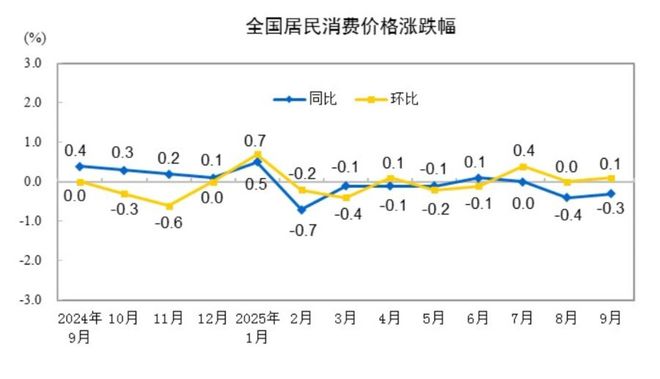
重要数据公布!
新华网财经· 2025-10-15 06:48
Core Insights - The overall consumer market in September remained stable, with the Consumer Price Index (CPI) rising by 0.1% month-on-month and decreasing by 0.3% year-on-year, while the core CPI (excluding food and energy) increased by 1.0% year-on-year, marking the fifth consecutive month of growth [1][3][4]. CPI Analysis - The month-on-month CPI increase was driven by a 0.7% rise in food prices, contributing approximately 0.13 percentage points to the CPI increase. Seasonal price increases were noted in fresh vegetables, eggs, fresh fruits, lamb, and beef, with price changes ranging from 0.9% to 6.1% [3]. - Year-on-year, the CPI decline was primarily influenced by a 4.4% drop in food prices, which accounted for about 0.83 percentage points of the CPI decrease. Notably, pork, fresh vegetables, eggs, and fresh fruits saw significant price drops of 17.0%, 13.7%, 13.5%, and 4.2%, respectively [4]. - The core CPI's year-on-year growth rate has expanded for five consecutive months, reaching 1%, the highest in nearly 19 months. Prices for industrial consumer goods, excluding food and energy, rose by 1.8%, with notable increases in gold and platinum jewelry prices of 42.1% and 33.6%, respectively [4]. PPI Analysis - The Producer Price Index (PPI) remained flat month-on-month for two consecutive months, with a year-on-year decline of 2.3%, which is a narrowing of the decline by 0.6 percentage points compared to the previous month [5][6]. - The PPI's stability was attributed to improved supply-demand dynamics in certain industries, with coal processing prices rising by 3.8% and black metal smelting prices increasing by 0.2% [6]. - The decline in oil-related industry prices was influenced by falling international oil prices, with oil extraction prices decreasing by 2.7% and refined oil product prices down by 1.5% [6]. Market Dynamics - The construction of a unified national market has led to a narrowing of year-on-year price declines in several industries, including coal processing and black metal smelting, with reductions in PPI's downward pressure by approximately 0.34 percentage points [7]. - Upgrading industrial structures and releasing consumer potential have contributed to price increases in specific sectors, such as aircraft manufacturing and electronic materials, with notable price increases of 1.4% and 1.2%, respectively [7].

人民币,突发!中国资产,迎来大利好!
Sou Hu Cai Jing· 2025-10-15 04:48
Core Viewpoint - The Chinese yuan has shown significant strength, with the central parity rate rising to 7.10 against the US dollar for the first time since November last year, indicating a potential shift in currency dynamics and market sentiment [1][2]. Currency Dynamics - The yuan's appreciation is attributed to two main factors: expectations of interest rate cuts by the Federal Reserve and a rebound in domestic price indices, with the core CPI rising by 1.0% in September, marking the first increase to this level in 19 months [3][4]. - The offshore yuan experienced a sharp increase, rising over 100 points following the adjustment of the central parity rate [2][3]. Market Reactions - The strengthening of the yuan has led to a broad rebound in equity markets, with the Hang Seng Index opening up by 1.08% and the Hang Seng Tech Index surging over 21%. A-shares also saw a significant recovery, particularly in the ChiNext Index, which rose by over 1% [3]. - The bond market reacted negatively, with a notable drop in government bond prices as a result of the yuan's appreciation and changing market conditions [1]. Economic Indicators - The National Bureau of Statistics reported a 2.3% year-on-year decline in the Producer Price Index (PPI) for September, although the rate of decline has narrowed compared to the previous month. This reflects some positive changes in industry prices [1][3]. - The narrowing of the PPI decline and the increase in core CPI suggest that macroeconomic policies are having a positive impact, leading to improved price stability in certain sectors [3][4]. Broader Economic Context - The current environment is characterized by a significant narrowing of the interest rate differential between China and the US, with a 5 basis point reduction in the 10-year spread, which may further support the yuan's strength [4][5]. - The ongoing trade tensions and the recent US government shutdown have contributed to increased uncertainty in financial markets, prompting a shift of capital from the US to non-US markets [6].