数智化转型

Search documents
构建智慧银行,成就普惠金融价值:华瑞银行引领智慧金融新未来
Sou Hu Cai Jing· 2025-10-13 13:16
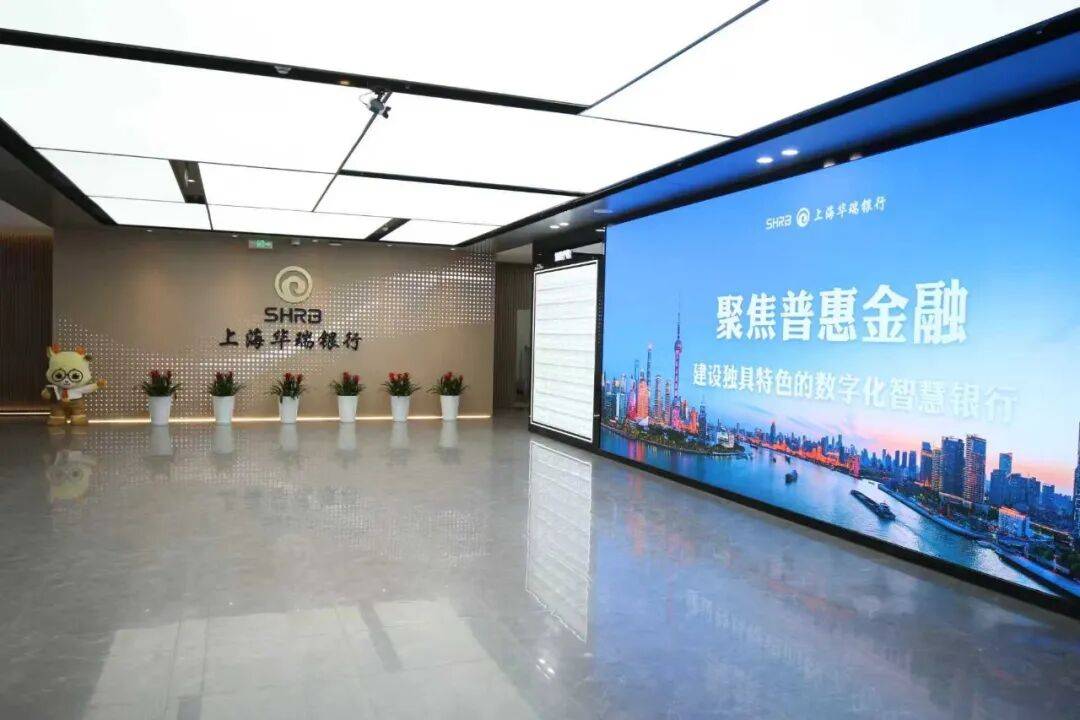
Core Insights - The banking industry is undergoing a transformation driven by AI technology, particularly large model technology, as highlighted in the Shanghai government's action plan to enhance the city's global financial technology center competitiveness [1][9] - Shanghai Huari Bank, as a pioneer in private banking in China, is actively pursuing digital transformation to build an efficient and stable intelligent risk control system, leveraging AI to provide flexible and efficient inclusive financial services [1][9] Group 1: Digital Transformation and AI Integration - Huari Bank aims to achieve comprehensive digital transformation by ensuring the safe, efficient, and stable operation of large models, which requires higher demands on computing power and flexible scheduling [3][5] - The bank faces challenges in high-concurrency business scenarios due to insufficient interconnectivity of computing power devices and the need for further upgrades to its storage systems to meet growing operational demands [3][4] Group 2: Infrastructure Development - Huari Bank collaborates with Huawei to enhance its computing power foundation and storage architecture, ensuring that AI capabilities translate into improved business efficiency [4][8] - The bank's infrastructure upgrades include the deployment of high-end storage devices, which allow for centralized management and dynamic allocation of data storage resources, supporting linear expansion based on business needs [7][8] Group 3: Business Continuity and Data Reliability - The implementation of a dual-active cluster for storage ensures data redundancy and business continuity, allowing for seamless operation even in the event of equipment failure [7][8] - The bank's storage solutions provide a robust defense for core business data, enhancing reliability and reducing operational risks while supporting the overall digital transformation strategy [6][8] Group 4: Future Outlook - The integration of AI technology into Huari Bank's operations is seen as a key factor for growth, with a focus on cost reduction, compliance, risk management, and decision-making capabilities [9] - Huawei's ongoing commitment to the financial sector aims to foster a secure, efficient, and inclusive digital financial ecosystem, supporting the long-term development of financial institutions [9]

致远互联与金山办公达成战略合作
Zheng Quan Ri Bao· 2025-10-13 12:13
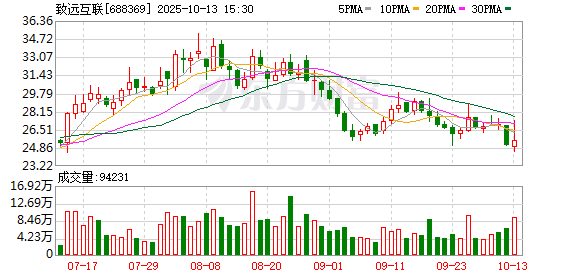
Core Insights - The strategic partnership between Kingsoft Office and Zhiyuan Interconnect aims to enhance productivity through AI integration, focusing on five dimensions including ecological strategy collaboration and product solution integration [2][3] - This collaboration signifies a shift from isolated tool usage to an integrated model of "intelligent collaboration + document services," setting a benchmark for the office software industry [2] - The partnership is expected to empower organizations by providing a closed-loop capability of "intelligent document processing + collaborative operation management," facilitating digital transformation and sustainable evolution [2] Company Developments - Zhiyuan Interconnect will leverage Kingsoft Office's intelligent document capabilities to enhance its "collaborative AI ecosystem" strategy, thereby improving product competitiveness [2] - Kingsoft Office aims to transition from a tool service provider to a productivity solution provider by expanding enterprise-level collaborative scenarios [2] Industry Trends - The collaboration represents an innovative exploration of enterprise collaboration paradigms in the AI era, aiming to drive productivity upgrades across various industries [3] - The partnership is positioned to lead the transformation of the office software industry from single-function competition to a model focused on "technology integration + scenario empowerment" [2]


数智转型打开房地产新赛道
Jing Ji Ri Bao· 2025-10-12 21:55
Core Viewpoint - The construction and real estate industries are undergoing a critical digital and intelligent transformation, which is essential for sustainable development and high-quality economic growth in China [1] Group 1: Intelligent Construction System - Intelligent construction is a key aspect of the transformation in the construction industry, with pilot projects launched in 24 cities including Beijing and Shenzhen to accelerate its application [1] - Key technological advancements in intelligent construction include the development of BIM software, smart production lines, and intelligent construction equipment, with 11 innovative technologies successfully implemented in Beijing [1] - Cities like Qingdao and Hefei are supporting the application of technological research outcomes, while Wuhan has authorized 181 patents related to intelligent construction over the past five years [1] Group 2: Standards and Industry System - New technical standards for intelligent construction are being introduced, such as the selection directory for construction robots in the Sichuan-Chongqing region, which outlines over 40 applicable scenarios [2] - An industrial system for intelligent construction is being rapidly established, with cities like Wuhan and Shenzhen creating mechanisms to integrate upstream and downstream enterprises [2] - In 2024, the sales revenue from the construction robot industry cluster in Foshan is expected to exceed 50 million yuan, driven by a leading enterprise and several collaborative companies [2] Group 3: Digital Home Construction - The construction of digital homes is being accelerated, with new national standards requiring smart features in residential buildings, such as communication systems and mobile signal coverage [4] - Digital homes are seen as a key initiative for expanding domestic demand and developing the digital economy, with 18 pilot regions making significant progress [4] - Infrastructure and platform development are crucial for digital home construction, with cities like Yaan and Zhangjiagang implementing requirements for digital community hardware and comprehensive information platforms [5] Group 4: Innovation and Application - Innovative applications in digital home construction include the installation of IoT devices for monitoring utilities and enhancing safety, with significant engagement from local governments [6] - The integration of smart home technology is being promoted through various initiatives, such as the "one-click help" button for elderly residents in Huzhou [6] - The digital home industry is seeing substantial sales growth, with over 50 related companies participating in promotional activities in Guangzhou, achieving sales exceeding 50 million yuan [6] Group 5: Digital Transformation in Real Estate - The real estate industry is shifting from traditional resource-driven models to a new model based on digital technology and new productive forces [7] - Companies like Longfor Group are utilizing digital tools to significantly reduce project timelines and improve operational efficiency [7] - Despite over half of real estate companies having digital transformation strategies, many still struggle to achieve measurable improvements in operational efficiency [8] Group 6: Future Trends - The digital transformation in real estate requires a fundamental restructuring of organizational culture and data capabilities to adapt to the digital age [8] - Technologies such as AI, IoT, and big data are reshaping the real estate ecosystem, enhancing operational efficiency and creating new growth opportunities [8] - The integration of advanced technologies is expected to transform buildings into intelligent entities, opening new pathways for value creation in the industry [8]
聚合伙伴,赋能亿企:华为吹响AI使能商业市场集结号
Sou Hu Cai Jing· 2025-10-11 15:56
Group 1 - The core viewpoint of the articles emphasizes the transformative impact of AI on various industries, highlighting the need for companies to embrace digital and intelligent transformation to unlock new business opportunities [1][3][4] - Huawei is actively developing a product portfolio tailored to different industry scenarios, aiming to accelerate the digital transformation of its clients through collaboration with partners [1][8] - The commercial market is identified as a new blue ocean for digital transformation, driven by the integration of AI into key business processes, which enhances operational efficiency and value creation [3][7] Group 2 - The demand for intelligent computing, data governance, and smart networks is increasing, necessitating the development of accessible AI capabilities and high-quality data solutions [3][5] - Companies must transition from being "technology providers" to "value co-creators" to effectively meet the diverse needs of clients in the commercial market [4][6] - Huawei is committed to building a new intelligent infrastructure that supports business innovation and enhances competitive advantage [6][9] Group 3 - Huawei's strategy involves a close partnership with various industries, providing comprehensive support across the entire value chain, including research, operations, supply, sales, and service [8][9] - The company has launched over 300 innovative products and scenario-based solutions to assist thousands of enterprises in their digital transformation efforts [9] - The upcoming Huawei Commercial Market Autumn Product Solution Conference on October 15 will showcase the latest intelligent infrastructure products and collaborative solutions [9]
哈药股份:从“蓝色经典”转向“创新智造”
Shang Hai Zheng Quan Bao· 2025-10-10 18:20
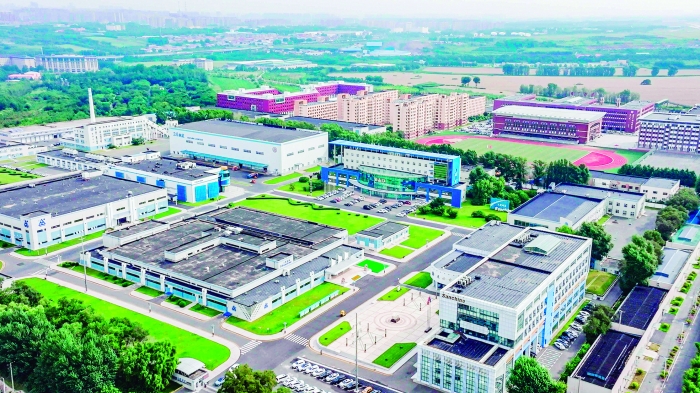
Core Viewpoint - Harbin Pharmaceutical Group Co., Ltd. (哈药股份) is undergoing a strategic transformation from marketing-driven growth to technology-driven innovation, focusing on high-tech generic drugs, innovative medicines, and traditional Chinese medicine [2][4]. Group 1: Innovation and Transformation - The company has significantly increased its R&D investment and is implementing a digital upgrade plan to enhance production efficiency and product quality [3][4]. - Harbin Pharmaceutical is establishing a new intelligent production system to align with modern pharmaceutical enterprise characteristics, aiming to become a benchmark for innovation in the national pharmaceutical industry [2][4]. Group 2: R&D System Reconstruction - The company has restructured its R&D system into a "one department and five institutes" model, focusing on various fields such as generic drugs, innovative drugs, and traditional Chinese medicine [5]. - Harbin Pharmaceutical is transitioning from a focus on generic drugs to a balanced emphasis on both innovative drugs and health products, with a clear strategic plan for R&D in key therapeutic areas [6][5]. Group 3: Marketing and Sales Innovation - The company is expanding its online sales through subsidiaries, leveraging a dual-track strategy to consolidate core product advantages and develop potential categories [7]. - Harbin Pharmaceutical is enhancing its marketing capabilities by integrating content e-commerce and traditional e-commerce, creating a synergistic marketing ecosystem for sustainable growth [7].

2025新国货COOLTOP100品牌榜:新国货的硬核内功与软叙事:千骑卷平冈
EqualOcean· 2025-10-10 05:25
Group 1: Market Trends - The domestic consumption potential is accelerating, with a shift from price-performance ratio to quality-price ratio, indicating a more discerning consumer base[5] - In the first half of 2025, China's retail sales of consumer goods showed a year-on-year growth of 12.3% in staple food categories, reflecting stable basic living consumption[26] - The cross-border e-commerce import and export scale reached 1.32 trillion yuan in the first half of 2025, with exports at 1.03 trillion yuan (up 4.7%) and imports at 291.1 billion yuan (up 9.3%)[43] Group 2: Policy Impact - The "Two New, Two Heavy" policies are enhancing the competitiveness of domestic products, leading to an increase in market share for new domestic goods[24] - The government is promoting consumption through various measures, including improving consumer confidence and expanding high-quality service offerings[20] - The domestic market is experiencing structural changes, with a focus on high-quality consumption driven by policies aimed at boosting consumer spending[18] Group 3: Brand Development - The global recognition of domestic brands has increased significantly, with a 20 percentage point rise in trust over five years, driven by high-quality products and corporate social responsibility[60] - In 2025, 76 Chinese brands were included in the World Brand 500 list, ranking second globally, indicating a significant leap in brand quality and market presence[72] - The integration of traditional cultural symbols into product design has become a key strategy for enhancing brand value and consumer connection[67] Group 4: Consumer Behavior - Consumers are increasingly prioritizing quality and emotional value over low prices, with a 13.1% net increase in the tendency to consume low-priced products[31] - Young consumers are driving the growth of domestic brands, with 44.2% preferring to purchase domestic products through e-commerce platforms[98] - The demand for products with investment and aesthetic value is rising, as evidenced by an 11.3% increase in retail sales of gold and jewelry[30]
化工物流“迎战”行业周期波动挑战
Zhong Guo Hua Gong Bao· 2025-10-09 03:22
Group 1 - The logistics of chemical products, especially hazardous materials, face unique challenges due to high safety requirements and professional standards, prompting companies to innovate and enhance service models to build a more resilient global transportation system [1] - Companies are expanding their service offerings to include a wider range of chemical products and adapting to market demands by developing new customer relationships and product lines to mitigate the impact of industry cycle fluctuations [2] - The focus on customized "end-to-end" logistics solutions is evident, with companies targeting specific sectors such as high-end fine chemicals and renewable materials to address export challenges [2] Group 2 - Many companies are implementing digital tracking platforms to enhance supply chain transparency, with significant efficiency improvements reported, such as a 50% increase in operational efficiency through the use of integrated logistics platforms [3] - Companies are committed to advancing their digital transformation strategies, including localizing operations and enhancing supply chain resilience through increased investments and infrastructure development [3] - The industry aims to tackle the issue of data silos by promoting interoperability among various stakeholders, which is expected to improve overall efficiency and transparency in the chemical logistics sector [3]
石化工程行业积极拥抱数智化转型
Zhong Guo Hua Gong Bao· 2025-10-09 02:40
Group 1 - Digital transformation has become a crucial engine for high-quality development in the engineering industry, with multiple engineering design companies incorporating it into their strategic plans [1] - China National Petroleum Corporation has identified "digital intelligence" as one of its four major development strategies, aiming to implement 35 core business intelligent bodies covering the entire EPC chain by 2025 [1] - China Tianchen Engineering Corporation has integrated digital transformation with the entire lifecycle of "research, investment, construction, operation, and sales" [1] - Donghua Engineering Technology Company is incorporating digital transformation into its business strategy through the collaboration of "technology + management + digital" [1] Group 2 - AI technology is leading a smart revolution in future design, transitioning from assisting design to enhancing and eventually autonomous design [2] - The core capabilities of designers will undergo significant transformation, shifting from skilled operation of drawing software to accurately defining problems and inputting instructions to AI [2] - To ensure successful digital transformation, companies must focus on talent reserves and incentive mechanisms [2] - China National Petroleum Corporation is ensuring the advancement of transformation through organizational adjustments and specialized talent training [2] - Zhejiang Tianzheng Design Engineering Company has implemented innovative mechanisms, such as a division system and employee stock ownership, to stimulate employee participation in digital transformation [2] - Tianzheng has established an information processing research institute to promote a "parameter-driven one-click generation" design model, reducing repetitive work through standardized and modular design [2]
长沙启动住建领域数智化通用型技术和平台“揭榜挂帅”工作
Chang Sha Wan Bao· 2025-10-07 00:31
Core Insights - The initiative launched by Changsha's housing and urban-rural development bureau, in collaboration with other governmental departments, aims to promote digital transformation in the construction industry, aligning with national strategies for high-quality urban development and "Artificial Intelligence+" actions [1][2] - The project focuses on ten key technology areas that cover the entire lifecycle of construction and critical urban operation processes, establishing a robust framework for digital transformation in the construction sector [1] Group 1 - The initiative is a significant step towards transforming the construction industry in Changsha, aiming to position the city as a leader in digital construction and intelligent building [1] - The core objectives include improving quality and efficiency, ensuring safety, promoting green and smart technologies, and upgrading the industry [1] - The ten technology areas range from digital construction collaborative design platforms to intelligent property management platforms, forming a comprehensive support structure for the sector [1] Group 2 - The initiative will reduce the blind spots and cost risks associated with independent R&D for enterprises, effectively empowering and alleviating burdens on businesses [2] - Successful applicants will receive the title of "Changsha Research and Promotion Center" and will benefit from market promotion, policy support, and application scenarios to ensure the practical implementation of their innovations [2] - The application deadline is set for October 24, and the ongoing efforts are expected to create an innovative ecosystem that attracts global resources and showcases the transformative potential of "Artificial Intelligence+" in Changsha's construction industry [2]
国内首台、国际首创!苏蒙首个重大能源合作项目投运【附中国电力行业现状】
Sou Hu Cai Jing· 2025-10-06 10:25
Group 1 - The first major energy cooperation project in Su Mong provinces, the Ulagai 2×1000MW ultra-supercritical coal-fired power generation project, has successfully completed a 168-hour full-load trial operation, marking the official transition to commercial operation of China's first and the world's first million-level lignite power generation unit [2][3] - The project, with a total investment of 7.26 billion yuan, is a key power support project for the "Ximeng-Taizhou ±800kV" UHV transmission line, which plays a significant role in ensuring energy security supply for Jiangsu Province [2][3] - The project has achieved over 20 domestic firsts in design, manufacturing, and construction, and has successfully addressed the challenges of stable and efficient clean combustion of high-moisture, low-heat-value lignite [3] Group 2 - The "Ximeng-Taizhou ±800kV" UHV transmission line, which is part of a key national project, connects the coal power bases in western China with the load centers in the east, with a total length of 1,620 kilometers [3] - Once both units of the project are fully operational, they are expected to deliver approximately 8 billion kilowatt-hours of electricity to Jiangsu annually, equivalent to the annual electricity consumption of over 3 million average households [3] - The electricity industry is a crucial sector in the national economy, reflecting economic development and closely related to social development and people's livelihoods [3] Group 3 - Recent data from the National Energy Administration indicates that China's total electricity consumption reached 1.02 trillion kilowatt-hours in July, marking an 8.6% year-on-year increase and breaking the 1 trillion kilowatt-hours mark for the first time in a single month [6] - According to Ember Energy's "2025 Global Power Review," global electricity generation is expected to continue growing, reaching 30,853.34 terawatt-hours in 2024, a year-on-year increase of 3.94% [4] Group 4 - The chairman and CEO of Shanghai Quanying Technology Co., Ltd. believes that coal-fired thermal power will continue to play a fundamental role in energy supply, despite the increasing conflict between energy supply and carbon reduction goals [8] - The application of artificial intelligence technology is expected to bring revolutionary changes to the thermal power industry, promoting a transition towards smarter, more efficient, and greener production capabilities [8]