低空经济

Search documents
惠州两会 秘海英:从四方面推进消费新业态新场景新模式
Nan Fang Du Shi Bao· 2026-02-05 09:14
Group 1 - The core viewpoint is that consumer spending is a key driver of economic growth, with Huizhou achieving the highest retail sales growth rate in the province during the first three quarters [1] - The growth in Huizhou's retail sector is attributed to innovative experiential consumption scenarios, the thriving first-store economy, and strong support from policies such as trade-in programs and cultural tourism vouchers [1] Group 2 - Suggestions for promoting new consumption formats and expanding domestic demand include government-led policies and city-level promotional activities to enhance consumer engagement and unleash spending potential [3] - Encouragement for commercial entities to increase the introduction of first stores and A-class stores to enrich the city's commercial brand diversity and better meet local consumer needs [4] - Focus on service consumption and experiential scenarios, with policies to encourage the development of new growth points in service consumption, integrating commerce with culture, sports, and entertainment [4] - Promotion of deep integration of culture, commerce, industry, and tourism, with government-led initiatives to create platforms for collaboration, encouraging industries with market potential to establish presence in commercial spaces [4]


瑞松科技(688090.SH):公司参与了小鹏汇天飞行器产线建设
Ge Long Hui A P P· 2026-02-05 08:29
Core Viewpoint - The company is actively participating in the construction of Xiaopeng Huitian's aircraft production line, aligning with the national strategy for low-altitude economy development, which presents unprecedented growth opportunities [1] Group 1: Company Involvement - The company has leveraged its deep expertise in intelligent manufacturing to tackle technical challenges in the smart manufacturing of low-altitude aircraft [1] - The developed intelligent manufacturing solutions integrate smart flexible connection technology with aviation aluminum riveting processes, showcasing innovation in lightweight connection techniques [1] Group 2: Industry Outlook - The low-altitude economy is recognized as a strategic emerging industry in the country, indicating significant growth potential [1] - The company's technological reserves are expected to expand into high-end equipment manufacturing fields such as aerospace, opening broader application prospects [1] Group 3: Financial Impact - Currently, the revenue from the related project is relatively small, suggesting a cautious approach for investors [1]

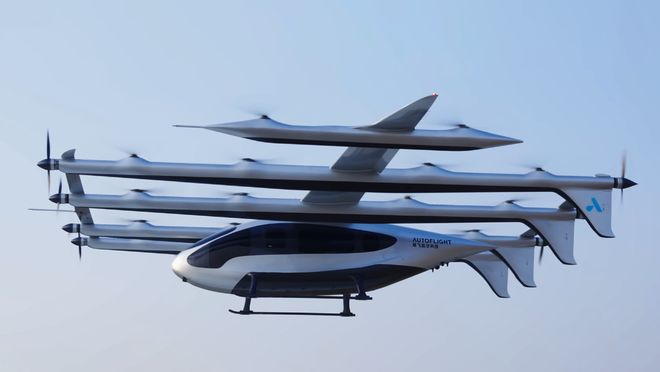
全球首款5吨级eVTOL亮相,可载客10人
Huan Qiu Wang Zi Xun· 2026-02-05 08:29
Group 1 - The V5000 Tianji Long, the world's first 5-ton eVTOL, has been officially unveiled by Fengfei Aviation Technology and has successfully completed transition flight at the Bai Lian Lake low-altitude base [1][3] - The eVTOL industry is currently experiencing rapid development, with payload and range being key indicators of efficiency and value. Most mainstream products are in the 1.5-3 ton takeoff weight range, carrying 4-6 passengers. The Tianji Long elevates the eVTOL takeoff weight to 5 tons, allowing for greater payload and longer range [3] - The pure electric version of the V5000 has a maximum range of 250 kilometers, while the hybrid version can reach up to 1500 kilometers. The passenger version can carry 10 people, and the cargo version can transport ton-level goods [3] Group 2 - eVTOL, or electric vertical takeoff and landing aircraft, is becoming a focal point in the global low-altitude economy and is expected to evolve into a trillion-dollar industry. The emergence of eVTOL indicates new possibilities in urban commuting, cultural tourism, and cargo delivery below 1000 meters [5] - The low-altitude economy has been included in the "14th Five-Year Plan" recommendations, and it is believed that Chinese companies possess the capability to lead globally in the eVTOL technology sector [5]
八大科技展区亮相CES Asia 2026,勾勒未来消费电子蓝图
Sou Hu Cai Jing· 2026-02-05 07:38
Core Insights - CES Asia 2026 will focus on "Technology Integration and Innovative Symbiosis," showcasing advancements in embodied intelligence, artificial intelligence, and low-altitude economy across an immersive 50,000 square meters exhibition space [2] - The event is scheduled to take place from June 10 to June 12, 2026, in Beijing, providing a platform for technology display, business matchmaking, and ecosystem building [2] Group 1: Embodied Intelligence - The Embodied Intelligence exhibition area will highlight breakthroughs in "flexible technology + multimodal interaction," featuring humanoid robots and flexible operational devices [3] - Key technologies such as hand-eye servo coordination, emotional computing, and spatial intelligent navigation will be showcased, addressing diverse scenarios like home services and emergency rescue [3] - The integration of flexible robots and drones will be a highlight, enabling innovative applications in complex environments [3] Group 2: Artificial Intelligence - The Artificial Intelligence exhibition area will emphasize "AI-native and full-scenario empowerment," showcasing core technologies like edge large models and cross-device collaboration [4] - AI-native smartphones will be a focal point, enhancing multi-modal interaction and task automation even in offline environments [4] - Emerging terminals like smart glasses and immersive AI desktop partners will also be presented, aiming to transform smartphones into intelligent assistants [4] Group 3: Low-altitude Economy - The Low-altitude Economy exhibition area will focus on the integration of "flying carriers + intelligent applications," featuring aerial work robots and eVTOLs [5] - Aerial work robots equipped with flexible robotic arms will demonstrate practical capabilities in high-altitude cleaning and precise delivery [5] - The intelligent mobility segment will showcase L4 autonomous driving and smart cockpit innovations, aligning with national low-altitude economic development strategies [5] Group 4: Smart Living - The Smart Living exhibition area will center on "seamless intelligence and health co-existence," showcasing the transition from single product intelligence to whole-home connectivity [6] - Home automation systems will utilize Matter protocol and 3D spatial scanning technology for seamless device integration and energy management [6] - The healthcare segment will focus on AI health monitoring devices, emphasizing non-invasive blood glucose monitoring and ECG analysis [7] Group 5: Intelligent Cockpit - The Intelligent Cockpit exhibition area will highlight the deep integration of automotive electronics and consumer electronics, showcasing innovations in "multi-modal perception + edge large models" [8] - New-generation smart cockpits will move beyond traditional app interactions, providing proactive service based on driver and passenger needs [8] - Solutions for seamless connectivity between travel and home will be presented, promoting cars as mobile smart living spaces [8] Group 6: Green Energy Storage - The Green Energy Storage exhibition area will align with the "dual carbon" strategy, showcasing portable storage and home energy systems [9] - Home energy systems will demonstrate solutions for solar integration and emergency power supply, catering to energy autonomy needs [9] - Portable storage products will leverage high energy density batteries and fast charging technology for outdoor and emergency applications [9] Group 7: Electronic Components - The Electronic Components exhibition area will focus on "hardcore foundation and innovation empowerment," presenting core technologies in the consumer electronics supply chain [10] - High-performance AI chips and flexible PCBs will be highlighted, addressing supply chain bottlenecks and enhancing product competitiveness [10] - The exhibition will facilitate connections between upstream and downstream enterprises, showcasing the entire industry chain [10] Group 8: Digital Art Technology - The Digital Art Technology exhibition area will emphasize "technology empowerment and creative expression," featuring AR/VR content and interactive art installations [11] - AR educational materials will utilize 3D visualization to enhance immersive learning experiences [11] - The exhibition will provide a platform for cross-industry innovation, connecting technology with culture, education, and entertainment [11] Additional Insights - The eight exhibition areas are interconnected through the theme of "technology integration," creating a comprehensive innovation ecosystem [11] - The event will also host forums and matchmaking events to discuss industry trends and foster collaboration among leading enterprises and research institutions [11] - Registration for exhibitors is ongoing, providing opportunities for businesses to engage with cutting-edge technologies and expand commercial partnerships [11]

我国网民规模达 11.25 亿,互联网普及率首破 80%
Huan Qiu Wang Zi Xun· 2026-02-05 03:30
Group 1 - The scale of internet users in China is projected to reach 1.125 billion by December 2025, with an internet penetration rate exceeding 80% [1] - The digital economy in China is steadily growing, with the core industry's added value accounting for 10.5% of GDP, indicating a comprehensive acceleration in industrial digital transformation [1] - The user base for generative artificial intelligence has reached 602 million, reflecting a growth of 141.7% compared to the end of 2024, with a penetration rate increase of 25.2 percentage points to 42.8%, positioning it as a new growth engine for the digital economy [1] Group 2 - There are over 60 million small and medium-sized enterprises (SMEs) in China, with more than 17,600 "specialized and innovative" small giant enterprises cultivated [2] - Over 60% of these "small giant" enterprises are focused on industrial foundational sectors, with nearly 6,000 companies involved in future industries such as quantum technology, artificial intelligence, and low-altitude economy, providing significant support for strengthening and stabilizing the industrial supply chain [2]
铂力特跌2.01%,成交额3.96亿元,主力资金净流出2669.67万元
Xin Lang Zheng Quan· 2026-02-05 03:02
Core Viewpoint - The stock of Plater Technology has experienced a decline in recent trading sessions, with a notable drop of 6.65% year-to-date and 7.94% over the last five trading days, despite a significant increase of 37.64% over the past 60 days [1]. Group 1: Stock Performance - As of February 5, Plater Technology's stock price was 104.10 CNY per share, with a market capitalization of 28.557 billion CNY [1]. - The stock has seen a net outflow of 26.6967 million CNY in principal funds, with large orders accounting for 25.04% of total buying and 27.12% of total selling [1]. - The company has appeared on the trading leaderboard once this year, with a net buy of -100 million CNY on January 12 [1]. Group 2: Financial Performance - For the period from January to September 2025, Plater Technology reported a revenue of 1.161 billion CNY, representing a year-on-year growth of 46.47%, and a net profit attributable to shareholders of 156 million CNY, reflecting a growth of 234.83% [2]. - Cumulative cash dividends since the company's A-share listing amount to 82.677 million CNY, with 66.517 million CNY distributed over the past three years [3]. Group 3: Company Overview - Plater Technology, established on July 6, 2011, and listed on July 22, 2019, specializes in providing comprehensive solutions for metal additive manufacturing (3D printing) and remanufacturing technology [1]. - The company's revenue composition includes 63.33% from customized 3D printing products and services, 27.89% from 3D printing equipment and services, and 8.78% from 3D printing materials [1].

金元证券每日晨报-20260205
Jinyuan Securities· 2026-02-05 02:46
Core Insights - The report highlights the release of the "Low Altitude Economic Standard System Construction Guide (2025 Edition)", marking a significant step in the regulation and development of the low altitude economy in China [13]. Group 1: Industry Dynamics - The Guangdong provincial government has set development goals for the low altitude economy in its 2026 work report, indicating a commitment to advancing this sector [13]. Group 2: Policy Developments - The "Low Altitude Economic Standard System Construction Guide (2025 Edition)" is the first comprehensive standard document in China's low altitude economy sector, aimed at transitioning the industry from "chaotic growth" to "regulated and scaled development" [13]. Group 3: Company Developments - WoFei ChangKong has completed a new round of financing amounting to nearly 1 billion yuan, setting a record for the largest single financing in the low altitude economy at the start of 2026. The funds will be used for the certification of the AE200 series, the production of a global headquarters, and the construction of a low altitude travel business model [12].
低空-标准体系政策出台-低空具体如何落地
2026-02-05 02:21
Summary of Low Altitude Economy Conference Call Industry Overview - The low altitude economy is emphasized for its safety and orderly development, with a goal to establish a standard system by 2027 and over 300 standards by 2030 to regulate industry growth and prevent competition and safety risks [1][2] - The low altitude economy includes emerging technologies such as drones and eVTOL, with applications in emergency rescue and power line inspection, gradually replacing traditional manned aircraft [1][6] Key Points and Arguments - **Standardization and Regulation**: The recent release of the "Low Altitude Economic Standard System Construction Guide" aims to address the chaotic state of the industry by establishing a unified standard system, which has been fragmented since 2016 [2][3] - **Safety Measures**: The Civil Aviation Administration mandates that drones over 25 kg must meet airworthiness standards, and a "combination of guidance and blockage" strategy is employed to control illegal flights [4][18] - **Market Growth**: The low altitude aviation market has expanded significantly, surpassing the traditional general aviation market, which is valued at approximately 20 billion [7] - **Drone Types and Applications**: Drones are categorized into multi-rotor, fixed-wing, and vertical take-off and landing (VTOL) types, with multi-rotor drones being widely used due to their ease of operation [8][9] Infrastructure Development - **Investment in Infrastructure**: The construction costs for low altitude aviation infrastructure vary significantly, with rooftop helipads costing around 7 million yuan and large general aviation airports requiring investments exceeding 200 million yuan [11][20] - **Challenges in Infrastructure**: The development of low altitude infrastructure faces challenges such as the need for military-civilian site evaluation and obtaining multiple governmental approvals [15][16] Certification and Compliance - **Certification Process**: The certification process for aircraft is lengthy, often exceeding 10 years, with only a few models currently certified [17][19] - **Leading Companies**: Companies like EHang and Fengfei Logistics are at the forefront of obtaining airworthiness certificates, but the certification process remains stringent [10] Regulatory Framework - **Unified Regulatory Platform**: The establishment of a unified UOM platform for drone regulation is underway, which will facilitate data management and compliance across national, provincial, and local levels [25][26] - **Local Government Initiatives**: Local governments are encouraged to build drone regulatory platforms to enhance safety and manage illegal flights [24][20] Emerging Trends and Future Outlook - **Technological Advancements**: The development of new technologies such as eVTOL and flying motorcycles is expanding the scope of the low altitude economy [6] - **Market Participation**: Major companies like SF Express and Meituan are actively building their own infrastructure and conducting pilot flights, indicating a trend towards self-sufficiency in the industry [20][13] Conclusion - The low altitude economy is poised for significant growth, driven by technological advancements and regulatory support, but faces challenges in standardization, safety, and infrastructure development that need to be addressed for sustainable progress [1][16]
低空经济+智能网联概念联动2连板!兴民智通9:49再度涨停,背后逻辑揭晓
Sou Hu Cai Jing· 2026-02-05 02:07
Group 1 - The core viewpoint of the article highlights that Xingmin Zhitong has achieved a consecutive two-day limit-up in trading, indicating strong market interest and performance [1] - The stock reached a trading limit at 9:49 AM with a transaction volume of 589 million yuan and a turnover rate of 13.12% [1] - The company has recently formed strategic partnerships in the low-altitude economy and intelligent connected vehicle sectors, focusing on the development of cutting-edge technologies such as 5G/6G communication and domain control integration [1] Group 2 - Local policies are expanding the operational areas for autonomous public transportation, which is likely to enhance the testing and demonstration applications of intelligent connected vehicles [1] - The related concept sectors are gaining market attention due to these developments and strategic collaborations [1]

趋势研判!2026年中国有源相控阵雷达行业政策、发展历程、运行现状、细分市场及未来发展趋势分析:军民融合加速,场景多元拓展空间广阔[图]
Chan Ye Xin Xi Wang· 2026-02-05 01:13
Core Insights - The active phased array radar (APAR) is a cornerstone of national defense and a key infrastructure for the digital economy, featuring advantages such as non-inertial scanning and multi-target tracking [1][2] - China's policies are promoting the technological iteration and civilian application of APAR, accelerating its penetration into the civilian economy [1][5] - The industry is characterized by a foundation in military applications, explosive growth in civilian markets, and leading technology, with the market expected to reach approximately 43.5 billion yuan by 2025 [1][5] Industry Overview - Active phased array radar (AESA) utilizes independent T/R components for each antenna unit, allowing for flexible beam steering and high data rates, overcoming the limitations of traditional mechanical scanning radars [2][3] - The classification of AESA includes analog, digital, and software-defined types, with applications spanning military and civilian sectors [3][4] Policy Environment - Recent policies in China, such as the "General Aviation Equipment Innovation Application Implementation Plan (2024-2030)" and others, support the development of APAR technology and its integration into civilian applications [5] - These policies aim to enhance core technology, expand application scenarios, and foster collaboration between academia and industry, facilitating the transition from military to civilian use [5] Current Industry Status - The APAR industry in China is in a golden development phase, characterized by technological independence, accelerated military-civilian integration, and steady market expansion [5][6] - The military market is expected to reach 44.8 billion yuan by 2030, with a compound annual growth rate (CAGR) of 10.7% from 2024 to 2030, while the civilian market is projected to reach 36.7 billion yuan with a CAGR of 21.5% [5][6] Industry Chain - The APAR industry has established a complete upstream, midstream, and downstream ecosystem, with significant domestic production capabilities [6] - Upstream focuses on core materials like GaN and GaAs, while midstream involves system integration and manufacturing led by state-owned enterprises [6] Development Trends - Future advancements in the APAR industry will focus on technological iteration, industrial upgrades, and application expansion, fostering a positive development environment [11][12] - Key trends include the widespread adoption of GaN materials, the integration of AI in radar technology, and the expansion of application scenarios in both military and civilian sectors [11][12][13]