净息差

Search documents
时间定了!央行明日降息,你的存款利率会受到影响吗
Mei Ri Jing Ji Xin Wen· 2025-05-07 13:35
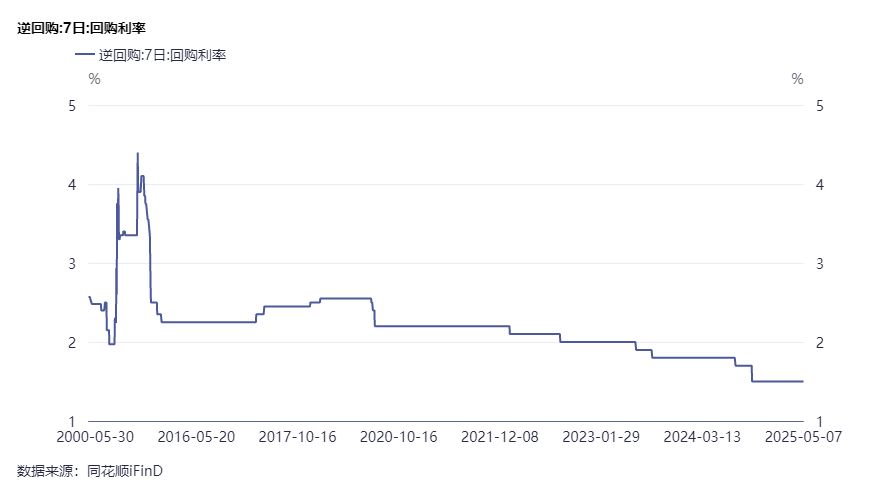
5月7日,中国人民银行宣布推出一揽子货币政策措施,旨在稳定市场预期和提振经济活力。其中,公开市场7天期逆回购操作 利率将于5月8日起由1.50%调整为1.40%,下降幅度为0.1个百分点。 7天逆回购操作利率是央行政策利率之一。目前我国市场基准利率以政策利率为中枢运行,并通过银行体系传导至贷款利率。 这也意味着,在本次降息后,包括个人住房按揭贷款在内的银行贷款利率,乃至多层次的市场主体融资成本都会进一步下降。 值得注意的是,商业银行维持稳健经营、防范金融风险,需要保持合理利润和净息差水平。在政策利率下行背景下,商业银行 净息差目前已降至历史最低水平,截至去年四季度末为1.52%。 调降存款利率是商业银行维持合理净息差水平的方式之一。金融监管政策专家周毅钦对《每日经济新闻》记者表示,此次降息 后,存款利率仍有下降空间,以维持净息差水平。此外,考虑到当前经济形势、中美贸易关系和货币政策目标,预计今年在必 要时,政策利率仍存在进一步下行的可能性。 历年来7天期逆回购操作利率走势 降低政策利率0.1个百分点,预计带动LPR同幅度下行 5月7日早间,中国人民银行发布公开市场业务公告(2025)第1号。 公告显示,为实施 ...

对话众安银行新任CEO吴忠豪:希望年内尽快推出港股交易服务
2 1 Shi Ji Jing Ji Bao Dao· 2025-05-07 12:31
Core Viewpoint - ZA Bank, Hong Kong's largest digital bank, reported significant growth in revenue and a reduction in net loss, indicating a positive trend towards profitability despite challenges in the banking sector [1][2]. Financial Performance - Total revenue for 2024 reached HKD 548 million, a year-on-year increase of 52.6% [1]. - Net loss narrowed to HKD 232 million, a 42% improvement compared to the previous year [1]. - Customer deposits grew by 66% to HKD 19.4 billion, while loan volume increased by 5.7% [1]. Net Interest Margin - ZA Bank's net interest margin expanded by 47 basis points to 2.41%, contrasting with the overall decline in the retail banking sector [1][4]. - Net interest income rose by 86% to HKD 489 million, contributing to the bank's move towards breakeven [1]. Leadership Changes - Calvin Ng, a founding member, has taken over as CEO, aiming to enhance user growth and diversify revenue streams [1][2]. Business Diversification - The bank is focusing on reducing reliance on interest income, with plans to launch Hong Kong stock trading services to complement existing offerings in U.S. stocks and cryptocurrencies [1][7]. - Currently, approximately 90% of total revenue comes from interest income, with efforts underway to increase contributions from wealth management services [7]. User Growth Strategy - ZA Bank aims to reach a target of 1 million users by 2025, representing a 25% increase from the current 800,000 users [2][9]. - The bank is adapting its customer acquisition strategy to focus on high-quality users through product-driven and word-of-mouth approaches [9]. Deposit Strategy - The bank's current proportion of demand deposits is around 30%, with plans to increase this to lower funding costs [5]. - Innovative deposit products like the "High-Interest Money Pot" are designed to attract deposits while maintaining customer engagement through task completion [6]. Market Positioning - In a competitive landscape with eight digital banks in Hong Kong, ZA Bank positions itself as a one-stop bank for both corporate and retail clients, offering diversified services [2].

42家上市银行年报收官:七成营收增速实现回升,11家归母净利润增速超10%
Cai Jing Wang· 2025-05-07 07:18
Core Insights - The 2024 performance report of 42 listed banks in A-shares shows a slight increase in operating income and net profit, indicating a recovery in revenue despite ongoing pressure on net interest margins [1][2][3] Financial Performance - Total operating income for the 42 listed banks reached 5.65 trillion yuan, a year-on-year increase of 0.08%, while net profit attributable to shareholders was 2.14 trillion yuan, up 2.35% [1][2] - 31 banks reported positive growth in both operating income and net profit, with 30 banks showing improved revenue growth compared to 2023 [2][3] - Notably, Nanjing Bank's revenue growth surged from 1.24% in 2023 to 11.32% in 2024 [2] Revenue Structure - The net interest margin continued to decline, with only two banks maintaining a margin above 2% [1][5] - Interest income for the listed banks collectively decreased by 2.1% to 4.16 trillion yuan, with 17 banks reporting positive growth [5][6] - Non-interest income saw a decline in fee and commission income by 9.38%, while investment income increased significantly by 20.32% to 512.8 billion yuan [7][8] Asset Growth - Total assets of the listed banks reached 302 trillion yuan, with major state-owned banks like ICBC, ABC, and CCB each surpassing 40 trillion yuan in assets [10][11] - ICBC's total assets were 48.82 trillion yuan, while ABC and CCB reported 43.24 trillion yuan and 40.57 trillion yuan, respectively [10] Loan and Deposit Trends - The total loan amount across the 42 banks reached 174 trillion yuan, with corporate loans showing robust growth [12] - Personal deposits increased across all listed banks, with 29 banks reporting growth exceeding 10% [13] - Agricultural Bank led in personal deposits with 18.7 trillion yuan, followed closely by ICBC with 18.54 trillion yuan [13]





招商银行(600036):利息、财富收入正增,存款成本改善
Changjiang Securities· 2025-05-07 02:44
Investment Rating - The investment rating for the company is "Buy" and is maintained [9]. Core Views - The company's revenue in Q1 2025 decreased by 3.1% year-on-year, while net profit attributable to shareholders fell by 2.1%. However, net interest income increased by 1.9%, and non-interest income grew by 10.6%, with wealth management fee income being a key highlight, growing by 10.5% [2][6]. - The cost of liabilities is declining, with the deposit interest rate decreasing to 1.29% in Q1, reinforcing the company's core advantage of low funding costs [2][6]. - The non-performing loan (NPL) ratio decreased by 1 basis point to 0.94% at the end of Q1, and the provision coverage ratio fell by 2 percentage points to 410% [2][6]. - The new NPL generation rate for Q1 was 1.00%, down by 5 basis points compared to the full year of 2024, primarily due to a significant decline in corporate NPL generation [2][6]. - The core Tier 1 capital adequacy ratio remains the highest in the industry, indicating solid internal growth advantages and significant investment value [2][6]. Summary by Sections Performance - The company's Q1 net interest income growth turned positive, supported by a low base from the previous year and a smaller-than-expected decline in interest margins. Non-interest income decreased by 10.6%, with a 2.5% drop in middle-income sources [12]. - The profit aspect showed a reduction in credit impairment provisions year-on-year, although the cost-to-income ratio and tax rate increased slightly [12]. Scale - Corporate lending drove growth, with loans increasing by 3.4% compared to the beginning of the period, mainly due to a 6.5% increase in corporate loans and a 9.8% rise in bills. Retail loan growth was slower at 0.4% due to a contraction in credit card loans [12]. - Deposits grew by 2.5%, with the proportion of demand deposits remaining stable at 50.5% of the average daily balance in Q1, up 0.1 percentage points from the full year of 2024 [12]. Interest Margin - The net interest margin stood at 1.91%, with a quarterly decline of 3 basis points, which is better than the expected decline of 7 basis points for the full year of 2024. The absolute level of interest margin remains advantageous compared to other large banks [12]. - The loan yield was 3.53%, down 17 basis points, reflecting the impact of repricing and lower rates on new loans [12]. Non-Interest Income - Non-interest income saw a decline of 10.6%, with middle-income sources down by 2.5%. However, wealth management fee income turned positive, growing by 10.5% in Q1, with significant increases in sales of mutual funds and trusts [12]. Asset Quality - The NPL ratio and new NPL generation rate showed improvement, with the new generation rate at 1.00%, down from the previous year. The corporate NPL generation decreased significantly, while retail NPL generation is still on the rise [12]. - The NPL ratio for real estate corporate loans was 4.79%, showing a slight increase but remaining stable overall [12]. Investment Recommendation - The company has a strong capital position with no dilution pressure from refinancing. The core Tier 1 capital adequacy ratio remains stable at 14.9%, the highest in the industry. The expected dividend payout ratio for 2024 is 35% [12]. - The decline in Q1 performance was mainly due to investment income, while core business revenues from interest and wealth management showed positive growth. The company is expected to maintain positive profit and dividend growth for the year [12].

交通银行(601328):利息、利润正增 负债成本加速改善
Xin Lang Cai Jing· 2025-05-06 10:26
Core Viewpoint - The company reported a slight decline in revenue for Q1 2025, but maintained positive growth in net profit and net interest income, indicating stability in its financial performance despite challenges in non-interest income [1][2]. Financial Performance - Q1 2025 revenue growth rate was -1.0%, while net profit growth rate was +1.5% and net interest income growth rate was +2.5% [1]. - Non-interest income decreased by 6.8%, with fee income down by 2.4% [2]. - Credit costs improved, with credit impairment losses down by 12% year-on-year, contributing to net profit growth that outperformed the average of major banks [2]. Scale and Growth - Total assets grew by 2.6% compared to the beginning of the year, with loans increasing by 4.2%, adding 116.9 billion [2]. - Retail loans showed stable growth, particularly in housing, consumer, and business loans, while credit card loans contracted due to seasonal factors [2]. Interest Margin - The net interest margin for Q1 was 1.23%, a decrease of 4 basis points compared to the full year of 2024, but the decline was less than that of peers [3]. - The cost of liabilities improved significantly, with the deposit cost rate down by 21 basis points year-on-year, helping to stabilize the interest margin [3]. Non-Interest Income - Non-interest income saw a decline of 2.4%, but the decrease is expected to stabilize, particularly in wealth management-related fees [3]. - Other non-interest income dropped by 10.6%, primarily due to losses from fair value changes influenced by bond market fluctuations [3]. Asset Quality - The non-performing loan (NPL) ratio decreased by 1 basis point to 1.30%, with a stable provision coverage ratio of 200% [1][4]. - Personal loan NPL ratio increased by 10 basis points to 1.18%, indicating rising risks in retail loans, although the overall impact on total NPL generation is expected to be limited [4]. Investment Outlook - The company is positioned as a stable dividend asset with high dividends and low valuation, projecting a dividend yield of 4.3% for A shares and 5.2% for H shares [4]. - The current price-to-book (PB) ratios for A and H shares are 0.57x and 0.48x, respectively, supporting a "buy" rating [4].

上市银行2025Q1业绩综述:投资支撑营收,息差降幅收窄
NORTHEAST SECURITIES· 2025-05-06 09:49
Investment Rating - The report rates the banking industry as "Outperforming the Market" [7]. Core Insights - In Q1 2025, the total operating revenue of 42 listed banks was 1.45 trillion yuan, a year-on-year decrease of 1.72%. The net profit attributable to shareholders was 563.98 billion yuan, down 1.20% year-on-year [2][15]. - Investment income saw rapid growth, accounting for a significant portion of revenue. In Q1 2025, interest income, commission income, and investment income were 1.02 trillion yuan (down 1.65% YoY), 230 billion yuan (down 0.72% YoY), and 170 billion yuan (up 26.10% YoY), respectively [2][15]. - The reduction in provision for asset impairment losses helped to release profits, with total asset impairment losses at 347.13 billion yuan, down 2.37% YoY [2][15]. Summary by Sections Revenue and Profitability - The operating revenue of listed banks decreased by 1.72% YoY, while net profit fell by 1.20% YoY, indicating a slight decline in overall profitability [2][15]. - Investment income increased significantly, contributing 11.62% to total revenue, up 2.56 percentage points from the previous year [2][15]. Loan and Deposit Growth - As of the end of Q1 2025, the total loan and advance amount reached 174.13 trillion yuan, growing by 7.92% YoY, with a slight deceleration in growth rate [3]. - The deposit scale also showed improvement, with a total of 212.38 trillion yuan, reflecting a 6.21% YoY increase [4]. Interest Margin and Asset Quality - The average net interest margin for listed banks was 1.55%, with a year-on-year decline of 0.09 percentage points, although the rate of decline has narrowed [5]. - The average non-performing loan ratio remained stable at 1.16%, while the provision coverage ratio decreased by 7.87 percentage points [5]. Capital Adequacy - As of the end of Q1 2025, the average core tier 1 capital adequacy ratio was 10.35%, showing a slight decline from the previous year [5]. Investment Recommendations - The report suggests that the core factors supporting the stable performance of the banking sector in 2024 and Q1 2025 include increased investment income and reduced provision for losses, indicating resilience in sector profits. Recommended stocks include Chongqing Bank, Yunnan Rural Commercial Bank, Shanghai Bank, and Shanghai Rural Commercial Bank [6].
交通银行(601328):利息、利润正增,负债成本加速改善
Changjiang Securities· 2025-05-06 08:44
Investment Rating - The investment rating for the company is "Buy" and is maintained [9]. Core Views - The company's revenue growth for Q1 2025 is -1.0%, while the net profit attributable to shareholders shows a growth of +1.5%, indicating a positive profit growth that outperforms the average of major banks [2][6]. - Net interest income has increased by +2.5%, continuing its positive growth since 2024, primarily due to the stabilization of interest margin declines [2][6]. - Non-interest income has decreased by -6.8%, with a notable decline in fee income of -2.4%, although the decline is expected to stabilize with a recovery in wealth management-related business [2][6]. - The asset quality remains stable, with a non-performing loan (NPL) ratio decreasing by 1 basis point to 1.30% at the end of Q1, and the provision coverage ratio decreasing by 1.5 percentage points to 200% [2][6]. Summary by Relevant Sections Financial Performance - Q1 2025 revenue growth is -1.0%, while net profit growth is +1.5%, outperforming major banks [2][6]. - Net interest income growth is +2.5%, with continuous positive growth since 2024, attributed to the stabilization of interest margin declines [2][6]. - Non-interest income decreased by -6.8%, with fee income down by -2.4%, but a recovery in wealth management income is anticipated [2][6]. Asset Quality - The NPL ratio decreased by 1 basis point to 1.30% at the end of Q1, indicating stable asset quality [2][6]. - The provision coverage ratio is at 200%, reflecting a stable provisioning environment [2][6]. Investment Outlook - The company is characterized as a stable dividend asset with high dividend yields and low valuation, with expected dividend yields of 4.3% for A shares and 5.2% for H shares over the next year [2][6]. - The current price-to-book (PB) ratios for A and H shares are 0.57x and 0.48x, respectively, reinforcing the investment appeal [2][6].
北部湾银行2024年营收净利双增 不良率持续上行压力初步缓解
2 1 Shi Ji Jing Ji Bao Dao· 2025-05-06 03:28
Core Viewpoint - Guangxi Beibu Gulf Bank has reported a resilient performance in its 2024 annual report, overcoming economic challenges and maintaining double-digit growth in key operational metrics [1] Financial Performance - As of the reporting period, the total assets of the bank reached 520.37 billion yuan, an increase of 49.24 billion yuan, or 10.45% year-on-year [1] - The loan balance stood at 296.52 billion yuan, reflecting a year-on-year increase of 12.84% [1] - Total deposits amounted to 384.23 billion yuan, up 11.40% year-on-year [1] - The bank achieved total operating revenue of 22.11 billion yuan, a year-on-year increase of 2.81% [1] - Net profit reached 3.11 billion yuan, marking a 7.02% increase year-on-year [1] Interest and Non-Interest Income - The net interest income for 2024 was 6.88 billion yuan, showing a slight decrease of 0.01% year-on-year [2] - The net interest margin was 1.67%, down 0.17 percentage points year-on-year [1] - Non-interest income grew significantly, with a year-on-year increase of 4.04 billion yuan, or 13.63% [2] - Investment income rose from 2.40 billion yuan in 2023 to 3.06 billion yuan in 2024, a growth of 27.80% [2] Asset Quality and Risk Management - The non-performing loan (NPL) ratio was stable at 1.43% for 2024, unchanged from 2023 [4] - The bank has been actively managing credit risk through various measures, including debt collection and asset disposal [5] - As of mid-2024, the bank's securities investment assets totaled 172.68 billion yuan, accounting for 34.11% of total assets [3] Management and IPO Progress - The bank has seen leadership changes, with new appointments in key positions aimed at driving the bank's IPO efforts [5] - The bank announced plans for an initial public offering (IPO) in 2023, with ongoing preparations despite not yet completing the listing guidance [5]
招商银行(600036)2025年一季报点评:归母净利润同比小幅下滑 存款成本继续优化
Xin Lang Cai Jing· 2025-05-06 00:25
Core Viewpoint - In Q1 2025, China Merchants Bank reported a decline in both operating income and net profit, indicating a slowdown in performance compared to the previous year [1][2]. Financial Performance - In Q1 2025, the bank achieved operating income of 83.751 billion yuan, a year-on-year decrease of 3.09%, with the decline rate widening by 2.61 percentage points compared to 2024 [1][2]. - The net profit attributable to shareholders was 37.286 billion yuan, down 2.08% year-on-year, with a decline of 3.3 percentage points compared to 2024 [1][2]. - The average return on total assets and average return on equity were 1.21% and 14.13%, respectively, both showing year-on-year declines of 0.14 percentage points and 1.95 percentage points [2]. Revenue Structure - Net interest income for Q1 2025 was 52.996 billion yuan, reflecting a year-on-year growth of 1.92%, continuing the growth trend from Q4 2024 [2]. - Net fee and commission income was 19.696 billion yuan, down 2.51% year-on-year, with wealth management fees increasing by 10.45% [2]. - The revenue from agency wealth management surged by 39.47% due to growth in agency scale and product structure optimization, while agency insurance income continued to decline due to falling insurance sales [2]. - Other net income was 11.059 billion yuan, down 22.19% year-on-year, primarily impacted by rising market interest rates leading to a decrease in the fair value of bond and fund investments [2]. Cost Management - The net interest margin for Q1 2025 was 1.91%, down 11 basis points year-on-year and 3 basis points quarter-on-quarter, with the decline rate narrowing [3]. - The deposit cost rate decreased by 34 basis points year-on-year to 1.29%, positively affecting the net interest margin due to lower deposit rates and regulatory restrictions on high-interest deposit solicitation [3]. Asset Quality - As of the end of Q1 2025, the non-performing loan ratio was 0.94%, a slight improvement of 0.01 percentage points from the end of the previous year [3]. - The non-performing loan ratio for corporate loans improved to 0.95%, while the retail loan non-performing ratio increased to 1.01%, indicating ongoing pressure on retail loan asset quality [3]. - The provision coverage ratio was 410.03%, down 1.95 percentage points from the end of the previous year [3]. Investment Outlook - The bank maintains a "buy" rating, with a dividend payout ratio exceeding 30% and a projected cash dividend of 2 yuan per share for 2024, resulting in a dividend yield of 4.91% based on the closing price on April 30 [4]. - The estimated net asset value per share for 2025 is 45.25 yuan, with the current stock price corresponding to a price-to-book ratio of 0.90 times [4].
存5年不如存3年?银行存款是怎么倒挂的这么厉害的?
Sou Hu Cai Jing· 2025-05-06 00:15
Group 1 - The phenomenon of 5-year deposit rates being lower than 3-year rates is observed, indicating a significant shift in bank deposit interest rates [3][5] - As of March 2025, the average interest rates for various deposit terms are as follows: 3-month at 1.249%, 6-month at 1.449%, 1-year at 1.566%, 2-year at 1.666%, 3-year at 2.042%, and 5-year at 1.883%, showing a widening gap between 3-year and 5-year rates [3][4] - The decline in long-term deposit rates is attributed to banks' strategies to optimize their liability structure in response to rising costs from fixed-term deposits [5][7] Group 2 - The current economic environment shows strong deposit willingness among savers, while loan demand remains weak, leading to a compression of banks' net interest margins [7][9] - Banks are adopting a "short-term high rate" strategy to encourage customers to shift funds from long-term to short-term deposits, thereby improving their funding structure and net interest margin [7][10] - Banks anticipate further declines in interest rates, prompting them to implement inverted interest rates to mitigate risks associated with future rate drops [9][10] Group 3 - The inverted interest rate structure allows banks to reduce the absorption of long-term deposits, avoiding high funding costs in a declining interest rate environment [10] - By increasing the proportion of short-term deposits, banks can enhance liquidity and allocate funds to higher-yielding, more liquid asset projects [10] - The inverted rates may also stimulate consumer spending as depositors reconsider their investment strategies, potentially reallocating funds from savings to consumption [10][12] Group 4 - Individuals are encouraged to reassess their asset allocation strategies in light of the inverted interest rate phenomenon, moving away from traditional reliance on bank deposits for stable returns [12] - Diversification into various investment channels, such as stocks, funds, and fixed-income products, is recommended to achieve better returns while managing risks [12] - A proactive approach to asset management, incorporating liquidity management, yield stratification, and risk hedging, is essential in a low-interest-rate environment [12]