
云计算

Search documents
三旺通信等成立新公司,含云计算设备业务
Qi Cha Cha· 2026-01-19 02:53
Group 1 - Shenzhen Niao Cloud Technology Co., Ltd. has been established recently, focusing on cloud computing equipment manufacturing and sales, as well as technical services related to cloud computing [1] - The company is co-owned by Sanwang Communication (688618) and other stakeholders [1]

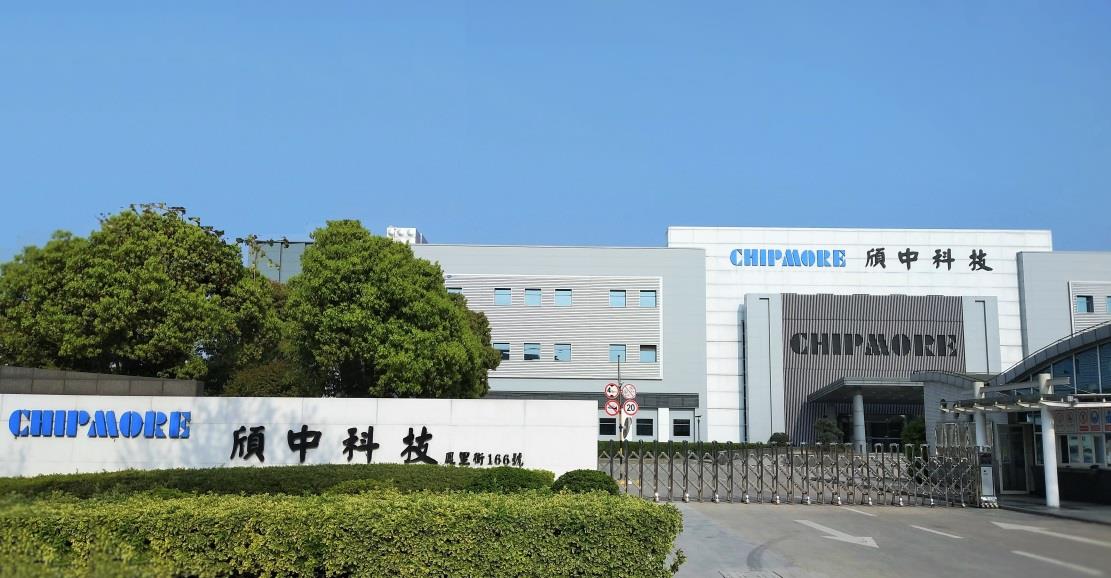
颀中科技拟5000万元增资禾芯集成,深耕先进封测领域实现战略协同
Ju Chao Zi Xun· 2026-01-19 02:53
Core Viewpoint - Hefei Qizhong Technology Co., Ltd. plans to invest 50 million yuan in Zhejiang Hexin Integrated Circuit Co., Ltd., acquiring a 2.27% stake, indicating a strategic move to enhance industry collaboration and competitive advantage in the integrated circuit packaging sector [2] Group 1: Investment Details - The investment will increase Hexin Integrated's registered capital by 26 million yuan, bringing its total registered capital to 105.716 million yuan [2] - Hexin Integrated, established in January 2021, focuses on advanced packaging and testing for integrated circuits, covering key areas such as information communication, AI, big data centers, automotive electronics, and smart terminals [2] Group 2: Strategic Considerations - Qizhong Technology aims to leverage this investment for customer resource expansion, technology capability complementarity, and enhancement of the advanced packaging ecosystem, thereby solidifying its industry position [2] - The collaboration will enable Qizhong to penetrate AI and high-performance computing chip packaging markets, while Hexin can accelerate technology commercialization through Qizhong's established market channels [3] Group 3: Technical Synergy - Qizhong has significant expertise in bumping and flip-chip packaging technologies, leading the industry in full-process testing for 8-inch and 12-inch display driver chips [3] - Hexin Integrated focuses on advanced packaging technologies, creating a unique platform for both wafer-level and panel-level advanced packaging processes, allowing for a comprehensive technical chain from basic to high-end integration [3] Group 4: Industry Ecosystem and Market Expansion - Qizhong is advancing a strategy centered on high-end display driver chip packaging while diversifying into various chip packaging areas, aligning with Hexin's capabilities in flip-chip, wafer-level, and panel-level packaging technologies [4] - The partnership will enhance capabilities in 5G/6G and automotive electronics packaging, optimizing resource allocation and cost control through collaborative capacity planning and supply chain synergy [4]


A股年报行情发布,16家上市公司净利最高同比预增超200%
Sou Hu Cai Jing· 2026-01-19 02:53
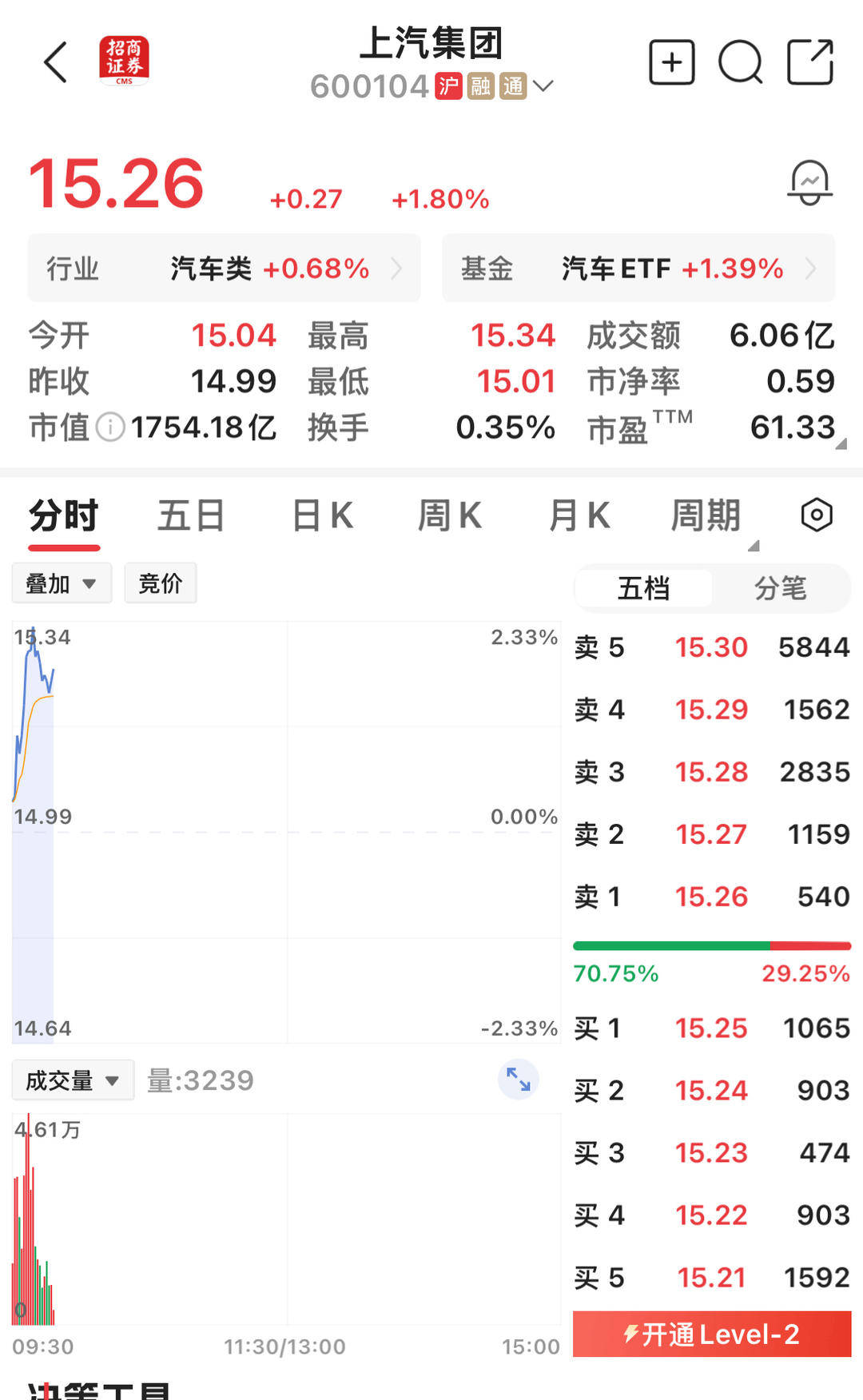
Group 1 - The core viewpoint of the news is that several A-share companies have released their 2025 annual profit forecasts, with significant expected growth in net profits for multiple firms, particularly in the automotive and technology sectors [1][4][5] Group 2 - A total of 366 A-share listed companies have announced their 2025 annual profit forecasts, with 16 companies, including SAIC Motor, Bawei Storage, and Changxin Bochuang, expecting a year-on-year increase in net profit exceeding 200% [4] - SAIC Motor leads with an expected net profit of 9 billion to 11 billion yuan, representing a year-on-year increase of 438% to 558%, driven by increased vehicle wholesale sales and a low base from asset impairment provisions in 2024 [4] - Bawei Storage anticipates a net profit of 850 million to 1 billion yuan, with a growth rate of 427.19% to 520.22%, and a projected Q4 net profit of 820 million to 970 million yuan, significantly above analyst expectations [4] - Changxin Bochuang expects a net profit of 320 million to 370 million yuan, reflecting a growth of 344.01% to 413.39%, supported by the demand for data communication products driven by advancements in cloud computing and AI [5] - Lakala, a cross-border payment concept stock, forecasts a net profit of 1.06 billion to 1.2 billion yuan, marking a growth of 202% to 242%, attributed to increased investment income and a surge in payment transaction volumes [5]

三旺通信等成立新公司 含云计算设备业务
Zheng Quan Shi Bao Wang· 2026-01-19 02:44
Group 1 - Shenzhen Niao Cloud Technology Co., Ltd. has been established recently, focusing on cloud computing equipment manufacturing and sales, as well as related technical services and IT consulting [1] - The company is co-owned by Sanwang Communication and other stakeholders, indicating a collaborative investment approach [1]
MiniMax在广州成立新公司,含AI及机器人业务
Qi Cha Cha· 2026-01-19 02:18
(原标题:MiniMax在广州成立新公司,含AI及机器人业务) 企查查APP显示,近日,广州稀完极智科技有限公司成立,注册资本7000万元,经营范围包含;智能机器人销售;人工智能硬件销售;人工智能 应用软件开发;人工智能行业应用系统集成服务等。企查查股权穿透显示,该公司由MiniMax关联公司上海稀宇极智科技有限公司全资持股. 相关ETF 食品饮料ETF (产品代码: 515170) ★ 跟踪:中证细分食品饮料产业主题指数 近五日涨跌: -1.97% 资金流向: 最新份额为101.9亿份,增 加了6600.0万份,净申赎 3639.5 厂元。 估值分位: 17.11% 游戏ETF (产品代码:159869) ★ 跟踪:中证动漫游戏指数 近五日涨跌: 8.13% 市盈率: 42.96倍 资金流向: 最新份额为90.7亿份,减少 了3.7亿份,净申赎-6.2亿 元。 估值分位:63.05% 市盈率: 19.94倍 近五日涨跌: 2.50% 市盈率:174.99倍 资金流向: 最新份额为530.7亿份, 增 加了1.3亿份,净申赎2.1亿 元。 估值分位: 97.37% 云计算50ETF (产品代码:516630) ...

港股异动 | 长飞光纤光缆(06869)涨超9% AI推动行业景气度提升 公司受益北美AI数据中心建设
智通财经网· 2026-01-19 02:05
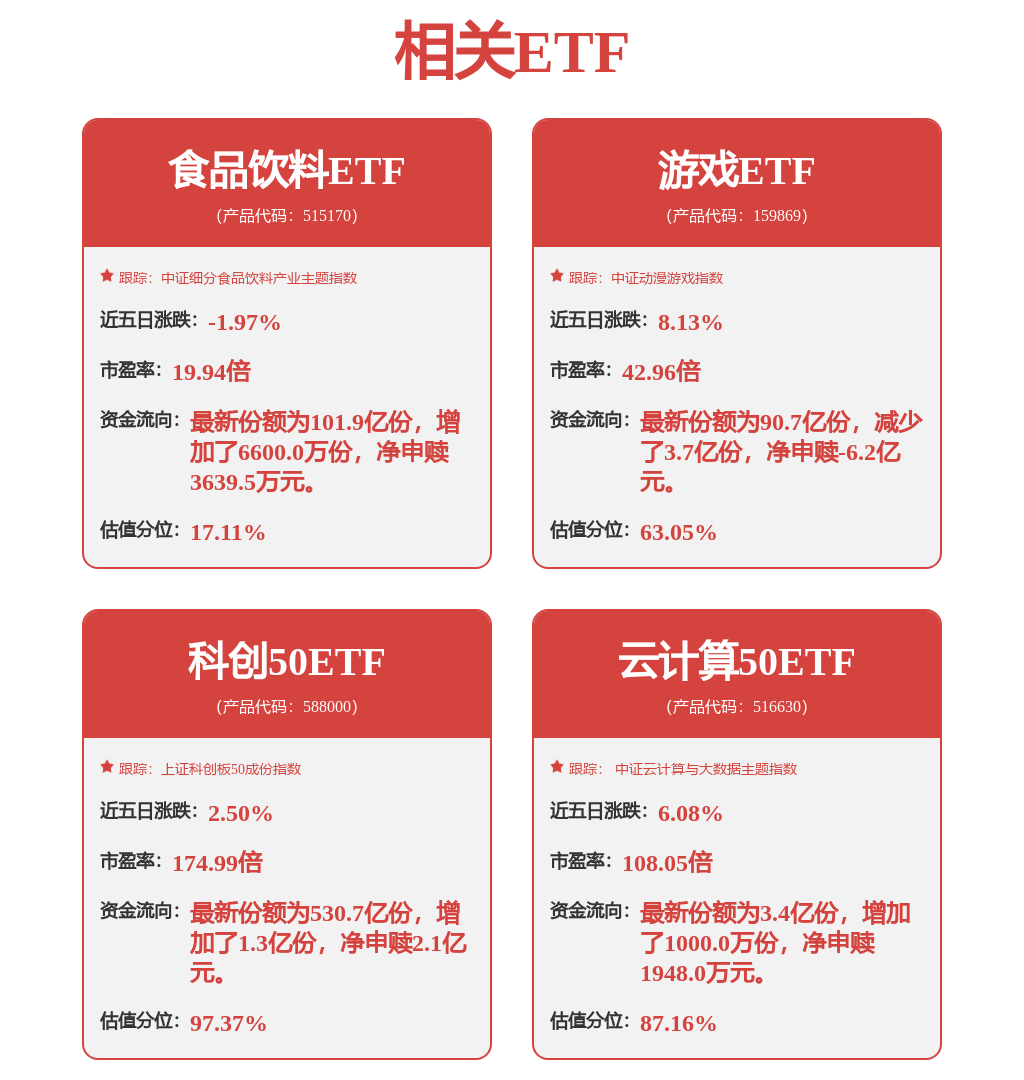
Core Viewpoint - Changfei Fiber Optics (06869) saw a stock price increase of over 9%, reaching HKD 55.3 with a trading volume of HKD 1.008 billion, driven by positive earnings forecasts from its subsidiary Changxin Bochuang for 2025 [1] Company Summary - Changxin Bochuang forecasts a net profit attributable to shareholders of HKD 320 million to HKD 370 million for 2025, representing a year-on-year growth of 344.01% to 413.39% [1] - The growth in net profit is attributed to the increasing demand for computing power driven by new-generation information technologies such as cloud computing, artificial intelligence, and big data, which are propelling the rapid development of the data communication market [1] - The company's revenue from data communication-related products is steadily increasing, contributing to the overall profit growth [1] Industry Summary - Huatai Securities noted that the MPO, AOC, and high-speed copper cable businesses, developed through Changxin Bochuang, have become strong growth points, benefiting from the construction of AI data centers in North America and the ongoing expansion of overseas business [1] - According to a report by Founder Securities, China's optical cable production reached 125 million core kilometers in the first half of 2025, showing a decrease year-on-year, but the decline has narrowed compared to previous periods [1] - The prices of common optical fibers have started to rebound, and the procurement prices from operators are expected to stabilize and recover, indicating that the overall industry outlook may enter an upward phase [1]

海量数据1月16日获融资买入2926.40万元,融资余额1.60亿元
Xin Lang Cai Jing· 2026-01-19 01:33
Group 1: Company Performance - As of January 16, the stock price of Beijing Haima Data Technology Co., Ltd. decreased by 2.42%, with a trading volume of 373 million yuan [1] - For the period from January to September 2025, the company achieved operating revenue of 314 million yuan, representing a year-on-year growth of 17.68% [2] - The net profit attributable to the parent company for the same period was -75.43 million yuan, a decrease of 73.04% year-on-year [2] Group 2: Financing and Shareholder Information - On January 16, the company had a financing buy-in amount of 29.26 million yuan, with a net financing buy of -2.86 million yuan [1] - The total balance of margin trading and securities lending as of January 16 was 160 million yuan, accounting for 3.36% of the circulating market value [1] - The number of shareholders as of September 30 was 27,400, a decrease of 12.44% compared to the previous period [2] Group 3: Business Overview - The company, established on July 30, 2007, focuses on providing IT infrastructure data platform solutions for large and medium-sized enterprises, including data storage, security, database management, and cloud computing services [1] - The revenue composition of the company's main business includes 59.72% from data infrastructure solutions, 39.86% from proprietary database products and services, and 0.42% from other sources [1] Group 4: Dividend Information - Since its A-share listing, the company has distributed a total of 64.50 million yuan in dividends, with no dividends paid in the last three years [3]

苏州玖物智能科技股份有限公司(H0329) - 申请版本(第一次呈交)
2026-01-18 16:00
香 港 聯 合 交 易 所 有 限 公 司 與 證 券 及 期 貨 事 務 監 察 委 員 會 對 本 申 請 版 本 的 內 容 概 不 負 責,對 其 準 確 性 或 完 整 性 亦 不 發 表 任 何 聲 明,並 明 確 表 示 概 不 就 因 本 申 請 版 本 全 部 或 任 何 部 分 內 容 而 產生或因倚賴該等內容而引致的任何損失承擔任何責任。 Suzhou Junion Intelligent Technology Co., Ltd. 蘇州玖物智能科技股份有限公司 (「本公司」) (於中華人民共和國註冊成立的股份有限公司) 的申請版本 警 告 本申請版本乃根據香港聯合交易所有限公司(「聯交所」)與證券及期貨事務監察委員會(「證監會」) 的要求而刊發,僅用作提供資料予香港公眾人士。 本申請版本為草擬本,其內所載資料並不完整,亦可能會作出重大變動。 閣下閱覽本文件, 即代表 閣 下 知 悉、接 納 並 向 本 公 司、本 公 司 的 聯 席 保 薦 人、整 體 協 調 人、顧 問 或 包 銷 團 成 員 表示同意: 倘 於 適 當 時 候 向 香 港 公 眾 人 士 提 出 要 約 或 邀 請, ...
每天三分钟公告很轻松 | 增长406%!国联民生披露业绩预告
Shang Hai Zheng Quan Bao· 2026-01-18 13:40
Group 1 - Yanjiang Co. plans to acquire 98.54% stake in Yongqiang Technology, which is expected to constitute a major asset restructuring. The transaction will involve issuing shares and cash payments to 28 counterparties, aiming to expand into the high-end electronic interconnection materials for integrated circuits [1] - Yongqiang Technology specializes in the R&D, production, and sales of high-performance copper-clad laminates and semi-cured sheets, which aligns with Yanjiang's strategic transformation and technology research in the integrated circuit sector [1] Group 2 - Guolian Minsheng forecasts a net profit increase of approximately 406% for 2025, expecting to reach 2.008 billion yuan, up from the previous year's 1.611 billion yuan. This growth is attributed to the acquisition of Minsheng Securities and the integration of its business [3] - The company aims to enhance its financial service capabilities through deep integration of technology, finance, and industry, leading to significant growth in securities investment, brokerage, and wealth management [3] Group 3 - Tianyuan Intelligent's actual controller and chairman has been detained for investigation, but the company states that its operations and management remain normal, and there is no significant impact on its business [4] Group 4 - Changxin Bochuang expects a net profit of 32 million to 37 million yuan for 2025, representing a year-on-year growth of 344.01% to 413.39%, driven by the demand for data communication products due to advancements in cloud computing and AI [5] - Shenghong Technology anticipates a net profit of 416 million to 456 million yuan for 2025, with a growth of 260.35% to 295.00%, maintaining its technological leadership in the global PCB manufacturing sector [5] Group 5 - Beifang Rare Earth predicts a net profit of 2.176 billion to 2.356 billion yuan for 2025, an increase of 116.67% to 134.60%, due to improved production and sales of rare earth products [7] - The company has made significant progress in its production efficiency and competitive advantages through various projects and innovations in the rare earth industry [7] Group 6 - Oke Yi expects a net profit of 96 million to 110 million yuan for 2025, a growth of 67.53% to 91.96%, driven by the rising demand for precision machining tools in the high-end manufacturing sector [8] - Lanqi Technology forecasts a net profit of 2.15 billion to 2.35 billion yuan for 2025, benefiting from the booming AI industry and increased demand for interconnect chips [9] Group 7 - Huida Technology has received approval for a stock issuance to specific investors, which is valid for 12 months, aimed at funding various projects [12] - Xinyuan New Materials plans to acquire a 51% stake in Hai Rui Te Engineering Plastics, enhancing its position in the high-tech materials sector [15]

1月18日周末公告汇总 | 锋龙股份停牌核查结束并复牌;剑桥科技、胜宏科技、长芯博创集体发布年报预告
Xuan Gu Bao· 2026-01-18 11:55
Group 1: Resumption of Trading - Yanjiang Co. plans to acquire 98.54% of Yongqiang Technology through a combination of share issuance and cash payment, and will issue shares to raise supporting funds from Xiamen Yansheng and Xie Jihua, leading to stock resumption [1] - Shimao Energy has terminated its plan for a change in control, resulting in stock resumption [2] - Fenglong Co. has completed its suspension review, leading to stock resumption [3] - Minbao Optoelectronics is planning to issue shares and pay cash to acquire Xiamen Xiazhi Precision Technology and Jiangxi Maida Intelligent Technology, resulting in stock suspension [4] Group 2: Mergers, Acquisitions, and Capital Increases - Dongyangguang has completed the capital increase of its joint venture for the acquisition of 100% of Qinhuai Data China [5] - Chengtian Weiye plans to raise no more than 800 million yuan through a private placement for the industrialization of liquid cooling heat dissipation systems [6] Group 3: External Investments and Daily Operations - Wanrun New Energy's wholly-owned subsidiary is investing 1.079 billion yuan to construct a lithium iron phosphate project [7] - Iwo Biological has completed the summary report of Phase I clinical trials for dust mite membrane agents [8] - Dashengda's subsidiary in Hainan is investing 721 million Thai Baht and introducing strategic investor SENDA INTERNATIONAL with an investment of 128 million Thai Baht for capital increase in Thailand [9] - Lizhong Group's wholly-owned subsidiary Hebei Lizhong Alloy Group has signed a strategic cooperation agreement with a leading domestic new energy vehicle company to establish a joint innovation laboratory for the research and application of aluminum alloy materials for automotive/robotics [10] Group 4: Performance Changes - Cambridge Technology expects a net profit of 252 million to 278 million yuan in 2025, a year-on-year increase of 51.19% to 66.79%, driven by strong market demand from AI and global data center construction [11] - Lishang Guochao anticipates a net profit of 140 million to 170 million yuan in 2025, a year-on-year increase of 92.96% to 134.31% [12] - Lanke Technology expects a net profit of 2.15 billion to 2.35 billion yuan in 2025, a year-on-year increase of 52.29% to 66.46%, due to a significant increase in shipments of interconnect chips [13] - Shenghong Technology anticipates a net profit of 4.16 billion to 4.56 billion yuan in 2025, a year-on-year increase of 260.35% to 295.00%, primarily due to large-scale production of high-end products in AI computing, data centers, and high-performance computing [14] - Hongyuan Pharmaceutical expects a net profit of 113 million to 137 million yuan in 2025, a year-on-year increase of 119.57% to 166.20%, driven by sustained growth in the new energy vehicle market and rapid growth in the energy storage market [15] - China First Heavy Industries expects a net profit of -310 million to -460 million yuan for 2025, compared to -3.736 billion yuan in the previous year, with positive developments in the power station casting and nuclear power sectors [16] - Changxin Bochuang anticipates a net profit of 320 million to 370 million yuan in 2025, a year-on-year increase of 344.01% to 413.39%, driven by the rapid development of the data communication market due to demand from cloud computing, AI, and big data [17]
