数字经济

Search documents
让营商环境更为优化,上海徐汇再出发
Zhong Guo Jing Ji Wang· 2026-01-27 14:37
Group 1 - The core viewpoint of the news is the official release of the "Action Plan for Accelerating the Creation of an International First-Class Business Environment in Xuhui District (2026)", which aims to enhance the business ecosystem through four key areas: government services, market competition, industrial ecology, and social governance [1] - The plan includes 22 tasks and 96 detailed measures to transform the optimization of the business environment from a "construction blueprint" into a "real scene" [1] - In 2025, Xuhui District achieved a GDP of 415.308 billion yuan, a year-on-year growth of 5.5%, maintaining the highest total among central urban areas [1] Group 2 - During the "14th Five-Year Plan" period, Xuhui District's GDP crossed two "trillion" thresholds, marking a historic leap in regional economic development [2] - Companies like Tencent and MiniMax have expressed their commitment to deepening their business presence in Xuhui, highlighting the district's favorable business environment and innovation ecosystem [2] - In early 2026, 16 key projects were signed, covering various fields such as artificial intelligence, biomedicine, and marketing technology, contributing to the economic vitality of Xuhui [2] Group 3 - Mettler-Toledo, a global leader in precision instruments, has been rooted in Xuhui since 1992, benefiting from the district's high-quality business environment [3] - Xuhui District has attracted 175 multinational company headquarters and foreign R&D centers, leading the central urban areas in terms of foreign investment [3] - Foreign enterprises, while constituting 17% of the total number of companies in Xuhui, contribute nearly 50% of the economic output, playing a crucial role in the district's development [3] Group 4 - In the "15th Five-Year Plan" period, Xuhui aims to build a modern industrial structure with a focus on innovation and quality, while also developing future industries such as smart manufacturing and quantum technology [4] - Approximately 2.8 million square meters of commercial buildings are expected to be completed and put into use over the next three years [4] - The district plans to enhance enterprise services and optimize support mechanisms to ensure the sustainable development of businesses [4]
权威解读·2025中国经济关键词|动能强劲 创新活力持续迸发
Xin Hua She· 2026-01-27 14:06
2025年,中国经济有效应对各种风险挑战,顶压前行、向新向优发展,交出一份来之不易的成绩单。 对外经济贸易大学国家对外开放研究院研究员刘斌说,当前我国产教融合和产业创新发展非常迅速,呈 现出政策牵引强、链条耦合深、成果转化快的特征。同时,智能化和绿色化转型发展迅速,制造业的某 些领域也逐渐攻克了被"卡脖子"的风险。 "总体而言,我国通过高强度投入与系统性布局,在前沿领域实现从跟跑到并跑、领跑的跨越,为产业 升级与新质生产力培育提供坚实支撑。"盛朝迅说,"十五五"时期,培育壮大新兴产业和未来产业,既 要巩固现有优势领域,又要前瞻布局新赛道,形成"技术多点突破、产业梯度接续、跨界深度融合"的发 展格局,为实体经济注入源源不断的新动能。 记者:李海伟、有之炘、马晓冬 国家发展改革委习近平经济思想研究中心副主任盛朝迅在接受采访时说,近年来,我国对科技创新与产 业创新的重视和投入,呈现出战略定位高、投入规模大、体系支撑强、转化效率高的特征,在人工智 能、人形机器人、商业航天、低空经济、量子通信、生物制造等前沿领域形成局部领跑、整体并跑的格 局,为高质量发展注入强劲动能 。 2025年,我国规模以上数字产品制造业增加值比 ...
怡亚通(002183.SZ):正坚定向科技驱动型企业转型
Ge Long Hui· 2026-01-27 13:40
Core Viewpoint - The company is committed to transforming into a technology-driven enterprise, focusing on the storage chip sector and AI computing platforms [1] Group 1: Technology Transformation - The company is transitioning towards a technology-driven model through its wholly-owned subsidiary, Yibaidong Electronics, ensuring stable supply of storage products [1] - Collaborations with international manufacturers such as Micron, Toshiba, and Kioxia are established to enhance product offerings in the storage chip market [1] Group 2: Investment Strategy - The company has developed a comprehensive investment layout in the storage chip field, including strategic investments in Starfire Semiconductor for chip design, serving clients like Chang'an and BYD [1] - The company holds shares in leading storage controller chip firm, Lianyun Technology, which has already gone public [1] - Investments in Shanghai Chip Scene have been made to enhance the storage module layout [1] Group 3: AI and Computing Power - The company's subsidiary, Zhuoyou Cloud Intelligence, has delivered multiple AI computing platforms [1] - Products from the invested enterprise, Zhuoyi Hengtong, are fully compatible with six domestic CPUs, including Haiguang and Feiteng [1] Group 4: Industry Collaboration - The company strengthens its distribution network and collaboration in the 5G/6G communication sector through stakes in quality enterprises like Weishi Jiajie and Junzhi Group [1] - This collaboration aims to build a self-controllable industrial ecosystem that supports the national digital economy development strategy [1]

海南两会观察:锚定“十五五” 开放排首位
Zhong Guo Xin Wen Wang· 2026-01-27 12:33
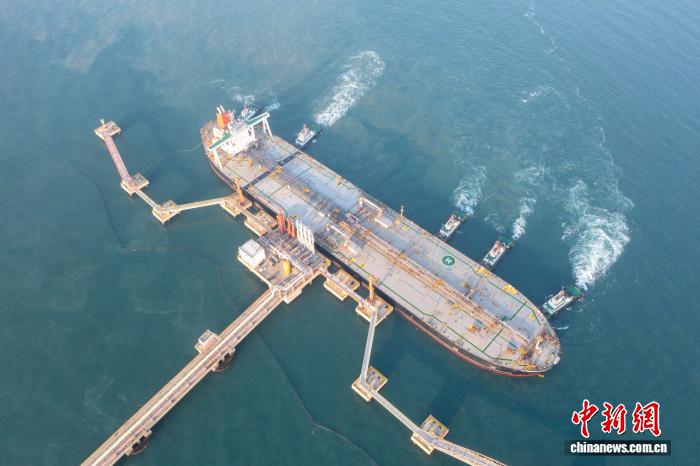
海南两会观察:锚定"十五五" 开放排首位 中新网海口1月27日电 (记者 王子谦)从建省办经济特区,到建设国际旅游岛,再到建设自由贸易港,开 放都是海南鲜明的底色。步入"十五五"开局之年,全岛封关后的海南自贸港如何起好步、开好局? 2025年12月18日,海南自贸港正式启动全岛封关后,第一批通关"零关税"石化原辅料运抵洋浦港。 中 新网记者 骆云飞 摄 海南省两会正在此间举行。细读海南省省长刘小明在海南省七届人大五次会议上所作的政府工作报告可 见,"开放"依然被摆在了重要位置。无论是实现"十五五"目标必须做到的"八个聚焦",还是实现"十五 五"开局之年经济社会发展主要预期目标要注重抓好的"十项工作",都把"开放"排在第一位。 开放是海南自贸港的本质属性,也是必然要求。锚定"十五五",海南官方把"聚焦对外开放,高标准建 设海南自贸港"排在"八个聚焦"的首位。 也就是,"十五五"时期,海南将全面落实海南自由贸易港建设总体方案,深入实施海南自由贸易港法, 稳步扩大制度型开放,深入推进商品和要素流动型开放,深化行政体制改革,在推进高水平对外开放中 发挥牵引作用,服务建设开放型世界经济。 2026年是"十五五"开局之年 ...

中国—中亚贸易额首破千亿美元 未来增长潜力何在?
证券时报· 2026-01-27 11:13
2025年,中国与中亚五国(哈萨克斯坦、吉尔吉斯斯坦、塔吉克斯坦、土库曼斯坦、乌兹别克斯坦)的货物贸易首次突破1000亿美元大关, 达到1063亿美元,同比增长12%。其中,进出口同向发力,增速分别达到14%、11%。中亚成为中国外贸增速最快的区域之一,中国也已成为 中亚各国第一大贸易伙伴。 中国社会科学院俄罗斯东欧中亚研究所副研究员李睿思: 近年来,围绕中亚国家经济发展中的绿色低碳转型、科技创新驱动、生态环保等现实 诉求,中方加大力度逐步实现投资的稳步扩容,通过打造资金、技术、产业的良性循环发展模式,推动含有高技术、高附加值的产品走向市场。 亮眼数据背后,支撑动力何在?未来增长潜力又如何?近期,证券时报记者采访了多位业内专家,解答这些问题。 证券时报:中国与中亚五国之间的贸易结构是怎样的? 商务部国际贸易经济合作研究院研究员余稳策: 2025年,中国与中亚五国贸易规模实现历史性突破。货物贸易总额达1063亿美元,同比增长 12%,中国首次跃居中亚各国第一大贸易伙伴。双方贸易结构呈现出"向新向优"的特点。中国对中亚出口712亿美元,同比增长11%,机电和高新 技术产品占主导,"新三样"(电动汽车、锂电池、太阳 ...

杭州上城百亿人工智能基金招GP
FOFWEEKLY· 2026-01-27 10:07
Group 1 - The core viewpoint of the article highlights the establishment of a public recruitment process by Hangzhou Shangcheng State Capital Operation Group Co., Ltd. for selecting sub-fund management institutions to manage a total scale of 10 billion yuan industry fund focused on future industries such as artificial intelligence and digital economy [1] - The fund management company has collaborated with industry leaders and state-owned capital to set up over 20 sub-funds, with a total cooperation scale nearing 20 billion yuan [1] - The sub-funds are required to be registered in Shangcheng District, Hangzhou, focusing on two main themes: "artificial intelligence" and "advanced manufacturing," with specific investment requirements for each thematic fund [1] Group 2 - The "artificial intelligence" thematic fund mandates that at least 70% of the investment amount must be directed towards areas such as embodied robots and AI applications [1] - The "advanced manufacturing" thematic fund requires that at least 70% of the investment amount be allocated to sectors aligned with Hangzhou's advanced manufacturing cluster, including aerospace and high-end equipment [1]

山东省政协委员“把脉”10万亿新起点、“新引擎”
Sou Hu Cai Jing· 2026-01-27 09:17
Core Insights - Shandong Province is projected to achieve a GDP of 10.3 trillion yuan by 2025, marking it as the first northern province and the third in China to enter the "trillion club" with a year-on-year growth of 5.5% [1][3] - The economic breakthrough is attributed to a combination of strengthening the real economy, activating growth momentum, and precise policy support, leading to both quantitative and qualitative improvements [1][3] Economic Structure - Shandong's industrial foundation is robust, with a projected year-on-year growth of 7.6% in industrial added value by 2025, supported by growth in 36 industrial sectors [1][3] - As an agricultural powerhouse, Shandong aims for a total agricultural output value of 1.3 trillion yuan by 2025, maintaining grain production above 110 billion jin for five consecutive years, showcasing a complementary economic structure between agriculture and industry [3][4] Transformation Strategy - The province is addressing its reliance on traditional industries through a three-step strategy: revitalizing traditional industries, expanding emerging industries, and planning for future industries [3][4] - Technological upgrades are being emphasized to transform traditional sectors like petrochemicals and steel into high-end, intelligent, and green industries [3][4] Green Transition - Shandong is positioned as a leader in green, low-carbon development, with non-fossil energy accounting for 54.2% of installed capacity by 2025, an increase of 23.4 percentage points since 2020 [4] - The province is breaking the notion that high energy consumption is necessary for high growth, achieving a balance between ecological and economic benefits [4] Trade and Openness - Shandong's foreign trade is shifting from a focus on goods to institutional and multidimensional collaboration, with a projected year-on-year growth of 4.5% in imports and exports by 2025 [4][5] - The province's general trade will account for 64.8% of its trade structure, with private enterprises contributing 76.3% to foreign trade growth [4][5] Future Directions - Moving forward, Shandong aims to focus on innovation, industrial upgrading, regional collaboration, improving livelihoods, and enhancing openness [5][6] - Recommendations include strengthening major technological breakthroughs, optimizing the innovation ecosystem, and promoting the integration of digital technology with the real economy [5][6] - The province is also encouraged to enhance its marine economy and develop new industries such as offshore wind power and marine biomedicine [5][6]
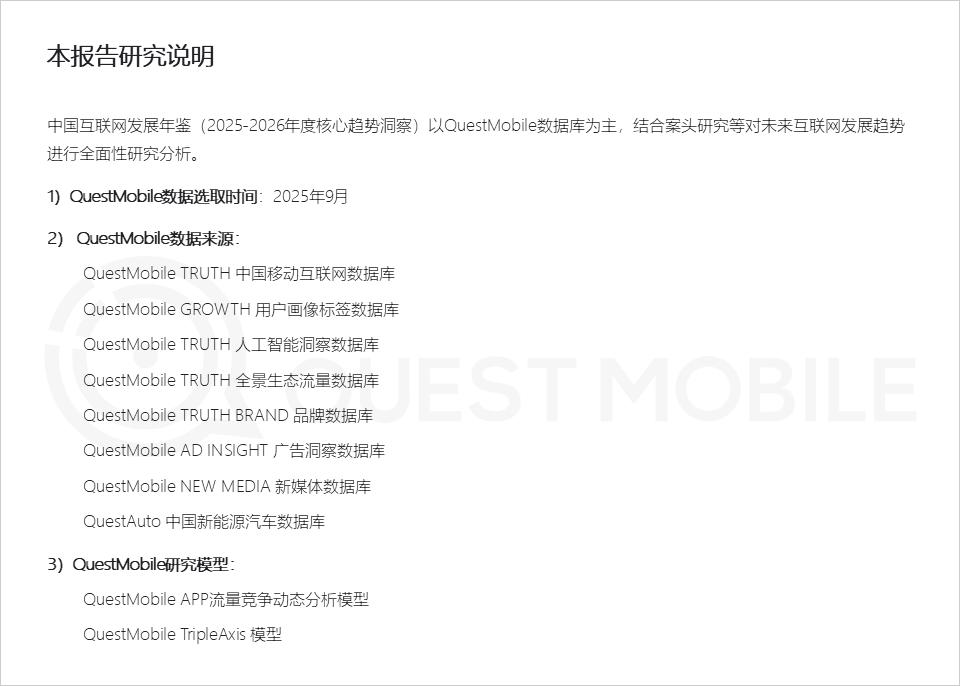
QuestMobile 2025-2026年度核心趋势报告
Sou Hu Wang· 2026-01-27 08:09
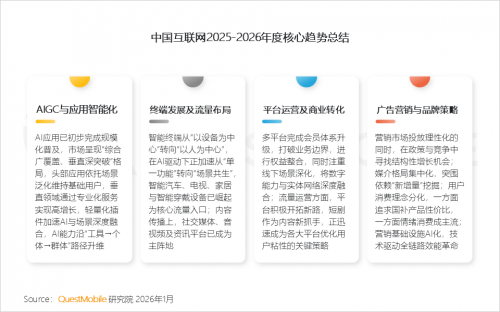
Core Insights - The article emphasizes the transition of China's digital economy from "quantitative change" to "qualitative change" by 2025, with the digital economy expected to exceed 65 trillion yuan, accounting for over 50% of GDP, thus becoming a core engine of the national economy [1] - The shift from a "traffic-centric" model to a "user-centric" value cultivation model is highlighted, indicating a new competitive landscape in the next decade [1] - Internet giants are focusing on "cost reduction and efficiency enhancement," moving their strategic focus from "traffic acquisition" to "user value cultivation" [1] Group 1: Digital Economy and User Value - By 2025, the digital economy in China is projected to surpass 65 trillion yuan, representing over 50% of GDP, marking a significant shift in its role within the national economy [1] - The transition from a "traffic-centric" to a "user-centric" model signifies the end of the "traffic is king" era in mobile internet, leading to a new competitive landscape [1] - Internet platforms are breaking boundaries and adopting a "data-technology-scenario" ecosystem to better serve users [1] Group 2: Key Strategies of Internet Giants - Major companies are integrating membership systems and deepening offline scenarios to enhance user engagement, as seen with Alibaba's Taobao and JD's PLUS service [2] - The rise of HarmonyOS and other distributed architectures is breaking the boundaries of single hardware, marking a shift towards a "super terminal ecosystem" [2] - The competition in the smartphone market is evolving with AI features becoming standard, pushing brands like Huawei to innovate [2] Group 3: AI and Application Trends - The AI industry is transitioning from technical breakthroughs to large-scale commercial applications, driven by policy, technology, and industry integration [7] - AI applications are experiencing rapid growth, with mobile AI assistant users reaching 7.29 billion by September 2025 [18] - The focus in the AI sector is shifting from model size to cost efficiency and speed of implementation, leading to a surge in "In-App AI" applications [18] Group 4: Market Environment and Trends - The overall macroeconomic environment in China is stable, with the digital economy being a significant driving force [5] - The internet advertising market is expected to maintain moderate growth, with mobile platforms remaining the core entry point for marketing [5] - The market is witnessing a shift from high-growth sectors to a focus on AIGC (AI-Generated Content) and the rapid proliferation of intelligent applications [11] Group 5: User Engagement and Content Strategy - The shift from "traffic hunting" to "user value cultivation" reflects a change in market dynamics, with a focus on deep user engagement [93] - Platforms are evolving from mere transaction sites to essential service providers in users' digital lives, integrating various services to enhance user experience [97] - The rise of short video content is becoming a new growth engine, with significant increases in user engagement across platforms [107]
QuestMobile 2025-2026年度核心趋势报告(精华版):智变重构用户价值,流量红利跃迁为服务红利,“产业红海”中新机涌动
3 6 Ke· 2026-01-27 05:23
Core Insights - The article highlights that 2025 will mark a pivotal transition for China's digital economy, with an expected scale exceeding 65 trillion yuan, accounting for over 50% of GDP, thus becoming a core engine of the national economy [1] - The shift from a "quantity" to "quality" focus in the digital economy indicates a new competitive landscape, moving away from the previous "traffic-centric" model to a user-centered value cultivation approach [1][2] - Major internet platforms are expected to adopt cost-cutting and efficiency-enhancing strategies, focusing on deepening user value rather than merely competing for user scale [1][2] Group 1: Digital Economy Trends - By 2025, the digital economy is projected to exceed 65 trillion yuan, representing over 50% of GDP, establishing itself as a core economic driver [1] - The transition to a user-centered model signifies the end of the "traffic is king" era, leading to a new competitive landscape for the next decade [1][2] - Internet giants are shifting their strategies from "traffic acquisition" to "user value cultivation," breaking boundaries to create a collaborative ecosystem of data, technology, and scenarios [1][2] Group 2: Hardware and Software Ecosystem - The rise of distributed operating systems like HarmonyOS is breaking the boundaries of single hardware, marking a shift from a device-centric to a user-centric approach in the smart terminal industry [2] - The competition in the smartphone sector is evolving into the "AI era," with features like AI summarization becoming standard, while the focus in the electric vehicle market is shifting from battery life to smart cockpit experiences [2] - The integration of AI into various sectors, including smart homes and vehicles, is transforming user experiences and driving significant changes across the ecosystem [2][3] Group 3: AI and Application Trends - The AI industry is transitioning from technical breakthroughs to large-scale commercial applications, with a focus on reducing implementation costs and increasing speed [10][19] - The competition in the AI sector is shifting from "who has the largest model parameters" to "who can implement solutions more efficiently," leading to a rapid rise in "In-App AI" applications [2][19] - By September 2025, the mobile AI assistant user base is expected to reach 7.29 billion, indicating a significant penetration of AI applications in daily life [19][21] Group 4: User Engagement and Marketing Strategies - The shift from "traffic hunting" to "user value cultivation" reflects a deeper operational focus as the growth of active mobile internet users stabilizes [92] - Internet platforms are increasingly competing on an ecosystem level rather than just within specific business areas, indicating a trend towards comprehensive ecosystem competition [94] - Marketing strategies are evolving to prioritize precision and efficiency, with a focus on creating measurable conversion effects through targeted advertising [124][135]
从历史规律到当前信号,流动性溢价下,为何看好中小盘?
Sou Hu Cai Jing· 2026-01-27 04:29
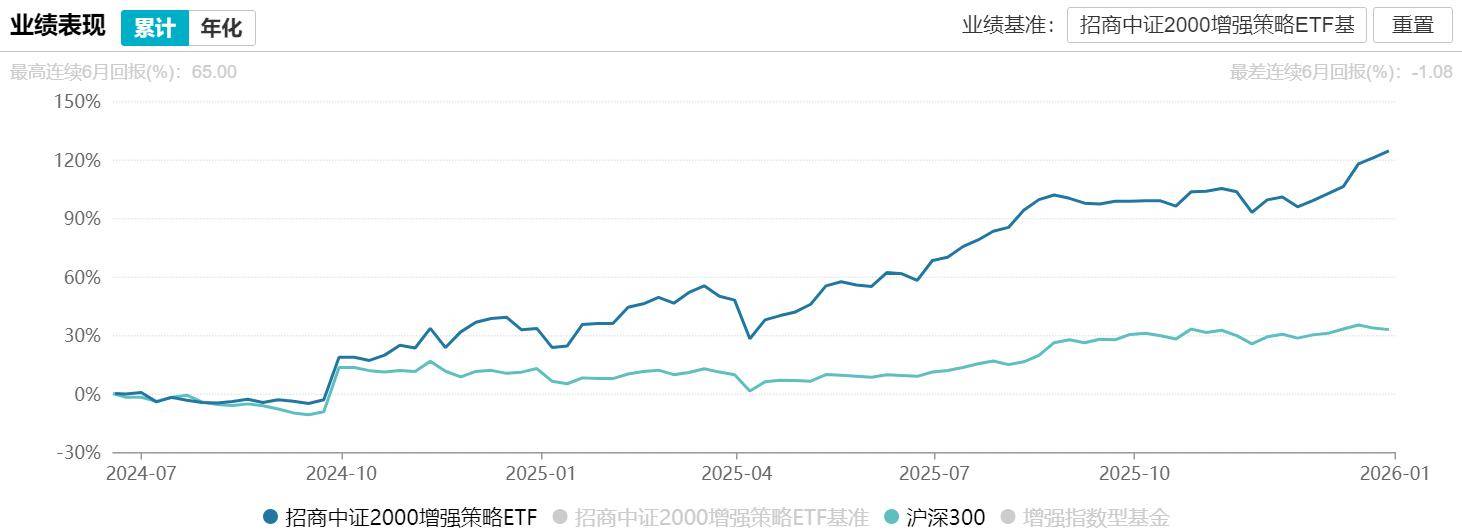
Core Viewpoint - The recent upward trend in the net value curve of the CSI 2000 Enhanced ETF (159552) indicates a market-driven style shift, with investors recognizing a wave of capital inflow [1] Group 1: Market Trends - Historical data shows that each significant increase in trading volume is accompanied by a strong rise in small-cap stocks, with the CSI 2000 outperforming the CSI 300 by 196% during the 2014-2015 market surge [2] - Since January, the average daily trading volume of A-shares has stabilized above 2.5 trillion, signaling the start of a new style rotation [3] Group 2: Performance and Strategy - Past trends indicate that small-cap outperformance typically lasts 2-3 months following a breakthrough in trading volume, suggesting potential for continuation in the current cycle [5] - The current macroeconomic environment, characterized by loose monetary policy and supportive policies for emerging industries, provides a solid foundation for the continuation of small-cap performance [5] - The CSI 2000 Enhanced ETF serves as an effective tool to capture this historical opportunity, tracking the CSI 2000 index closely and benefiting from liquidity premiums, with an annualized excess return of 19.87% since inception [5] Group 3: Future Outlook - The ongoing macro liquidity supports small-cap stocks, while emerging industry transformations open growth opportunities for small enterprises, particularly in dynamic sectors like AI and high-end manufacturing [6] - The CSI 1000 Enhanced ETF (159680) has also shown strength recently, with an annualized excess return of 10.49%, allowing investors to build a "high elasticity + stable growth" small-cap portfolio based on their risk preferences [6]