生态文明建设

Search documents
辉煌60载 魅力新西藏|山南绿漫金沙地
Jing Ji Ri Bao· 2025-07-24 04:57
Group 1 - The transformation of previously barren land in Shannan City, Tibet, into fertile areas demonstrates the successful implementation of the concept that "lucid waters and lush mountains are invaluable assets" [1][4] - The establishment of a 50.33 square kilometer oasis from saline-alkali land showcases the community's efforts in ecological restoration and sustainable development [2][3] - The introduction of the Green Source Company in Zhanang County has led to the reclamation of over 4,000 acres of sandy land, significantly improving agricultural productivity [3] Group 2 - The cultivation of asparagus by Green Source Company not only meets nutritional needs but also aligns with ecological protection goals, enhancing both ecological and economic benefits [3] - The company has achieved a sales revenue exceeding ten million yuan annually, with a peak transportation volume of one ton per day for organic asparagus [3] - Since its establishment, Green Source Company has contributed to an increase in local residents' income by over 63 million yuan, reflecting its positive impact on the community [3]
贯彻落实中央城市工作会议精神 | 北京城市副中心:千年运河畔加速崛起“和谐宜居城”
Xin Hua She· 2025-07-23 13:48
Core Viewpoint - The transformation of Tongzhou District, Beijing's urban sub-center, reflects a significant improvement in urban infrastructure and quality of life, driven by a people-centered planning approach and effective implementation of urban development strategies [1][5]. Group 1: Urban Development and Infrastructure - The urban space structure is being developed with a focus on "one belt, one axis, and multiple groups," which is transitioning from blueprint to reality [1]. - The Grand Canal in Tongzhou has achieved the best water quality in history, with all eight key assessment sections meeting Class III standards [2]. - The forest area in Tongzhou has reached 464,500 acres, with over 95% coverage of park green space within a 500-meter radius [2]. Group 2: Economic Growth and Employment - The GDP of the urban sub-center grew by 12.5% year-on-year, indicating a robust economic performance [4]. - The industrial output growth rate in Tongzhou is the highest in the city, showcasing a shift towards higher-quality industrial development [4]. - The tourism sector has seen significant activity, with 10 million visitors recorded, contributing to the local economy [4]. Group 3: Social Services and Community Development - The establishment of 12 community-sharing groups and 36 beautiful neighborhoods aims to enhance public service accessibility for residents [3]. - The introduction of quality educational resources, including 15 new educational institutions, has added over 60,000 new school places [3]. - Healthcare services have improved with the establishment of several top-tier hospitals in the area, allowing residents to access medical care locally [3]. Group 4: Rural Development and Economic Diversification - The development of rural areas is being supported by the growth of collective economies, with local farmers' incomes steadily increasing [4]. - The village of Tangdazhuang has successfully transitioned to a tourism model, providing over 600 guest rooms and projecting an average income of over 50,000 yuan per farmer by 2024 [4].
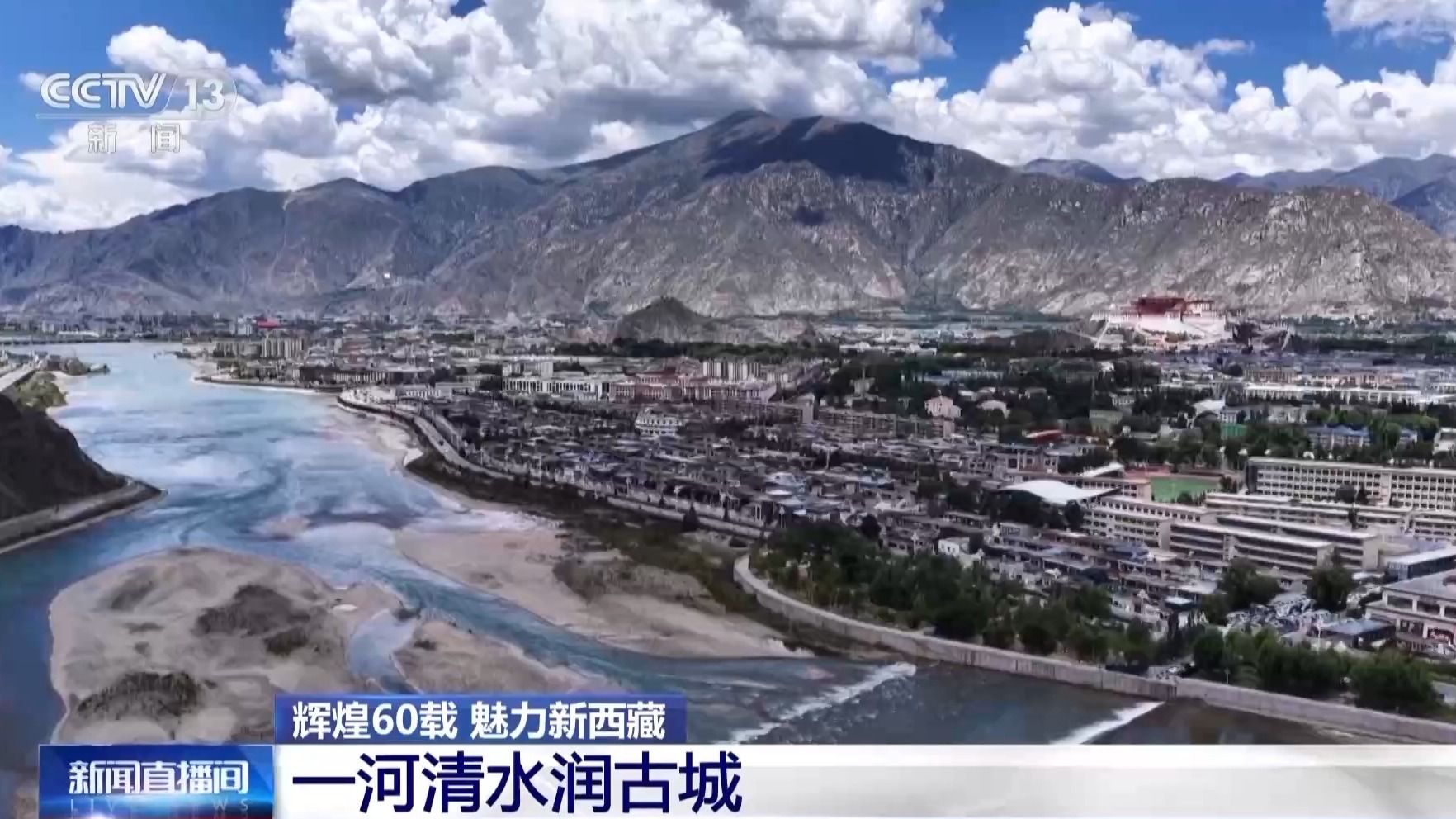
辉煌60载 魅力新西藏丨一河清水润古城 千年拉萨城正焕发绿色新活力
Yang Shi Xin Wen Ke Hu Duan· 2025-07-23 01:38
Core Viewpoint - The 60th anniversary of the Tibet Autonomous Region highlights significant achievements in various sectors, particularly in ecological development and urban transformation in Lhasa, driven by the central government's policies and investments [1]. Group 1: Ecological Development - The Lhasa River, a tributary of the Yarlung Tsangpo, has undergone significant ecological restoration to improve the living environment and support high-quality development [3]. - The Lhasa municipal government has prioritized the construction of ecological corridors and wetland parks along the Lhasa River to enhance the city's ecological landscape [1][11]. - A total investment of 2.7 billion yuan has been allocated for a series of river governance projects, reflecting the central government's strong financial support [17]. Group 2: Urban Transformation - The ongoing renovation of the inner river project aims to establish a comprehensive flood control system and restore the river's ecological balance, benefiting both wildlife and urban residents [7][9]. - The development of a 4.1 km ecological corridor between Xianzudao and Taiyangdao is transforming previously barren areas into green spaces, enhancing the urban environment [11]. - Local businesses, such as bakeries and restaurants, are thriving due to the improved riverside environment, indicating a positive impact on tourism and local economy [19][21].

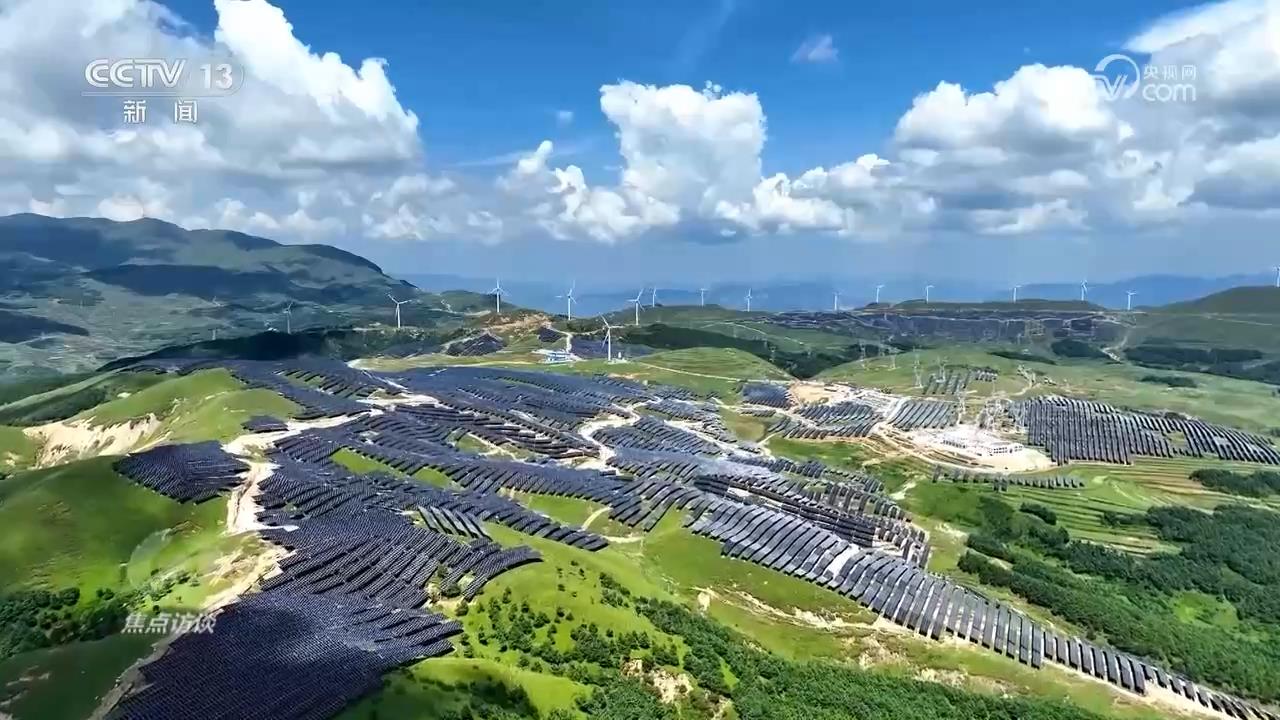
焦点访谈|生态积分、绿电团购、零碳建筑……揭秘中国绿色转型“破局之道”
Yang Shi Wang· 2025-07-22 14:11
Core Viewpoint - The 2025 Ecological Civilization Forum in Guiyang focused on themes such as green development, industrial cooperation, and the practice of the "Two Mountains" theory, emphasizing the harmonious coexistence of humans and nature for global green transformation [1][3]. Group 1: Ecological Achievements - Over the past 20 years, China has accounted for approximately 25% of the world's new vegetation coverage, leading globally [3]. - China has the largest clean power system and renewable energy generation capacity, with the fastest improvement in energy intensity and air quality [3]. Group 2: Innovative Practices - The Sino-Singapore Tianjin Eco-City, developed over 16 years, spans 22 square kilometers and houses 150,000 residents, showcasing advanced ecological concepts [5]. - The Eco-City has implemented over 20 replicable innovative measures, focusing on "ecology + intelligence" for sustainable urbanization [5]. Group 3: Green Technology and Standards - The Eco-City features a large ecological park with 179 bird species and 265 plant species, and a comprehensive water system to maintain high air and water quality [5]. - Buildings in the Eco-City adhere to strict green low-carbon standards, including the first zero-carbon building in Tianjin, which reduces carbon emissions by 329 tons annually [5][7]. Group 4: Green Energy Initiatives - The Eco-City promotes the use of green electricity through a "group purchase" model, allowing companies to access renewable energy at lower costs [7]. - Various smart management systems, such as drone management and intelligent waste sorting, are integrated into the Eco-City to enhance green practices [7]. Group 5: Financial Incentives for Green Transition - The "Fanjing Ecological Account" in Tongren City allows businesses to convert ecological contributions into points, facilitating access to financial incentives for green upgrades [13][15]. - By mid-2023, the program had established 158,900 accounts, issuing loans totaling 9.66 billion yuan, benefiting 85,600 market entities [15]. Group 6: Global Collaboration and Future Directions - The Guiyang Forum serves as a platform for sharing China's ecological civilization achievements and fostering global cooperation in addressing climate change [17]. - The construction of ecological civilization requires collective participation and shared benefits, emphasizing the need for international collaboration in sustainable development [17].
“绿富美”里有良法
Ren Min Ri Bao· 2025-07-21 22:31
Core Viewpoint - The article highlights the successful implementation of local legislation in Huzhou, Zhejiang Province, which has significantly improved the ecological environment and promoted rural tourism, leading to economic benefits for local communities [1][2][3][4]. Group 1: Local Legislation and Ecological Improvement - The implementation of the "Huzhou Beautiful Countryside Construction Regulations" has led to the establishment of a 2,900-meter sewage pipeline network, improving water quality to Class III standards [1]. - The "Huzhou Ecological Civilization Model City Construction Promotion Regulations" has facilitated projects for water environment enhancement and ecological restoration [1][2]. - A comprehensive "1+N" regulatory framework has been developed, enhancing the breadth, precision, and depth of ecological legislation [2]. Group 2: Economic Impact and Rural Tourism - The integration of tourism with agriculture and culture has created new industries and business models, transforming farmland into classrooms and farmhouses into guesthouses [3]. - The rural tourism sector has generated 330 job opportunities and contributed nearly 10 million yuan to collective village income [3]. - Local legislation has effectively supported the dual development of ecology and tourism, ensuring sustainable economic growth [3][4]. Group 3: Green Finance and Ecological Product Development - Huzhou has been approved as one of the first national pilot zones for green financial reform, with the "Huzhou Green Finance Promotion Regulations" solidifying practical experiences in green finance [4]. - The local legislation has extended the industrial and value chains of ecological products, facilitating the transformation from "green mountains and clear waters" to "golden mountains and silver mountains" [4].
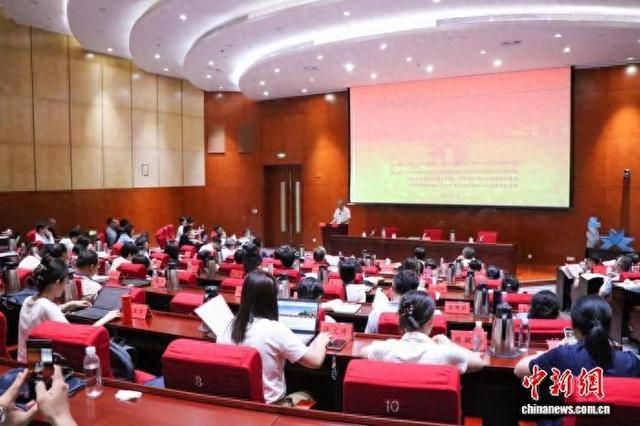
近百名专家学者论道“两山” 天津生态文明蓝皮书发布
Zhong Guo Xin Wen Wang· 2025-07-20 12:35
Core Viewpoint - The "Ecological Civilization Haihe Forum (2025)" and the academic seminar celebrating the 20th anniversary of the "Green Water and Green Mountains are Gold and Silver Mountains" concept were held in Tianjin, focusing on theoretical innovation and practical paths related to the concept [1][3]. Group 1: Event Overview - The forum gathered nearly a hundred experts and scholars from universities, party schools, and social science research institutions to discuss the "Two Mountains" concept [1][3]. - The "Tianjin Ecological Civilization Construction Report (2025)" blue paper was officially released during the event, compiled by Tianjin Academy of Social Sciences in collaboration with over ten research institutions, universities, and practical departments [1][3]. Group 2: Blue Paper Content - The blue paper includes 20 research reports, with the main report titled "Building a Beautiful Tianjin with Harmony between Humans and Nature - 2024 Tianjin Ecological Civilization Construction Report" [3][4]. - The specialized reports cover topics such as environmental governance, ecological construction, green low-carbon development, reform and innovation, and case studies, showcasing recent progress and innovative measures in Tianjin's ecological civilization construction and green low-carbon development [3][4]. Group 3: Future Directions - The blue paper emphasizes that the coming years are crucial for the construction of a beautiful Tianjin, calling for higher standards in ecological civilization construction [4]. - It advocates for an intrinsic development path, aiming to build a green, low-carbon, ecologically livable, refined, modern, civilized, orderly, and open Tianjin in the new era [4].
辉煌60载 魅力新西藏丨青山志:拉萨南北山的绿色答卷
Xin Hua Wang· 2025-07-19 02:09
新华社记者董博婷、旦增尼玛曲珠、王洪流 新华社拉萨7月18日电 题:青山志:拉萨南北山的绿色答卷 盛夏,南山与北山草木葳蕤,将拉萨市捧在手心。 年轻的姑娘泽仁巴西的家就住在西藏拉萨市北山脚下,在她年少时的记忆里,这里的山是灰白色的。 "第一次上山时,我觉得这里完全不能种树呀。"站在海拔3600多米的观景平台上,泽仁巴西笑着远眺,满山的绿意映在她的眼睛里。 今年,已是她担任娘热沟2号片区绿化养护工人的第4个年头。 2021年,拉萨南北山绿化作为西藏规模最大的营造林建设工程启动,计划用10年完成营造林206.72万亩。自那时起,让家乡变成青山绿水环绕的 生态宜居高原城市,成了泽仁巴西努力的目标。 "看到我们呵护的树开了花、结了果,就会觉得很幸福,就想继续种下去。"泽仁巴西说,这是大伙儿共同的心声。 群策群力之下,如今南北山绿化工程已完成造林107.93万亩,栽植苗木1.2亿余株,总体成活率85%以上。 数据显示,2024年,拉萨周边平均降水量393.1毫米,较常年同期增加4.8毫米;今年上半年,拉萨周边平均降水量149.4毫米,较常年同期增加29 毫米;相对湿度36.4%,较常年同期增加0.2%。 4年间,她的工 ...

马卫光赴临安调研生物多样性保护和乡村共富工作
Hang Zhou Ri Bao· 2025-07-18 02:35
Group 1 - The Tianmu Mountain-Qingliang Peak Biosphere Reserve has been included in the World Network of Biosphere Reserves, showcasing the region's commitment to biodiversity protection and ecological sustainability [1] - The local government emphasizes the importance of strict ecological protection measures, enhancing monitoring capabilities, and building a robust biodiversity protection network to safeguard the area's ecological, scientific, and aesthetic values [1] - The government is encouraging the development of the "Tianmu Ecological Tea" brand by leveraging local ecological advantages and cultural heritage to enhance market competitiveness and brand recognition [1] Group 2 - The Fifth World Biosphere Reserve Conference is highlighted as a significant opportunity to showcase Hangzhou's ecological civilization achievements, with a focus on implementing Xi Jinping's ecological civilization thoughts [2] - The local government aims to enhance the transformation of "green water and lush mountains" into "golden mountains and silver mountains," promoting sustainable development and ecological branding [2] - The local political advisory body is tasked with contributing to biodiversity protection and rural prosperity initiatives, emphasizing the importance of research and collaboration for high-quality ecological development in Hangzhou [2]
钟寰平:加快建设绿色低碳的美丽城市
Zhong Guo Huan Jing Bao· 2025-07-18 02:11
Core Insights - The central urban work conference in Beijing highlighted the importance of building green and low-carbon beautiful cities, emphasizing ecological environment governance and the need for effective measures to address urban pollution and biodiversity enhancement [1][2][3] Group 1: Urban Development Strategy - China's urbanization is transitioning from rapid growth to stable development, requiring a shift from large-scale expansion to quality improvement and efficiency [2] - The focus is on high-quality development to meet new demands for urban green transformation amidst challenges such as environmental constraints and increasing public demand for better ecological environments [2] Group 2: Environmental Quality Improvement - There is a need to continuously improve urban ecological environment quality, addressing issues like air pollution, black and odorous water bodies, and noise pollution that affect public satisfaction [2][3] - The strategy includes enhancing ecological safety and human living conditions by tackling prominent environmental issues and planning for secondary environmental problems [2] Group 3: Green Low-Carbon Development - Green low-carbon development is identified as a fundamental solution to ecological issues, with cities being key areas for this transformation [3] - The approach involves optimizing urban spatial structure, promoting green buildings, and fostering green industries and services to enhance urban productivity [3] Group 4: Public Participation - Encouraging public involvement in the construction of beautiful cities is essential, with mechanisms for feedback and assessment of urban development efforts [3] - The goal is to ensure transparency and responsiveness to public concerns, thereby increasing community satisfaction and engagement [3] Group 5: Future Direction - The emphasis is on aligning thoughts and actions with the central government's directives to promote high-quality urban development and enhance the quality of life in modern cities [4]
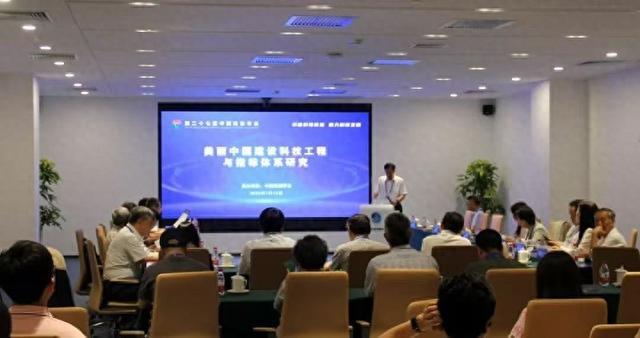
美丽中国建设科技工程与指标体系研究专题论坛在北京举办
Huan Qiu Wang Zi Xun· 2025-07-16 04:10
Core Insights - The forum focused on the "Beautiful China" initiative, discussing goals, indicator systems, governance paths, and technological support [1][3] Group 1: Forum Overview - The 27th China Association for Science and Technology Annual Conference hosted a forum on "Beautiful China Construction" with over 60 experts in attendance [1] - The forum featured 18 reports from renowned experts and young scholars [1] Group 2: Key Presentations - Yang Linsheng from the Chinese Academy of Sciences presented the "Beautiful China Construction Intelligent Simulation System" based on research outcomes [3] - Lei Yalin from China University of Geosciences proposed three digital governance models for "Beautiful China," emphasizing regional collaboration and data sharing [3] - Zhou Hongchun from the State Council Development Research Center reflected on the philosophical and cultural dimensions of "Beautiful China," advocating for a balanced approach to development and ecology [3] Group 3: Collaborative Paths and Mechanisms - Fang Chuanglin summarized the achievements of the "14th Five-Year Plan" for "Beautiful China" and proposed six collaborative paths for the "15th Five-Year Plan" [3] - Li Hongwei from the Central Party School emphasized the need for a sound ecological product value realization mechanism to support "Beautiful China" [3] - Yang Xiaoming from the Ministry of Ecology and Environment discussed the need for modern governance capabilities to address systemic challenges [3] Group 4: Regional Development and Case Studies - Sun Fubao proposed a dual-driven path of "ecological security + new energy" for Inner Mongolia [3] - Ge Yong from Jiangxi Normal University summarized 20 years of experience in "poverty reduction-ecology-carbon reduction" collaborative development [3] - Wu Kang analyzed the challenges of green transformation in shrinking resource cities using Shanxi Province as a case study [4] Group 5: Future Directions and Challenges - Zhang Jingyong presented new insights on climate change and extreme heat predictions for 2025, highlighting disaster risk areas [5] - The forum discussed key issues such as regional development imbalance and the lack of ecological compensation mechanisms [5]