无人驾驶

Search documents
【公告全知道】存储芯片+第三代半导体+先进封装!公司交付首台先进光刻胶设备订单
财联社· 2025-11-19 15:42
Group 1 - The article highlights significant announcements in the stock market, including "suspensions and resumption of trading, shareholding changes, investment wins, acquisitions, performance reports, unlocks, and high transfers" to help investors identify investment hotspots and mitigate risks [1] - A company has delivered its first advanced lithography equipment order, with stable application of storage products on SK Hynix's production line, indicating progress in the storage chip and third-generation semiconductor sectors [1] - Another company, backed by the National Integrated Circuit Industry Investment Fund and involved in state-owned enterprise reform, anticipates strong growth in its flash memory business over the next few years [1] - A company has launched an AI computing terminal aimed at the robotics sector, in collaboration with Huawei, and is also involved in autonomous driving and partnerships with Nvidia [1]


《求是》杂志刊文:人工智能在无人驾驶领域渗透应用,形成就业新增长点
Yang Zi Wan Bao Wang· 2025-11-19 07:21
Core Insights - The article emphasizes that the impact of artificial intelligence (AI) on employment is limited in terms of job replacement but significantly alters the employment structure, creating a large number of "new quality jobs" [1] - The integration of AI in areas like autonomous driving is expected to generate new industries and job opportunities, such as roles in research, manufacturing, and application [1] - The Chinese government's policy support for AI, particularly in enhancing livelihoods through the "AI+" initiative, aims to foster new employment forms that combine automated and human services [1] Group 1: Employment Impact of AI - AI technology is not merely replacing traditional jobs but is redefining production tools, leading to new work paradigms such as human-machine collaboration [1][2] - The demand for AI-related positions, such as algorithm engineers and data analysts, is projected to grow significantly, with a year-on-year increase exceeding 100% for certain roles [3] - The autonomous driving sector is seeing a rise in recruitment for positions like intelligent driving engineers and safety personnel, with a preference for candidates with traditional driving experience to facilitate skill transformation [3] Group 2: Industry Development and Talent Cultivation - The autonomous driving industry integrates multiple core technologies, including AI, 5G, and big data, driving the transformation of traditional industries and creating high-quality digital industry clusters [2] - Companies like "Luobo Kuaipao" are actively engaging in deep collaboration with educational institutions to develop a talent pipeline for the autonomous driving sector, establishing practical education programs [3][4] - The "government-enterprise collaboration and industry-academia integration" model is expected to create a development loop that supports the emergence of high-quality employment opportunities [4]
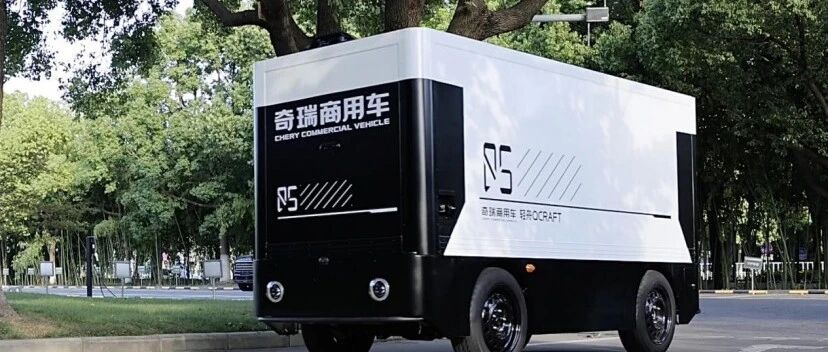
奇瑞商用车签下重磅战略合作!尹同跃出席
第一商用车网· 2025-11-19 07:02
Core Viewpoint - Chery Commercial Vehicle and Light Boat Intelligent Navigation have signed a strategic cooperation agreement to develop L4 logistics products for unmanned logistics, aiming for large-scale application in urban delivery scenarios [1][2][3] Group 1: Strategic Cooperation - The partnership aims to leverage Chery's manufacturing capabilities and Light Boat's advanced autonomous driving technology to create a leading global vehicle platform for unmanned logistics [2][3] - The collaboration will focus on three main advantages: brand synergy, product development, and service enhancement [2][3] Group 2: Product Development - The first unmanned logistics vehicle developed by the partnership has already been deployed in cities such as Suzhou, Jinhua, and Wuhu, with plans for further expansion across key urban areas and globally [3] - The vehicle will be based on Chery's extensive manufacturing experience and Light Boat's vast data from nearly one million NOA production vehicles, ensuring a reliable and safe product [2][3] Group 3: Service Enhancement - The partnership will provide users with advanced global and intelligent delivery and after-sales services, creating a sustainable service ecosystem in the industry [3] - The strategic signing marks a deepening of cooperation between Chery Commercial Vehicle and Light Boat Intelligent Navigation, aiming to standardize and scale the development of smart logistics [3]
从集成电驱桥到无人驾驶,零一汽车如何用“技术护城河”重构重卡行业?
第一商用车网· 2025-11-19 07:02
Core Viewpoint - The new energy heavy truck market is experiencing rapid growth, but most products are limited to short-distance or fixed-scenario operations, making it difficult to break through the bottleneck of medium and long-distance transportation. There is a pressing need for a long-range, economical electric heavy truck that can adapt to complex working conditions. In this context, Zero One Auto has launched the "Jingzhe Leizhenzi" model, which features a battery capacity of 600 kWh and a range of 550 kilometers, attracting significant industry attention [1]. Group 1: Product and Technology - Zero One Auto's CEO, Huang Zehua, emphasizes that the company's greatest competitive advantage lies in its product and technology, stating that most current "new energy heavy trucks" are merely "oil-to-electric" conversions without a systematic redesign of the vehicle architecture [2]. - The company has adhered to a "positive research and development" approach since its inception, focusing on "software-defined hardware" and achieving full-stack self-research in core systems such as electric drive bridges, thermal management, and vehicle control [5]. - The "Jingzhe Leizhenzi" model has a comprehensive energy consumption of only 0.95 kWh/km, which is 20% lower than the industry average, potentially saving users 28,000 yuan in electricity costs annually based on a driving distance of 140,000 km and an electricity price of 0.8 yuan/kWh [8]. Group 2: Economic Benefits - The lightweight design of the vehicle provides direct economic benefits, with a weight reduction of one ton translating to an additional 45,000 yuan in annual freight income for users [9]. - The vehicle's electric drive bridge, a first in the industry, integrates the motor, transmission, axle, and power take-off, eliminating traditional drive shaft structures and achieving true electric drive [11]. Group 3: Market Positioning and Future Plans - Zero One Auto aims to establish itself as a "transportation robot company," with plans to release the T platform model next year, which will feature a newly designed cabin specifically for pure electric heavy trucks [15]. - The company has a clear three-step strategy for achieving autonomous driving, starting with solidifying hardware, then achieving L4-level autonomous driving in closed scenarios, and finally progressing to L5-level systems within five years [15][18]. - The company is not just manufacturing a vehicle but is also building a new era of transportation infrastructure, transitioning heavy trucks from "human dependency" to "intelligent autonomy" [16].
众泰汽车涨2.14%,成交额4.04亿元,主力资金净流入354.62万元
Xin Lang Cai Jing· 2025-11-19 06:27
11月19日,众泰汽车盘中上涨2.14%,截至13:55,报3.81元/股,成交4.04亿元,换手率2.14%,总市值 192.12亿元。 资金流向方面,主力资金净流入354.62万元,特大单买入4371.98万元,占比10.82%,卖出4655.43万 元,占比11.52%;大单买入9936.24万元,占比24.59%,卖出9298.18万元,占比23.01%。 众泰汽车今年以来股价涨59.41%,近5个交易日涨10.76%,近20日涨2.14%,近60日涨59.41%。 今年以来众泰汽车已经6次登上龙虎榜,最近一次登上龙虎榜为10月14日,当日龙虎榜净买入-1.88亿 元;买入总计4.05亿元 ,占总成交额比11.61%;卖出总计5.93亿元 ,占总成交额比16.99%。 众泰汽车所属申万行业为:汽车-汽车零部件-汽车电子电气系统。所属概念板块包括:无人驾驶、融资 融券、汽车电子、新能源车、一带一路等。 截至9月30日,众泰汽车股东户数12.12万,较上期减少30.19%;人均流通股41505股,较上期增加 43.24%。2025年1月-9月,众泰汽车实现营业收入4.19亿元,同比增长8.98%;归母净利 ...

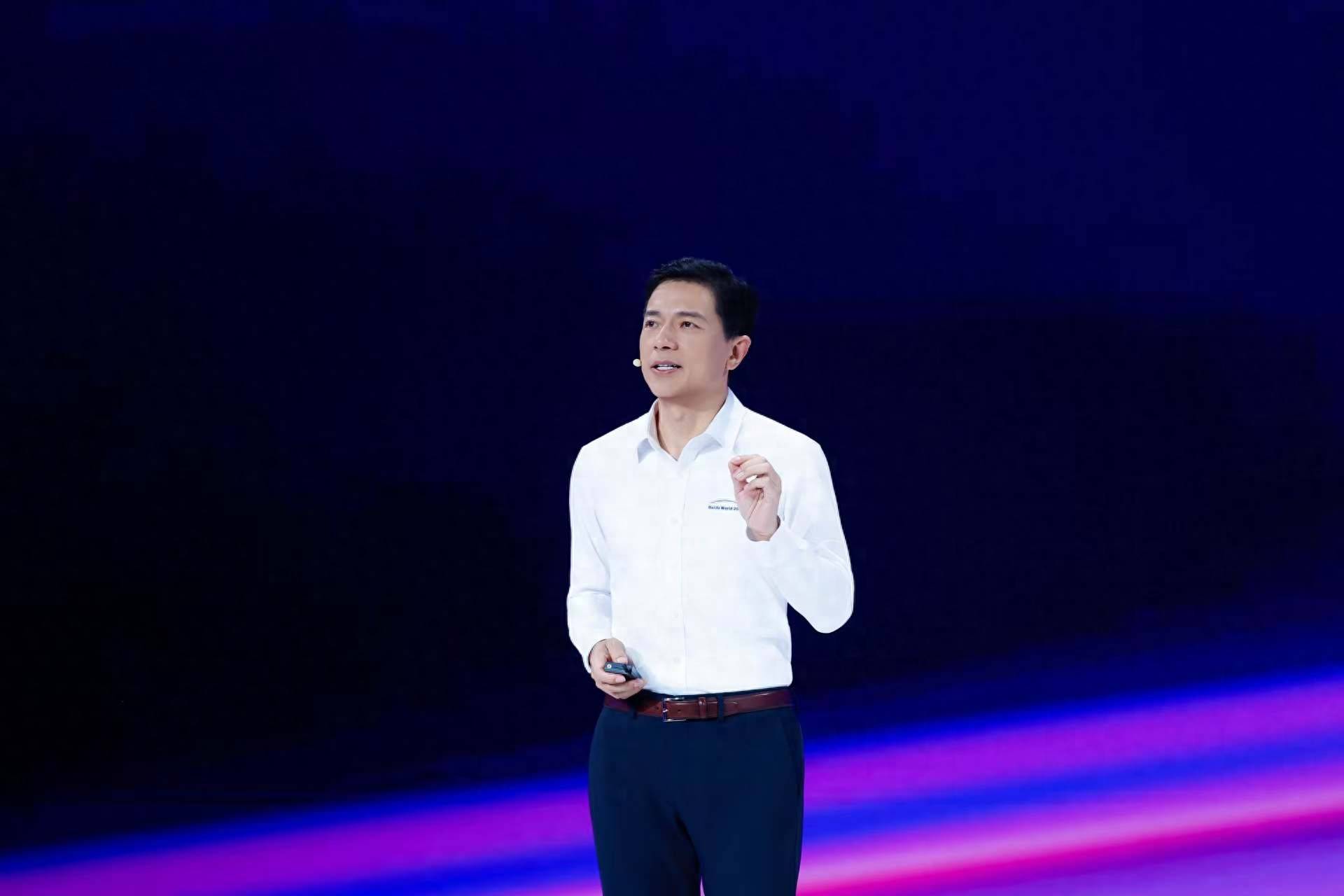
百度李彦宏,终于知天命
Sou Hu Cai Jing· 2025-11-19 03:12
Core Insights - The article discusses the evolution of Baidu under the leadership of Li Yanhong, emphasizing his shift in mindset towards focusing on technology-driven projects and learning from past failures [2][3][5]. Group 1: Leadership and Philosophy - Li Yanhong, at 57, demonstrates remarkable physical and mental vitality, attributed to his self-discipline [2]. - He reflects on past project failures, emphasizing that success is more likely when technology plays a decisive role [3]. - The philosophy of "knowing one's mission" is highlighted, indicating that both individuals and companies should focus on their strengths and interests [3][4]. Group 2: Project Evaluation and Strategy - Li Yanhong has decided to only pursue new projects where technology is a key factor, acknowledging that many past ventures were driven by market opportunities rather than technological advantages [3][4]. - Baidu's previous failures in various sectors, such as e-commerce and ride-sharing, are seen as lessons that have clarified the company's mission [5][6]. Group 3: AI Leadership and Market Position - Baidu is positioned as a leader in the AI sector, particularly in autonomous driving technology, with the "萝卜快跑" project achieving over 250,000 orders weekly and 17 million global service instances [6]. - Despite initial skepticism, Baidu's commitment to AI has led to significant advancements, although the company has faced challenges in public perception and project execution [6][7]. Group 4: Market Dynamics and Competition - Baidu was an early mover in the large language model space with "文心一言," but has struggled to maintain a competitive edge against later entrants [7][8]. - Frequent rebranding of the "文心" app reflects strategic uncertainty, although the company is expected to stabilize its tactical approach moving forward [8][9]. Group 5: Transformation Journey - The past decade has been characterized by Baidu's painful transformation from a dominant internet player to a focused AI company, with ongoing investments in AI despite challenges [10][11]. - The transition from a diversified strategy to a core focus illustrates Li Yanhong's journey of understanding and aligning with the company's mission [11][12].

阿尔特跌2.09%,成交额2295.24万元,主力资金净流出99.57万元
Xin Lang Cai Jing· 2025-11-19 02:31
Group 1 - The core viewpoint of the article highlights the decline in the stock price of Alter, which has dropped 8.58% year-to-date and 2.91% over the past 20 days [2] - As of November 19, Alter's stock price was 10.33 CNY per share, with a market capitalization of 5.145 billion CNY [1] - The company reported a significant increase in revenue for the first nine months of 2025, achieving 736 million CNY, a year-on-year growth of 19.30%, but faced a drastic decline in net profit, with a loss of 151 million CNY, a decrease of 12,246.62% [2] Group 2 - Alter's main business involves the design of fuel and new energy vehicles, with 87.68% of revenue coming from new energy vehicle design [2] - The company is categorized under the automotive services industry and is involved in various concept sectors, including autonomous driving and new energy vehicles [2] - As of September 30, 2025, the number of shareholders increased by 6.69% to 31,500, while the average circulating shares per person decreased by 6.27% to 15,400 shares [2]
亿航智能成功完成EH216-S中东首次城市内无人驾驶载人飞行
Zheng Quan Shi Bao Wang· 2025-11-18 09:40
Core Insights - EHang Intelligent announced the successful completion of a series of flight activities for its flagship product, the EH216-S autonomous passenger aircraft, in downtown Doha, Qatar [1] - The flight activities included point-to-point flights and manned flight missions, marking the first urban autonomous eVTOL flights in the Middle East [1] - The initiative was strongly supported by the Qatari Ministry of Transport, connecting Doha Port with the iconic Katara Cultural Village [1]

11月18日沪深两市涨停分析
Xin Lang Cai Jing· 2025-11-18 07:33
Group 1: AI and Digital Marketing - Company is developing OrangeGPT, an AI training and big data analysis platform that integrates RAG technology and industry marketing knowledge, capable of multimodal generation including text and image [2] - FastMai Xiaozhi, a subsidiary, has integrated and supports DeepSeek; the company has also opened public testing for its intelligent agent [2] - Company has established strong partnerships in digital marketing with platforms like Douyin, Xiaohongshu, and Bilibili, accumulating a large number of quality clients [2] Group 2: Semiconductor and Storage - Company focuses on semiconductor storage products, primarily NAND and DRAM, with a subsidiary that has products applicable in data centers [2] - Company is involved in the lithium resource extraction and recycling business, with projects in Tibet and Argentina, and has completed a lithium carbonate production line with an annual capacity of 2,000 tons [3] Group 3: Consumer Goods and Retail - Company is a leading domestic men's pants brand located in Xiamen, Fujian, and has seen significant stock performance with five consecutive trading limits [3] - Company operates in the daily ceramic products sector and has also experienced a strong stock performance with three consecutive trading limits [3] Group 4: Strategic Acquisitions and Investments - Company plans to acquire Tianyi Chemical, a leader in brominated flame retardants [4] - Company intends to invest up to 540 million in acquiring Kuixin Technology, expanding into the semiconductor sector [4] - Company is involved in the natural gas business and plans to purchase related assets from its controlling shareholder [4] Group 5: Free Trade and Economic Development - High-standard construction of Hainan Free Trade Port is underway, with a closure set to start on December 18 [5] - Company has significant land holdings in Hainan for industrial use, focusing on non-woven fabric products [5] Group 6: Robotics and Automation - Company specializes in intelligent control valves, essential for industrial internet and IoT applications [4] - Company is developing intelligent cockpit and assisted driving products, with several features already implemented [5]

轻舟智航与奇瑞商用车达成战略合作,打造全新量产级L4无人物流车
IPO早知道· 2025-11-18 03:22
无人物流车再添"量产级玩家"。 本文为IPO早知道原创 作者| Stone Jin 微信公众号|ipozaozhidao 据IPO早知道消息,轻舟智航与奇瑞商用车日前达成无人物流战略合作,双方将携手打造行业全新的 量产级L4物流产品,整合各自在自动驾驶技术、整车量产制造及全球市场资源等领域的优势,推动 无人物流车在城市配送全场景的规模化应用。 此次轻舟智航与奇瑞商用车在无人物流领域正式签约,双方将携手打造全球领先的车规级无人驾驶商 用车平台,形成三大行业领先优势: 首先是品牌共赢优势。 依托奇瑞强大的品牌号召力与轻舟智航领先的科技创新力,双方将携手树立 智慧物流新典范,助力无人物流行业品牌新高度。 其次是产品共赢优势。 基于奇瑞商用车整车量产研发制造底蕴与全球领先的供应链和质量体系,以 及轻舟智航近百万台NOA量产上车的海量高价值数据,双方将共同打造真正车规级、安全可靠的量 产无人产品,共筑中国L4物流产品新标杆。 最后是服务共赢优势。 依托奇瑞商用车全球化智能交付与售后网络及轻舟智航行业领先的无人化平 台,客户将享受到行业独有的全球化、智能化交付与售后服务,体验到可持续的行业服务新生态能 力。 目前,双方联 ...