
交能融合

Search documents
统筹交通与能源融合发展
Jing Ji Ri Bao· 2025-06-08 22:09
Core Viewpoint - The integration of transportation and energy is becoming increasingly prevalent, with significant advancements in clean energy infrastructure and electric vehicle adoption in the transportation sector [1][2]. Group 1: Current Developments - The Ministry of Transport has initiated several projects to promote the integration of transportation and energy, enhancing the clean energy supply system [1]. - The installed capacity of clean energy sources in national transportation infrastructure has exceeded 890,000 kilowatts, with 35,000 charging piles and approximately 51,000 charging parking spaces established [1]. - The transportation sector accounts for about 17% of China's energy consumption, making it a key area for energy transition [1]. Group 2: Challenges - Despite progress, challenges such as inadequate infrastructure, insufficient coverage of charging and hydrogen networks, and high costs of hydrogen storage and transportation persist [2]. - Issues like "range anxiety" during peak holiday periods highlight the need for improved energy facilities at transportation hubs [2]. Group 3: Future Goals - The "Guiding Opinions on Promoting the Integration of Transportation and Energy" aims for comprehensive interaction between transportation and new energy systems by 2035 [2]. - The plan emphasizes the need for a supportive policy framework and enhanced technological capabilities to address existing challenges [2]. Group 4: Technological and Project Initiatives - The integration of transportation and energy requires addressing technical issues in production, storage, transportation, and usage of new energy [3]. - Establishing a research platform for technology development and promoting collaborative innovation across sectors is essential [3]. - The successful implementation of the Shandong Zaohua Expressway project serves as a model for future integration projects, demonstrating feasibility and providing insights for further development [3].
山高新能源(01250.HK),新能源3.0的领航者
Ge Long Hui· 2025-06-03 09:09
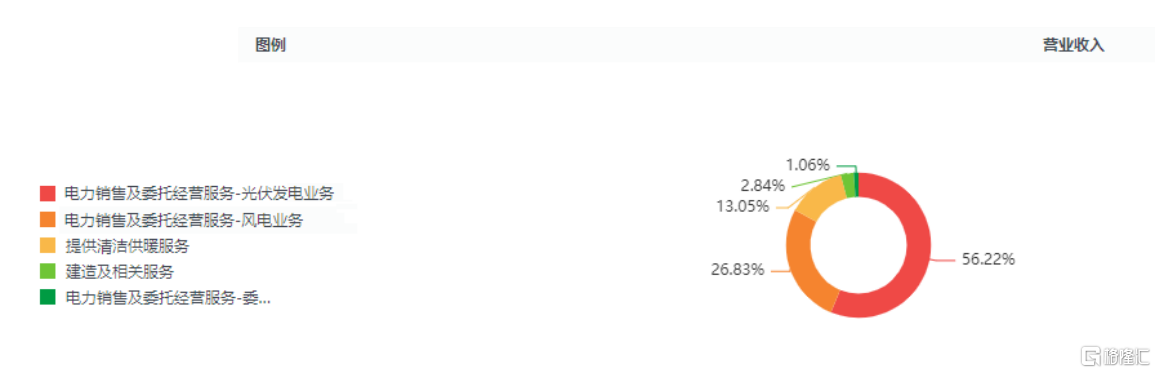
Core Viewpoint - The energy sector is undergoing a significant transformation driven by the rapid development of AI and the increasing demand for energy, marking a pivotal moment in history for energy consumption and production [3][4]. Group 1: Company Overview - The company, Shango New Energy, is transitioning from a traditional energy supplier to a comprehensive energy solution provider, focusing on the intersection of green energy and computing power [4][7]. - As of December 2024, Shango New Energy operates 54 centralized photovoltaic power stations with a total installed capacity of 2,602 MW, 920 MW of distributed photovoltaic power stations, and 19 wind power stations with a capacity of 1,176 MW [8]. - The company has achieved significant growth in its wind power business, with revenue reaching 1.187 billion yuan in 2024, a year-on-year increase of 24.2%, contributing to 26.8% of total revenue [8][10]. Group 2: Industry Trends - The global energy landscape is shifting towards renewable sources, with the National Energy Administration aiming for non-fossil energy to account for 60% of power generation by 2025 [11]. - The digital energy market is rapidly expanding, with the market size growing from 654.42 billion yuan in 2015 to 1,105.15 billion yuan in 2022, indicating a burgeoning trillion-level market [14][16]. - The integration of energy and transportation is becoming a key trend, with expectations of significant investment growth in this sector, potentially exceeding one trillion yuan [24][27]. Group 3: Strategic Collaborations - Shango New Energy has formed strategic partnerships with major tech companies like Century Internet and Huawei to enhance its capabilities in green energy supply and computing power infrastructure [18][19]. - The collaboration with Century Internet aims to create a comprehensive energy ecosystem that integrates green energy production and computing power consumption [18]. - The partnership with Huawei focuses on developing smart energy solutions, leveraging Shango's renewable assets to provide customized green energy for data centers [19]. Group 4: Financial Performance - In 2024, Shango New Energy reported a revenue of 4.423 billion yuan and a net profit of 463 million yuan, reflecting a year-on-year growth of approximately 32% [29][30]. - The company's asset-liability ratio was maintained at 60%, with cash and equivalents exceeding 3.6 billion yuan, indicating strong financial health [29].

交能融合发展应用与路径分析 | 交通战略研究
Sou Hu Cai Jing· 2025-05-30 10:33
Core Viewpoint - The integration of transportation and energy is crucial for achieving carbon neutrality goals, significantly reducing carbon emissions while providing economic and social benefits [1][2]. Group 1: Current State and Policy Direction - The integration of transportation and energy involves breaking down industry barriers through technological innovation and infrastructure development, becoming a key pathway for green and low-carbon transformation [2][3]. - The national infrastructure has seen significant advancements, with over 890,000 kW of clean energy installed capacity and 35,000 charging piles built, alongside a 77.6% share of new energy city buses [2][3]. - A series of policy documents have been issued to promote energy-saving renovations of existing transportation infrastructure and accelerate the application of renewable energy in key areas [2][3]. Group 2: Key Application Scenarios - Distributed photovoltaic systems combined with energy storage are being implemented in various transportation facilities, such as service areas and airports, to achieve self-sufficiency in green energy [4]. - A robust charging and swapping network has been established, with 3.99 million public charging piles and 16,000 charging stations by April 2025, supporting the rapid development of electric vehicles [5]. - Green ports are being developed to utilize renewable energy sources, with Shanghai Port achieving 100% shore power coverage and several ports included in the "Asia-Pacific Green Port Award Program" [6]. Group 3: Challenges and Development Paths - The integration faces challenges such as insufficient technological maturity, with complexities arising from the need for multi-domain technology integration [11]. - The policy framework is still underdeveloped, lacking comprehensive standards and mechanisms for project management in the integration sector [12]. - Market mechanisms are not fully established, with high initial investments and long payback periods deterring private sector participation [13]. Group 4: Future Directions - There is a need to enhance the policy support system by developing relevant planning and standards for deep integration of transportation and energy [14]. - Emphasis on technological innovation is essential, focusing on smart transportation and digital energy to drive the integration forward [15]. - Expanding application scenarios is crucial, promoting a collaborative development model that integrates transportation with renewable energy sources [16]. - Exploring market-oriented development mechanisms will be vital for attracting social capital and enhancing investment confidence in the integration projects [17]. Conclusion - The emergence of new business models in the integration of transportation and energy showcases significant potential for economic and social development, necessitating breakthroughs in key technologies and a robust policy framework to support large-scale development [18].
重庆:鼓励投资主体探索分布式光伏多元化应用场景建设
news flash· 2025-05-30 08:14
Core Viewpoint - Chongqing is encouraging investment entities to explore diversified application scenarios for distributed photovoltaic (PV) construction through the draft implementation guidelines for distributed PV development and construction management [1] Summary by Relevant Sections - **Policy Framework**: The draft guidelines specify that general commercial and industrial distributed PV projects using self-generated surplus electricity for grid connection should determine different grid connection electricity ratios based on local power load distribution [1] - **Electricity Usage Ratios**: For projects located within the main urban area of Chongqing, the annual self-generated electricity usage ratio should not be less than 20% across 22 districts and counties. In other districts, the ratio should not be less than 40% [1] - **Encouragement of Innovation**: Investment entities are encouraged to explore diversified application scenarios for distributed PV, supporting the development of incremental distribution networks, virtual power plants, smart microgrids, and mechanisms for benefit coordination and sharing between large grids and local networks [1] - **Integrated Development**: The guidelines promote integrated development of source, grid, load, and storage, and encourage research into energy integration, PV + storage, and development models such as PV + 5G base stations [1]
事关交能融合发展,交通运输部这样安排推进
Xin Hua She· 2025-05-20 13:56
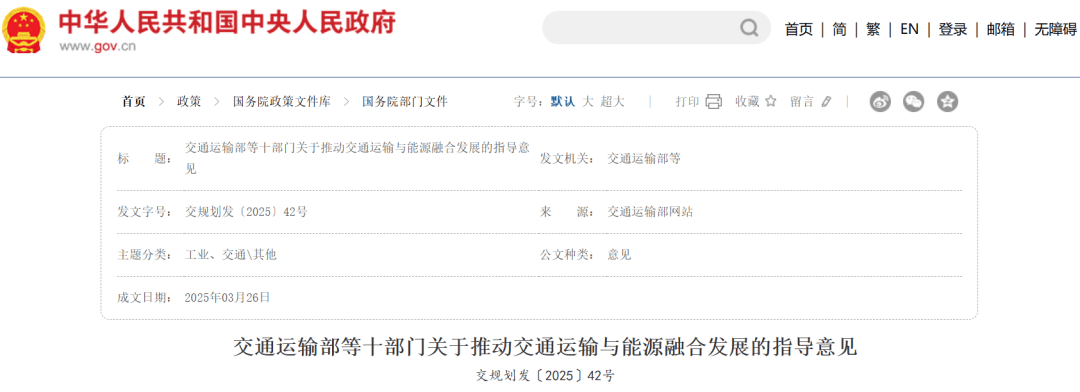
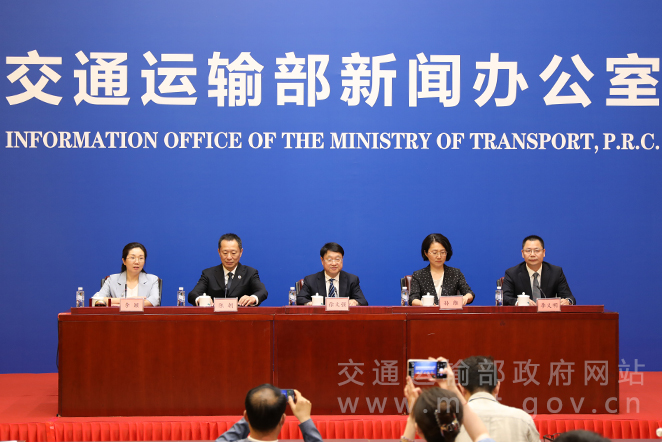
Core Viewpoint - The Ministry of Transport and ten other departments have jointly issued guidelines to promote the integration of transportation and energy sectors, emphasizing the importance of planning coordination and the development of clean energy infrastructure [1][2][3]. Group 1: Current Status of Transportation and Energy Integration - The installed capacity of clean energy sources such as wind and solar in national transportation infrastructure exceeds 890,000 kilowatts, with 35,000 charging stations and approximately 51,000 charging parking spaces established [1]. - The proportion of new energy city buses has reached 77.6%, and over 430 clean energy vessels have been built or are under construction [1]. - The electrification rate of national railways stands at 75.3% [1]. Group 2: Planned Actions and Initiatives - A series of special actions will be implemented, including the "启曜" action for transportation infrastructure and the "乘风" action for low-carbon transformation of transport equipment [2]. - The guidelines aim to enhance policy coordination, allowing clean energy projects in transportation infrastructure to participate in electricity market transactions [2]. - By 2035, the integration of transportation and new energy systems is expected to be fully realized, with a focus on expanding the application of new energy vehicles in various sectors [2]. Group 3: Technological Development and Strategic Importance - The development of a research platform for transportation and energy integration technologies is planned, focusing on key technologies such as flexible interconnection of transportation energy systems and large-capacity solid-state batteries [3]. - The deep integration of transportation and energy sectors is deemed crucial for ensuring national energy security and advancing carbon peak and carbon neutrality goals [3]. - The implementation of significant projects in this area is expected to lead to substantial adjustments in energy use structures within the transportation sector, promoting new scenarios, models, and business formats for renewable energy [3].
交能融合发展迈上新台阶 点名大容量固态电池、兆瓦级超级快充等关键技术!
Zhong Guo Qi Che Bao Wang· 2025-05-20 09:18
Group 1: Establishment of International Standards - The Ministry of Transport announced the establishment of an ISO Technical Committee focused on port and terminal standardization, marking a significant milestone for China's role in international standardization efforts [1] - The committee was approved on January 18, 2025, and is the first of its kind globally, dedicated to port and terminal standardization [1] Group 2: Integration of Transportation and Energy - The integration of transportation and energy sectors is crucial for national energy security and achieving carbon neutrality goals, with significant progress reported in clean energy projects [3][4] - Key statistics include over 890,000 kilowatts of installed clean energy capacity in transportation infrastructure, 35,000 charging piles, and a 77.6% share of new energy buses in urban public transport [3] Group 3: Guidelines for Energy Integration - A joint guideline was issued by ten departments to promote the integration of transportation and energy, focusing on clean energy development, new energy equipment promotion, and green fuel supply [4] - The guideline outlines 25 key tasks aimed at transforming the energy structure in transportation and enhancing overall infrastructure efficiency [4] Group 4: Service Quality Improvement in Highway Service Areas - The Ministry of Transport has introduced a new evaluation method for highway service area quality, emphasizing the need for improved services for the growing number of self-driving travelers [6][7] - The evaluation criteria include both infrastructure configuration and service quality, aiming to enhance the overall experience for travelers [7]
深城交(301091) - 301091深城交投资者关系管理信息20250515
2025-05-15 10:36
Group 1: Industry Outlook and Company Strategy - The urbanization process in China has shifted towards optimizing existing resources and high-quality development, focusing on improving transportation efficiency, safety, resilience, and sustainability [3] - The company aims to enhance its core competitiveness and achieve sustained revenue growth by positioning itself as a "new generation urban transportation intelligent product and technology company," targeting emerging sectors like low-altitude economy and intelligent networking [3] - The company plans to invest approximately 10% of its revenue annually in R&D, with a focus on AI data platforms and intelligent products related to the low-altitude economy [3] Group 2: Business Development and Market Expansion - The company's new generation urban transportation solutions have been implemented in key cities across China and regions like Hong Kong and the UAE, with over 50% of new contracts signed in 2024 coming from outside the local area [5] - In 2024, the company secured nearly 350 million in projects in the UAE and is currently negotiating additional projects in Saudi Arabia, the UAE, and Singapore [5] - The company is committed to becoming a global leader in urban transportation solutions, with a strategy of "Shenzhen benchmark + national replication + international output" [4] Group 3: Financial Performance and Future Projections - The company's net profit for 2024 was reported at 110 million [5] - All three main business segments are currently profitable, and the management is focused on optimizing operations to enhance profitability and return value to investors [5] - The company is considering a name change to reflect its transformation from an engineering design and consulting firm to a leader in big data, software, and AI solutions [6]

金溢科技(002869) - 2025年5月13日金溢科技业绩说明会、路演活动信息
2025-05-13 15:52
Group 1: Industry Outlook - The smart transportation industry is experiencing strong growth driven by national policies, technological advancements, and market demand [2] - The integration of ETC and C-V2X technologies is accelerating the development of smart transportation [2] - The digital transformation of traffic infrastructure supports the construction of a strong transportation nation [2] Group 2: Company Performance - In 2024, the company achieved a revenue of 7,875.48 million yuan, a year-on-year increase of 16.39% [3] - The net profit attributable to shareholders reached 5.96 million yuan, reflecting a year-on-year growth of 59.69% [3] - The company’s first-quarter net profit in 2025 declined due to increased R&D expenses and reduced financial income from changes in monetary policy [4] Group 3: Strategic Initiatives - The company aims to leverage its dual capabilities in "transportation + IT" to enhance its service offerings in various sectors, including vehicle-road-cloud integration and digital energy [5] - The focus will be on deepening domestic market engagement while actively exploring international opportunities for growth [5] - The company plans to build an efficient and flexible market operation system to improve response speed and service quality [5] Group 4: Management and Compensation - The compensation for directors and senior management is structured around a base salary, performance salary, bonuses, and long-term incentives [6] - The company follows a market-oriented principle in its compensation strategy, aiming to enhance talent competitiveness [7]
华设集团: 关于2024年度暨2025年第一季度业绩说明会情况的公告
Zheng Quan Zhi Xing· 2025-05-13 08:21
Summary of Key Points Core Viewpoint - The company is experiencing a decline in profitability due to macroeconomic conditions and industry downturns, but it is focusing on transformation and new growth areas to enhance its competitive position in the market [1][2][3]. Group 1: Financial Performance - In 2024, the company achieved a net profit of 383 million yuan, a decrease compared to 2023, and for Q1 2025, the net profit was 57.895 million yuan, also down year-on-year [1][2]. - The company's cash flow from investment activities was negative due to increased purchases of financial products, while cash flow from financing activities was negative due to dividend payments [4]. Group 2: Growth Opportunities - The company is committed to a strategic transformation focusing on "digitalization, industrialization, platformization, and internationalization," aiming to develop new business areas such as low-altitude economy and infrastructure digitalization [2][3]. - In 2024, revenue from new business segments reached 1.38 billion yuan, accounting for over 31% of total revenue, with the low-altitude economy segment seeing a 96% increase in order volume [2]. Group 3: Industry Outlook - The traditional infrastructure construction era is facing challenges, but new fields driven by digital, AI, and low-carbon technologies present significant market opportunities for growth [3]. - The overall industry is in a downturn due to reduced macro infrastructure investment, but there are still emerging growth points in areas like low-altitude economy and digital transformation [3].

发挥交能融合倍增效应
Jing Ji Ri Bao· 2025-05-06 21:57
交能融合为何渐成趋势?交通与能源同为支撑国民经济发展的重要基础产业,二者深度融合发展意义重 大。历史上,在煤炭与蒸汽机的交融中,人类进入了火车时代;在石油和内燃机的碰撞中,汽车走进千 家万户。交通与能源从来都是并驾齐驱,但更多的是单向的能源供给关系。如今全面推进交能融合发 展,可有效发挥交通和能源两大行业对我国经济社会可持续发展的倍增作用。 保障能源安全。长期以来,我国石油、天然气对外依存度高,尤其是石油资源广泛用于交通领域。积极 开发新能源发电项目,配套储能等调节资源保障支撑,实施电能替代并延伸扩大下游氢基能源产业链, 推进交通运输行业清洁用能替代,是端牢我国能源饭碗的重要举措。 助力低碳转型。交通和能源行业是实现"双碳"目标的关键领域。面对资源紧缺、气候变化、环境污染的 严峻挑战,利用交通资产能源化、交通用能绿色化,加快能源和交通领域绿色低碳转型,逐步构建以清 洁能源为主体的交通能源体系,是实现"双碳"目标的必然选择。 高速服务区装风机,公路沿线铺光伏,交通基础设施变身虚拟电厂……交通运输与能源领域的边界日渐 模糊。交通运输部等10部门日前发布《关于推动交通运输与能源融合发展的指导意见》提出,到2035 ...