
保供稳价

Search documents
农业农村部:强化生猪产能综合调控 切实做好保供稳价工作
Xin Hua Cai Jing· 2025-09-25 13:55
Core Viewpoint - The Ministry of Agriculture and Rural Affairs emphasizes the importance of ensuring the harvest of autumn grains and the production of winter crops, while also focusing on stabilizing the supply of key agricultural products and enhancing food safety measures [1] Group 1: Autumn Production Focus - The meeting highlights the need to effectively manage the key tasks of the "Three Autumns" production, ensuring the harvest of autumn grains and achieving "grain stored" [1] - There is a strong emphasis on the production of winter wheat and the continued expansion of winter oilseed rape cultivation [1] Group 2: Supply Stability - The Ministry aims to stabilize the production supply of "vegetable basket" products, ensuring the steady supply of winter and spring vegetables [1] - Comprehensive regulation of pig production capacity is prioritized, along with ongoing support for the beef and dairy industries to alleviate difficulties [1] Group 3: Quality and Safety Oversight - Strict supervision of agricultural product quality and safety is mandated, with a focus on key areas such as fishing vessels and agricultural machinery to prevent major safety incidents [1]
农业农村部:强化生猪产能综合调控,切实做好保供稳价工作
Xin Lang Cai Jing· 2025-09-25 11:48
Group 1 - The Ministry of Agriculture and Rural Affairs emphasized the importance of ensuring the harvest of autumn grains and maintaining stable production of winter wheat and winter rapeseed [1] - The meeting highlighted the need to stabilize the supply of "vegetable basket" products and ensure the production of winter and spring vegetables, while also managing the comprehensive adjustment of pig production capacity [1] - There is a strong focus on agricultural product quality and safety supervision, particularly in key areas such as fishing vessels and agricultural machinery to prevent major safety accidents [1]
蔬菜肉蛋充足!记者实探广州多家商超:有商家增加3倍备货量
Nan Fang Du Shi Bao· 2025-09-23 13:49
Summary of Key Points Core Viewpoint - The article highlights the preparedness and response of various supermarkets and supply chains in Guangzhou in anticipation of Typhoon "Hagupit," ensuring sufficient supply and stable prices for essential goods. Group 1: Supply Situation - Supermarkets and markets in Guangzhou report sufficient supplies of essential goods, with citizens shopping in an orderly manner [2][4][8] - Specific stores like "Qian Dama" and "Meat Federation" show no significant impact on supply levels, with normal sales volumes reported [2][3] - The overall supply of fresh produce and essential items remains stable, with some stores increasing stock levels significantly [4][6] Group 2: Emergency Preparedness - Major supermarket chains like "Hua Run Wan Jia" have increased their stock by approximately 50% for essential goods and are monitoring inventory in real-time [4] - "Sheng Jia Supermarket" has tripled its stock of fresh food and increased emergency food supplies by five times [4] - "Hema" has raised its overall stock by over 80% for essential items and has prepared logistics for potential disruptions [6] Group 3: Online and Delivery Services - Online grocery services are experiencing high demand, with some delivery slots already fully booked [5][7] - "Meituan" has implemented a weather response plan to ensure rider safety and may suspend delivery services in certain areas based on weather conditions [7] - "Hema" is adjusting its delivery services according to local policies and weather changes, ensuring safety for delivery personnel [6]
迎战“桦加沙”!深圳各大商超连夜补货,货足价稳!
Shen Zhen Shang Bao· 2025-09-23 03:39
Core Viewpoint - Shenzhen's supermarkets and wholesale markets are actively preparing for Typhoon Haikui by ensuring sufficient stock and stable prices for essential goods, implementing emergency supply plans to meet consumer needs [1][2][5] Group 1: Supermarket Preparedness - Major supermarkets like Walmart, Sam's Club, and Tianhong have increased their inventory of essential items such as drinking water, fresh vegetables, and meat products to ensure supply stability [1][2] - Tianhong has enhanced its logistics and inventory management, ensuring that stock levels meet demand for at least two days, focusing on essential goods like vegetables and packaged foods [1][3] - Walmart has activated its emergency plan, ensuring stable operations and sufficient reserves of daily necessities, while also enhancing logistics arrangements [1][2] Group 2: Community Response - Local community stores are experiencing high customer traffic, with residents actively purchasing essential food items, indicating a strong demand for supplies ahead of the typhoon [4] - Consumers report that prices for vegetables and meat remain stable, with some items even being cheaper than usual, reflecting effective supply chain management [4] Group 3: Wholesale Market Operations - Shenzhen's wholesale markets, including the Hai Jixing vegetable market, are reporting high incoming supply volumes, with expectations to exceed 7,000 tons by the morning of September 23 [5] - The market has increased its daily supply capacity to 5,500 tons, ensuring that essential goods are available during the typhoon [5] - The Deep Agricultural Group is leveraging its national supply network to ensure timely delivery of goods, maintaining a robust supply chain to prevent shortages [5]


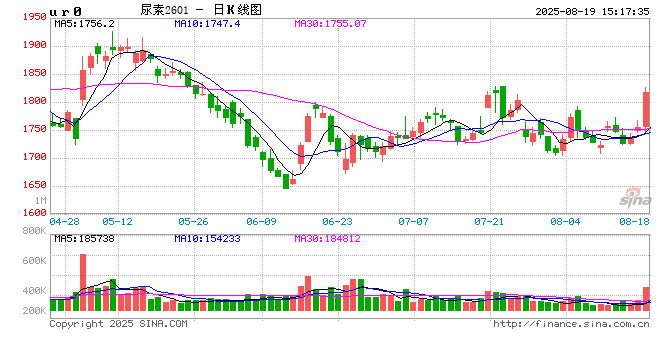
期货收评:尿素涨超3%,PX0>对二甲苯、菜粕涨超1%;硅铁跌超3%,锰硅、氧化铝、纯碱、鸡蛋跌超2%
Sou Hu Cai Jing· 2025-08-19 07:28
Group 1 - The core viewpoint of the articles indicates a mixed performance in the futures market, with urea prices showing a slight rebound while other commodities experienced varied movements [1][2] - Urea market prices have increased by 10 to 30 yuan per ton in major regions, with Shandong and Henan reporting prices of 1730 yuan per ton, reflecting a day-on-day increase of 30 yuan and 10 yuan respectively [1] - The daily production of urea in the industry is reported at 197,200 tons, which is a slight increase of 4,000 tons compared to the previous day, indicating a stable supply level [1] Group 2 - The demand side shows improved sentiment, with the sales rate in major regions reaching 100% or higher, although some areas like Henan and Hebei still exhibit weaker performance [1] - Market sentiment is bolstered by factors such as a new round of bidding and potential Chinese supply to India, suggesting a clear bottoming feature in short-term prices [1] - However, there are cautionary notes regarding the overall optimism for price increases due to supply stability measures, with attention needed on India's new bidding results and China's export policy dynamics [1]

采矿业利润上涨 下游生产经营负重
Bei Jing Shang Bao· 2025-08-08 06:59
Group 1 - The core viewpoint of the articles highlights the contrasting impacts of rising commodity prices on upstream and downstream industries, with upstream mining and raw material manufacturing experiencing significant profit growth, while downstream enterprises face increased costs and shrinking profits [1][2][3]. - According to data from the National Bureau of Statistics, from January to April, profits of industrial enterprises above designated size reached 25,943.5 billion yuan, a year-on-year increase of 106%, with all 41 major industrial sectors reporting profit increases [1][2]. - The mining industry's profits saw a year-on-year increase of 103% in the first four months, with oil and gas extraction profits growing by 119%, and raw material manufacturing profits increasing by 366%, significantly outpacing the average industrial profit growth [2]. Group 2 - Downstream industries, such as steel, are struggling with rising costs due to rapid increases in steel prices, which are affecting sectors like shipbuilding and home appliances, leading to reduced profit margins and impacting business confidence [3]. - The manufacturing sector is heavily impacted, with raw material costs accounting for over 60% of production costs, making small and micro enterprises particularly vulnerable to cost fluctuations and reducing their investment willingness [3]. - The government is taking measures to support small and micro enterprises, including providing employment stability subsidies and encouraging large enterprises to stabilize supply chains and combat market disruptions caused by hoarding and price gouging [4][5].
国家发展改革委价格监测中心赴济南粮油蔬菜批发市场开展深入调研
Zhong Guo Fa Zhan Wang· 2025-07-30 03:10
Group 1 - The National Development and Reform Commission (NDRC) emphasizes the importance of price monitoring in the new era, highlighting the need to understand consumer structure and dietary habits [3] - The price monitoring team conducted an in-depth investigation in Jinan, focusing on the supply, transportation, storage, and sales of essential goods such as grain, oil, and vegetables [1][5] - Jinan has strengthened its price monitoring emergency capabilities, aiming to ensure stable prices and sufficient supply, which is seen as a key mission for the city [5] Group 2 - The monitoring team received positive feedback on Jinan's price monitoring efforts, indicating a commitment to enhancing the effectiveness of these initiatives [3] - The collaboration between city and district levels in Jinan allows for rapid information gathering and precise early warnings to maintain price stability [5]

2025年化工行业“反内卷”-磷肥
2025-07-29 02:10
Summary of Key Points from the Conference Call on the Phosphate Industry Industry Overview - The phosphate industry in China is primarily concentrated in Hubei, Yunnan, and Guizhou, with Hubei accounting for approximately 50 million tons of production, representing a significant portion of the total output [1][2] - The industry has faced increasing mining costs due to a decline in the quality of domestic phosphate rock, with costs rising by 15% to 20% [1][2] Core Insights and Arguments - **Environmental Policies**: Stricter environmental regulations have limited the production capacity of small to medium-sized phosphate mines, extending the approval time for mining licenses and increasing financial pressure on companies [1][3] - **Import and Export Trends**: Since 2018, China has become a net importer of phosphate rock, with imports significantly increasing in 2024 while exports have decreased by nearly 70% [1][4] - **Phosphate Fertilizer Demand**: The phosphate fertilizer sector is the largest consumer of phosphate rock, accounting for about 75% of total demand. The demand for lithium iron phosphate in the new energy sector indirectly increases the need for phosphoric acid, although the direct usage remains low [1][5] - **Future Capacity Additions**: New phosphate rock production capacity is expected to be added mainly in 2025 and 2026, with projections of 15 million tons and 12 million tons respectively. However, actual demand may not meet this supply [1][6] Additional Important Content - **Cost Structure and Profitability**: The profitability of the phosphate fertilizer industry is heavily reliant on the prices of raw materials like phosphate rock and sulfuric acid, with an estimated industry profit margin of around 7% in 2024 [1][11] - **Energy Efficiency Standards**: By 2026, phosphate fertilizer production companies are required to meet specific energy efficiency benchmarks, which may lead to the elimination of some outdated production capacities [1][12] - **Impact of Lithium Iron Phosphate**: The growth in demand for lithium iron phosphate is expected to drive the need for phosphoric acid, but its overall impact on the total demand for phosphate rock is minimal [1][13] - **Market Price Trends**: Current market prices are high, ranging from 800 to 1,000 yuan per ton, influenced by tight supply conditions. Future price trends may see a decline due to cyclical market behaviors [1][8][14] - **Export Dynamics**: The export of phosphate fertilizers is expected to remain stable in 2025, with production anticipated to exceed 18 million tons, driven by increased demand in the new energy sector [1][20] Conclusion The phosphate industry in China is navigating a complex landscape shaped by environmental regulations, shifting demand dynamics, and market pressures. The interplay between domestic production capabilities and import needs will continue to influence pricing and profitability in the coming years.
周期风起,氮肥,磷肥后续怎样看?
2025-07-23 14:35
Summary of Conference Call Records Industry Overview - The conference call primarily discusses the nitrogen and phosphate fertilizer industry in China, focusing on market dynamics, production challenges, and future outlooks [1][2][3]. Key Points on Nitrogen Fertilizer (Urea) - The domestic urea market faces challenges such as overcapacity, high proportion of outdated production capacity, significant cost differences, and export volume impacting pricing. However, increased export quotas may help mitigate losses from supply stability [1][6]. - Coal price fluctuations in the first half of the year reduced costs for some coal chemical products, altering the cost curve between gas-based and oil-based urea, with gas-based urea showing price resilience [1][8]. - The government has set demands for single nutrient fertilizers to not increase or even decrease, but food security strategies and policies supporting land restoration are expected to sustain fertilizer demand. The per-acre fertilizer application in China is nearing levels seen in developed countries, indicating overall demand growth [1][10]. - The urea supply pressure is slightly better than initial expectations for the year, with an estimated release of about 2 million tons in the first half and an additional 1-2 million tons expected in the second half [10]. Key Points on Phosphate Fertilizer - The phosphate market is under pressure from rising raw material prices and domestic supply stabilization requirements. The first quarter saw low export volumes due to delayed export quotas, but limited new capacity and high overseas phosphate prices are expected to improve company performance in the third quarter [1][11]. - Phosphate rock pricing is crucial for the profitability of integrated phosphate fertilizer companies, with expectations for high prices to persist throughout the year, allowing for strong profit margins [1][14]. - The phosphate industry is experiencing tight supply-demand conditions, influenced by high raw material prices and concentrated procurement demands from exporting countries. This has led to a relative shortage in overseas phosphate supply, supporting phosphate prices [1][13]. Challenges and Opportunities - The nitrogen fertilizer industry faces four main challenges: overcapacity, a significant proportion of outdated production capacity, notable differences in profitability across production methods, and the impact of export volumes on domestic demand and pricing [6]. - The phosphate industry is also grappling with challenges such as high raw material prices and the need for domestic supply stabilization, but there are opportunities for improved performance due to concentrated export activities in the third quarter [11][12]. Future Outlook - The outlook for nitrogen fertilizer remains cautiously optimistic despite potential price fluctuations, while the phosphate fertilizer environment appears stable with a positive trend in performance [3][16]. - The overall market environment for both nitrogen and phosphate fertilizers is expected to remain favorable, with no significant new capacity pressures or disruptions to market order anticipated [16].
尿素&纯碱市场近况与展望
2025-07-21 14:26
Summary of Key Points from the Conference Call Industry Overview - The conference call primarily discusses the **soda ash** and **urea** markets, focusing on their current status and future outlooks [1][3]. Core Insights and Arguments Soda Ash Market - The soda ash industry is currently influenced by macroeconomic policies rather than strict capacity reduction or technological upgrades, as there are no expectations for mandatory upgrades or elimination of outdated capacities [1][4]. - New capacity in the soda ash sector continues to be released, particularly from natural soda ash projects, with significant expansions expected in regions like Alashan and Jinshan [1][6][8]. - In the first half of 2025, soda ash supply remains high, with an average operating rate of approximately 85%, a slight year-on-year decrease, but actual production levels are stable compared to the previous year [9]. - The glass industry, particularly photovoltaic glass, has seen a significant reduction in production due to internal competition policies, leading to a notable decline in soda ash demand [1][12]. - Light soda ash demand from downstream industries such as monosodium glutamate and lithium salts has increased by about 10% year-on-year, providing some support for light soda ash demand [1][13]. Urea Market - The urea market is constrained by supply and price stabilization policies, with price fluctuations limited. New production capacities have increased supply, with daily production levels rising to nearly 200,000 tons [3][16]. - Urea exports face challenges due to port inspection capabilities and logistics, with historical data showing limited exports exceeding one million tons [20][23]. - The overall urea production capacity is projected to exceed 8 million tons by the end of 2025, with only about 10% classified as outdated capacity [17]. - The demand for urea has been growing, driven by high-value crops and environmental regulations, with a year-on-year increase in apparent consumption of about 9% in early 2025 [19]. Additional Important Insights - The soda ash market is currently experiencing high inventory levels, with production-side inventories reaching historical highs, which negatively impacts the futures market [11]. - The urea market is expected to face downward pressure in the second half of 2025 due to various factors, including international political dynamics and energy price fluctuations [27]. - The export quota system for urea is creating challenges for companies, as only those meeting storage requirements can obtain export quotas, leading to potential delays and increased costs [29]. - The price difference between domestic and international urea markets remains significant, influencing export behaviors and market dynamics [30][31]. This summary encapsulates the key points discussed in the conference call, providing a comprehensive overview of the current state and future outlook of the soda ash and urea markets.