PX(对二甲苯)

Search documents
开市必读|2026年春节假期行情综述及节后行情展望
Xin Lang Cai Jing· 2026-02-23 04:33
Group 1: Financial Derivatives - The overall macro environment is optimistic, with low inflation data stimulating interest rate cut expectations, leading to increased liquidity and risk appetite in the markets [1][2] - U.S. and Iran negotiations are ongoing, with tensions remaining due to unresolved nuclear issues, while U.S.-Russia-Ukraine talks are gradually cooling down [1] - Recommendations include a cautious approach post-holiday, suggesting to observe market movements before making significant investments [1] Group 2: Precious Metals - During the Spring Festival, precious metals experienced significant volatility, initially declining before rebounding due to U.S. GDP growth data falling short of expectations [2][3] - The announcement of new tariffs by Trump on global imports has raised concerns about trade conflicts and economic downturns, increasing demand for safe-haven assets like gold and silver [2] - Silver saw a notable increase of nearly 8% in a single day, indicating strong market reactions to geopolitical developments [2] Group 3: Shipping Index (European Route) - Shipping rates on the European route remained stable during the holiday, with no new positions taken by major shipping companies [3] - The overall sentiment in the market is positive due to a rise in commodity prices, although the shipping rates are expected to face downward pressure in the coming months due to seasonal demand fluctuations [3] Group 4: Non-Ferrous Metals - Copper prices fluctuated between $12,500 and $13,100 per ton during the holiday, influenced by weak domestic demand and rising inventories [4] - Aluminum prices increased by approximately 1.34% during the holiday, with inventory levels in China expected to reach a five-year high post-holiday, potentially pressuring prices [5] - Zinc prices remained stable, with expectations of a slight rebound in processing fees as domestic mines resume production [6] Group 5: Energy and Chemicals - Oil prices rose over 5% during the holiday due to geopolitical tensions, with U.S. crude oil inventories decreasing unexpectedly [16] - PX prices increased by $25 per ton, driven by higher oil prices and strong demand from the polyester sector, although overall supply and demand are expected to weaken in the first quarter [17][18] - Ethylene glycol prices are anticipated to face downward pressure due to high port inventories, despite expectations of improved demand in the second quarter [19] Group 6: Agricultural Products - U.S. soybean prices fluctuated, influenced by trade expectations and supply concerns from Argentina, with a slight overall increase of about 1.67% [35] - Palm oil prices rose by approximately 1.89% during the holiday, but are expected to face downward pressure as the traditional demand season approaches [36] - Corn prices are expected to remain stable post-holiday, with supply pressures from increased market activity and demand from deep processing enterprises [37]


聚酯月报:商品情绪推动冲高,短期弱基本面下回落-20260206
Wu Kuang Qi Huo· 2026-02-06 13:20
1. Report Industry Investment Rating No relevant content provided. 2. Core Viewpoints of the Report - PX: Last month, PXN retraced due to lack of fundamental drivers and off - season pressure, while the sharp rise in crude oil compressed chemical valuations. Currently, PX load remains high, downstream PTA has many maintenance activities, and it is expected to maintain a stockpiling pattern before the maintenance season. The mid - term outlook is positive, and there are opportunities to go long on dips following crude oil [11]. - PTA: Last month, PTA processing fees fluctuated at a high level. Subsequently, the supply side will maintain high - level maintenance in the short term, and the demand side of polyester and chemical fiber will decline due to the off - season. PTA will enter the Spring Festival stockpiling stage. There is room for valuation increase after the Spring Festival, and mid - term opportunities to go long on dips should be grasped [12]. - MEG: Last month, there was a game between weak fundamentals and geopolitics. After a sharp rebound, it returned to weak - fundamental trading. Currently, the overall load is still high, and the port stockpiling pressure is large. There is an expectation of further profit compression and load reduction in the mid - term. The valuation is currently at a relatively low level, and there is a risk of rebound [13]. 3. Summary by Directory 3.1 Monthly Assessment and Strategy Recommendation PX - **Market Review**: Prices rose and then fell last month. As of February 5, the closing price of the 03 contract was 7,098 yuan, a year - on - year decrease of 70 yuan; the PX CFR price was 892 dollars, a year - on - year increase of 6 dollars. The basis was - 47 yuan, a year - on - year increase of 7 yuan; the 3 - 5 spread was - 102 yuan, a year - on - year decrease of 60 yuan [11]. - **Supply**: At the end of the month, China's load was 89.5%, a year - on - year decrease of 1.1%; Asia's load was 82.4%, a year - on - year increase of 1.5%. In January and February, the maintenance volume was relatively small, and the load was expected to remain stable [11]. - **Demand**: At the end of the month, the PTA load was 77.6%, a month - on - month decrease of 0.5%. In February, the maintenance volume was expected to be large, and the average load would remain stable [11]. - **Inventory**: At the end of December, the social inventory was 4.65 million tons, a year - on - year increase of 190,000 tons. According to the balance sheet, there will be a small amount of stockpiling from January to February [11]. - **Valuation and Cost**: Last month, PXN decreased by 42 dollars, and as of February 4, it was 304 dollars. The naphtha crack spread increased by 12 dollars, and as of February 4, it was 93 dollars [11]. PTA - **Market Review**: Prices rose and then fell last month. As of February 5, the closing price of the 05 contract was 5,144 yuan, a year - on - year increase of 58 yuan; the East China spot price was 5,100 yuan, a year - on - year increase of 30 yuan. The basis was - 77 yuan, a year - on - year decrease of 28 yuan; the 5 - 9 spread was - 4 yuan, a year - on - year decrease of 64 yuan [12]. - **Supply**: At the end of the month, the PTA load was 77.6%, a month - on - month decrease of 0.5%. In February, the maintenance volume was expected to be large, and the average load would remain stable [12]. - **Demand**: At the end of the month, the polyester load was 79.3%, a year - on - year decrease of 11.5%. The terminal situation weakened, and it is expected to gradually recover around the Lantern Festival [12]. - **Inventory**: As of January 30, the total social inventory of PTA (excluding credit warehouse receipts) was 2.116 million tons, a year - on - year increase of 61,000 tons. It is expected to maintain a stockpiling pattern [12]. - **Profit**: The spot processing fee increased by 180 yuan year - on - year, and as of December 30, it was 345 yuan/ton; the disk processing fee increased by 127 yuan, and as of December 30, it was 345 yuan/ton [12]. MEG - **Market Review**: Prices rebounded and then fell last month. As of February 5, the closing price of the 05 contract was 3,745 yuan, a year - on - year decrease of 101 yuan; the East China spot price was 3,649 yuan, a year - on - year decrease of 68 yuan. The basis was - 111 yuan, a year - on - year increase of 15 yuan; the 5 - 9 spread was - 112 yuan, a year - on - year decrease of 21 yuan [13]. - **Supply**: At the end of the month, the EG load was 76.2%, a month - on - month increase of 2.5%. The import volume in February is expected to decrease slightly [13]. - **Demand**: At the end of the month, the polyester load was 79.3%, a year - on - year decrease of 11.5%. The terminal situation weakened, and it is expected to gradually recover around the Lantern Festival [13]. - **Inventory**: As of February 2, the port inventory was 897,000 tons, a year - on - year increase of 172,000 tons. Ports are expected to continue stockpiling [13]. - **Valuation and Cost**: Naphtha - based profit decreased by 419 yuan to - 1,175 yuan/ton, domestic ethylene - based profit increased by 190 to - 704 yuan/ton, and coal - based profit decreased by 87 yuan to 101 yuan/ton [13]. 3.2 Futures and Spot Market - **PX**: The basis fluctuated weakly, and the spread was weak. The position was at a high level, and trading volume was strong [32][35]. - **PTA**: The position and trading volume increased [44]. - **MEG**: The basis was weak, and the spread fluctuated weakly. The position decreased [54][62]. 3.3 PX Fundamentals - **New Capacity**: Domestic new capacity includes Fuguidaohua (technical renovation) with 300,000 tons in early 2026, Huajin Aramco with 2 million tons in Q3 2026, and Yantai Yulongdao with 3 million tons from the end of 2026 to 2027. Overseas, IOC in India will add 800,000 tons in H2 2026 [75]. - **Supply**: The January start - up rate was at a historical high [79]. - **Import**: Imports increased significantly in December [83]. - **Inventory**: Inventory continued to accumulate in December [86]. - **Cost and Profit**: PXN retraced, short - process profits decreased, and the naphtha crack spread fluctuated [89]. - **Aromatic Hydrocarbon Blending for Oil**: Gasoline performance was weak, the octane value showed certain trends, the US - South Korea aromatic hydrocarbon spread was weak, and the relative value of blending for oil decreased [96][99][103][106]. 3.4 PTA Fundamentals - **New Capacity**: In 2025, there were new capacities such as Honggang Petrochemical (Phase III), Hailun Petrochemical 3, and Dushan Energy 4. In 2026, India Oil and GAIL will add new capacities [122]. - **Supply**: It has entered the stockpiling cycle [129]. - **Export**: There are data on exports to India, Turkey, and Vietnam [127]. - **Inventory**: It has entered the stockpiling cycle [129]. - **Profit**: There are data on spot and disk processing fees and acetic acid costs [132]. 3.5 MEG Fundamentals - **New Capacity**: In 2025, there were new capacities such as Zhengdakai Phase I, Yulong Petrochemical 1, and Yichang (Kunpeng Phase I). In 2026, BASF, Tianying, Huajin Aramco, and Zhongsha Gulei will add new capacities [135]. - **Supply**: The overall load remained at a high level [138]. - **Import**: Imports increased significantly in December [140]. - **Inventory**: Due to high imports and the downstream off - season, ports continued to stockpile [150]. - **Cost**: Coal prices fluctuated, ethylene prices were continuously weak, and ethane prices rose [157]. - **Profit**: The valuation was at a relatively low level [160]. 3.6 Polyester and Terminal - **Polyester** - **New Capacity**: There are new bottle - chip production facilities, and new capacities are planned for polyester filament, staple fiber, and chips in 2026 [175][176]. - **Supply**: The start - up rate has entered the off - season [178]. - **Export**: December export data increased year - on - year and month - on - month [184]. - **Inventory**: The inventory pressure of filament was relatively small [187]. - **Sales - to - Production Ratio**: There are data on the sales - to - production ratios of filament, staple fiber, and chips [194]. - **Profit**: The profit of filament improved significantly, and the profit of bottle - chips recovered [197][200]. - **Terminal** - **Start - up**: It has entered the off - season [203]. - **Order and Inventory**: Orders declined, inventory decreased, and raw material stockpiling was weak [209]. - **Retail and Export**: The growth rate of domestic demand for textile and clothing decreased, and exports were weak. The US clothing wholesale inventory was below the pre - pandemic high [213][216].
机构称化工板块有望重估,指数震荡蓄力现布局机会,关注化工行业ETF易方达(516570)配置价值
Mei Ri Jing Ji Xin Wen· 2026-01-27 03:25
Group 1 - The core viewpoint of the article is that the chemical sector may undergo a revaluation due to clearer supply-side policy guidance and a mismatch between the current operational status and market position of China's chemical industry, indicating a high probability of future recovery [1] - The market may be underestimating the impact of liquidity on the sector, as the chemical industry is one of the few sectors that is at the bottom of the cycle, has an upward trend in fundamentals, and offers attractive valuations [1] - The China Petroleum and Chemical Industry Index includes major players such as "Three Oil Giants," Wanhua Chemical, and Hengli Petrochemical, which are expected to benefit significantly from the cyclical recovery of the sector [1]
黑色金属-能源化工专场
2026-01-23 15:35
Summary of Key Points from Conference Call Records Industry Overview - **Iron Ore Market**: The iron ore market is expected to experience oversupply in 2026, with major miners like FMG, Rio Tinto, and Vale planning production increases. Total import increment is projected to reach 31.5 million tons, with 16.1 million tons in the first half and 15.4 million tons in the second half. Price range is estimated between $85 and $110 per ton [1][16]. - **Steel Demand**: The demand for steel in the Chinese real estate market is expected to be weak, with new home transaction volumes dropping over 50% since 2020. Infrastructure investment is anticipated to be neutral to slightly optimistic, but mainly focused on new infrastructure, which may not significantly boost steel demand [9][10]. - **Coal and Coke Market**: The coal and coke market will focus on policy changes affecting supply and demand structures. Price rebounds were noted in the second half of 2025, with inventory levels returning to reasonable positions. Future price volatility is expected to be less than in previous years, but changes in delivery standards may increase pricing by 100 yuan [17][18]. Core Insights and Arguments - **Iron Ore Supply**: In 2026, major iron ore producers are expected to continue increasing output, with total increments from major and non-mainstream mines estimated at around 40 million tons. This includes significant contributions from projects like FMG's Iron Bridge and Atlas Iron [5][6]. - **Steel Price Projections**: Rebar prices are expected to range between 2,850 and 3,350 yuan, while hot-rolled coil futures are projected between 2,950 and 3,500 yuan. The upward pressure on prices is primarily due to the closure of export profit windows, while downward pressure is influenced by raw material costs [15]. - **Manufacturing Sector Impact**: The manufacturing sector has seen a rapid decline in investment since the second half of 2025, leading to reduced demand for steel. The overall manufacturing demand is expected to weaken further in 2026, despite some support from consumption policies [11][19]. - **Steel Exports**: China's steel exports are expected to remain high, but the growth rate may slow down. The export volume for 2025 is projected to exceed 112 million tons, with an average price decrease of 10.3% year-on-year. The Asian market remains the largest export region, while North America has seen reductions due to tariff issues [12]. Additional Important Insights - **Inventory Pressure**: By the end of 2025, iron ore inventory levels were high, but prices remained stable. The structure of inventory accumulation is expected to become more pronounced in 2026, with different scenarios predicting significant changes in port inventory levels based on price fluctuations [13]. - **Overall Demand Expectations**: The overall demand for iron ore and steel in 2026 is expected to stabilize or slightly decline, leading to a tendency for steel prices to operate within a bottom range [14]. - **Coal Market Dynamics**: The coal market's supply-demand balance is influenced by seasonal factors and production rhythms. Overall, the coal market is expected to remain balanced, with no significant imbalances anticipated [25][26]. - **Glass and Soda Ash Market**: The glass and soda ash markets are projected to face downward pressure due to high supply and weak demand. Opportunities for arbitrage may arise from production adjustments and market dynamics [29][30]. - **Natural Rubber Market**: The natural rubber market is expected to see opportunities as it approaches a cyclical reversal point, with prices projected to fluctuate between 14,000 and 18,000 yuan [39][47]. - **Chemical Industry Outlook**: The chemical industry is at a cyclical bottom, with strong performance in TA (terephthalic acid) and significant new capacity coming online. Market dynamics will be influenced by raw material price fluctuations and capacity releases [48][49]. This summary encapsulates the key insights and projections from the conference call records, providing a comprehensive overview of the current and expected future states of the relevant industries.
指数上涨2%,化工行业迎供需共振,化工行业ETF易方达(516570)等产品配置价值显现
Sou Hu Cai Jing· 2026-01-22 06:26
Group 1 - The core viewpoint of the article highlights an improvement in global crude oil demand forecasts, with the International Energy Agency (IEA) raising its demand growth expectation for this year from 860,000 barrels per day to 930,000 barrels per day, reflecting resilience in energy demand amid global economic recovery [1] - The petrochemical sector's capital expenditure is nearing its end, with ongoing construction projects declining year-on-year for three consecutive quarters, alongside the elimination of outdated facilities and the deepening of "anti-involution" policies, leading to a significant improvement in the supply side [1] - The China Petroleum and Chemical Industry Index has seen a 2.0% increase, with key stocks such as Hebang Biotechnology rising over 6%, and major players like Rongsheng Petrochemical, Hualu Hengsheng, Sinopec, and CNOOC rising over 4% [1] Group 2 - The index includes major companies in the oil and petrochemical sectors, such as the "three oil giants" and Wanhua Chemical, which are expected to benefit from rising product price expectations due to the effectiveness of anti-involution policies [1] - The ETF managed by E Fund (516570) offers a low management fee rate of 0.15% per year, providing investors with a cost-effective way to invest in the favorable supply and demand dynamics of the petrochemical industry [1]
开年必读 | 31家投研团队、47个期货品种的观点、共性逻辑、分歧点都在这了(三)
对冲研投· 2026-01-09 02:38
Core Viewpoint - The article presents a comprehensive analysis of the commodity market outlook for 2026, based on insights from 31 institutions covering 47 trading varieties across various sectors including metals, energy, chemicals, and agricultural products [1][2]. Group 1: Energy and Chemical Products - Institutions show a strong consensus on bullish views for certain products like PX (para-xylene), driven by supply constraints and robust demand, particularly in the first half of 2026 [3][4]. - Conversely, there is a unified bearish outlook for products like MEG (ethylene glycol) and LPG (liquefied petroleum gas), attributed to oversupply and weak demand dynamics [3][4]. - The oil market is expected to experience fluctuations, with Brent crude prices projected to range between $60-70 per barrel in the first half and potentially rise to $70-80 in the second half of 2026 [5][9]. Group 2: Price Predictions and Strategies - Price predictions for Brent crude suggest a range of $55-75 per barrel, with strategies focusing on high sell positions above $65 and long positions if prices drop to around $50 [10][15]. - For methanol, the price is expected to fluctuate between 2000-2600 yuan per ton, with strategies emphasizing seasonal trading opportunities [57][90]. - Urea prices are anticipated to range from 1500-1950 yuan per ton, reflecting a supply-demand imbalance and reliance on export policies for stabilization [99][100]. Group 3: Market Dynamics and Supply-Demand Balance - The supply-demand balance is projected to shift from a slight surplus in the first half of 2026 to a tighter balance in the latter half, influenced by geopolitical factors and OPEC+ production decisions [7][8][44]. - Institutions highlight the ongoing tension between supply growth from OPEC+ and non-OECD countries against the backdrop of resilient demand, particularly from strategic reserves [7][8]. - The overall sentiment indicates a cautious approach to trading, with many institutions advocating for strategies that capitalize on seasonal fluctuations and geopolitical developments [35][36][37].

基础化工行业行业周报:PX价格上涨触发石化企业行情,行业存长期修复机遇-20260104
Orient Securities· 2026-01-04 11:16
Investment Rating - The industry investment rating is maintained as "Positive" [5] Core Viewpoints - The rise in PX prices has triggered a bullish trend in the petrochemical sector, indicating long-term recovery opportunities for the industry [2][7] - The report highlights that the increase in PX prices, with futures rising over 800 CNY/ton and spot prices up about 340 CNY/ton, has improved profit expectations for refining companies [7] - The report emphasizes that the refining industry has faced prolonged downturns, with major companies encountering challenges such as declining domestic demand for refined oil and stagnant export quotas [7] - The appointment of new leadership at China Petroleum & Chemical Corporation is seen as a potential catalyst for industry recovery [7] Summary by Relevant Sections Investment Recommendations and Targets - Recommended leading companies in the refining sector include Sinopec (600028, Buy), Rongsheng Petrochemical (002493, Buy), and Hengli Petrochemical (600346, Buy) [3] - The report expresses optimism for recovery opportunities across various chemical sub-industries, including MDI leader Wanhua Chemical (600309, Buy) and companies in the PVC sector such as Zhongtai Chemical (002092, Not Rated), Xinjiang Tianye (600075, Not Rated), and Chlor-alkali Chemical (600618, Not Rated) [3] - In the phosphoric chemical sector, companies like Chuanheng Co. (002895, Not Rated) and Yuntianhua (600096, Not Rated) are highlighted due to growth driven by energy storage [3] - The oxalic acid industry recommendations include Hualu Hengsheng (600426, Buy), Huayi Group (600623, Buy), and Wankai New Materials (301216, Buy) [3]



PX、PTA创近一年新高 荣盛石化产能规模全球最大
Quan Jing Wang· 2025-12-29 01:01
Group 1 - Recent price increases in PX and PTA futures have drawn significant market attention, with PX futures reaching a high of 7618 yuan/ton and PTA futures surpassing 5300 yuan/ton, both marking nearly one-year highs [1] - Rongsheng Petrochemical, as one of the largest PX and PTA producers globally, holds a leading position with a PX capacity of 10.4 million tons, accounting for approximately 24% of the national total [1] - The PTA production capacity in China is highly concentrated, with the top three companies holding about 52% of the total capacity, and Yisheng Petrochemical, a joint venture involving Rongsheng, being the largest PTA producer with a capacity of 2.15 million tons [1] Group 2 - The industry has experienced significant expansion since 2019, with production capacity doubling from 46.69 million tons to over 94.7 million tons by 2025, but no new capacity is expected in 2026, easing supply pressures [1][2] - As of December, PTA inventory levels are low, and the overall market fundamentals remain stable, with a decrease in PTA operating rates from 83.7% to around 78.8% since late October [2] - Rongsheng Petrochemical is actively transitioning towards high-value chemical new materials, with its subsidiary making progress in fine chemicals and new materials, reflecting a strong performance with a net profit of 286 million yuan in Q3 2025, a year-on-year increase of 1427.94% [2] Group 3 - The outlook for 2026 indicates no new PTA capacity and concentrated PX capacity additions in the second half, leading to an improved supply-demand balance [3] - The industry is shifting focus from capacity expansion to enhancing efficiency and transformation, as emphasized by a joint policy from six departments, which is expected to accelerate market share concentration towards leading companies [3] - Rongsheng Petrochemical's advanced capacity advantages are being amplified, positioning the company at the forefront of the new industry cycle [3]
PX、PTA价格创近一年新高 民营大炼化龙头产能优势凸显
Zhong Guo Hua Gong Bao· 2025-12-26 11:08
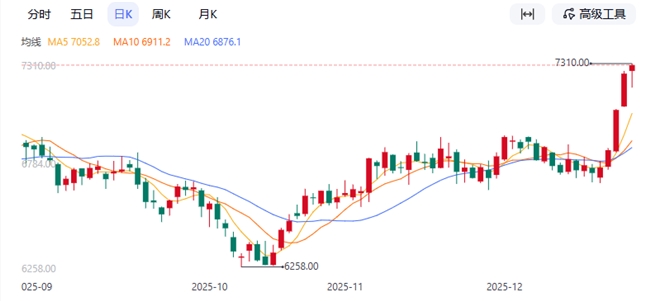
Core Viewpoint - The recent surge in domestic PX (para-xylene) and PTA (purified terephthalic acid) futures prices is attributed to multiple favorable factors, including global energy restructuring, optimized supply capacity, and ongoing industrial policy support [1][3]. Group 1: Price Trends - On December 26, PX futures rose by 4% to a peak of 7618 yuan/ton, while PTA futures surpassed 5300 yuan/ton, both reaching nearly one-year highs [1]. - The PX industry chain is becoming a significant profit breakthrough point in the refining sector, with expectations of high profitability due to limited supply growth and recovering demand [4]. Group 2: Supply and Demand Dynamics - Global PX capacity is expected to see no new additions in 2024 and 2025, with new projects planned for late 2026, creating a supply gap in the first half of 2026 [4]. - The current PX industry capacity utilization rate has exceeded 85%, indicating limited supply elasticity [4]. - The textile and apparel sectors in China and the U.S. may experience a replenishment wave in 2026, further driving demand for PX and its downstream products [4]. Group 3: Industry Structure - The domestic PX and PTA industries exhibit significant concentration, with the top three PX producers accounting for 54% of total capacity by the end of 2025 [6]. - Major PX producers include Rongsheng Petrochemical (1040 million tons), Sinopec (750 million tons), and PetroChina (630 million tons) [7]. - The PTA industry also shows high concentration, with the top three companies holding 52% of total capacity, led by Yisheng Petrochemical (2150 million tons) [8]. Group 4: Market Performance - Leading companies in the PX and PTA sectors have seen their stock prices rise significantly, with Rongsheng Petrochemical, Hengyi Petrochemical, and Hengli Petrochemical experiencing increases of 17.26%, 21.63%, and 15.42% respectively over the past two weeks [9]. Group 5: Future Outlook - The supply-demand landscape for PX and PTA is expected to continue optimizing into 2026, with no new PTA capacity and a focus on existing competition [10]. - The "anti-involution" policy is likely to lead to a contraction in supply, further improving the industry structure [10]. - Companies with integrated "crude oil-aromatic-PTA-polyester" supply chains, such as Rongsheng Petrochemical, are positioned to benefit significantly from the improving industry cycle [10].
PX、PTA创10个月新高 民营大炼化龙头价值迎重估
Cai Fu Zai Xian· 2025-12-24 05:00
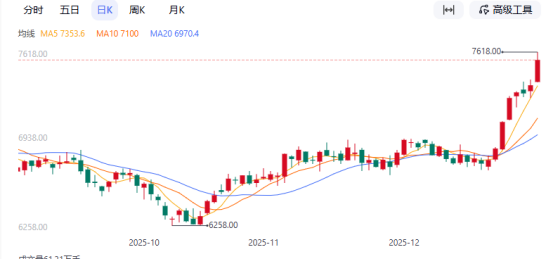
Core Viewpoint - The recent surge in domestic PX (para-xylene) and PTA (purified terephthalic acid) futures prices is attributed to multiple favorable factors, including global energy restructuring, optimized supply capacity, and ongoing industrial policy support [5][6]. Group 1: Price Trends - On December 23, PX futures surpassed 7300 yuan/ton, while PTA futures exceeded 5000 yuan/ton, both reaching nearly 10-month highs [1]. - The PX industry chain is becoming a significant profit breakthrough point for the refining sector, with expectations of high profitability due to limited supply growth and recovering demand [6]. Group 2: Supply and Demand Dynamics - Global PX capacity is expected to see no new additions in 2024 and 2025, with new projects planned for late 2026, creating a supply gap in the first half of 2026 [6][11]. - The current PX industry capacity utilization rate has risen to over 85%, indicating limited supply elasticity [6]. - The textile and apparel sectors in China and the U.S. may experience a synchronized inventory replenishment in 2026, further boosting demand for PX and PTA [7]. Group 3: Industry Structure and Market Leaders - The domestic PX and PTA industries exhibit significant concentration, with the top three companies holding 54% of the total PX capacity and 52% of the total PTA capacity by the end of 2025 [8][9]. - Major players include Rongsheng Petrochemical, Sinopec, and PetroChina in the PX sector, and Yisheng Petrochemical, Hengli Petrochemical, and Xin Fengming in the PTA sector [9][10]. Group 4: Market Outlook - The supply-demand landscape for PX and PTA is expected to continue optimizing into 2026, with a generally optimistic market outlook [11]. - The absence of new PTA capacity will lead to a focus on existing capacity, potentially accelerating the exit of high-cost older capacities [11]. - Companies with integrated "crude oil-aromatic-PTA-polyester" supply chains, such as Rongsheng Petrochemical, are positioned to benefit significantly from the improving industry cycle [11].