
县域经济

Search documents
农林牧渔行业:农产品保供稳价,积极推进农业高质量发展
Dongxing Securities· 2025-12-24 12:13
Investment Rating - The industry investment rating is "Positive" [5] Core Insights - The report emphasizes the importance of ensuring food security and stabilizing agricultural product prices, with a focus on grain production and the rural revitalization strategy [2][3] - The report highlights the need for innovation in agriculture, advocating for the development of new productive forces through smart agriculture and biotechnology [4] Summary by Sections Agricultural Production and Price Stability - The central economic meeting stresses the need to strictly adhere to arable land limits and maintain grain production to keep prices of essential agricultural products at reasonable levels [2] - Since June 2025, a series of capacity control measures have been implemented, leading to a decrease in the breeding sow inventory to below 4,000 heads by October 2025, aligning with the central economic meeting's directives [2] - The report recommends focusing on the pig farming industry, particularly on leading enterprises like Muyuan Foods, and other beneficiaries such as Wens Foodstuff Group and DeKang Agriculture [2] County Economic Development and Brand Agriculture - The report discusses the promotion of county-level economic development as a key driver for high-quality growth, suggesting the establishment of a full industry chain from production to branding [3] - It encourages agricultural enterprises to transition from bulk raw material producers to specialty agricultural brand companies, highlighting the potential for growth in county-level economies [3] Innovation and New Productive Forces - The report advocates for a new round of high-quality development actions in key industrial chains, emphasizing the integration of artificial intelligence in agriculture [4] - It identifies three key areas for investment: biotechnology innovation, agricultural machinery upgrades, and smart agriculture, recommending specific companies in each sector [4]

平时生活里,还真得有个“晋江”
Xin Hua Wang· 2025-12-24 10:37
Group 1 - The 2025 China Private Economy and Listed Companies Development Conference is being held in Jinjiang, highlighting the city's significant presence in daily life and its economic contributions [1][36]. - Jinjiang is known for its diverse manufacturing capabilities, producing well-known brands in apparel and footwear, such as 361°, K-Boxing, and Anta [4][5][19]. - The city has developed a strong industrial base, including integrated circuits, smart equipment, and healthcare products, showcasing its advancement in technology and innovation [16][21]. Group 2 - Jinjiang's economy ranks third nationally in terms of comprehensive development strength among county-level economies, indicating its robust economic performance [21]. - The city has a rich cultural heritage and is recognized for its tourism potential, with historical sites and traditional music contributing to its cultural landscape [30][32][33]. - Jinjiang's residents are characterized by a resilient spirit, shaped by their historical relationship with the sea, which has fostered a culture of adaptability and inclusiveness [25].


县域活力足,经济韧性强
Xin Lang Cai Jing· 2025-12-22 23:27
Core Insights - The GDP of county-level regions in Fujian is projected to grow from 5.21 trillion yuan to 5.78 trillion yuan from 2022 to 2024, with an annual compound growth rate of 5.6% [1] - The number of billion-yuan counties in Fujian increased from 14 to 18, with Jinjiang and Gulou District surpassing 300 billion yuan in GDP, ranking in the top 1% among 2,846 county-level regions nationwide [1] Group 1: Development Index and Key Counties - The first Fujian County Key Industry Chain Development Index was released, identifying Jinjiang, Jimei, Nan'an, Xiang'an, Fuzhou, and others as top ten counties based on various metrics [2] - The top ten counties are primarily located in the Fuzhou and Xiamen-Zhangzhou-Quanzhou metropolitan areas, excelling in industrial scale, innovation resource aggregation, and collaborative development [2][3] Group 2: Industrial Growth and Innovation - Fujian's industrial strong counties have achieved simultaneous growth in scale and quality, with Jinjiang focusing on innovation and brand empowerment to transition from OEM to brand ownership [3] - The province's industrial output value increased by 7% from January to November 2025, outpacing the national average by 1 percentage point, with industrial investment growing by 7.9% [4] Group 3: Innovation and Digital Transformation - Innovation is identified as the primary driver of economic growth, with significant investments in R&D and the establishment of provincial-level technology centers [5] - Digital transformation initiatives have led to substantial efficiency improvements, with companies like Luojiang Iron Tuo Machinery achieving a 20% increase in production efficiency through digitalization [5] Group 4: Financial Support and Collaboration - Fujian is implementing targeted financial services for key industry chains, with significant financing events leading to over 177 billion yuan in intended financing [8] - Collaborative efforts among experts and local enterprises have resulted in the establishment of research projects and platforms, enhancing the innovation ecosystem [7]
流水上亿小微被“小钱”卡住,分期乐普惠让厂里机器不停转、鱼虾满塘跃
Xin Lang Cai Jing· 2025-12-22 08:29
Core Insights - The article highlights the challenges faced by small and micro enterprises in accessing financial services, exemplified by Zhao Zhen, a small business owner in the aquaculture industry who struggles with cash flow despite significant annual revenue [1][8]. Group 1: Business Background - Zhao Zhen started his business in the 1990s, initially trading raw materials for aquaculture feed, and later established his own feed factory in 2019, focusing on fish, shrimp, and crab feed production [2][9]. - His factory quickly gained popularity, selling products not only locally but also to provinces like Zhejiang, Anhui, and Guangdong, becoming a leading fish feed processing enterprise in the region [10]. Group 2: Financial Challenges - In 2023, Zhao expanded his operations by contracting nearly 1,000 acres for aquaculture and invested 4 million yuan in new machinery, leading to increased financial strain [4][12]. - The cost of fishmeal is significant, with prices at 17,000 yuan per ton, requiring over 1 million yuan in working capital to maintain normal operations [4][12]. Group 3: Financial Solutions - Zhao Zhen's experience with traditional loans was slow and cumbersome, often requiring property collateral, which delayed access to necessary funds [4][12]. - Recently, he utilized a service called Fenqi Le Puhui, which provided a quick loan approval process, allowing him to access funds almost immediately, thus addressing his cash flow issues effectively [4][12][15]. Group 4: Industry Impact - The article emphasizes the importance of small and micro enterprises like Zhao's in the local economy, contributing significantly to regional production and employment [5][13]. - Fenqi Le Puhui's innovative approach combines local service with online data risk assessment, enabling better access to financial services for small businesses, thus fostering economic resilience in county-level economies [5][15]. Group 5: Service Reach and Impact - Fenqi Le Puhui has expanded its services to cover over 30 provinces and 330 counties, assisting more than 4 million small users in overcoming financial challenges [15]. - In the third quarter of 2025 alone, nearly 160,000 users received a total of 5 billion yuan in inclusive loans, demonstrating the platform's significant role in supporting small enterprises [15].
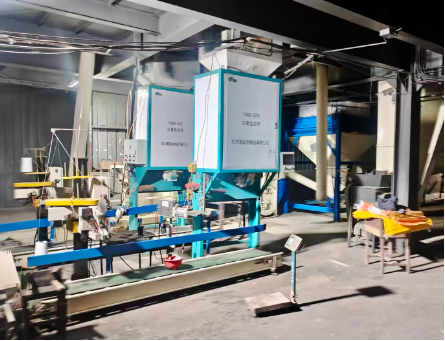
贵州榕江因地制宜发展县域经济 立足“村超”跳出“村超”做强特色产业
Ren Min Ri Bao· 2025-12-22 07:30
Core Insights - The article highlights the economic transformation of Rongjiang County in Guizhou Province, emphasizing the development of a unique county economy through local resources and initiatives like "Village Super" [1][3][5] Group 1: Economic Development - Rongjiang County has leveraged its comparative advantages to develop its economy, focusing on local specialties like Luo Han Guo (Monk Fruit) to increase income for residents [1] - The county's GDP has surpassed 10 billion yuan, indicating significant economic growth [5] Group 2: "Village Super" Initiative - The "Village Super" initiative has hosted over 2,700 events since May 2023, attracting more than 26 million tourists and generating over 29.6 billion yuan in tourism revenue [3] - The initiative has led to the establishment of 9,270 new business entities and partnerships with over 50 companies, enhancing the local economy [5] Group 3: Investment and Industry Growth - The success of "Village Super" has attracted businesses to invest in Rongjiang, with companies like Guizhou Huacheng Green Science and Technology investing 300 million yuan in Luo Han Guo processing facilities [4] - The establishment of processing facilities has allowed local farmers to secure better prices and stabilize income through guaranteed purchase agreements [4]
贯彻四中全会精神一线见闻|贵州榕江因地制宜发展县域经济 立足“村超”跳出“村超”做强特色产业
Ren Min Ri Bao· 2025-12-22 03:40
Core Viewpoint - The development of unique county economies, particularly through the promotion of local特色产业, is essential for increasing income and employment opportunities for rural communities [2]. Group 1: Economic Development - Guizhou's Rongjiang County has leveraged its comparative advantages to develop its economy, transitioning from one of the last poverty-stricken counties to a thriving area through local特色产业 [1]. - The county's GDP has exceeded 100 billion yuan, indicating significant economic growth [5]. Group 2: "Village Super" Initiative - The "Village Super" initiative has hosted over 2,700 events since May 2023, attracting more than 26 million tourists and generating over 29.6 billion yuan in tourism revenue [3]. - The initiative has directly benefited local businesses, such as a food stall that saw its annual income quadruple due to increased foot traffic from events [3]. Group 3: Investment and Industry Growth - The "Village Super" brand has enhanced the county's attractiveness for investment, leading to a significant increase in businesses seeking to establish operations in the area [4]. - A total of 9,270 new business entities have been established in Rongjiang County, with over 10 quality enterprises in food processing and electronics now operating [5]. - The establishment of a 300 million yuan investment project for processing罗汉果 has resulted in the processing of over 8,000 tons of fresh fruit, generating more than 100 million yuan in output value [4].
广东“潜力板”激活:县域“黑马”跑赢全省经济增速丨品粤百千万
2 1 Shi Ji Jing Ji Bao Dao· 2025-12-22 00:06
Core Insights - The article highlights the significant economic growth and transformation occurring in Guangdong's county-level economies, driven by the "Hundred Counties, Thousand Towns, and Ten Thousand Villages High-Quality Development Project" [2][6] Economic Growth - In 2023, 57 counties in Guangdong have consistently outpaced the provincial GDP growth rate for two consecutive years, with a 1.1 percentage point lead over the provincial average [2] - The industrial added value in these counties has increased by 6.8%, contributing to a net inflow of population and an urbanization rate of 46.48% [2][9] - The income disparity between urban and rural residents has narrowed from a ratio of 2.41:1 to 2.31:1 [2][9] Infrastructure Development - The completion of the "most beautiful tourism road" connecting major tourist attractions has significantly boosted local economies, with one village reporting an increase of nearly 200,000 yuan in monthly revenue [1] - The Huizhou New Materials Industrial Park is projected to attract over 5 billion yuan in investment by November 2025 [1] County-Level Strategies - Guangdong's approach emphasizes tailored strategies for each county, fostering unique industrial clusters and enhancing local economic capabilities [2][3] - The establishment of 64 provincial industrial parks and over 110 incubators has facilitated the transfer of industrial projects, with a total planned investment exceeding 720 billion yuan [3] Sector-Specific Developments - Bo Luo County has focused on integrating into the Greater Bay Area's industrial chain, achieving a GDP of 95.22 billion yuan in 2024, with industrial added value contributing 73.2% to this growth [3][4] - Huizhou has concentrated on developing a new materials industry park, resulting in over 26% year-on-year growth in industrial output for the first half of 2025 [6] Tourism and Cultural Integration - The article discusses the rise of cultural tourism, with counties leveraging local resources to attract visitors, such as the transformation of a warehouse into a popular cultural site [8][9] - The integration of rural ecological and cultural resources into economic activities has created new revenue streams for local communities [9]
立足“村超”跳出“村超”做强特色产业(贯彻四中全会精神一线见闻)
Ren Min Ri Bao· 2025-12-21 22:41
Core Insights - The article highlights the economic transformation of Rongjiang County in Guizhou Province, emphasizing the development of a unique county economy through local advantages and the promotion of特色产业 (characteristic industries) [1][2]. Group 1: Economic Development - Rongjiang County has leveraged its comparative advantages to develop its economy, focusing on特色产业 (characteristic industries) to increase income for local residents [1]. - The county has seen significant growth in tourism and related economic activities, with over 2,700 events held since May 2023, attracting more than 26 million visitors and generating over 29.6 billion yuan in tourism revenue [3]. Group 2: Agricultural and Industrial Growth - The introduction of the "village super" (村超) brand has enhanced the local economy, leading to the establishment of 9,270 new business entities and the introduction of over 10 quality enterprises in food processing and electronics [5]. - The investment in processing facilities for local products, such as罗汉果 (luohan fruit), has increased the value of agricultural products, with a total investment of 300 million yuan in new processing lines, generating over 1 billion yuan in output [4]. Group 3: Community Impact - The "village super" initiative has directly benefited local businesses, with entrepreneurs like Yang Li reporting a fourfold increase in annual income due to increased foot traffic from events [3]. - The county's GDP has surpassed 10 billion yuan, reflecting the successful integration of local resources and the promotion of特色产业 (characteristic industries) [5].
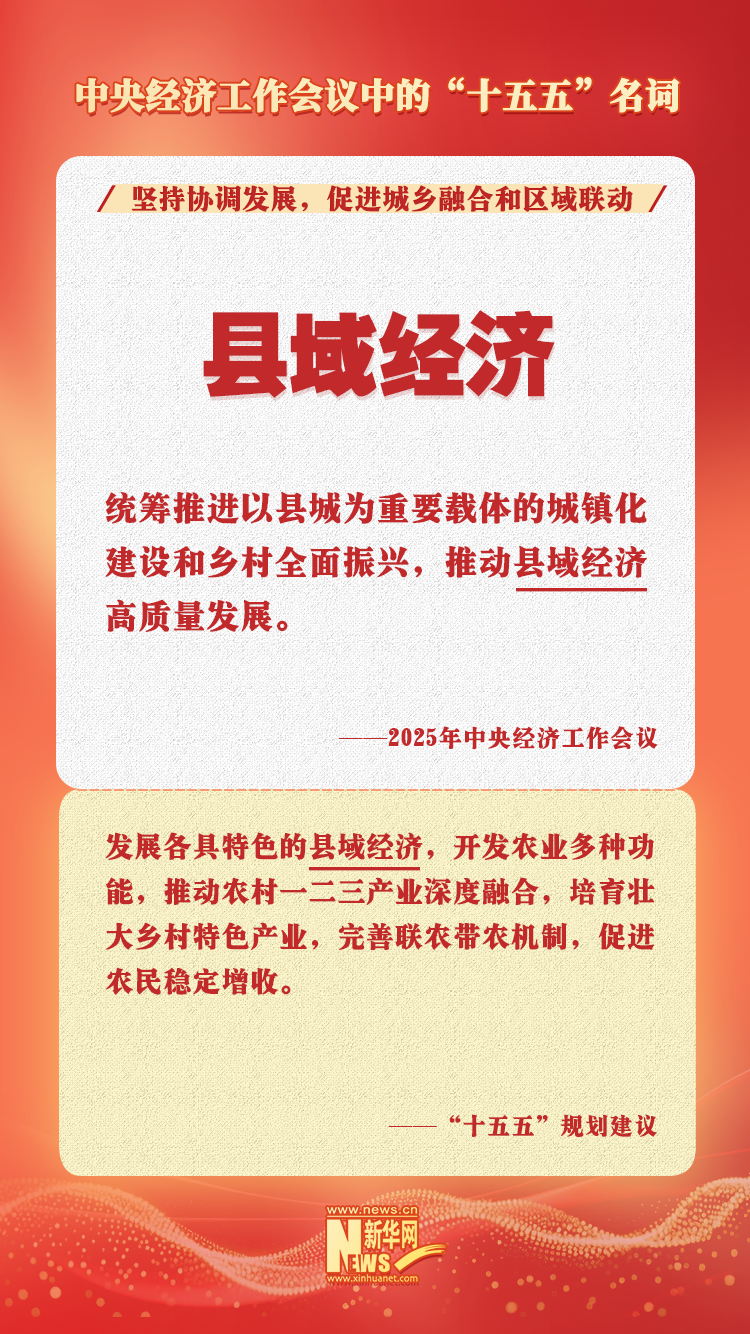
中央经济工作会议中的“十五五”名词:县域经济
Xin Hua Wang· 2025-12-20 07:40
2026年是"十五五"开局之年,近日召开的中央经济工作会议明确了关于明年经济工作的思路、任务、 政策等,一系列重点工作与"十五五"规划建议的部署一脉相承。为更好帮助网友理解会议精神,新华网梳 理了会议提出的部分关键提法,一起来学习。 延展阅读 如何理解发展各具特色的县域经济? 县域经济是我国经济的基本单元,是发展经济、保障民生、维护稳定、促进国家长治久安的重要基 础。《建议》提出"发展各具特色的县域经济",对分类推进以县城为重要载体的城镇化建设、促进城乡融 合和区域协调发展具有重大意义。 "十五五"时期,要着力做好以下几个方面的工作。 第一,推动县域各展其长。 要加强分类指导,引导和支持各县顺应市场规律,依托当地资源,发挥比较优势,找准功能定位,明 确发展方向,宜工则工、宜农则农、宜商则商、宜游则游,走特色化发展路径。实行差异化支持政策,针 对各县实际相应加大资源配置、产业升级、基础设施等领域的投入,集中力量放大县域特色优势。 第二,强化县域产业支撑。 要抓住部分发达地区产业迁移、多数县域交通通信等基础设施条件大幅改善、风电光伏等分布式能源 加快发展等机遇,切实优化县域营商环境,推动县域发展与国家重大战略、区 ...
迈向“十五五”的发展图景·大国小村丨一个村何以集聚58家法兰锻造企业
Ren Min Ri Bao· 2025-12-19 07:22
Core Insights - The article highlights the development of the county economy in China, focusing on the integration of agriculture and industry, particularly in the forging industry in Cuijiazhuang Village, Shanxi Province [1] Group 1: Industry Development - Cuijiazhuang Village has over 58 forging enterprises, with 27 being large-scale, primarily focused on flange forging, which is essential in various sectors such as machinery, wind power, and petrochemicals [2] - The forging industry in the region has historical roots dating back to the Han Dynasty, with local expertise in ironworking leading to the establishment of a prosperous industry despite limited natural resources [3] Group 2: Company Growth - The company, Fuxingtong Heavy Forging Co., has seen its annual output value grow from less than 50 million to 800 million yuan, expanding its product range from wind power flanges to various forged products [3] - The company is currently expanding its facilities, which is expected to create more job opportunities for local residents [3] Group 3: Community Impact - The local government and companies are collaborating to improve community infrastructure, including waste management and road services, enhancing the living conditions in the village [4] - The forging industry in Dingxiang County accounts for approximately 48% of the national total output, with an expected total output value exceeding 20 billion yuan by 2025 [4]