
宽基ETF

Search documents
持续加仓!
中国基金报· 2025-12-08 06:50
Group 1 - The core viewpoint of the article highlights that the A-share market continues its rebound, with stock ETFs attracting significant net inflows exceeding 10.8 billion yuan in a single week [2][3][4] - As of December 5, the total scale of stock ETFs (including cross-border ETFs) reached 4.38 trillion yuan, with a weekly increase of 35.378 billion units [4] - On December 5 alone, the net inflow of funds into stock ETFs was approximately 8.954 billion yuan, with broad-based ETFs and Hong Kong market ETFs leading the inflows [5][8] Group 2 - The article notes that the net inflow of funds into ETFs tracking the CSI A500 index was particularly strong, with a single-day net inflow of 3.482 billion yuan [8] - Major fund companies, such as E Fund and Huaxia Fund, reported continued net inflows into their ETFs, with E Fund's ETFs reaching a scale of 817.12 billion yuan and Huaxia Fund's A500 ETF seeing a net inflow of 1.621 billion yuan [9][10] - The article mentions that the recent adjustment of risk factors for insurance companies is expected to benefit broad-based ETFs, leading to increased net inflows [12] Group 3 - The top ten ETFs by net inflow included several broad-based ETFs, with the A500 ETF from Huatai-PB seeing a net inflow of over 2.209 billion yuan [14] - Conversely, the article lists the top ten ETFs by net outflow, highlighting that bank ETFs, chemical ETFs, and the SSE 50 ETF experienced significant outflows, each exceeding 1 billion yuan [16]


中证A500ETF(159338)涨超1% 近3日吸金近8亿元 指数长期跑赢沪深300
Mei Ri Jing Ji Xin Wen· 2025-12-05 06:47
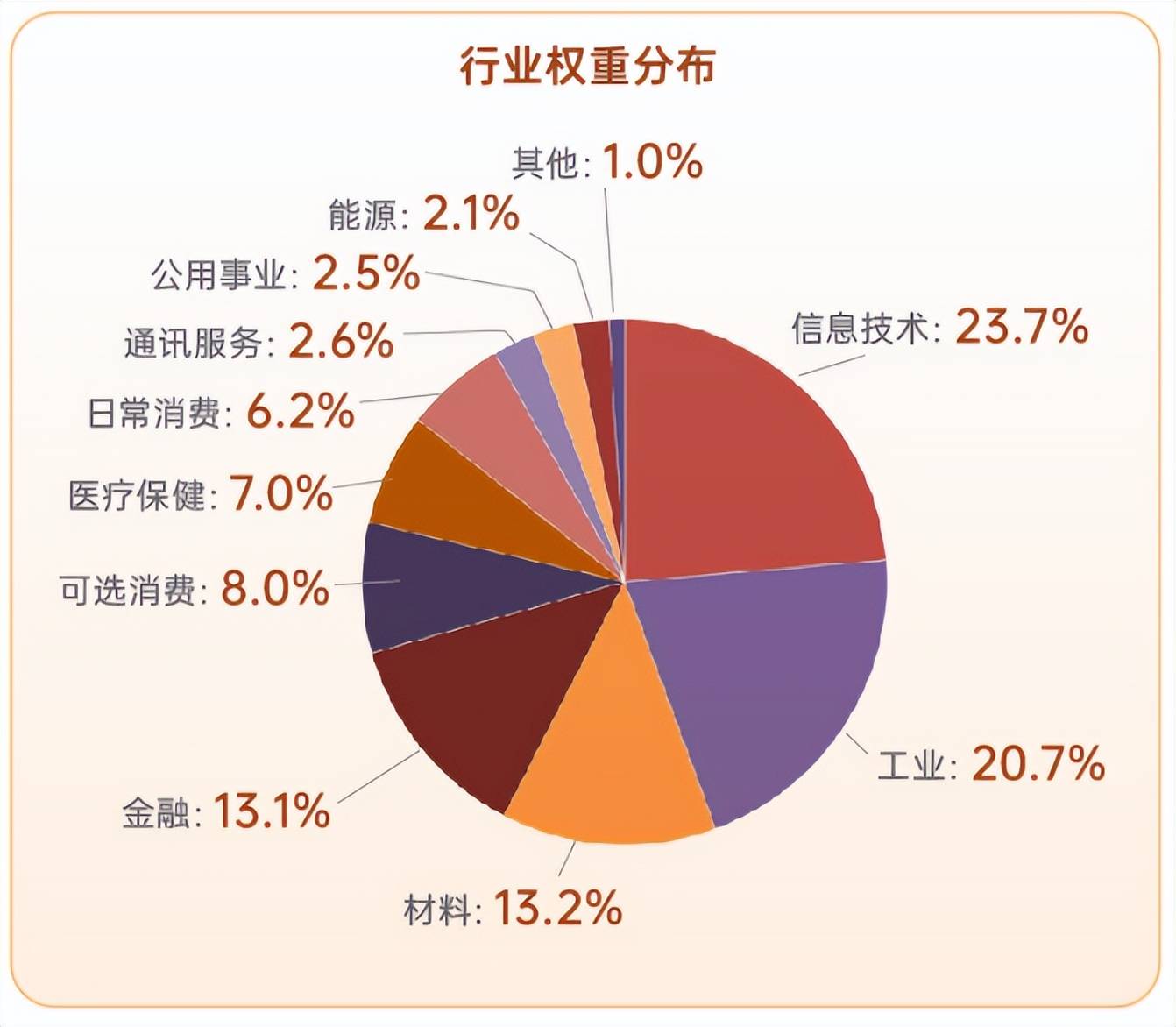
另外,成分股方面,中证A500指数成分股包括约50%传统价值行业+约50%新兴成长行业,相较于沪深 300,中证A500减少了传统行业的分布,纳入了更多电力设备、医药生物、电子、计算机等新兴领域龙 头。既能把握科技股的上涨弹性,又能拥有传统价值行业抵御风险的能力。 历史业绩来看,中证A500指数历史走势占优。截至2025年10月31日,中证 A500指数基日以来涨幅高达 458.37%,而同期沪深300,中证800指数收益率为362.22%,409.30%,超额分别为96.15%、49.07%。 2025年至今,中证 A500上涨21.15%,同期沪深300,中证800指数涨幅分别为17.94%,20.50%,超额分 别为3.21%、0.65%。 (文章来源:每日经济新闻) 近期市场波动放大,资金青睐宽基ETF布局大盘,中证A500ETF(159338)近3日获资金加仓近8亿元, 根据wind数据,截至目前,今日盘中获资金申购超3亿份额。 中证A500ETF(159338)跟踪中证A500指数,行业分布全面且均衡,实现100%行业覆盖,且做了行业 中性处理,更能代表A股市场。 ...
A500ETF基金(512050)近1个月流入43亿,居宽基ETF第一!23亿元抄底费率最低黄金ETF华夏(518850)
Sou Hu Cai Jing· 2025-12-03 06:33
Group 1 - The recent rebound of gold prices has brought them back to the $4,200 level, with the China Gold ETF experiencing a 4.86% pullback since its peak on October 20, while attracting 2.354 billion yuan in bottom-fishing investments [1] - From October 21, there has been a significant inflow of funds into broad-based ETFs, with the A500 ETF seeing a net inflow of 4.341 billion yuan, making it the largest "capital-absorbing" broad-based ETF [1] - Market optimism for gold has weakened recently, but with the Federal Reserve expected to continue lowering interest rates, the allocation value of gold is expected to remain prominent [1] Group 2 - According to a report by CICC on December 3, the rapid increase in gold prices since the beginning of the year has outpaced levels that align with fundamentals, which may lead to increased volatility in the future [1] - Despite the potential for volatility, the ongoing rate-cutting cycle by the Federal Reserve and the damaged credibility of the US dollar suggest that the gold bull market is not over, with recommendations to maintain an overweight position and to increase allocations on dips [1] - The continuous net inflow into broad-based ETFs since mid-October is attributed to market fluctuations, which often lead to valuation digestion, causing broad index valuations to drop to historical lows [1] Group 3 - The A500 ETF, which balances "value + growth," has a recent performance of -0.44%, with a current scale of 20.457 billion yuan and an average daily trading volume of 4.185 billion yuan, maintaining its position as the top performer in its category [1] - The lowest fee gold investment tool, the China Gold ETF, is anchored to physical gold and supports T+0 trading, with associated off-market connection funds available [2]
A500ETF基金(512050)近1个月流入43亿,居宽基ETF第一!23亿元抄底费率最低黄金ETF华夏
Sou Hu Cai Jing· 2025-12-03 06:27
Group 1 - The recent rebound of gold prices to the $4,200 level follows a correction since the peak on October 20, with the gold ETF Huaxia experiencing a 4.86% decline since that high, while attracting 2.354 billion yuan in bottom-fishing investments [1] - From October 21, there has been a significant inflow of funds into broad-based ETFs, with the A500 ETF seeing a net inflow of 4.341 billion yuan, making it the largest in terms of capital attraction among broad-based ETFs [1] - Market optimism for gold has weakened recently, but with the Federal Reserve expected to continue lowering interest rates, the allocation value of gold is anticipated to remain strong. CICC's report on December 3 suggests that despite a rapid increase in gold prices this year, which has outpaced fundamental levels, the bull market for gold is not over, recommending an overweight position and buying on dips [1] Group 2 - The A500 ETF (512050), which balances value and growth, has a recent decline of 0.44% and a total size of 20.457 billion yuan, maintaining the highest average daily trading volume of 4.185 billion yuan among its peers this year [2] - The Huaxia Gold ETF (518850), which is the lowest fee investment tool for gold, has seen a slight decline of 0.2% and is anchored to physical gold, supporting T+0 trading [2]
行情反复博弈,中证A500ETF(159338)攻守兼备,指数历史业绩较沪深300超额明显
Sou Hu Cai Jing· 2025-12-02 02:42
临近年底政策窗口期,市场往往面临 "业绩真空期 + 政策不确定性 + 资金面收紧"的问题,行情开始震荡波动。 在这种行情下,选择一只优质的宽基ETF,或许能够获得更好的"防御底仓"。 中证A500ETF(159338)跟踪中证A500指数,以国际通用的"行业均衡"方式编制,被誉为A股市场的"尖子班", 本土"标普500"。它挑选了各行业市值较 大、流动性较好的500只证券作为指数样本,涵盖了A股市场的核心资产。 同时,几乎所有三级行业龙头都入选样本,真正实现了"龙头荟萃"。这些成分股不仅代表了A股市场的中坚力量,或更是未来经济增长的潜力所在。 注:数据来源wind,截止2025年10月31日。中证二级行业共35个,中证三级行业共93个,中证A500指数含有中证三级行业91个。行业占比动态变化,仅供 参考。中证三级行业中,将截止2025年10月31日市值排名前两位的公司定义为"行业龙头"。 历史业绩来看,中证A500指数历史走势占优。截至2025年10月31日,中证 A500指数基日以来涨幅高达458.37%,而同期沪深300,中证800指数收益率为 362.22%,409.30%,超额分别为96.15%、49 ...
慢牛稳了?这届基民学会了低买高卖!
Sou Hu Cai Jing· 2025-12-01 09:10
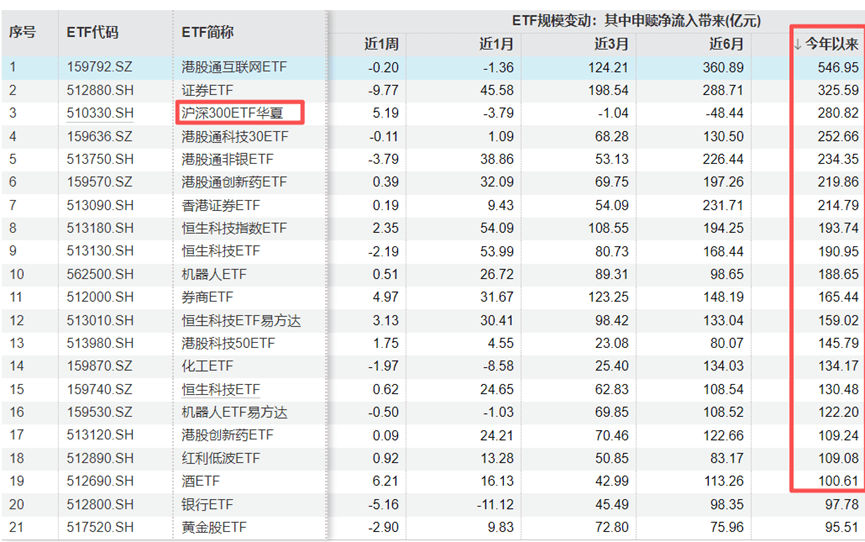
Group 1 - The current bull market is characterized by a "slow bull" sentiment, where the timing of retail investors entering the market affects the duration of the bull run [1] - Retail investors are increasingly favoring narrow-based ETFs over broad-based ETFs, indicating a shift towards more aggressive investment strategies [1][2] - Among the 19 ETFs with over 10 billion yuan in net inflows this year, only the CSI 300 is a broad-based ETF, while the remaining 18 are narrow-based ETFs [2] Group 2 - The Hong Kong Internet ETF and Securities ETF have seen significant net inflows of 546.95 billion yuan and 325.59 billion yuan, respectively, making them the top two performers [4] - The performance of narrow-based ETFs is further supported by the strong inflows into industry-themed ETFs, which dominate the accumulation rankings [6][7] - The CSI 500 index has experienced the largest net outflow this year, exceeding 960 billion yuan, attributed to previous overinflation and underperformance [10] Group 3 - The trend of net outflows from broad-based ETFs is evident, with only a few industry-specific indices appearing in the top outflow rankings [8][9] - The net outflow from the ChiNext and Sci-Tech 50 indices is viewed as a positive signal, indicating a shift in investor sentiment [11] - Retail investors have shown a tendency to exit the market after recovering their investments, particularly in the Sci-Tech 50 index [12][14] Group 4 - The majority of net inflows into ETFs are concentrated in narrow-based funds, with a notable preference for sectors like innovative drugs and robotics [15][17] - The Hong Kong Technology ETF has seen net subscriptions close to 100 billion yuan, with significant inflows during market dips, reflecting a strong accumulation sentiment [18] - The overall market sentiment suggests that as long as there are willing buyers, the bull market is likely to continue, despite potential risks [22]
从“广撒网”转向“精聚焦” 资金加速涌入窄基ETF
Zheng Quan Shi Bao· 2025-11-30 18:17
Core Insights - The first batch of 7 ETFs tracking the CSI Sci-Tech Innovation and Entrepreneurship Artificial Intelligence Index has officially launched, with some ETFs selling out on the first day, indicating strong investor interest in industry-themed ETFs [1][2] - There is a notable shift in investor preference from broad-based strategies to focused investments, reflecting a structural divergence in the A-share market where emerging industries outperform traditional blue-chip stocks [1][3] - The total scale of narrow-based ETFs has surpassed 1.6 trillion yuan, showing a doubling growth compared to the beginning of the year, while broad-based ETFs have seen less than 10% growth [1][2] Narrow-based ETF Growth - The narrow-based ETF market has seen explosive growth this year, with numerous industry-themed ETFs in the application process, including those focused on robotics, semiconductors, and innovative pharmaceuticals [2][3] - Investor enthusiasm for narrow-based ETFs is evident, with 18 ETFs attracting over 10 billion yuan in net inflows, all of which are narrow-based, highlighting a preference for targeted investment strategies [2][3] - The significant inflows into narrow-based ETFs, such as the Hong Kong Stock Connect Internet ETF and Securities ETF, which received 55.3 billion yuan and 33.4 billion yuan respectively, further emphasize this trend [2] Divergence in ETF Performance - In contrast to the popularity of narrow-based ETFs, broad-based ETFs have faced significant outflows, with the top three experiencing net outflows of 46 billion yuan, 29 billion yuan, and 14.9 billion yuan respectively [3][4] - A total of 27 ETFs have seen net outflows exceeding 5 billion yuan this year, with 21 of these being broad-based ETFs, indicating a strong preference for narrow-based options [3][4] - The structural characteristics of the market have led to a concentration of capital in high-growth sectors, while broad-based ETFs lack the appeal of specific industry attributes, resulting in diminished attractiveness [3][5] Investment Strategy Shift - Investors are transitioning from broad-based ETFs, which provide a "fuzzy allocation," to narrow-based ETFs that allow for precise selection based on specific industry trends, such as AI and renewable energy [5][6] - The shift is driven by the significant disparity in performance across different sectors, with narrow-based ETFs offering the potential for higher returns by capturing structural opportunities [5][6] - The lower investment threshold of narrow-based ETFs also helps investors avoid individual stock risks, aligning with their needs for timing and sector rotation [5][6] Market Dynamics and Risks - The current trend towards narrow-based ETFs reflects a structural shift in the A-share market, with sectors related to high-quality economic development, such as AI and semiconductors, becoming focal points for investment [6][7] - The high turnover rates of narrow-based ETFs contribute to increased volatility, with concentrated capital inflows potentially leading to inflated valuations and heightened risks of "crowded trades" [7][8] - Investors are advised to remain cautious, as the performance of narrow-based ETFs is highly sensitive to industry conditions, and significant capital withdrawals can lead to sharp declines in corresponding sectors [8][9]
一日售罄!这类ETF突然爆发,投资者为何痴迷?
Sou Hu Cai Jing· 2025-11-30 09:54
Core Insights - The public fund industry is experiencing a surge in the issuance of industry-themed ETFs, with the first batch of seven ETFs tracking the CSI Innovation and Entrepreneurship Artificial Intelligence Index launched on November 28, selling out on the first day [1][2] - Investors are increasingly favoring narrow-based ETFs over broad-based ETFs due to the structural characteristics of the A-share market, where emerging industries are performing well while traditional blue-chip stocks lag behind [1][4] Group 1: Market Trends - The total scale of narrow-based ETFs in the stock market has surpassed 1.6 trillion yuan, with a growth rate of 100%, significantly outpacing the less than 10% growth of broad-based ETFs [1][3] - In 2025, 34 ETFs exceeded 10 billion yuan in scale, with only 2 being broad-based, highlighting the preference for narrow-based ETFs [3] - The net inflow of funds into narrow-based ETFs has been substantial, with 18 ETFs attracting over 10 billion yuan each, while broad-based ETFs have seen significant net outflows [3][4] Group 2: Investor Behavior - Investors are shifting from "broad allocation" to "precise selection," focusing on specific high-growth sectors such as AI and new energy, reflecting a more refined investment strategy [5][6] - The preference for narrow-based ETFs is driven by the significant disparity in performance across different industries, with narrow-based ETFs allowing for targeted exposure to high-growth areas [6][7] - The low investment threshold of narrow-based ETFs makes them attractive for investors looking to avoid individual stock risks while capitalizing on industry trends [6][7] Group 3: Risks and Volatility - Narrow-based ETFs are characterized by higher volatility compared to broad-based ETFs, which may lead to significant losses during industry corrections [8][10] - The high turnover rates of narrow-based ETFs indicate a trend of frequent trading among investors, which can contribute to inflated valuations and increased market volatility [9] - Investors are advised to maintain a balanced approach, potentially using a core-satellite strategy that combines broad-based ETFs with narrow-based ETFs to mitigate risks [10]
A500ETF基金(512050)近20日强势净流入23亿元,券商ETF11月下跌6%
Ge Long Hui· 2025-11-28 07:37
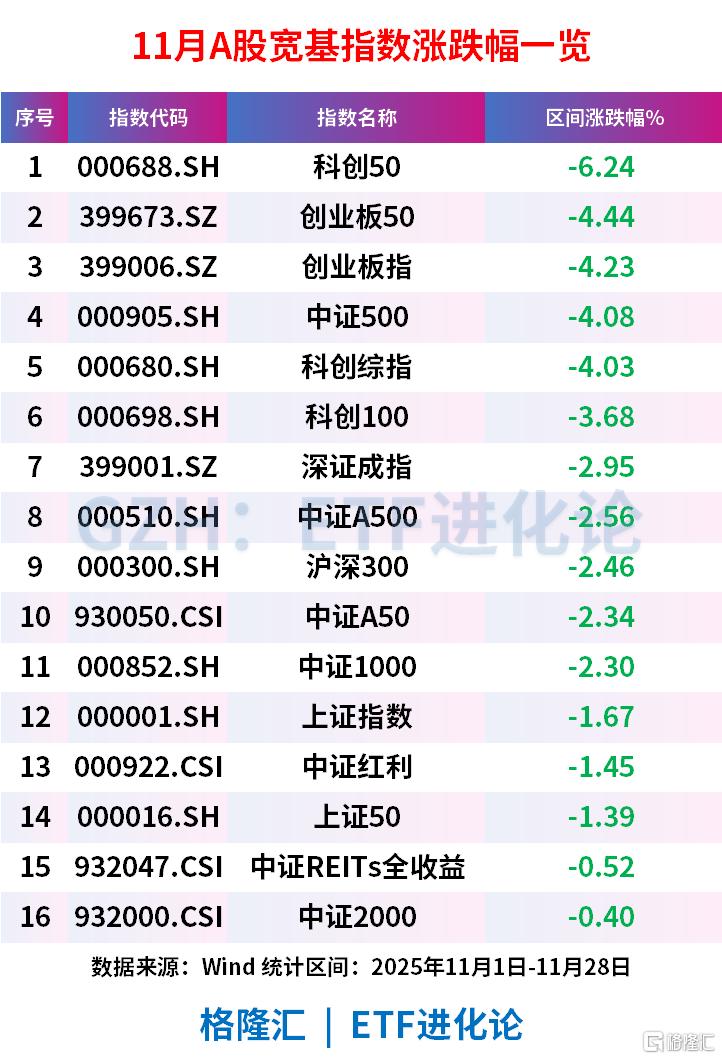
Market Overview - On the last trading day of November, A-shares ended with a slight rebound, with the Shanghai Composite Index rising by 0.34%, the Shenzhen Component Index increasing by 0.85%, and the ChiNext Index up by 0.7% [1] - The total market turnover was 1.59 trillion yuan, a decrease of 125.4 billion yuan from the previous day, marking the lowest turnover since August 4, with three consecutive days of declining turnover [1] Index Performance - In November, the A-share market continued to experience fluctuations and corrections, with the growth style indices suffering the most. The STAR 50, ChiNext Index, and CSI 500 fell by 6.24%, 4.23%, and 4.08% respectively [1][2] - The CSI A500 and CSI 300 indices decreased by 2.55% and 2.46% respectively [1] Sector Performance - In terms of sector performance for November, the top-performing industries included comprehensive, banking, textile and apparel, and petroleum and petrochemicals, while the worst-performing sectors were computer, automotive, electronics, and non-bank financials [4][5] - The comprehensive sector saw a rise of 4.07%, banking increased by 2.99%, textile and apparel rose by 2.95%, and petroleum and petrochemicals grew by 2.90% [5] ETF Trends - The "Global Vision, Betting on China" top ten core ETFs experienced a decline of 2.98% in November, but recorded a year-to-date increase of 29.53%, significantly outperforming the CSI 300 index by 14 percentage points [8] - The A500 ETF (512050) saw a weekly increase of 2.15% and a monthly decline of 2.73%, with continuous net inflows, totaling 5.84 billion yuan on the previous day and 23.53 billion yuan over the past 20 days [8][10] - The securities-themed ETFs collectively saw a net inflow of 67.79 billion yuan in November, with a year-to-date net inflow of 902 billion yuan [19] Policy and Economic Outlook - The implementation plan issued by six departments aims to enhance the adaptability of supply and demand for consumer goods, with a target to optimize the supply structure by 2027 and establish a high-quality development pattern by 2030 [15][16] - The focus on boosting consumption has been highlighted as a primary task for economic work in 2025, with various policies being developed to support this goal [16] Securities Industry Insights - The securities industry is expected to see accelerated mergers and acquisitions, enhancing overall competitiveness and moving towards the goal of building a first-class investment bank [20] - The performance of listed securities firms showed significant improvement in the first three quarters of 2025, with total operating income reaching 419.56 billion yuan, a year-on-year increase of 42.55% [20][21]
资金全方位抄底宽基ETF!千亿规模的上证50ETF(510050)单日净流入15亿,规模最大的科创50ETF上周净流入超34亿
Ge Long Hui· 2025-11-25 21:06
Group 1 - A-shares experienced a rebound driven by military and AI applications, with significant inflows into broad-based ETFs, including 1.53 billion CNY into the largest SSE 50 ETF and 518 million CNY into the Sci-Tech 50 ETF in a single day [1] - Since the sharp correction in A-shares, broad-based ETFs have become a "safe haven" for funds, with a total net inflow of 70 billion CNY into stock ETFs last week, including 50 billion CNY on November 21 alone [1] - The core contradiction in the volatile market is the uncertainty of returns against the certainty of risks, leading to increased allocation in broad-based ETFs, which diversify investments across leading stocks in all sectors, thus avoiding deep corrections in sector ETFs [1] Group 2 - The Sci-Tech 50 ETF (588000) has over 60% semiconductor content, with a latest scale of 73 billion CNY and an average daily trading volume of 4.197 billion CNY, ranking first in both scale and liquidity among similar products [2] - The A500 ETF (512050) is a balanced fund combining "value + growth," with a latest scale of 19.5 billion CNY and an average daily trading volume of 4.06 billion CNY, also ranking first among similar products [2] - The CSI 1000 ETF (159845) focuses on small-cap growth stocks with a strong offensive nature, having a latest scale of 44.6 billion CNY, complementing large-cap broad-based funds and aligning with emerging industry trends [2] - The SSE 50 ETF (510050) is the "blue-chip flagship" of A-shares, with a latest scale of 178.5 billion CNY, making it the largest SSE 50 ETF in the market, significantly surpassing similar products [2]