庞氏骗局

Search documents
2017年,马云预言房地产将如白菜价,如今8年过去了预言成为现实
Sou Hu Cai Jing· 2025-10-05 22:18
Core Viewpoint - The prediction made by Jack Ma in 2017 that "future housing prices will be like scallions" has come true, as the real estate market has entered a phase of adjustment with significant price declines, especially in third and fourth-tier cities [1][3][5][14]. Real Estate Market Situation - The real estate market has been undergoing adjustments since 2022, with multiple cities experiencing price corrections, particularly in third and fourth-tier cities where prices have dropped significantly from historical highs [5][14]. - As of 2024, the number of second-hand homes listed for sale has increased, and the average transaction cycle has lengthened, indicating a buyer's market [7][16]. - Many homeowners who purchased properties between 2017 and 2019 are finding that current new home prices are lower than their purchase prices, leading to discussions about real estate no longer being the best investment [9][16]. Economic Context - The average interest rates for three-year and five-year fixed deposits in banks have decreased to 1.711% and 1.573%, respectively, leading to a significant reduction in returns compared to previous years [18][20]. - The purchasing power of savings is being eroded due to low interest rates and rising daily consumption costs, creating a "silent wealth evaporation" effect [24][26][28]. Investment Landscape - There is a rise in high-yield investment projects that often disguise themselves with trendy concepts like "metaverse real estate" and "blockchain mining," promising annual returns of over 20% [30][32]. - These schemes often operate similarly, targeting clients through social media and creating a false sense of wealth, ultimately leading to significant financial losses for investors [32][37]. Recommended Investment Strategies - Financial experts suggest a diversified asset allocation strategy to navigate the current economic environment, recommending that 50%-60% of funds be allocated for basic living expenses, 20%-30% for inflation-hedging assets, and 10% for educational investments or small innovative projects [42][45]. - Data indicates that global central banks increased their gold holdings by over 1,000 tons in 2023, highlighting a trend towards stable investments [47].

股市泡沫与清王朝的覆灭:对当前科技投资的警示
水皮More· 2025-09-30 09:19
Group 1 - The article discusses the historical context of the rubber stock market frenzy in late Qing Dynasty Shanghai, highlighting its impact on the financial system and the eventual collapse of the Qing Dynasty [1] - Shanghai emerged as a financial hub in the Far East after its opening in 1843, with a dual financial system comprising foreign banks and local money shops, which facilitated speculation [2][3] - The establishment of the Shanghai Stock Exchange allowed for the trading of rubber stocks, but the lack of regulation led to rampant insider trading and market manipulation [3][4] Group 2 - The rubber industry experienced explosive growth due to technological advancements in the early 20th century, with significant increases in demand for rubber products, particularly from the automotive sector [6][7] - Many rubber companies listed in Shanghai were found to have exaggerated claims about their production capabilities, leading to inflated stock valuations [7][9] - The speculative bubble was fueled by a combination of misleading information, high dividend promises, and a lack of transparency in the operations of rubber companies [8][9] Group 3 - Financial institutions and media played a crucial role in promoting the rubber stock frenzy, with banks providing leverage for investors and newspapers amplifying the hype around rubber stocks [11][12] - Local money shops engaged in high-risk lending practices, significantly increasing their exposure to the stock market, which contributed to the systemic risk [12][16] - The speculative environment led to widespread participation from various social classes, resulting in a collective investment frenzy that detached stock prices from underlying values [13][15] Group 4 - The bubble burst in mid-1910 due to a combination of declining demand for rubber and increasing supply from newly established plantations, leading to a rapid decline in stock prices [17][18] - The collapse of the rubber market triggered a liquidity crisis among money shops, which were heavily invested in rubber stocks, resulting in a wave of bankruptcies [20][22] - The financial crisis had far-reaching consequences, leading to a significant contraction in economic activity and contributing to the social unrest that culminated in the 1911 revolution [25][26] Group 5 - The article concludes with lessons learned from the rubber stock frenzy, emphasizing the importance of risk management, regulatory oversight, and the need for transparency in financial markets to prevent similar crises in the future [31][36]

比特币遮不住的430亿骗局:钱志敏的"三世富贵"梦与跨国追赃困局
Sou Hu Cai Jing· 2025-09-30 08:34
Core Points - The case of Qian Zhimin marks a significant turning point in the largest Bitcoin money laundering case in the UK, with her guilty plea revealing the connection to 43 billion yuan of illegal fundraising [1][6] - The fraudulent scheme, operated by Qian through her company, Blue Sky Ge Rui, attracted 128,000 investors across 31 provinces in China, promising unrealistic returns of 100% to 300% annually [2][4] - The investigation into the scheme led to the discovery of 61,000 Bitcoins, valued at over 20 billion yuan at the time, which were hidden in a "cold wallet" [3][5] Group 1 - Qian Zhimin's fraudulent activities involved creating a facade of legitimacy through technology and secrecy, including the use of a "mask ceremony" for high-value investors [2][4] - The scheme's operations included returning funds to earlier investors to maintain the illusion of profitability, with over 34.1 billion yuan used for this purpose [2][6] - The case highlights the challenges of cross-border asset recovery, with only 13% of the funds returned to victims so far, and the potential for the seized Bitcoins to be split between UK authorities and Chinese creditors [6][7] Group 2 - The investigation revealed that Qian attempted to launder her illicit gains by converting them into Bitcoin and using fake identities to escape to the UK [5][6] - The case underscores the regulatory gaps in cryptocurrency, as the decentralized and anonymous nature of Bitcoin initially allowed Qian to evade detection [6][7] - The eventual legal proceedings and international cooperation in this case may set a precedent for future cryptocurrency-related fraud cases [7]
“抢名酒”稳赚不赔?一市民投资十万后平台停摆
Qi Lu Wan Bao Wang· 2025-09-29 10:03
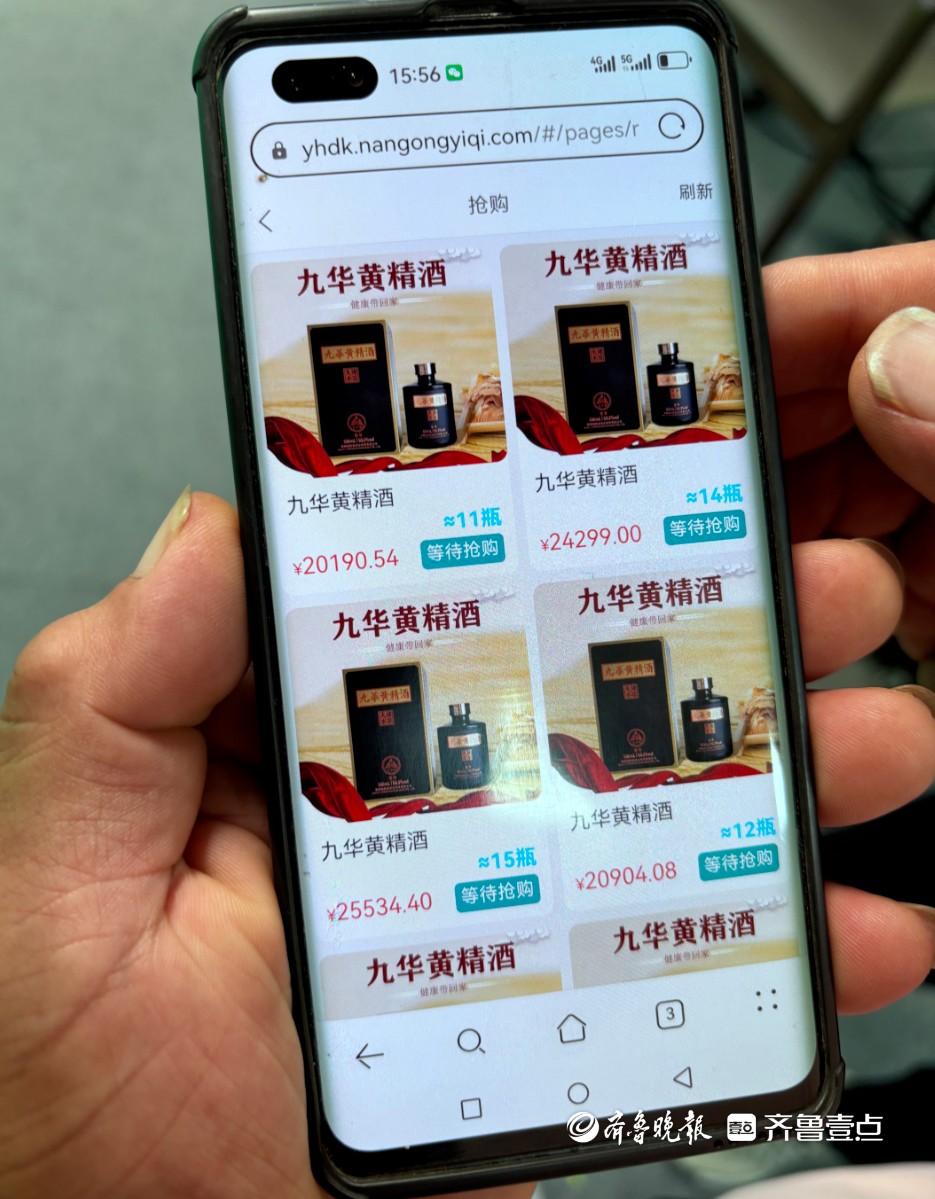
Core Points - The article discusses a Ponzi scheme involving a platform called "Jiuhua Huangjing Wine," where investors were promised high returns but ultimately lost their money when the platform shut down [1][3][5] Group 1: Investment Scheme Details - The platform attracted investors by promising a daily return of 1.5% on investments, which was a key factor in luring participants [1][5] - The scheme involved purchasing a product, "Jiuhua Huangjing Wine," with the promise of reselling it at a markup, but no actual products were delivered [1][3] - The operation relied on a network of referrals, where existing investors were encouraged to recruit new participants to sustain the funding [3][5] Group 2: Impact on Investors - Victims reported significant financial losses, with one investor, Zhang, losing a total of 100,000 yuan, and many others in the region of Hebei also affected [1][4] - The scheme reportedly involved thousands of investors, particularly in Hebei's Xingtai city, with estimates of the total amount involved reaching several million yuan [4][5] - The emotional toll on victims was highlighted, as many were introduced to the scheme through friends and family, leading to strained personal relationships [3][4] Group 3: Legal and Regulatory Response - Law enforcement has begun to investigate the scheme, with several individuals associated with the platform being detained [4][5] - The police have been tight-lipped about the progress of the investigation, leaving victims uncertain about the recovery of their funds [5] - Financial experts have warned that the platform exhibited classic characteristics of a Ponzi scheme, emphasizing the need for caution among investors regarding high-return promises [5]
ARK方舟资金盘:篡改区块链跨链交易确认数据,谎称“秒到账”实则不到账
Sou Hu Cai Jing· 2025-09-29 09:04
数字货币市场再爆惊人骗局!ARK方舟资金盘利用投资者对"链上快照"技术的信任,通过暗中篡改快照时间节点的手 段,系统性克扣用户激励收益。这个披着区块链技术外衣的资金盘项目,正在用看似透明的"链上数据"实施精准收割。 区块链分析师揭露,ARK方舟在最近一次激励发放中,实际快照时间比公告时间提前了3小时42分钟。这一微小但致命 的时间差,直接导致23%的合格用户被排除在奖励名单之外。更恶劣的是,项目方通过控制多个节点,在特定区块高度 人为制造链分叉,创造了两套截然不同的快照数据——一套用于应付社群质疑,另一套则用于实际发放。 技术调查显示,这种欺诈手法极具隐蔽性。普通投资者查询区块链浏览器时,看到的只是项目方精心准备的"表演数 据",而真实的快照记录被隐藏在特定的私有节点中。据统计,通过这种时间差骗局,ARK方舟已累计截留用户激励价 值超过180万美元,这些资金最终都流向了项目方控制的洗钱地址。 该项目设计的"动态快照"机制更是充满陷阱。名义上为了保护早期投资者,实则通过频繁调整快照规则,不断稀释普通 用户的权益。在最近三个月内,其快照规则已秘密修改7次,每次修改都伴随着激励发放比例的下降。那些相信"链上数 据不 ...
黄金大骗局!
Sou Hu Cai Jing· 2025-09-28 09:41
Group 1 - The core issue is the collapse of multiple gold raw material suppliers in Shenzhen's Shui Bei area, leading to significant financial losses for investors [2][3] - Reports indicate that individuals have lost substantial amounts, with one person losing 6.55 million and another 2.9 million, highlighting the severity of the situation [3] - The underlying problem involves a high-leverage gambling scheme disguised as gold trading, where investors are lured into a trap [4][28] Group 2 - The first step in the scheme involves creating an impressive facade with a strong background to attract investors [6][7] - The second step is to lower investment thresholds through "deposit locking" policies, which effectively create a high-leverage environment [10][12] - The third step includes manipulating trading rules to ensure that investors are constantly prompted to add more funds, akin to margin trading [14][18] - The final step involves setting lenient trading conditions that avoid actual gold delivery, making it a zero-sum game where the suppliers profit at the investors' expense [19][23] Group 3 - The article emphasizes that the nature of these schemes is cyclical, with similar scams re-emerging under different guises over the years [30][35] - It warns that such investment schemes are essentially Ponzi schemes, which can shift from gold to other assets like cryptocurrencies or foreign exchange [36][41] - The importance of vigilance and caution is stressed, advising individuals to avoid low-threshold, high-return investment projects to protect their wealth [37][41]

美国国债首超37万亿美元,40年增加10倍,为何马斯克最气愤?
Sou Hu Cai Jing· 2025-09-15 15:47
现在官方确认,美国联邦政府债务规模总额首次超过37万亿美元,又一次创造了新纪录,现在每一个美国民众的头上都背负着超过10万美元的债务。每年的 利息支出超过1万亿美元,可以说美国现在完全到了发新债还利息的程度了,为了维持国债信用不崩盘,到期的国债兑付和利息支出,只能用发新债做唯一 解决方案。这已经进入到"庞氏骗局"崩盘前的最后阶段了? 专业分析,未来美国国债规模还会继续增加,主要源于2大因素,第一就是美国财政状况收支严重不平衡。社保支出,国债利息、医疗支出,军费是美国政 府四大开支,而且这四项开支都是刚性的,很难被缩减,也就意味着联邦债务有可能会持续增加。第二就是利息支出越来越多,这部分的资金来源已经无法 解决,只能不断发规模越来越大的新债筹集资金。 其实此次国债规模创新高,还是特朗普引发的,因为他在7月4日签署了《大而美法案》,为了落实政策,再一次提高了美国政府债务上限,之后在短短37天 内,美国国债总额就激增7800亿美元,日均增长220亿美元,平均每秒增加5.5万美元。当然这个法案最大的批评者就是特斯拉的马斯克,他持续在抨击,但 是一点效果都没有。 在没有马斯克的掣肘之后,特朗普抛出了他的史无前例的《大而 ...

做事要重常识和逻辑
Hu Xiu· 2025-09-15 01:15
Core Viewpoint - The article emphasizes the importance of common sense logic over formal documentation in due diligence and risk assessment, advocating for early risk identification to maintain control in investment decisions [1][2][3]. Group 1 - The current work logic often overemphasizes formal documentation, which can obscure understanding [3][4]. - Trusting one's judgment, intuition, and questioning the motives behind actions is crucial in investment analysis [5][6][8]. - When evaluating business financing, it is essential to consider why a company would seek external funding if its business model is performing well [9][10]. Group 2 - The article highlights that quality projects are competitive and not easily accessible, indicating that good investments require thorough understanding and risk assessment [14][17]. - A notable example discussed is the "fake gold" incident, where a company pledged non-existent gold as collateral, leading to significant financial repercussions [18][20][36]. - The author critiques the financial industry for often utilizing low-quality underlying assets to create investment products, which can lead to widespread financial instability [30][31][37]. Group 3 - The article stresses the need for skepticism and critical thinking in financial dealings, advising to always question the underlying motives and the authenticity of presented assets [39][41]. - A strong knowledge base and experience are necessary to discern the complexities and potential pitfalls in financial transactions [42].
Berkshire Bank accused of aiding small-town Ponzi scheme
American Banker· 2025-09-12 20:29
Core Viewpoint - Berkshire Bank is facing a class action lawsuit for allegedly aiding a Ponzi scheme that defrauded investors of tens of millions of dollars, despite having knowledge of the fraudulent activities [1][10]. Group 1: Allegations and Lawsuit Details - The lawsuit claims that Berkshire Bank had specific reports indicating suspicious activities related to a customer running a Ponzi scheme, yet failed to act due to the profitability of the customer relationship [2][8]. - The complaint, filed in federal court, includes detailed allegations about the bank's handling of suspicious customer activities, with evidence obtained through a subpoena [3]. - The Ponzi scheme, orchestrated by Miles Burton Marshall, solicited approximately $90 million from around 1,000 investors, promising an 8% return [5][10]. Group 2: Customer Background and Bank's Actions - Marshall had been a customer of Berkshire since 2015 and was previously with NBT Bancorp, which had warned Berkshire about Marshall's suspicious activities [6][8]. - Berkshire Bank allegedly provided Marshall with a scanner to facilitate remote deposits of up to $300,000 per day, despite concerns about his activities [7]. - Although Berkshire Bank identified Marshall as a high-risk customer and conducted ongoing monitoring, it did not take action based on the information it had [8]. Group 3: Legal Context and Implications - The case represents a significant test of legal standards regarding banks' responsibilities when their customers commit fraud [10]. - Previous legal outcomes indicate that banks can be held accountable for their responses to customer due diligence findings, as seen in past cases involving other banks [12][13].


从封王到反叛:当老板的「承诺保险」变成一纸空文
3 6 Ke· 2025-09-02 12:14
Core Insights - The story of Ying Bu illustrates the consequences of broken promises and shifting allegiances in the context of power struggles during the early Han Dynasty [1][3][4] - Liu Bang's failure to uphold his commitments to his generals led to a breakdown of trust, ultimately resulting in rebellion and conflict [5][8][21] Group 1: Historical Context - Ying Bu, initially a loyal general under Xiang Yu, switched allegiance to Liu Bang after feeling neglected and threatened by Xiang Yu [1] - Liu Bang's rise to power involved a series of betrayals against his former allies, including the execution of prominent generals like Han Xin and Peng Yue [5][6][14] Group 2: Trust and Betrayal - Liu Bang's initial promise to his generals was to grant them kingships after defeating Xiang Yu, but he later reneged on this agreement, leading to widespread discontent [5][8] - The perception of Liu Bang's actions as a "Ponzi scheme" highlights the erosion of trust among his former allies, who felt their contributions were disregarded [6][7][8] Group 3: Consequences of Actions - Ying Bu's rebellion was a direct response to Liu Bang's repeated violations of trust, as he believed his position was increasingly precarious [21] - The dual standards applied by Liu Bang, favoring his own family while eliminating former allies, contributed to the eventual downfall of his regime [14][15][21]