新兴市场

Search documents
国泰海通|海外策略:欧美股指成交显著放量
国泰海通证券研究· 2025-12-24 13:38
Market Performance - Developed markets outperformed last week, with MSCI Global index unchanged at +0.0%, MSCI Developed Markets up +0.2%, and MSCI Emerging Markets down -1.5% [1] - In the bond market, long-term rates in Japan increased while U.S. rates decreased [1] - In commodities, silver saw significant gains while soybean prices dropped [1] - The Chinese stock market saw gains in essential consumption, finance, and energy materials, while U.S. stocks in consumer discretionary and technology performed well [1] Trading Sentiment - There was a significant increase in trading volume for U.S. and European stock indices, while Hong Kong and A-shares saw weaker trading volumes [1] - Investor sentiment in Hong Kong decreased and is at historically low levels, while U.S. investor sentiment increased and is at historically high levels [1] - Volatility decreased for Hong Kong, European, and U.S. stocks, while Japanese stocks experienced an increase in volatility [1] - Overall valuation for developed markets rose compared to the previous week, while emerging markets saw a decline in valuation [1] Earnings Expectations - Hong Kong's earnings expectations were slightly revised upward, with the Hang Seng Index's 2025 EPS forecast adjusted from 2064 to 2065 [2] - U.S. earnings expectations remained stable, with the S&P 500 Index's 2025 EPS forecast at 273 [2] - European earnings expectations also remained stable, with the Eurozone STOXX 50 Index's 2025 EPS forecast unchanged at 330 [2] Economic Expectations - Economic sentiment in major markets declined to varying degrees last week [2] - The Citigroup U.S. Economic Surprise Index decreased, influenced by the Federal Reserve's cautious stance on future rate cuts, lower inflation data, and disappointing employment figures [2] - The European Economic Surprise Index also saw a slight decline due to falling consumer confidence and geopolitical tensions [2] - The Citigroup China Economic Surprise Index dropped, affected by disappointing macro data and tightening external conditions [2] Capital Flows - The Federal Reserve's cautious stance on rate cuts for 2026 was noted, with expectations of approximately two rate cuts remaining unchanged from the previous week [3] - Dollar liquidity tightened last week, with the SOFR-OIS spread widening [3] - Global micro liquidity saw significant inflows into China, the U.S., Japan, India, and South Korea, while flexible foreign capital flowed into Hong Kong stocks [3]



新兴市场股债汇今年均录得两位数涨幅,2026年华尔街悲观论几乎绝迹
Di Yi Cai Jing· 2025-12-22 08:56
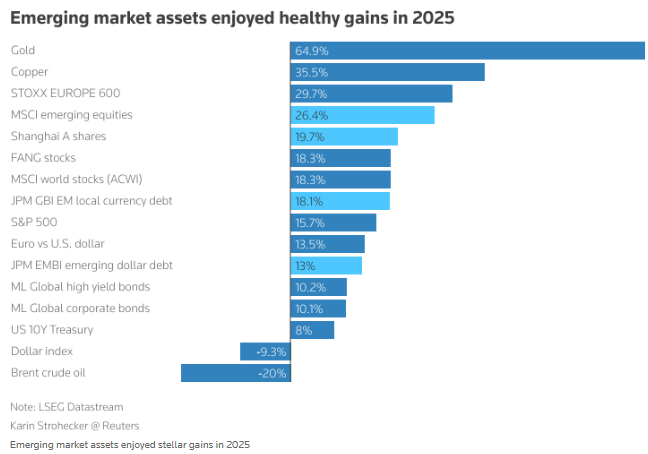
Core Viewpoint - Emerging market assets are expected to perform well in 2026, with a general consensus among institutions that there is little pessimism regarding these markets [1][4][6]. Group 1: Market Performance - Emerging market local currency bonds have risen by 18% and stocks by 26% in 2025, marking a significant recovery from previous years [3]. - Emerging market stocks have outperformed U.S. stocks for the first time since 2017, and the yield spread between emerging market bonds and U.S. Treasuries has narrowed to its lowest level in 11 years [3]. - The Bloomberg Emerging Market Carry Index has achieved a return of 16.71% this year, the best since 2009 [3]. Group 2: Investor Sentiment - A recent survey by Bank of America involving 300 investors revealed that there is almost no pessimism towards emerging markets [4]. - HSBC's December survey indicated that bearish views on emerging markets have completely disappeared, with net bullish sentiment reaching a historical high [4]. - Strategas estimates that U.S. ETFs focused on emerging market stocks attracted nearly $31 billion in 2025, while emerging market bond funds absorbed over $60 billion [4]. Group 3: Economic Outlook - Emerging markets are expected to benefit from a more accommodative global financial environment and stable internal policies, with growth anticipated to outperform developed economies [6]. - The Asian region is highlighted as a key growth engine, with potential for pro-business governments emerging from elections in Latin America [6]. - Structural trends such as geopolitical reshuffling and supply chain restructuring are expected to favor emerging markets, particularly in Asia [5]. Group 4: Investment Strategies - Emerging market bonds are seen as attractive due to high yields and diversification benefits, with a focus on Central and Eastern Europe, parts of Latin America, and Asia [6]. - Investment in technology sectors and industries with clear advantages, such as the electric vehicle supply chain and renewable energy in China, is recommended [6]. - The outlook for Indian markets is positive, driven by the "Make in India" initiative, which is expected to boost manufacturing and infrastructure [6]. Group 5: Currency and Interest Rate Dynamics - The trajectory of the U.S. economy is crucial for the sustained strong performance of emerging market currencies, with expectations of a slowdown encouraging the Fed to maintain loose monetary policy [9]. - JPMorgan and Morgan Stanley predict that emerging markets will benefit from a weaker dollar and the investment boom in AI [9]. - Emerging market currency volatility is currently low, but there are concerns that unfavorable exchange rate movements could erase gains [11].



上海前十一个月进出口超四万亿元
Xin Lang Cai Jing· 2025-12-20 10:54
Core Insights - Shanghai's foreign trade has shown robust growth, with a total import and export value of 4.1 trillion yuan, marking a year-on-year increase of 5.7%, outpacing the national average by 2 percentage points [3] - Exports have been particularly strong, with November's export value reaching a historical high, contributing to a steady recovery in foreign trade [3] Group 1: Trade Performance - In the first 11 months, Shanghai's total export value reached 1.83 trillion yuan, an increase of 11.2%, while total imports amounted to 2.27 trillion yuan, growing by 1.6% [3] - In November alone, the city's total trade reached 387.49 billion yuan, a year-on-year increase of 10.6%, with exports at 186.6 billion yuan, up 18.2%, setting a monthly export record [3] - Imports in November were 200.89 billion yuan, reflecting a growth of 4.4% [3] Group 2: Market Structure - Emerging markets have become significant drivers of Shanghai's foreign trade growth, with trade values to ASEAN, the Middle East, and Africa reaching 584.68 billion yuan, 145.78 billion yuan, and 135.77 billion yuan respectively, with growth rates of 12.6%, 17.5%, and 28.9% [3] - Trade with the EU saw a total value of 742.31 billion yuan, growing by 1.4%, indicating a further acceleration compared to previous periods [3] Group 3: Export Dynamics - The export of electromechanical products totaled 1.19 trillion yuan, growing by 6.3%, accounting for 65.4% of the city's total exports [4] - The "new three items" category, which includes hybrid vehicles, saw exports of 144.32 billion yuan, a significant increase of 16.5%, with hybrid vehicle exports alone surging by 174.8% to 25.72 billion yuan [4] - The green low-carbon trend has positively impacted related equipment exports, with liquid cargo ship exports reaching 34.24 billion yuan, up 130.5% [4] Group 4: Import Trends - High-tech product imports totaled 737.21 billion yuan, growing by 6.3%, with notable increases in semiconductor manufacturing equipment, computers and components, and aircraft imports, which grew by 35.4%, 24%, and 74.3% respectively [4] - Imports of raw materials such as metal ores and unrefined copper increased by 11.5% and 14% respectively, indicating ongoing industrial vitality [4] - Consumer goods imports also showed strong performance, with fruit and dairy imports rising by 17.8% and 14.2%, and toys and sports equipment imports exceeding 15% growth [4]

新股前瞻 | “非洲之王”的二次进化:传音控股赴港上市,开启AI与智能生态新篇章
Zhi Tong Cai Jing· 2025-12-20 10:27
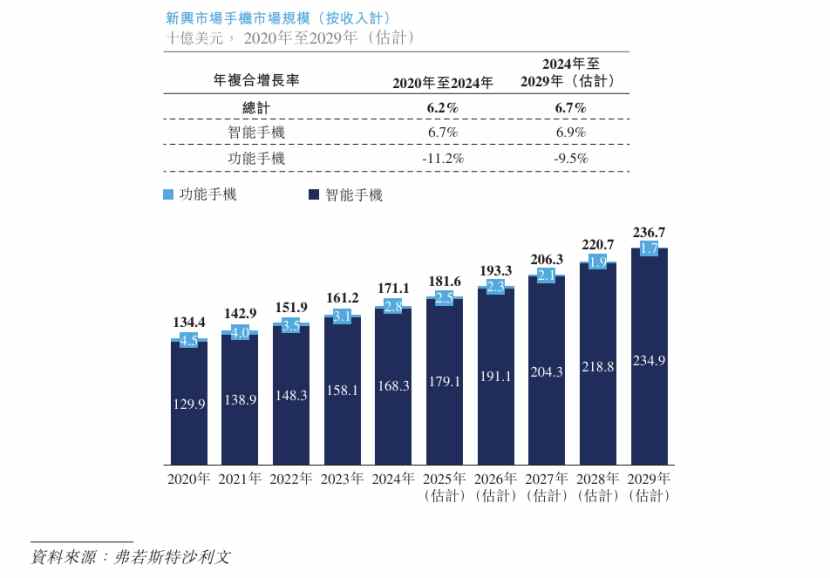
Core Viewpoint - Transsion Holdings, known as the "King of Africa" in the mobile industry, has submitted an H-share listing application to the Hong Kong Stock Exchange to diversify its financing channels and support its strategic transformation into a smart ecosystem service provider, covering mobile internet services, energy storage, and electric mobility [1][2]. Group 1: Market Position and Financial Performance - Transsion has established a dominant position in emerging markets, particularly in Africa, where it holds a market share of 61.5%, and is the largest smartphone provider in emerging markets with a share of 24.1% as of 2024 [1][2]. - The company's total revenue is projected to grow from RMB 465.96 billion in 2022 to RMB 687.15 billion in 2024, with net profit increasing from RMB 24.67 billion to RMB 55.97 billion during the same period [2]. - However, in the first half of 2025, the company experienced a revenue decline from RMB 346 billion in 2024 to RMB 291 billion, with a drop in gross margin from 20.8% to 19.0%, attributed to smartphone product release cycles and intensified competition in emerging markets [2]. Group 2: Strategic Transformation and Future Growth - The long-term growth strategy of Transsion is to transition from hardware sales to building a smart ecosystem driven by mobile internet services and diversified IoT products [2][5]. - The company aims to leverage its large user base to drive high-growth services and products, with over 270 million average monthly active users as of June 30, 2025, and a focus on mobile internet services that have a gross margin of 78.0% [5][6]. - Transsion is also expanding into energy storage and light electric mobility, launching brands like itel Energy and DYQUE Energy to address power supply issues in Africa, and introducing electric mobility solutions for both personal and commercial users [6][7]. Group 3: Market Opportunities and Projections - Emerging markets are expected to be the main growth driver for the global smartphone market, with a projected compound annual growth rate (CAGR) of 6.7% from 2024 to 2029, surpassing the global market's expected 4.6% [3][5]. - The market sizes for mobile internet services, IoT products, energy storage, and light electric mobility are projected to grow significantly, with CAGRs of 26.9%, 19.4%, 16.4%, and 15.6% respectively from 2024 to 2029 [6][7]. - To support its ecosystem transformation and maintain technological leadership, Transsion plans to use funds from the H-share listing to enhance AI capabilities and upgrade its operating system [6].

国泰海通|固收:核心-卫星框架下的EM主权债投资——可落地的2026海外债策略债券年报
国泰海通证券研究· 2025-12-19 11:51
Core Viewpoint - The overseas bond market in 2026 is expected to exhibit a pattern of "interest rate decline and credit differentiation within a moderate easing cycle," with emerging market sovereign debt presenting a significant allocation window [1] Group 1: Economic Environment - Global central banks are entering a differentiated easing cycle, with developed economies experiencing a slowdown in growth, while emerging markets maintain a medium to high growth rate of 5-7% driven by supply chain restructuring and manufacturing spillover [1] - Overall inflation in emerging markets has decreased from 5.2% to 4.0%-4.3%, falling faster than in developed economies, creating space for monetary policy easing [1] - The US dollar index, after a 15-year strong cycle, is expected to enter a phase of moderate decline in 2026, leading to a significant alleviation of global liquidity pressure and a trend of funds flowing back into emerging market assets [1] Group 2: Investment Opportunities in Emerging Market Sovereign Debt - Emerging market sovereign debt benefits from three key allocation advantages: 1. The debt environment has improved significantly, with no new sovereign defaults since the end of 2023, a continuous decline in corporate default rates, and government leverage ratios significantly lower than those of developed economies, leading to a relatively lighter debt sustainability pressure and upgrades in credit ratings for multiple countries [2] 2. There is a notable yield advantage, with the 10-year government bond yields of major emerging economies rising over 360 basis points, placing them at high levels since the global financial crisis, offering significantly higher nominal and real yields compared to US and European bonds, highlighting strong carry value [2] 3. Geopolitical restructuring and industrial chain spillover are creating structural growth momentum, with countries like ASEAN, India, and Mexico leveraging labor, location, and policy advantages to attract "capacity transfer" from outside China, resulting in a positive cycle of export expansion, accelerated FDI inflows, and alleviated fiscal pressures, thereby improving sovereign credit [2] Group 3: Investment Strategy - A "core-satellite" allocation framework is recommended, where core positions consist of investment-grade or near-investment-grade hard currency sovereign debt, complemented by medium to long-term structures to benefit from the decline in US Treasury rates and the compression of sovereign credit spreads, providing stable income sources [3] - Satellite positions should include high-yield sovereign debt (BB, single B ratings) and local currency bonds, which can achieve stronger total returns under improved risk appetite, a declining dollar, or stabilizing fundamentals in emerging markets, with a steeper convergence of spreads [3] - Duration allocation can be adjusted based on the Federal Reserve's interest rate cut path and market volatility, with a focus on countries in Latin America and Asia-Pacific that have stable fundamentals and are at the early stages of a rate-cutting cycle [3] - Policy-wise, the expansion of southbound trading to include brokerages, funds, insurance, and wealth management institutions, along with a shift in RMB internationalization from "cautious advancement" to "promotion," provides institutional convenience for domestic investors' global allocation [3]

两位数回报之后,新兴市场:新的避险天堂,还是短暂繁荣?
智通财经网· 2025-12-19 08:31
Core Insights - Emerging markets are expected to deliver double-digit returns in 2025, despite global uncertainties, as investors anticipate a repeat of this year's performance [1] - The combination of sound policies and favorable conditions has contributed to the stability of emerging market assets amid geopolitical tensions [1] Group 1: Market Dynamics - The return of former President Trump has created market volatility, yet his erratic trade policies have made emerging markets appear more stable [2] - Investors are diversifying their portfolios beyond the U.S., seeking global diversification due to years of capital outflows from emerging markets [2] - Significant changes in the fundamentals of emerging markets have occurred, with countries like Turkey, Nigeria, and Egypt implementing reforms that have led to improved economic conditions [2] Group 2: Credit Ratings and Resilience - Emerging markets have shown resilience, with a second consecutive year of net credit rating upgrades, indicating improving fundamentals [3] - Emerging market central banks have demonstrated independence and sound policy-making, enhancing their credibility compared to the U.S. Federal Reserve [3] - The cautious monetary policies in emerging markets have led to strong performance of local currency bonds, with returns around 18% this year [3] Group 3: Opportunities Amid Uncertainty - Political uncertainties in countries like Hungary, Brazil, and Colombia may present opportunities for investors, as potential policy changes could create market movements [4] - Despite risks from the U.S. economy, emerging markets are less sensitive to U.S. economic fluctuations than in the past [7] - A recent survey indicates that pessimism towards emerging markets has vanished, with net sentiment reaching historical highs [7]
这个外贸大市官宣,拿下“第一”
3 6 Ke· 2025-12-18 02:12
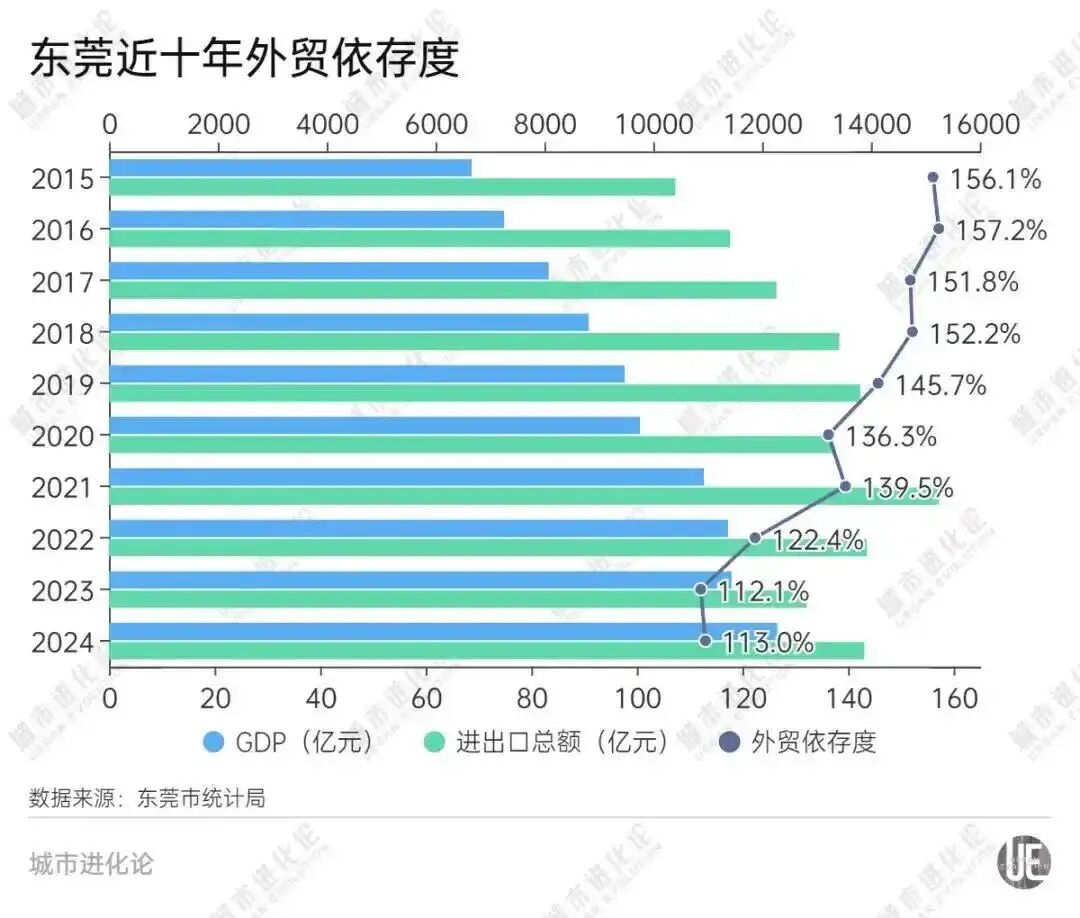
Core Insights - Dongguan's foreign trade import and export value reached 1.44 trillion yuan in the first 11 months of the year, marking a historical high for the same period and ranking fifth nationally, with a year-on-year growth of 14.3% [1] - The city's export value was 878.95 billion yuan, growing by 8.7%, while import value was 557.24 billion yuan, increasing by 24.3% [1] - The number of foreign trade enterprises in Dongguan increased by 15.6% year-on-year to 27,000, surpassing the total for the entire year of 2024 [1] - Private enterprises contributed 900 billion yuan to foreign trade, reflecting a year-on-year growth of 20.9% [1] Trade Dynamics - Dongguan regained its position as the "fifth largest foreign trade city" in China, overtaking Ningbo with a growth rate of 16.5% [1] - Emerging markets are a significant driver of Dongguan's foreign trade growth, with trade with 54 countries and regions increasing by over 50% [1] - Trade with Belt and Road Initiative countries grew by 24.3%, accounting for 30% of total trade, while trade with ASEAN countries surged by 36.8% [1] Industrial Competitiveness - Dongguan is enhancing its industrial competitiveness by upgrading towards high-tech and high-value-added sectors, with electromechanical product exports reaching 617.42 billion yuan, a growth of 12.3% [2] - Exports of integrated circuits, electrical equipment, computers and components, and mobile phones saw significant growth rates of 20.1%, 20.6%, 18.4%, and 6.9% respectively [2] - The foreign trade dependence ratio has decreased to 113%, down from over 400%, yet remains the highest among major cities in China [2] Economic Goals - Dongguan aims for an average annual economic growth rate of around 5% during the 14th Five-Year Plan, targeting a GDP exceeding 1.7 trillion yuan by 2030 [3] - The city plans to enhance foreign trade quality and efficiency by expanding overseas warehouse layouts and establishing more overseas exhibition centers [3] - There is a focus on tapping into domestic market potential and activating consumption to adapt to changing international conditions [3]
新疆今年前11个月外贸进出口规模超去年全年
Zhong Guo Xin Wen Wang· 2025-12-18 01:51
Core Insights - Xinjiang's foreign trade import and export value for the first 11 months of this year reached 459.19 billion yuan, surpassing the total for the entire year of 2024, with a year-on-year growth of 14.1% [1] Group 1: Trade Growth - Significant growth in foreign trade with emerging markets, with exports to ASEAN, Africa, West Asia, the Middle East, and Latin America increasing by 74.1%, 124.7%, 82.3%, 81.9%, and 68.3% respectively [1] - General trade mode saw a year-on-year increase of 61.5% in imports and exports [1] - In November, general trade mode imports and exports grew by 26.5%, with cross-border e-commerce exports increasing by 20.5% year-on-year and 97.4% month-on-month [1] Group 2: Foreign Investment and Enterprises - The number of foreign trade enterprises in Xinjiang reached 4,215, with foreign-invested enterprises experiencing a year-on-year growth of 21.8% in imports and exports [1] - All regions in Xinjiang reported growth in imports and exports, with Ili Kazakh Autonomous Prefecture, Kashgar Region, Urumqi City, and Bortala Mongol Autonomous Prefecture accounting for 78.6% of the total foreign trade value [1]
城市24小时 | 这个外贸大市官宣,拿下“第一”
Mei Ri Jing Ji Xin Wen· 2025-12-17 15:49
Core Insights - Dongguan's foreign trade import and export value reached 1.44 trillion yuan in the first 11 months of the year, marking a historical high for the same period and ranking fifth nationally, with a year-on-year growth of 14.3% [1] - The city's export value was 878.95 billion yuan, growing by 8.7%, while import value was 557.24 billion yuan, increasing by 24.3% [1] - The number of foreign trade enterprises in Dongguan reached 27,000, a year-on-year increase of 15.6%, surpassing the total for the entire year of 2024 [1] - Private enterprises contributed 900 billion yuan to the import and export value, a growth of 20.9% [1] Trade Dynamics - Dongguan's foreign trade growth is significantly driven by emerging markets, with trade with 54 countries and regions increasing by over 50% year-on-year [1] - Trade with countries along the Belt and Road Initiative grew by 24.3%, accounting for 30% of total trade [1] - Trade with ASEAN countries saw a remarkable increase of 36.8% [1] Industry Competitiveness - Dongguan is enhancing its industrial competitiveness by upgrading towards high-tech and high-value-added sectors, with electromechanical products exports reaching 617.42 billion yuan, a growth of 12.3% [2] - Electromechanical products accounted for 70.2% of Dongguan's total export value, with significant growth in integrated circuits (20.1%), electrical equipment (20.6%), computers and components (18.4%), and mobile phones (6.9%) [2] Economic Goals - Dongguan aims to maintain an average annual economic growth rate of around 5% during the 14th Five-Year Plan period, targeting a GDP exceeding 1.7 trillion yuan by 2030 [6] - The city plans to enhance foreign trade quality and efficiency by expanding overseas warehouse layouts and establishing more overseas exhibition centers [6] - Dongguan is also focusing on tapping into domestic market potential and increasing effective investment to stimulate consumption [6]

Emerging Markets 2026: The Next Phase Of Global Rebalancing
Seeking Alpha· 2025-12-16 15:36
Group 1 - The article does not provide any relevant content regarding the company or industry [1]