
生成式引擎优化(GEO)

Search documents
放量,大涨!
中国基金报· 2026-01-12 10:31
Core Viewpoint - The Hong Kong stock market experienced significant gains on January 12, with a trading volume exceeding 300 billion HKD, driven by a surge in technology stocks and positive sentiment surrounding AI applications [2][3]. Market Performance - The Hang Seng Index rose by 1.44% to close at 26,608.48 points, while the Hang Seng Technology Index increased by 3.10% to 5,863.20 points. The total market turnover reached 306.22 billion HKD, a substantial increase from the previous trading day [2][3]. - Notable stocks included Alibaba, which surged by 5.87% with a trading volume of 25 billion HKD, and the global leader in large models, Zhiyuan, which saw a dramatic increase of 31.40% [7][9]. Sector Highlights - The technology sector saw widespread gains, with 23 out of 28 constituents of the Hang Seng Technology Index rising. Kingdee International led the gains with a 12.16% increase, while SenseTime rose by 6.88%. However, Horizon Robotics experienced a decline of 4.19% [4][12]. - The AI sector is expected to be a key driver of market performance, with the Chinese government outlining plans to enhance AI applications in manufacturing by 2027, including the development of general large models and high-quality data sets [7]. Strategic Developments - Zhiyuan announced a strategic partnership with Didi to explore AI applications in transportation, which is expected to enhance their capabilities in complex business scenarios [11]. - The market is reacting positively to the anticipated release of new AI technologies, including Elon Musk's announcement regarding the open-sourcing of the latest content recommendation algorithm on the X platform [11]. Short Selling Activity - On January 12, a total of 701 Hong Kong stocks were short-sold, with a total short-selling amount of 36.24 billion HKD. Notable stocks with significant short-selling included Xiaomi, Alibaba, and Tencent [15][16].


今日A股三大指数均涨超1% AI概念股爆发 GEO成焦点
Sou Hu Cai Jing· 2026-01-12 10:31
Group 1 - The A-share market experienced a strong rally, with all three major indices rising over 1%, driven by the rapid rise of the Generative Engine Optimization (GEO) concept [1][3] - AI application and marketing-related stocks surged, with companies like BlueFocus and Handan Information hitting the daily limit, and over 200 stocks in total reaching their upper limits [1] - The GEO concept aims to enhance brand information visibility in AI search results by optimizing content's semantic structure and credibility, indicating a shift in traditional marketing paradigms [3] Group 2 - The Ministry of Industry and Information Technology emphasized that intelligence is the core driving force behind the integration of information technology and industrialization, promoting the "AI + manufacturing" initiative [3] - Recent advancements in AI infrastructure were highlighted at CES 2026, with NVIDIA announcing the mass production of its new Rubin platform and AMD unveiling its Helios platform and MI400 series accelerators [3] - The competition in large models is shifting from parameter comparison to actual task execution capabilities, marking a transition to the "agent" phase in AI development [4]

A股成交3.64万亿创新高,AI应用与商业航天引领涨势
Sou Hu Cai Jing· 2026-01-12 10:16
Market Performance - The A-share market continued its strong performance with all major indices closing higher, marking the 17th consecutive trading day of gains [1] - The Shanghai Composite Index closed at 4165.29 points, up 1.09%, while the Shenzhen Component Index rose 1.75% to 14366.91 points, and the ChiNext Index increased by 1.82% to 3388.34 points [1] Trading Volume - The total trading volume for the day reached approximately 3.64 trillion yuan, breaking the previous record of 3.49 trillion yuan set on October 8, 2024 [3] AI Applications - The AI application sector saw significant growth, particularly in the Generative Engine Optimization (GEO) concept, which focuses on enhancing brand visibility in AI-generated content [3] - Companies such as Yidian Tianxia, BlueFocus, Zhongwen Online, and Tianlong Group experienced a 20% increase in stock prices, forming a new market focus dubbed the "Yizhongtian" combination [3] - According to Pacific Securities, the GEO market in China is projected to grow from 2.9 billion yuan in 2025 to 24 billion yuan by 2030, with a compound annual growth rate of approximately 53% [3] Commercial Aerospace - The commercial aerospace sector continued its strong performance, with Chinese companies like China Satellite and China Satcom seeing their stock prices hit the daily limit and reach historical highs [3] - The International Telecommunication Union (ITU) reported that China recently submitted an application for frequency resources for an additional 203,000 satellites, covering 14 satellite constellations [3] Brain-Computer Interface - Brain-computer interface stocks remained active, with advancements reported in non-invasive brain-computer interface technology, including the first "space brain-computer interface experiment" conducted during manned space missions [4] Lithium Carbonate Futures - Lithium carbonate futures prices have been rising, with recent data showing prices exceeding 150,000 yuan per ton, representing an increase of over 80% compared to the same period in 2025 [4] - Since hitting a low in June 2025, lithium prices have increased by more than 166%, driven by regulatory policies, increased demand in energy storage, and tightening supply from upstream lithium mines [4] Precious Metals - International precious metal prices surged, with gold futures and spot prices both surpassing 4,600 USD per ounce, while silver prices reached historical highs [4] - Analysts attribute the rise in precious metal prices to expectations of interest rate cuts by the Federal Reserve and geopolitical tensions [4]

“填权预期”升温!创业板人工智能ETF(159363)爆量猛涨7.85%!AI应用火力全开,20CM涨停潮来袭
Sou Hu Cai Jing· 2026-01-12 10:08
Core Insights - The AI application sector is experiencing a significant surge, with multiple stocks in the ChiNext index hitting the 20% daily limit up, indicating strong market enthusiasm for AI-related investments [1] - The ChiNext AI ETF (159363) has seen a substantial price increase of 7.85%, reflecting a robust inflow of capital, with a net subscription of 352 million units [1][3] - The overall performance of the ChiNext AI index has outpaced the communication equipment index, with a cumulative increase of over 12% since the beginning of the year [3] Group 1: Market Performance - Eight stocks, including BlueFocus, Toprays, and Han's Information, achieved the 20% limit up, showcasing the bullish sentiment in the AI sector [1] - The ChiNext AI ETF has recorded a trading volume exceeding 1 billion yuan in a single day, indicating strong investor interest [1] - The current price of the ChiNext AI ETF is approaching its pre-dividend closing price, suggesting a potential "fill the gap" scenario, which reflects high industry optimism [1] Group 2: Industry Developments - New catalysts for AI applications have emerged, particularly the growing interest in "Generative Engine Optimization" (GEO) as a new AI sector [3] - Elon Musk announced the upcoming open-source release of the latest content recommendation algorithm for the X platform, which is expected to enhance AI capabilities [3] - A report from China Merchants Securities highlights the rapid advancement in AI applications, driven by improved reasoning capabilities and reduced training costs, with expectations for better revenue realization by 2026 [3] Group 3: Investment Strategy - The ChiNext AI index is structured to cover a wide range of assets from computing infrastructure to deep integration of AI technologies across various industries, indicating a strategic shift towards application-driven investments [4] - The market is perceived to have entered a new phase of AI investment, where applications are prioritized over mere computational power, emphasizing the importance of a dual strategy in "computing power + AI applications" [4]



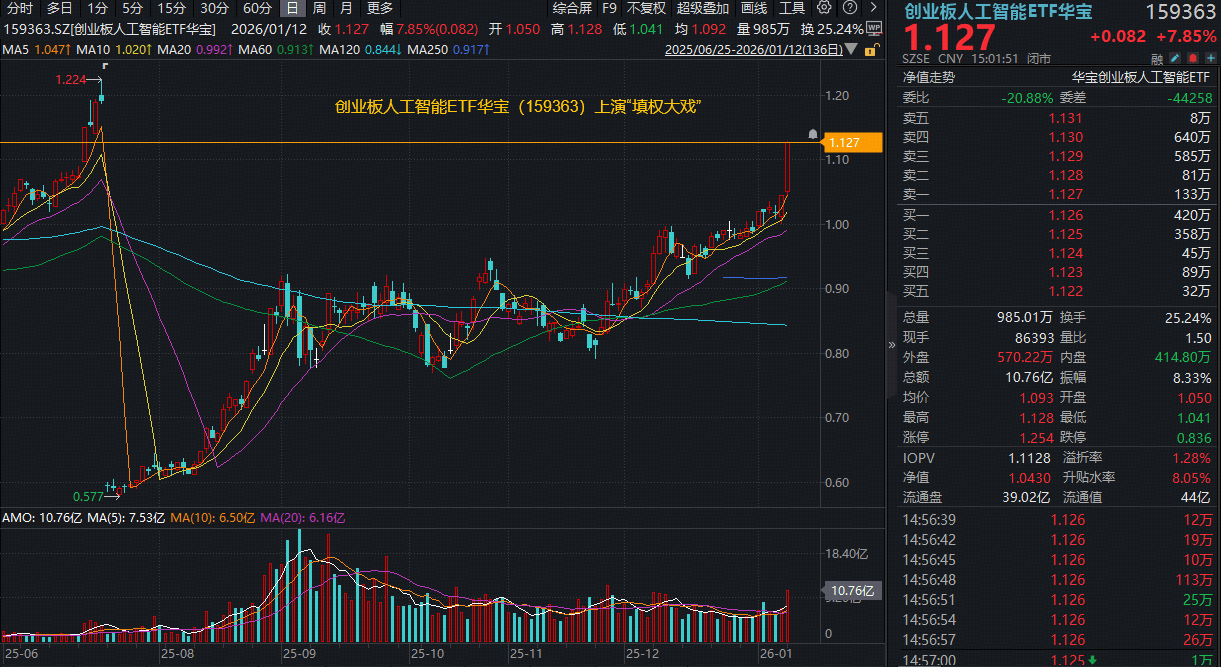
低费率创业板人工智能ETF华夏、云计算ETF华夏涨超7%,GEO引燃AI+行情
Mei Ri Jing Ji Xin Wen· 2026-01-12 07:25
Group 1 - The AI sector continues to show strong performance, with the low-fee AI ETF and cloud computing ETF both experiencing significant gains, indicating robust market interest in AI-related investments [1] - Generative Engine Optimization (GEO) is gaining attention, with expectations for product launches and strategic initiatives from service providers in the first half of 2026, highlighting a shift from technical concept to marketing necessity [1] - The focus on AI-driven content production and digital marketing is expected to drive growth, with major players like Zhizhu and MiniMax set to enter the Hong Kong market in January 2026, indicating a positive outlook for AI applications in various sectors [1] Group 2 - The cloud computing ETF tracks an index that emphasizes domestic AI software and hardware capabilities, with a combined weight of 83.7% in computer software, cloud services, and computer equipment, showcasing the ETF's focus on AI infrastructure [2] - The entrepreneurial AI ETF is designed to support investments in AI hardware and software applications, with a balanced weight distribution that enhances its representativeness and potential for growth in the AI sector [2]
迈富时日涨超23%:率先布局GEO业务,千亿蓝海下长期价值可期
Zhi Tong Cai Jing· 2026-01-12 05:20
Group 1 - The core action of Elon Musk to open-source the content recommendation algorithm of the X platform is expected to significantly benefit the GEO sector by lowering technical barriers and stimulating market imagination [1] - The opening of the algorithm allows companies, including marketing technology firms like MaiFuShi, to develop their own GEO optimization tools, accelerating industry progress [1] - Following Musk's announcement, GEO concept stocks, particularly MaiFuShi, experienced a strong surge, with the stock price increasing by 23.61% to HKD 47.96, and a total market capitalization of HKD 12.29 billion [1] Group 2 - MaiFuShi has launched a specific product in the GEO field called the GEO Intelligent Assistant, which enhances users' GEO capabilities through building knowledge bases and providing data feedback [2] - The GEO market is poised for explosive growth, with a projected 215% year-on-year increase in China's GEO market size by Q2 2025, and over 78% of decision-makers prioritizing AI search optimization in their digital transformation [2] - The global and Chinese GEO market sizes are expected to reach USD 11.2 billion and CNY 2.9 billion respectively by 2025, with further growth anticipated by 2030 [2] Group 3 - Musk's forward-looking strategy has laid the groundwork for the development of GEO, making MaiFuShi's stock price increase a logical outcome [3] - In the short term, the company's stock is expected to perform strongly due to the benefits from the growth of GEO [3] - In the medium to long term, successful commercialization of the GEO Intelligent Assistant is likely to elevate the company's performance and valuation [3]
行业点评报告:AI应用一马当先,重点关注GEO和漫剧
ZHESHANG SECURITIES· 2026-01-12 05:19
Investment Rating - Industry rating: Positive (maintained) [1] Core Insights - AI applications are leading the way, with a focus on Generative Engine Optimization (GEO) and AI animated dramas. The generative engine optimization is evolving from a technical concept to a marketing necessity, while AI animated dramas represent an innovative form of AIGC in the content domain. ByteDance's sponsorship of the Spring Festival Gala is expected to catalyze the AI animated drama sector [5] - The GEO market in China began in the second half of 2025, with service models still undefined, making it difficult to provide clear gross margin estimates. The main commercialization path for GEO focuses on meeting marketing needs to enhance AI recommendation rates, charging based on keywords and AI recommendation duration [5] - The investment suggestion emphasizes continued attention to GEO (companies like BlueFocus, Gravity Media, Leo Group, Zhejiang Wenlian, Yidian Tianxia, Borui Communication, Visual China, and Jiuxi Software) and AI animated dramas (including companies like Huanrui Century, Rongxin Culture, Zhongwen Online, Kunlun Wanwei, and Zhangyue Technology) as thematic investment opportunities [5]


迈富时(02556)日涨超23%:率先布局GEO业务,千亿蓝海下长期价值可期
智通财经网· 2026-01-12 05:14
Group 1 - The core action of Elon Musk's announcement to open-source the content recommendation algorithm on the X platform is expected to significantly benefit the GEO sector by lowering technical barriers and stimulating market imagination [1][4] - The opening of the algorithm allows companies, including marketing technology firms like MaiFuShi, to more easily research and develop their own GEO optimization tools, accelerating industry progress [1][4] - Following Musk's announcement, GEO concept stocks, particularly MaiFuShi, experienced a strong surge in the Hong Kong stock market, with MaiFuShi's stock price increasing by 23.61% to 47.96 HKD, and a total market capitalization of 12.29 billion HKD [1][4] Group 2 - MaiFuShi has strategically positioned itself in the GEO field by launching the GEO Intelligent Assistant, which enhances users' GEO capabilities through building knowledge bases, content feeding, and AI prompt optimization [4][5] - The GEO market, defined as "Generative Engine Optimization," is on the verge of explosive growth, with a projected 215% year-on-year increase in China's GEO market size by Q2 2025, and over 78% of decision-makers prioritizing AI search optimization in digital transformation [5] - The global and Chinese GEO market sizes are expected to reach 11.2 billion USD and 2.9 billion CNY respectively by 2025, with projections of 100.7 billion USD and 24 billion CNY by 2030 [5]
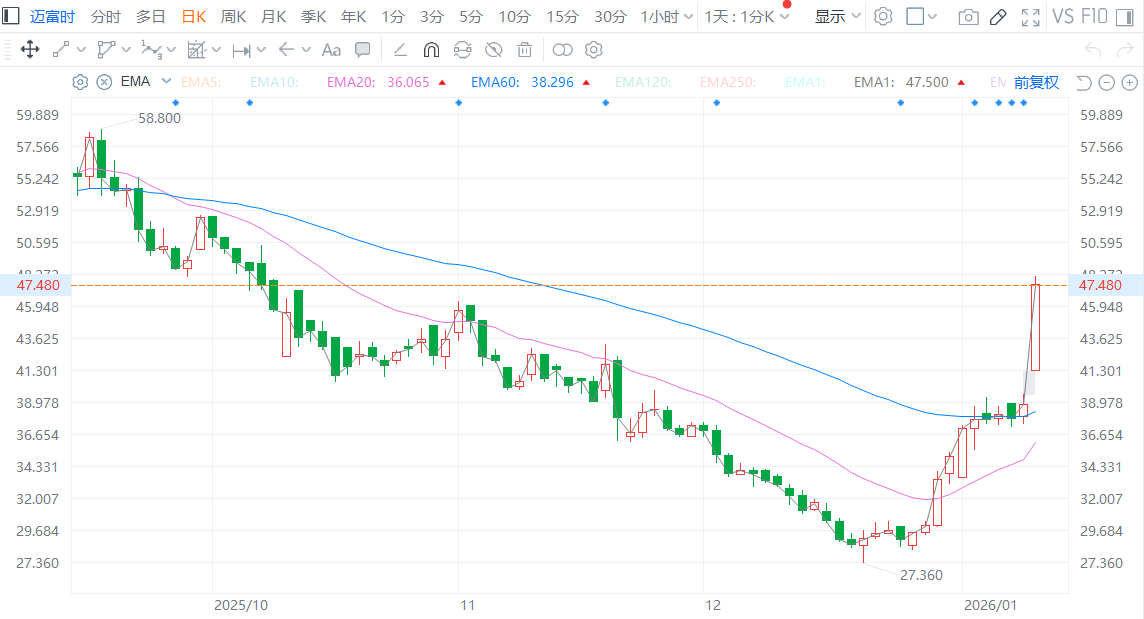
港股异动丨迈富时大涨超18%,9个交易日累计涨幅超40%,股价创近3个月新高
Ge Long Hui· 2026-01-12 04:53
Group 1 - The core viewpoint of the article highlights a significant surge in AI application stocks in the Hong Kong market, particularly Mifus (2556.HK), which saw an increase of over 18% and a cumulative rise of over 40% in 9 trading days, reaching a new high of 45.88 HKD and a total market value of 11.75 billion HKD [1] Group 2 - The AGI-Next Frontier Summit, initiated by Tsinghua University's Key Laboratory of Basic Models, has drawn industry attention, indicating a shift in large model competition from "Chat" to the "Agent" phase, with a focus on executing complex tasks in real environments [1] - The industry anticipates that 2026 will be the year when commercial value is realized, with technological advancements moving towards verifiable Reinforcement Learning (RLVR) [1] Group 3 - Mifus is recognized as a benchmark for GEO (Generative Engine Optimization) full-chain AI solutions, serving over 200,000 enterprises globally and establishing a technological closed loop in the GEO field [1] - The company has launched GEO intelligent assistants and workstations, leveraging its self-developed AI-Agentforce 2.0 platform and Tforce marketing model, creating a comprehensive service chain that accurately identifies brand visibility in the AI ecosystem and provides optimization suggestions [1]
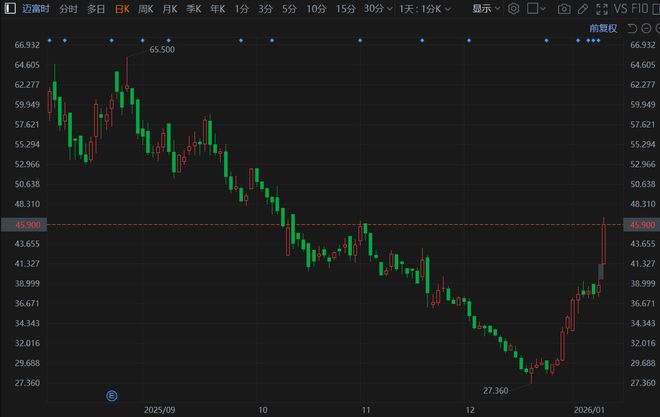
GEO持续引爆市场 全市场同类规模最大的传媒ETF(512980)涨停
Zhong Zheng Wang· 2026-01-12 04:35
Group 1 - The GEO concept in AI advertising marketing is gaining traction, leading to a significant rise in the media sector, with the China Securities Media Index increasing over 8% in early trading on January 12 [1] - The Media ETF (512980) has seen a growth of over 15% since 2026, ranking among the top in the market, and recorded a net inflow of over 600 million yuan on January 9, with a total scale exceeding 3.9 billion yuan [1] - Generative Engine Optimization (GEO) is an advertising technology aimed at generative AI applications, enhancing the probability of ad content being referenced in AI-generated content [1] Group 2 - As generative AI products like Doubao and Qianwen become core information access points, GEO is optimizing content's semantic expression and credibility, attracting companies such as BlueFocus and Liou Group to actively engage in this area [2] - The Media ETF tracks the China Securities Media Index, which includes 50 large-cap listed companies from sectors like marketing, advertising, and digital media, with a significant focus on the media industry [2] - The market for GEO is expected to experience rapid growth, with projections estimating the global and Chinese GEO market sizes to reach 11.2 billion USD and 2.9 billion CNY by 2025, respectively, and further growth to 100.7 billion USD and 24 billion CNY by 2030 [2]
