经济多元化

Search documents
标普:非油经济将推动沙特GDP快速增长
Shang Wu Bu Wang Zhan· 2025-10-24 16:48
Core Insights - The non-oil sector in Saudi Arabia is projected to contribute up to 3.5 percentage points to GDP growth annually from 2025 to 2028, driven primarily by real estate, tourism, and infrastructure [1] - In Q2 2025, the non-oil real GDP is expected to grow by 3.9%, with non-oil activities increasing by 4.6%, marking 18 consecutive quarters of expansion [1] - Key drivers of non-oil growth include housing programs, mortgage financing, and large-scale projects, aligning with the economic diversification goals outlined in Vision 2030 [1] - By 2025, the non-oil economy is anticipated to account for 57% of the total economic output, indicating a shift towards a sustainable transformation driven by long-term investments [1]
哥伦比亚启动首轮铜金矿招标
Shang Wu Bu Wang Zhan· 2025-10-14 15:49
Core Insights - Colombia's National Mining Agency (ANM) has officially launched its first round of bidding for copper, gold, and polymetallic mining, marking the country's entry into the global trend of diversifying economies through strategic mining development [1] - The initial bidding projects cover four strategic provinces: Antioquia, Cesar, La Guajira, and Tolima, which have been confirmed by the Colombian Geological Service to possess potential for integration into the global critical mineral supply chain [1] - The government aims to position Colombia as a reliable destination for strategic mining investments, accelerating energy transition while promoting diversification of export structures [1] Summary by Categories Mining Sector Development - The launch of the first round of mining bids signifies Colombia's commitment to developing its mining sector in line with global practices [1] - The bidding process aligns Colombia with countries like Chile, Argentina, Peru, Brazil, Indonesia, and India that promote competitive mining development through market-oriented approaches [1] Strategic Provinces - The provinces involved in the bidding—Antioquia, Cesar, La Guajira, and Tolima—are identified as strategic areas with significant mining potential [1] - These regions have been assessed by the Colombian Geological Service, indicating their capability to contribute to the global supply chain of critical minerals [1] Government Objectives - The Colombian government aims to enhance the country's attractiveness for strategic mining investments [1] - The initiative is part of a broader strategy to diversify the country's export structure while facilitating an energy transition [1]
阿联酋与经合组织探讨深化伙伴关系
Shang Wu Bu Wang Zhan· 2025-10-09 02:17
Core Viewpoint - The UAE has maintained close cooperation with the OECD for nearly two decades, achieving significant results in sustainable economic growth, economic diversification, and optimizing the business environment [1] Group 1: Economic Cooperation - The UAE's Minister of Economy and Tourism highlighted the ongoing collaboration with the OECD during an event in Paris [1] - Joint initiatives have been implemented to promote sustainable economic growth and diversification [1] Group 2: Business Environment Reforms - The UAE has continuously advanced reforms in the business environment, having enacted or updated over 35 economic laws in the past five years [1] - These reforms cover various areas including family businesses, cooperatives, e-commerce, intellectual property, and foreign ownership (100%) [1]
阿尔及利亚360°新闻网站编译版:阿尔及利亚外国直接投资流量回升
Shang Wu Bu Wang Zhan· 2025-10-01 15:07
Core Insights - Algeria's foreign direct investment (FDI) flow is expected to rebound in 2024, indicating a positive economic recovery trend [1] Investment Flow Summary - In 2020, Algeria's FDI flow was $1.125 billion, which decreased to $920 million in 2021 due to the pandemic [1] - The FDI flow further declined to $171 million in 2022, despite improvements in the current account surplus [1] - A significant recovery occurred in 2023, with FDI flow rising to $1.049 billion [1] - The projected FDI flow for 2024 is $1.181 billion, reflecting ongoing economic recovery [1] Government Policy Impact - The increase in FDI from 2023 to 2024 suggests that government efforts to improve the business environment, simplify administrative procedures, and encourage investment in non-oil and gas sectors are effective [1] - The Algerian government plans to accelerate structural reforms and continue implementing economic diversification policies in the future [1]
【环球财经】沙特首届文化投资大会在利雅得开幕 文化产业成为经济多元化重要支点
Xin Hua Cai Jing· 2025-09-30 03:34
Group 1 - The first "2025 Cultural Investment Conference" in Saudi Arabia aims to explore how culture can drive sustainable economic growth, featuring over 38 forums and workshops with more than 1,500 participants [1][3] - The establishment of Riyadh University of Arts (RUA) was announced, focusing on creative education and cultural innovation, with plans to expand to 13 colleges and rank among the top 50 global arts and culture institutions [1][2] - A memorandum of understanding was signed between the Saudi Ministry of Culture and the Royal Commission for AlUla to enhance cultural tourism and community talent development [1][2] Group 2 - ASYAD Holding Group, in collaboration with Spark Lab and Lamar Investment, plans to build a multifunctional cultural landmark and creative incubation center in Riyadh, promoting private sector investment in culture [2] - The launch of the "MENA Arts Fund" by Awad Capital, the first regulated art investment fund in Saudi Arabia and the MENA region, aims to focus on modern and contemporary art [2] - The Saudi Film Fund, now renamed "Riviera Content Fund," announced new film investment plans exceeding 32.5 million Riyals, collaborating with international companies like Universal Pictures and Columbia Pictures [2] Group 3 - The conference featured discussions with leaders from international institutions like Sotheby's and Christie's, focusing on how culture can create jobs and stimulate tourism and regional development [3] - The event signifies a dual approach in Saudi Arabia's cultural sector, enhancing both supply-side and capital-side initiatives, positioning culture as a key pillar for economic diversification and social cohesion [3]
阿塞拜疆工业企业累计实施项目金额约40亿美元
Shang Wu Bu Wang Zhan· 2025-09-27 03:23
Core Insights - Azerbaijan's primary economic goal has shifted from maintaining macroeconomic stability to achieving economic diversification, with a focus on developing the non-resource economy [1] Economic Goals - The government prioritizes industrial production as a key area for attracting investment and creating jobs [1] - Over 170 industrial production enterprises are currently operating in Azerbaijan, with a total project implementation amount of approximately $4 billion [1] - These initiatives have created over 10,000 jobs [1] Sector Development - Azerbaijan is committed to developing agricultural product processing and industrial production [1] - The country aims to accelerate the introduction of new technologies to build a comprehensive, technologically advanced, and sustainable growth economy [1]
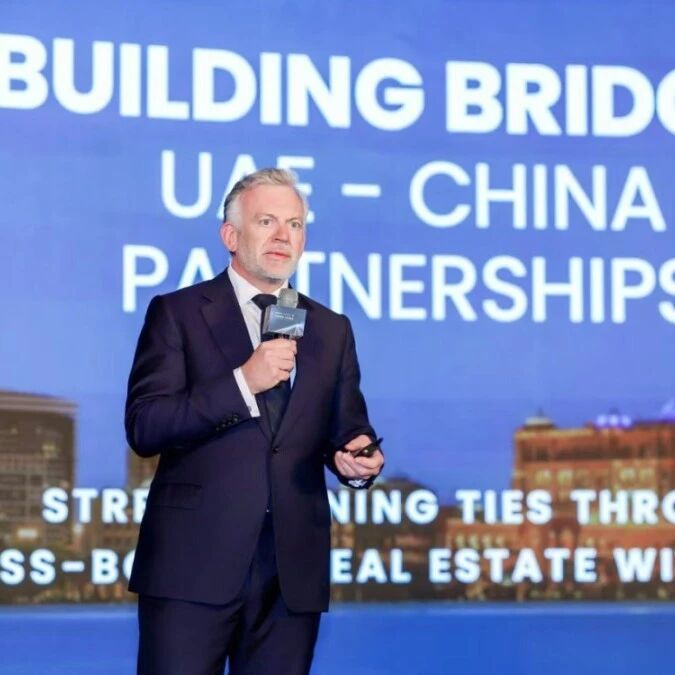
阿布扎比Jonathan Emery:ALDAR如何借力国家战略打造“阿联酋名片” | 中东高峰论坛后记
克而瑞地产研究· 2025-09-27 00:39
Core Insights - The forum "Global Vision · Middle East Opportunities - 2025 Middle East Real Estate Investment Summit" was held in Shanghai, showcasing the growing relationship between China and the UAE, with a focus on real estate collaboration [1][4][16]. Group 1: UAE Economic Growth - The UAE is experiencing rapid economic growth, with a projected real GDP growth rate of 3.8% in 2024, increasing to 4% in 2025 and 5% in 2026, making it one of the fastest-growing economies globally [6]. - The diversification of the UAE's economy is evident as it shifts focus from oil and gas to sectors like finance, digital technology, logistics, and tourism [6][7]. Group 2: Abu Dhabi's Real Estate Market - Abu Dhabi's real estate market is thriving, with property transaction volumes exceeding $14 billion in the first half of 2025, marking a 39% year-on-year increase [8]. - The share of overseas and foreign buyers in Aldar's sales has surged to 78% in 2024, up from 21% in 2021, with significant contributions from Chinese buyers [8]. Group 3: Key Developments and Attractions - Saadiyat Island is emerging as a cultural hub, featuring landmarks like the Louvre Abu Dhabi and upcoming museums, enhancing its appeal as a tourist destination [9]. - Yas Island is positioned as a vibrant entertainment hub, hosting attractions such as Ferrari World and Warner Bros. World, and is set to become a major lifestyle destination [10]. - Al Fahid Island is being developed as a coastal health destination, integrating luxury living with sustainability, with an expected development value exceeding $10 billion [10]. Group 4: Aldar's Role in Development - Aldar is a key player in shaping Abu Dhabi's urban landscape, focusing on residential, commercial, retail, and hospitality sectors, while expanding its operations beyond Abu Dhabi to Dubai, Egypt, and the UK [11]. - The company collaborates with leading brands and global institutions, enhancing its reputation as a reliable partner in the UAE's real estate development [11].

沙特股市单日暴涨5%,外资持股限制或将松绑
Hua Er Jie Jian Wen· 2025-09-24 12:30
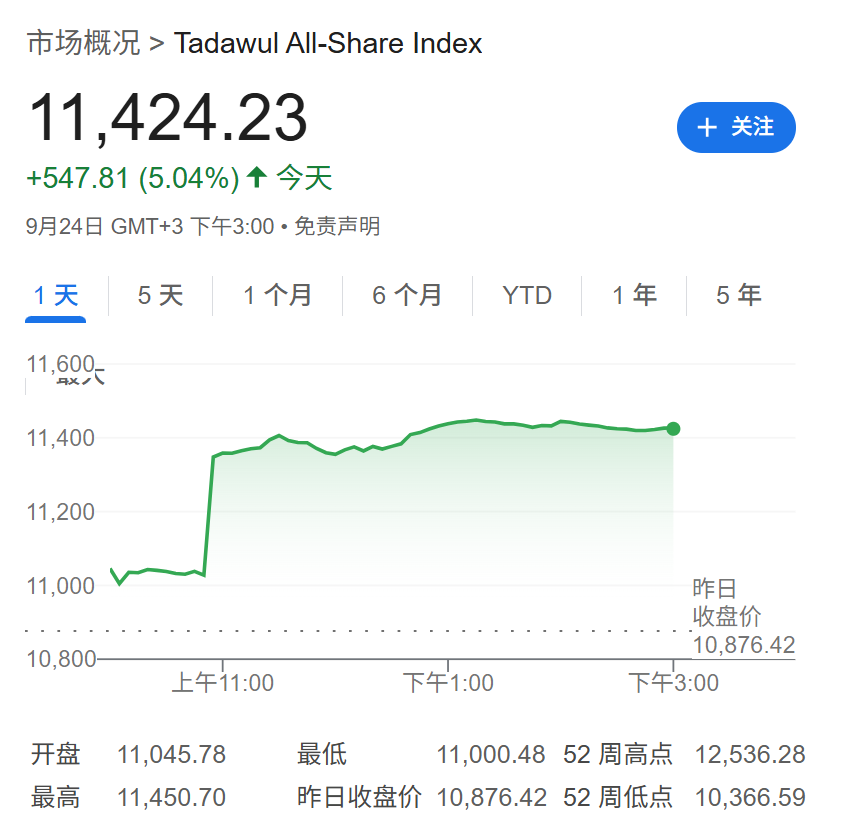
Core Viewpoint - The Saudi Arabian stock market surged due to expectations that the country will relax strict foreign investor ownership limits, potentially unlocking hundreds of billions of dollars in new investments and significantly enhancing its position in global capital markets [1][3]. Group 1: Market Reaction - The Tadawul All Share Index experienced a significant increase, rising by 5% during trading, which resulted in a market capitalization boost of $123 billion [1]. - All industry sectors recorded gains, with Saudi bank stocks achieving a record single-day increase of 9% [3]. Group 2: Potential Capital Inflows - Morgan Stanley predicts that if the Saudi Capital Market Authority raises the foreign ownership limit to 100%, it could lead to a net capital inflow of $10.6 billion, while EFG Hermes estimates around $10 billion [4]. - The anticipated policy change is seen as a crucial step in diversifying the Saudi economy and reducing its reliance on oil, aligning its capital market with Gulf neighbors like the UAE [3]. Group 3: Current Ownership Limits and Beneficiaries - Currently, a single foreign investor is limited to a 49% stake in listed companies, and any increase above 50% would be a milestone, allowing foreign investors to hold controlling stakes for the first time [5]. - Analysts believe that the financial sector, particularly bank stocks, will be the biggest beneficiaries of this policy relaxation, with Al Rajhi Bank's stock price soaring by 10% following the news [5]. Group 4: Index Weight and Foreign Investment - The relaxation of ownership limits is expected to increase the weight of Saudi stocks in global benchmark indices, potentially raising its weight in the MSCI Emerging Markets Index from approximately 3.3% to around 4% [6]. - Some listed companies are nearing the current foreign ownership limits, with firms like Tawuniya, Rasan, and Etihad Etisalat having foreign ownership ratios exceeding 20% but below 25%, indicating significant potential for future capital inflows [6].
阿联酋经济预计2025年将增长4.9%
Shang Wu Bu Wang Zhan· 2025-09-22 17:08
Core Viewpoint - The Central Bank of the UAE projects a 4.9% economic growth for the UAE in 2025, up from a previous forecast of 4.4%, driven by increased oil production and strong growth in the non-hydrocarbon sector [1] Economic Growth Projections - The hydrocarbon sector is expected to grow by 5.8% in 2025 and 6.5% in the following year, attributed to increased oil production under OPEC+ quotas [1] - The non-hydrocarbon sector accounted for 77.1% of GDP in the first quarter, indicating a significant shift towards economic diversification [1] Sector-Specific Growth - The non-hydrocarbon GDP is projected to grow by 4.5% in 2025 and 4.8% in 2026, potentially benefiting from indirect effects of hydrocarbon growth, including increased investment, government spending, and enhanced economic confidence [1] - The UAE's economy grew by 3.9% year-on-year in the first quarter, driven by a 5.3% increase in the non-hydrocarbon sector, particularly in manufacturing, financial services, construction, and real estate [1]
2025年油海新貌:沙特阿拉伯能源转型与中沙能源合作新图景报告
Sou Hu Cai Jing· 2025-09-19 05:50
Core Insights - Saudi Arabia, as the largest economy in the Middle East, is heavily reliant on oil, with oil activities contributing 27.9% to GDP in 2024, while non-oil activities account for 51.4%. This dependency necessitates economic restructuring as part of the "Vision 2030" initiative aimed at energy transition [1][7]. Group 1: Drivers of Energy Transition - The energy transition in Saudi Arabia is driven by four main factors: sensitivity to oil price fluctuations, the need for economic diversification to alleviate fiscal pressure, global low-carbon energy demand, and the necessity to maintain global energy leadership amidst regional competition [2][7]. - Key initiatives include stabilizing oil production, expanding the refining industry, significantly increasing natural gas production to 13 billion cubic feet per day by 2030, and scaling up renewable energy development with a target of 58.7 GW installed capacity by 2030 [2][3]. Group 2: Sino-Saudi Energy Cooperation - China is the largest destination for Saudi oil exports, with 14.7% of China's crude oil imports coming from Saudi Arabia in 2024. Cooperation extends to refining technology, port infrastructure, and capital collaboration [3][8]. - In the natural gas sector, Chinese companies are involved in the expansion of Saudi gas pipelines and field development, contributing to the entire industry chain [3][8]. - In clean energy, Chinese firms have established solar projects totaling 12.8 GW, representing 76% of Saudi Arabia's total solar capacity, and are actively engaged in hydrogen technology and energy storage projects [3][8]. Group 3: Key Achievements in Energy Transition - The localization level of the oil and gas industry in Saudi Arabia has increased from 37% in 2016 to 65.5% in 2023, reflecting significant progress in domestic value retention [2][46]. - The share of oil activities in GDP has decreased from 36.9% in 2010 to 27.9% in 2024, indicating a successful shift towards a more diversified economy [2][50]. - Non-oil government revenue has grown from 185.75 billion SAR in 2016 to 502.47 billion SAR in 2024, although it still falls short of the 1 trillion SAR target set for 2030 [2][60].