载人登月

Search documents
载人登月,要过几道关?
Ren Min Ri Bao· 2025-08-18 05:57
Core Viewpoint - China aims to achieve its first manned moon landing by 2030, with significant progress in the development of the "Dream Boat" spacecraft and the "Moon Catcher" lunar lander [1][10]. Group 1: Manned Moon Landing Mission Overview - The mission involves launching two rockets to send the lunar lander and crewed spacecraft to a translunar trajectory, followed by docking in lunar orbit and landing on the moon [4][14]. - The lunar mission is expected to enhance scientific innovation and technological advancement, with a projected return on investment of 1:15 for space engineering [3][6]. Group 2: Technical Challenges and Solutions - The rockets must have a payload capacity of at least 27 tons for the mission, necessitating the development of the new Long March 10 series rockets [6][7]. - The "Dream Boat" spacecraft is designed to accommodate up to seven astronauts and features advanced safety systems for emergency situations [10][11]. Group 3: Lunar Landing and Operations - The lunar lander "Moon Catcher" will serve as the operational center for astronauts on the moon, supporting their activities and scientific investigations [12][13]. - Astronauts will face challenges such as extreme temperatures, vacuum conditions, and complex terrain during their lunar activities [11][12]. Group 4: Return Journey to Earth - The return phase involves a complex "space skipping" maneuver to ensure a safe re-entry into Earth's atmosphere, requiring precise navigation and thermal protection [15][16]. - The mission aims to collect lunar samples and safely return them to Earth, marking a significant milestone in China's space exploration efforts [15][16]. Group 5: Future Exploration Plans - Following the manned moon landing, China plans to establish a lunar research facility and conduct continuous lunar exploration and technology validation [16][17].
面临全新的巨大考验 我国载人登月要过几道关?
Ren Min Ri Bao· 2025-08-18 01:56
Core Viewpoint - China is progressing towards its goal of manned lunar landing by 2030, with significant advancements in spacecraft and technology [11][29]. Group 1: Manned Lunar Mission Progress - The "Dream Boat" manned spacecraft successfully completed a zero-height escape flight test, enhancing safety for future missions [11][20]. - The "Moon Catcher" lunar lander has successfully undergone comprehensive verification tests for landing and takeoff [11][22]. - The training of the fourth batch of reserve astronauts has commenced, with 10 selected candidates, including 8 pilots and 2 payload specialists from Hong Kong and Macau [11][20]. Group 2: Technical Challenges and Solutions - The mission involves launching two rockets to send the lunar lander and manned spacecraft to a translunar trajectory, followed by docking in lunar orbit [14][21]. - The new "Long March 10" rocket is being developed to meet the required payload capacity of at least 27 tons for lunar missions, addressing the limitations of existing rockets [16][19]. - The "Dream Boat" spacecraft is designed to support both lunar landing and near-Earth space station missions, featuring enhanced safety and life support systems [20][27]. Group 3: Lunar Landing and Return - The lunar lander will serve as the operational center for astronauts on the moon, supporting their activities and scientific research [22][24]. - The return journey involves a complex "space skipping" maneuver to ensure safe re-entry into Earth's atmosphere, which requires precise navigation and thermal protection [26][28]. - The lunar mission aims to enhance understanding of the moon and lay the groundwork for future lunar research facilities and continuous exploration [28][29].


载人登月,要过几道关
Ren Min Ri Bao· 2025-08-18 00:36
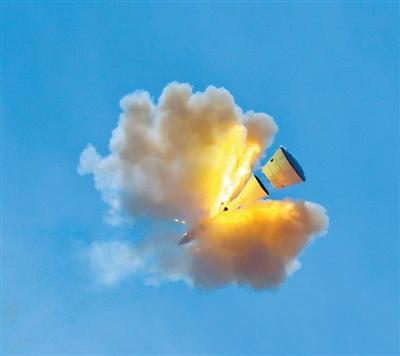
Core Viewpoint - China's manned lunar landing mission is progressing smoothly, with plans to achieve the first human landing on the moon by 2030, supported by successful tests of the new generation crewed spacecraft "Dream Boat" and the lunar lander "Moon Catcher" [1][3]. Group 1: Mission Overview - The lunar landing mission involves multiple stages, including launching the lunar lander and crewed spacecraft, docking in lunar orbit, landing on the moon, conducting scientific research, and returning to Earth [5][16]. - The average distance to the moon is approximately 380,000 kilometers, making the mission a significant technological challenge [3][4]. Group 2: Technological Requirements - The mission requires a powerful rocket capable of carrying at least 27 tons to the lunar transfer orbit, which exceeds the capacity of current rockets [7][9]. - The Long March 10 series of rockets is being developed to meet these requirements, featuring high reliability, safety, and adaptability for multiple missions [8][10]. Group 3: Spacecraft Development - The "Dream Boat" spacecraft is designed to support both lunar landing and near-Earth space station missions, with enhanced safety features for crew escape in emergencies [11][12]. - The lunar lander "Moon Catcher" will serve as the central hub for lunar activities, equipped with scientific instruments and a lunar rover [12][13]. Group 4: Challenges and Solutions - Astronauts will face extreme conditions on the moon, including temperature fluctuations, vacuum, and complex terrain, necessitating thorough preparation and emergency plans [14][15]. - The return journey involves a "space skip" maneuver to safely re-enter Earth's atmosphere, requiring advanced heat protection and precise navigation systems [17][19]. Group 5: Future Prospects - The lunar landing mission is expected to enhance understanding of the moon and lay the groundwork for future lunar research facilities and continuous exploration [19][20]. - The initial phases of China's lunar exploration program include orbiting, landing, and sample return missions, with plans for further advancements in lunar research [21][23].
载人登月,要过几道关(科技视点)
Ren Min Ri Bao· 2025-08-17 22:01
Core Viewpoint - China aims to achieve its first manned moon landing by 2030, with significant progress in the development of the "Dream Boat" manned spacecraft and the "Moon Catcher" lunar lander, indicating a strong commitment to advancing its space exploration capabilities [10][24]. Group 1: Manned Moon Landing Plans - The primary flight process for the manned moon landing involves launching two rockets to send the lunar lander and manned spacecraft to a trans-lunar trajectory, docking in lunar orbit, landing on the moon, and returning to Earth with samples [5][13]. - The "Dream Boat" spacecraft is designed to carry up to seven astronauts and features advanced safety systems, including an autonomous escape capability in emergencies [19][24]. - The "Moon Catcher" lunar lander will serve as the operational center for astronauts on the moon, supporting their activities and scientific research [21][23]. Group 2: Technological Developments - The Long March 10 rocket is being developed to meet the required payload capacity of at least 27 tons for lunar missions, addressing the limitations of current rockets [15][17]. - The "Dream Boat" spacecraft has undergone successful zero-height escape flight tests, enhancing safety for future lunar missions [19][24]. - The lunar lander has completed critical landing and ascent verification tests, ensuring its capability to safely land and take off from the moon [21][24]. Group 3: Challenges and Innovations - The mission will face challenges such as extreme temperatures, vacuum conditions, and complex terrain on the moon, necessitating thorough preparation and technology validation [22][24]. - The return journey to Earth involves a "space skipping" technique to manage high-speed re-entry, ensuring the safety of astronauts and the integrity of lunar samples [26][27]. - Continuous advancements in navigation and control systems are being pursued to ensure a smooth and safe return from the moon [27][28].
月球科研转向:从地质解密到工程应用
Yang Shi Wang· 2025-08-08 23:17
Core Insights - The research focus on lunar samples in China is shifting from traditional geological analysis to engineering applications such as in-situ resource utilization and lunar regolith brick-making [1][3]. Group 1: Research Evolution - Initial lunar sample research began with the Chang'e 5 mission, primarily focusing on geological sciences, including lunar age determination, paleomagnetic analysis, and mineral composition studies [3]. - As research progresses, there is an increasing scientific demand for lunar samples related to lunar engineering and applications [3]. Group 2: Institutional Involvement - Numerous engineering research institutions in China are now involved in lunar sample applications, with research topics covering regolith material properties, equipment calibration, and basalt fiber preparation [5]. - The growing demand for lunar research is driven by future missions, including manned lunar landings and the construction of lunar research stations, prompting early preparatory studies [5].

卫网君:国家航天局:质量问题,终身追责;特朗普黄金穹顶能否绕开马斯克太空帝国?黄仁勋:美国在5G惨败,不能在AI和6G重蹈覆辙
Sou Hu Cai Jing· 2025-07-27 13:13
Group 1 - The article highlights concerns that the U.S. may be ceding lunar dominance to China, with predictions that Chinese astronauts could land on the moon first by 2029 if current U.S. plans continue to falter [1][2] - Criticism is directed at the Artemis program, citing high costs, slow progress, and bureaucratic inefficiencies as major obstacles to establishing a sustainable lunar base [1][2] - The author proposes an urgent four-step plan for the U.S. to regain its competitive edge, including leadership changes at NASA, cutting the SLS and Gateway projects, and embracing a commercial approach to lunar exploration [1][2] Group 2 - The competitive landscape of lunar exploration is framed as a significant geopolitical contest, with implications for global leadership and technological supremacy [2][3] - The article emphasizes the need for the U.S. to adopt bold leadership and innovative strategies to prevent the moon from becoming a "Chinese exclusive stage" [2][3] - The publication of a new regulatory framework by China's National Space Administration marks a shift towards high-quality transformation in the commercial space sector, emphasizing lifetime quality accountability and a collaborative oversight mechanism [6][7] Group 3 - The new regulatory framework in China aims to cover the entire lifecycle of commercial space projects, addressing long-standing issues of unclear standards and responsibilities [6][7] - The framework introduces a "four-party collaboration" mechanism, establishing companies as primary responsible entities and introducing lifetime accountability for quality issues [6][7] - The transition from a focus on scale to quality in China's commercial space industry is seen as a critical step, although challenges remain in balancing regulation with innovation [7][10]

航天科技集团召开2025年上半年经济运行分析会
news flash· 2025-07-23 12:06
7月23日下午,中国 航天科技集团有限公司召开2025年上半年经济运行分析会。会议强调,要坚定履行 强军首责,全力确保以载人登月工程重大试验、 卫星互联网系统建设为代表的年度重大任务圆满完 成。 ...

马斯克放弃火星移民?这问题大了:因为星舰还是美国重返月球关键
Sou Hu Cai Jing· 2025-07-02 03:55
Core Viewpoint - Elon Musk may have abandoned his political vision for Mars colonization, raising concerns about the feasibility of human migration to Mars [1][2][6] Group 1: Musk's Mars Colonization Plans - Reports suggest that Musk's commitment to Mars colonization is in question, with speculation stemming from comments made by investor Peter Thiel [2][5] - Despite the speculation, Musk has not made any definitive statements regarding the abandonment of his Mars plans, indicating that the situation remains uncertain [2][6] - Musk's Mars colonization efforts have faced significant setbacks, including multiple rocket failures, leading to doubts about the viability of the mission [6][9] Group 2: Starship's Performance and Challenges - The Starship rocket, crucial for Mars missions, has experienced several failures during testing, including a significant explosion during a launch pad test [11][15] - Starship's specifications include a height of 121 meters, a launch mass of 5000 tons, and a payload capacity of 100-150 tons, which are essential for future missions [16] - The success of Starship is critical not only for Mars colonization but also for NASA's plans to return to the Moon, as it is integral to the development of lunar landers [20][22] Group 3: Implications for U.S. Space Policy - The failure of Starship could jeopardize the U.S. plans for manned lunar missions, with potential delays in the timeline for lunar lander development [22][24] - Current projections suggest that the U.S. may not meet its goal of returning to the Moon by 2027, with delays in the lunar lander program likely [24][26] - The overall uncertainty surrounding U.S. space missions raises questions about the future of its space exploration initiatives, particularly in light of recent cancellations of various projects [26]

整理:每日科技要闻速递(6月18日)
news flash· 2025-06-17 23:35
Group 1 - WeChat is testing a feature for backing up chat records to external storage devices [1] - iFlytek plans to launch an upgraded version of its AI product, Spark X1, in July 2023 [2] - Meituan CEO Wang Xing has sold shares in Li Auto, cashing out HKD 600 million in four days [3] Group 2 - AI startup Anysphere has received venture capital interest, with a valuation exceeding USD 18 billion [4] - Elon Musk's XAI is in talks to raise USD 4.3 billion through equity financing [5] - Tencent has launched an AI programming mode for its Yuanbao platform, allowing users to write code while specifying requirements [6] Group 3 - China has made progress in manned lunar missions, successfully conducting a zero-height escape flight test with the Dream Boat spacecraft [7] - Microsoft is reportedly developing the next generation of Xbox Cloud Gaming servers [8] - CFM reports that DDR4 memory prices are rising, with the spot market showing signs of weakness [9] Group 4 - Baoneng Automobile responded to reports of "dissolution and liquidation," stating that the company is operating normally and has new vehicles set to launch [10] - China has achieved a breakthrough in magnetic levitation technology, accelerating a 1.1-ton test vehicle to 650 km/h over a distance of 1,000 meters [11] - Nomura Securities predicts that Meta will launch its next-generation ASIC chip, MTIA T-V1, as early as Q4, with specifications expected to surpass NVIDIA's "Rubin" [12]
美国“载人登月计划”要塌方了?
Guan Cha Zhe Wang· 2025-05-06 05:52
Core Viewpoint - The proposed budget from the White House suggests retiring the SLS rocket and the Lunar Gateway, casting doubt on the future of the Artemis program and signaling a significant shift in U.S. lunar ambitions [1][3][15]. Group 1: SLS Rocket and Lunar Gateway - The SLS rocket and Lunar Gateway were seen as essential components of the Artemis program, representing significant political and financial investments by NASA [3][5]. - The SLS rocket has faced continuous delays and budget overruns, with development costs reaching $24 billion and a per-launch cost of $4 billion, making it one of the most expensive rockets with minimal flight history [5][6]. - The political backing for SLS has been strong due to its distribution of contracts across various states, making it a "Congressional Rocket" that is difficult to cancel without significant political repercussions [6][7]. Group 2: Budget Proposal Implications - The budget proposal reflects a broader trend of budget cuts under the Trump administration, impacting NASA's ability to sustain the SLS and Lunar Gateway projects [7][15]. - The Lunar Gateway, initially envisioned as a critical hub for lunar missions, is now at risk of being abandoned due to its high costs and unclear functional benefits [10][11]. - The proposal to cut these projects indicates a potential strategic pivot towards more immediate and economically viable goals, such as Mars exploration and private space initiatives [15][16]. Group 3: Comparison with China's Lunar Program - The U.S. approach to lunar exploration has become increasingly complex, relying on multiple components like the Lunar Gateway, while China's strategy focuses on a more straightforward execution of lunar missions [19][20]. - China's lunar program emphasizes a clear and efficient path to landing and returning from the moon, contrasting with the U.S. strategy that has become bogged down in political and logistical challenges [20][21]. - The U.S. may risk falling behind in the lunar race as China's lunar missions progress steadily, highlighting the need for a reassessment of U.S. lunar ambitions and strategies [16][19].