
零售转型

Search documents
拼多多“包邮风”吹旺香港自提点,小老板转型赚佣金还能攒人气
Sou Hu Cai Jing· 2025-09-12 00:51
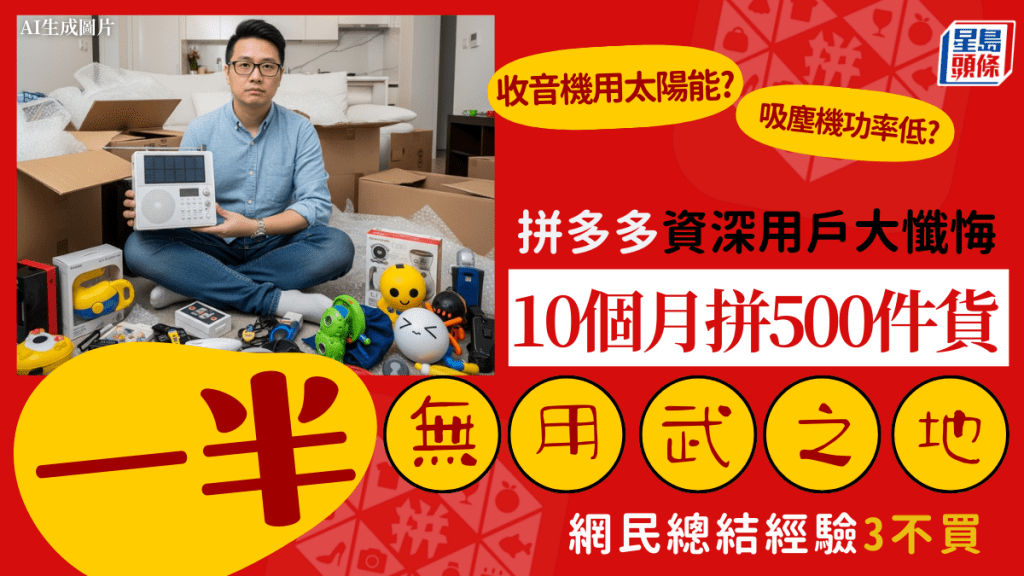
Core Insights - The rapid expansion of e-commerce platforms like JD.com, Taobao, and Pinduoduo into the Hong Kong market is driving a significant transformation in the city's commercial landscape, centered around the concept of "free shipping" [1] - Traditional shops are adapting by establishing parcel pickup points, which is reshaping consumer habits and the retail environment in Hong Kong [1] E-commerce Trends - Pinduoduo's introduction of free shipping services in Hong Kong has led to a surge in consumer purchases, with one user reporting over 500 items bought, many of which are non-essential [3] - The "free shipping impulse" phenomenon highlights the effectiveness of low-price strategies and emotional marketing in driving consumer behavior [3] - Taobao's "zero-threshold free shipping" policy has nearly doubled user participation since its launch in mid-August [3] Infrastructure Development - The number of parcel pickup points in Hong Kong has surpassed 2,000, covering various traditional business types such as markets and pharmacies [3] - Logistics operators report that private shipping companies charge around 4-5 HKD per kilogram for each package, while e-commerce platforms pay about 2.5 HKD, with pickup points potentially earning up to 18,000 HKD monthly by handling 200 packages daily [3] Business Adaptation - Traditional businesses like "Zheng Ji Fruit Shop" have seen a 50% decline in sales due to reduced tourism, prompting a shift to parcel pickup services, which now account for half of their revenue [4] - The owner of "Zheng Ji Fruit Shop" has diversified by adding a craft beer section to attract more customers through the pickup point [4] - Similarly, a liquor supplier has transformed their warehouse into a pickup point, generating an additional income of 5,000 to 10,000 HKD monthly [6] Retail Industry Challenges - The Hong Kong retail sector is facing deeper challenges, with a projected 3.2% year-on-year decline in total retail sales value for 2024, while online shopping continues to grow [6] - As the growth of online shopping stabilizes, the competition among pickup points is expected to shift towards service differentiation and the conversion of offline traffic into diversified revenue streams [6]

2025H1家电行业财报综述:稳中有进
Guolian Minsheng Securities· 2025-09-10 07:13
Investment Rating - The report maintains an "Outperform" rating for the home appliance industry [8][15]. Core Insights - The home appliance sector shows steady growth, with white goods domestic sales improving and external tariff impacts becoming evident. Leading brands demonstrate resilience, while cleaning product leaders experience high growth. Increased marketing expenses in discretionary categories have led to a slight decline in profitability. Future outlook suggests that trade-in programs will support domestic demand, and leading brands along with emerging categories will contribute to revenue growth, indicating investment value [4][15]. Summary by Sections Overall Performance - In Q2 2025, the home appliance sector's revenue increased by 4.78% year-on-year to 431.5 billion yuan, with a net profit attributable to shareholders rising by 3.38% to 38.1 billion yuan. The first half of 2025 saw revenue growth of 8.59% to 842.6 billion yuan and net profit growth of 11.23% to 71.2 billion yuan. The cost environment improved due to a decline in raw material prices and shipping costs [19][29]. White Goods - The white goods segment's revenue grew by 4.64% year-on-year to 303.2 billion yuan in Q2 2025, with net profit increasing by 6.08% to 30.6 billion yuan. Domestic demand is supported by favorable policies and high temperatures driving air conditioning needs. However, external sales showed weakness due to tariff impacts [10][20]. Black Goods - The black goods segment reported a revenue increase of 5.81% year-on-year to 50.8 billion yuan, but net profit decreased by 1.04% to 1.0 billion yuan. The segment faced challenges from fluctuating U.S. tariff policies and varying performance between self-owned brands and OEMs [11][29]. Kitchen Appliances - Kitchen appliance revenue declined by 6.95% year-on-year to 12.4 billion yuan, with net profit down by 16.75% to 1.96 billion yuan. The decline is attributed to sluggish real estate conditions and increased difficulty in subsidy applications [12][19]. Smart Home - The smart home segment experienced a significant revenue increase of 32.09% year-on-year to 12.6 billion yuan, although net profit fell by 12.95% to 1.0 billion yuan due to increased marketing expenditures [13][19]. Traditional Small Appliances - Revenue for traditional small appliances decreased by 0.69% year-on-year to 23.1 billion yuan, with net profit down by 12.44% to 1.3 billion yuan. The segment faced challenges from changing tariff policies and reduced external demand [14][19]. Upstream Performance - The upstream sector saw a revenue increase of 5.07% year-on-year to 29.5 billion yuan, with net profit rising by 12.56% to 2.2 billion yuan. The upstream segment's profitability improved due to better cost management [19][25].



北京银行副行长徐毛毛:将以特色化、智能化、生态化发展扎实推动零售转型
Zheng Quan Ri Bao Wang· 2025-09-06 04:03
Core Viewpoint - Beijing Bank is focusing on retail transformation and risk management in personal loans, achieving significant growth in retail revenue and loan issuance while maintaining asset quality [1][2] Group 1: Retail Transformation - In the first half of the year, Beijing Bank's retail revenue reached 11.081 billion yuan, with net fee and commission income increasing by 8.95% year-on-year [1] - Retail funding scale surpassed 1.3 trillion yuan, growing by 7.28% since the beginning of the year, while savings deposits exceeded 790 billion yuan, up by 6.87% [1] - The bank has actively supported the real estate market, inclusive finance, and consumption recovery, with personal loan issuance nearing 140 billion yuan, a year-on-year increase of 36.3% [1] Group 2: Strategic Direction - The bank has outlined a "123456" strategy for the second half of the year, focusing on specialized, intelligent, and ecological development in retail banking [2] - The strategy includes creating a comprehensive financial service model that caters to various life stages, from children's finance to retirement finance [2] - The bank aims to enhance intelligent development through improved channel construction and customer service [2] Group 3: Personal Loan Risk Management - The bank acknowledges that the personal loan asset quality faces temporary pressure, but overall, the non-performing loan level remains controllable [2] - Risk management strategies have shifted from passive responses to proactive defenses, focusing on quality customer selection and real business [2] - The bank employs AI and digital applications to enhance approval efficiency while ensuring quality, alongside effective collection and asset disposal strategies [2]

零售银行鏖战AUM
2 1 Shi Ji Jing Ji Bao Dao· 2025-09-05 12:50
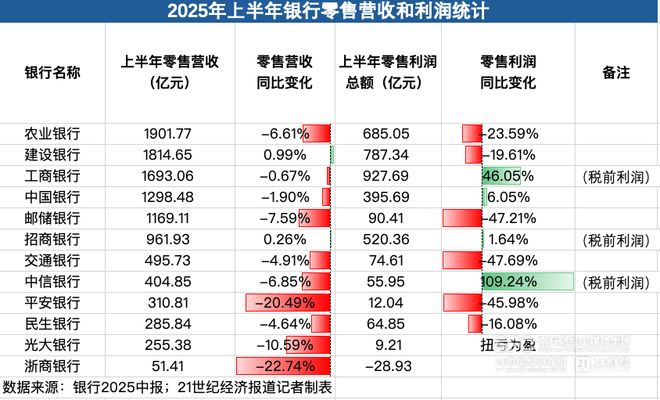
Core Viewpoint - The retail banking sector is under pressure, with declining revenue and profit, while retail credit risks are on the rise, prompting banks to explore new transformation paths focused on retail AUM (Assets Under Management) as a key performance indicator [1][2][5]. Group 1: Retail Banking Performance - In the first half of 2025, three banks (Postal Savings Bank, China Merchants Bank, Agricultural Bank) reported retail revenue contributions exceeding 50%, while most banks with a focus on corporate banking had contributions below 40% [2]. - Among 12 sample banks, 10 reported a decline in retail revenue, and 7 saw a decrease in total profit, indicating that the retail business has not yet hit bottom [2]. - Notably, Industrial and Commercial Bank of China (ICBC) and China CITIC Bank reported significant increases in retail profit, with growth rates of 46.05% and 109.24% respectively [4]. Group 2: Retail AUM Trends - Retail AUM has become a focal point for banks, with the top three banks (ICBC, China Construction Bank, Agricultural Bank) exceeding 20 trillion yuan in retail AUM, and ICBC leading with 24 trillion yuan [5]. - All 13 banks analyzed reported positive growth in retail AUM compared to the beginning of the year, with notable increases from Shanghai Pudong Development Bank and Ping An Bank [5][6]. - Retail AUM is defined as a comprehensive measure of a bank's retail financial capabilities, including personal deposits, wealth management products, and insurance [5]. Group 3: Wealth Management Strategies - Banks are shifting focus from traditional deposit-based models to wealth management, emphasizing the importance of retail AUM for increasing non-interest income [6][11]. - The growth of retail AUM is expected to support the growth of intermediary business income, as highlighted by China Merchants Bank's strategy to enhance customer retention [9][12]. - Different banks are adopting varied approaches to wealth management, with ICBC focusing on customer coverage and China Bank emphasizing its infrastructure advantages [13][14].



矛盾的江阴银行,大涨同时伴随着“窘迫”
Xin Lang Cai Jing· 2025-09-04 07:53
Core Insights - Jiangyin Bank has achieved a "double growth" in revenue and net profit for the first half of 2025, with operating income reaching 2.401 billion yuan, a year-on-year increase of 10.45%, and net profit attributable to shareholders amounting to 846 million yuan, up 16.69% year-on-year [1][2] Group 1: Performance Analysis - The significant increase in performance is primarily driven by a substantial rise in investment income, which has seen non-interest income grow for three consecutive years, reaching 999.2 million yuan in the first half of 2025, a year-on-year increase of 30.26% [2][3] - Investment income alone surged to 882 million yuan in the first half of 2025, marking an impressive increase of 81.44% compared to the previous year, contributing 36.72% to total operating income [2][3] - The bank's trading financial assets grew from 19.703 billion yuan at the end of the previous year to 25.335 billion yuan by June 2025, reflecting a 28.58% increase [3] Group 2: Challenges Faced - Despite the impressive growth in non-interest income, net interest income has slightly declined by 0.23% to 1.409 billion yuan in the first half of 2025, with losses in funding operations widening by 30.71% [4][5] - The bank's fee and commission income also faced pressure, dropping by 35.18% to 50.085 million yuan in the first half of 2025 [5] - Personal loan balances have decreased for two consecutive years, falling to 20.507 billion yuan in the first half of 2025, leading to a significant decline in personal loan interest income by 18.37% [6] Group 3: Business Focus - The bank's corporate business has also encountered challenges, with corporate revenue declining by 0.76% to 1.051 billion yuan, despite an increase in total corporate assets to 110.586 billion yuan [8] - Jiangyin Bank's corporate loans are heavily focused on the manufacturing sector, which constitutes 31.47% of its loan portfolio, indicating a strong reliance on this industry [8] Group 4: Market Position - Jiangyin Bank's global ranking improved to 506th place, an increase of 26 positions compared to the previous year, marking the third consecutive year of ranking improvement [9] - However, compared to leading regional banks, Jiangyin Bank's retail transformation is lagging, and adjustments are needed in corporate business to enhance support for green technology and innovative enterprises [9][10]

规模扩、质量优、效益增!郑州银行用“三升”成绩诠释稳健发展
Huan Qiu Lao Hu Cai Jing· 2025-09-02 13:30
Core Viewpoint - Zhengzhou Bank has achieved "double growth" in revenue and profit, alongside improved asset quality, with a non-performing loan ratio of 1.76%, down 0.11 percentage points year-on-year, and a provision coverage ratio of 179.20% [1][7] Financial Performance - As of June 30, 2025, Zhengzhou Bank's total assets reached 719.738 billion yuan, an increase of 43.373 billion yuan, or 6.41%, compared to the end of the previous year [1][2] - The bank's operating income for the reporting period was 6.690 billion yuan, a year-on-year increase of 4.64%, while net profit attributable to shareholders was 1.627 billion yuan, up 2.1% [2][3] Loan and Credit Growth - By the end of June, the total amount of loans and advances issued by Zhengzhou Bank was 406.094 billion yuan, an increase of 18.404 billion yuan, or 4.75%, from the end of the previous year [2] - The bank's corporate loan balance was 274.623 billion yuan, up 2.11%, while personal loan balance reached 94.556 billion yuan, increasing by 3.96% [2] Retail Transformation - Zhengzhou Bank's retail business generated 1.236 billion yuan in revenue, marking a historical high for the same period, with a year-on-year growth of 3.56% [5] - Personal deposit balance surged to 258.098 billion yuan, an increase of 39.918 billion yuan, or 18.3%, reflecting strong growth in retail banking [5][6] Asset Quality and Risk Management - The bank's non-performing loan balance was 7.165 billion yuan, with a non-performing loan ratio of 1.76%, continuing a three-year decline [7] - The provision coverage ratio stood at 179.20%, with capital adequacy ratios maintained at stable levels, including a capital adequacy ratio of 11.85% and a core tier 1 capital ratio of 8.60% [7] Future Outlook - Zhengzhou Bank aims to leverage its strategic layout and development advantages to create long-term value amidst uncertainties [8]
吉林银行董事长秦季章:零售转型是一项长期的系统性工程
Xin Lang Cai Jing· 2025-09-02 07:58
Core Viewpoint - Jilin Bank has successfully transformed its retail banking operations, significantly improving its financial health and reducing non-performing loan ratios, while also planning for future growth and potential listing [1][4][19]. Group 1: Financial Performance - Jilin Bank's asset scale has doubled from 2019 to 2024, reaching 750 billion yuan, with revenue and pre-provision profit increasing by 37% and 24% respectively, to 13.6 billion yuan and 7.3 billion yuan [1]. - The non-performing loan ratio has decreased from nearly 5% in 2019 to 1.85% as of mid-2024 [1][21]. - As of June 2024, Jilin Bank's total assets surpassed 800 billion yuan [1]. Group 2: Retail Transformation Strategy - The retail transformation is viewed as a long-term systematic project that requires top-level strategic organization and implementation [4][11]. - Jilin Bank aims to increase its personal loan ratio from 23% to 40% during the "14th Five-Year Plan" period, with a long-term goal of exceeding 50% [15]. - The bank has achieved significant growth in its retail AUM, increasing from 185.4 billion yuan to over 470 billion yuan from 2019 to 2024 [15][16]. Group 3: Market Environment and Challenges - The economic environment in Jilin has improved, with GDP growth of 5.7% in the first half of 2025, surpassing the national average [5]. - The bank faces challenges such as a shift in savings deposits to wealth management products, which could impact loan availability and profitability [9][10]. - Jilin Bank has identified opportunities in diversifying its wealth management product offerings to meet customer needs [10]. Group 4: Risk Management and Future Plans - Jilin Bank has implemented strict measures to manage loan quality, focusing on high-quality clients and sectors, maintaining a new loan non-performing rate around 1% [21][22]. - The bank plans to issue 150 billion yuan in subordinated debt and 50 billion yuan in perpetual bonds to bolster its capital base [19]. - Jilin Bank is actively preparing for a potential public listing, contingent on business development and market conditions [20].

美的集团(000333):境内外业务表现强势 B端业务占比保持提升
Xin Lang Cai Jing· 2025-09-02 04:38
Core Viewpoint - The company reported strong financial performance for the first half of 2025, with significant year-on-year growth in both revenue and net profit [1][2]. Financial Performance - In 25H1, the company achieved revenue of 251.12 billion yuan, a year-on-year increase of 15.58%, and a net profit attributable to shareholders of 26.014 billion yuan, up 25.04% [1]. - For Q2 alone, the company recorded revenue of 123.903 billion yuan, reflecting a growth of 10.99%, and a net profit of 13.591 billion yuan, which is a 15.14% increase year-on-year [1]. Business Segments - Domestic business revenue reached 143.9 billion yuan, growing by 14%, with the company's products leading in sales on major online platforms [2]. - The overseas business generated revenue of 107.2 billion yuan, marking an 18% increase, with products exported to over 200 countries and regions [2]. - The toC smart home segment reported revenue of 167.2 billion yuan, up 13%, while the toB segment achieved 64.5 billion yuan, growing by 21% [2]. - The company’s high-end brands, Toshiba and COLMO, saw retail sales growth exceeding 60% [2]. Strategic Focus - The company is committed to a DTC transformation, focusing on retail to drive growth in the C-end business [3]. - The B-end business is leveraging a technology-driven strategy to enhance customer value and efficiency, maintaining strong growth [3]. Valuation - The company’s projected EPS for 2025-2027 is 5.66, 6.28, and 6.93 yuan per share, with growth rates of 13%, 11%, and 10% respectively [3]. - A target price of 90.56 yuan is set based on a 16x PE valuation for 2025, maintaining an "outperform" rating [3].
郑州银行连续第二个财报季营收与利润“双增长”
Di Yi Cai Jing· 2025-09-01 11:41
Core Viewpoint - Zhengzhou Bank demonstrates resilience and high-quality development amidst a complex economic environment, achieving growth in both revenue and profit for the second consecutive reporting season [1][2]. Financial Performance - As of June 30, 2025, Zhengzhou Bank's total assets reached 719.738 billion yuan, a 6.41% increase from the previous year [1]. - The bank reported a non-performing loan (NPL) ratio of 1.76%, down 0.11 percentage points year-on-year [1]. - Operating income for the first half of 2025 was 6.690 billion yuan, a 4.64% increase year-on-year, while net profit attributable to shareholders was 1.627 billion yuan, up 2.1% [1]. Business Segments - Company banking business generated 3.546 billion yuan in revenue, remaining the core business pillar, while retail banking revenue reached 1.236 billion yuan, marking a 3.56% increase year-on-year [2]. - The bank's funding business saw a significant revenue increase of 26.62%, totaling 1.895 billion yuan [2]. Retail Transformation - Zhengzhou Bank has implemented a customer-centric approach, launching four key service models: "Citizen Manager," "Financing Manager," "Wealth Manager," and "Rural Manager" to enhance retail business [3]. - As of June 30, 2025, the balance of inclusive micro-loans reached 52.578 billion yuan, serving over 70,800 clients [3]. - Personal deposits increased by 39.918 billion yuan to 258.098 billion yuan, reflecting an 18.3% growth [3]. Risk Management - The bank maintains a low NPL ratio of 0.67% for personal consumption loans, significantly below the industry average, showcasing effective risk management [4]. - As of June 30, 2025, the NPL balance was 7.165 billion yuan, with a coverage ratio of 179.20% and a capital adequacy ratio of 11.85% [9][10]. Strategic Focus - Zhengzhou Bank emphasizes supporting local economic development, aligning with national policies to enhance consumption and investment in key sectors [6][7]. - The bank has actively engaged in financing major projects and supporting industries such as technology innovation and green development [7][8]. Future Outlook - Looking ahead, Zhengzhou Bank aims to deepen reforms and innovations, focusing on high-quality development and enhancing its service capabilities to contribute to regional economic growth [10].
郑州银行2025年中答卷:资产突破7100亿元 多项核心指标创历史新高
2 1 Shi Ji Jing Ji Bao Dao· 2025-09-01 04:28
Core Viewpoint - Zhengzhou Bank has demonstrated impressive performance in the first half of 2025, with significant growth in assets, revenue, and net profit, reflecting its commitment to serving the local economy and small enterprises [1][2][5]. Asset Growth - As of June 30, 2025, Zhengzhou Bank's total assets reached 719.74 billion yuan, an increase of 43.37 billion yuan from the end of the previous year, marking a year-on-year growth rate of 11.47%, the highest since 2018 [1][2]. - The bank's asset growth is closely aligned with the economic development of Henan province, emphasizing a strategic approach to meet the financing needs of the real economy [2]. Loan and Credit Strategy - The total amount of loans and advances issued by Zhengzhou Bank reached 406.09 billion yuan, with an increase of 18.40 billion yuan, reflecting a growth rate of 4.75% [2]. - The bank's loan structure shows a dual-driven model with corporate loans at 274.62 billion yuan (up 2.11%) and personal loans at 94.56 billion yuan (up 3.96%), indicating a tailored approach to meet diverse customer needs [2]. Retail Business Performance - Retail business income reached 1.236 billion yuan, a record high, with a year-on-year increase of 3.56%, establishing it as a strategic pillar for growth [3]. - Personal deposits surged by 39.92 billion yuan to 258.10 billion yuan, reflecting a growth rate of 18.3%, indicating strong trust from local residents [3][4]. Consumer Loan Growth - Personal consumer loans exceeded 20.6 billion yuan, with a growth rate of 20.72%, while maintaining a low non-performing loan ratio of 0.67%, significantly below the industry average [4][5]. Profitability and Cost Management - The bank achieved an operating income of 6.69 billion yuan, a year-on-year increase of 4.64%, and a net profit of 1.627 billion yuan, up 2.1%, marking two consecutive quarters of growth [5]. - Investment income doubled to 1.229 billion yuan, contributing significantly to profit growth, alongside a reduction in business and management expenses by 6.82% [5]. Risk Management and Capital Strength - As of June 30, 2025, the non-performing loan ratio was 1.76%, down 0.11 percentage points year-on-year, with a provision coverage ratio of 179.20%, indicating strong risk management capabilities [5][6]. - The bank's capital adequacy ratio stood at 11.85%, with core tier 1 capital adequacy at 8.60%, meeting regulatory requirements and showcasing robust capital strength [6]. Future Outlook - Zhengzhou Bank plans to continue its commitment to serving the local economy by directing more financial resources to key sectors, aiming for high-quality regional economic development [7].