
生成式人工智能

Search documents
无需剥离浏览器 谷歌反垄断案躲过一劫
Bei Jing Shang Bao· 2025-09-04 14:20
Core Viewpoint - Google's long-standing antitrust lawsuit has concluded, allowing the company to avoid the forced breakup of its Chrome browser, with market sentiment suggesting the company emerged largely unscathed from the court ruling. The emergence of generative AI is noted as a significant factor that influenced the case's outcome [1][3][7]. Group 1: Antitrust Case Details - The antitrust case against Google began in October 2020, initiated by the U.S. Department of Justice, accusing the company of illegally monopolizing the search engine and search advertising markets [3]. - In September 2023, the case was heard in the U.S. District Court for the District of Columbia, and in August 2024, Judge Amit Mehta ruled that Google monopolized the search engine market [3]. - On September 2, 2024, the judge issued a new ruling prohibiting Google from entering into exclusive agreements but rejected the DOJ's request to force the breakup of Chrome [3][4]. Group 2: Implications of the Ruling - The court mandated Google to share more data with competitors and create an antitrust technology committee to oversee its operations, while not requiring the disclosure of derivative data related to search result quality [3][4]. - The ruling is seen as favorable for Google, as it avoided the most severe consequences, such as the breakup of its core businesses like Chrome and Android [4]. - Following the announcement, Google's stock price surged over 8% in after-hours trading [4]. Group 3: Impact on the Tech Industry - The ruling provides hope for other tech giants facing antitrust scrutiny, as it sets a precedent for future cases involving market dominance [4][5]. - Other companies, such as Meta and Amazon, are also facing antitrust lawsuits, with significant implications for their operations [5]. - The decision is viewed as beneficial for smartphone manufacturers like Apple, as it allows Google to continue paying for default search engine agreements without exclusive contracts [5][6]. Group 4: Role of AI in the Case - The rise of generative AI is highlighted as a transformative factor in the case, with the judge noting that it has "changed the course of this case" [7]. - Although generative AI has not yet replaced Google Search, it is seen as a potential game-changer, with increasing usage of AI chatbots for information retrieval [7][8]. - OpenAI's collaboration with Google Cloud for computational needs is noted, indicating a surprising partnership between two major players in the AI field [7][8].



谷歌成功避拆分市值飙升2300亿 但监管挑战依旧严峻
Xin Lang Cai Jing· 2025-09-03 21:41
Core Viewpoint - Google's recent antitrust ruling has allowed the company to avoid forced breakup, resulting in a surge in its market value to $230 billion [1] Group 1: Court Ruling and Implications - The U.S. District Court judge Amit Mehta ruled against the Department of Justice's suggestion to split Google, allowing the company to maintain its core business integrity [1] - The court imposed several restrictions on Google, including a ban on exclusive default search agreements with device manufacturers and browser developers, and a requirement to share certain search data with eligible competitors [1][2] - Despite these restrictions, Google can continue to pay Apple for its default search engine position on iPhone devices, which has historically contributed significantly to Apple's service revenue, with payments reaching up to $20 billion [1] Group 2: Market Reactions and Future Prospects - The ruling has reduced significant uncertainty, leading to a notable increase in Google's stock price, while Apple's stock also rose due to the ongoing partnership with Google [2] - Analysts suggest that with reduced legal pressure, Google and Apple may expand their collaboration in the artificial intelligence sector [2] - The ruling may strategically benefit Google's AI competitors like OpenAI and Perplexity, as the restrictions could provide them with more market access and data resources [2] Group 3: Broader Industry Context - The ruling not only clears legal hurdles for Google and its partners but also offers insights for other tech companies on maintaining fair competition and collaboration in a changing market [3] - The case highlights the ongoing focus on antitrust laws and their role in fostering and sustaining market vitality [3]
奥数金牌只是序章,OpenAI谷歌彻底打脸预言家,AI巨浪势不可挡
3 6 Ke· 2025-09-03 12:17
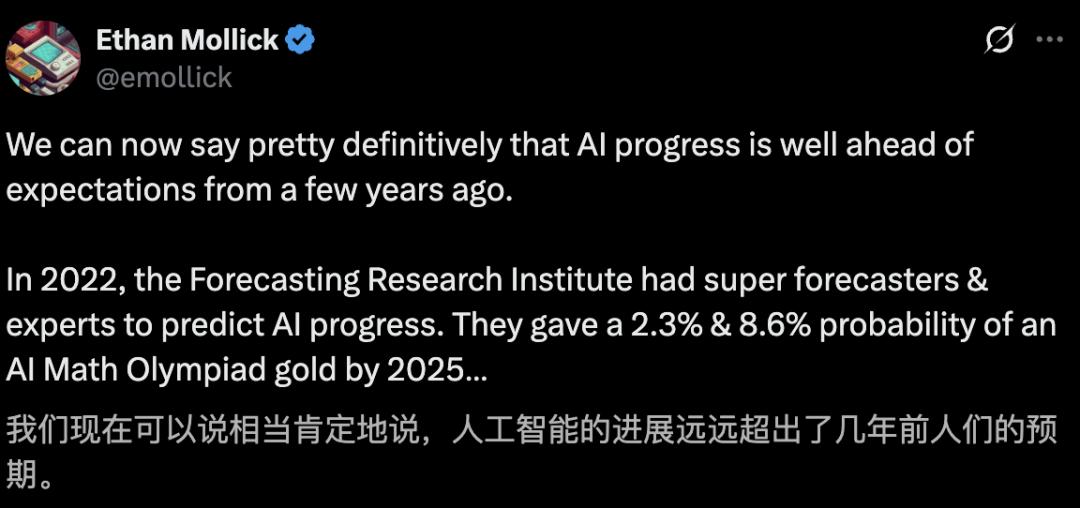
2022年,预言家放言:到2025年,押注90%的概率AI拿不下国际奥数IMO金牌。 可谓言之凿凿,信心十足。 然而仅仅两年,OpenAI与谷歌DeepMind双双击碎了悲观预言: LLM不仅提前「封神」摘金,还打破了对AI能力边界的想象。 从语言生成到逻辑推理,从通用能力到专业领域竞技,生成式AI正以惊人的速度越过每一道人类设下的「智力高墙」。 预测错得越离谱,AI给人的感觉就越震撼。 如今,几乎可以确定,AI发展速度远超过去几年的主流预期。 巨变,才刚刚开始。 预言家集体翻车 刚刚,宾大沃顿商学院教授、生成式人工智能实验室联合主任Ethan Mollick非常笃定:过去,人们低估了AI发展的速度。 他举了一个例子: 2022年,预测研究院(Forecasting Research Institute)邀请169名顶尖预测专家和学者评估AI进展。 当时,他们分别给出结论:到2025年,仅有2.3%和8.6%概率,AI能赢得国际数学奥林匹克金牌。 结果,被现实啪啪打脸:谷歌DeepMind的Gemini、OpenAI的ChatGPT,这两个通用大模型拿下了2025年国际数学奥赛的金牌。 谷歌DeepMind和 ...
三七互娱自研“小七大模型”通过生成式人工智能服务备案
Zheng Quan Shi Bao· 2025-09-03 09:17
Core Insights - Sanqi Interactive Entertainment's self-developed "Xiao Qi Large Model" has officially obtained the qualification for public operation after passing the National Internet Information Office's generative artificial intelligence service filing [1] - This model is one of the first game-specific large models in Guangdong Province to receive such approval [1]

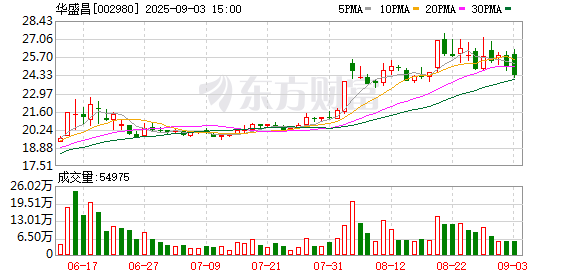
华盛昌:关于“DeepSense深度感测大模型”备案通过的自愿性信息披露公告
Zheng Quan Ri Bao· 2025-09-03 07:11
Core Viewpoint - The company Huashengchang announced that its "DeepSense Deep Sensing Model" has officially passed the filing for generative artificial intelligence services [2] Group 1 - The announcement was made on the evening of September 2 [2] - The filing indicates a significant step for the company in the field of generative AI [2]
自动驾驶论文速递 | DriveQA、闭环仿真、AIGC、世界模型等~
自动驾驶之心· 2025-09-03 03:19
Core Insights - The article discusses the development of the DriveQA dataset, which integrates driving manuals from various U.S. states with visual scenarios from the CARLA simulation environment, creating a comprehensive driving rules question-answering benchmark with 474K samples [2][3] - It highlights the advantages of DriveQA over existing multimodal datasets in covering traffic rules and improving model generalization and reasoning capabilities [2][3] Contribution Summary DriveQA Multimodal Driving Knowledge Benchmark - DriveQA consists of two components: DriveQA-T with 26K QA pairs from 51 U.S. states covering 19 question categories, and DriveQA-V with 68K images and 448K QA pairs based on CARLA simulations, supporting various evaluation tasks [3] System Evaluation of SOTA Models - Testing on mainstream LLMs (e.g., GPT-4o, Llama-3.1) and MLLMs (e.g., LLaVA-1.5) revealed good performance on basic traffic rules but significant deficiencies in numerical reasoning, complex right-of-way scenarios, and understanding traffic sign variants [3] Model Optimization Value of DriveQA - Fine-tuning with LoRA on DriveQA significantly improved accuracy in recognizing regulatory signs and making intersection decisions, demonstrating effective generalization in downstream driving tasks [3] Analysis of Model Sensitivity and Generalization Limitations - The controlled variables in DriveQA-V revealed model sensitivity to environmental factors, and negative sampling exposed weaknesses in understanding complex rules, providing insights for optimizing rule reasoning in autonomous driving AI [3] Generative AI in Autonomous Driving Systems Testing - The article summarizes the application of generative AI in testing autonomous driving systems, categorizing existing research into six core tasks related to scenario-based testing [9][11] - It reviews various generative AI models used in testing, including LLMs, VLMs, diffusion models, GANs, and VAEs, detailing their mechanisms in different testing tasks [11][14] Evaluation Resources and Benchmark Integration - A comprehensive reference framework for datasets, simulators, ADS systems, evaluation metrics, and benchmark methods in the field of ADS testing is provided [14] Limitations and Future Directions - The article identifies 27 core limitations of generative AI in ADS testing, such as hallucination issues in LLMs and computational overhead in diffusion models, suggesting targeted improvement directions [14]

谷歌(GOOG.US,GOOGL.US)在线搜索垄断案裁定出炉 无需剥离Chrome和安卓系统 盘后股价暴涨超8%
智通财经网· 2025-09-02 22:21
Core Points - The U.S. District Court Judge Amit Mehta ruled that Google does not need to divest its Chrome browser or split its Android operating system, rejecting related requests from the prosecution [1] - Google is not prohibited from paying Apple to keep its search as the default option on Apple devices, although the court retains the right to revisit this arrangement in the future [1] - Google must share certain search index data with competitors to enhance competition in the online search market and cannot enter into exclusive distribution agreements related to Google Search, Chrome, Google Assistant, and Gemini applications [1][2] Industry Context - Google is facing another antitrust lawsuit from the U.S. Department of Justice regarding its illegal monopoly in the online advertising technology sector, with a hearing scheduled for September [2] - The emergence of generative AI has shifted the dynamics of the antitrust case, with Judge Mehta noting that the rise of GenAI has changed the course of the proceedings [2] - The traditional internet search traffic has been declining due to the rise of AI chatbots like ChatGPT and Perplexity, which are seen as potential competitive threats to search engines [2] Market Reaction - Following the announcement, Alphabet's stock rose by 8.4% in after-hours trading, as the market interpreted the ruling as less severe than previously expected [3] - Apple's stock also increased by 3.6%, benefiting from its search distribution partnership with Google [3]
每天三分钟公告很轻松 | 宁德时代已耗资21.31亿元回购A股股份869万股
Shang Hai Zheng Quan Bao· 2025-09-02 16:07
Group 1: Company Actions - Ningde Times has spent 2.131 billion yuan to repurchase 8.69 million A-shares, accounting for 0.1973% of the total A-shares as of August 31, 2025, with a maximum price of 290 yuan/share and a minimum price of 231.5 yuan/share [1] - Dongxin Co. has completed its verification work and will resume trading on September 3, 2025, after being suspended due to abnormal stock price fluctuations [2] - Daoshi Technology's subsidiary plans to invest 30 million USD in Brain Family Inc. for Pre-B round preferred shares, aiming to enhance its capabilities in AI and new materials [5] Group 2: Financial and Market Developments - *ST Tianmao plans to terminate its stock listing and will provide cash options to eligible shareholders, with a cash option price set at 1.60 yuan/share [4] - Xiamen Tungsten's credit rating has been upgraded to AAA from AA+, which is expected to lower financing costs and enhance sustainable development [8] - Gree Electric's major shareholder has increased its stake by acquiring 46.38 million shares, representing 0.8281% of the total share capital, with an investment of approximately 2.099 billion yuan [12] Group 3: Market Opportunities - Eastern Tower has been selected as a candidate for a procurement project by the State Grid, with a total bid amount of approximately 137 million yuan, representing 3.27% of its audited revenue for 2024 [6] - Juhua Technology is a candidate for a procurement project with a bid amount of approximately 166 million yuan [7] - The company plans to issue H-shares and list on the Hong Kong Stock Exchange to enhance competitiveness and international presence [9]


华盛昌: 关于“DeepSense深度感测大模型”备案通过的自愿性信息披露公告
Zheng Quan Zhi Xing· 2025-09-02 13:11
Core Viewpoint - Shenzhen Huashengchang Technology Industrial Co., Ltd. has successfully registered its "DeepSense Deep Sensing Large Model" for generative artificial intelligence services, marking a significant achievement in the AI and measurement sector [1][2]. Group 1: Model Registration Details - The "DeepSense Deep Sensing Large Model" is a vertically integrated model designed for applications in instruments, professional measurement, and testing industries, providing intelligent and efficient technical support and integrated solutions for downstream enterprises and professionals [1][2]. - The model offers real-time technical support for operations, maintenance, and calibration of instruments, optimizing measurement processes and enhancing data analysis capabilities through sensor data and deep learning technology [2]. Group 2: Impact of Model Registration - The successful registration of the model signifies a milestone for the company in the "AI + Measurement Intelligence" field, enabling it to provide industry-leading measurement models and deep sensing solutions for industrial applications [2]. - This transition from a single hardware supplier to a provider of intelligent industrial monitoring solutions is expected to enhance the company's competitiveness, reduce implementation costs, and expand application scenarios [2]. Group 3: Future Development Plans - The company plans to continue strengthening product and technology research and development, integrating vertical large model technology into smart instruments and medical devices, and launching valuable new products to the market [3].
“三位一体”战略成效显著 分拆业务焕发活力
Zheng Quan Shi Bao· 2025-09-02 12:55
Core Viewpoint - SenseTime's generative AI business has shown significant growth, with revenue reaching approximately 1.816 billion yuan in the first half of the year, marking a year-on-year increase of 72.7% and accounting for 77% of total revenue [1][2] Group 1: Financial Performance - The company's revenue increased by 35.6% year-on-year, while the adjusted net loss decreased by 50% [2] - Generative AI's contribution to total revenue rose from 64% in 2024 to 77% in the first half of this year, indicating a strong focus on this segment [2] Group 2: Strategic Framework - SenseTime has adopted a "1+X" framework, where "1" represents core businesses like generative AI and computer vision (CV), and "X" includes potential high-growth businesses in vertical industries [3][5] - The "1+X" strategy aims to shift from a fragmented pricing model to a holistic delivery approach, enhancing customer experience and value [3] Group 3: Market Position and Competitive Advantage - SenseTime holds a leading position in the Chinese computer vision market with a 22.8% market share, marking its ninth consecutive year at the top [4] - The company has successfully exported CV technology to Japan, showcasing its technological leadership [4] Group 4: Future Outlook - The "X" businesses are expected to operate independently and may eventually seek external investment or even go public, enhancing their operational agility [5][6] - SenseTime plans to leverage its generative AI and visual AI capabilities as dual engines for growth, aiming to create sustained value for employees, customers, and shareholders [6]
