
绿色低碳发展

Search documents
2025世界制造业大会在安徽合肥开幕
Xin Hua She· 2025-09-20 15:17
2025世界制造业大会20日在安徽合肥开幕,全国政协副主席王勇出席开幕式并致辞。 王勇表示,习近平主席高度重视制造业发展,2019年向世界制造业大会亲致贺信。六年来,中国在习近 平主席重要贺信精神指引下,与各方秉持互利共赢理念,发挥大会平台作用,深化务实合作,为全球制 造业发展提供有力支撑。面对新一轮科技革命和产业变革,中国将坚定践行习近平主席提出的四大全球 倡议,愿同各方加强制造业等关键领域合作,打破技术、人才、数据等要素流动壁垒,推进产学研用深 度融通,突破关键核心技术,推动成果转化应用,实现绿色低碳发展,共创高质量发展美好未来。 本届大会以"智造世界·创造美好"为主题,来自全球40多个国家和地区的1000多位嘉宾参加。 (文章来源:新华社) ...
第二座5万亿之城来了,中国城市格局怎么变
Feng Huang Wang· 2025-09-20 14:46
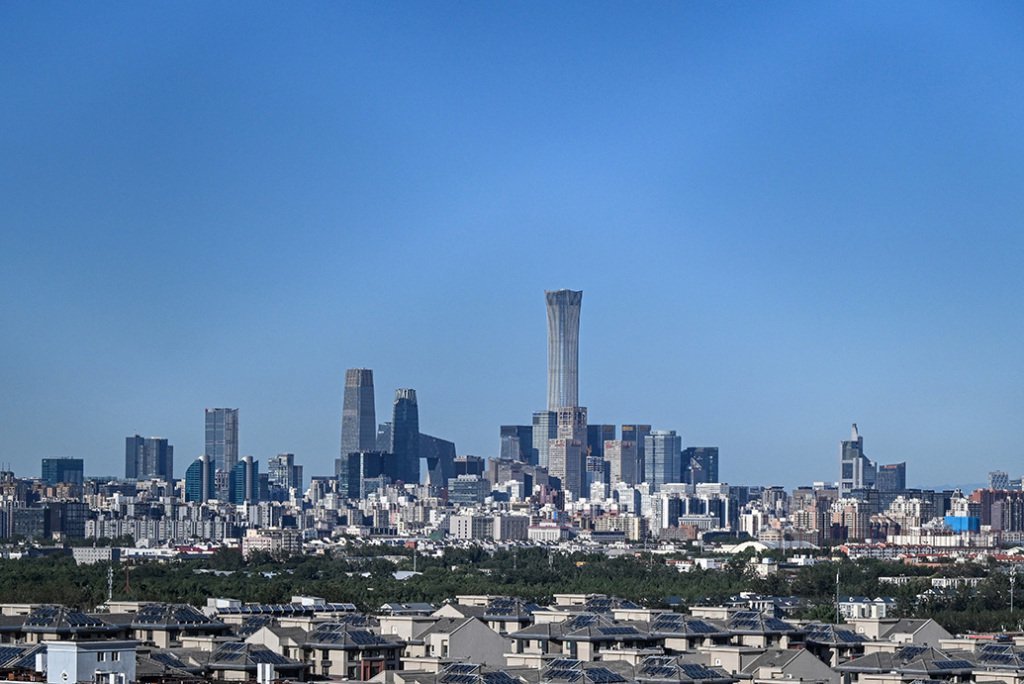
Core Insights - Beijing is set to become the second city in China to surpass a GDP of 5 trillion yuan, following Shanghai, marking a significant milestone in the urban economic landscape of China [1][3][13] - The achievement is attributed to Beijing's long-term commitment to high-quality development and continuous optimization of its economic structure [3][4] Economic Growth and Structure - In 2024, Beijing's GDP is projected to reach 49,843.1 billion yuan, with a year-on-year growth of 5.2%, and in the first half of 2025, it achieved a GDP of 25,029.2 billion yuan, reflecting a growth of 5.5% [3][12] - Over the past five years, Beijing's economic increment has been approximately 1.4 trillion yuan, equivalent to the economic total of a district like Haidian [3] - Key indicators such as energy consumption, water usage, and carbon emissions per unit GDP are among the best in the country, with energy efficiency being three times the national average [3][4] Industry Performance - The information service industry has become Beijing's largest pillar industry, consistently growing by at least 100 billion yuan annually, with a significant contribution to the city's GDP [4] - The financial sector in Beijing has assets exceeding 220 trillion yuan, accounting for about half of the national total, with a growth rate of 7.6% in 2024 [5] - Beijing is a national center for technological innovation, with over 2,400 AI companies and a core AI industry scale surpassing 300 billion yuan [5] Consumption and Investment - Consumer spending has been effectively stimulated, with expectations for total market consumption to exceed 3 trillion yuan by 2025 [6] - Fixed asset investment is projected to surpass 1 trillion yuan, indicating robust economic activity [6] Regional Development Strategy - The "Beijing-Tianjin-Hebei coordinated development" strategy has been pivotal in promoting regional economic growth, with significant reductions in non-capital functions to optimize space and resources [8][10] - Support for Xiong'an New Area has led to the establishment of over 4,000 enterprises from Beijing, enhancing the economic dynamism of the region [9] Competitive Landscape - The entry of Beijing and Shanghai into the "5 trillion club" is reshaping the competitive landscape of Chinese cities, with 27 cities now having a GDP of over 1 trillion yuan [13][14] - The focus is shifting from total GDP to quality of growth, emphasizing technological innovation, industrial upgrades, and regional collaboration as key competitive advantages [14]

新城市志|第二座5万亿之城来了,中国城市格局怎么变
Xin Lang Cai Jing· 2025-09-20 06:17
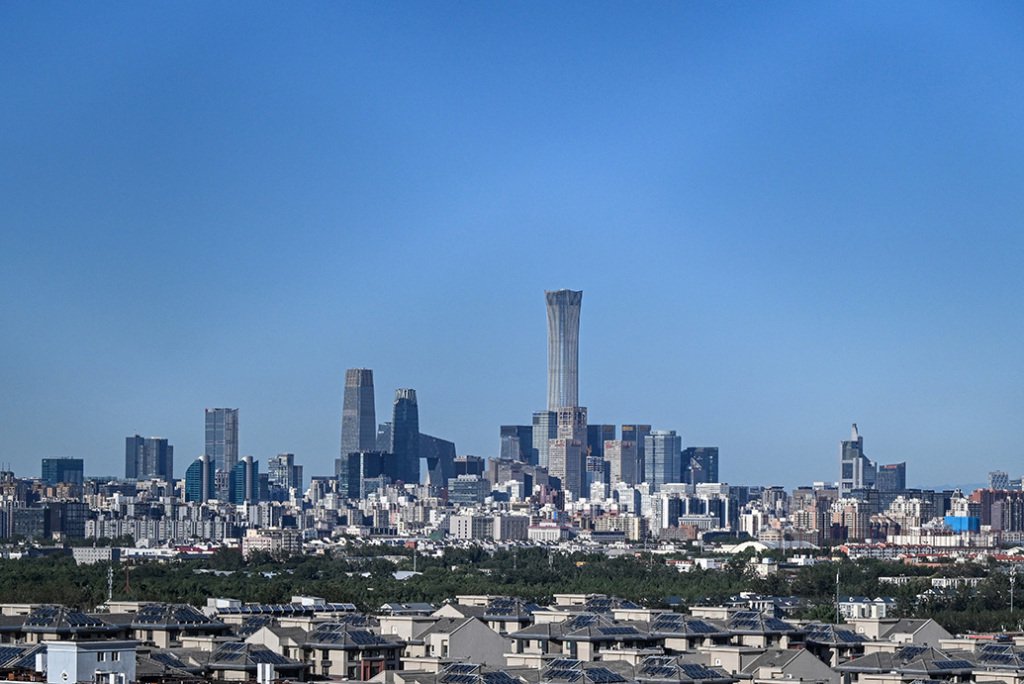
Core Insights - Beijing is set to become the second city in China to surpass a GDP of 5 trillion yuan, following Shanghai, marking a significant milestone in the urban economic landscape of China [1][14] - The achievement is attributed to long-term high-quality development and continuous optimization of the economic structure, with a projected GDP of 49,843.1 billion yuan in 2024, reflecting a growth of 5.2% year-on-year [3][14] Economic Growth and Structure - Beijing's economic growth is driven by the optimization of its industrial structure, with the information service industry emerging as the largest pillar, contributing significantly to GDP [4] - The financial sector in Beijing has assets exceeding 220 trillion yuan, accounting for about half of the national total, with a growth rate of 7.6% in 2024 [5] - The city has seen a robust increase in technology innovation, with over 2,400 AI companies and a core AI industry scale surpassing 300 billion yuan [5] Consumption and Investment - Consumer spending has been stimulated by various events, with an expected market total consumption exceeding 3 trillion yuan by 2025 [6] - Fixed asset investment is projected to surpass 1 trillion yuan, indicating strong investment activity in the city [6] Regional Development and Collaboration - The "Beijing-Tianjin-Hebei coordinated development" strategy has been pivotal in driving regional economic growth, with over 4,000 Beijing-based enterprises establishing operations in Xiong'an New Area [7][8] - Transportation infrastructure improvements have facilitated better connectivity within the region, enhancing economic interactions [9] Future Outlook - The competition among cities is shifting from total economic volume to quality, with a focus on technological innovation, industrial upgrades, and regional collaboration as key competitive advantages [14][15] - The number of trillion-yuan cities is expected to increase, with cities like Tangshan and others on the verge of breaking into the trillion-yuan GDP club [15]
江苏盐城:向绿而行 “风光”之间崛起零碳新地标
Zhong Guo Xin Wen Wang· 2025-09-20 04:25
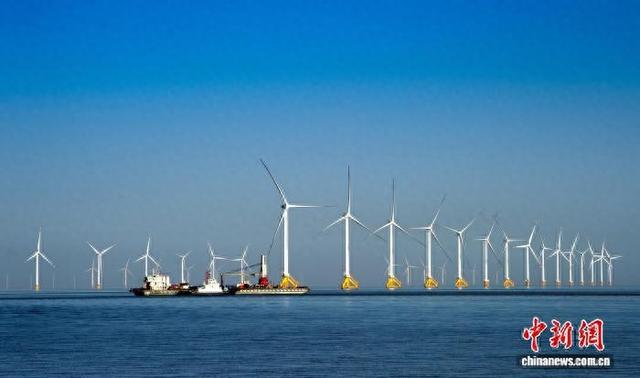
Core Insights - Yancheng, Jiangsu is emerging as a leader in green low-carbon development, leveraging wind and solar energy to establish itself as a zero-carbon landmark [1][2][3] Group 1: Wind Energy Development - Yancheng has an average wind speed of 7.6 meters per second and over 3000 equivalent full-load hours annually, making it one of the most valuable offshore wind farms globally [2] - As of July 2023, Yancheng's new energy generation capacity exceeded 20.06 million kilowatts, making it the first city in the Yangtze River Delta to reach this milestone, with offshore wind capacity at 5.6537 million kilowatts, accounting for 12.8% of the total and 7% globally [2] - The city has developed a complete offshore wind power industry chain, including R&D, manufacturing, resource development, and operation services, with major companies like Goldwind Technology and Envision Energy establishing a significant presence [2] Group 2: Zero-Carbon Industrial Parks - The Dafeng Port Zero Carbon Industrial Park features a unique "one-to-many" green electricity supply model, attracting 18 international certification agencies and supporting projects like green hydrogen and green methanol [3][4] - The Binhai Port Zero Carbon Industrial Park utilizes LNG cold energy for various applications, including food processing and aquaculture, showcasing innovative energy utilization [3] - The Sheyang Port Zero Carbon Industrial Park has integrated 700,000 kilowatts of offshore wind power and 10.8 million kilowatts of solar power, achieving an annual electricity generation of 3.4 billion kilowatt-hours [4] Group 3: Technological Innovation - The Jiangsu Coastal Renewable Energy Technology Innovation Center is working on full DC power generation technology, which can significantly increase energy output from offshore wind turbines [5] - Yancheng is establishing a high-standard green low-carbon innovation park, attracting 41 high-level scientific projects, including the National Wind Power Technology Innovation Center [5][6] - Recent innovations include the world's first "carbon-neutral" wind turbine and advancements in floating wind turbine technology, positioning Yancheng as a key player in future energy solutions [6] Group 4: Future Outlook - Yancheng is developing a replicable model for zero-carbon initiatives, with a focus on traceable green electricity and tiered utilization of cold energy [6] - The city will host the 2025 Global Coastal Forum, emphasizing its commitment to ecological and green development [6]
江苏盐城:向绿而行,“风光”之间崛起零碳新地标
Zhong Guo Xin Wen Wang· 2025-09-20 04:06
Group 1 - Yancheng, Jiangsu is emerging as a new zero-carbon landmark, leveraging wind and solar energy for green low-carbon development [1] - The city has a coastline of over 580 kilometers, featuring numerous wind turbines and solar panels, symbolizing the integration of ecology and energy [1] - Yancheng is recognized as the first city in the Yangtze River Delta to exceed 20 million kilowatts of installed renewable energy capacity, with offshore wind power capacity reaching 5.6537 million kilowatts, accounting for 12.8% of the total and 7% globally [4] Group 2 - The offshore wind farm in Yancheng has an average wind speed of 7.6 meters per second and over 3,000 equivalent full-load hours annually, making it one of the most valuable offshore wind fields globally [4] - Yancheng has developed a complete offshore wind power industry chain, including R&D, equipment manufacturing, resource development, and operation services, with major companies like Goldwind Technology and Envision Energy [4][11] - The city is home to the largest offshore wind turbine production capacity in China, with 40% of the national offshore wind turbine capacity and 20% of the blade production capacity [4] Group 3 - The Dafeng Port Zero Carbon Industrial Park has implemented a unique "one-to-many" green electricity supply model, attracting 18 international certification agencies to provide carbon footprint services [5][6] - The park has achieved a green electricity connection of 700,000 kilowatts from offshore wind and 607,300 kilowatts from onshore wind, generating an annual output of 3.4 billion kilowatt-hours [8] - The Yancheng Green Energy Port project includes ten large LNG storage tanks and a cold energy supply system that processes 2 million tons of LNG annually, showcasing innovative applications of cold energy [8] Group 4 - The Jiangsu Coastal Renewable Energy Technology Innovation Center is working on direct current wind power generation technology, which can significantly increase energy output [9] - Yancheng is establishing a high-standard green low-carbon science and technology park, attracting 41 high-level scientific projects, including the National Wind Power Technology Innovation Center [11] - The city is positioning itself in the future energy landscape with projects in green hydrogen and methanol, aiming to create a comprehensive energy system [11]

数十家跨国公司赴盐城“零碳之约” 共建“绿电+”产业生态圈
Zhong Guo Xin Wen Wang· 2025-09-20 03:31
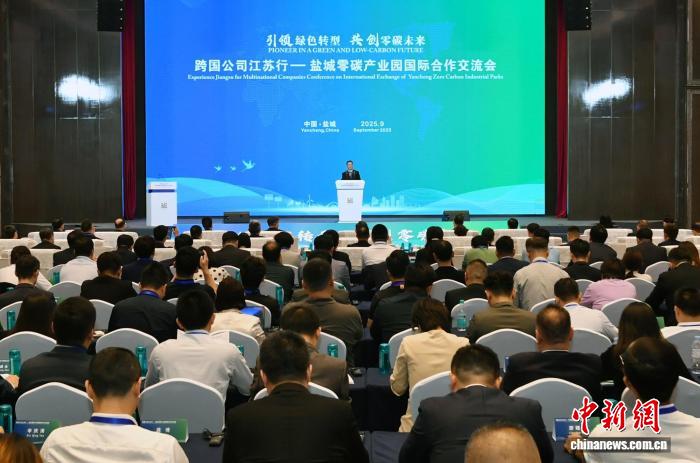
Group 1 - The international cooperation exchange meeting themed "Leading Green Transformation, Creating a Zero-Carbon Future" was held in Yancheng, Jiangsu, with representatives from 20 Fortune 500 companies and 50 multinational companies attending [1][3]. - Jiangsu is recognized as one of China's most powerful and open regions, with Yancheng being a national pilot city for carbon peaking and an important growth area for green and low-carbon development [3]. - Yancheng is actively implementing the "dual carbon" strategy and has taken the lead in constructing zero-carbon parks, focusing on diverse paths such as "green electricity + hydrogen energy" [3][4]. Group 2 - The meeting highlighted Jiangsu's role as a manufacturing and economic hub in China, with Yancheng seizing opportunities in the zero-carbon industry, and the US-China Business Council expressing willingness to enhance cooperation [4]. - The event featured speeches from executives of major companies like BASF and Total Energy, who shared their experiences in green development and expressed a desire for continued collaboration with Yancheng [6]. - The Yancheng zero-carbon industrial park's development and achievements were promoted, with 15 major projects signed on-site after in-depth discussions [6].
绿水青山间写就精彩答卷
Jing Ji Ri Bao· 2025-09-20 01:29
Core Viewpoint - The "14th Five-Year Plan" period is a milestone for ecological civilization construction and environmental protection in China, marking a transition from pollution control to comprehensive promotion of beautiful China construction [1] Group 1: Achievements in Environmental Protection - Significant progress has been made in key battles for environmental protection, including the Blue Sky Defense Battle, where 41 million households completed clean heating transformations and nearly 20 million high-emission vehicles were eliminated [2] - In the Blue Sky Defense Battle, PM2.5 concentrations in key regions are projected to decrease by 18%, 10%, and 20% by 2024 compared to 2020 [2] - The Black and Odorous Water Treatment campaign has led to the identification of over 360,000 river discharge outlets and a 90% completion rate for major river basins and key bays [2] - Over 90% of black and odorous water bodies in county-level cities have been eliminated [2] - Soil pollution prevention actions have been implemented, with over 100,000 administrative villages undergoing comprehensive environmental remediation [2] Group 2: Continuous Improvement in Ecological Environment Quality - By 2024, PM2.5 concentrations in cities at or above the prefecture level are expected to drop to 29.3 micrograms per cubic meter, a 16.3% decrease from 2020, with good air quality days reaching 87.2% [3] - The proportion of surface water with good quality has exceeded 90% for the first time, with major rivers maintaining Class II water quality for several consecutive years [3] - Public satisfaction with the ecological environment has remained above 90% for four consecutive years [3] Group 3: Green and Low-Carbon Development - China is accelerating its transition to a high-quality, green, and low-carbon development phase, with 1.12 billion kilowatts of coal power and 950 million tons of crude steel capacity undergoing ultra-low emission transformations [4] - The world's largest carbon trading market has been established, covering over 60% of national carbon emissions, alongside the initiation of a voluntary greenhouse gas reduction trading market [4] - The number of environmental impact assessments for high-emission projects has decreased, while those for wind power and new energy vehicles have increased by 44.4% and 31.3%, respectively, in the first half of the year [4] Group 4: Technological Innovation and Standards - A national platform for ecological and environmental technology achievements has been established, gathering over 5,000 outstanding technological results to support green and low-carbon development [6] - The ecological environment standard system has been improved with the completion of 32 emission standards, promoting green transformation in key industries [5] Group 5: Non-Site Law Enforcement - The application of non-site law enforcement is becoming a trend, enhancing the ability to discover and solve problems through smart enforcement [7] - The use of satellite remote sensing, infrared imaging, and drones has improved the precision and effectiveness of environmental inspections, with a 30% decrease in on-site inspections but a 10-25% increase in problem discovery rates [7]
美丽中国建设迈出重大步伐
Ren Min Ri Bao· 2025-09-20 00:37
Core Viewpoint - The Chinese government is making significant strides in promoting high-quality development through ecological and environmental protection during the "14th Five-Year Plan" period, transitioning from pollution control to comprehensive construction of a beautiful China [1] Group 1: Pollution Prevention Achievements - The quality of the ecological environment has continuously improved, with PM2.5 concentration in cities expected to drop to 29.3 micrograms per cubic meter by 2024, a 16.3% decrease from 2020 [2] - The proportion of days with good air quality reached 87.2%, an increase of 2.4 percentage points from 2020, and over 90% of surface water quality monitoring points are now rated as good [2] - Significant progress has been made in pollution control, with PM2.5 concentrations in key regions like Beijing-Tianjin-Hebei and the Yangtze River Delta decreasing by 18% and 10% respectively [2] Group 2: Green and Low-Carbon Development - The country has made advancements in green and low-carbon development, with 1.12 billion kilowatts of coal power and 950 million tons of crude steel capacity undergoing ultra-low emission transformations [3] - A carbon trading market has been established, covering over 60% of national carbon emissions, enhancing the momentum for green development [3] Group 3: Ecological Protection and Restoration - The area of ecological protection red lines has exceeded 30%, with 90% of terrestrial ecosystem types and 74% of key wildlife populations effectively protected [3] - A comprehensive ecological environment monitoring network has been established, making it the largest and most complete globally [3] Group 4: Policy and Regulatory Framework - The Ministry of Ecology and Environment has developed a robust policy framework to promote high-level protection and foster new productive forces, including a differentiated access list for various industries [4] - The number of environmental impact assessments for high-emission projects has decreased, while those for renewable energy projects have increased significantly, with wind power and new energy vehicles seeing growth rates of 44.4% and 31.3% respectively [4] Group 5: Standards and Technological Innovation - A total of 32 emission standards have been revised or established, and significant reductions in coal and cement production emissions have been achieved [5] - A national platform for ecological and environmental technology transfer has been created, consolidating over 5,000 innovative technologies to support green development [5] Group 6: Green Finance Initiatives - Over 100 projects have received financial support, amounting to 216.4 billion yuan in credit and 76.4 billion yuan in loans, promoting green and low-carbon transitions [6] - The Ministry has addressed numerous environmental issues through strict oversight, with a completion rate of over 85% for rectification tasks from the second round of inspections [6] Group 7: Climate Change and Carbon Neutrality - The Ministry is actively advancing policies for carbon peak and carbon neutrality, with the national carbon market achieving a cumulative trading volume of 714 million tons and a transaction value of 48.961 billion yuan [7] - The construction of a beautiful China is integral to the national rejuvenation, with ongoing efforts to enhance the quality of rivers and lakes [7]
生态环境质量持续改善,优良天数比例达87.2% 美丽中国建设迈出重大步伐
Ren Min Ri Bao· 2025-09-20 00:26
Group 1 - The core viewpoint of the article emphasizes the significant progress made in ecological environment protection and high-quality development during the "14th Five-Year Plan" period, highlighting a shift from pollution prevention to comprehensive construction of a beautiful China [1][2][4] Group 2 - The pollution prevention campaign has achieved new results, with PM2.5 concentration in cities expected to drop to 29.3 micrograms per cubic meter by 2024, a 16.3% decrease from 2020, and the proportion of good air quality days reaching 87.2%, up 2.4 percentage points from 2020 [2] - The blue sky protection campaign has seen PM2.5 concentrations in key regions like Beijing-Tianjin-Hebei and the Yangtze River Delta decrease by 18% and 10% respectively compared to 2020 [2] - The water quality improvement initiative has led to over 90% of surface water quality monitoring points achieving good water quality for the first time [2] Group 3 - Green and low-carbon development has made new strides, with 1.12 billion kilowatts of coal power units and 950 million tons of crude steel capacity undergoing ultra-low emission transformations [3] - The establishment of the world's largest carbon trading market covers over 60% of national carbon emissions, enhancing the internal motivation and innovative vitality for green development [3] Group 4 - A robust policy framework has been developed to promote high-level protection and foster new productive forces, with a significant decrease in environmental impact assessments for high-emission projects and an increase in assessments for renewable energy projects [4][5] - The ecological environment management system has been established, categorizing over 40,000 control units into three types: priority protection, key control, and general control [4] Group 5 - The green finance sector has been advanced, with over 100 projects receiving financial support amounting to 216.4 billion yuan, facilitating the transition to a low-carbon economy [6] - The national carbon market has seen a cumulative trading volume of 714 million tons and a total transaction value of 48.961 billion yuan as of September 18 [7]
“十四五”期间二氧化碳排放强度持续下降 我国建成全球规模最大碳排放权交易市场
Zhong Guo Zheng Quan Bao· 2025-09-19 22:22
Core Insights - The Ministry of Ecology and Environment has announced significant advancements in China's green and low-carbon development, including the establishment of the world's largest carbon emissions trading market, which covers over 60% of the country's carbon emissions [1][2] - The country has made substantial progress in pollution prevention and control, with over 41 million households completing coal-to-clean heating transformations and the elimination of black and odorous water bodies in over 90% of county-level cities [2] - The transition to a smart ecological monitoring network has achieved notable results, utilizing modern technologies such as big data and artificial intelligence to enhance monitoring efficiency and accuracy [4][5] Carbon Emissions Trading Market - China has built the largest carbon emissions trading market globally, which is now operational and covers more than 60% of national carbon emissions [1][2] - A voluntary greenhouse gas reduction trading market has been initiated, and efforts are underway to establish a product carbon footprint management system [1][2] Pollution Control Achievements - The country has completed ultra-low emissions transformations for 1.12 billion kilowatts of coal power units and 950 million tons of crude steel capacity [2] - The "Blue Sky Defense War" has seen the completion of coal governance for 41 million households, and nearly 20 million high-emission vehicles are set to be eliminated during the 14th Five-Year Plan [2] - Over 3,000 urban black and odorous water bodies have been eliminated, with a 90% elimination rate in county-level cities [2] Green Finance Initiatives - Since the beginning of the 14th Five-Year Plan, over 100 projects have received financial support, amounting to a credit of 216.4 billion yuan and loans of 76.4 billion yuan [3] - A project promotion mechanism for green finance has been established in collaboration with the People's Bank of China, with initial loan contracts reaching 14.3 billion yuan [3] Smart Monitoring Network Transformation - The ecological monitoring network has undergone a digital transformation, achieving automation in sampling, analysis, and maintenance processes [4][5] - The use of drones for surface water monitoring has reduced sampling time by over 70%, and "dark laboratories" can perform continuous analysis without human intervention, increasing efficiency by over eight times [4][5] - Intelligent upgrades to monitoring stations have reduced maintenance frequency from weekly to monthly, with a 70% decrease in human involvement [5] - The application of AI technologies has enabled precise identification of pollution sources, enhancing regulatory effectiveness [5]