
产教融合

Search documents
郑州航空港构建全链条生态 打造中部技能人才高地
Huan Qiu Wang· 2025-09-23 09:08
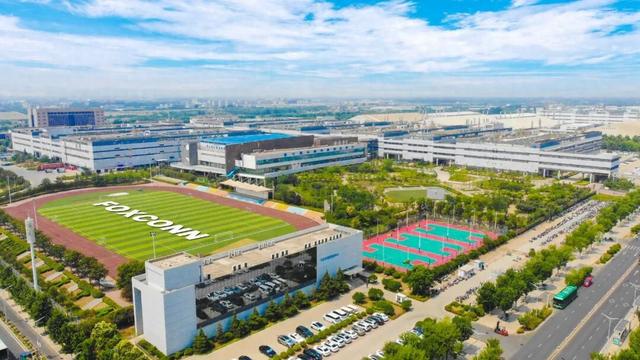
同时,该区充分发挥富士康工程师学院、比亚迪实训基地以及19家社会培训机构阵地作用,并加快建设 国家级公共实训基地、河南技师学院、中原新能源汽车工程师学院,打造集"产业链链主企业+院校+培 训机构+岗位推荐+技能升级"于一体的"强技航空港"培训品牌。 此外,该区成立全国机器人和数控机床行业、新能源汽车产业集群市域产教联合体,联络龙头企业与技 师院校共建新能源汽车、工业机器人、航空卫星、时尚创意等产业技工教育联盟,推行"订单班""现代 学徒制"等培养模式,打造"技耀航空港"产教融合品牌。 据悉,中部技能人才港总投资30亿元,占地460亩,建设高技能培训、交流研学、商娱休闲为一体的高 技能人才集聚综合体,构建"人才培养-技术研发-成果转化-产业集聚"的全链条生态体系,最终建设 成为立足港区、服务中部、辐射全国的人才港与技能创新策源地。 以第三届全国技能大赛为契机,郑州航空港打造集"比赛、展示、体验、观摩"于一体的"竞技航空港"赛 事品牌,成功举办第四届全国工业设计职业技能大赛,推动河南省职业技能大赛永久落户航空港区。 来源:环球网 9月19日至23日,由人力资源社会保障部主办,河南省人民政府承办的第三届全国技能大赛 ...

中国已进入高等教育普及化阶段:高等教育毛入学率达60.8%
Xin Jing Bao· 2025-09-23 07:49
Group 1 - The core achievement of the "14th Five-Year Plan" is the significant improvement in China's education system, with a focus on expanding and enhancing the quality of education [1][2] - The gross enrollment rate for preschool education has increased from 64.5% in 2012 to 92%, benefiting over 12 million children this year [1] - The gross enrollment rate for higher education has more than doubled from 30% in 2012 to 60.8%, marking a transition to a recognized stage of popularization [1][2] Group 2 - During the "14th Five-Year Plan," higher education has contributed 55 million talents to society, with vocational education supplying over 70% of new high-quality skilled talents in modern industries [2] - Over 75% of national natural science awards and technology invention awards, as well as over 55% of technological progress awards, have been obtained by universities [2] - The implementation of the "Strong Foundation Program" and the establishment of pilot programs in cutting-edge fields like artificial intelligence and integrated circuits are ongoing to enhance talent cultivation [2] Group 3 - Comprehensive education reforms are being promoted, with a focus on revitalizing county-level education and reducing competition and anxiety associated with exams [3] - The "New Double High" reform in vocational education aims to enhance educational capabilities and quality, aligning talent development with regional economic and social needs [3] - Graduate students in the engineering field can now apply for degrees based on innovative achievements, breaking the traditional requirement of a thesis [3]
怀进鹏:职业教育为现代产业供给了超70%的新增高技能人才
Nan Fang Du Shi Bao· 2025-09-23 06:15
Core Viewpoint - The article emphasizes the importance of vocational education in supporting China's transition from "Made in China" to "Created in China," highlighting the need for increased social recognition of vocational education [1][2]. Group 1: Current State of Vocational Education - During the 14th Five-Year Plan, vocational education has supplied over 70% of the new high-quality skilled talent for modern industries [1]. - There are currently 9,302 secondary vocational schools, 1,562 higher vocational schools, and 87 vocational undergraduate institutions in China, with a total enrollment of 34 million students, making it the largest vocational education system in the world [2][3]. Group 2: Policy and Structural Reforms - The Ministry of Education is implementing the "New Double High" reform to enhance the quality of educational institutions and the integration of education with industry, aligning talent development with regional economic needs [2]. - The recent revision of the Vocational Education Law, effective from May 1, aims to further support the development of vocational education [2]. Group 3: Quality Improvement Initiatives - The government has added 12,000 new vocational programs and established 63 vocational undergraduate schools during the 14th Five-Year Plan, with 50% of new programs focused on engineering and technology [3]. - Initiatives such as the "High-Skilled Talent Cluster Training Program" and partnerships between schools and industries are being promoted to enhance practical skills training [3]. Group 4: Social Recognition and Cultural Promotion - Efforts are being made to improve the social perception of vocational education through various activities that promote the value of labor and skills, including the establishment of vocational experience centers for younger students [3].
云岭大地上的教改脉动(深聚焦)
Ren Min Ri Bao· 2025-09-22 22:21
Core Viewpoint - Yunnan Province is implementing comprehensive educational reforms to enhance the quality of education, particularly in rural areas, aiming to provide better educational resources and opportunities for local students [8][10][15]. Group 1: Educational Reforms and Developments - The "Three-Year Action Plan for High-Quality Development of Education in Yunnan Province (2023-2025)" has accelerated educational reforms, leading to significant improvements in basic education and vocational training [8][10]. - By the end of 2024, 13,700 basic education schools and 5.73 million students will be covered by various management models, achieving coverage rates of 54.51% for schools and 68.63% for students [10]. Group 2: Local Education Initiatives - In the past, many parents in rural areas preferred sending their children to prestigious schools outside their hometowns due to a lack of quality education resources [8][9]. - The introduction of quality educational resources and personalized guidance has led to improved student performance, exemplified by a student from Zhenkang County who gained admission to Beijing Foreign Studies University [9]. Group 3: Teacher Recruitment and Training - Yunnan has recruited 3,700 senior teachers through the "Silver Age Teacher Action Plan" to enhance rural education, providing mentorship and sharing teaching experiences with younger educators [11]. - The integration of experienced teachers into rural schools has improved teaching quality and student engagement [11]. Group 4: Collaboration with Higher Education Institutions - Over 6,000 university students and teachers have been dispatched to support underprivileged schools, enhancing physical education and arts education through culturally relevant curricula [13]. - The collaboration between vocational education institutions and local industries has led to the establishment of training bases, ensuring that students acquire skills aligned with regional employment needs [14][15]. Group 5: Industry-Education Integration - The partnership between educational institutions and industries, such as the collaboration with Qilin Vocational Education Group, focuses on practical training and employment readiness for students [14]. - The "dual mentor system" at universities like Kunming University of Science and Technology has resulted in a high employment rate for graduates in local industries, fostering a cycle of talent development and technical innovation [15].
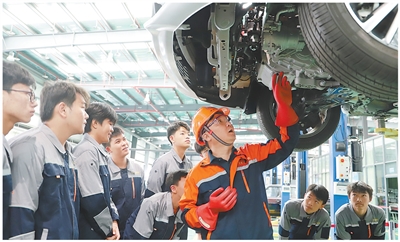
云南着力破解优质资源短缺等难题,夯实教育高质量发展根基 云岭大地上的教改脉动(深聚焦)
Ren Min Ri Bao· 2025-09-22 22:08
Core Insights - Yunnan province is addressing educational challenges such as resource shortages and student outflow by implementing comprehensive reforms to enhance the quality of education [1][2][3] Group 1: Educational Reforms and Developments - The "Three-Year Action Plan for High-Quality Education Development in Yunnan Province (2023-2025)" has accelerated educational reforms, expanding the coverage of quality educational resources and improving vocational education [1] - The introduction of quality educational resources and personalized guidance has led to significant improvements in student performance, exemplified by a student from Zhenkang County who gained admission to Beijing Foreign Studies University [2][3] - Yunnan's educational reforms include increasing investment, enhancing teaching quality through training, and establishing resource-sharing mechanisms with prestigious schools [3][4] Group 2: Teacher Recruitment and Training - Yunnan has initiated programs to attract experienced teachers back to rural schools, enhancing the quality of education through mentorship and innovative teaching methods [5][6] - The "Silver Age Teacher Action Plan" has recruited 3,700 senior teachers to support rural education, while university students are also contributing through volunteer teaching programs [6][7] Group 3: Vocational Education and Industry Collaboration - Yunnan's vocational education is increasingly aligned with regional industry needs, with partnerships between educational institutions and companies to provide practical training and skill development [8][9] - The implementation of a dual-mentor system in universities has resulted in high employment rates for graduates, particularly in remote areas, fostering a strong link between education and local economic development [9]
中国移动河北公司:深化产教融合,打造智慧场景,以数智力量服务教育强国建设
Ren Min Ri Bao· 2025-09-22 21:51
Group 1 - The core viewpoint emphasizes the role of China Mobile Hebei in driving digital education development and collaboration with higher education institutions to enhance the integration of teaching, research, and industry [1][2] - China Mobile Hebei has developed an agricultural remote sensing model in collaboration with Hebei Agricultural University, utilizing over 1000GB of high-resolution satellite data to identify crop distribution and assess growth conditions, achieving a 40-fold efficiency improvement over traditional methods [1] - The company is implementing digital transformation projects at Hebei Agricultural University and Hebei Finance University, incorporating technologies like 4K video interaction and VR immersive teaching to enhance practical learning experiences [2] Group 2 - A collaborative initiative named "Honghu Zhan Chi" has been launched by China Mobile Hebei in partnership with six universities to create a talent development plan, integrating enterprise resources with academic training in fields like big data and artificial intelligence [2] - The "Wutong·Honghu" platform offers a comprehensive talent cultivation system, including training, certification, and employment services, with nearly 200 premium courses and over 50,000 registered students [2]

“智汇经开·产教融合”专场活动举办 校企携手共筑人才新高地
Qi Lu Wan Bao Wang· 2025-09-22 10:56
Core Viewpoint - The event aims to create an efficient platform for the integration of industry and education, addressing the urgent demand for high-quality technical talents in emerging industries within the Binzhou Economic and Technological Development Zone [1][3]. Group 1: Industry Development and Talent Demand - The Binzhou Economic and Technological Development Zone is undergoing a critical transformation, with rapid growth in emerging industries such as high-end aluminum, new energy vehicle components, and biomedicine, leading to an increasing demand for skilled technical talents [3]. - The event featured a promotional video showcasing the development of the zone's industries, innovation ecosystem, and talent policies, providing attendees with a comprehensive understanding of the local industrial landscape [3]. Group 2: Company Engagement and Recruitment - The event included presentations from industry professionals, such as the quality and technical leaders from Shandong Hongwen Automotive Chassis System Co., who shared insights on industry technology trends and talent needs, offering students valuable career development advice [4]. - A live recruitment session featured over thirty key enterprises from the development zone, offering numerous quality job positions across various fields, including intelligent manufacturing, new materials, and biomedicine, which attracted many students to engage and submit resumes [5]. - The initiative serves as a practical measure to promote the integration of industry and education, optimize the talent ecosystem, and will continue to deepen school-enterprise cooperation while enhancing policy support for talent development in the region [5].
产教深度融合启新程 数字商业共绘职教蓝图
Xin Hua Ri Bao· 2025-09-22 07:05
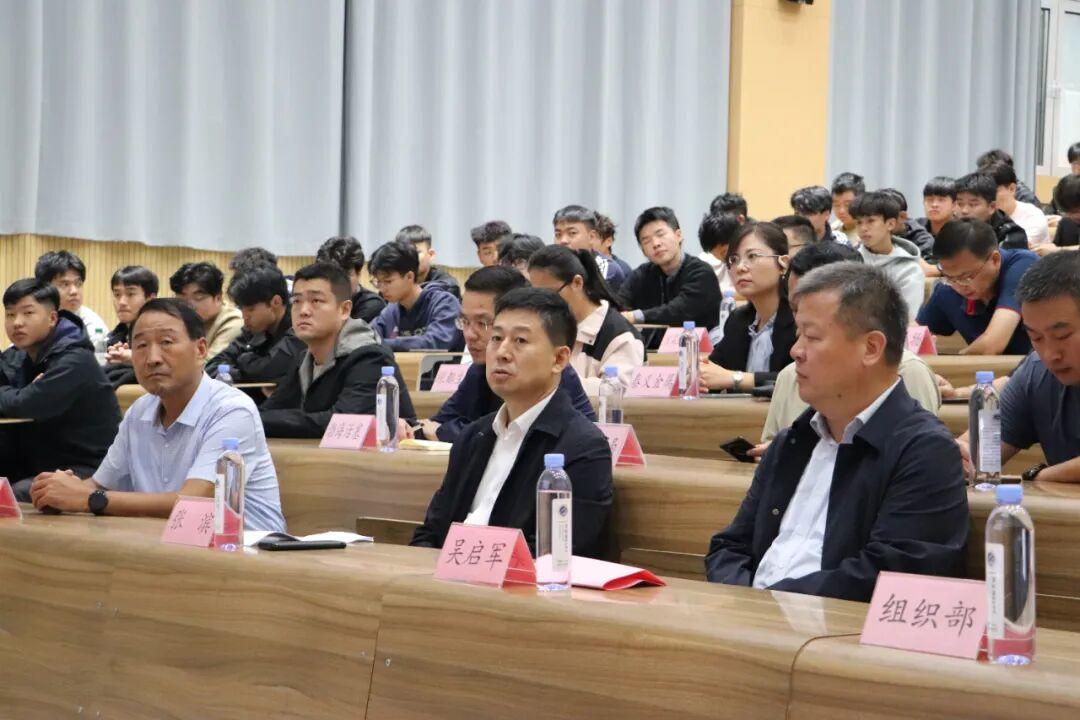
Core Viewpoint - The conference emphasized the importance of integrating vocational education with industry development, particularly in the context of digital transformation in education [1] Group 1: Conference Highlights - The event was hosted by the National Digital Business Industry-Education Integration Community and focused on new models of industry-education integration in the digital business sector [1] - Experts discussed the need to shift from superficial connections to a restructured mechanism for industry-education integration, advocating for joint standard-setting, resource sharing, and collaborative innovation [1] - The conference showcased case studies that provided replicable and promotable practices for industry-education integration [1] Group 2: Educational Standards and Development - The release of three standardization projects, including international professional teaching standards and curriculum, marked a significant step towards standardization and internationalization in digital business education [1] - The conference highlighted the role of vocational education in supporting national strategies and enhancing talent cultivation quality to bolster the digital economy and regional industrial upgrades [1] - The event demonstrated the "Jiangsu practice" of industry-education integration and explored new pathways for high-quality development of vocational education in the context of building a strong educational nation [1]
优胜劣汰通道开启 民办高校加速洗牌
Zhong Guo Qing Nian Bao· 2025-09-21 22:45
今年高校招生季,民办本科高校招生经历了"冰火两重天"。一方面,少数新建"新型研究性大学"招生分 数奇高,甚至超过一些"双一流"建设高校和专业;另一方面,不少传统民办本科高校招生遇冷,引起人 们对民办高校发展前景的担忧。据报道,少部分省份民办本科高校在第一轮招生后缺额严重,有的高校 经过多次征集补录仍难以完成招生计划,有的甚至被迫取消了文化课分数限制。 目前,我国本科教育体量巨大,出现以上两种情况的高校均为少数,各种夸大其词的议论并不完全可 信。然而,从历史、现实和未来的维度认识,这两种情况都体现了我国本科教育发展的新趋势,对民办 乃至公办本科高校发展前景的担忧并不多余。面对来自人口、技术、政策、产业等方面的重大变化,民 办本科高校进入优胜劣汰的发展通道,转型升级成为必然选择。 本科高校生源供给面临多重挑战 我国民办本科教育从20世纪90年代中期开始出现,2000年以后进入快速发展轨道。2024年全国教育事业 发展统计公报显示,全国共有民办高校803所,占全国高校总数比例的25.75%。民办高校在普及高等教 育、探索办学和管理体制改革、创新人才培养模式等方面发挥了重要作用。近年来,随着新出生人口减 少和政策规范 ...
2025专精特新企业高质量发展大会举办 八大平台联动推介“大兴机遇”
Sou Hu Cai Jing· 2025-09-21 02:20
人民网北京9月21日电(记者池梦蕊)9月20日,以"兴聚新国门,专精向未来"为主题的2025专精特新企业 高质量发展大会在大兴区中建之星举行。大会汇聚了全国顶尖的专精特新"小巨人"企业代表、知名专家 学者,共同打造推动产业与资源融合、区域与企业共赢的平台。 会上还举行了企业入驻兴丰街道的集中签约仪式。"北京专精特新企业商会青年分会""专精特新大兴会 客厅"也正式揭牌。 此外,与会嘉宾分别围绕宏观经济趋势、人工智能赋能、融资破局、产教融合、品牌出海等议题作专题 分享,为专精特新企业提供了前沿的战略思考和实战路径。 本次大会创新设置了八大系列推介环节,大兴区各核心产业重点企业负责人轮番上阵,以商招商:大兴 国际机场临空经济区的全球资源配置优势;生物医药产业基地的全产业链支撑能力;国际氢能示范区的 先行先试政策;北京中日创新合作示范区的国际开放动能;北京商业航天产业基地的星辰大海梦想;北 京数字经济示范区的数字出海机遇;永定湾的宜居宜业生态;采育数字时尚小镇的高品质的时尚空间。 通过系列推介,全面地呈现了大兴区的政策红利、区位优势、产业配套和应用场景,充分展示了全区一 流的营商环境和广阔的发展前景。 大兴区工商联主 ...