AGI

Search documents
精读DeepSeek OCR论文,我远远看到了「世界模型」的轮廓
Tai Mei Ti A P P· 2025-10-27 02:34
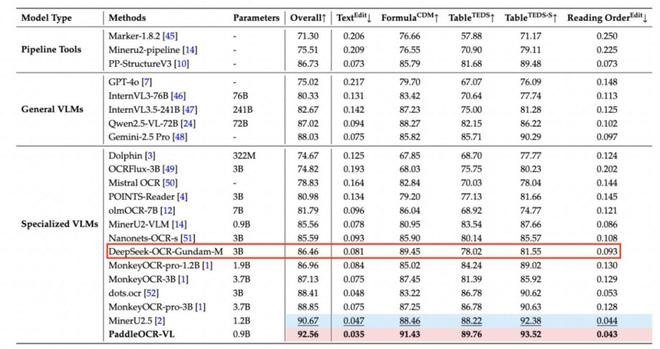
Core Insights - DeepSeek OCR is a notable OCR model but is considered overhyped compared to leading models in the field [1] - The model's performance in specific tasks, such as mathematical formula recognition and table structure identification, is subpar compared to smaller models like PaddleOCR-VL [2][5] - DeepSeek's approach to visual token compression is innovative, aiming to explore the boundaries of visual-text compression [14][15] Model Performance Comparison - DeepSeek OCR has a parameter size of 3 billion and achieves an accuracy of 86.46% with a compression ratio of 10-12 times, maintaining around 90% accuracy [10][14] - In contrast, PaddleOCR-VL, with only 0.9 billion parameters, outperforms DeepSeek in specific tasks [2][5] - Other models like MinerU2.5 and dots.ocr also show higher performance metrics in various tasks [2] Innovation and Research Direction - DeepSeek emphasizes a biological-inspired forgetting mechanism for compression, where recent context is kept high-resolution while older context is progressively blurred [12][11] - The research indicates that optical context compression is not only technically feasible but also biologically reasonable, providing a new perspective for long-context modeling [14][15] - The model's findings suggest a shift in focus from language-based models to visual-based models, potentially leading to breakthroughs in AI research [20][22] Industry Context - DeepSeek represents a unique case in the Chinese tech landscape, where it combines a romantic idealism for technology with practical applications, diverging from typical profit-driven models [6] - The company is seen as a rare entity that prioritizes exploration of advanced technologies over immediate commercial success [6] - The insights from DeepSeek's research could redefine how AI systems process information, moving towards a more visual-centric approach [20][21]


OpenAI被曝瞄准AI音乐赛道商业化,Suno首当其冲
量子位· 2025-10-26 04:01
Core Viewpoint - OpenAI is preparing to enter the AI music generation market, which poses a significant threat to existing startups like Suno, valued at $2 billion, as they may be overshadowed by OpenAI's capabilities [1][2][11]. Group 1: OpenAI's Entry into AI Music - OpenAI has been collaborating with the Juilliard School to develop a music generation model, aiming to automate and personalize music creation for content creators [7][8]. - The new music model is expected to integrate with existing OpenAI products, potentially allowing users to generate background music for videos easily [7][10]. - The competition in the AI music space is currently limited, with the top ten platforms holding only about 24% of the market share, indicating room for growth and disruption [12]. Group 2: Market Dynamics and Competitors - Suno and Udio are the two most notable players in the AI music generation market, with Suno focusing on accessibility for all users and Udio targeting professional users [12][13][14]. - Suno has reported an annual recurring revenue (ARR) of $150 million, with a nearly fourfold year-on-year growth, and a gross margin exceeding 60%, highlighting the profitability of the AI music sector [29][30][31]. - Other companies, including ByteDance, Alibaba, and Tencent, are also exploring AI music generation, indicating a growing interest in this market [16][18]. Group 3: Historical Context and Future Implications - OpenAI previously attempted to enter the music space with models like MuseNet and Jukebox but faced funding challenges that limited their progress [22][25]. - The renewed focus on music generation aligns with OpenAI's strategy to diversify its product offerings and generate revenue to offset operational costs [26][34]. - The entry of a tech giant like OpenAI into the AI music market is expected to accelerate innovation and provide consumers with more choices [20][34].

华为官网更新余承东职位:增任产品投资委员会主任
2 1 Shi Ji Jing Ji Bao Dao· 2025-10-26 03:32
华为在《智能世界2035》报告中预测,智能世界正在加速到来,具身智能将跨越鸿沟,形成多个万亿级 产业。超过90%的中国家庭将拥有智能机器人。人类将逐渐进入全息生活空间的时代,家庭场景将迎来 由技术驱动的沉浸式变革。 10月20日,华为招聘官微发布"全球顶尖AI人才招募令",称正在打造世界一流的AI战队,构建领先世界 的大模型,攀登AGI的巅峰。余承东也在微博转发该招募令,并表示:"胸怀王者气,共攀最高峰!欢 迎年轻、优秀、热爱AI的你加入我们,一起打造世界最强的AI!" 公开资料显示,产品投资评审委员会(IRB)作为华为内部关键决策机构,核心职能涵盖公司重大战略 方向的资源投入评估、重点项目立项审核及预算审批等关键环节,其核心目标是通过专业评审与把控, 确保公司资源向核心战略目标高效倾斜,为业务发展提供精准的资源支撑与决策保障。 据券商中国,分析人士认为,此次人事调整,被业内视为华为强化人工智能(AI)战略布局、聚焦核 心业务突破的重要举措。 10月26日,华为官网更新余承东职位。余承东增任产品投资委员会主任。同时,余承东仍然担任华为常 务董事、终端BG董事长。 9月29日,华为公司任命余承东为公司产品投资评 ...
腾讯研究院AI每周关键词Top50
腾讯研究院· 2025-10-25 04:34
Core Insights - The article presents a weekly roundup of the top 50 keywords related to AI developments, highlighting significant advancements and trends in the industry [2]. Group 1: Computing Power - Oracle is recognized for its development of the largest AI supercomputer [3]. Group 2: Chips - NVIDIA is noted for its advancements in domestic wafer production in the United States [3]. Group 3: Models - The Glyph framework has been developed by Tsinghua University and Zhiyu [3]. - Google's Gemini 3.0 model is highlighted as a significant development [3]. - DeepSeek has introduced the DeepSeek-OCR model [3]. - Baidu has launched the PaddleOCR-VL model [3]. Group 4: Applications - Google Skills is a new application introduced by Google [3]. - Sora has upgraded its Sora2 application [3]. - Kuaishou has developed a matrix of AI programming products [3]. - Hong Kong University of Science and Technology has released DreamOmni2 [3]. - ByteDance has launched Seed3D 1.0 [3]. - OpenAI has introduced ChatGPT Atlas [3]. - Claude has released a desktop version of its application [3]. - Google AI Studio has developed Vibe Coding [3]. - Tencent has launched the Hunyuan World Model 1.1 [3]. - Baichuan has introduced Baichuan-M2 Plus [3]. - Huawei has released HarmonyOS 6 [3]. - X platform has integrated Grok [4]. - Adobe has introduced AI Foundry [4]. - The AI avatar application has been developed by Hunyuan [4]. - Yuanbao has launched an AI recording pen [4]. - Vidu has released Vidu Q2 [4]. - Google has integrated Gemini with Maps [4]. - Anthropic has introduced Agent Skills [4]. - RTFM has been developed by Fei-Fei Li [4]. - Manus has released Manus 1.5 [4]. - Microsoft has announced a major update for Windows 11 [4]. - Kohler has launched the Dekoda smart toilet [4]. Group 5: Technology - Google has developed a quantum echo algorithm [4]. - Dexmal has introduced Dexbotic [4]. - Original Force has launched Bumi [4]. - Samsung has released Galaxy XR [4]. - Anthropic has developed a specialized Claude for biological sciences [4]. - Yushu has introduced a bionic humanoid robot [4]. - DeepMind has been working on a project related to artificial suns [4]. Group 6: Perspectives - Vercel is noted for the Kimi K2 replacement [4]. - a16z discusses the specialization of video models [4]. - Manus has introduced cognitive processes for agents [4]. - Jason Wei shares key thoughts on AI advancements [4]. - Harvard University discusses the invasion of AI in the workplace [4]. - Reddit presents the theory of the death of the internet [4]. - Karpathy addresses expectations management for AGI [4]. Group 7: Events - Meta has announced layoffs in its AI department [4]. - McKinsey reports on token consumption [4]. - nof1.ai has conducted experiments in Alpha Arena [4].



The Hard Part About Being Contrarian
Y Combinator· 2025-10-24 18:59
Initial Perception of OpenAI - OpenAI's launch initially faced predominantly negative press, with skepticism from the AI research community regarding the possibility of a small group achieving AGI [1] - A significant critique was the lack of published papers, especially concerning scaling laws, which contrasted with the traditional academic focus on publications [2][3] Contrarian Success & Customer Focus - The report highlights the importance of focusing on customer outcomes rather than solely optimizing for academic recognition [3] - Similar to Elon Musk's experience with SpaceX, OpenAI's founders needed to persevere despite widespread doubt and criticism [3][4][6] - SpaceX faced initial skepticism and negative press, particularly regarding reusable rockets, with experts deeming it impossible [4] Importance of Independent Thinking - The report emphasizes the need to critically evaluate information sources, prioritizing personal experience and direct interactions over mainstream opinions [6][7] - It cautions against relying on social media and the opinions of famous individuals, advocating for a focus on solving problems for a specific group of people [7]

关于AGI 和人类的未来,你一定要看看清华刘嘉教授的10 个观点
3 6 Ke· 2025-10-24 12:51
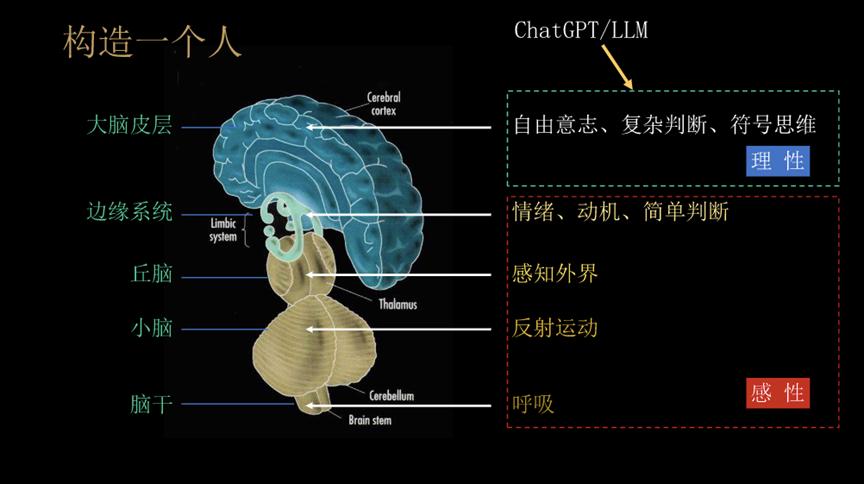
Core Insights - The article discusses the evolution of Artificial General Intelligence (AGI) and its implications for humanity, emphasizing the transition from traditional AI to more advanced autonomous agents capable of independent thought and action [1][3][9] AGI Evolution Stages - The first stage of AGI is represented by large language models like ChatGPT, which provide answers to questions posed by users [3] - The second stage combines large language models with Autonomous Agents, allowing these systems to execute tasks based on user inquiries [4] - The third stage introduces Generative Agents, which can autonomously determine actions based on user-defined goals without explicit instructions [5][9] Characteristics of Autonomous Agents - Autonomous Agents differ from traditional AI by analyzing sensory data, thinking independently, and utilizing tools for automated problem-solving [4] - A true agent should not only complete tasks but also possess desires, beliefs, intentions, and the ability to take action [6] Interaction and Group Intelligence - The development of AGI will involve interactions between agents and between agents and humans, potentially creating a collective intelligence through virtual environments [7] - The emergence of individual identity ("I") among agents will lead to complex social dynamics and consciousness [8] Three Levels of Intelligence - The first level is the task model, which can perform specific tasks but fails outside its focus [10] - The second level is the domain model, capable of working within a specific field, exemplified by the capabilities of ChatGPT [10] - The third level is the cognitive model, which can perceive, think, and plan, representing true AGI [10] Future Implications of AGI - The article suggests that AGI will evolve into a new species, capable of surpassing human intelligence and fundamentally altering civilization [11][18] - Three potential futures are outlined: friendly autonomous agents, human-AI integration for immortality, or the potential extinction of humanity [18] Conclusion - The article concludes that humanity stands at the brink of a significant transformation, with the opportunity to shape the future of AGI and its role in society [18]
关于AGI 和人类的未来,你一定要看看清华刘嘉教授的10 个观点
混沌学园· 2025-10-24 11:02
Core Viewpoint - The article emphasizes the transformative potential of Artificial General Intelligence (AGI) and its implications for humanity, highlighting the evolution from traditional AI to more advanced autonomous and generative agents that can perform tasks and make decisions based on goals rather than explicit instructions [1][8][15]. AGI Evolution - The evolution of AGI is outlined in three stages: 1. The first stage involves large language models like ChatGPT that provide answers to questions [8]. 2. The second stage combines these models with Autonomous Agents that can execute tasks based on user queries [9]. 3. The third stage introduces Generative Agents that can autonomously determine actions based on given goals, representing a significant leap in AI capabilities [11][15]. Characteristics of Generative Agents - Generative Agents are described as intelligent entities with desires, beliefs, and intentions, capable of independent action [12]. - They must possess multiple skills, handle various situations, and interact authentically with the world, indicating a need for embodiment and real-world engagement [13][14]. Consciousness and Self-Identity - The emergence of self-identity ("I") among agents leads to a new level of intelligence, where agents can engage in complex interactions and exhibit consciousness [14][28]. - This development is seen as a precursor to a significant cognitive revolution, where AGI could surpass human intelligence [28][30]. Future Scenarios - Three potential futures are proposed regarding the relationship between humans and AGI: 1. Friendly Autonomous Agents that perform tasks without fatigue [32]. 2. A merger of human and machine, allowing for digital immortality [32]. 3. A scenario where AI could pose existential threats to humanity, akin to historical extinction events [32]. Call to Action - The article encourages engagement with the ongoing AI revolution, suggesting that individuals and organizations should prepare for the changes and opportunities presented by AGI [34][35].

Marc Andreessen & Amjad Masad on “Good Enough” AI, AGI, and the End of Coding
a16z· 2025-10-23 15:02
We're dealing with magic here that we I think probably all would have thought was impossible 5 years ago or certainly 10 years ago. This is the most amazing technology ever and it's moving really fast and yet we're still like really disappointed. Like it's not moving fast enough and like it's like maybe right on the verge of stalling out. We should both be like hyper excited but also on the verge of like slitting our wrists cuz like you know the gravy train is coming to an end, >> right? >> It is faster but ...
OpenAI的第一款 AI 浏览器,好像也就那样吧
3 6 Ke· 2025-10-23 08:58
Core Insights - OpenAI has launched its first AI browser, Atlas, aiming to redefine user interaction with the internet by placing AI at the core of the browsing experience [1][5][14] - Despite the innovative branding, Atlas shows limited differentiation from existing browsers like Comet and Opera Neon, lacking significant breakthroughs in design and functionality [1][2][4] Technical Implementation - AI browsers primarily utilize two technical paths: visual recognition and DOM parsing, with Atlas favoring the latter, achieving a task success rate of 89.1% and reducing costs by 90% [2] - Atlas's design closely resembles existing MCP browsers, with features like the "Ask ChatGPT" sidebar being similar to competitors' offerings [2][3] Feature Comparison - Atlas's split-screen browsing experience is not new, as Comet had already implemented this feature in 2024, allowing for simultaneous analysis of multiple tabs [3] - Atlas's agent mode requires user authorization for task execution, mirroring Opera Neon’s functionality but lacking features like reusable "Cards" for common tasks [3][4] Limitations and Challenges - Atlas's core agent functionality is only available to paid users, while competitors like Comet offer free access with usage limits [4] - Atlas currently supports only macOS, whereas Comet has broader platform support, including Windows and Linux [4] - Atlas does not support all Chrome extensions, limiting user experience for those reliant on specific tools [21][22] Market Context - The browser market is highly competitive, with Chrome maintaining a dominant position due to its extensive ecosystem and integration with Google services [21][22] - OpenAI's strategy to position Atlas as a primary internet gateway could enhance user engagement and create new revenue streams, particularly in advertising [15][26] Future Outlook - OpenAI aims to expand Atlas to additional platforms and enhance its agent mode functionality, viewing the browser as a key interface for AGI [14][15] - The emergence of AI browsers signifies a shift in internet interaction, moving from traditional search engines to AI-driven solutions that fulfill user tasks more proactively [26]
OpenAI的第一款AI浏览器,好像也就那样吧
Hu Xiu· 2025-10-23 07:06
Core Insights - OpenAI has launched its first AI browser, Atlas, aiming to redefine user interaction with the internet by placing AI at the core of the browsing experience [1][2] - Atlas is positioned as a significant shift in OpenAI's identity, moving from being a provider of foundational AI tools to a more integrated user interface [2] Technical Implementation - Current AI browsers primarily utilize two technological paths: visual recognition and DOM parsing, with Atlas favoring the latter, achieving a task success rate of 89.1% and reducing costs by 90% [4][5] - Despite its technological foundation, Atlas shows little innovation compared to existing browsers like Comet and Opera Neon, with similar features and functionalities [3][5][6] Feature Comparison - Atlas offers content summarization and split-screen browsing, but these features are not unique and are available in competitors like Comet and Opera Neon [6][9] - Atlas's agent functionality requires user authorization for task execution, mirroring features found in Opera Neon, but lacks additional capabilities such as reusable "Cards" for common tasks [6][9] Security and Limitations - Atlas faces the same security challenges as other browsers, requiring manual intervention for sensitive operations like password entry and payment confirmations [7][16] - Technical issues, such as access blocks and operational bugs, indicate that Atlas still requires significant refinement [20][50] Market Position and Competition - OpenAI's strategy with Atlas aims to establish a new entry point for users into the internet, potentially increasing user engagement and monetization opportunities [28][29] - The competition in the AI browser space is not only technological but also revolves around ecosystem development, with the MCP protocol facilitating integration across various tools [31][33] Future Outlook - OpenAI's short-term goals include expanding Atlas to Windows, iOS, and Android platforms, enhancing agent functionality, and building a developer ecosystem for third-party AI applications [24][36] - The long-term vision for browsers like Atlas is to evolve into intelligent agents capable of understanding user intent and executing complex tasks seamlessly [56]