合成生物学

Search documents
麦角硫因陷多重争议,究竟是有效产品还是营销噱头?
2 1 Shi Ji Jing Ji Bao Dao· 2025-06-06 08:37
Core Viewpoint - The controversy surrounding ergothioneine, a compound linked to anti-aging, has intensified following accusations of it being a "fake drug" due to lack of sufficient evidence for its approval as a medicine. Companies like Kelun Pharmaceutical and its subsidiary have defended ergothioneine's classification as a health management tool rather than a drug, citing international studies that support its potential benefits [1][2][4]. Industry Overview - The global market for ergothioneine is projected to exceed $810.4 million by 2027, with a compound annual growth rate (CAGR) of 36.17% from 2021 to 2027. The raw material market for ergothioneine is also expected to grow from $6.3 million in 2024 to $16.1 million by 2031 [1]. - Companies such as Huaxi Biological and Chuaning Biological are accelerating their production capabilities through synthetic biology to meet the rising demand for high-purity ergothioneine [2][8]. Product Positioning and Pricing - Ergothioneine is marketed as a dietary supplement rather than a drug, with Kelun's product priced at 1499 yuan for 60 capsules, while competitors like Jinsan Biological offer similar products at 539 yuan. Kelun justifies its pricing based on Japanese market standards and production costs [4][5]. - The compound is recognized as a fifth-generation antioxidant and is used in both topical and oral applications, often combined with other ingredients like hyaluronic acid and collagen peptides [3][6]. Scientific Research and Development - Despite claims of ergothioneine's anti-aging effects, there are gaps in scientific understanding regarding its mechanisms and clinical validation. Research indicates that while ergothioneine shows promise, further studies are needed to explore its effects and applications in medicine [2][8]. - Companies are investing in research to better understand ergothioneine's potential, with Huaxi Biological planning to invest 1.35 million yuan in related projects [7]. Production and Supply Chain - The production of ergothioneine has historically faced challenges due to low yields from natural sources, but advancements in synthetic biology are enabling domestic companies to increase production capacity. For instance, Chuaning Biological plans to establish a facility capable of producing 0.5 tons of ergothioneine annually [6][8]. - The majority of ergothioneine is produced through microbial fermentation or enzyme catalysis, with domestic firms achieving over 99% purity in their products [8].


国内“世界一流建设高校”中首个合成生物学院成立!
仪器信息网· 2025-06-06 06:03
导读: 我国首个合成生物学院在天津大学揭牌,将聚焦科研突破与人才培养,推动合成生物学发展。 特别提示 微信机制调整,点击顶部"仪器信息网" → 右上方"…" → 设为 ★ 星标,否则很可能无法看到我 们的推送。 近日, 天津大学合成生物与生物制造学院正式揭牌。据悉,这是我国"世界一流建设高校"中 首个合成生物学院 ,也是天津大学统筹推进教育科技人才体制机制一体改革的重要举措。 新成立的合成生物与生物制造学院将整合多学科资源,用人工智能赋能教学科研,搭建全方位 的人才培养与科研创新平台。 科研方面,学院力争实现前瞻性基础研究和引领性原创成果的重 大突破,在部分方向实现领跑;产出一批共性关键技术、前沿引领技术、颠覆性创新技术,为 我国医药健康、能源材料、生物育种和环境治理等提供科技支撑。人才培养方面,学院突破学 科限制,建立完善的专业动态调整机制,设立交叉学科课程及实践课题,为学生参与跨学科学 习和研究创造条件;还将探索"以任务带学科,以任务聚人才"的培养模式,通过重大任务和重 点项目,开展研究性项目式教学,所有学生都将参与科研项目训练,构建多学科贯通的知识体 系,形成多维能力;同时,将汇聚全球优质资源,为拔尖学 ...


合成生物学周报:华东师大实现聚砜塑料低能耗升级回收,山东支持中碳和聚乳酸纤维项目
Huaan Securities· 2025-06-06 01:23
Investment Rating - The industry investment rating is "Overweight" [2] Core Insights - The report highlights the ongoing active research in life sciences and the global wave of biotechnology revolution, which is accelerating integration into economic and social development, providing new solutions to major challenges such as health, climate change, resource security, and food security. The National Development and Reform Commission has issued the "14th Five-Year Plan for Bioeconomic Development," indicating a trillion-yuan market potential in the bioeconomy [5][12]. Summary by Sections 1. Industry Market Performance - The synthetic biology sector saw an increase of 1.13% in the week of May 26 to May 30, 2025, outperforming the Shanghai Composite Index by 1.16% and the ChiNext Index by 2.53% [6][20]. 2. Company Business Progress - Shanghai Puranwei and the Shanghai Academy of Agricultural Sciences signed a strategic cooperation agreement to develop mycelium leather technology, aiming to create a new type of biological material to replace traditional leather [26]. - Angel Yeast announced a 230 million yuan investment in a project focused on serum-free cell culture medium technology, marking its entry into the synthetic biology sector [26]. - Xiangsheng Technology unveiled its Shanghai product headquarters, focusing on the large-scale application of bio-based materials like FDCA and PEF [27]. 3. Industry Financing Tracking - The report notes an acceleration in financing for synthetic biology companies, with nearly a hundred companies completing new financing rounds since the beginning of 2025 [37]. - Haobo Pharmaceutical completed a $50 million B+ round of financing to advance its antisense oligonucleotide drug AHB-137 for chronic hepatitis B [37]. - Swiss biotechnology company GlycoEra raised $130 million in a B round to develop its IgG4-targeting protein degradation agents [37].
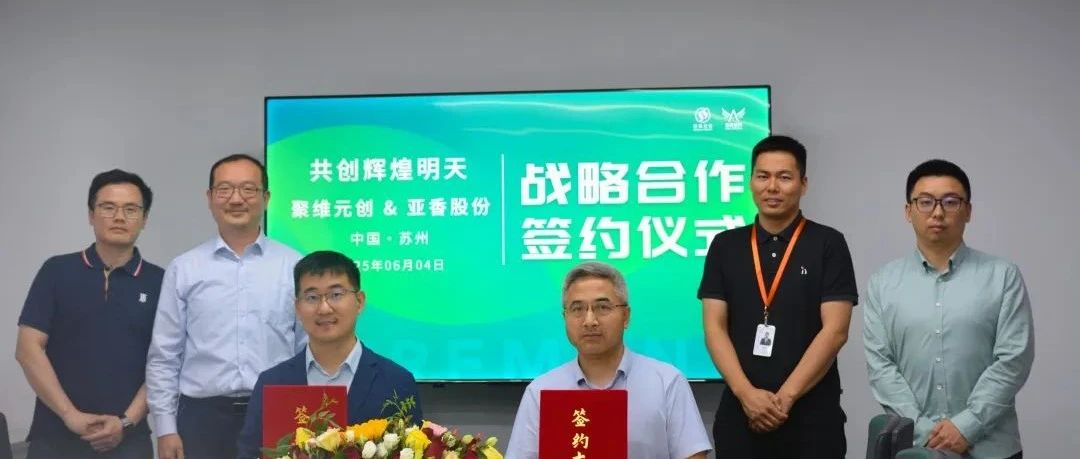
聚焦合成生物香料产业!聚维元创携手亚香股份战略合作
合成生物学与绿色生物制造· 2025-06-05 10:36
Core Viewpoint - The strategic partnership between Suzhou Juweiyuan Biotechnology Co., Ltd. and Kunshan Yaxiang Flavor Co., Ltd. signifies the deep integration of synthetic biology technology and AI with the traditional flavor and fragrance industry, focusing on collaborative innovation in bio-based flavor and fragrance raw materials, green manufacturing pathways, and international market expansion [1][4]. Group 1 - The partnership aims to address the growing consumer demand for natural, safe, and green flavors and fragrances, positioning synthetic biology as a key opportunity for transforming the industry from petrochemical synthesis to sustainable manufacturing [4]. - Juweiyuan, as a leading synthetic biotechnology company, leverages its proprietary chassis cell library, high-throughput gene editing platform, and AI protein engineering system to overcome critical bottlenecks in the biomanufacturing supply chain [4]. - The collaboration is aligned with China's dual carbon goals, promoting the high-end, green, and international transformation of manufacturing, with a focus on low-carbon alternatives and high-value innovation [4]. Group 2 - The partnership will create a globally leading joint innovation platform for bio-synthetic flavors and fragrances, accelerating the transition of green products from laboratory to market [4]. - The initiative is expected to reshape the supply system and value structure of the flavor and fragrance industry, emphasizing the unique advantages of synthetic biology in raw material substitution, process innovation, and low-carbon manufacturing [4].
全球首个!十吨级!青岛能源所与鲁抗医药合成生物制造项目正式投产
合成生物学与绿色生物制造· 2025-06-05 10:36
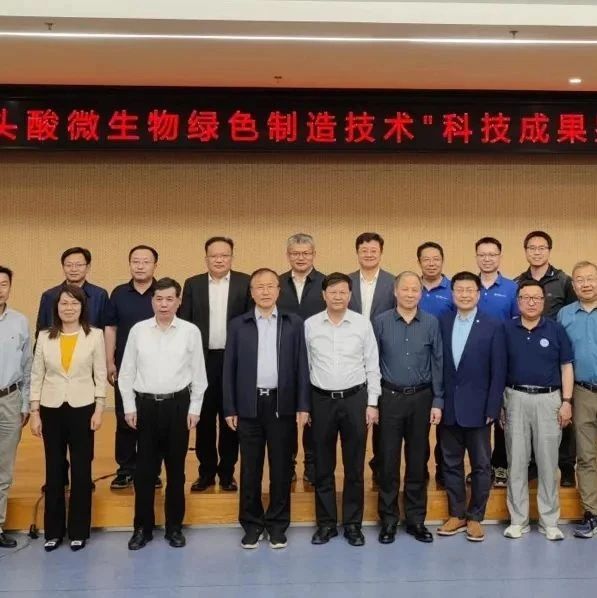
Core Viewpoint - The successful launch of the world's first microbial green manufacturing project for trans-aconitic acid by Qingdao Energy Research Institute and Shandong Lukang Pharmaceutical Co., Ltd. marks a significant breakthrough in the accessibility of this important chemical raw material, which will effectively promote the rapid development of downstream applications such as bio-based materials and biopesticides [1][3]. Group 1: Project Overview - The project was officially launched on May 29, 2024, in Jining, Shandong, and is recognized for overcoming the challenges in microbial green manufacturing technology for trans-aconitic acid [1][3]. - The technology has been evaluated as internationally leading, with strong innovation and advanced indicators, suggesting further expansion of production and application scale [3][4]. Group 2: Technological Innovations - The project utilizes synthetic biology strategies to achieve microbial green manufacturing of trans-aconitic acid for the first time, employing high acid-resistant Aspergillus niger as the chassis cell [3][4]. - Key technological developments include enabling technology platforms, efficient cell factories, fermentation process demonstration, and separation and purification processes, leading to the establishment of the world's first demonstration line for microbial green manufacturing of trans-aconitic acid [3][4]. Group 3: Industry Impact - The collaboration between Qingdao Energy Research Institute and Lukang Pharmaceutical exemplifies interdisciplinary innovation in bio-chemical-materials integration, transforming disruptive technologies into new productive forces [4]. - The project has been recognized as a benchmark for green, low-carbon, and high-quality development, injecting new momentum into the bio-economy sector [5].

全球首个!十吨级!青岛能源所与鲁抗医药合成生物制造项目正式投产
合成生物学与绿色生物制造· 2025-06-05 10:36
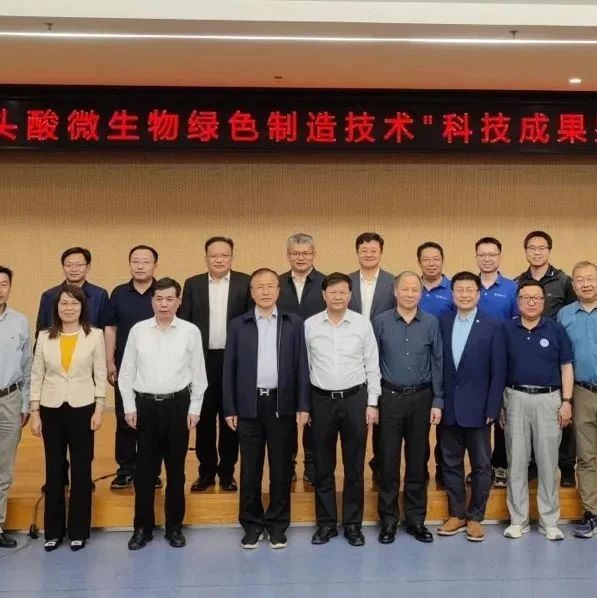
Core Viewpoint - The successful launch of the world's first microbial green manufacturing project for trans-aconitic acid by Qingdao Energy Institute and Shandong Lukang Pharmaceutical marks a significant breakthrough in the accessibility of this important chemical raw material, which will effectively promote the rapid development of downstream applications such as bio-based materials and biopesticides [1][3]. Group 1: Project Overview - The project was officially launched on May 29 in Jining, Shandong, and represents a major advancement in the microbial green manufacturing technology for trans-aconitic acid [1]. - The technology has been recognized as internationally leading, having overcome challenges in microbial green manufacturing, and has established the world's first demonstration line for this production method [3][4]. Group 2: Technological Innovations - The project utilized a high acid-resistant strain of Aspergillus niger as the chassis cell and developed key technologies including enabling technology platforms, efficient cell factories, fermentation process demonstration, and separation and purification processes [3]. - The successful scale-up of fermentation processes was achieved at a pilot level of ten tons, demonstrating the feasibility of large-scale production [3]. Group 3: Applications and Impact - The project has led to the development of environmentally friendly, safe, and economical new bio-based plasticizers derived from trans-aconitic acid, providing innovative solutions for sectors such as medical devices, electrical cables, and specialty rubber [4]. - The project has been awarded the highest prize at the first National Disruptive Technology Innovation Competition, showcasing its potential to lead industry innovation through technology [5].
天津工生所吴信研究员在技术驱动非粮原料生物制造微生物蛋白的前沿综述
合成生物学与绿色生物制造· 2025-06-05 10:36
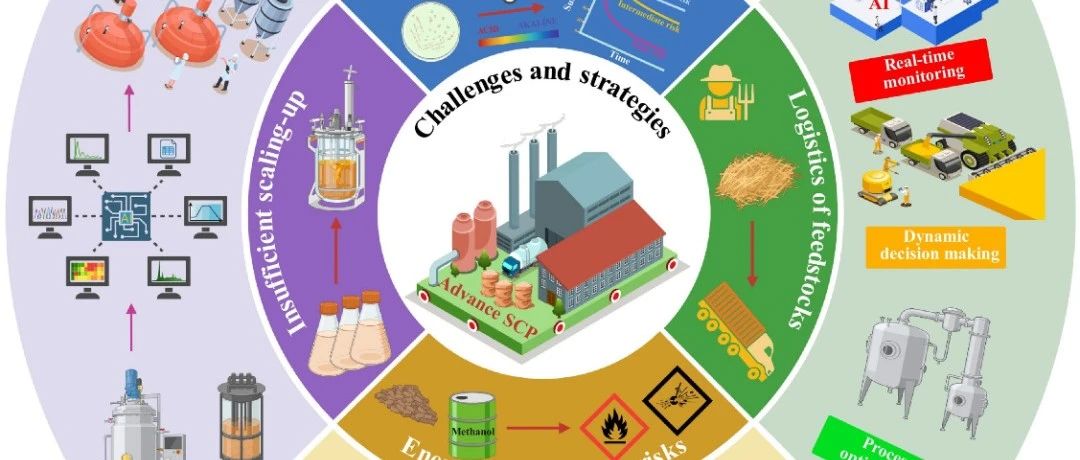
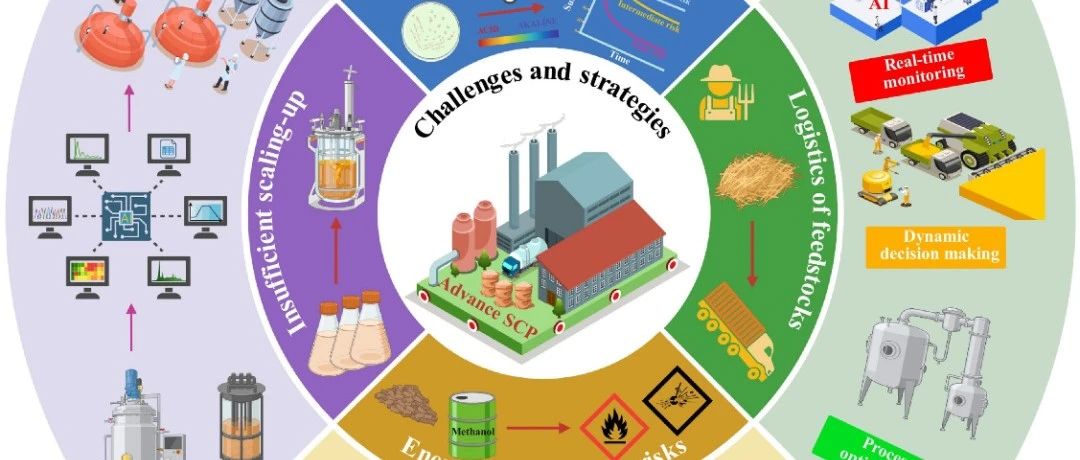
Core Viewpoint - The article emphasizes the transformative potential of synthetic biology in addressing sustainability challenges in traditional agricultural protein production, particularly through the development of microbial protein from non-grain raw materials [1][2]. Group 1: Technological Innovations - The research team has made significant breakthroughs in the use of methanol as a renewable C1 compound, enhancing the efficiency of converting methanol into single-cell protein through metabolic engineering and genomic perturbation [2]. - Innovations in gas-phase non-grain microbial protein production include the construction of a light-dark energy adapter in E. coli, enabling light-driven CO2 assimilation [2]. - The team has developed a machine learning model to decode the composition of degrading enzyme systems based on the structural characteristics of lignocellulose, facilitating the production of microbial protein from agricultural waste [2]. Group 2: Economic and Environmental Impact - The innovative conversion models not only enhance the economic value of agricultural waste but also pave the way for the industrial-scale biosynthesis of microbial protein from these resources, achieving a dual benefit of resource utilization [2]. - The research highlights the integration of synthetic biology and interdisciplinary innovation as a driving force for sustainable protein production, contributing to food security and carbon neutrality goals [6]. Group 3: Future Research Directions - Future research will focus on the super-evolutionary design of chassis cells, the closed-loop integration of negative carbon manufacturing systems, and the construction of AI-driven intelligent bio-manufacturing platforms [6].
天津工生所吴信研究员在技术驱动非粮原料生物制造微生物蛋白的前沿综述
合成生物学与绿色生物制造· 2025-06-05 10:36
团队前期的工作围绕甲醇作为一种可再生的 C1 化合物以及与二氧化碳氢化合成技术的重大突破,通过碳氮协同耦合代谢工程与基因组扰动等多重策 略,有效提升天然甲基营养菌中甲醇向单细胞蛋白的定向转化效率,进而突破工业菌株性能极限,为利用甲醇作为碳源生物制造微生物蛋白大规模工业 化生产提供了关键技术支持;在气态非粮生物制造微生物蛋白方面,通过构建大肠杆菌中的光 - 暗反应能量适配器,实现光驱动 CO 2 同化的全细胞 催化过程;通过电催化 - 生物耦合技术,可将电化学还原 CO 2 生成的甲酸盐与微生物同化模块精准对接,为气态非粮原料的转化技术开辟了负碳生 物制造微生物蛋白的新维度;在固态非粮原料生物合成微生物蛋白技术方面,该团队通过机器学习模型,基于木质纤维素结构特性破译出降解酶系组成 的新算法,进而摆脱复杂性底物结构 - 多样性酶系构效关系的实验先验,精准定制了多种地源性木质纤维素来源的微生物蛋白,达到地源性农业废弃 物资源利用与微生物蛋白生物合成"一草双收"效果。这些创新转化模式不仅提升了农业废弃物资源化利用经济价值,更开辟了农业废弃物规模化生物 合成微生物蛋白的工业化新路径。 以下文章来源于中国科学院天津工业生 ...
60 岁中国首位科创板女首富,30 年垄断全球 60% 市场
Sou Hu Cai Jing· 2025-06-05 08:59
Core Insights - Zhao Yan, known as the "Hyaluronic Acid Queen," has built a significant business empire and holds a crucial position in the capital market and industry [2] - The journey of Zhao Yan from a university assistant to a successful entrepreneur is marked by challenges and strategic decisions that led to her current success [2][3] Early Career and Initial Ventures - Zhao Yan was born in 1966 in Kunming, Yunnan, and showed exceptional academic talent, leading her to East China Normal University [2] - After graduating in 1986, she worked as a teaching assistant with a modest salary of less than 100 yuan per month [2] - In 1988, she left her stable job to pursue opportunities in Hainan, pooling 5,000 yuan with three other teachers to start a business [2][3] First Major Success - Zhao Yan discovered an opportunity with a joint venture factory in Hainan that had unsold refrigerators, which she and her partners repaired and sold, earning a profit of 800,000 yuan [3] - This initial success allowed them to invest in a clothing factory, which generated annual revenue of 1 million yuan [5] Real Estate Investments - Recognizing the potential in Hainan's real estate market, Zhao Yan used profits from the clothing business to acquire properties, leading to a wealth increase from 800,000 yuan to 2 million yuan [5] - She eventually sold her real estate holdings at the peak of the market, successfully avoiding the subsequent market crash [8] Expansion to Beijing and Real Estate Development - After relocating to Beijing, Zhao Yan founded Huaxi Group and developed significant projects, including Huaxia Bank Tower and Wukesong Sports Center, contributing to the company's total assets exceeding 80 billion yuan [9] Entry into Biopharmaceuticals - In the early 2000s, Zhao Yan invested in Shandong Furuida Biological Chemical Co., becoming the largest shareholder and later rebranding it as Huaxi Biological [11] - Under her leadership, the company became the world's largest producer of hyaluronic acid by 2007, expanding into medical aesthetics and functional skincare products [12] Product Diversification and Market Expansion - Huaxi Biological launched various medical aesthetic products, including hyaluronic acid fillers and functional skincare lines, achieving high market share and positive consumer reception [12][13] - In 2021, the company introduced functional foods like hyaluronic acid drinking water, capitalizing on the growing health-conscious consumer trend [15] Cultural and Social Contributions - Zhao Yan's leadership extended to cultural projects, such as the development of Wukesong Sports Center, which hosted major events like the 2008 Beijing Olympics [15] - The establishment of Huaxi International Era Art Museum has contributed significantly to the promotion of Chinese cultural and artistic endeavors [16] Future Outlook - Huaxi Biological stands at a new crossroads with a leading position in hyaluronic acid production, a growing skincare brand portfolio, and ambitious plans in synthetic biology [18] - Zhao Yan faces ongoing challenges in balancing marketing, technology, and corporate responsibilities as the leader of a public company [18]

AI设计人类增强子!超越天然增强子,短至50bp也能实现细胞特异性
生物世界· 2025-06-05 03:43
Core Viewpoint - The research conducted by Washington University and Altius Biomedical Science Institute successfully designed synthetic enhancers that are more efficient and simpler than natural enhancers, achieving unprecedented cell-type specificity in human cells through iterative deep learning technology [2][6]. Group 1: Research Challenges - Traditional enhancer discovery faces three major challenges: the vast number of candidate enhancers in the human genome, the lack of precision in existing enhancers that often activate multiple cell types, and the complexity of regulatory rules involving various transcription factor combinations and spatial arrangements [6]. Group 2: Research Methodology - The research team developed an iterative deep learning design system, which underwent two cycles of "design-experiment-optimize," starting from 29,891 natural enhancer MPRA activity data to train the model, resulting in the design of 1,037 synthetic enhancers [6]. - The model was refined using real measurement data of synthetic enhancers, reducing the training data volume by 30 times compared to previous generations, and introducing L2 regularization to prevent over-reliance on a single transcription factor [6]. - The second generation achieved a breakthrough with the design of 688 new enhancers, significantly increasing median expression levels in specific cell types, such as a 46.2-fold increase in HepG2 cells and a 6.7-fold increase in K562 cells [6][7]. Group 3: Research Highlights - The specificity of the deep learning-designed enhancers surpassed that of natural controls, and the sequence grammar used for synthetic enhancers was more compact than that of natural enhancers [8]. - Iterative retraining of synthetic enhancers led to designs with superior specificity, and the activity of synthetic enhancers was correlated with single-cell transcription factor expression [8]. Group 4: Applications - The research opens three major application directions: targeted gene therapy for liver cancer, customized tissue-specific enhancers for rare genetic diseases, and the construction of cell-type-specific biosensors in synthetic biology [10]. - This study marks a fundamental shift in the design paradigm of gene regulatory elements, moving from traditional methods to an AI-driven approach that significantly increases success rates [10].