
AI大模型

Search documents
机器人年终盘点:宇树科技官宣IPO 掀起行业资本浪潮
智通财经网· 2025-12-14 08:07
Core Insights - Yushu Technology is preparing for an IPO, reflecting a broader trend in the robotics industry where nearly 30 companies have applied for listings on the Hong Kong Stock Exchange in 2025 [1][5] - The company has achieved significant milestones in technology and market presence, transitioning from a startup to a leading player with annual revenue of approximately 1 billion yuan [2][3] Group 1: Company Overview - Yushu Technology was founded in 2016 and focuses on high-performance quadruped and humanoid robots, with a strong emphasis on vertical integration of core components [2] - The company has grown to employ around 1,000 staff and has a significant market presence, driven by successful marketing campaigns [2][3] Group 2: Technological Advancements - Yushu Technology has made notable technological breakthroughs, including the launch of the world's first low-cost electric quadruped robot and a humanoid robot capable of performing acrobatic movements [3] - The company's products gained national attention through performances at major events, significantly boosting market confidence and demand [3] Group 3: Capital and Valuation - Yushu Technology has completed 10 rounds of financing since its inception, attracting investments from major firms like China Mobile, Tencent, and Alibaba [4] - The company's valuation has surged, reportedly exceeding 10 billion yuan, with estimates reaching 12 billion yuan following its latest funding round [4] Group 4: Industry Trends - The 2025 IPO wave in the robotics sector is characterized by a high concentration of listings in Hong Kong, driven by favorable regulatory changes [5][8] - The trend shows a shift from component manufacturers to complete system manufacturers, indicating a new phase in the industry focused on product definition and large-scale applications [5] Group 5: Market Dynamics - The surge in IPOs is fueled by multiple factors, including government support for the "embodied intelligence" sector, which was highlighted in the 2025 government work report [8] - The first eight months of 2025 saw significant investment in the robotics sector, with funding reaching 38.624 billion yuan, indicating a shift in capital focus towards companies with tangible products and large orders [9] Group 6: Future Challenges - Despite the excitement around IPOs, many companies still face challenges related to profitability and competition, with concerns about market saturation and similar product offerings [11] - The year 2026 is anticipated to be a critical period for the commercialization of robotics, where companies will need to demonstrate clear paths to profitability and sustainable business models [12]

知情人士辟谣“豆包手机被约谈”:消息不实
Xin Lang Cai Jing· 2025-12-14 01:45
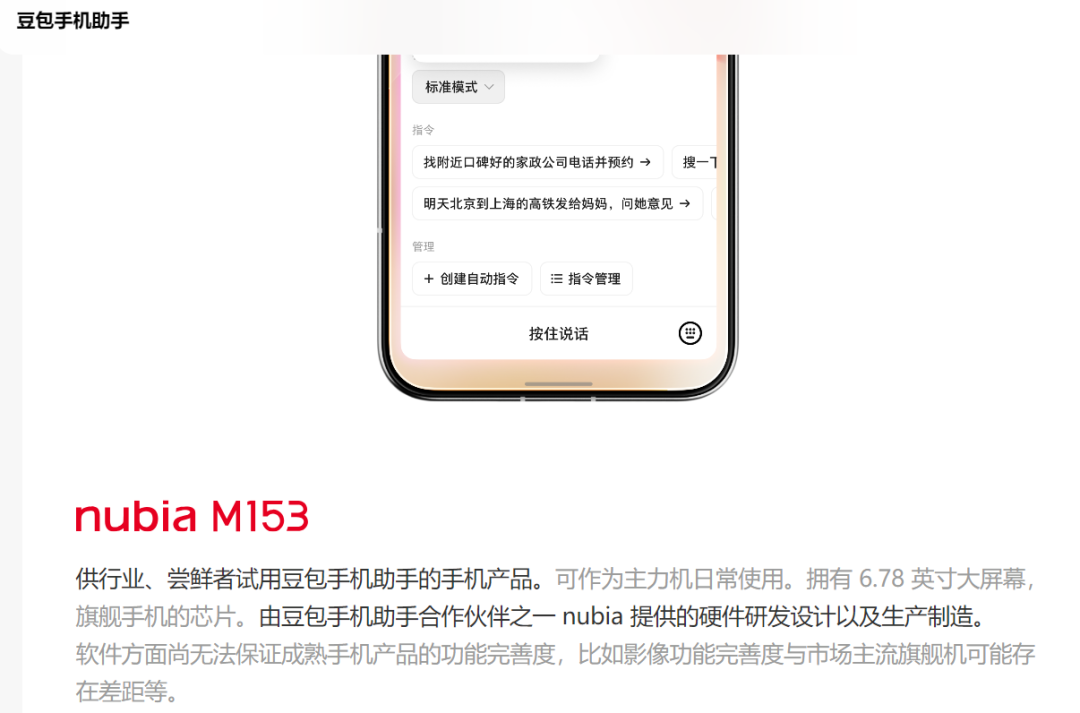
新浪科技讯 12月14日上午消息,近日,字节跳动旗下AI大模型豆包手机助手,与中兴通讯合作推出"豆 包手机"努比亚M153工程机引发科技圈关注,有用户反馈该机在登录部分社交平台时受限。 针对网传"监管机构因网络安全、数据安全及竞争问题约谈字节跳动"的消息,知情人士向新浪科技称该 消息不实。12月3日、5日、13日,豆包手机助手连发声明,强调不代用户授权、不截屏受保护内容,并 呼吁建立清晰规则。新机核心卖点为跨应用语音操作,可自动完成比价并跳转下单。 责任编辑:尉旖涵 新浪科技讯 12月14日上午消息,近日,字节跳动旗下AI大模型豆包手机助手,与中兴通讯合作推出"豆 包手机"努比亚M153工程机引发科技圈关注,有用户反馈该机在登录部分社交平台时受限。 针对网传"监管机构因网络安全、数据安全及竞争问题约谈字节跳动"的消息,知情人士向新浪科技称该 消息不实。12月3日、5日、13日,豆包手机助手连发声明,强调不代用户授权、不截屏受保护内容,并 呼吁建立清晰规则。新机核心卖点为跨应用语音操作,可自动完成比价并跳转下单。 责任编辑:尉旖涵 ...

知名大厂被约谈?官方最新回应!
Zhong Guo Jing Ying Bao· 2025-12-14 01:38
Core Insights - ByteDance's AI model "Doubao" launched a mobile assistant and partnered with ZTE to introduce the "Doubao Phone" - Nubia M153, aiming to redefine human-computer interaction [1] Group 1: Product Launch and Features - The Doubao mobile assistant is designed to operate smartphones like a human, representing a significant breakthrough in the AI era [1] - The assistant utilizes a cloud-based processing model where user commands are captured via screenshots uploaded to a cloud model for analysis, with a processing interval of approximately 3 seconds [7] - The assistant claims to adhere to Android's Secure protocol, ensuring that sensitive information, such as banking passwords, cannot be accessed if the respective apps have screen capture protection enabled [7] Group 2: Security Concerns and Regulatory Response - Concerns regarding the security of the AI mobile assistant have led to discussions about network and data safety, prompting regulatory bodies to engage with ByteDance [4] - ByteDance has publicly refuted claims regarding the misuse of permissions, clarifying that the assistant uses native screenshot interfaces and does not bypass security measures [4][7] - In response to external concerns, Doubao announced plans to adjust its AI capabilities in specific scenarios, particularly in financial applications and competitive gaming, to respect user rights and maintain fairness [9] Group 3: Market Reactions and Restrictions - Several major apps, including WeChat, Taobao, Alipay, and various banking applications, have restricted or disabled access to the Doubao mobile assistant [8] - The assistant's operational capabilities will be regulated to prevent automated actions that could undermine user engagement and fairness in competitive environments [9]

以“智能”之跃中创智领开启工业破界新生
Zhong Guo Zheng Quan Bao· 2025-12-12 20:17
Core Viewpoint - The company, now named Zhongchuang Zhiling, has undergone a significant transformation, achieving a revenue of 30.745 billion yuan in the first three quarters of the year, a year-on-year increase of 10.44%, and a net profit of 3.645 billion yuan, up 19.17% year-on-year, driven by robust growth in both traditional coal machinery and automotive parts sectors [1][2]. Business Transformation - The name change from Zhengmei Ji to Zhongchuang Zhiling reflects a strategic elevation, moving from a focus on coal machinery to a broader business model that includes coal machinery, automotive parts, and industrial intelligence [1][2]. - The company has transitioned from being a "technology follower" to a "technology leader," emphasizing independent innovation and smart technology as core components of its strategy [2][3]. Performance in Traditional Sector - In the traditional coal machinery sector, the company has evolved beyond simple equipment manufacturing, providing intelligent solutions to over 1,000 working faces across the country, thus enhancing operational efficiency and safety [2][3]. - The coal machinery segment reported a revenue increase of 1.549 billion yuan, a growth rate of 10.66%, and a net profit increase of 150 million yuan, a growth rate of 4.77% in the first three quarters [3]. Automotive Parts Sector Growth - The automotive parts segment has shown remarkable growth, with a net profit increase of 133.76% year-on-year, driven by subsidiaries SEG and Yaxinke, which have successfully turned around losses and increased revenues in their respective markets [3][4]. - SEG achieved a net profit of 218 million yuan in the first three quarters, while Yaxinke's revenue from its shock absorber and commercial vehicle business grew by 19.9%, with an additional 324 million yuan from new energy motor business [3][4]. Strategic Acquisitions and Collaborations - The company has strengthened its strategic collaboration by increasing its stake in core subsidiaries like Hengda Zhikong and Yaxinke, ensuring resource focus and driving performance growth [4][5]. - The strategic acquisitions made over the past decade have positioned the company to capitalize on the automotive parts market and the transition to new energy [2][4]. Future Vision - The company's vision is to become a global leader in sustainable intelligent industrial solutions, moving from being a provider of products and components to a paradigm outputter of intelligent industrial solutions [4][5]. - The integration of advanced technologies such as 5G, IoT, and AI into its operations is seen as a key driver for this transformation, with a dedicated R&D team focused on applying AI in industrial scenarios [5].

自动驾驶愿景遇现实需求考验 Rivian(RIVN.US)自研芯片与软件未能掀起波澜
Zhi Tong Cai Jing· 2025-12-12 14:17
Core Viewpoint - Rivian Automotive is being reassessed by Wall Street analysts following its "AI and Autonomous Driving Day," showcasing new self-developed autonomous driving chips and AI technologies, highlighting a significant divide in opinions regarding the company's future prospects [1] Group 1: Technology and Product Development - Rivian plans to equip its upcoming R2 SUV with the Rivian Autonomy Processor 1 (RAP1) chip and a new LiDAR sensor, aiming for full autonomous driving capabilities [1] - The RAP1 chip utilizes advanced chiplet packaging technology with a memory bandwidth of 205GB per second, crucial for in-vehicle AI applications and full autonomy [1] - The next-generation vehicle computer, Autonomy Compute Module 3, will be powered by two RAP1 chips, processing 5 billion pixels per second, which is four times the performance of the current Nvidia system used in Rivian vehicles [2] Group 2: Market Position and Analyst Ratings - Needham reaffirmed a "Buy" rating for Rivian, raising the target price to $23, reflecting confidence in Rivian's unique market positioning and the increasing importance of automotive software systems [2] - Morgan Stanley maintains a cautious stance, rating Rivian as "Underweight" with a target price of $12, citing demand risks that could limit data collection necessary for achieving higher levels of autonomous driving [3] - Wells Fargo holds a neutral "Equal Weight" rating, noting the low margin for error in Rivian's operations and the need for the company to prove its ability to grow its customer base while maintaining low advertising costs [4] Group 3: Financial Performance and Challenges - Rivian's stock has seen a year-to-date increase of over 23%, trading around $16.6, despite a significant drop of over 80% from its IPO peak [4][5] - The company is facing operational challenges, with its Illinois factory expected to produce less than 50,000 vehicles this year, far below its capacity [4] - Rivian is continuously cutting costs and laying off employees due to ongoing financial losses, while Volkswagen has committed nearly $6 billion to a joint venture, leveraging Rivian's expertise in software and automated vehicle manufacturing [5]

【券商聚焦】中邮证券维持丘钛科技(01478)“买入”评级 公司无人机光学模组持续升级 激光雷达前景广阔
Xin Lang Cai Jing· 2025-12-12 14:13
Group 1: Drone Industry Insights - The optical modules for drones by Q Tech (01478) are continuously upgrading, with a promising outlook for LiDAR technology [1][4] - Different levels of drones are equipped with varying numbers of camera modules, with flagship drones typically having about 3 camera modules, mid-range having about 2, and entry-level having about 1 [1][4] - The global aerial drone market is estimated to be approximately $7.1 billion in 2023, projected to reach $12.2 billion by 2030, with a CAGR exceeding 10% from 2024 to 2032 [1][4] Group 2: Handheld Imaging Devices - The global action camera market is valued at 31.44 billion yuan in 2023, expected to grow to 51.35 billion yuan by 2027, with a CAGR of 13.0% [2][5] - The global panoramic camera market is projected to grow from 5.03 billion yuan in 2023 to 7.85 billion yuan by 2027, with a CAGR of 11.8% [2][5] - The shift from single-camera to dual-camera systems in handheld imaging devices enhances long-focus shooting capabilities and supports advanced features like "one shot, infinite composition, AI one-click production" [2][5] Group 3: Robotics and AI Integration - The collaboration between the company, Nanjing Chip Vision, and Digua Robot aims to develop a dual RGBD perception module for embodied robots, enhancing their sensory capabilities [3][6] - The RGBD fusion solution addresses limitations of single sensors in complex environments, improving accuracy and adaptability in dynamic settings [3][6] - The global market for embodied intelligent robots is expected to exceed $60 billion by 2025, with the new solution potentially overcoming key development bottlenecks in the industry [3][6] Group 4: Financial Projections - The company is projected to achieve revenues of 20.6 billion yuan, 23.5 billion yuan, and 26.7 billion yuan in 2025, 2026, and 2027 respectively, with net profits of 768 million yuan, 1.051 billion yuan, and 1.230 billion yuan [4][7]
同福共享平台:以科技化赋能实体,书写双网融合新答卷
Sou Hu Cai Jing· 2025-12-12 13:51
Core Insights - The article emphasizes the integration of industrial internet and consumer internet through the Tongfu Shared Platform, which leverages technology to address pain points in the industrial chain and drive high-quality development of the real economy [1][4]. Group 1: Industry Trends - The current circulation sector faces significant challenges, including information fragmentation between manufacturers and consumers, pressure on distributors to transform, and traffic difficulties for terminal stores, which hinder industrial efficiency [1][3]. - The platform's development strategy aligns with the principle of "leading new supply with new demand and creating new demand with new supply," with technology being a crucial support for implementing this strategy [1][3]. Group 2: Technological Implementation - The platform promotes "two integrations": the integration of industrial internet with consumer internet and the deep integration of online and offline channels, utilizing technology to facilitate efficient data and resource flow within the physical network [3]. - The platform's operational strategy includes "linking factories, connecting businesses, engaging stores, and locking in customers," with technology enhancing the entire supply chain through digital collaboration, reducing overall costs, and improving local service value for distributors [3]. Group 3: Practical Applications - A recent initiative during the Mid-Autumn Festival involved the platform collaborating with well-known nut and beverage brands to launch a 100-yuan combo package, showcasing the practical application of technology in understanding consumer demand and driving store traffic [3]. - This model breaks the traditional inventory pressure, with some stores achieving sales exceeding 1,000 units, demonstrating the effectiveness of technology in creating new demand and supply [3]. Group 4: Future Outlook - The platform plans to deepen its technological layout by expanding its national presence and validating the universality of its technology-enabled model, while also integrating self-developed systems to enhance the flow of goods, logistics, information, and data [4]. - The exploration of new technologies, such as AI large models, will further improve service efficiency within the platform's operations [4].

谁说中国机器人只会唱歌跳舞?优必选谭旻:没有真正通过商业验证的量产交付都没有意义
Xin Lang Cai Jing· 2025-12-12 09:13
Core Viewpoint - The recent controversy surrounding a video of UBTECH's humanoid robot formation highlights the industry's deep interest in humanoid robot development and the potential for creating commercial value as these robots transition from science fiction to real-world applications [3][15]. Industry Insights - The perception that "Chinese robots only perform while American robots work" is overly simplistic, as over 80% of the world's most advanced factories are newly built in China, providing fertile ground for the humanoid robot industry [3][15]. - The humanoid robot industry is shifting focus from entertainment to practical applications, which is seen as a healthier direction for sustainable development [3][15]. Technological Development - UBTECH has a 13-year history of building an open ecosystem for collaboration with various AI models, indicating a commitment to testing different models' advantages for humanoid robots [4][16]. - The next significant breakthrough in AI models for humanoid robots will likely involve integrating computer vision, as 80% of information exchange occurs visually rather than verbally [5][17]. Competitive Landscape - UBTECH has launched multiple iterations of its industrial humanoid robot, Walker, with the latest model, Walker S2, capable of autonomous battery swapping, showcasing rapid development and adaptation to real-world applications [6][19]. - While American companies focus heavily on AI investment, Chinese humanoid robot companies are rapidly developing practical applications, leveraging the largest smart manufacturing scenarios globally [7][18]. Market Goals - UBTECH aims to deliver between 500 to 1,000 robots this year, with targets of 3,000 to 5,000 next year and 10,000 by 2027, emphasizing the importance of commercial validation before scaling production [9][21]. - The trend of entertainment-focused robots is seen as a temporary phase, with a shift towards real-world applications being encouraged by government policies [10][24]. Future Outlook - The Chinese humanoid robot industry has the potential to become a standard-setting entity, benefiting from advancements in electric motor technology and the largest smart manufacturing applications globally [8][20]. - Embracing challenges and opportunities in the humanoid robot sector could lead to the formation of a new trillion-dollar industry cluster in China [11][24].
从“会种地”到“慧种地” 看十亿亩农田“版本升级”
Yang Shi Xin Wen· 2025-12-12 07:25
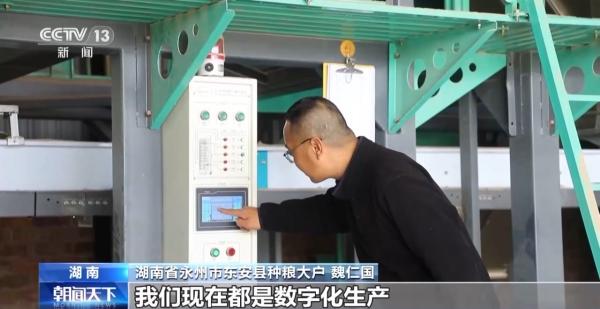
Core Viewpoint - The article discusses the modernization and upgrading of agricultural practices in China, highlighting advancements in technology and infrastructure that enhance productivity and resilience against climate challenges. Group 1: Equipment and Technology Upgrades - Farmers are adopting advanced equipment such as precision seeders, harvesters, and drones to improve efficiency and yield [2][8] - Digital production methods are being implemented, leading to higher crop yields through scientific management [4] - Data platforms allow for real-time monitoring of agricultural activities, significantly improving oversight and productivity [6][12] Group 2: Infrastructure Improvements - China plans to build and renovate 80 million acres of high-standard farmland, enhancing irrigation and drainage systems to ensure stable yields [17] - The construction of drainage channels, known as "毛渠," is crucial for effective water management, helping to mitigate drought and flooding risks [21][23] - Modernization of irrigation systems and water infrastructure is a key focus, with significant investments aimed at securing food supply [25][39] Group 3: Agricultural Data and AI Integration - Remote sensing satellites and AI models are being utilized to monitor crop growth and optimize agricultural practices [29][31] - The contribution of agricultural technology to productivity is significant, with a reported 63.2% contribution rate from technological advancements [35] - The integration of big data models is replacing traditional farming methods, leading to more scientific decision-making in agriculture [35] Group 4: High-Standard Farmland Development - Over 100 million acres of high-standard farmland have been established, ensuring effective water management and pest control [41] - The government provides over 2,000 yuan per acre in subsidies for high-standard farmland, promoting tailored agricultural practices based on regional needs [39][36] - By 2030, the goal is to expand high-standard farmland to 135 million acres, further securing food production for the future [41]
单日狂揽3.5亿元!资金加速抄底港股互联网
Mei Ri Jing Ji Xin Wen· 2025-12-12 06:16
Core Viewpoint - The Hong Kong internet sector is experiencing a rebound, with significant capital inflow as investors show enthusiasm for bottom-fishing, indicating a potential recovery phase for the sector [1] Group 1: Market Activity - The Hong Kong internet ETF (513770) saw a substantial increase in capital, with a net inflow of 352 million HKD on December 11, and a total of 584 million HKD over the past six days [1] - Major companies in the sector, including Tencent and Xiaomi, have initiated significant share buybacks, signaling a mismatch between current stock prices and corporate value [1] Group 2: Company Performance - Tencent has repurchased 18.638 million shares since November, costing over 11.4 billion HKD, while Xiaomi has repurchased 77.6 million shares for over 3.1 billion HKD, leading the buyback amounts in the Hong Kong market [1] - Analysts from Guosen Securities suggest that the valuations of key players like Tencent, Meituan, and Alibaba have significantly adjusted, making it a favorable time to increase positions in the Hong Kong internet sector [1] Group 3: Sector Characteristics - The Hong Kong internet sector includes several platform-based technology giants and leaders in hard technology, which are deeply integrated into the global supply chain in critical areas such as AI, cloud computing, smart hardware, and semiconductors [1] - The Hong Kong internet ETF (513770) tracks the CSI Hong Kong Internet Index, heavily weighted towards leading internet companies, with the top three holdings being Alibaba, Tencent, and Xiaomi, accounting for over 45% of the total weight [2]