
产教融合

Search documents
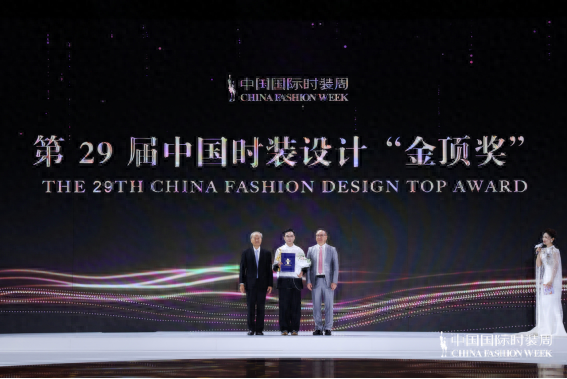
陈龙荣获中国时装设计“金顶奖”,“江服日”荣耀而归
Huan Qiu Wang· 2025-09-16 07:45
Core Viewpoint - The 2025 China International Fashion Week showcased the significant contributions of Jiangxi Fashion Institute, highlighting its role in nurturing talent and driving innovation in the Chinese fashion industry [1][9]. Group 1: Achievements and Awards - Jiangxi Fashion Institute's professor Chen Long won the "Golden Top Award" at the 29th China Fashion Design Awards, marking a significant achievement for the institution [9]. - Alumni and faculty from Jiangxi Fashion Institute received multiple accolades, including Sui Zhenchong being named "Best Women's Wear Designer of 2025" and several others winning the "Top Ten Fashion Technology Awards" [9][11]. - The institute collectively won the "2025 Fashion Industry Promotion Award," demonstrating its impact on the fashion education sector [9]. Group 2: Educational Impact - Jiangxi Fashion Institute emphasizes personal growth and development for both students and faculty, providing ample support for skill enhancement and competition preparation [11]. - The school has produced numerous influential designers, including 11 "Top Ten Fashion Designers" and 13 "New Designer Award" winners, showcasing its commitment to fostering talent in the fashion industry [11]. Group 3: Fashion Shows and Innovations - The institute's alumni presented innovative fashion shows, such as Sui Zhenchong's "Awakening" collection, which integrated environmental aesthetics with sportswear design [22]. - Faculty member Cheng Hao showcased a collection that combined traditional wax dyeing techniques with modern 3D printing, highlighting the fusion of heritage and contemporary design [28]. - Professor Min Yue's show focused on traditional Chinese elements, using eco-friendly materials to explore the harmony between tradition and modernity [37]. Group 4: Industry Integration - Jiangxi Fashion Institute's participation in the China International Fashion Week reflects its deep integration into the fashion industry over the past 30 years, linking education with practical application [47]. - The institute aims to empower aspiring fashion talents, enabling them to connect with global fashion trends and shape the future of the industry [47].

日照因地制宜推动新兴产业聚链成群、稳步壮大——实现从跟跑变领跑的创新跨越
Da Zhong Ri Bao· 2025-09-16 06:36
Group 1: Innovation in Medical Devices - Increasing number of companies in Rizhao are focusing on "core technology autonomy," "industry-education ecological collaboration," and "deep integration of digital and physical" for innovation breakthroughs [1] - Shandong Hujie Dental Medical Group has broken the decades-long monopoly of imported brands in high-end dental biomaterials through independent research and development, achieving a domestic market share of over 50% for its key products [1] - Shandong Benos Medical Device Co., Ltd. has developed over 50 high-value medical device products, with its main product, the surgical drainage catheter set, leading the domestic market [2] Group 2: Digital Economy and Talent Development - Zhongkai Digital Technology (Shandong) Group is addressing talent bottlenecks through a "city + university" model, integrating educational resources with industry needs [3] - The company has established a dual mentor system and an order class model to ensure students gain practical experience while studying, creating a closed-loop training system [4] - This approach has led to the formation of a stable employment structure and sufficient talent reserves, with 3,000 employed and 5,000 in reserve [4] Group 3: Industrial Internet and Digital Transformation - Shandong Jushui Internet Technology Co., Ltd. is reconstructing traditional industry ecosystems through "digital-physical integration," serving over 25,000 enterprises in the plastic industry [5] - The company has built 50 high-end modified plastic production lines and is focusing on key areas such as medical, home appliance, and automotive lightweight materials [6] - The ultimate goal of the industrial internet is to optimize production processes and drive innovation through data penetration across the supply chain [6]
两部门联合印发通知产教融合培养复合型人才
Qi Lu Wan Bao· 2025-09-15 23:30
Core Viewpoint - The joint notice issued by the State Administration for Market Regulation and the Ministry of Education aims to promote the integration of professional and standardized education in higher education institutions, fostering the development of composite talents urgently needed in the industry [1] Group 1: Policy Initiatives - The notice encourages local undergraduate and vocational colleges to collaborate with standardization research institutes and enterprises to apply for and implement projects that integrate professional and standardized education [1] - The initiative is part of a broader effort to accelerate the integration of industry and education, addressing the demand for skilled professionals in various sectors [1] Group 2: Objectives - The primary goal is to cultivate a batch of composite talents that are urgently needed for industrial development, thereby enhancing the workforce's capabilities [1]
产教融合育人才 数字赋能启新篇
Xin Hua Ri Bao· 2025-09-15 21:28
Core Insights - The establishment of the "Industry-Education Integration Digital Intelligent Innovation Training Base" at Lianyungang Vocational and Technical College marks a significant milestone in enhancing educational conditions and deepening industry-education integration, supported by a central budget investment of 48 million yuan and a total investment of 150 million yuan [1] Group 1: Infrastructure and Facilities - The training base covers an area of nearly 50,000 square meters, featuring 23 specialized training rooms and multiple technology centers [3] - The base has systematically updated 1,676 software applications and 3,923 hardware devices, including advanced industry-leading equipment such as industrial robot workstations and AI computing servers [3] Group 2: Training Centers and Programs - The base includes five core training centers: Intelligent Manufacturing, Digital Intelligent Supply Chain Services, Smart Petrochemical Industry Chain Simulation, Artificial Intelligence, and Smart Construction and Green Construction [1][2] - The Intelligent Manufacturing Training Center integrates technologies such as industrial robotics and mechatronics to create a comprehensive practical platform [2] Group 3: Educational Impact and Community Engagement - The base serves over 15,000 students annually for practical teaching and conducts training, skill assessment, and technical services for more than 20,000 individuals from the community each year [3] - Lianyungang Vocational and Technical College aims to leverage the base's advantages to enhance the quality of technical talent training and deepen the integration of education, talent, industry, and innovation chains [3]
吸纳百万毕业生后,广东开会再提“人才”!四大部门回应
Nan Fang Du Shi Bao· 2025-09-15 12:25
Group 1: Talent Development Initiatives - Guangdong has launched the "Million Talents Gathering in South Guangdong" initiative, attracting over 1 million college graduates for employment and entrepreneurship in the region by July 2023 [1][2] - The provincial government is focusing on 20 strategic industrial clusters, including artificial intelligence, robotics, and new energy vehicles, to enhance talent supply and match job opportunities [2][3] - The total skilled workforce in Guangdong is 22.01 million, with 8.27 million being high-skilled talents, indicating a strong emphasis on increasing high-skilled talent supply through various training programs [2] Group 2: Education and Industry Integration - The provincial education department aims to optimize the alignment between educational programs and industry needs, enhancing the relevance of academic disciplines to modern industrial requirements [3][4] - Efforts are being made to improve vocational education quality and effectiveness, with a focus on establishing modern industrial colleges and enhancing training for high-skilled talent [3][4] - Continuous development of mechanisms for industry-education integration is being promoted to facilitate collaboration between educational institutions and industries, ensuring that research outcomes are effectively applied in the industrial sector [4][5] Group 3: Innovation and Technology Support - The provincial technology department is working on building a comprehensive innovation chain that includes basic research, technology breakthroughs, and talent support, aiming to create a high-level talent hub [6] - Initiatives are in place to attract strategic scientists and high-level innovation teams to address critical technological challenges and enhance the region's innovation ecosystem [6][7] - The focus is on optimizing talent evaluation systems to favor industry and youth talents, promoting collaboration between enterprises and educational institutions to foster innovation [6][7] Group 4: Industry-Specific Talent Policies - The industrial and information technology department is supporting enterprises in their role as primary agents for talent cultivation and retention, particularly in key sectors [7] - Policies are being developed to integrate talent development with industrial growth, linking talent outcomes directly to project and funding incentives [7] - The emphasis is on creating targeted measures to nurture talent in emerging industries such as integrated circuits, artificial intelligence, and robotics, ensuring that talent evaluation is aligned with industry contributions [7]
低空经济缺人?广东这场会上,人大代表建议开设“微专业”
Nan Fang Du Shi Bao· 2025-09-15 12:05
Group 1 - Guangdong has prioritized the cultivation of high-quality talent to support the construction of a modern industrial system, with over 1 million college graduates attracted to work and start businesses in the region by July 2025 [1] - A special meeting was held on September 15 to discuss the acceleration of modern industrial system construction, focusing on high-quality talent cultivation [1] - National representatives provided suggestions on talent cultivation, innovation, and mobility to enhance the talent support for Guangdong's modern industrial system [1] Group 2 - The establishment of "micro-specialties" is recommended to empower emerging industries, particularly in the low-altitude economy, with a focus on interdisciplinary talent [2] - Suggestions include creating a "Low Altitude Regulations and Ethics" interdisciplinary course and a provincial low-altitude economic talent development fund [2] - Emphasis on deepening industry-education integration and practical training to enhance the capabilities of graduates in relevant fields [2] Group 3 - Recommendations for a "Biomedicine Future Industry Talent Training Program" to encourage multi-position training and establish a cross-school "Biomedicine + X" micro-specialty [3] - The proposal to create a talent "reverse flying ground" to separate innovation and application, facilitating targeted talent development [3] - Suggestions to enhance talent retention through regional honor systems and professional communities to reduce talent loss [3] Group 4 - The importance of breaking down barriers to talent mobility between institutions, enterprises, and research platforms is emphasized [4] - Encouragement for innovative enterprises to engage research personnel in applied research to promote two-way talent flow [5] - Recommendations for reforming talent evaluation mechanisms to grant enterprises greater autonomy in talent assessment [5]
这所职高,为何这么有魅力
Ren Min Ri Bao· 2025-09-15 04:04
Core Insights - The article highlights the successful enrollment and educational approach of Changsha Finance School, emphasizing its dual focus on both academic advancement and employment opportunities for vocational students [1][2][3] Enrollment and Popularity - Changsha Finance School planned to enroll 1,800 students but received over 10,000 applications, ultimately admitting 1,890 students, showcasing its strong appeal [1] - The school aims to create a nurturing environment where every student can discover and cultivate their unique talents [1] Educational Approach - The school offers two pathways for students: academic advancement and employment, allowing for tailored teaching methods based on individual student characteristics and interests [2] - The implementation of vocational college entrance examinations (职教高考) provides students with diverse pathways to higher education, with 422 students advancing to undergraduate programs in 2024, accounting for nearly half of the city's vocational school admissions [2] Skills Development and Competitiveness - The school has a strong emphasis on practical skills training, with a focus on aligning professional programs with market demands, which enhances students' employability [4][5] - The school has achieved significant recognition in vocational skills competitions, winning multiple awards, including four gold medals in national competitions [4][5] Innovation and Entrepreneurship - Changsha Finance School actively promotes innovation and entrepreneurship through various activities, including entrepreneurship training and project incubation, resulting in successful student-led businesses [6][7] - The school integrates entrepreneurial education with professional training, providing students with resources and support to launch their ventures [6][7] Industry Collaboration - The school emphasizes the importance of industry collaboration, involving enterprise experts in curriculum development and practical training, which enhances the quality of vocational education [7] - The overall achievements of Changsha Finance School reflect a growing societal expectation for high-quality vocational education [7]
从一棵树到一片林,16年育出“新能源虎”|华南虎啸星城
Chang Sha Wan Bao· 2025-09-14 23:36
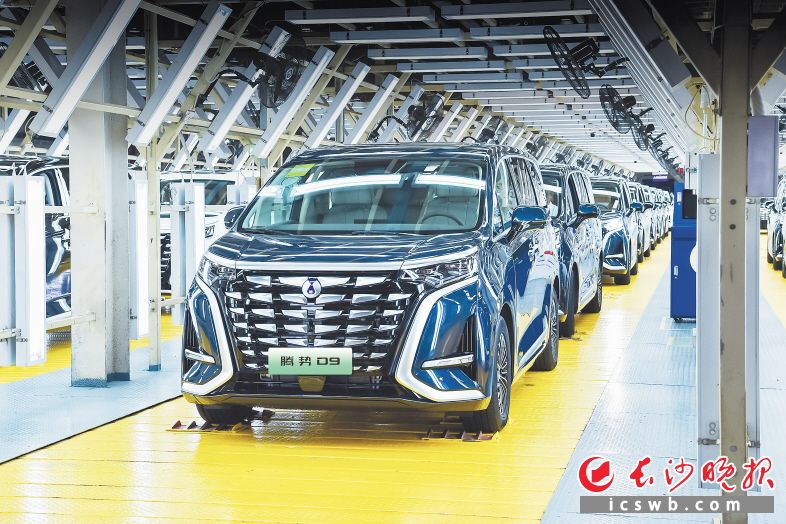
Core Insights - BYD has established a significant presence in Changsha, continuously increasing investments and developing six major bases, positioning "Changsha-made" products on the global stage [1][2][10] Group 1: Strategic Development - In 2009, BYD chose Changsha as its location for its first new energy vehicle base in Central China, capitalizing on the region's transportation advantages and government support [5][6] - Over 16 years, BYD has transformed from a single facility to a comprehensive ecosystem with six bases covering key industry segments, including vehicle manufacturing, battery production, and electronics [6][7] Group 2: Government and Corporate Synergy - The collaboration between BYD and the Changsha government reflects mutual trust and confidence in the region's future, demonstrated by efficient services such as online material reviews and "one-stop" processing [7][8] - Initiatives like the "return-to-work express" bus service have effectively addressed labor shortages, ensuring timely operations for manufacturing companies [7][8] Group 3: Global Expansion - BYD's Changsha-produced Tengshi D9 has become a global leader in the new energy MPV market, achieving significant sales milestones in various countries, including Thailand and Singapore [9][10] - In the first half of the year, Hunan's private enterprises exported electric vehicles worth 5.4 billion yuan, with BYD accounting for over 80% of this figure, reflecting a growth rate of 58.6% [10]

这所职高,为何这么有魅力(民生一线·职业教育观察)
Ren Min Ri Bao· 2025-09-14 22:03
Core Viewpoint - The article highlights the growing appeal of vocational education in Changsha, Hunan, particularly at Changsha Finance School, which reflects societal expectations for high-quality vocational education development [1][2]. Group 1: Enrollment and Demand - Changsha Finance School planned to enroll 1,800 students but received over 10,000 applications, ultimately admitting 1,890 students [1][3]. - The school emphasizes a dual-track approach, balancing academic advancement and employment opportunities for students [2][3]. Group 2: Educational Philosophy and Curriculum - The school aims to cultivate a new generation of vocational students who are confident and capable, focusing on individual talents and providing a supportive learning environment [2][4]. - Changsha Finance School offers a distinct educational model that includes a comprehensive professional system, practical training facilities, and a focus on holistic development through various campus activities [2][3]. Group 3: Pathways for Students - Students at Changsha Finance School can choose between academic advancement and employment, with tailored courses for each path [3][4]. - The vocational college entrance examination allows students to pursue higher education, with 422 students advancing to undergraduate programs in 2024, representing nearly half of the city's vocational school graduates [3][4]. Group 4: Skills Competitions and Achievements - The school has a strong track record in vocational skills competitions, winning multiple awards, including four gold medals in the National Vocational College Skills Competition [5][6]. - Students participate in various skill competitions to enhance their employability, with notable success stories emerging from these experiences [5][6]. Group 5: Innovation and Entrepreneurship - Changsha Finance School promotes innovation and entrepreneurship through a series of activities, including training camps and competitions, fostering a culture of creativity among students [7][8]. - The school has successfully incubated 79 student entrepreneurship projects since 2016, providing support and resources for aspiring entrepreneurs [7][8]. Group 6: Industry Integration - The school emphasizes the importance of integrating education with industry, collaborating with businesses to develop curriculum standards and training programs [8]. - This approach not only enhances the quality of vocational education but also aligns with societal expectations for skilled professionals in the workforce [8].
教育援疆,提升“硬件”留下“火种”
Xin Hua Ri Bao· 2025-09-14 20:51
Group 1 - The vocational education park in Xinjiang, with a total investment of 625 million yuan, is nearing delivery and aims to address local educational challenges by providing quality resources [1] - The park will offer training for over 30 trades and accommodate at least 7,000 students, integrating resources from Suzhou Technical Institute [1] - The project is seen as a pilot for the "integration of industry and education" concept, expected to inject "skill power" into the local economy [1] Group 2 - Since 2023, Jiangsu has sent 665 teachers to Ili, investing 1.725 billion yuan in 63 educational projects, and building 17 new schools to create a comprehensive educational pathway [2] - Over 45,700 teachers in Ili have received training, with 1,700 benefiting from mentorship, leading to significant achievements in national and regional skill competitions [2] - The establishment of the "Jiangsu-Ili Basic Science Education Development Center" and the introduction of a digital education resource platform are key initiatives to enhance educational quality [2] Group 3 - Jiangsu's educational aid emphasizes soft power development alongside hardware improvements, with specialized training programs for local teachers [3] - The "Silver Hair Plan" has successfully recruited retired teachers to share their experience and methods with local educators, ensuring sustainable teaching practices [3] - The commitment to educational aid in Xinjiang is framed as a long-term dedication to nurturing knowledge and growth in the region [3]