具身智能

Search documents
机器人行业一直被忽视的基础设施缺口,有人开始补了
机器人大讲堂· 2026-03-09 09:03
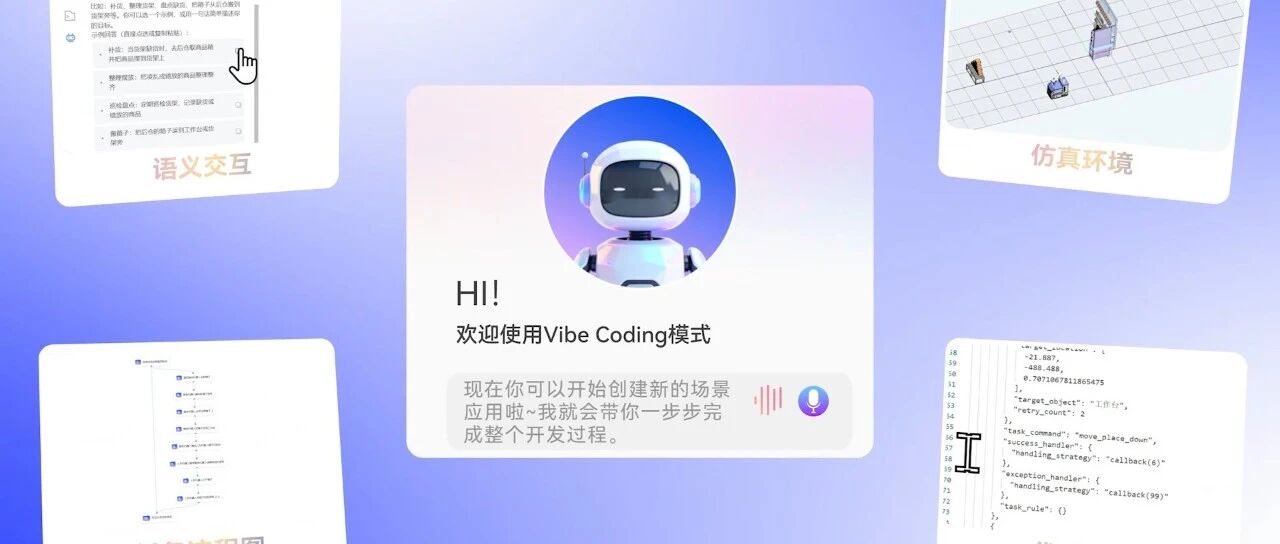
Core Viewpoint - The article highlights the structural challenges faced by the domestic robotics industry, emphasizing that while hardware can be produced locally, the core software platforms, including operating systems and development tools, still heavily rely on foreign ecosystems like ROS and NVIDIA's IsaacSim [1][3]. Group 1: Industry Challenges - The increasing autonomy rate of domestic robots reveals a critical issue: while hardware can be localized, the essential software components remain a significant vulnerability for companies in the robotics sector [3]. - The industry is at a crossroads where the integration of control systems, data platforms, and development paradigms is crucial for overcoming these challenges [4]. Group 2: Technological Advancements - Efort Qizhi has developed three core products—Mudu IDE, Dayan Data Platform, and OpenmindOS—aimed at addressing the integration of these essential components [4][6]. - The Mudu IDE serves as a one-stop simulation and development platform, integrating various stages of the development process, which traditionally required switching between multiple software tools [9][12]. Group 3: Vibe Coding - Vibe Coding, a new programming paradigm introduced by Mudu IDE, allows users to describe tasks in natural language, which the system then translates into executable programs, significantly reducing the time from idea to implementation by 65%-70% [12][14]. - This approach democratizes technology, enabling non-technical users, such as store managers and production engineers, to participate in the development process, thus unleashing a broader creative potential [15]. Group 4: Practical Applications - A demonstration of a complete task cycle in a supermarket setting showcased the seamless collaboration between different types of robots, validating the effectiveness of the integrated system [8][6]. - The Mudu IDE's capabilities include high-precision virtual controllers that allow for complex logic validation and program debugging without the need for physical hardware, thereby reducing on-site debugging time by over 30% [20][22]. Group 5: Future Prospects - The article envisions a future where the Mudu IDE not only addresses current efficiency issues but also reconstructs the entire development and commercial ecosystem of the robotics industry, similar to the evolution of app stores [31][34]. - The potential for a collaborative ecosystem is highlighted, where various stakeholders, including component manufacturers and integrators, can leverage the platform to enhance their offerings and streamline processes [35][36].


“建议补助高龄独居老人购置陪伴机器人”
第一财经· 2026-03-09 08:53
Core Viewpoint - The article emphasizes the accelerating aging population in China and the role of emerging technologies such as artificial intelligence, humanoid robots, and brain-computer interfaces in supporting the development of a high-quality "silver economy" [3]. Group 1: Aging Population and Economic Impact - By 2025, the population aged 60 and above in China is expected to reach 323 million, accounting for 23% of the total population. By around 2035, this number is projected to exceed 400 million, representing over 30% of the population, indicating a shift into a heavily aged society [3]. - The article highlights the changing family structure, with increasing issues of childlessness and low birth rates leading to a growing "accompaniment gap" in families [3]. Group 2: Policy Recommendations and Industry Development - National Committee member Li Lianzhu suggests implementing policies to support the development of family companionship robots, including subsidies for low-income and elderly households to purchase compliant robots [4]. - The article notes that 2026 is a critical year for the robotics industry, transitioning from technology validation to practical application, particularly in regions like the Guangdong-Hong Kong-Macau Greater Bay Area and the Yangtze River Delta [5]. - Li Lianzhu also points out that the family companionship robot industry is still in its early stages, facing challenges such as high costs, difficulties in widespread adoption, and a lack of standards and regulations [5]. Group 3: Technological Integration and Market Potential - Suggestions from various representatives include encouraging companies to increase R&D investments to enhance product offerings and accelerate the integration of robotics with industry and supply chains [6]. - The article cites the "Silver Economy Blue Book," estimating that the silver economy's total scale in China is around 7 trillion yuan, approximately 6% of GDP, with projections of reaching 30 trillion yuan by 2035, accounting for 10% of GDP [6].

独家丨前阿里副总裁任庚将创业,搭档前理想智驾一号位郎咸朋
雷峰网· 2026-03-09 08:48
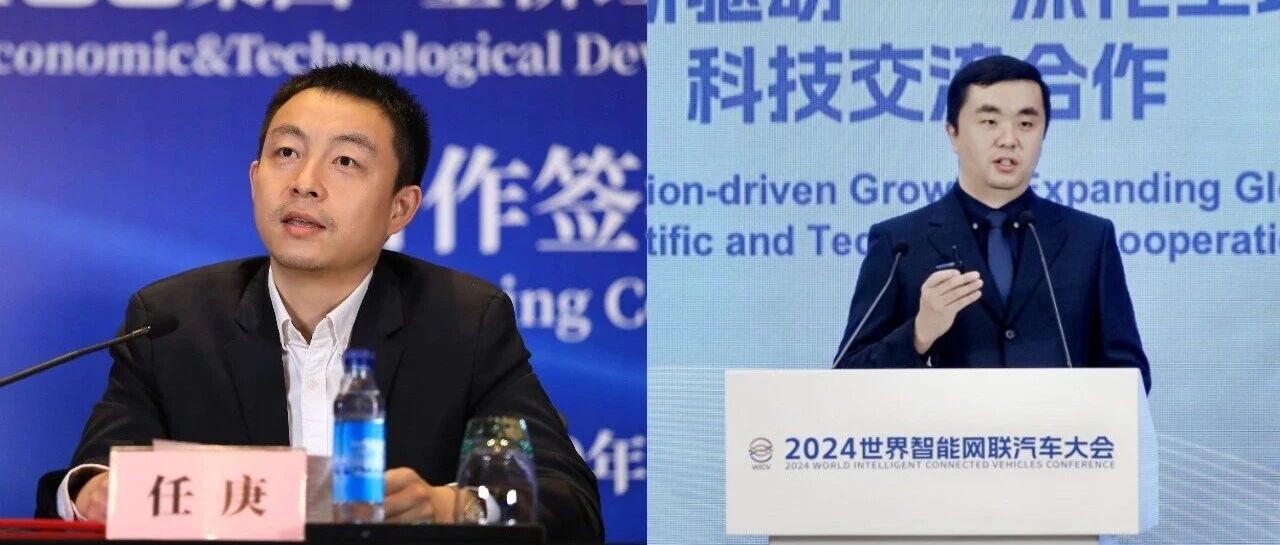
Core Viewpoint - A new company focused on embodied intelligence is being established by former Alibaba executives Ren Geng and Lang Xianpeng, with significant investment interest from top institutions during its early financing rounds [2][3]. Group 1: Company Formation and Leadership - Ren Geng, former Alibaba Cloud China President, will serve as the founder and CEO of the new company, while Lang Xianpeng, former Vice President of Intelligent Driving at Li Auto, will be the co-founder and CTO [2][9]. - The company aims to develop full-stack embodied intelligence technology, positioning itself against Tesla's humanoid robots [2][12]. Group 2: Background of Founders - Ren Geng has extensive experience in managing large-scale organizations, having held key positions at Huawei and Alibaba, where he contributed to Alibaba Cloud's growth during a period of rapid market expansion [3][4][7]. - Lang Xianpeng has a strong background in intelligent driving, having built the autonomous driving research and development system at Li Auto and led significant projects that advanced the company's technology [9][11]. Group 3: Industry Context and Potential - The field of embodied intelligence is transitioning from experimental research to early-stage industrial application, indicating a growing market opportunity [12]. - The combination of Ren Geng's strategic and organizational expertise with Lang Xianpeng's technical and engineering capabilities is seen as a unique advantage in the current entrepreneurial landscape of embodied intelligence [13][14].
ETF未来产业含量盘点
HTSC· 2026-03-09 08:40
证券研究报告 ETF 未来产业含量盘点 2026 年 3 月 08 日│中国内地 ETF 点评 ETF 市场观察:政策明确支持未来产业发展,哪些 ETF 持股比例较高? 近期国家政策密集支持未来产业发展,明确将 6G、具身智能、未来能源、 脑机接口、量子科技等产业列为重点培育方向。基于此,我们采用"核心业 务关联/明确技术布局"的严格标准,对相关概念股进行筛选,并结合最新 指数成分权重,梳理了现有 ETF 在五大方向上的持股结构。结果显示,6G、 具身智能、未来能源分别在跟踪电信/通信、机器人、新能源车电池等类别 指数的 ETF 中含量较高;而量子科技和脑机接口等前沿领域,目前在严格 口径下尚缺乏纯粹主题标的,医疗器械类指数在脑机接口方向的权重占比相 对有限。 ETF 市场回顾:近一周宽基 ETF 净流出,A 股油气 ETF 规模快速增加 近一周(2026.3.2-2026.3.6)宽基 ETF 整体净流出,中证 500、沪深 300、 中证 1000ETF 的净流出额均在 50 亿元以上。行业主题 ETF 中,A 股油气 ETF 总规模在近一周内从 77 亿元增长到 282 亿元,单周规模增幅 265%, ...
德赛西威(002920):2025年报点评:2025年业绩稳健增长,创新业务发展启航
Guohai Securities· 2026-03-09 07:04
Investment Rating - The investment rating for the company is "Buy" (maintained) [1][8] Core Insights - The company achieved a revenue of 32.557 billion yuan in 2025, representing a year-on-year increase of 17.88%, and a net profit attributable to shareholders of 2.454 billion yuan, up 22.38% year-on-year [2][4] - The fourth quarter of 2025 saw a revenue of 10.221 billion yuan, an increase of 18.25% year-on-year and 32.87% quarter-on-quarter, with a net profit of 666 million yuan, up 11.34% year-on-year and 17.82% quarter-on-quarter [2][4] - The company is focusing on expanding its international market presence and continuously innovating its product offerings, with overseas revenue reaching 2.41 billion yuan, a 41% increase year-on-year, and accounting for 7.40% of total revenue [4][7] Financial Performance - The company’s revenue is projected to grow to 38.430 billion yuan in 2026, 44.165 billion yuan in 2027, and 49.978 billion yuan in 2028, with growth rates of 18%, 15%, and 13% respectively [6][8] - The net profit attributable to shareholders is expected to reach 2.803 billion yuan in 2026, 3.388 billion yuan in 2027, and 3.953 billion yuan in 2028, with growth rates of 14%, 21%, and 17% respectively [6][8] - The company maintains a return on equity (ROE) of 16% for 2026, increasing to 18% by 2028 [6][8] Business Development - The company is actively expanding into new business areas such as unmanned logistics vehicles and embodied intelligence, launching the "Chuanxing Zhiyuan" brand and the S6 series of unmanned vehicles [7] - The company has developed a full-stack self-research L4-level autonomous driving system, suitable for various high-value scenarios such as industrial parks and logistics distribution [7] - The company’s new projects have an annual sales target exceeding 3.5 billion yuan, with significant advancements in AI cockpit solutions and autonomous driving technologies [5][7]

未来产业周报第12期(2026/3/1-2026/3/7):未来产业风险分担机制确立,5G-A与卫星组网加速共筑6G底座-20260309
Shenwan Hongyuan Securities· 2026-03-09 06:46
Policy Dynamics - The 2026 government work report emphasizes the establishment of a future industry risk-sharing mechanism, aiming to support the development of quantum technology, future energy, embodied intelligence, brain-computer interfaces, and 6G [5][6] - The report indicates a shift towards a collaborative model where state-owned enterprises lead and social capital follows, with national funds directly covering initial R&D losses [5][6] Quantum Technology - Huawei launched the "Galaxy AI Network Flux Integration Solution" at the 2026 World Mobile Communication Conference, significantly reducing the deployment costs and barriers for quantum encryption technology [7][8] - French quantum computing company Pasqal is set to go public via SPAC, with a valuation of $2 billion, showcasing the commercial competitiveness of the neutral atom approach [9][10] - A Chinese research team achieved breakthroughs in solid-state quantum light sources, developing a high-efficiency dual-photon emitter, which aids in the domestic production of optical quantum computers [11] Hydrogen Energy and Nuclear Fusion - The Baowu Clean Energy (Yangjiang) green hydrogen industrial park has officially launched, exploring the direct hydrogen production model from offshore wind power, with a total investment of 11 billion yuan [12][13] - The "14th Five-Year Plan" outlines a trillion-level future industry layout, emphasizing nuclear fusion and green hydrogen alongside major energy projects [14] Brain-Computer Interfaces - Science Corporation has accelerated the commercialization of its PRIMA retinal implant system, raising $230 million in Series C funding to help restore vision for patients with macular degeneration [15][16] Embodied Intelligence - Honor has released its first humanoid robot and "robot phone," which features innovative design and capabilities for physical perception and execution [19] 6G and Commercial Aerospace - The global communication industry is transitioning from 5G-A to 6G, with Huawei and ZTE promoting the large-scale commercial use of the U6GHz frequency band [20][21] - SpaceX plans to launch 1,200 second-generation "Starlink" satellites by the end of 2027, aiming for global seamless coverage, which aligns with the 6G vision of comprehensive connectivity [27][28]
首提航空航天为新兴支柱产业
Huafu Securities· 2026-03-09 06:43
Investment Rating - The report maintains a rating of "stronger than the market" for the defense industry [4]. Core Viewpoints - The report highlights that aerospace has been designated as an emerging pillar industry for the first time in the 2026 government work report, alongside integrated circuits, biomedicine, and the low-altitude economy, indicating increased attention and investment potential in these sectors [3][45]. - Significant investments in satellite internet and other major projects are anticipated, with scales reaching hundreds of billions or even trillions [3][46]. - The report emphasizes the importance of domestic rocket development, the overseas SpaceX/Tesla supply chain, and technological innovations in the satellite industry as key areas for investment [3][51][52]. Summary by Sections Domestic Rockets - Three core logic points are presented: 1. Macro: Strong launch capacity is a strategic high ground for major powers, similar to GPUs [4][51]. 2. Mid-level: The objective gap establishes a logic for rocket quantity inflation, with a significant increase expected within five years [4][51]. 3. Micro: The listing and financing of rocket companies will drive capacity expansion across the entire industry chain, achieving a dual boost in PE and EPS [4][51]. - Recommended companies include Feiwo Technology, Western Materials, Aerospace Power, and others [4][51]. SpaceX/Tesla Supply Chain - The report notes that overseas commercial aerospace industries, represented by SpaceX, are progressing rapidly in rocket launches, Starlink deployment, and photovoltaic construction [4][52]. - Companies to watch include Lens Technology, Yujing Co., and others [4][52]. Technological Innovations in the Satellite Industry - The report indicates that new technologies such as flexible solar wings and low-cost commercial satellites are entering a rapid development phase, with new suppliers emerging [4][56]. - Suggested companies for investment include Aerospace Electronics, Geberit, and others [4][56]. Military Industry Focus - The report suggests focusing on commercial engines, nuclear fusion, and drones, highlighting companies like Aerospace Technology, and others [4][57][58]. - The report also notes ongoing geopolitical tensions that may catalyze demand in missile, unmanned, and military trade sectors [4][58].
——解析人形机器人灵巧手产业链:灵巧之手,如何成形?
Huachuang Securities· 2026-03-09 06:43
Investment Rating - The report does not explicitly state an investment rating for the humanoid robot dexterous hand industry Core Insights - The dexterous hand is seen as the "last mile" for humanoid robots, crucial for achieving generalization and replacing complex manual labor. It faces three main bottlenecks: high costs, insufficient reliability, and weak control generalization capabilities. Collaborative innovation in core components and algorithms is essential for overcoming these challenges [1][5][11] - The market for dexterous hands is transitioning from specialized laboratory equipment to standard components in humanoid robots, driven by universal demand, decreasing prices, and mature supply chains. The global market for multi-finger dexterous hands is projected to grow from approximately $123 million in 2024 to $5.849 billion by 2031, with a compound annual growth rate (CAGR) of 65.9% from 2025 to 2031 [1][7][11] Summary by Sections 1. Importance of Dexterous Hands - Dexterous hands are critical for humanoid robots as they enable fine manipulation, which is currently a technological bottleneck. The focus has shifted from mobility to operational capabilities, making dexterous hands essential for tasks requiring precision and coordination [5][8][9] 2. Industry Chain Overview - The dexterous hand industry is characterized by a structure where international giants dominate key components, while domestic companies make breakthroughs in various areas. The industry is moving from laboratory prototypes to large-scale industrial products [1][7] - The upstream consists of four key modules: drive and transmission, perception and sensing, materials and structural components, and core software and algorithms. The midstream is the value integration hub, while the downstream includes applications in research, industrial automation, special operations, medical services, and consumer markets [1][2][3] 3. Key Bottlenecks and Challenges - The industry faces three main bottlenecks: technical challenges in achieving high output, precision, and lightweight designs; reliance on imported core components; and fragmented software and hardware interfaces lacking unified testing standards [1][11] 4. Global Landscape - The global market for dexterous hands shows a tiered structure, with the US leading in algorithm and innovation, Europe focusing on precision manufacturing, Japan and South Korea emphasizing core component breakthroughs, and China emerging as a leader through system-level integration and cost disruption [1][3][11]
2026年紧缺岗位薪资报告2026
Lie Pin· 2026-03-09 06:30
Investment Rating - The report does not explicitly provide an investment rating for the industry Core Insights - The report emphasizes the importance of understanding compensation as a strategic lever for organizational competitiveness and talent value realization, especially in the context of China's economic recovery and labor market dynamics [6][7] - It predicts a rebound in average salary growth to around 5.0% in 2026, with a shift towards differentiated pay for key positions and high performers, marking the end of the era of universal salary adjustments [7][8] - The report highlights the ongoing transformation in the labor market, with a focus on the integration of AI and digital skills, which are becoming critical for employment and compensation strategies [6][9] Summary by Sections Macroeconomic Trends Analysis - The global economy is expected to show resilience in 2026, with growth forecasts adjusted to 3.3% by the IMF, despite ongoing geopolitical tensions and supply chain disruptions [9][10] - China's GDP growth is projected to be between 4.5% and 4.8%, driven by new productivity factors and a shift from traditional infrastructure to high-end manufacturing and technology applications [13][14] - The report indicates that domestic consumption will contribute over 60% to economic growth, with a focus on service consumption and the aging population creating new growth opportunities [14] Labor Supply and Demand Market Information - By the end of 2025, China's total population is projected to be approximately 1.40489 billion, with a labor force of 851.36 million aged 16-59, indicating a rich resource for economic development [20][21] - Talent mobility is shifting towards rational flows based on industry fit and cost of living, with significant cross-regional movement expected to exceed 66 billion trips in 2025 [22][24] - The demand for talent in high-tech sectors is surging, particularly in AI and digital transformation, reflecting a strong alignment with national industrial strategies [28][37] Salary Insights in AI and Key Positions - The AI industry is projected to reach a market size of 452 billion yuan in 2025, with a growth rate exceeding 25%, indicating robust demand for AI-related skills [44][45] - The report outlines significant salary disparities for key positions, with algorithm engineers earning an average of 446,200 yuan, reflecting the high demand for specialized skills in the tech sector [53][54] - It notes that the average salary in major cities like Beijing and Shanghai is significantly higher than the national average, highlighting the competitive landscape for talent in urban centers [56][58] Talent Management and Compensation Trends - The report discusses the transformation of organizational structures due to AI, moving from hierarchical models to more fluid, skill-based frameworks [62][63] - It emphasizes the need for organizations to adapt to a new talent management paradigm that prioritizes skills over traditional job descriptions, driven by AI capabilities [64][66] - The report predicts that the competition for talent will intensify, necessitating innovative compensation strategies to attract and retain high-performing individuals [61][62]
周观点 | 比亚迪发布全新闪充技术 小鹏发布第二代VLA【国联民生汽车 崔琰团队】
汽车琰究· 2026-03-09 05:59
Market Performance - The automotive sector underperformed the market this week, with A-share automotive stocks declining by 2.76%, ranking 16th among Shenwan sub-industries, compared to the CSI 300's decline of 1.07% [2][28]. - Among sub-sectors, passenger cars increased by 0.85%, while automotive services, parts, commercial vehicles, motorcycles, and others decreased by -3.24%, -3.64%, -3.76%, and -3.96% respectively [2][28]. Key Insights - The article suggests focusing on core stocks including Geely Automobile, Xpeng Motors, BYD, Bertel, Top Group, New Spring, Weichai Power, China National Heavy Duty Truck Group H, and Jingu Co. [2][7]. - BYD announced a new generation of blade battery and flash charging technology, achieving the fastest charging speed in global mass production, charging from 10% to 70% in 5 minutes and from 10% to 97% in 9 minutes, showcasing its leadership in electrification [2][7]. Electrification and Smart Technology - Huawei launched a new generation of dual-light path image-level 896-line lidar, marking a significant advancement in perception capabilities [3][7]. - Xpeng Motors introduced its second-generation VLA, eliminating the "language translation" step and enabling direct generation of action commands from visual signals, representing a breakthrough in the industry [3][7]. Policy and Market Recovery - Various local governments have begun implementing 2026 vehicle trade-in subsidies, which are expected to stabilize and boost automotive sales [3][8]. - The weak demand for passenger vehicles in January and February was attributed to delayed subsidy policies and a lack of new model launches, but improvements in these areas are anticipated to support demand recovery in March [3][8]. Investment Recommendations - For passenger vehicles, the article recommends focusing on companies like Geely, Xpeng, and BYD, while suggesting attention to Jianghuai Automobile [4][9]. - In the parts sector, it highlights companies such as Bertel, Xpeng, and Horizon Robotics for their smart technology advancements, and suggests monitoring companies like Qianli Technology and Xiaoma Zhixing [4][9]. - For commercial vehicles, it recommends Weichai Power and China National Heavy Duty Truck Group, driven by trade-in policies and export growth [4][15]. Motorcycle Market - The motorcycle market is seeing growth in mid-to-large displacement models, with companies like Spring Power and Loncin General being recommended as leaders in this segment [5][25].