
半导体

Search documents
六位投资大咖激辩
Zhong Guo Ji Jin Bao· 2025-12-28 02:33
Core Insights - The forum discussed investment opportunities in AI and robotics, emphasizing the importance of real-world applications and market demand in these sectors [1][3][5]. Group 1: Investment Opportunities - Key areas of focus include AI applications in autonomous driving, AI integration with biomedicine, and productivity-enhancing robots [3][5]. - The investment community anticipates significant advancements in AI software applications and hardware integration by 2026, particularly in the context of China's manufacturing advantages [6][12]. - The emergence of humanoid robots and space computing is highlighted as a promising investment direction, with expectations for substantial growth in these sectors [4][11]. Group 2: Market Trends and Valuation - The discussion noted that secondary market trends often lag behind primary market dynamics, suggesting that current high valuations in the AI and robotics sectors may not reflect underlying fundamentals [10][19]. - The panelists emphasized the need for companies to demonstrate real market demand and solve industry pain points to justify their valuations, especially in a potentially bubble-like environment [15][17]. - The importance of investing in companies with strong customer bases and technological differentiation was underscored as a strategy to mitigate risks associated with high valuations [16][18]. Group 3: Future Projections - The consensus is that 2026 will be a pivotal year for AI and robotics, with a wide array of entrepreneurial and investment opportunities expected to emerge [8][23]. - The potential for breakthroughs in China's semiconductor industry is seen as a critical investment opportunity, with expectations for significant advancements in chip technology [14][22]. - The panelists believe that the next decade will witness a shift towards greater global competitiveness for Chinese technology, creating numerous investment prospects [23].

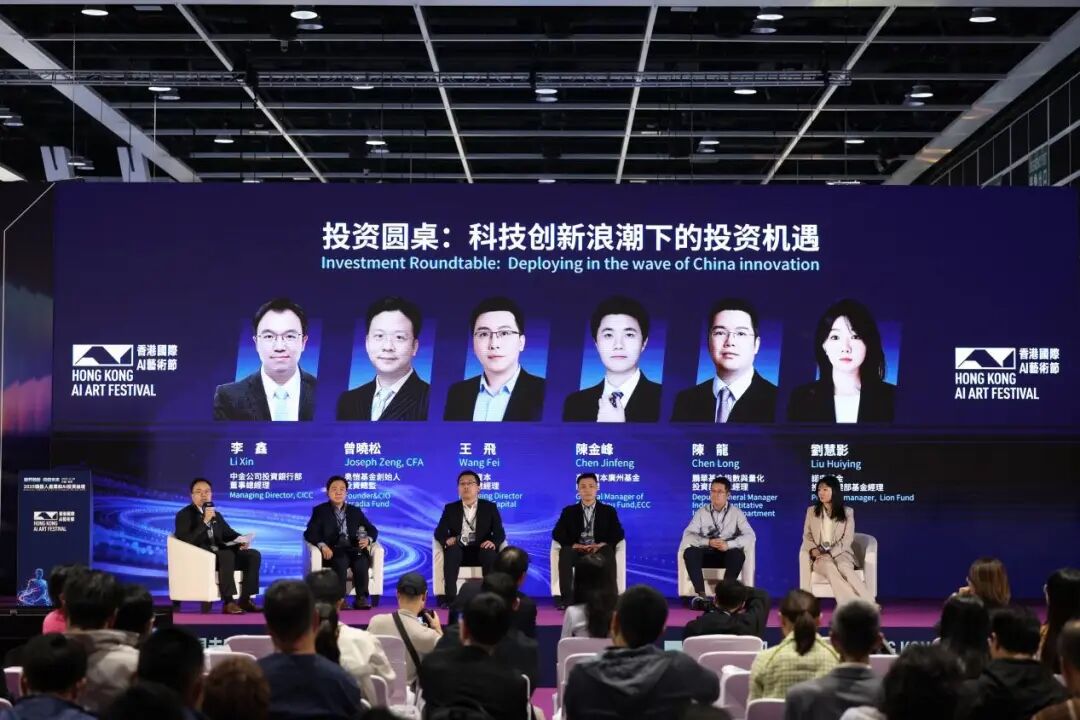
六位投资大咖激辩
中国基金报· 2025-12-28 02:22
Core Viewpoint - The forum highlighted significant investment opportunities in AI and robotics, emphasizing the importance of practical applications and market demand in evaluating potential investments [2][4][15]. Group 1: Investment Opportunities in AI and Robotics - Key areas of focus include AI applications in autonomous driving, AI integration with biomedicine, and productivity-enhancing robots in various industries [4][7]. - Investment in AI downstream applications, particularly software and hardware integration, is expected to grow, with notable examples being AIGC in audio and video [8][12]. - The importance of infrastructure investments in AI, including computing power and related technologies, is emphasized as a long-term opportunity [8][14]. Group 2: Market Trends and Valuation - The secondary market often lags behind the primary market, with trends in the primary market influencing secondary market dynamics [5][11]. - The valuation of companies in the AI and robotics sectors is currently high, but there is a belief that significant growth potential exists, particularly for companies that can demonstrate real market demand [15][19]. - The discussion highlighted the need for companies to have substantial clients and to address genuine industry pain points to justify their valuations [15][19]. Group 3: Future Outlook and Strategic Focus - The year 2026 is anticipated to be pivotal for AI and robotics, with expectations of widespread entrepreneurial and investment opportunities across various sectors [9][10][14]. - The Chinese semiconductor industry is projected to achieve breakthroughs, positioning it as a significant player in the global market, which could reshape valuations in the tech sector [14][24]. - The focus on "scene + AI" investment logic suggests that practical applications of AI in real-world scenarios will be crucial for successful investments [10][15].

行情录得五连阳,后市重点关注几条主线
Sou Hu Cai Jing· 2025-12-27 01:08
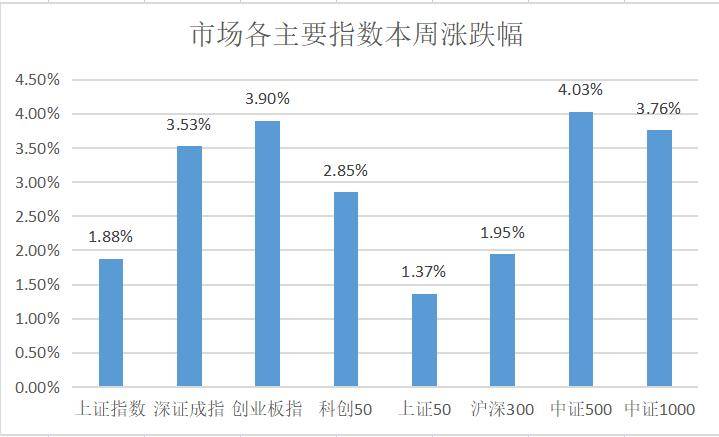
Group 1 - The market showed a continuous rebound this week, with all three major indices recording five consecutive days of gains. The CSI 500 index led with a weekly increase of 4.03%, while the SSE 50 and CSI 300 indices lagged behind [2][30]. - In terms of sector performance, industries such as non-ferrous metals, industrial trade, national defense, and chemicals saw significant gains, while utilities, media and entertainment, transportation, and pharmaceuticals underperformed [4][30]. - The thematic sectors that performed well included fiberglass, lithium battery electrolytes, Hainan Free Trade Port, photovoltaics, and batteries [5][30]. Group 2 - In November, the manufacturing PMI was reported at 49.2%, an increase of 0.2 percentage points from the previous month, indicating an improvement in economic conditions. Conversely, the non-manufacturing business activity index fell to 49.5%, down 0.6 percentage points [8]. - Consumer prices in November rose by 0.7% year-on-year, while the average for January to November remained flat compared to the previous year. Month-on-month, consumer prices decreased by 0.1% [13]. - In November, the export value from China increased by 5.9% year-on-year, while imports grew by 1.9%. The trade surplus reached $111.68 billion, up from $90.07 billion in the previous period [19]. - New social financing in November amounted to 2.49 trillion yuan, an increase of 159.7 billion yuan year-on-year, with new deposits totaling 1.41 trillion yuan [19]. - The industrial added value in November saw a real growth of 4.8% year-on-year, with a month-on-month increase of 0.44%. For the first eleven months, the growth was 6.0% year-on-year [21]. - Fixed asset investment from January to November totaled 4440.35 billion yuan, a decrease of 2.6% year-on-year, with real estate development investment down by 15.9% [24][25]. - Retail sales of consumer goods in November reached 43.898 billion yuan, reflecting a year-on-year growth of 1.3%, while the total for January to November grew by 4.0% [27][29]. Group 3 - The market outlook remains optimistic, with expectations for a spring rally in the coming year due to policy support and major projects being prioritized. The focus will be on domestic demand policies as a key driver for market performance [30][33]. - Despite current market fluctuations, there is a belief that the market will strengthen gradually, with strategies focusing on upcoming earnings disclosures and themes such as domestic demand, anti-involution, new momentum, and technological growth [33].
美埃科技跌6.20%,成交额5.92亿元,今日主力净流入432.60万
Xin Lang Cai Jing· 2025-12-26 07:47
Core Viewpoint - The company Meiyai (China) Environmental Technology Co., Ltd. is experiencing a decline in stock price, with a drop of 6.20% on December 26, leading to a market capitalization of 8.587 billion yuan [1] Group 1: Company Overview - Meiyai specializes in the research, production, and sales of air purification products and atmospheric environmental governance products, with a primary revenue source from cleanroom air filtration and clean wall ceiling system products accounting for 90.18% of total revenue [3][7] - The company was awarded the national-level "specialized and innovative" title of "little giant" at the end of 2021, establishing itself as a leading domestic enterprise in cleanroom equipment for the electronics semiconductor industry [3] Group 2: Business Relationships and Market Position - Meiyai has developed the first domestic 28nm lithography equipment for Shanghai Microelectronics Equipment (Group) Co., Ltd., providing products that meet the highest international cleanliness standards [2] - The company has been a long-term supplier to SMIC, providing various air purification products essential for maintaining air cleanliness in advanced semiconductor manufacturing processes [2] Group 3: Financial Performance - For the period from January to September 2025, Meiyai achieved a revenue of 1.486 billion yuan, representing a year-on-year growth of 23.64%, while the net profit attributable to shareholders decreased by 5.17% to 141 million yuan [7][8] - The company has distributed a total of 80.64 million yuan in dividends since its A-share listing [9] Group 4: Market Activity - The stock has seen a net inflow of 2.6654 million yuan today, with a trading volume of 5.92 billion yuan and a turnover rate of 6.73% [1][4] - The average trading cost of the stock is 54.83 yuan, with the current price approaching a resistance level of 68.79 yuan, indicating potential for a price correction if this level is not surpassed [6]

沪指还是8连阳了!11:13全市场为何同步跳水?
Mei Ri Jing Ji Xin Wen· 2025-12-26 07:42
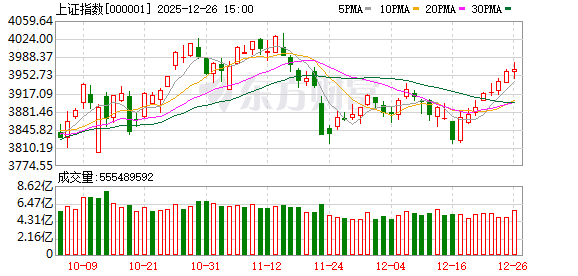
Market Overview - The market experienced a slight increase with the Shanghai Composite Index rising by 0.1%, marking an eight-day consecutive gain [2] - The Shenzhen Component Index increased by 0.54%, while the ChiNext Index rose by 0.14% [2] - Over 3,400 stocks declined, with total trading volume in the Shanghai and Shenzhen markets reaching 2.16 trillion yuan, an increase of 235.7 billion yuan from the previous trading day [2] Sector Performance - The commercial aerospace sector saw a significant surge, while the lithium battery supply chain also performed strongly [2] - The Hainan Free Trade Zone concept remained active, whereas sectors such as paper, liquor, and computing hardware faced notable declines [2] Market Dynamics - A sudden drop in the market around 11:13 AM raised speculation about potential negative news triggering a collective sell-off [4] - The market quickly rebounded after the drop, indicating that there was no significant negative news impacting the market [4][6] - Historical precedents of similar intraday drops were noted, suggesting that such fluctuations do not necessarily affect the long-term market trend [5][8] Investment Sentiment - The current market environment is perceived as stabilizing, with an increase in risk appetite among investors [7] - The offshore RMB against the USD breaking the 7 mark may accelerate foreign investment in quality Chinese assets [7] - The Central Economic Work Conference emphasized technological innovation as a driver for modern industrial system construction, with sectors like commercial aerospace, AI, and semiconductors identified for continued policy support [7] Sector Highlights - The lithium carbonate futures price surged past 130,000 yuan, with a daily increase of over 8%, reaching a new high since November 2023 [10] - The photovoltaic industry is expected to turn profitable by 2026, with major companies likely to benefit from cash flow and scale advantages [11] - Hainan's free trade zone is experiencing a surge in duty-free shopping, with significant increases in consumer spending and travel bookings [12]
日本政府加码押注AI芯片:下一财年预算增加近三倍
智通财经网· 2025-12-26 07:08
智通财经APP获悉,日本经济产业省计划将本财年(从 4 月开始)对尖端半导体和人工智能开发的预算支 持增加近三倍,达到约 1.23 万亿日元(79 亿美元)。日本经济产业省的预算总额较上年增长约50%,达到 3.07万亿日元,主要原因是芯片和人工智能领域的支出大幅增加。日本首相高市早苗的内阁于周五批准 了该预算案,初步预算方案将于新年提交国会审议。 在整体预算中,50亿日元将用于保障包括稀土在内的关键矿产资源。为实现脱碳目标,1220亿日元将用 于包括开发所谓下一代核电站在内的多个领域。根据两国贸易协定,日本还将发行约1.78万亿日元的特 别债券,以帮助国家支持的日本出口投资保险公司支持日本对美投资。 从4月开始的新财年起,日本经济产业省计划将芯片和人工智能领域的大部分额外资金纳入常规预算, 而不是像以往那样在年底通过额外预算临时拨款。此举有望为相关领域提供更稳定的资金支持。 在半导体领域,日本经济产业省已拨款1500亿日元用于国有芯片企业Rapidus Corp.,使政府对该企业的 累计投资达到2500亿日元。在人工智能领域,日本政府拨款3873亿日元用于开发国内基础人工智能模 型、加强数据基础设施建设以及 ...
中国新质生产力风向标——A500ETF南方(159352)盘中交投活跃,反弹向上,成分股永兴材料、航天发展等多股涨停
Xin Lang Cai Jing· 2025-12-26 06:22
Group 1 - A500ETF Southern (159352) has seen a 0.65% increase, marking a six-day consecutive rise, with a trading volume of 7.878 billion yuan and a turnover rate of 17.12% [1] - The CSI A500 Index, which the A500ETF closely tracks, rose by 0.60%, with several constituent stocks, including Yongxing Materials and Enjie Co., each increasing by 10% [1] - The CSI A500 Index is recognized as a "barometer of China's new productive forces," covering approximately 90 tertiary industries and focusing on industry leaders and ESG criteria [1] Group 2 - Listed companies in China have accelerated investments in innovation, with a total R&D expenditure of 1.16 trillion yuan in the first three quarters of 2025, marking three consecutive years of over 1 trillion yuan in R&D spending [2] - The A-share market is entering a critical window for cross-year layout, with structural opportunities expected to align with policy guidance and industry prosperity [2] - A500ETF Southern (159352) offers a low management fee of 0.15% and a custody fee of 0.05%, providing a high-precision, low-cost investment channel [2]





华峰测控跌2.04%,成交额2.64亿元,主力资金净流出191.08万元
Xin Lang Zheng Quan· 2025-12-26 05:19
Core Viewpoint - Huafeng Measurement and Control has experienced significant stock price fluctuations and strong revenue growth, indicating a robust performance in the semiconductor testing system sector. Group 1: Stock Performance - As of December 26, Huafeng Measurement and Control's stock price decreased by 2.04% to 189.51 CNY per share, with a trading volume of 264 million CNY and a turnover rate of 1.02%, resulting in a total market capitalization of 25.685 billion CNY [1] - The stock has increased by 82.66% year-to-date, with a 10.82% rise over the last five trading days and an 11.28% increase over the last 20 days, although it has seen a decline of 9.52% over the past 60 days [1] Group 2: Financial Performance - For the period from January to September 2025, Huafeng Measurement and Control achieved a revenue of 939 million CNY, representing a year-on-year growth of 51.21%, while the net profit attributable to shareholders was 387 million CNY, reflecting an increase of 81.57% year-on-year [2] - The company has distributed a total of 565 million CNY in dividends since its A-share listing, with 336 million CNY distributed over the past three years [3] Group 3: Shareholder Information - As of September 30, 2025, the number of shareholders for Huafeng Measurement and Control reached 10,200, an increase of 45.32% from the previous period, while the average circulating shares per person decreased by 31.18% to 13,295 shares [2] - Among the top ten circulating shareholders, Hong Kong Central Clearing Limited is the third-largest, holding 8.5111 million shares, a decrease of 333,000 shares from the previous period [3]

南华期货有色金属锡2026年度展望:物以锡为贵
Nan Hua Qi Huo· 2025-12-26 05:13
Report Industry Investment Rating No relevant content provided. Core Viewpoints of the Report - The price of tin is expected to fluctuate widely throughout 2026, with the overall center of gravity moving upward. It may face pressure in the first half of the year due to supply recovery and potential AI bubbles, and then rise in the second half as macro - easing policies are implemented and the market reaches a tight balance. The predicted core fluctuation range for the SHFE Shanghai tin main contract in 2026 is 275,000 - 400,000 yuan/ton, and the range for LME tin is 38,500 - 56,000 US dollars/ton [2]. - On the supply side, there are significant uncertainties in the three major supply areas of Myanmar, Indonesia, and Congo (Kinshasa). Supply may be stronger in the first half of 2026 compared to this year, but supply disruptions will persist in the second half due to factors such as the rainy season in Myanmar, the intensification of the war in Congo (Kinshasa), and quota restrictions in Indonesia [2]. - On the demand side, the consumer electronics industry is entering a recovery cycle. Although the AI sector has a relatively small weight, it has strong driving force. Other traditional tin - consuming sectors will maintain steady growth. The overall demand growth rate of tin is expected to remain above 3% in 2026 [2][26]. Summary by Relevant Catalogs Chapter 2: Market Review - **First stage (January - May 2025)**: Supply bottlenecks drove the market, and capital forced short - covering to push prices to a peak. The core contradiction was a sharp contraction in supply. Delays in Indonesia's RKAB export quota approval and the repeated failure of the复产 in Myanmar's Wa State mine led to a supply gap. Coupled with the Fed's expected interest - rate cut, capital launched a short - covering campaign, pushing the Shanghai tin main contract to a high [4]. - **Second stage (May - September 2025)**: Negative feedback emerged, and there was a deep correction as the macro - environment cooled. High tin prices suppressed downstream purchasing, leading to low spot trading and inventory stagnation. The approval of Indonesia's RKAB and the recovery of exports, along with fluctuating macro - sentiment, caused long - position capital to leave the market, and tin prices fell [4]. - **Third stage (October - December 2025)**: Raw material shortages resurfaced, and the implementation of macro - policies pushed prices to a new high. Despite the nominal复产 in Myanmar's Wa State, actual tin concentrate inflows were lower than expected. The Fed's interest - rate cut, combined with low inventory and weak supply in the industry and increased demand from semiconductors and AI, drove tin prices up to a historical high [7]. Chapter 3: Supply Side - Increasing Uncertainty - **Tin ore: Limited growth**: In 2025, global tin concentrate supply showed a pattern of "stock competition and limited growth." In 2026, the supply elasticity of global tin ore remains weak, and the core contradiction is shifting from policy disruptions to resource depletion. The growth rate of global tin ore production is expected to be in the range of 1.5% - 2% under a pessimistic scenario, and may reach 8% if the复产 exceeds expectations [8]. - **Myanmar: Multiple disturbances**: Myanmar's tin supply has been a major source of "expected differences." Since the mining rectification in 2024, the actual复产 has been slow and non - continuous due to policy, equipment, and cost factors. In 2026, resource depletion will limit supply, and the rainy season and logistics problems may cause supply shortages and price increases [12][13]. - **Indonesia: From elastic adjustment to institutional constraints**: In 2025, Indonesia's tin exports were restricted by anti - corruption investigations and stricter RKAB approvals. In 2026, although the approval process may normalize, supply elasticity will decline significantly. Exports are expected to recover but will be subject to RKAB approvals [18]. - **Congo (Kinshasa): Increment and geopolitical concerns**: The Bisie tin mine in Congo (Kinshasa) is the only certain incremental source of global supply in 2026. However, the project faces risks of armed conflict and unstable logistics, so a higher risk premium should be considered [22]. - **Cost support analysis**: In 2026, the cost of global tin mining is expected to rise. The 90 - percentile cash cost line (C1) is expected to reach 26,000 - 27,000 US dollars/ton, and the 90 - percentile fully cost (AISC) is expected to exceed 29,000 US dollars/ton, providing strong support for tin prices [24][25]. Chapter 4: Demand Side - Cycle Resonance and AI Reconstruction - **Consumer electronics: From "passive inventory reduction" to "active inventory replenishment"**: The consumer electronics industry has ended the difficult inventory reduction phase. In 2026, it will enter the "active inventory replenishment" stage driven by the replacement cycle of PC equipment and the penetration of "edge - side AI" [27][30]. - **AI servers: Strong driving force, low weight** - In 2026, the AI server market is divided into "standard modular servers" and "rack - scale systems." The rack - scale system represented by NVIDIA GB300 NVL72 has a revolutionary impact on tin consumption [33][34]. - The estimated tin consumption of a single NVIDIA GB300 NVL72 cabinet is 5.15 kg, mainly from computing trays, cable assemblies, power systems, and backplane systems [36][38]. - The total tin consumption increment of the AI industry chain in 2026 is estimated to be about 1,600 tons, accounting for less than 0.5% of the global annual consumption. Although the physical impact is limited, it has a significant influence on market pricing [43][44]. - **Marginal changes: Photovoltaic's reduction concerns and the resilience of traditional sectors** - In 2026, the demand growth of the photovoltaic sector will level off as the increase in installed capacity is offset by the decline in tin consumption per GW. The sector will become a support for maintaining high - level consumption rather than a major driver of price increases [45][46]. - In traditional sectors, tin chemicals may face a decline, while tinplate and lead - acid batteries are expected to maintain stable growth, providing basic support for tin consumption [46]. Chapter 5: Supply - Demand Balance Sheet and Inventory - **Global supply - demand balance**: Under different scenarios in 2026, the supply of global tin ore and refined tin will increase, and consumption will also grow. However, there will still be a supply - demand gap, and the gap may widen [49]. - **Inventory: Excess inventory cleared, elasticity restored**: In 2025, tin market inventory returned to normal levels. In 2026, with the expected expansion of the supply - demand gap, the ability of inventory to regulate supply and demand will weaken, and prices will be more sensitive to marginal gaps [50].
云南锗业跌2.00%,成交额8.36亿元,主力资金净流出8921.87万元
Xin Lang Cai Jing· 2025-12-26 03:43
Core Viewpoint - Yunnan Ge Industry's stock price has shown significant volatility, with a year-to-date increase of 60.73%, but recent trading indicates a net outflow of funds, suggesting potential investor caution [1][2]. Group 1: Company Overview - Yunnan Ge Industry, established on August 19, 1998, and listed on June 8, 2010, specializes in germanium mining, refining, and deep processing, with key products including zone-refined germanium ingots and infrared-grade germanium single crystals [2]. - The company's revenue composition includes material-grade germanium products (29.26%), photovoltaic-grade germanium products (23.34%), optical fiber-grade germanium products (21.98%), infrared-grade germanium products (12.45%), compound semiconductor materials (10.54%), and others (2.44%) [2]. - The company operates within the non-ferrous metals sector, specifically in small metals, and is associated with concepts such as third-generation semiconductors and aerospace military [2]. Group 2: Financial Performance - For the period from January to September 2025, Yunnan Ge Industry reported a revenue of 799 million yuan, reflecting a year-on-year growth of 58.89%, while the net profit attributable to shareholders decreased by 38.43% to 18.15 million yuan [2]. - The company has distributed a total of 179 million yuan in dividends since its A-share listing, with 32.66 million yuan distributed over the past three years [3]. Group 3: Shareholder Information - As of September 30, 2025, the number of shareholders for Yunnan Ge Industry increased to 88,900, with an average of 7,349 circulating shares per person, a decrease of 2.65% from the previous period [2]. - Major shareholders include Hong Kong Central Clearing Limited, which increased its holdings by 10.59 million shares, and Southern CSI 1000 ETF, which reduced its holdings by 49,500 shares [3].
