
硬科技

Search documents
港版淡马锡「港投公司」,去年投资收入逾23亿,董事总经理或以上级别的员工平均年薪470万港元
Xin Lang Cai Jing· 2025-12-05 06:42
Core Viewpoint - Hong Kong Investment Management Company (HKIMC), known as the "Hong Kong version of Temasek," reported its first annual report, showing an investment income of HKD 2.345 billion for 2024, with an operating profit of HKD 2.252 billion after deducting operating expenses of HKD 93 million [2][11]. Financial Performance - Investment income for the year ending December 31, 2024, was HKD 2,345 million - Operating expenses totaled HKD 93 million, which included: - Employee and related costs: HKD 43 million - Legal and professional fees: HKD 19 million - Other operating expenses: HKD 18 million - Depreciation: HKD 13 million - Operating profit reached HKD 2,252 million [4][11]. Investment Strategy - 62% of the capital was allocated to projects in mainland China, 34% in Hong Kong, and 4% in other regions [5][7]. - By investment theme, hard technology accounted for 71%, life sciences for 13%, and renewable and green technology for 11%, with other themes making up 5% [8]. - 69% of the funds were directed towards growth-stage companies, 21% towards mature companies, and 10% towards early-stage companies [10]. Market Impact - The investments made by HKIMC have created over 6,400 jobs in Hong Kong and leased 268,000 square meters of office space, while also registering 109 intellectual properties in the region [10]. - The company has seen two of its portfolio companies go public, with over ten others having submitted or preparing to submit IPO applications, including five unicorns prior to their listings [10]. Leadership and Compensation - The average annual salary for employees at the director level or above was HKD 4.7 million, with the CEO's salary being HKD 7.2 million [11].

摩尔线程正式登陆科创板 多家银行股债联动护航“硬科技”
2 1 Shi Ji Jing Ji Bao Dao· 2025-12-05 06:01
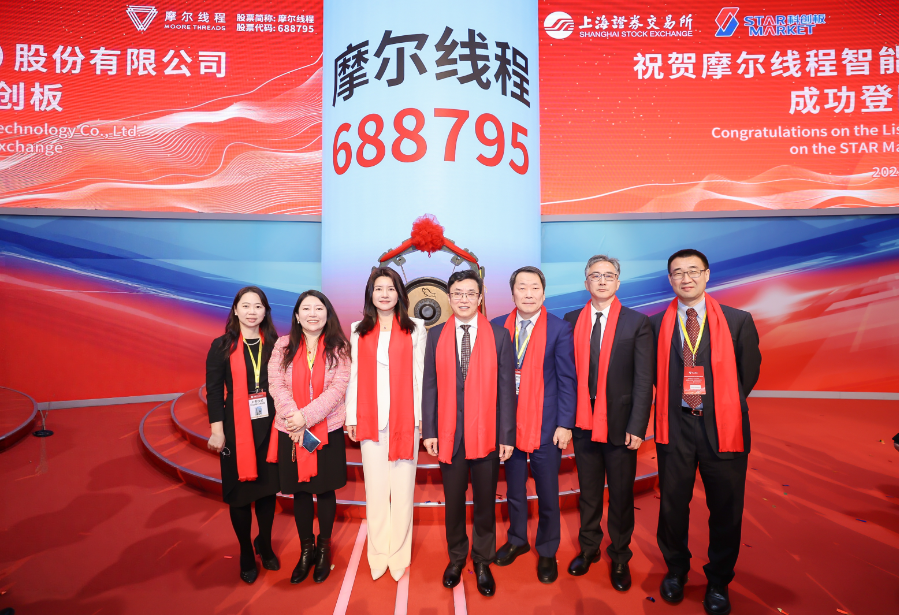
Company Overview - Moore Threads, known as the "first domestic GPU stock," debuted on the Shanghai Stock Exchange's Sci-Tech Innovation Board on December 5, opening at 650 yuan per share, a 468.78% increase from its issue price of 114.28 yuan, with potential earnings of approximately 267,900 yuan for a single subscription [1] - The company is the only domestic enterprise to achieve mass production of fully functional GPUs, focusing on the research, design, and sales of GPUs and related products, with its MUSA architecture directly competing with NVIDIA's data center GPU product line [1] Market Potential - The demand for GPUs is rapidly expanding due to the AI era, with Frost & Sullivan predicting the global GPU market to exceed 1 trillion yuan in 2024, and a compound annual growth rate (CAGR) of 24.5% from 2025 to 2029 [4] - The Chinese GPU market is expected to grow even faster, from 142.5 billion yuan in 2024 to 1,336.8 billion yuan by 2029, with a CAGR of 53.7% from 2025 to 2029, indicating significant opportunities for domestic GPU manufacturers [4] Financial Performance - Moore Threads has not yet achieved profitability, reporting losses of 1.894 billion yuan in 2022, 1.703 billion yuan in 2023, and 1.618 billion yuan in 2024, with a net loss of 724 million yuan in the first three quarters of 2025 [4][10] - Revenue has shown significant growth, increasing from 46 million yuan in 2022 to 1.24 billion yuan in 2023, and further to 4.38 billion yuan in 2024, with a 181.99% year-on-year increase to 785 million yuan in the first three quarters of 2025 [9][10] Funding and Financial Support - Moore Threads has received substantial financial support from various banks throughout its growth, utilizing innovative "equity-debt linkage" models to provide comprehensive financial backing [5][6] - In 2023, Beijing Bank provided several hundred million yuan in credit support for the second-generation chip "Chunxiao," and in 2024, China Construction Bank led a syndicate to offer liquidity loans [5] - Agricultural Bank of China invested 100 million yuan through its equity investment pilot fund, demonstrating the integration of financial services with industry policies [7] IPO Process - Moore Threads was founded in 2020 and began its IPO counseling in November 2024, completing the process in just 122 days, marking it as one of the fastest approvals for a company on the Sci-Tech Innovation Board [9] - The company is part of a growing trend of "hard technology" IPOs, with several other companies in the GPU and related sectors also receiving approval for their IPOs, indicating a robust market for technology-driven enterprises [10][11]
一签最高盈利28.7万元!摩尔线程登陆科创板,成今年最赚钱新股
Feng Huang Wang· 2025-12-05 04:31
摩尔线程近年来营收增幅较大,但仍然处于亏损阶段。2022年至2024年,摩尔线程分别实现营业收入 0.46亿元、1.24亿元、4.38亿元,归母净利润分别为亏损18.94亿元、17.03亿元及16.18亿元。2025年上半 年,摩尔线程实现营业收入7.02亿元,超过过去三年年度总和,归母净利润为亏损2.71亿元。 在二十届四中全会谋划"十五五"规划的关键时点,硬科技产业扶持政策持续加码。二十届四中全会明确 提出"加快高水平科技自立自强,引领发展新质生产力"。这一导向在科创板制度优化中得到充分体现, 科创板针对未盈利但技术突破显著的硬科技企业,予以制度保障。 12月5日,"国产GPU第一股"今日正式登陆科创板。 盘前摩尔线程竞价高开468%,总市值近3055亿元,股价报650元。 开盘后半小时,截至发稿,摩尔线程股价涨415%,盘中价格最高达到688元/股,理论上一签盈利或达 28.7万元,超越今年6月11日上市的影石创新,成为年内最赚钱新股。 从今年6月30日摩尔线程科创板IPO正式获受理,到9月26日过会,再到10月30日获证监会注册批复,12 月5日上市,全程用时5个月(158天)。 摩尔线程成立于202 ...
11月港美股IPO上市月报|港股募资额显著增长,备案高效稳定市场信心
Sou Hu Cai Jing· 2025-12-05 03:48
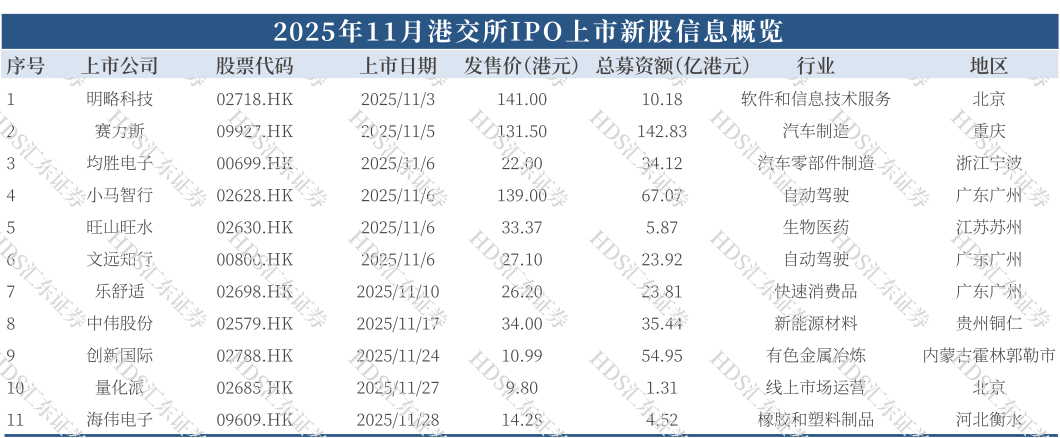
Group 1: Hong Kong IPO Market Overview - In November 2025, the Hong Kong Stock Exchange saw 12 companies successfully listed, raising approximately HKD 40.401 billion, marking the third-highest fundraising scale of the year [1] - The leading sectors for fundraising included automotive manufacturing, autonomous driving, biotechnology, and software services, indicating strong international capital confidence in China's leading enterprises in new energy and AI [2][4] - Notable contributions to the fundraising total came from companies such as Seres (HKD 14.283 billion), Pony.ai (HKD 6.707 billion), and Innovation International (HKD 5.495 billion), which together accounted for over 65.56% of the total [2] Group 2: Upcoming IPOs and Market Activity - A total of 55 companies submitted IPO applications in November, with 11 companies initiating their offering process, indicating a robust pipeline for future listings [7] - The market is expected to remain active, supported by high-quality projects from companies like JD Industrial, Tianyu Semiconductor, and Naxin Microelectronics, which are anticipated to contribute to the IPO landscape in late 2025 and early 2026 [7] Group 3: US IPO Market Insights - In the US market, no Chinese companies completed IPOs in November due to the government shutdown affecting the SEC's operations, which led to a slowdown in the review process for new IPO applications [8][10] - Despite the lack of new listings, seven companies submitted IPO applications, primarily in logistics, digital marketing, and tourism services, showcasing the ongoing interest of Chinese firms in the US market [10] Group 4: Regulatory Developments and Efficiency - Sixteen companies received approval from the China Securities Regulatory Commission for overseas listings, surpassing the previous month's figures and setting a new record for 2025 [12] - The average approval time for these projects was approximately five months, reflecting improved efficiency and predictability in the regulatory process, which enhances corporate confidence in pursuing overseas listings [12] Group 5: Market Outlook - The Hong Kong market is expected to maintain its status as a preferred destination for Chinese companies seeking to list abroad, supported by a clear focus on hard technology and substantial fundraising capabilities [13] - The ongoing regulatory improvements and the active pipeline of companies indicate a promising future for both the Hong Kong and US IPO markets, with potential for a return of Chinese enterprises to the US when conditions are favorable [13]

多地绘就资本市场发展路线图
Jing Ji Wang· 2025-12-05 03:02
Group 1: Capital Market Development Initiatives - Local governments are increasingly focusing on guiding capital towards technology innovation and emerging industries, reflecting a strategic approach to enhance the role of capital markets in supporting the real economy [1][2][3] - Various regions, including Shaanxi, Guangdong, and Zhejiang, have introduced measures to support the listing and financing of technology-driven enterprises, aiming to create a favorable environment for hard technology companies [2][3] Group 2: Support for Hard Technology Enterprises - Shaanxi's recent measures include 16 initiatives aimed at nurturing potential listing companies and optimizing the listing process for technology firms, emphasizing a mechanism that promotes a virtuous cycle among technology, industry, and finance [2] - The goal is to have over 80% of new listed companies come from the technology innovation sector, with a target of issuing technology innovation bonds exceeding 1 trillion yuan [3] Group 3: Mergers and Acquisitions (M&A) Encouragement - The M&A market has seen increased activity due to supportive policies from both central and local governments, which provide a solid institutional framework for development [4][5] - Local governments are promoting state-owned capital M&A funds, focusing on strategic emerging industries, to enhance resource integration and accelerate the commercialization of new technologies [5] Group 4: Strengthening Corporate Governance - There is a shift in corporate governance from mere compliance to effective substance, with local governments emphasizing the need for improved incentive mechanisms within listed companies [6] - Measures include enhancing cash dividend policies and the role of independent directors, which are expected to elevate the governance standards of listed companies and ensure better returns for shareholders [6]
多地绘就资本市场发展路线图!服务硬科技和并购重组成关键词
Zheng Quan Shi Bao Wang· 2025-12-05 01:53
Group 1: Capital Market Development - Local governments are increasingly focusing on guiding capital towards technology innovation and emerging industries, reflecting a strategic approach to enhance the role of capital markets in supporting the real economy [1][2] - Various regions, including Shaanxi, Guangdong, and Zhejiang, have introduced measures to support the listing and financing of technology-driven enterprises, aiming to create a favorable environment for hard technology companies [2][3] Group 2: Support for Hard Technology Enterprises - Shaanxi's recent measures include 16 initiatives to strengthen the cultivation of potential listed companies and support technology firms in accessing capital markets [2] - The goal is to establish a nurturing mechanism for listed companies, facilitating a virtuous cycle between technology, industry, and finance [2][3] Group 3: Mergers and Acquisitions - The mergers and acquisitions market has been active this year, driven by supportive policies from both central and local governments, which provide a solid institutional framework for development [4][5] - Local governments are promoting state-owned capital merger funds, focusing on advantageous and strategic emerging industries, to enhance resource integration and accelerate the commercialization of new technologies [5] Group 4: Corporate Governance Enhancement - There is a shift in corporate governance from mere compliance to effective substance, with local governments emphasizing the need for improved incentive and restraint mechanisms [6] - Measures include enhancing cash dividend mechanisms and strengthening the role of independent directors to ensure better governance and operational standards among listed companies [6]
外卖大战烧钱千亿元:没有赢家的“内卷”
证券时报· 2025-12-05 00:23
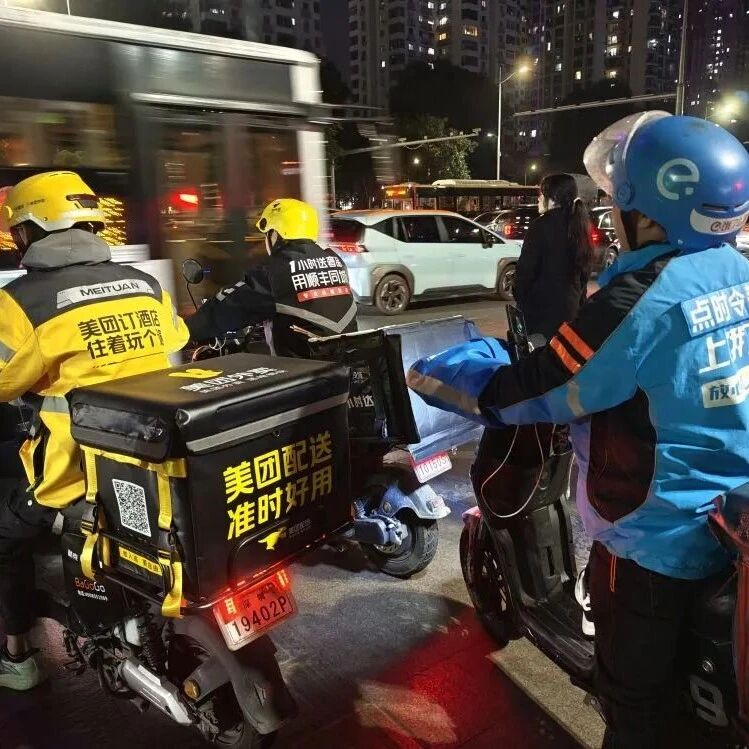
Group 1 - The core viewpoint of the article is that the fierce competition among the three major platforms in the food delivery sector has resulted in significant financial losses, with a combined loss of nearly 80 billion yuan, indicating that there are "no winners" in this battle [1] - Meituan reported its largest loss since going public, Alibaba's operating profit plummeted by 85%, and JD's net profit was halved, highlighting the unsustainable nature of the current growth model driven by heavy subsidies and marketing [1] - Despite the losses, the competition has accelerated user habit formation and expanded instant retail from food delivery to a broader range of categories, with JD's active users surpassing 700 million and Alibaba's growth in various business lines [1] Group 2 - The article reflects on the strategic choices of Chinese tech companies, contrasting their focus on short-term delivery efficiency with the long-term investments made by overseas tech giants in AI and other advanced technologies [2] - While companies like Alibaba and Meituan have made some investments in AI, their overall contributions to foundational technologies and global breakthroughs remain insufficient compared to their spending in the local delivery market [2] - The "ceasefire" in the food delivery war signals a need for rationality, urging Chinese tech firms to redirect resources towards hard technology and innovation that will determine long-term competitiveness [2]


创投筑基科创架桥 硬科技突围正当时
Zheng Quan Shi Bao Wang· 2025-12-04 23:25
Group 1 - The core viewpoint of the news highlights the rapid development of domestic GPU leaders, Moore Threads and Muxi Co., which have collectively secured over 22 billion yuan in financing and are set to raise an additional 12.2 billion yuan through IPOs on the Sci-Tech Innovation Board [1][3] - The GPU sector is characterized by high investment, long cycles, and significant risks, with financial capital playing a crucial role in supporting breakthroughs [2] - The Sci-Tech Innovation Board's institutional innovations are broadening growth channels for hard tech companies, allowing for a more accommodating capital path for unprofitable yet high-quality tech firms [3] Group 2 - The collaboration of diverse capital sources, including state-owned platforms and market-oriented venture capital, has been instrumental in the growth of Moore Threads and Muxi Co., with over 80 institutions investing nearly 9.5 billion yuan in Moore Threads alone [2] - The establishment of the growth tier on the Sci-Tech Innovation Board in July has further enhanced the capital cycle for hard tech companies, promoting a supportive environment for innovation [3] - The ongoing development of venture capital and the continuous improvement of the Sci-Tech Innovation Board's system are expected to empower more hard tech companies to seize core positions in the global industrial chain [3]
多地绘就资本市场发展路线图 服务硬科技和并购重组成关键词
Sou Hu Cai Jing· 2025-12-04 22:16
Group 1: Core Insights - Local governments are increasingly implementing measures to support the development of capital markets, focusing on fostering new productive forces and enhancing corporate governance [1] - The emphasis is on guiding capital towards technology innovation and emerging industries, thereby creating a virtuous cycle between capital markets and the real economy [1] Group 2: Support for Hard Technology Enterprises - The capital market's improved inclusivity is providing a fertile ground for hard technology enterprises to grow, with various local governments promoting the integration of technological and industrial innovation [2] - Shaanxi Province has introduced 16 measures to support the listing and financing of technology enterprises, including a mechanism for nurturing potential listing candidates [2] - Other provinces like Guangdong and Zhejiang are also implementing supportive policies to encourage technology enterprises to list on various stock exchanges [2] Group 3: Encouragement of Mergers and Acquisitions - The mergers and acquisitions market has been active this year, driven by a series of supportive policies from both central and local governments [4] - Beijing's financial authorities have issued guidelines to promote mergers and acquisitions as a means to enhance the quality of listed companies, particularly in strategic emerging industries [4] - Shenzhen is also supporting leading companies in strategic sectors to engage in mergers and acquisitions to enhance their capabilities [5] Group 4: Strengthening Corporate Governance - The governance of listed companies in China is transitioning from mere compliance to effective substance, with local governments focusing on improving incentive and restraint mechanisms [6] - Measures in Shaanxi and Guizhou emphasize the importance of cash dividend mechanisms and the role of independent directors in enhancing corporate governance [6] - As of now, A-share listed companies have announced or implemented mid-year dividends exceeding 760 billion yuan, indicating a trend towards better shareholder returns [6]
多地绘就资本市场发展路线图服务硬科技和并购重组成关键词
Zheng Quan Shi Bao· 2025-12-04 17:54
Group 1: Core Insights - Local governments are increasingly implementing measures to support the development of capital markets, focusing on fostering technology-driven enterprises and enhancing corporate governance [1][6] - The promotion of "hard technology" companies is a key focus, with various regions introducing policies to facilitate their listing and financing [2][3] - Mergers and acquisitions (M&A) are being encouraged as a means to enhance corporate quality and drive industrial upgrades, supported by a series of policies from both central and local governments [4][5] Group 2: Regional Initiatives - Shaanxi Province has introduced 16 measures to support the listing of technology companies, including the establishment of a nurturing mechanism for potential listing candidates [2] - Guangdong and Zhejiang provinces are also actively promoting policies to support technology enterprises in accessing capital markets, including the establishment of comprehensive service platforms for listings [2][3] - The goal in Zhejiang is for new technology companies to account for over 80% of new listings, with a target of issuing over 100 billion yuan in technology innovation bonds [3] Group 3: M&A and Corporate Governance - The M&A market is experiencing growth due to supportive policies, with a focus on strategic emerging industries such as artificial intelligence and biomedicine [4][5] - Local governments are establishing state-owned capital M&A funds to invest in advantageous local industries and strategic emerging sectors [5] - There is a shift towards enhancing the governance of listed companies, with measures aimed at improving cash dividend mechanisms and strengthening internal controls [6]