
科创创业人工智能ETF

Search documents
科技基金密集上新,AI是投资主线
第一财经· 2026-03-18 13:54
Core Viewpoint - The article highlights the accelerating investment in the technology sector, particularly in AI and hard technology, with significant capital inflows and a growing number of funds focused on these areas [3][5][7]. Investment Trends - 15 hard technology-themed funds have recently been approved, expanding investment channels for technology-focused investors [3][5]. - As of March 18, 2023, the total fundraising for technology-related equity funds has reached nearly 240 billion yuan, with 37 new funds established this year [5][6]. - The demand for technology-related products is increasing, with 12 additional products currently in the fundraising stage [5]. AI as a Long-term Investment Focus - AI is viewed as a core investment theme in the capital market, with long-term value and growth potential [3][7]. - The focus is shifting from "what AI can do" to "what AI will replace," prompting a movement of funds from potentially disrupted assets to "AI immune assets" [3][7]. Fund Performance and Market Dynamics - Technology sectors are experiencing significant capital inflows, with over 120 billion yuan attracted to AI-related ETFs this year [6]. - Notable funds, such as the Huaxia Semiconductor ETF, have seen their assets double within a year due to strong net inflows [6][9]. Market Sentiment and Future Outlook - Despite short-term market fluctuations, technology remains a key investment theme for the year, driven by ongoing advancements in AI and related technologies [7][9]. - The overall market risk appetite is expected to stabilize, with a potential return of funds to equity markets as external risks diminish [9][10].


ETF收评 | 影视板块强势领涨,影视ETF涨7.5%
Ge Long Hui· 2026-02-09 16:38
Market Performance - The three major A-share indices opened high and closed higher, with the Shanghai Composite Index rising by 1.41%, the Shenzhen Component Index increasing by 2.17%, and the ChiNext Index up by 2.98% [1] - The North China 50 Index rose by 1.36%, and the total trading volume in the Shanghai, Shenzhen, and Beijing markets reached 22,702 billion yuan, an increase of 1,067 billion yuan compared to the previous day [1] - Over 4,600 stocks in the three markets experienced gains [1] Sector Performance - The leading sectors included video production, optical fiber, dyes, photovoltaics, CPO, cultivated diamonds, computing power leasing, semiconductors, commercial aerospace, and smart grids [1] - The oil and gas extraction and service sectors lagged behind in performance [1] ETF Performance - The film and television sector saw strong gains, with the Guotai Fund Film and Television ETF and the Yinhua Fund Film and Television ETF rising by 7.5% and 6.89%, respectively [1] - The CPO sector experienced a significant surge, with the ChiNext Artificial Intelligence ETFs from Huashan, Guotai, and Fuguo increasing by 6.98%, 6.59%, and 6.59%, respectively [1] - The artificial intelligence sector was active, with the Science and Technology Innovation ChiNext Artificial Intelligence ETF from Yongying rising by 5% [1] Bond ETF Performance - The oil and gas extraction and service sectors showed weakness, with the Energy and Chemical ETF from Jianxin declining by 0.08% [2] - Bond ETFs were in the red, with the Science and Technology Innovation Bond ETF from Fuguo and the 10-Year Local Government Bond ETF from Haifutong falling by 0.05% and 0.04%, respectively [2]
加仓!资金大幅涌入这些方向
Zhong Guo Zheng Quan Bao· 2026-02-08 23:07
Group 1: Market Performance - The consumption and photovoltaic sectors saw significant gains last week, with several related ETFs, such as the E Fund Consumption ETF (513070) and E Fund New Energy ETF (589960), recording over 3% weekly increases [1][4] - Conversely, gold and artificial intelligence sectors experienced notable adjustments, with multiple related ETFs declining over 9% [1][6] Group 2: Trading Activity - The A-share market saw active trading in broad-based products, with the A500 ETF (159361) and others tracking the CSI A500 index achieving a total trading volume exceeding 254.8 billion yuan [2][8] - The Hang Seng Technology sector attracted significant capital inflow, with ETFs like the E Fund Hang Seng Technology ETF (513010) seeing substantial net inflows [3][10] Group 3: Sector Highlights - The Hang Seng Consumption ETF (513070) tracked the CSI Hong Kong Consumption Index, which rose over 4%, while the E Fund New Energy ETF (589960) and E Fund Photovoltaic ETF (562970) tracked indices that increased over 3% [4][5] - The gold sector showed weakness, with all 14 commodity gold ETFs declining over 5%, and some gold stock ETFs dropping more than 13% [6][7] Group 4: Future Outlook - Industry experts express optimism for the Hong Kong consumption sector in 2026, focusing on high-dividend consumer stocks, resilient domestic demand sectors like education, and timing strategies for new consumption sectors [5] - The market is expected to shift focus towards macroeconomic and industrial cues post-holiday, with a clearer framework for high-quality development and new-old kinetic energy conversion [12]
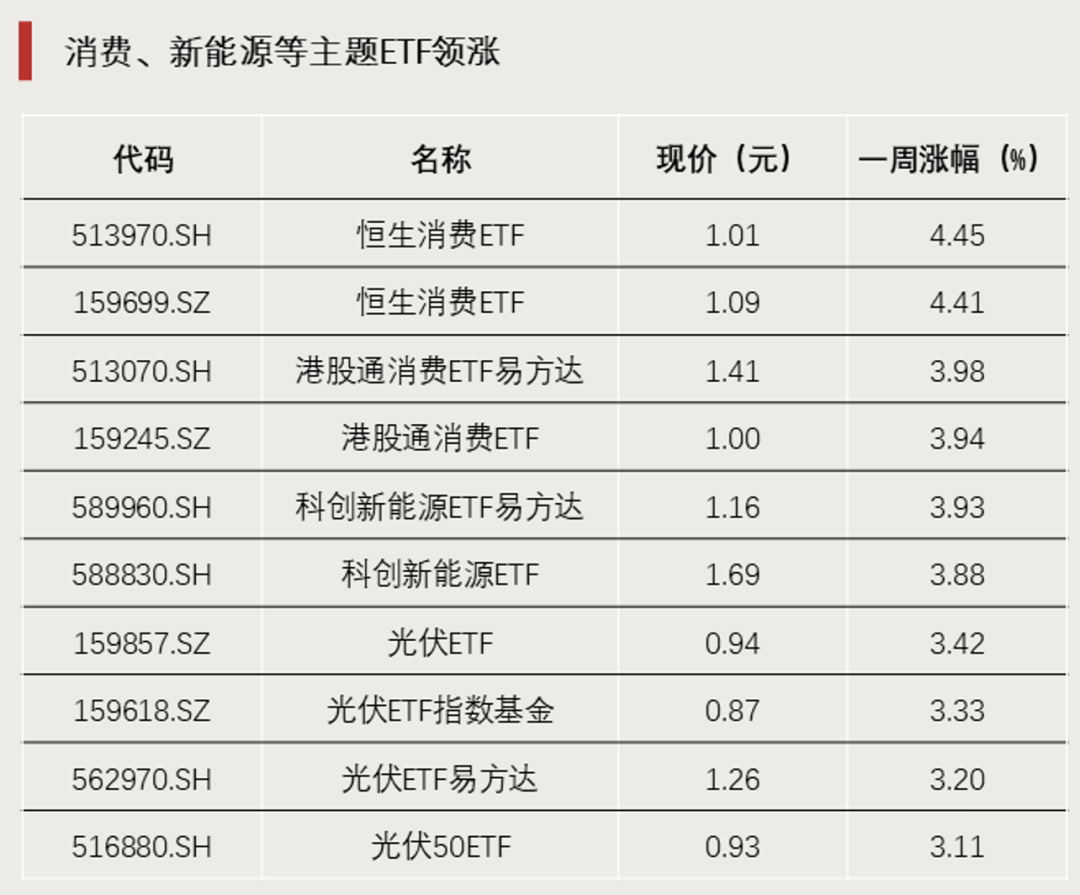
公募基金信息披露更加透明;开年以来已有13家公募27位高管变动|天赐良基日报
Mei Ri Jing Ji Xin Wen· 2026-02-06 08:17
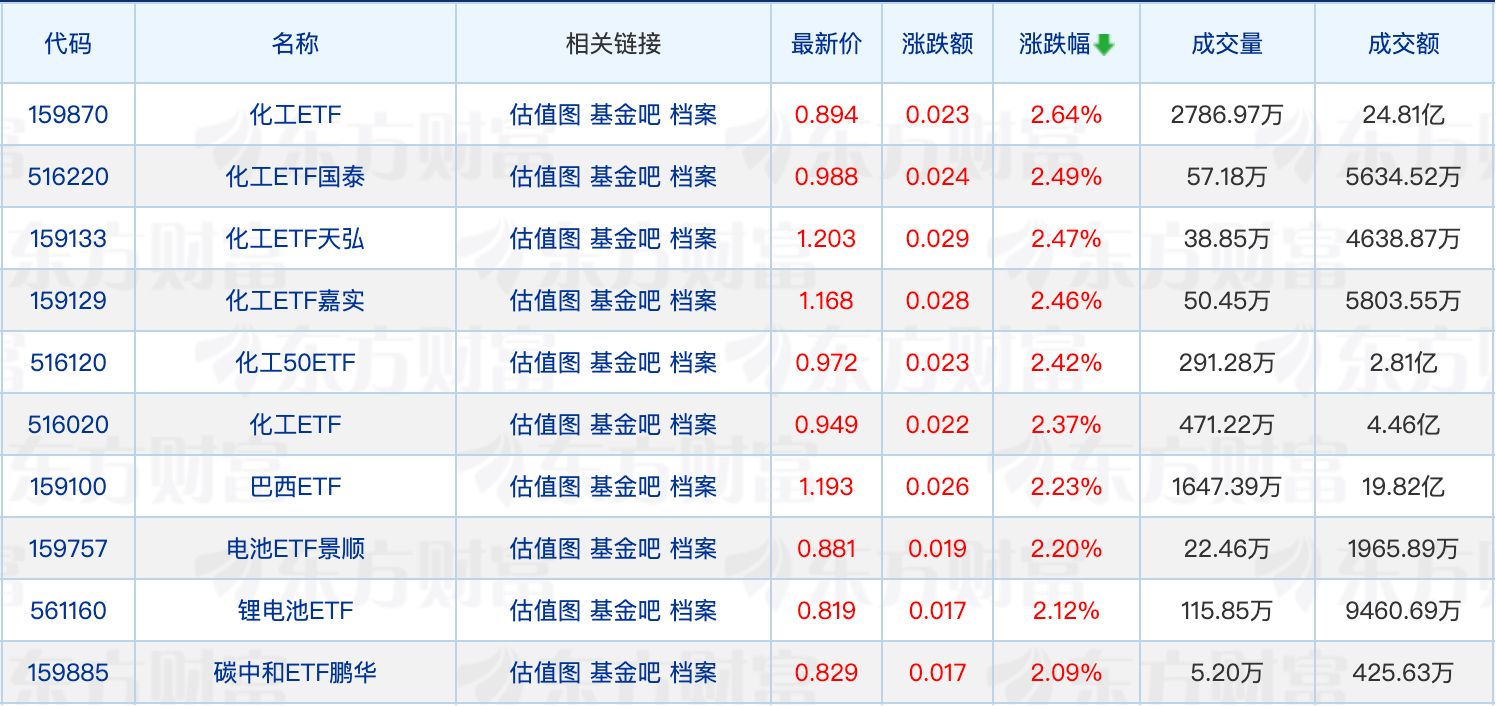
Group 1 - The China Securities Regulatory Commission (CSRC) is seeking public opinion on the revised guidelines for the content and format of periodic reports for publicly offered securities investment funds, aiming for more transparent information disclosure [1] - Since the beginning of the year, there have been changes in 13 public fund institutions, with a total of 27 executives, including changes in positions such as chairman, general manager, and chief information officer [2] - Everbright Prudential has officially submitted an application for a closed-end commercial real estate investment fund [3] Group 2 - Fund manager Li Kunyuan emphasizes a strict adherence to the "Four Good" principles when selecting investment targets, focusing on good industries, good stages, good companies, and good prices [4] - The market experienced a low opening but closed higher, with the Shanghai Composite Index down 0.25%, the Shenzhen Component Index down 0.33%, and the ChiNext Index down 0.73%, with a total trading volume of 2.15 trillion yuan, a decrease of 30.5 billion yuan from the previous trading day [5] - The chemical sector showed strong performance, with several companies reaching the daily limit, and the chemical ETF saw a maximum increase of 2.64% [6] Group 3 - The chemical sector has been on a continuous rise since the "anti-involution" trend began in July 2025, with increased investment and supply-side logic following the issuance of chemical ETFs and the announcement of "dual carbon" policies [9]
AI概念股走低,科创创业人工智能相关ETF跌超2%
Sou Hu Cai Jing· 2026-02-06 02:17
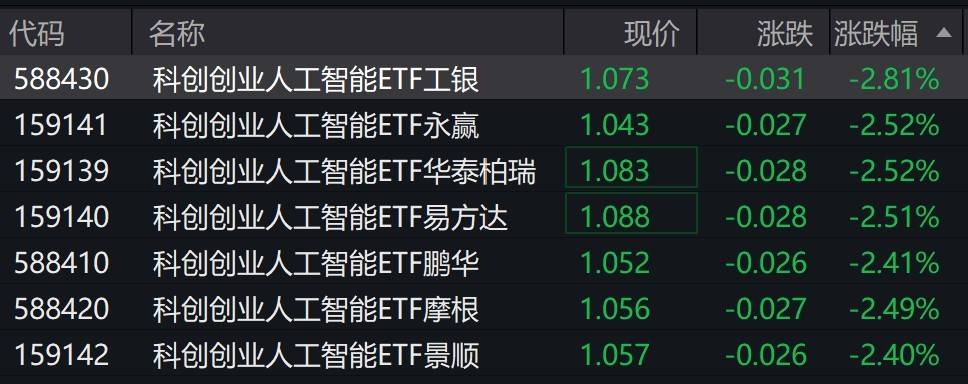
Group 1 - AI concept stocks declined, with Kunlun Wanwei dropping over 8%, Chipone falling over 5%, and Xinyi Sheng and Zhongji Xuchuang both decreasing over 4% [1] - The AI-related ETFs in the Sci-Tech and Entrepreneurship sector fell by more than 2% due to market influences [1] Group 2 - Various AI-related ETFs showed the following price changes: - ICBC Sci-Tech Entrepreneurship AI ETF at 1.073, down 2.81% - Yongying Sci-Tech Entrepreneurship AI ETF at 1.043, down 2.52% - Huatai-PB Sci-Tech Entrepreneurship AI ETF at 1.083, down 2.52% - E Fund Sci-Tech Entrepreneurship AI ETF at 1.088, down 2.51% - Penghua Sci-Tech Entrepreneurship AI ETF at 1.052, down 2.41% - Morgan Sci-Tech Entrepreneurship AI ETF at 1.056, down 2.49% - Invesco Sci-Tech Entrepreneurship AI ETF at 1.057, down 2.40% [2] Group 3 - Analysts indicate that AI is the core driving force of a new technological revolution, with its greatest value lying in creating new possibilities rather than merely enhancing efficiency [2] - Large model technology is profoundly reshaping the global industrial landscape, with potential to bring incremental commercial value worth trillions of yuan to the financial industry, transitioning from efficiency enhancement to value creation [2] - The iterative development of large models faces challenges such as technological bottlenecks, high investment costs, and the need to balance with regulatory frameworks [2]




商业航天,相关ETF单日跌9%,什么信号?
Sou Hu Cai Jing· 2026-01-14 01:19
Group 1 - The commercial aerospace sector experienced a significant decline, with related ETFs dropping around 5%, while some aerospace ETFs fell by as much as 9% in a single day [1] - AI application ETFs also faced substantial losses, with some individual ETFs declining over 11% in one day, indicating a potential overheating in recent thematic sectors [1] - Historical performance analysis shows that commercial aerospace has been the only sector with sustained growth, while most thematic sectors have shown poor performance, often returning to their original levels after brief surges [1] Group 2 - Specific ETFs reported notable declines, such as the Morgan AI ETF down 11.42%, the Aerospace ETF down 9.36%, and several others in the aerospace and aviation sectors experiencing declines between 8.21% and 9.36% [2] - The commercial aerospace sector has attracted significant capital inflows, with some ETFs seeing over 10 billion yuan in a single day, which is considered rare historically [2] - The question remains whether these inflows can be sustained and if investors will ultimately profit from their holdings, highlighting the need for caution in investing in popular thematic ETFs [3]
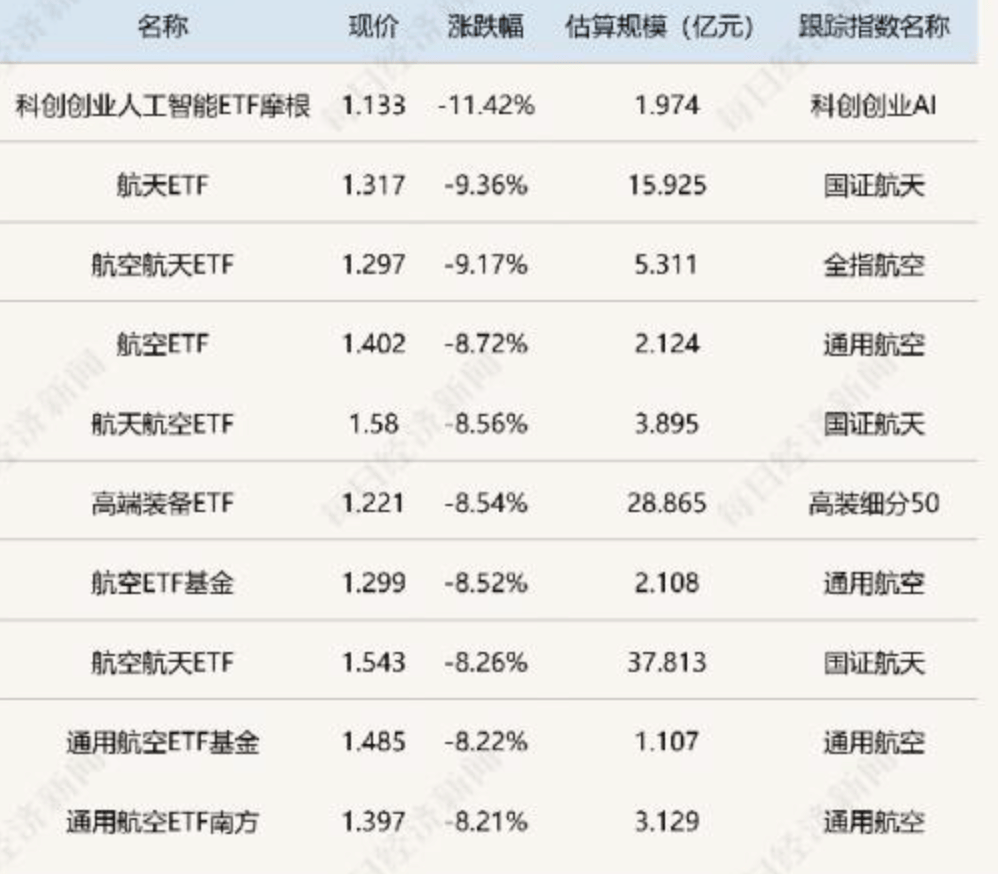
创新科技金融服务驱动“科技—产业—金融”良性循环|展望2026
Guo Ji Jin Rong Bao· 2025-12-31 13:36
Core Insights - The central theme of the articles emphasizes the importance of innovation-driven economic growth in 2026, particularly through the enhancement of technology financial services as a key focus of the Central Economic Work Conference [1] Group 1: Innovation in Technology Financial Services - The core objective is to establish a virtuous cycle connecting technology, industry, and finance, ensuring that financial resources are accurately matched to the development needs of hard technology enterprises throughout their lifecycle [2] - Key initiatives for 2026 include improving the intellectual property pledge financing mechanism, expanding the pilot scope of "investment-loan linkage" and "investment-insurance linkage," and fostering patient capital through the development of AIC equity investments and technology innovation bonds [2][8] Group 2: Financing Tools and Mechanisms - The articles highlight the need for innovative financing tools to support technology enterprises, including the establishment of a bond market "technology board" and the encouragement of technology companies to issue innovation bonds and asset-backed securities [4] - The focus is on making intellectual property pledge financing more accessible and effective, with efforts to standardize processes and introduce risk compensation mechanisms to alleviate banks' lending hesitance [4][6] Group 3: Patient Capital and Long-term Investment - The government aims to cultivate a "long money, long investment" ecosystem by establishing a national venture capital guiding fund with a 20-year duration, directing 70% of funds to seed and early-stage enterprises [12] - Measures to support hard technology enterprises include optimizing the listing review process, enhancing the inclusivity for unprofitable and high R&D companies, and promoting long-term capital investment [13][14] Group 4: Market Dynamics and Future Outlook - The articles suggest that the listing process for hard technology companies on the STAR Market will accelerate, with a focus on supporting enterprises with core technologies and clear commercialization paths while maintaining strict quality standards [14] - The emphasis will be on creating a favorable environment for genuine innovation while preventing "pseudo-innovation" from entering the market [14]
焕然“E”新!近六万亿市场,大变样!
券商中国· 2025-12-22 09:54
Core Viewpoint - The article discusses the rapid evolution of the ETF market in China, highlighting a shift from scale expansion to quality enhancement in index investment, marking 2025 as a pivotal year for high-quality development in the capital market [2]. Group 1: Market Transformation - The release of the "Action Plan for Promoting High-Quality Development of Index Investment in Capital Markets" has initiated a significant transformation in the index investment sector, focusing on optimizing resource allocation and enhancing the quality of listed companies [2][3]. - By 2025, index investment is expected to demonstrate strategic value in five core areas: optimizing resource allocation, improving the quality of listed companies, serving wealth management, guiding long-term capital into the market, and maintaining market stability [2]. Group 2: Institutional Support and Innovation - The implementation of the "Action Plan" provides dual support through institutional guarantees and innovation engines, enhancing the efficiency of ETF registration and issuance processes [3]. - The China Securities Regulatory Commission has streamlined the ETF registration process, allowing fund managers to apply directly for registration, significantly reducing the time required for ETF product approval [3]. Group 3: Product Development and Cost Reduction - A variety of new ETFs have been launched this year, including those focused on hard technology and high-end manufacturing, with efforts to lower investment costs by waiving certain fees associated with ETF operations [4][5]. - The introduction of innovative tools such as ESG indices and Smart Beta strategy indices caters to diverse investor needs, enhancing the vibrancy of the industry [4]. Group 4: Growth of ETF Adoption - The total market size of listed ETFs reached 5.83 trillion yuan, an increase of 2.09 trillion yuan or 56% from the beginning of the year, indicating a growing channel for attracting household wealth [5]. - The proportion of individual investors holding ETFs has been steadily increasing, with ETFs becoming a core component of their investment strategies [5]. Group 5: Enhanced Clarity and Naming Standards - Fund companies have begun to rename their ETFs for clearer identification, aligning with new naming regulations that emphasize the core characteristics of the products [6]. - The revised naming conventions aim to improve product recognition and enhance investment decision-making efficiency [6]. Group 6: Diversification and Thematic Focus - The variety of ETF products has expanded, with a notable increase in narrow-based and thematic ETFs, reflecting a trend towards more specialized investment options [7]. - The focus on specific sectors, such as consumer goods and technology, allows for more precise investment strategies that align with market demands [8]. Group 7: Role of ETFs in Asset Allocation - ETFs are increasingly replacing actively managed equity funds in FOF portfolios, indicating a shift towards quality-focused asset management [9]. - The growth of ETFs is seen as a critical support for the transition of the wealth management industry from product sales to asset allocation [9]. Group 8: Contribution to Market Stability - The development of ETFs has attracted long-term capital, including pension funds and social security funds, which play a vital role in maintaining market stability [9]. - The involvement of state-owned entities in ETF investments has been significant, contributing to the stabilization of the capital market [9]. Group 9: Focus on New Quality Production - ETFs have evolved into essential infrastructure for high-quality development in the capital market, directing capital towards emerging industries such as AI and biotechnology [10]. - The inclusion of high-quality companies in indices is expected to enhance the long-term investment value for investors [11].

从单一工具变成基础设施 近6万亿ETF市场焕然“E”新
Zheng Quan Shi Bao· 2025-12-21 18:09
Core Viewpoint - The article discusses the transformation of index investment in China's capital market, highlighting its strategic value in optimizing resource allocation, enhancing the quality of listed companies, and attracting long-term capital by 2025, marking the beginning of a new phase in high-quality index investment development [1]. Group 1: Institutional Support and Innovation - The implementation of the "Action Plan" provides dual support for index investment through institutional guarantees and innovation engines, significantly improving the efficiency of ETF registration and issuance [1]. - The China Securities Regulatory Commission has streamlined the ETF registration process, allowing fund managers to apply directly for registration without needing a no-objection letter from the stock exchange, thus expediting the registration process to within five working days [1]. Group 2: Product Development and Cost Reduction - Index companies and fund managers are optimizing index compilation methods, focusing on national strategic directions and developing specialized indices that cater to emerging industries, such as the AI index launched in May 2023 [2]. - The investment costs for index funds have continued to decrease, with the elimination of annual fees for ETF listings and reductions in other operational costs, promoting a lower cost structure for index funds [2]. Group 3: Accessibility and Growth of ETFs - ETFs are rapidly emerging as a key vehicle for inclusive finance, providing ordinary investors with a channel to share in the capital market's growth, with the total market size of ETFs reaching 5.83 trillion yuan, a 56% increase from the beginning of the year [3]. - The proportion of individual investors holding ETFs has been steadily increasing, indicating a shift towards ETFs as a core investment tool among retail investors [3]. Group 4: Enhanced Investment Options - The variety of ETF products has expanded, with a notable increase in narrow-based and thematic ETFs, catering to both individual and institutional investors' diverse needs [5]. - The public fund industry is entering a tool-oriented era, with a focus on narrow-based ETFs that can deliver high performance, aligning with market trends towards active equity fund transformation [5]. Group 5: Strategic Alignment with National Goals - ETFs are becoming essential in guiding capital towards emerging industries such as AI, biomedicine, and aerospace, thus supporting industrial upgrades and enhancing corporate governance through their selection mechanisms [7]. - Major ETF management institutions are intensifying their focus on the Sci-Tech Innovation Board, enriching the toolbox for investing in technological innovation and high-quality development [8]. Group 6: Market Impact and Pricing Power - Some ETFs are replacing active equity funds as the largest institutional investors in listed companies, enhancing their marginal pricing power in the market [9]. - The inclusion of companies in index components has led to significant increases in ETF holdings, surpassing investments from northbound funds and active equity funds [9].
ETF周报:A500ETF净申购超300亿元,上周新成立三只科创创业人工智能ETF-20251221
Guoxin Securities· 2025-12-21 14:29
1. Report Industry Investment Rating - No information provided in the content 2. Core Viewpoints of the Report - Last week (from December 15 to December 19, 2025), the median weekly return of equity ETFs was -0.26%. Among broad-based ETFs, the median return of SSE 50 ETF was 0.67%, the highest. By sector, the median return of large financial ETFs was 1.22%, the highest. By theme, the median return of military ETFs was 2.56%, the highest [1][13][18]. - Last week, equity ETFs had a net subscription of 55.447 billion yuan, and the overall scale increased by 38.992 billion yuan. Among broad-based ETFs, A500 ETF had the largest net subscription, reaching 32.639 billion yuan. By sector, technology ETFs had the largest net subscription, amounting to 6.382 billion yuan. By hot theme, chip ETFs had the largest net subscription, reaching 3.050 billion yuan [2][27][33]. - As of last Friday, the valuation quantiles of ChiNext - related ETFs among broad - based ETFs were relatively low. By sector, the valuation quantiles of consumer and large financial ETFs were relatively moderate. By sub - theme, the valuation quantiles of liquor and new energy vehicle ETFs were relatively low. Compared with the previous week, the valuation quantiles of A500 and consumer ETFs increased significantly [3][34][44]. - From Monday to Thursday last week, the margin trading balance of equity ETFs increased from 46.443 billion yuan in the previous week to 47.714 billion yuan, and the short - selling volume decreased from 2.582 billion shares in the previous week to 2.481 billion shares. Among the top 10 ETFs with the highest average daily margin purchases and short - selling volumes, securities ETFs and STAR Market ETFs had relatively high average daily margin purchases, while CSI 1000 ETF and SSE 50 ETF had relatively high average daily short - selling volumes [4][45][53]. - As of last Friday, Huaxia, E Fund, and HuaTai - Berry ranked top three in the total scale of listed non - monetary ETFs. This week, 5 ETFs, including Huaxia CSI All - Share Food ETF, Huabao CSI All - Share Electric Power Utility ETF, ICBC ChiNext New Energy ETF, E Fund SSE STAR Market Chip Design Theme ETF, and E Fund CSI All - Share Food ETF, will be issued [5][57][60]. 3. Summary by Relevant Catalogs ETF Performance - **Equity ETFs**: The median weekly return was -0.26%. The median returns of SSE 50, CSI 500, CSI 300, A500, CSI 1000, ChiNext - related, and STAR Market ETFs were 0.67%, 0.03%, -0.13%, -0.14%, -0.53%, -2.25%, and -2.43% respectively. The median returns of commodity, bond, money - market, and cross - border ETFs were 0.98%, 0.05%, 0.02%, and -1.76% respectively [13]. - **By Sector**: The median returns of large financial, consumer, cyclical, and technology sector ETFs were 1.22%, 0.38%, -0.52%, and -2.31% respectively [18]. - **By Theme**: The median returns of military, bank, and securities ETFs were 2.56%, 1.23%, and 1.07% respectively, showing relatively strong performance. The median returns of chip, photovoltaic, and AI ETFs were -3.24%, -2.91%, and -2.45% respectively, showing relatively weak performance [18]. ETF Scale Changes and Net Subscriptions/Redeemptions - **Overall Scale**: As of last Friday, the scales of equity, cross - border, and bond ETFs were 3,683.2 billion yuan, 965.0 billion yuan, and 743.0 billion yuan respectively. The scales of commodity and money - market ETFs were relatively small, at 246.8 billion yuan and 186.2 billion yuan respectively [20]. - **Broad - based ETFs**: The scales of CSI 300 and A500 ETFs were relatively large, at 1,176.9 billion yuan and 243.0 billion yuan respectively. The scales of STAR Market, SSE 50, CSI 500, ChiNext - related, and CSI 1000 ETFs were relatively small, at 207.8 billion yuan, 184.6 billion yuan, 180.8 billion yuan, 174.3 billion yuan, and 170.3 billion yuan respectively [20]. - **By Sector**: As of last Friday, the scale of technology sector ETFs was 418.5 billion yuan, followed by cyclical sector ETFs at 210.3 billion yuan. The scales of large financial and consumer ETFs were relatively small, at 197.1 billion yuan and 186.7 billion yuan respectively [25]. - **By Theme**: As of last Friday, the scales of chip, securities, and pharmaceutical ETFs were the highest, at 147.5 billion yuan, 139.2 billion yuan, and 101.7 billion yuan respectively [25]. - **Net Subscriptions/Redeemptions**: Last week, equity ETFs had a net subscription of 55.447 billion yuan, and the overall scale increased by 38.992 billion yuan. Money - market ETFs had a net redemption of 1.662 billion yuan, and the overall scale decreased by 1.645 billion yuan. Among broad - based ETFs, A500 ETF had the largest net subscription of 32.639 billion yuan, and its scale increased by 32.528 billion yuan. SSE 50 ETF had the largest net redemption of 461 million yuan, and its scale increased by 560 million yuan [27]. By sector, technology ETFs had the largest net subscription of 6.382 billion yuan, and their scale decreased by 3.386 billion yuan. Cyclical ETFs had the largest net redemption of 3.207 billion yuan, and their scale decreased by 1.987 billion yuan. By hot theme, chip ETFs had the largest net subscription of 3.050 billion yuan, and their scale decreased by 2.222 billion yuan. Military ETFs had the largest net redemption of 4.229 billion yuan, and their scale decreased by 3.058 billion yuan [31][33]. ETF Benchmark Index Valuation - **Broad - based ETFs**: As of last Friday, the price - to - earnings ratios of SSE 50, CSI 300, CSI 500, CSI 1000, ChiNext - related, and A500 ETFs were at the 82.44%, 82.44%, 95.22%, 93.82%, 59.52%, and 90.79% quantiles respectively, and the price - to - book ratios were at the 60.72%, 68.43%, 96.70%, 48.23%, 59.03%, and 89.70% quantiles respectively. Since December 31, 2019, the current price - to - earnings and price - to - book ratios of STAR Market - related ETFs were at the 81.37% and 70.82% quantiles respectively. Compared with the previous week, the valuation quantiles of A500 ETF increased significantly [34][36]. - **By Sector**: As of last Friday, the price - to - earnings ratios of cyclical, large financial, consumer, and technology sector ETFs were at the 73.54%, 32.15%, 25.89%, and 92.75% quantiles respectively, and the price - to - book ratios were at the 69.08%, 56.31%, 36.19%, and 79.39% quantiles respectively. Compared with the previous week, the valuation quantiles of consumer ETFs increased significantly [38]. - **By Theme**: As of last Friday, the price - to - earnings quantiles of photovoltaic, military, and dividend ETFs were relatively high, at 99.59%, 99.01%, and 96.04% respectively. The price - to - book quantiles of AI, dividend, and robot ETFs were relatively high, at 99.75%, 96.13%, and 92.50% respectively. Overall, among broad - based ETFs, the valuation quantiles of ChiNext - related ETFs were relatively low. By sector, the valuation quantiles of consumer and large financial ETFs were relatively moderate. By sub - theme, the valuation quantiles of liquor and new energy vehicle ETFs were relatively low [40][41][44]. ETF Margin Trading and Short - Selling - Overall, the short - selling volume of equity ETFs has generally maintained an upward trend in the past year. As of last Thursday, the margin trading balance of equity ETFs increased from 46.443 billion yuan in the previous week to 47.714 billion yuan, and the short - selling volume decreased from 2.582 billion shares in the previous week to 2.481 billion shares [45]. - Among the top 10 ETFs with the highest average daily margin purchases from Monday to Thursday last week, securities ETFs and STAR Market ETFs had relatively high average daily margin purchases. Among the top 10 ETFs with the highest average daily short - selling volumes, CSI 1000 ETF and SSE 50 ETF had relatively high average daily short - selling volumes [48][50][53]. ETF Managers - As of last Friday, Huaxia Fund ranked first in the total scale of listed non - monetary ETFs, and had a relatively high management scale in multiple sub - fields such as scale - based index ETFs, theme - based, style - based, and strategy - based index ETFs, and cross - border ETFs. E Fund ranked second, with a relatively high management scale in scale - based index ETFs and cross - border ETFs. HuaTai - Berry ranked third, with a relatively high management scale in scale - based index ETFs and theme - based, style - based, and strategy - based index ETFs [54]. - Last week, 7 new ETFs were established. This week, 5 ETFs, including Huaxia CSI All - Share Food ETF, Huabao CSI All - Share Electric Power Utility ETF, ICBC ChiNext New Energy ETF, E Fund SSE STAR Market Chip Design Theme ETF, and E Fund CSI All - Share Food ETF, will be issued [57].