通用人工智能(AGI)

Search documents
阿里吴泳铭勾勒ASI演进路线 全栈自研卡位全球竞争
Huan Qiu Wang· 2025-09-28 02:25
Core Insights - Alibaba Group's CEO, Wu Yongming, outlined a three-stage evolution path towards Artificial Super Intelligence (ASI) during the 10th anniversary of the Yunqi Conference, positioning Alibaba Cloud as a "full-stack AI service provider" [1][3] - The first stage, "Intelligent Emergence," focuses on AI's ability to learn from vast amounts of human knowledge, achieving near-human performance in fields like mathematics [3][4] - The second stage, "Autonomous Action," emphasizes AI's interaction with the physical world through natural language processing and tool usage, with Alibaba Cloud already making significant advancements in this area [4][5] - The third stage, "Self-Iteration," aims for AI to surpass human capabilities by directly accessing raw data and optimizing its models through self-learning, supported by substantial investments in AI infrastructure [5][6] Investment and Infrastructure - Alibaba Cloud's strategy includes a comprehensive ecosystem covering model, platform, and infrastructure layers, with significant achievements in AI model development and deployment [5][6] - The company plans to enhance its data center energy efficiency by tenfold by 2032, which is expected to support a massive increase in computing power [6][7] - The competitive landscape is shifting towards "super AI cloud" platforms, with Alibaba and Google being the only companies with capabilities across large models, cloud computing, and chip development [6][7] Future Outlook - Wu Yongming predicts that ASI will exponentially amplify human intelligence, positioning AI as a super assistant rather than a replacement for humans [8] - The collaboration between humans and AI is expected to evolve, allowing individuals to manage multiple AI agents, significantly increasing productivity [8] - Alibaba Cloud's ongoing investments and partnerships, such as with NVIDIA, are aimed at driving the transition from a technological revolution to an industrial revolution in AI [8]


苹果开发类ChatGPT应用,仅供内部测试新版Siri;Anthropic:国际员工将增长两倍,AI团队扩张五倍丨AIGC日报
创业邦· 2025-09-28 00:08
Group 1 - Li Kaifu emphasized that DeepSeek's core contribution to China's AI development is the promotion of an open-source ecosystem, which is expected to help China narrow the gap with the US in AI [2] - OpenAI CEO Sam Altman stated that general artificial intelligence (AGI) will arrive before 2030, claiming it will be "far smarter than humans" and could take over 30-40% of human jobs in the future [2] - Anthropic announced plans to double its international workforce and expand its AI team fivefold by 2025, driven by a surge in demand for its Claude AI model [2] Group 2 - Apple is reportedly developing a ChatGPT-like application for internal testing of a major upgrade to Siri, with the app currently named Veritas and focused on enhancing Siri's capabilities [2]

高代码时代来临,阿里云百炼要让 Agent 真正跑在业务里
3 6 Ke· 2025-09-27 07:19
Core Insights - The development of AI agents is becoming a crucial paradigm in the AI era, with significant adoption among enterprises aiming to enhance efficiency [1][2] - A recent PwC survey revealed that 79% of companies are already utilizing AI agents in some capacity, leading to productivity improvements (66%), cost reductions (57%), faster decision-making (55%), and enhanced customer experience (54%) [1] - Major tech companies are competing to develop and upgrade their agent platforms, with notable advancements from both international and domestic players [1] Group 1: Agent Development and Adoption - AI agents are increasingly seen as essential for businesses to improve operational efficiency, with a focus on their ability to run stably within business systems [2][4] - Alibaba Cloud's new ModelStudio-ADK framework addresses the limitations of low-code platforms by enabling the development of agents with autonomous planning and execution capabilities [2][8] - The ModelStudio-ADK framework allows for a more flexible approach to agent development, moving away from predefined scripts to support complex task execution [8][9] Group 2: Alibaba Cloud's Strategy - Alibaba Cloud's Baolian platform is positioned as a comprehensive solution for enterprises, providing a full suite of capabilities for agent development, deployment, and operation [4][12] - The platform has seen significant engagement, with over 200,000 developers creating more than 800,000 agents, showcasing its effectiveness in meeting diverse business needs [5][12] - The introduction of the Pay Server, a commercial payment channel for enterprise agents, marks a significant step towards the commercialization of AI agents [5][12] Group 3: Real-World Applications - The ModelStudio-ADK framework has been successfully utilized by companies like MyBank to develop applications that significantly reduce processing time for loan approvals [12][13] - The framework's ability to handle complex tasks and integrate with various business systems demonstrates its potential to transform operational efficiency [12][13] - As AI agents evolve, they are expected to join the workforce and fundamentally change company outputs, aligning with industry predictions for 2025 [13]
刚刚,奥特曼预言:人类「只剩」最后5年!
3 6 Ke· 2025-09-27 07:02
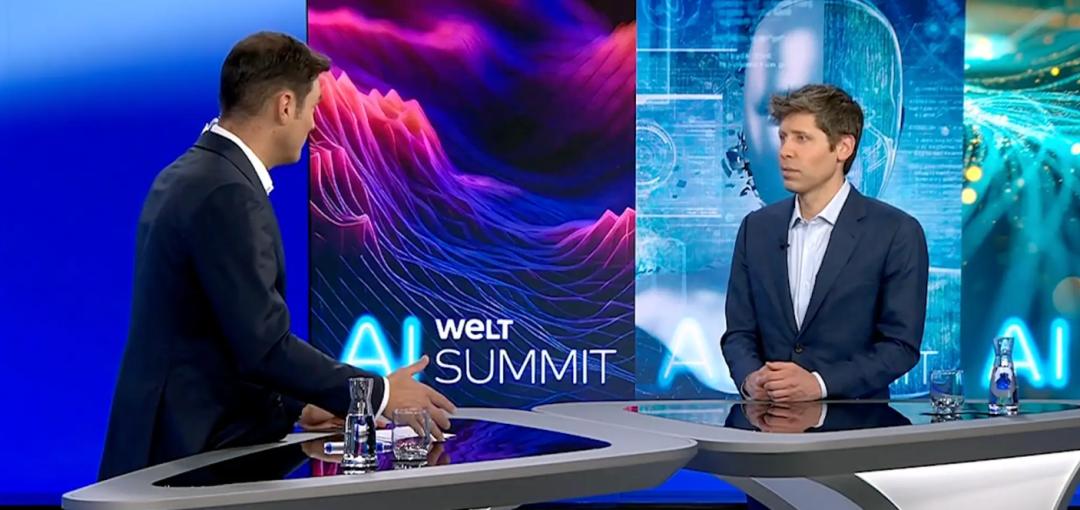
倒计时开始! 奥特曼把「超级智能」实现的时间线拉到了2030年。 5年后,AI将全面超越人类。 几年后的某一天,一个名为GPT-8的系统,平静地告诉你,它攻克了量子引力——那个困扰了爱因斯坦之后所有物理学家的终极难题。 它不仅给出了答案,更能向你娓娓道来其思考过程、灵感来源,以及它为何决定研究这个课题。 这能算是AGI吗? 在和量子计算教父David Deutsch的对谈中,奥特曼抛出这个问题。 David Deutsch也不得不承认,这将成为一个潜在的基准。 假设GPT-8能够解决量子引力问题,它将有资格成为真正的AGI。 倒计时开启,AI五年后超越人类 他在接受德国《世界报》采访时表示: 我可以肯定地说,到2030年底之前,如果我们没能开发出能够完成人类自身无法企及任务的超级智能模型,我会感到非常意外。 奥特曼 他还抛出了一个极具争议的新标准: 刚刚在柏林领取了声誉卓著的阿克塞尔·斯普林格奖,奥特曼紧接着就投下了一颗震撼弹。 在一次深度专访中,他给出了一个惊人预测:到2030年,人工智能将在所有维度上超越人类。 「超级智能何时会出现?」当被问及这个终极问题时,奥特曼的回答平静却极具颠覆性。 「在很多方面, ...
吴泳铭给出了中国版的“加速主义”AI叙事
Guan Cha Zhe Wang· 2025-09-27 03:02
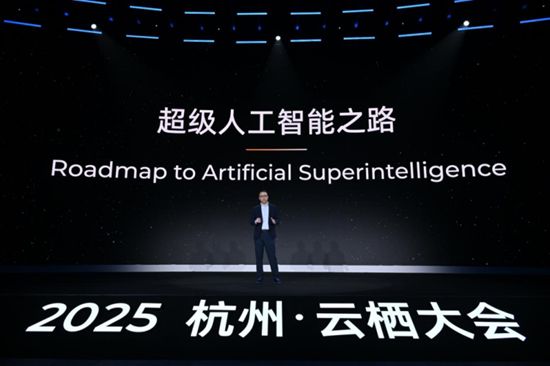
Core Insights - Alibaba Group's CEO, Wu Yongming, presented an optimistic vision for the future of artificial intelligence (AI) at the Yunqi Conference, emphasizing the inevitability of achieving Artificial General Intelligence (AGI) as a starting point towards Super Artificial Intelligence (ASI) [1][3] Group 1: AI Development and Future Potential - Wu believes that AI will liberate human potential and usher society into an unprecedented intelligent era, with AGI aimed at freeing humans from 80% of daily tasks [3] - The pathway to ASI is divided into three stages: "intelligent emergence," "autonomous action," and "self-iteration," with a focus on acquiring comprehensive data from the physical world [3][4] - ASI is expected to solve significant scientific and engineering challenges at an exponential pace, potentially leading to breakthroughs in medicine, new materials, sustainable energy, and even interstellar travel [3][4] Group 2: Strategic Investments and Infrastructure - Alibaba plans to invest 380 billion RMB in AI infrastructure, aiming to enhance data center energy efficiency by tenfold by 2032 [4][6] - The company positions itself as a "full-stack AI service provider," offering leading intelligent capabilities and a global AI cloud computing network [4][6] - Wu's announcement of substantial investment has invigorated the Chinese capital market, highlighting a shift in the competitive landscape of AI investment between China and the U.S. [6][8] Group 3: Competitive Landscape and Global Context - The article notes that U.S. tech giants have significantly outspent their Chinese counterparts in AI investments, with the top four U.S. companies investing 5.36 trillion RMB over the past five years compared to only 630 billion RMB from seven major Chinese internet firms [6] - Wu's vision aligns with other industry leaders like Ray Kurzweil and Sam Altman, who also foresee rapid advancements in AI leading to economic prosperity and enhanced human productivity [4][5] - The competition for establishing a few dominant AI cloud platforms is emphasized, with predictions that only 5-6 super cloud computing platforms will emerge globally [7][8]
OpenAI CEO预测2030年通用人工智能到来,未来接管人类40%工作
Sou Hu Cai Jing· 2025-09-26 16:31
Core Insights - OpenAI CEO Sam Altman predicts that Artificial General Intelligence (AGI) will arrive before 2030, claiming it will be "far smarter than humans" and referred to as "super AI" [1][3] - Altman believes that AI will take over 30-40% of jobs in the future, emphasizing that many jobs have already disappeared over the past 30 years, regardless of AI [3] - He suggests that individuals should learn "how to learn" and adapt to the changing world to avoid being replaced by AI [3] - Altman reassures that AGI will treat humanity kindly, although he acknowledges potential unforeseen consequences, asserting that humans have the opportunity to instill the right values in AGI [3] - He also mentions that he would not use ChatGPT for solving emotional issues [3]

周靖人解读阿里云大模型“七连发” 与OpenAI、谷歌比拼迭代与创新
Zhong Guo Jing Ying Bao· 2025-09-26 11:51
Core Insights - Alibaba Cloud has launched seven new large model technology products, marking significant advancements in various fields such as language, speech, vision, multimodal, and coding capabilities [1][2] - The CEO of Alibaba Cloud, Wu Yongming, emphasized that achieving Artificial General Intelligence (AGI) is a certainty, positioning large models as the next-generation operating system [1][5] Product Launch and Features - The largest model released is Qwen3-Max, with a pre-training data volume of 36 trillion tokens and over one trillion parameters, excelling in coding and agent tool capabilities [2][3] - The new multimodal model, Wan2.5-preview, can generate videos from text and images, representing Alibaba's strongest visual generation model to date [2][3] Evolution and Integration - The transition from unimodal to multimodal systems is seen as an inevitable trend, with the introduction of the voice model Tongyi Bailin, which includes advanced speech recognition and synthesis capabilities [3][5] - The Tongyi model family now includes over 300 models covering various modalities, indicating a comprehensive approach to AI solutions [3][5] Competitive Positioning - Alibaba Cloud aims to be a full-stack AI service provider, integrating AI models, agent development, and AI infrastructure [5][6] - The company is positioned as a leading global player in both large models and cloud computing, emphasizing its unique competitive advantage [6] Strategic Direction - Alibaba Cloud is committed to a three-year investment plan of 380 billion yuan in AI infrastructure, anticipating a tenfold increase in global data center energy consumption by 2032 [6] - The company is pursuing a "full-stack" technology strategy, contrasting with Tencent's "ecosystem integration" approach, highlighting different paths in the AI landscape [6]
OpenAI 3万亿美元测试,AI首战44个行业人类专家
3 6 Ke· 2025-09-26 09:47
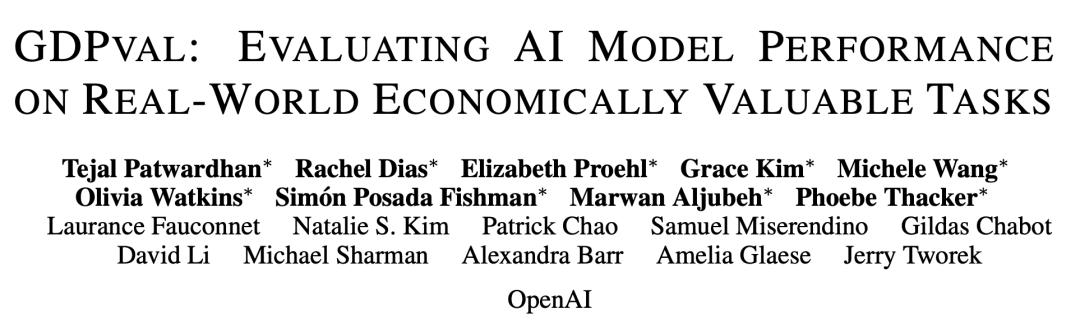
AI下半场,AGI已成过去式,ASI正引领新智能革命!OpenAI推出的GDPval评估体系,通过真实工作任务审视大模型潜力,揭示AI如何从实验 室走向3万亿经济战场,助力人类从日常琐事中解放,拥抱创造性未来。 AI下半场真来了! AGI都过时了,现在AI业内讨论的是超级人工智能ASI: AGI能把人类从80%的日常工作中解放出来; 而ASI则全面超越人类智能的系统。 刚刚,在a16z访谈中,OpenAI首席科学家Jakub Pachocki,透露OpenAI的研究路线图的下一步是推理,下一个5年的重点目标是打造自动化研究人员: AI自动发现新想法,自动化研究人员的工作,自动化机器学习研究。 但理解AI潜力最清晰的方式,并不是预测未来,而是看看模型现在已经能做什么。 历史经验告诉我们,从互联网到智能手机,每一项重大技术从诞生到普及都需要十年以上。 OpenAI希望以更透明的方式,展示大模型如何真正服务于现实世界。 因此,他们推出了一项全新的评估体系GDPval,在有据可依的基础上审视AI进步轨迹,而不是凭空臆测。 论文地址:https://cdn.openai.com/pdf/d5eb7428-c4e9-4a ...
云栖大会后花旗点评阿里:推动AI革命从AGI向ASI转型,维持买入评级
Zhi Tong Cai Jing· 2025-09-25 13:26
Core Strategy - Alibaba is focusing on the transition from Artificial General Intelligence (AGI) to Artificial Super Intelligence (ASI), with a clear development path outlined by CEO Wu Yongming [2] - The company plans to increase its global data center capacity tenfold by 2032, building on a capital expenditure target of 380 billion RMB to meet the surging demand for AI infrastructure [2] - Alibaba aims to capture a share of the global AI investment boom, which has exceeded 400 billion USD in the past year and is expected to reach 4 trillion USD in the next five years [2] AI and Cloud Integration - Alibaba Cloud's CTO Zhou Jingren emphasized the importance of integrating large models with cloud computing as a core competitive advantage, announcing five major product upgrades to enhance full-stack service capabilities [3] - The Tongyi Qianwen model family, the largest globally, has served over 1 million enterprise clients and includes over 300 open-source models and 170,000 derivative models [3] - New flagship model Qwen3-Max, with over 1 trillion parameters, was introduced, along with other models that support complex graphics understanding and multi-modal inputs [3] Product Innovations - Tongyi Wanxiang has generated 390 million images and 70 million videos, with the new Wan2.5-Preview version supporting high-quality narrative and AI-generated audio-video content [4] - A new audio model series, including Fun-ASR for speech recognition and Fun-CosyVoice for speech synthesis, was launched to enhance multi-modal interaction [5] - The Model Studio Agent platform simplifies agent development with low-code visual operations, experiencing a 15-fold increase in interaction volume over the past year [6] AI Infrastructure - Upgrades to core hardware, including the Pangu super node server and high-performance network HPN8.0, have been made to support large-scale AI applications [7] Valuation Logic and Key Data - Citi maintains a "Buy" rating for Alibaba, with a target price of 187 USD for US shares and 183 HKD for Hong Kong shares, based on a sum-of-the-parts valuation method [8] - The current stock price is 163.08 USD, with an expected price return of 14.7% and a total expected return of 15.9% [9] - Alibaba's market capitalization stands at 388.796 billion USD [10]

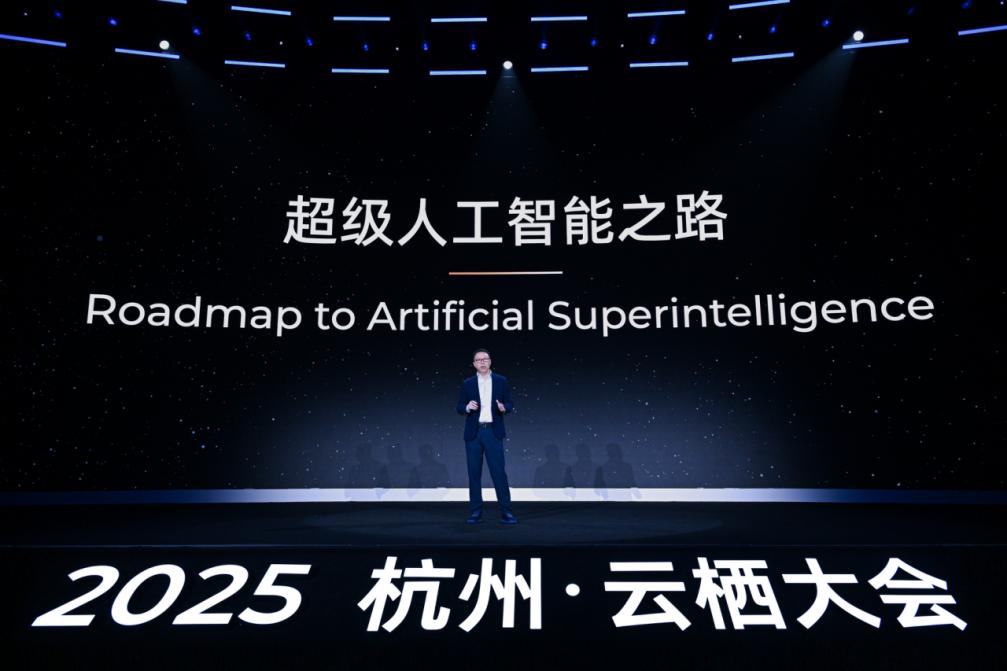
2025云栖大会“AI大模型核弹”齐发
Hang Zhou Ri Bao· 2025-09-25 03:12
Group 1 - The core theme of the news is the unveiling of Alibaba's ambitious vision for Artificial Superintelligence (ASI) at the 10th Yunqi Conference, showcasing a range of AI products and models aimed at achieving this goal [3][4][5] - Alibaba's CEO, Wu Yongming, outlined a three-phase roadmap to ASI: "intelligent emergence," "autonomous action," and "self-iteration," emphasizing that AGI is just the starting point [4][5] - The company plans to invest 380 billion yuan over three years in AI infrastructure, with a tenfold increase in global data center energy consumption by 2032 compared to 2022 [5] Group 2 - The launch of seven significant AI models, referred to as "AI model nuclear bombs," covers various fields including language, vision, and programming, indicating a strategic shift towards a collaborative ecosystem of specialized models rather than a single super brain [6][7] - The flagship model, Qwen3-Max, boasts over one trillion parameters, showcasing advanced reasoning capabilities, while other models like Qwen3-VL and Qwen3-Omni demonstrate integrated visual and multimodal processing abilities [6][7] - The new ecosystem allows developers to leverage standardized capabilities without starting from scratch, aiming to create a prosperous AI environment that ultimately leads to the era of ASI [7]