
大数据

Search documents
国家矿山安全监察局:将推动机器人代替危险繁重岗位作业
Nan Fang Du Shi Bao· 2025-12-30 11:58
Core Viewpoint - The Chinese government is promoting the integration of advanced technologies such as industrial internet, artificial intelligence, and robotics into mining operations to enhance safety and efficiency in the industry [1][2]. Group 1: Intelligent Mining Applications - The State Council's implementation opinion emphasizes the construction of high-level intelligent application scenarios for mining safety production [1]. - The National Mine Safety Administration will guide mining enterprises to develop comprehensive intelligent mining scenarios, focusing on areas such as information infrastructure, geological assurance, and safety monitoring [1]. - The goal is to create a model for intelligent mining that minimizes human presence and utilizes automation [1]. Group 2: Specific Intelligent Scenarios - In the area of mining operations, there will be a push for large-scale application of unmanned mining trucks in open-pit mines and accelerated intelligent transformation of underground mining operations [2]. - The initiative includes the development and application of 56 types of robots as outlined in the "Key R&D Directory for Mining Intelligent Robots" [2]. - For safety management, the integration of big data, cloud computing, and AI technologies will facilitate intelligent monitoring of key operations and early warning of hazards [2].

六部门发文推动现代物流标准化建设 引领物流企业数字化转型
Zheng Quan Ri Bao Wang· 2025-12-30 11:27
Core Viewpoint - The issuance of the "Key Work Plan for Modern Logistics Standardization (2025-2027)" by six government departments is a significant step towards the high-quality development of China's logistics industry and digital transformation [1][2]. Group 1: Logistics Infrastructure Enhancement - The Work Plan emphasizes the development of standards for key logistics infrastructures such as national logistics hubs, logistics parks, and warehousing and distribution centers, aiming to improve connectivity and establish a modern logistics operation system [1]. - Standards for national logistics hubs are expected to clarify indicators for multi-modal transport efficiency and emergency material storage capacity, enhancing logistics timeliness and flexibility [1]. Group 2: International Competitiveness - The standardization of logistics infrastructure is crucial for China's logistics industry to align with international standards, thereby improving its competitiveness in the global logistics market [2]. - The Work Plan is anticipated to enhance the overall competitiveness of the logistics industry and facilitate its integration into the global logistics system, providing new development opportunities for logistics companies [2]. Group 3: Quality Improvement in Logistics Services - The Work Plan aims to accelerate the development of standards related to cold chain logistics, pharmaceutical logistics, multi-modal transport, and safety standards for hazardous goods, thereby supporting the resilience and safety of supply chains [3]. - The emphasis on digital transformation and the adoption of advanced technologies like big data, AI, and blockchain is expected to enhance operational efficiency and reduce costs for logistics companies, making them more attractive to investors [3].
全国首个足球运动表现分析实验室在武汉投入使用
Xin Lang Cai Jing· 2025-12-30 10:52
Core Viewpoint - The establishment of China's first football performance analysis laboratory at Wuhan Sports University aims to leverage artificial intelligence and big data technologies to provide scientific training support for football players [1][3]. Group 1: Laboratory Features - The football performance analysis laboratory covers an area of approximately 1,500 square meters and includes components such as an AI digital center for campus football, a scenario-based training system, a data collection system, and a large database for campus football [3]. - The laboratory features a smart training field equipped with a ball machine that can accurately deliver balls at various angles and spins, allowing players to practice specific receiving and shooting actions repeatedly, which is difficult to achieve in regular training [3]. Group 2: Training System and Technology - The scenario-based training system can simulate rare and difficult real-game situations, such as bicycle kicks and goalkeeper saves, by accurately reproducing parameters like ball speed, trajectory, and angle, thereby helping players develop muscle memory and enhance decision-making skills during matches [5]. - The AI digital center utilizes artificial intelligence to extract match data from video footage based on jersey numbers, creating visual analysis results. This technology is already being piloted in several primary and secondary schools across the country [5]. Group 3: Talent Development and Data Utilization - The laboratory tracks data from players' initial contact with football through their progression into youth training teams and eventually to professional status, creating personal profiles for each player [7]. - The aim is to empower youth football talent development, scientific training, and event progression through data, establishing a comprehensive technology support system that encompasses data collection, analysis application, and talent incubation [7][8].

丰台科学教育育人合力加速形成,超70名专家担任“科学导师”
Xin Lang Cai Jing· 2025-12-30 10:51
转自:北京日报客户端 近年来,丰台区以学生发展中心(创新人才发展中心)为"中枢",构建了"区域统筹-集团联动-学校落 实"的三级三层运行机制,有效打破学段、校际壁垒。目前,科学教育正实现从"单点突破"到"系统构 建"的转变:该区系统链接了清华大学等30余家顶级高校与科研机构,成功申报了6所教育部科学教育实 验校,建设了13所拔尖创新人才培养基地,将外部顶尖资源高效转化为区域发展的内生动力。 丰台区已聘请高校教授、科研院所研究员、企业工程师等70人以上的专家团队,担任学校"科学副校 长"或项目导师;通过"科学家精神进校园""院士名家学术前沿课程"等活动,将科学家精神具象化、课 程化。同时,该区依托人工智能、大数据等技术赋能,构建数据驱动的教师发展模型与学生素养"数字 画像",推动教学方式与评价体系变革。 京日报客户端 来源:北 丰台区教委携该区学生发展中心(创新人才发展中心)等多个单位,亮出科学教育成果。这也标志着区 域科学教育多元育人合力正在加速形成。 ...

三线齐发!浪潮智慧科技助力济南地铁4、6、8号线正式开通运营,赋能交通强国建设
Qi Lu Wan Bao· 2025-12-30 09:01
Core Viewpoint - Inspur Smart Technology has successfully completed the construction of communication systems for the Jinan Metro lines 4, 6, and 8, which are now operational, significantly enhancing urban connectivity and alleviating traffic congestion in the city [3][5]. Group 1: Project Overview - The Jinan Metro lines 4, 6, and 8 officially commenced operations on December 27, marking a significant milestone in the city's transportation infrastructure [3]. - These lines serve as key east-west corridors across various districts, improving passenger flow and regional development [3]. Group 2: Technology and Innovation - Inspur has developed a comprehensive communication system that supports high-standard operations, including fully automated driving for lines 4 and 8, and autonomous driving for line 6 [5]. - The communication system integrates 13 subsystems, including 100G SPN transmission technology, 800M LTE-M mobile communication, and 5G private networks, ensuring a secure and high-capacity platform [5]. - The system supports SIL4 level fully automated operations and incorporates smart features such as intelligent video analysis and passenger travel big data [5][7]. Group 3: Company Strengths and Future Directions - Inspur's continuous investment in R&D and technological innovation has led to breakthroughs in key areas such as passenger information systems and smart operations within the smart rail industry [7]. - The successful delivery of the Jinan Metro project further validates the company's technical strength and service capabilities in the smart transportation sector [7]. - Looking ahead, Inspur aims to enhance digital empowerment and contribute to the intelligent, green, and autonomous development of China's rail transit [9].
星宸科技(301536.SZ):目前暂未涉及TPU
Ge Long Hui· 2025-12-30 07:20
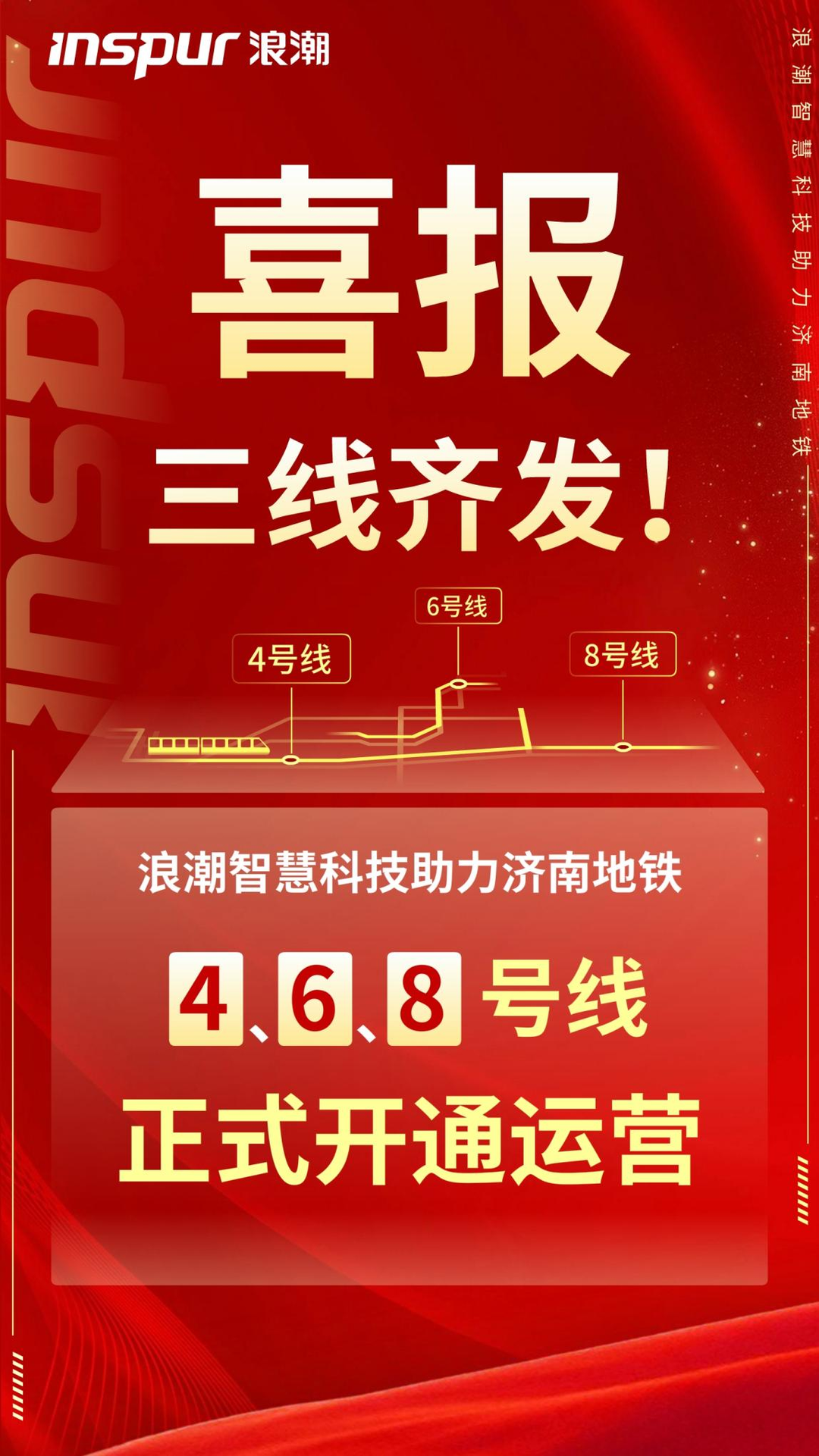
Group 1 - The core viewpoint of the article highlights that Xingchen Technology has developed its own NPU, which, combined with an expandable computing architecture and distributed computing chip set, can achieve a maximum computing power of up to 128T, suitable for high-end intelligent scenarios such as embodied intelligent robots [1] Group 2 - The Food and Beverage ETF (Product Code: 515170) tracks the CSI Sub-Industry Food and Beverage Theme Index, with a recent five-day decline of 1.42%, a price-to-earnings ratio of 19.99 times, and a net redemption of 1.0 million yuan, with the latest share count at 10.38 billion, down by 180 million [3] - The Gaming ETF (Product Code: 159869) tracks the CSI Animation and Gaming Index, showing a five-day increase of 0.48%, a price-to-earnings ratio of 37.50 times, and a net subscription of 83.83 million yuan, with the latest share count at 8.7 billion, an increase of 58 million [4] - The Sci-Tech 50 ETF (Product Code: 588000) tracks the SSE Sci-Tech 50 Index, with a five-day increase of 0.85%, a price-to-earnings ratio of 160.92 times, and a net redemption of 700 million yuan, with the latest share count at 54.34 billion, an increase of 490 million [5] - The Cloud Computing 50 ETF (Product Code: 516630) tracks the CSI Cloud Computing and Big Data Theme Index, with a five-day increase of 1.37%, a price-to-earnings ratio of 96.29 times, and no change in net subscriptions or redemptions, with the latest share count at 250 million [5]
国家平台智能中台正式上线,将加速教育智能化转型进程
Xin Lang Cai Jing· 2025-12-30 06:40
Core Insights - The launch of the National Education Big Data Center and the National Platform Intelligent Middle Platform marks a significant milestone in advancing the digital transformation of education in China, shifting from pilot demonstrations to widespread application [1][4] Group 1: National Education Big Data Center - The National Education Big Data Center signifies a new phase of "coordinated management, orderly sharing, and deep empowerment" of educational data resources, breaking down data silos and enabling real-time monitoring of key indicators such as resource allocation and teaching quality [2][4] - It supports the scientific decision-making in education by transitioning governance from "experience-driven" to "data-driven" approaches, enhancing the overall efficiency and fairness of educational governance [2][4] - The center facilitates a reform in educational evaluation by providing in-depth analysis of students' learning processes and needs, thus supporting differentiated teaching and personalized guidance [2][4] Group 2: National Platform Intelligent Middle Platform - The National Platform Intelligent Middle Platform represents a critical upgrade in the infrastructure of educational platforms, enabling a systematic approach to intelligent education through standardized interfaces and modular packaging [3][4] - It allows for the rapid development and deployment of intelligent applications using low-code methods, thereby reducing barriers to application development and promoting resource efficiency [3][4] - The platform aims to foster an environment conducive to innovative educational practices, supporting the transformation of teaching and learning methods, and facilitating the transition from pilot projects to widespread intelligent teaching applications [3][4]
华胜天成荣膺三大百强榜单,领航京津冀数字经济与服务新生态
Xin Lang Cai Jing· 2025-12-30 03:38
Core Insights - Huasheng Tiancai has been recognized in three major lists: "2025 Beijing Digital Economy Top 100," "2025 Beijing Service Industry Top 100," and "2025 Beijing-Tianjin-Hebei Service Industry Top 100," highlighting its innovation in the digital economy and service sectors [1][6]. Group 1: Company Achievements - Huasheng Tiancai's inclusion in the top lists reflects its strong capabilities as a benchmark for technological innovation in the capital [1][6]. - The company has established itself as a leading digital innovation service provider, leveraging Beijing's policy advantages and cutting-edge technology resources [5][10]. Group 2: Strategic Initiatives - The company employs an "AI + computing power" approach to solidify its technological foundation, while "AI + scenarios" leads application innovation, and "AI + ecosystem" gathers industrial strength [5][10]. - Huasheng Tiancai has successfully provided comprehensive solutions across over ten industries, including government, finance, education, manufacturing, and energy, aiding clients in digital transformation and intelligent upgrades [5][10]. Group 3: Regional Development - Under the guidance of the Beijing-Tianjin-Hebei collaborative development strategy, Huasheng Tiancai uses its Beijing headquarters as an innovation engine to achieve efficient cross-regional technology transfer in Tianjin and Hebei [5][10]. - The company promotes overall service capability enhancement in the Beijing-Tianjin-Hebei region through standard output, talent cultivation, and ecosystem building [5][10]. Group 4: Future Outlook - Huasheng Tiancai aims to continue its role as an industry leader by increasing research and development investments and accelerating breakthroughs in artificial intelligence, computing power, and big data [5][10]. - The company is committed to contributing to the establishment of a new global digital economy hub [5][10].


依米康涨2.03%,成交额1.20亿元,主力资金净流入1815.65万元
Xin Lang Cai Jing· 2025-12-30 02:45
Core Viewpoint - The stock of Yimikang has shown a positive trend with a year-to-date increase of 18.00%, despite a recent decline over the past 60 days [1][2]. Group 1: Stock Performance - As of December 30, Yimikang's stock price rose by 2.03% to 15.08 CNY per share, with a trading volume of 1.20 billion CNY and a turnover rate of 2.15%, resulting in a total market capitalization of 6.643 billion CNY [1]. - The stock has experienced a net inflow of 18.1565 million CNY from major funds, with significant buying activity from large orders [1]. - Over the past five trading days, the stock has increased by 2.31%, while it has decreased by 8.05% over the last 60 days [1]. Group 2: Company Overview - Yimikang Technology Group Co., Ltd. was established on September 12, 2002, and went public on August 3, 2011, specializing in green solutions for the entire lifecycle of digital infrastructure [2]. - The company operates in the computer equipment sector, focusing on data center solutions, and has a revenue composition of 100% from the information data field [2]. - As of September 30, the number of shareholders increased to 62,700, with an average of 5,958 circulating shares per person [2]. Group 3: Financial Performance - For the period from January to September 2025, Yimikang reported a revenue of 1.064 billion CNY, marking a year-on-year growth of 52.61%, and a net profit attributable to shareholders of 27.6472 million CNY, reflecting a significant increase of 273.71% [2]. - The company has distributed a total of 51.0709 million CNY in dividends since its A-share listing, with no dividends paid in the last three years [3].

精准施策提升小微企业融资效率
Jin Rong Shi Bao· 2025-12-30 02:07
Core Viewpoint - The Central Economic Work Conference emphasizes the need for financial institutions to enhance support for key areas such as expanding domestic demand, technological innovation, and small and micro enterprises in the 2026 economic work plan [1] Group 1: Financial Support for Small and Micro Enterprises - As of September 2025, the balance of inclusive micro and small loans reached 36.1 trillion yuan, reflecting a year-on-year growth of 12.2%, indicating effective financial support measures for small and micro enterprises [1] - The financing success for small and micro enterprises is characterized by increased volume, expanded coverage, and reduced costs, demonstrating the effectiveness of various financial support initiatives [1] - The emergence of many small and micro enterprises in new and future industries highlights their characteristics of being asset-light, high-tech, and high-growth, while also facing significant risks [1] Group 2: Credit Value and Information Sharing - The national platform for sharing credit information on cash flow for small and micro enterprises has established records for over 60 million enterprises, facilitating financing exceeding 1.1 trillion yuan [2] - The platform converts "data flow" into "credit flow" by analyzing cash flow and transaction data, enabling banks to assess creditworthiness more effectively [2] - Various regions are integrating government service data and intellectual property data to create comprehensive financing service platforms for small and micro enterprises, enhancing loan accessibility [2] Group 3: Transparency in Financing Costs - The People's Bank of China initiated a pilot program to clarify comprehensive financing costs for enterprises, promoting transparency and trust between banks and businesses [3] - The initiative has exposed hidden fees and reduced loan costs, improving overall satisfaction and trust among enterprises [3] - Some banks have begun to cover evaluation and pledge supervision fees, demonstrating a commitment to supporting the real economy [3] Group 4: Tailored Financial Products for Technology Enterprises - Financial institutions are adopting a "invest early, invest small, invest long-term, and invest in hard technology" approach, providing tailored financial products for technology-oriented small and micro enterprises [4] - Local governments are utilizing industry funds and loan interest subsidies to encourage financial institutions to increase support for small and micro enterprises [4] - Financial institutions are beginning to match financing products to the entire lifecycle of enterprises, offering specialized loans based on the qualifications and assets of key personnel [4] Group 5: Continuous Improvement in Financing Environment - The ongoing improvement in the financing environment is allowing more small and micro enterprises to experience supportive financial services [4] - Many regions are exploring successful experiences in breaking down information barriers and converting data into credit using big data and artificial intelligence [5] - There is a need for further institutional innovation to address the challenges of risk and return matching in financing [5]