量子计算

Search documents
投资大家谈 | 长城基金“科技+”:等待新的市场主线,AI中期配置价值不改
Sou Hu Cai Jing· 2025-11-09 11:21
Core Insights - The A-share market is experiencing a structural divergence, with cyclical industries leading the gains while the technology sector is undergoing a correction. The overall market is expected to maintain a "slow bull" trend, supported by the recent "14th Five-Year Plan" which provides long-term investment direction focusing on technological self-reliance and modern industrial system construction [1] Group 1: Market Trends - In October, the Shanghai Composite Index successfully approached the 4000-point mark, indicating a recovery phase in the domestic economy [1] - The market is currently characterized by a rotation of funds among various sectors, with a focus on stocks that show changes in their fundamentals [2][3] Group 2: Sector Focus - The AI and terminal application sectors are highlighted as key areas for investment opportunities, with a cautious approach towards previously high-performing sectors [3][6] - The military industry is noted for its potential short-term catalysts, while the commercial aerospace sector is expected to accelerate in development in the coming months [5] Group 3: Investment Strategies - Investors are advised to look for stocks with strong performance and valuation support, particularly in the AI industry chain and consumer electronics [4][11] - The focus on AI applications is emphasized, with potential growth in sectors such as robotics, smart driving, and AI infrastructure [8][10] Group 4: Economic Outlook - The overall market sentiment is cautious as it enters a period of performance and policy vacuum, with expectations of a balanced market style towards the end of the year [9][10] - The technology innovation sector is viewed as a crucial growth engine, with ongoing developments in AI infrastructure and applications expected to create new investment opportunities [11]
在水乡乌镇,感受照耀未来的“互联网之光”
Xin Hua She· 2025-11-09 08:08
Group 1 - The 2025 World Internet Conference Wuzhen Summit is held in Wuzhen, Zhejiang from November 6 to 9, showcasing the "light of the internet" that illuminates the future [1] - The "Internet Light" Expo focuses on "AI and Knowledge Empowerment," featuring over 600 enterprises and institutions from more than 50 countries and regions [3][4] - The expo serves as a platform for demonstrating new technologies, products, and scenarios in the field of artificial intelligence, including various intelligent glasses and digital solutions that significantly enhance production efficiency [5] Group 2 - Seventeen internationally representative projects received the Leading Technology Award at the conference, covering cutting-edge fields such as large models, intelligent networks, embodied intelligence, and quantum computing [8] - The summit highlights the global tech community's shared concerns and active exploration of a digital future, marking the tenth anniversary of the concept of building a community with a shared future in cyberspace [12] - The event features discussions on the present and future of artificial intelligence, with representatives from six companies sharing insights [10]


互联网发展报告蓝皮书发布
Ke Ji Ri Bao· 2025-11-09 01:11
Group 1: China's Internet Development Report 2025 - The report highlights the continuous optimization and upgrading of information infrastructure, with the digital economy developing in a stable and substantial manner [1] - It emphasizes the ongoing deep transformation of industrial digitization, showcasing innovations in digital industries and the empowering effects of cutting-edge technologies like artificial intelligence, blockchain, and quantum computing [1] - The report notes significant advancements in network security capabilities and governance systems, with a marked improvement in protective measures [1] - It mentions the enhancement of e-government and digital society construction, leading to notable outcomes in data-driven high-quality economic and social development [1] - The report indicates an increasing degree of systematization and standardization in network legal frameworks, optimizing the business environment and promoting orderly development of the platform economy [1] - China actively participates in global digital governance, advocating for a community of shared future in cyberspace [1] Group 2: World Internet Development Report 2025 - The report provides a global perspective on internet development, noting that infrastructure construction supports digital transformation, evolving towards intelligence and sustainability [2] - It highlights the acceleration of foundational and application technologies in the information sector, injecting new momentum into digital transformation across various industries [2] - The report states that artificial intelligence drives global digital economy innovation and growth, facilitating the intelligent transformation of content production in internet media [2] - It describes a complex global cybersecurity landscape characterized by military and intelligent interweaving, with major countries enhancing their cybersecurity capabilities [2] - The report points out that government digital transformation is being propelled by innovative applications, with significant achievements in public data development and cross-border data flow [2] - It emphasizes the importance of orderly development of technological norms as a key theme in global cyber law construction, with increasing attention to digital governance rules among countries [2]
2 Top Quantum Computing Stocks to Watch in November
The Motley Fool· 2025-11-08 15:15
Core Insights - Quantum computing is poised to revolutionize computing power by utilizing qubits, which can exist in multiple states simultaneously, potentially solving problems that would take traditional computers millions of years [1] - Companies like Rigetti Computing and D-Wave Quantum are early movers in the quantum computing space, with significant stock price increases and unique business models that warrant attention from investors [2][3] Rigetti Computing - Rigetti Computing has seen a remarkable 156% increase in stock price this year, attributed to its pick-and-shovel business model and vertical integration efforts [3] - The company focuses on providing the infrastructure necessary for quantum computing rather than generating revenue directly from the technology, similar to Nvidia's role in the AI industry [4] - Rigetti manufactures its own chips at its facility in Fremont, California, which enhances control over its supply chain and reduces reliance on foreign partners [6] - The company has received government support, including an $8.6 million grant from DARPA in 2020, highlighting its strategic importance [7] D-Wave Quantum - D-Wave Quantum has experienced explosive growth, with a 293% year-to-date gain and a staggering 3,200% increase over the past 12 months [8] - Unlike Rigetti, D-Wave focuses on quantum annealing technology, which is designed for optimization tasks, making it suitable for applications in logistics and generative AI [9] - D-Wave has begun commercializing its technology, with second-quarter revenue increasing by 42% year-over-year to $3.1 million, although it still faces significant operating losses of $26.5 million [10] Investment Considerations - While both Rigetti and D-Wave present attractive investment opportunities, the commercial viability of quantum computing technology may still be years away, and both companies are incurring substantial research costs [11] - The price-to-sales multiples for Rigetti and D-Wave are extremely high at 1,110 and 335, respectively, indicating that their shares may be overvalued given the long-term challenges they face [12]




虚数 i ,要被量子力学抛弃了?
机器之心· 2025-11-08 06:10
Core Viewpoint - Recent research suggests that quantum mechanics may be rewritten using only real numbers, challenging the long-standing reliance on imaginary numbers in the field [1][7][11]. Group 1: Historical Context - Quantum mechanics was established over a century ago to explain the strange behavior of atoms and fundamental particles, achieving significant success [2]. - The core equations of quantum mechanics include the imaginary unit i, which has been a point of contention among physicists [3][4]. Group 2: Recent Developments - In 2021, a study indicated that imaginary numbers were essential to quantum theory, but subsequent research in 2025 proposed a real-number equivalent that is fully compatible with standard quantum theory [8][11][15]. - Several teams have developed real-number formulations of quantum theory, raising questions about the necessity of imaginary components [15][38]. Group 3: Experimental Evidence - A modified Bell experiment demonstrated that the correlations between entangled particles exceeded the limits set by real-number theories, suggesting that imaginary numbers are crucial for accurate quantum descriptions [30][29]. - Despite statistical evidence supporting the necessity of imaginary numbers, skepticism remains regarding the conclusions drawn from these experiments [31][32]. Group 4: Philosophical Implications - The debate continues over why real-number formulations are more complex and whether they can fully replicate the results of traditional quantum mechanics [42][43]. - Some researchers argue that even if imaginary numbers are not strictly necessary, they provide a more elegant and intuitive framework for quantum mechanics [44][49]. Group 5: Future Directions - Ongoing research aims to uncover the unique properties of quantum mechanics that make imaginary numbers particularly suitable, with some theorists suggesting that spin may play a role [51][52]. - The quest for a simpler axiomatic framework for quantum mechanics continues, as researchers seek to understand why the traditional formulation remains dominant [53].

五年规划彰显中国特色社会主义制度优势
人民网-国际频道 原创稿· 2025-11-08 04:22
Group 1 - The Five-Year Plan is a key support for China's sustained economic growth and reflects the advantages of the socialist system with Chinese characteristics, showcasing the Communist Party's ability to lead national development through long-term planning [1] - The "14th Five-Year Plan" integrates short-term, medium-term, and long-term goals, allowing for flexibility in response to changing global conditions, and emphasizes the importance of research and public opinion in shaping the plan [1] - The plan demonstrates the Communist Party's capability to combine strategic foresight with pragmatic actions, achieving concrete results in innovation, poverty alleviation, and macroeconomic stability [1] Group 2 - The "14th Five-Year Plan" emphasizes accelerating high-level technological self-reliance and strength, focusing on key areas such as artificial intelligence, biotechnology, semiconductors, quantum computing, and clean energy [2] - The plan also prioritizes the transformation of traditional industries and the promotion of digital transformation to build a modern industrial system with higher efficiency and flexibility [2] - China aims to expand autonomous openness, promote trade innovation, and enhance bilateral investment cooperation, reflecting its commitment to sharing development opportunities with the world [2]
创新成果与人才活力相互赋能 乌镇峰会搭建对接桥梁加速数智红利落地
Yang Shi Wang· 2025-11-08 02:56
Group 1 - The 2025 World Internet Conference in Wuzhen focuses on building a collaborative and secure digital future, emphasizing the importance of open cooperation in cyberspace [1] - The conference features practical activities such as the Leading Technology Award and a talent recruitment fair, showcasing advancements in global digital technology and bridging the gap between talent and industry [1][3] - The talent recruitment fair attracted over 1,100 companies and nearly 10,000 job positions, with AI-related roles like AI development engineers and senior algorithm engineers being particularly in demand [3] Group 2 - The Leading Technology Award received submissions from 34 countries and regions, with over 400 valid entries covering cutting-edge fields such as large models, intelligent networks, embodied intelligence, and quantum computing [4] - A total of 17 internationally representative projects were selected, including key technologies and applications related to the BeiDou-3 satellite navigation system and high-fidelity digital human technology driven by script-based multi-modal collaboration [4] - The Wuzhen Summit aims to empower innovation outcomes and talent vitality through diverse initiatives, facilitating the application of frontier technologies and the gathering of industry talent [6]
雷鸟,又融了一轮 | 融中投融资周报
Sou Hu Cai Jing· 2025-11-08 02:47
Group 1: Investment Highlights - Thunderbird Innovation completed a record financing round in the AI+AR glasses sector, led by CITIC Jinshi, with funds aimed at accelerating technology development and ecosystem construction [2] - Time Technology raised 300 million RMB in a B++ round, marking its second financing round in 2025, and signed a procurement agreement for 350 eVTOL aircraft worth 1 billion USD with Autocraft [2] - Sensing Intelligence, focused on "robot perception," completed a Pre-A round financing with undisclosed amounts, aimed at enhancing technology development and market expansion [3] Group 2: Company Developments - Hongyi Technology, targeting AI+industrial digitalization, aims to provide comprehensive solutions for small and medium-sized manufacturers, with significant funding directed towards reducing AI usage barriers [4] - Suzhou Xinshi Nuo Semiconductor Equipment Co., Ltd. announced a strategic financing round to enhance R&D and market expansion in the semiconductor automation sector [5] - MatriQ, specializing in neutral atom quantum computing, completed a seed round financing to advance core technology development and industrial application [6] Group 3: Robotics and AI Integration - Alsaik, an intelligent pneumatic company, completed a multi-million Pre-A round financing to enhance product development and market positioning [7] - Simple AI, a company in the embodied intelligent robotics sector, raised 200 million RMB through consecutive seed rounds to support commercialization efforts [8] - The establishment of the Henan Electric Equipment Fund, with a scale of 300 million RMB, aims to invest in new electric equipment manufacturing, enhancing local industry development [9] Group 4: International Collaboration - A partnership between Binhai New Area and Yida Capital at the Future Investment Initiative Conference aims to strengthen cross-border capital and industry cooperation, with an initial agreement of 80 million USD [10] - A strategic action plan in Shandong focuses on advancing the robotics industry, aiming for significant technological breakthroughs and the establishment of innovation platforms by 2028 [11]

AI与机器人的“乌镇时间”
Jing Ji Guan Cha Wang· 2025-11-07 23:43
Core Insights - The 2025 World Internet Conference in Wuzhen focuses on AI and robotics, showcasing over 1,000 AI products from more than 600 companies globally, emphasizing the integration of technology and international cooperation [2][3] - Key highlights include the establishment of a digital heritage committee, a health forum focusing on AI in medicine, and the introduction of a fully unmanned delivery station by JD Group in 2026 [2][3][4] Group 1: AI and Robotics - The "Internet Light" Expo serves as a platform for AI and robotics, featuring innovative applications in logistics, healthcare, and cultural sectors [2][3] - JD Group's founder announced plans for the world's first fully unmanned delivery station, aiming for significant reductions in employee work hours [2] - Alibaba's CEO discussed the evolution of AI technology towards superintelligence and the company's investment in a comprehensive AI cloud [3] Group 2: Health and Cultural Applications - AI-assisted diagnostics are highlighted, with technologies like smart health mirrors capable of assessing over 30 health indicators in 30 seconds [4] - The expo features AI applications in tourism, including multilingual smart guide robots and personalized travel suggestions [4][5] - A digital heritage committee was established to promote the digital preservation of cultural heritage through various initiatives [3][6] Group 3: Reports and Standards - The conference released significant reports addressing AI standards and global governance frameworks, emphasizing responsible AI development [6] - The "World Internet Conference Cultural Heritage Digitalization Case Collection" showcases 40 representative cases from 12 countries, focusing on digital restoration and immersive experiences [6] Group 4: Interactive Experiences - The expo introduced interactive experiences such as robot battles and VR projects, enhancing public engagement with technology [5] - Ant Group launched AI glasses for digital tour services, integrating navigation and payment functionalities for a seamless experience [5]

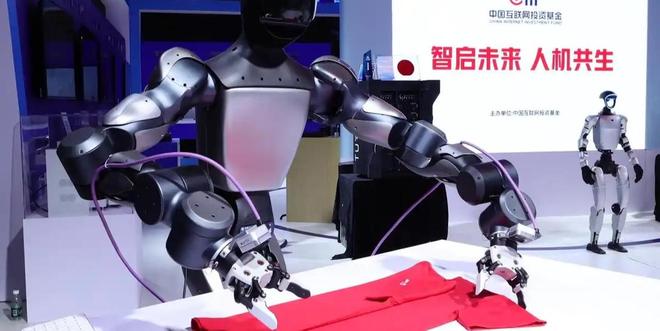
Rigetti Computing's Upcoming Earnings: A Glimpse into Quantum Computing's Future
Financial Modeling Prep· 2025-11-07 16:00
Core Insights - Rigetti Computing is a significant player in the quantum computing industry, focusing on developing quantum integrated circuits and systems to enhance computing capabilities [1] - The company is set to release its third-quarter earnings on November 10, 2025, with Wall Street expecting an EPS of -$0.05 and revenue of $2.17 million, while Rigetti estimates revenue at $2.39 million, a 0.4% increase from the previous year [2] - Rigetti's stock has increased by 182% since its second-quarter earnings report, driven by investor sentiment and advancements in quantum computing, despite a negative P/E ratio of -62.17 [3] - The company faces challenges with a negative enterprise value to operating cash flow ratio of -206.15, indicating difficulties in generating positive cash flow, but maintains a low debt-to-equity ratio of 0.014 [4] - Rigetti's strong current ratio of 41.57 suggests excellent short-term liquidity, providing a buffer against financial uncertainties as the third-quarter earnings season unfolds [5][6]