
全国统一大市场建设

Search documents
市场监管总局:“十四五”期间出台质量融资增信措施 助3万家企业获贷款超2000亿元
智通财经网· 2025-08-22 03:58
Group 1 - The State Administration for Market Regulation (SAMR) has established a fair competition review mechanism, reviewing 42,200 important policy measures and proposing amendments to 11,400 of them to prevent policies that are detrimental to the construction of a unified national market [10][12] - During the 14th Five-Year Plan period, the SAMR has handled nearly 50,000 cases of unfair competition, including 4,296 cases of online unfair competition, optimizing the competitive ecosystem of both online and offline markets [12][6] - The SAMR has implemented a series of measures to enhance the quality of enterprises, including the establishment of chief quality officers in 279,000 companies, resulting in an average annual revenue growth of 9.7% for small and micro enterprises involved in quality improvement initiatives [2][46] Group 2 - The SAMR has strengthened the regulation of food safety, handling 2.26 million food safety cases and maintaining a food safety compliance rate of over 99.4% for drug inspections [7][29] - The SAMR has revised key laws such as the Company Law and the Anti-Monopoly Law, enhancing the regulatory framework for market operations and increasing the enterprise credit index from 128.6 in 2020 to 161.61 in the first half of 2025 [6][10] - The SAMR has facilitated the establishment of a unified market by promoting regional market integration, achieving "one network for handling" across multiple provinces and cities, and implementing shared electronic certificate standards [12][11] Group 3 - The SAMR has focused on enhancing the quality of the pharmaceutical industry, approving 204 innovative drugs and 265 innovative medical devices during the 14th Five-Year Plan period, with a significant increase in the number of innovative drugs under research [35][52] - The SAMR has implemented a comprehensive reform of drug and medical device regulation, emphasizing the entire lifecycle of drug safety and quality, and has established a dynamic regulatory mechanism for drug safety risk assessment [34][52] - The SAMR has actively supported the development of quality standards, issuing over 13,000 national standards and leading the formulation of 1,079 international standards during the 14th Five-Year Plan period [38][40]
市场监管总局:“十五五”以更大力度破除地方保护和市场分割
Xin Lang Cai Jing· 2025-08-22 03:48
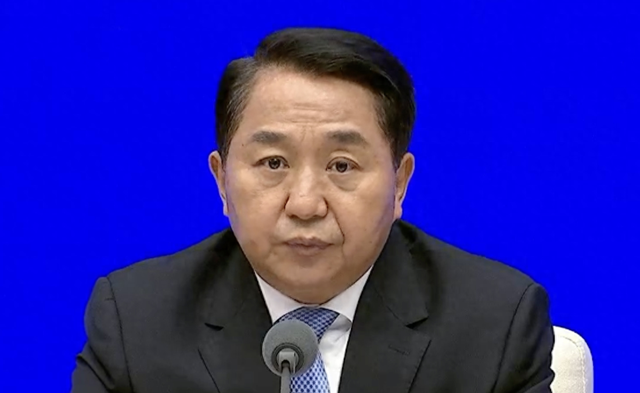
转自:北京日报客户端 来源:北京日报客户端 国家市场监督管理总局局长罗文表示,"十五五"时期,将继续聚焦纵深推进全国统一大市场建设,以更 大力度破除地方保护和市场分割,以更实举措维护公平竞争市场秩序,全力推动全国统一大市场成为各 类经营主体公平竞争的大舞台。 8月22日上午,国新办举行"高质量完成'十四五'规划"系列主题新闻发布会,介绍"十四五"时期市场监管 高质量发展成就,并答记者问。 ...

破除“内卷式”竞争 迈向高质量发展(人民眼·建设全国统一大市场)
Ren Min Ri Bao· 2025-08-21 23:33
Group 1 - The article discusses the shift from "involution" competition to high-quality development in various industries, emphasizing the need for fair competition and innovation [1][2] - E-commerce platforms have adjusted their "refund only" policies to protect merchants' rights and promote a healthier consumption ecosystem, resulting in a significant decrease in related disputes [3][4][6] - The adjustment of the "refund only" rule has led to a 30% reduction in total refund requests on platforms like Taobao, indicating a positive impact on market order [6][8] Group 2 - The article highlights the transformation of the eyewear industry in Taizhou, where companies are moving away from low-cost competition to focus on innovation and quality, with production efficiency increasing by 8 times due to new technology [9][11] - Taizhou's eyewear industry has seen a significant improvement in product quality, with a 94.3% compliance rate in 2024, up 16 percentage points from 2022 [12] - The establishment of specialized industrial parks has facilitated collaboration among businesses, improving supply chain efficiency and reducing costs [11][12] Group 3 - The article outlines the shift in investment attraction strategies in cities like Jiaozuo, moving from offering tax incentives to optimizing the business environment and enhancing service quality [13][15] - Jiaozuo has implemented a systematic approach to track and support investment projects, resulting in a significant increase in signed projects [16][19] - The introduction of specialized talent for investment promotion has led to the successful attraction of numerous projects, demonstrating the effectiveness of a service-oriented approach [17][19]
破除“内卷式”竞争迈向高质量发展——纵深推进全国统一大市场建设观察之三(人民眼·建设全国统一大市场)
Ren Min Ri Bao· 2025-08-21 22:21
Group 1 - The article discusses the adjustment of the "refund only" mechanism by major e-commerce platforms, which will no longer actively intervene in consumer requests for refunds without returns after receiving goods, aiming to balance the rights of merchants and consumers [1][3] - The adjustment of the "refund only" rule has led to a significant decrease in related disputes, with the Beijing Internet Court handling less than 20 cases this year, a drop of over 60% compared to the same period last year [2] - The optimization of the "refund only" rule is seen as a corrective measure to maintain market order and improve the consumption ecosystem, as it addresses the abuse of the rule by some consumers [5][6] Group 2 - The article highlights the transformation of the eyewear industry in Taizhou, where companies are moving away from low-end, price-driven competition to focus on innovation and quality, with the production efficiency of a local company increasing eightfold due to new equipment [8][9] - The establishment of high-standard industrial parks in Taizhou has facilitated collaboration among eyewear manufacturers, improving supply chain efficiency and reducing production costs [9][10] - The article notes that the quality inspection pass rate for Taizhou eyewear has improved to 94.3% in 2024, an increase of 16 percentage points from 2022, indicating a shift towards quality management [10] Group 3 - The article discusses the shift in investment attraction strategies in cities like Jiaozuo, where the focus has moved from offering tax incentives to optimizing the business environment and enhancing service quality [11][12] - Jiaozuo has implemented a systematic approach to track and support investment projects, ensuring accountability and progress monitoring [14][18] - The introduction of specialized talent for investment attraction has led to significant project signings and a focus on creating a favorable business environment rather than competing on incentives [16][18]
万华化学(600309):至暗时刻已过,龙头腾飞在即
Changjiang Securities· 2025-08-21 15:38
Investment Rating - The report maintains a "Buy" rating for the company [13][15]. Core Viewpoints - The company has experienced a prolonged decline in stock price since February 2021, with earnings expected to fluctuate downwards from 2022 to 2024, and a projected 25.1% year-on-year decline in the first half of 2025. Currently, the company is at a low point in both performance and valuation. However, there are positive changes anticipated in the global and Chinese market environments, with the main products MDI/TDI expected to see an upturn in demand. The company has established a competitive moat in its petrochemical business, and a slowdown in capital expenditure may lead to sustained cash flow improvements. The company is focusing on a strategy of "focusing" and "operating" to solidify its advantages and promote a recovery [3][6][22]. Summary by Sections Market Environment Changes - The global and Chinese chemical industry leaders are facing a challenging period, but there are signs of positive changes in supply dynamics. Increased operational pressures have led foreign companies like Shell and Dow to exit certain capacities, resulting in a continuous optimization of supply [7][33]. MDI Market Outlook - MDI, primarily used in home appliances and real estate insulation, is expected to see improved supply-demand dynamics. The demand for MDI in China is supported by the home appliance sector, and potential interest rate cuts in the US may boost real estate demand. The global MDI market is characterized by oligopoly, with significant barriers to entry and a projected recovery in demand [8][51][59]. TDI Market Outlook - TDI, used in the production of foams and curing agents, is experiencing a supply shortage, leading to significant price increases. The domestic furniture industry's strong demand is expected to further drive TDI consumption [9][72]. Petrochemical Business - The company is enhancing its competitive edge through raw material advantages, with a successful launch of a new ethylene facility. The integration of the entire industrial chain is expected to significantly improve profitability in the petrochemical sector [10][12]. Fine Chemicals and New Materials - The company is focusing on its fine chemicals and new materials segment, which includes various high-value-added business units. The acceleration of self-developed technologies is expected to yield promising future growth [11][12]. Management and Cost Control - The company is implementing cost reduction and capital expenditure control measures, with a focus on improving operational efficiency. A planned investment of 25.24 billion yuan in 2025 indicates a significant reduction in overall investment scale, which may lead to improved cash flow and a decrease in the debt-to-asset ratio [12][46].

从国务院第九次全体会议看下半年经济工作重点
Jing Ji Guan Cha Wang· 2025-08-21 07:51
Core Viewpoint - The State Council emphasizes the need to consolidate and expand the economic recovery momentum and strive to achieve the annual economic and social development goals, with a focus on six key areas for the second half of the year [1] Group 1: Economic Policy Implementation - The government aims to enhance the effectiveness of macro policy implementation, assess policy impacts, and respond to market concerns to stabilize expectations [1] - There is a recognition of marginal economic slowdown in June and July, particularly in fixed asset investment and retail sales, necessitating timely responses to stabilize market expectations [1] Group 2: Domestic Circulation - Strengthening domestic circulation is identified as a key focus, leveraging its inherent stability and long-term growth potential to counter uncertainties in international circulation [2][3] Group 3: Consumer Potential - The government plans to stimulate consumption by removing restrictive measures in the consumption sector and fostering new growth points in service consumption and new consumption models [4] Group 4: Effective Investment - There is an emphasis on increasing effective investment, particularly in major projects that can boost domestic demand, create jobs, and support growth, with a focus on investments that serve the public [4] Group 5: Unified Market Construction - The meeting highlights the importance of advancing the construction of a unified national market to continuously release the benefits of a super-large-scale market [5] Group 6: Real Estate Market Stabilization - The government intends to take strong measures to stabilize the real estate market and promote urban renewal, addressing the need for improvement in housing demand [5]
平台企业涉税信息报送规定顺利实施 助力全国统一大市场建设向纵深推进
Zheng Quan Ri Bao Wang· 2025-08-20 07:12
本报讯(记者韩昱)今年6月份,国务院公布实施了《互联网平台企业涉税信息报送规定》(以下简称《规 定》),致力营造法治公平的税收环境,引导平台经济规范健康发展,促进全国统一大市场建设。《规 定》明确,平台企业要在今年7月份首次报送包括平台域名、业务类型、相关运营主体名称等在内的自 身基本信息。 根据《规定》要求,今年10月份,互联网平台企业要向主管税务机关报送平台内经营者和从业人员身份 信息及上季度收入信息。为确保10月份首次涉税信息报送平稳顺利,税务部门及时升级信息系统、优化 服务措施,目前已辅导平台企业在试报过程中掌握统一的报送口径、标准和方法,为首次涉税信息报送 打好基础。 国家税务总局相关司局负责人表示,下一步,税务部门将持续推进《规定》落实,坚持严格规范公正文 明执法,促进全国执法标准统一,遏制"内卷式"无序竞争,协同纠治利用平台违规招商引资行为,促进 全国统一大市场建设和经济高质量发展。 8月20日,《证券日报》记者从税务部门获悉,《规定》实施后,各类互联网平台企业积极响应,平台 基本信息首次报送工作进展顺利。 据国家税务总局相关司局负责人介绍,作为遏制刷单炒信等"内卷式"无序竞争、破解地方违规利用 ...
遏制“内卷式”竞争 平台企业涉税信息报送规定顺利实施
Zheng Quan Shi Bao Wang· 2025-08-20 06:20
根据《规定》要求,今年10月份,互联网平台企业要向主管税务机关报送平台内经营者和从业人员身份 信息及上季度收入信息。为确保10月首次涉税信息报送平稳顺利,税务部门及时升级信息系统、优化服 务措施,目前已辅导平台企业在试报过程中掌握统一的报送口径、标准和方法,为首次涉税信息报送打 好基础。 国家税务总局相关司局负责人表示,下一步,税务部门将持续推进《规定》落实,坚持严格规范公正文 明执法,促进全国执法标准统一,遏制"内卷式"无序竞争,协同纠治利用平台违规招商引资行为,促进 全国统一大市场建设和经济高质量发展。 今年6月,国务院公布实施了《互联网平台企业涉税信息报送规定》(下称《规定》),致力营造法治公 平的税收环境,引导平台经济规范健康发展,促进全国统一大市场建设。《规定》明确,平台企业要在 今年7月首次报送包括平台域名、业务类型、相关运营主体名称等在内的自身基本信息。8月20日,记者 从税务部门了解到,《规定》实施后,各类互联网平台企业积极响应,平台基本信息首次报送工作进展 顺利。 国家税务总局相关司局负责人介绍,作为遏制刷单炒信等"内卷式"无序竞争、破解地方违规利用平台招 商引资问题、纵深推进全国统一大市场 ...
税务总局:相关平台企业已报送基本信息 将对个别未报送企业开展宣传辅导和约谈提醒
Jing Ji Guan Cha Wang· 2025-08-20 03:44
Core Points - The State Taxation Administration has reported that platform enterprises submitted basic information in July 2023 as per the "Regulations on Reporting Tax Information by Internet Platform Enterprises" [1][2] - The regulations aim to create a fair tax environment and promote the healthy development of the platform economy, as well as the construction of a unified national market [1][2] Group 1 - The regulations require internet platform enterprises to report basic information including platform domain names, business types, and operational entity names [1] - The regulations apply equally to both domestic and foreign platform enterprises, ensuring fair competition among all operating entities [1][2] Group 2 - By October 2023, internet platform enterprises must report identity information of operators and employees, along with income information from the previous quarter [2] - The tax authorities have upgraded their information systems and optimized service measures to facilitate the smooth reporting of tax information [2] - The implementation of these regulations is seen as a crucial step to curb disordered competition and promote a unified national market [2]
互联网平台企业涉税信息首次报送进展顺利
Yang Shi Xin Wen· 2025-08-20 02:01
Core Points - The implementation of the "Regulations on Tax Reporting for Internet Platform Enterprises" has been positively received by various internet platform companies since its introduction in June this year [1] - The regulations aim to ensure fair competition among domestic and foreign platform enterprises and to promote a unified and fair execution across the country [1][2] - The tax authorities are actively providing guidance and support to platform enterprises to ensure compliance with the reporting requirements [2] Group 1 - The basic information reporting by platform enterprises, including domain names, business types, and operational主体 names, has progressed smoothly since July [1] - Tax authorities will conduct promotional guidance and reminders for those platform enterprises that have not yet submitted their basic information [1] - The regulations are part of broader efforts to curb disordered competition and promote the construction of a unified national market [1] Group 2 - By October, internet platform enterprises are required to report identity information of operators and employees, as well as income information from the previous quarter [2] - The tax department has upgraded its information systems and optimized service measures to ensure a smooth first tax information reporting [2] - Future efforts will focus on strict, standardized, and fair law enforcement to promote high-quality economic development and address issues related to improper use of platforms for investment attraction [2]