
可再生能源

Search documents
助力孟加拉国清洁能源发展
人民网-国际频道 原创稿· 2025-09-12 01:42
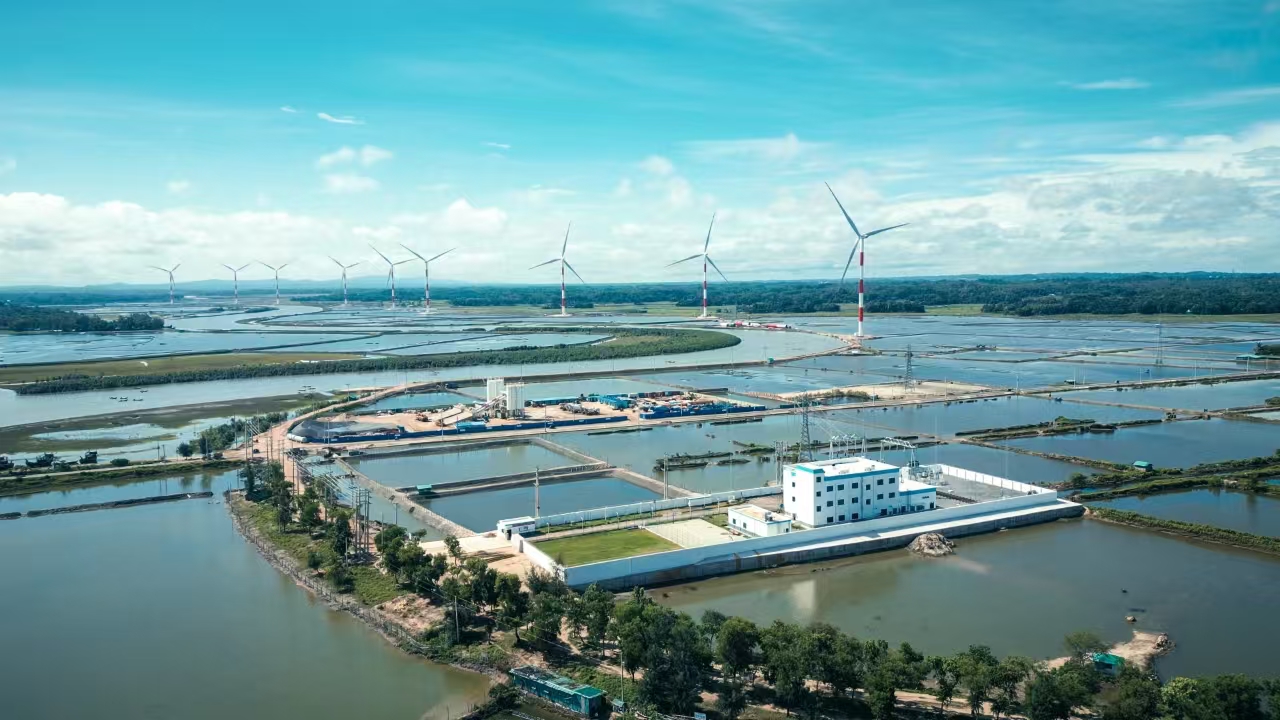
Core Insights - The Cox's Bazar Wind Power Project is Bangladesh's first centralized wind power project, located in the southeastern coastal city of Cox's Bazar, providing a significant source of green energy to the local area [1][2]. Group 1: Project Overview - The project has a total capacity of 66,000 kW and generates approximately 145.6 million kWh of green electricity annually, reducing coal consumption by 44,600 tons, CO2 emissions by 109,200 tons, and SO2 emissions by 251.5 tons each year [2]. - The wind farm consists of 22 turbines and connects to the local grid through a 132kV substation and a 10 km double-circuit transmission line, supplying power to around 100,000 households [2][7]. Group 2: Economic and Social Impact - The reliable electricity supply from the wind project alleviates power shortages that previously affected local businesses, particularly hotels and restaurants, thus supporting economic development and tourism in the region [2][3]. - The project has also contributed to local employment by training the first batch of wind power industry professionals in Bangladesh, enhancing local expertise in renewable energy [2][3]. Group 3: Future Development Plans - There are plans to further develop integrated smart energy projects in the region, combining wind and solar energy, to establish Cox's Bazar as a major hub for renewable energy in Bangladesh [3]. - The government aims to increase the share of renewable energy to 40% by 2041 as part of its energy transition strategy, addressing the growing electricity demand which has been rising by approximately 10% annually [3][4]. Group 4: Broader Renewable Energy Initiatives - The project is part of a larger trend of increasing investment in renewable energy in Bangladesh, facilitated by Chinese companies under the Belt and Road Initiative, which includes various solar and wind projects [4][7]. - The Pabna Solar Power Project, another significant renewable initiative, is expected to generate about 100 million kWh of clean electricity annually, further contributing to the reduction of carbon emissions and improving local air quality [4].

创造人类记录!全球第一电力强国炼成
21世纪经济报道· 2025-09-12 01:30
Core Insights - China's electricity consumption exceeded 1 trillion kilowatt-hours in July, setting a new global record, with the national power load reaching a peak of 1.508 billion kilowatts, an increase of 57 million kilowatts compared to last year [1] - The country has successfully restructured its power system over four years to ensure supply and promote transformation, emerging as a "powerful nation" in electricity [1] - By 2025, China's total electricity consumption is projected to surpass 10 trillion kilowatt-hours, equivalent to the combined consumption of the United States, India, and Japan [1] Power Generation Capacity - By May 2025, China's total installed power generation capacity is expected to exceed 3.61 billion kilowatts, representing a year-on-year growth of 18.8%, with renewable energy accounting for 57.9% of this capacity [2] Energy Structure - China's energy strategy is characterized by a "multi-coupling" approach, where coal remains a stabilizing force, while wind and solar power are becoming the main sources of new generation [3] - Key infrastructure includes energy storage and ultra-high voltage transmission, which address volatility and enable precise energy dispatch from resource-rich areas to load centers [3] Digital Economy and Electricity - The stability and low cost of electricity have become core competitive advantages for China, making it an ideal location for the digital economy, with significant growth in electricity consumption in internet services and electric vehicle manufacturing [3] - In the first half of the year, electricity consumption in the internet and related services sector grew by 27.4%, while electric vehicle manufacturing saw a 28.7% increase [3] Future Challenges - The focus is shifting from merely ensuring electricity supply to optimizing electricity usage, maintaining grid stability with increasing renewable energy proportions, and constructing a unified national electricity market [4] - The Chinese power system is evolving beyond supply assurance to enhancing quality, adjusting structure, and promoting transformation [4] Conclusion - The target of "10 trillion kilowatt-hours" marks just a new starting point in China's ongoing electricity narrative [5]

Voltalia SA: Total number of shares and voting rights in the share capital as of August 31, 2025
Globenewswire· 2025-09-11 17:16
Company Overview - Voltalia is an international player in the renewable energy sector, producing and selling electricity from wind, solar, hydraulic, biomass, and storage facilities [2] - The company has a generating capacity in operation and under construction of over 3.3 GW, with a project portfolio under development representing a total capacity of 17.4 GW [2] Services Offered - Voltalia acts as a service provider, supporting investor clients in renewable energy projects from design to operation and maintenance [3] - The company offers a comprehensive range of services to private companies, including the supply of green electricity, energy efficiency services, and local electricity production [3] Workforce and Global Presence - The company employs more than 2,000 individuals and operates in 20 countries across three continents, enabling it to serve clients worldwide [4] Market Position - Voltalia is listed on the Euronext regulated market in Paris and is included in indices such as Enternext Tech 40 and CAC Mid&Small [5] - The company is also recognized in MSCI ESG ratings and Sustainalytics ratings, highlighting its commitment to sustainability [5] Share Capital Information - As of August 31, 2025, Voltalia has a total of 131,318,716 shares and 223,422,497 theoretical voting rights [1] - The next financial update regarding Q3 2025 turnover is scheduled for October 22, 2025, after market close [1]

“中国助力下,沙特正崛起为太阳能发电大国”
Sou Hu Cai Jing· 2025-09-11 15:41
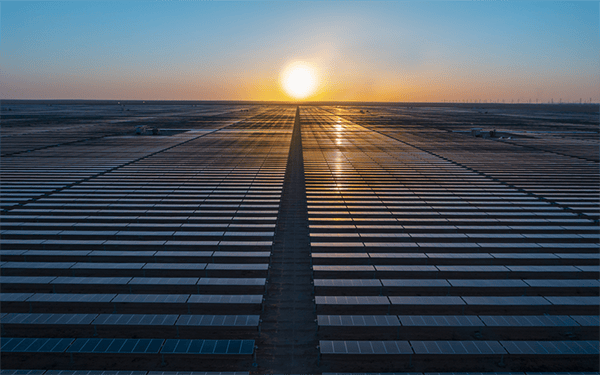
Core Insights - Saudi Arabia is transitioning from an oil-dependent economy to a solar energy powerhouse, aiming for 50% of its electricity to come from clean energy by 2030 [1][2] - The country is investing heavily in renewable energy projects, with a focus on solar and wind, to support its economic diversification and tourism initiatives [3][4] Group 1: Economic Transition - Saudi Arabia's Vision 2030 seeks to reduce reliance on oil by increasing the share of renewable energy in its power generation [1] - The country currently generates about one-third of its electricity from fossil fuels, equating to an annual loss of approximately $20 billion in oil exports [1][2] Group 2: Investment and Projects - In July, Saudi companies, including ACWA Power, announced an investment of $8.3 billion for 15 GW of renewable energy projects, primarily in solar and wind [3] - The Al Shubakh solar power project, located about 80 kilometers south of Jeddah, is the largest solar project in the Middle East, with a total capacity of 3.19 GW [4] Group 3: Challenges and Market Dynamics - The solar projects face challenges such as heat and dust affecting solar panel output, and the need for more energy storage solutions to manage renewable energy supply [2][3] - Analysts predict that while Saudi Arabia may not meet its 50% clean energy target by 2030, low-carbon energy could account for over one-third of its power structure [2][3] Group 4: Role of China - China plays a significant role in Saudi Arabia's solar energy development, with the country expected to import 16 GW of solar panels from China in 2024 [4] - Chinese companies are involved in constructing key solar projects in Saudi Arabia, contributing to the rapid growth of the solar market [4]

中国助力下,沙特正崛起为太阳能发电大国
Guan Cha Zhe Wang· 2025-09-11 12:59
Core Insights - Saudi Arabia is transitioning from an oil-dependent economy to a solar energy powerhouse, aiming for 50% of its electricity to come from clean energy by 2030 [1][2] - The country is investing heavily in solar power infrastructure, with a significant partnership with China to lower costs and enhance renewable energy capacity [4][5] Group 1: Economic Transformation - Saudi Arabia's Vision 2030 seeks to reduce reliance on oil by developing renewable energy sources, particularly solar power [1] - The country plans to utilize solar energy to support new tourism projects, factories, and AI data centers, allowing for increased oil exports [1][2] - Current estimates suggest that Saudi Arabia forfeits approximately $20 billion in oil exports annually due to its reliance on fossil fuels for electricity [1] Group 2: Investment and Infrastructure - In July, Saudi companies, including ACWA Power, announced an investment of $8.3 billion for 15 GW of renewable energy projects, primarily solar and wind [3] - The Al Shubakh solar power plant, the largest in the Middle East, has a total capacity of 3.19 GW and is expected to generate around 282.2 billion kWh over 35 years [5] - Saudi Arabia is projected to become one of the top five markets for new solar capacity globally by 2030, with low-carbon energy potentially making up over one-third of its electricity mix [2][3] Group 3: Challenges and Opportunities - The solar projects face challenges such as heat and dust in the desert affecting solar panel output and the need for enhanced grid management due to increased renewable energy [3] - Saudi Arabia's reliance on Chinese solar technology has made it a key market for Chinese exports, with an expected import capacity of 16 GW of solar panels in 2024 [4] - The collaboration with Chinese companies is crucial for meeting the growing demand for solar energy infrastructure in Saudi Arabia [5]
美国变压器需求渠道调研专家会议要点 _ 专家会议要点-US Transformer Demand Channel Check Expert Call Takeaways_ Expert Call Takeaways
2025-09-11 12:11
Summary of Key Points from the Conference Call Industry Overview - The focus is on the **AIDC (Automated Industrial Data Center)** sector, particularly in the context of **transformer demand** in the US market, driven by increased capital expenditure in the AIDC sector [1][2]. Core Insights - **Transformer Demand Sources**: In the US, transformer demand is split between utility companies (20% distribution, 40% transmission) and non-utility companies, with the latter accounting for the remaining 40% [2]. - **Growth Trends**: Utility demand is stable but has slowed due to inventory completion by late 2024. Non-utility demand is more volatile, with renewable energy's share dropping from 70% to 20% YTD, while data center demand for transformers has surged by 50% YTD [3]. - **Transformer Density**: Data centers require a higher density of transformers compared to renewable energy projects, necessitating multiple levels of power stepping-down [4]. Opportunities for Chinese Companies - **Market Penetration**: Chinese transformer companies are finding significant opportunities in the US non-utility sector, with 60% of transformer tenders involving data centers and renewable energy [5]. - **Competitive Advantage**: Chinese manufacturers can deliver transformers 60-70% faster than global competitors, which is crucial for data centers that prioritize safety, reliability, and rapid delivery [5]. Pricing Dynamics - **Price Increases**: Transformer prices have risen by 15% over the past two years due to raw material cost fluctuations, particularly copper prices. Further price increases are anticipated due to US tariff hikes [6][7]. - **Tariff Impact**: The tariff on transformers has fluctuated, with a current rate of 55%. Chinese manufacturers are willing to absorb up to 30% of tariffs for non-utility orders but will need to raise prices for utility orders [7]. Global Market Expansion - **Export Opportunities**: For Huapeng, exports in 2024 are projected to be 40% to the US, 30% to Europe, and 25% to other regions. The tight global transformer supply is making European markets more accessible for Chinese companies [8]. - **Supply Chain Challenges**: While transformer production capacity may be resolved within three years, shortages of tap changers and bushings are expected to persist longer [9]. Investment Recommendations - **Preferred Companies**: The report favors Chinese power equipment and electric apparatus companies that supply to the US AIDC sector, highlighting specific companies like Shanghai Liangxin Electrical Co Ltd [10]. - **Valuation and Risks**: Shanghai Liangxin has a price target of RMB 13 based on a forward P/E of 25x, with risks including slower market share expansion and low-voltage apparatus demand growth in China [11]. Additional Considerations - **Market Sentiment**: The report indicates a positive outlook for companies involved in the AIDC sector, particularly those that can navigate the complexities of tariffs and supply chain issues [10][11]. This summary encapsulates the critical insights and data points from the conference call, providing a comprehensive overview of the current state and future outlook of the transformer market within the AIDC sector.

创造人类记录!全球第一电力强国炼成
2 1 Shi Ji Jing Ji Bao Dao· 2025-09-11 11:51
Core Insights - In July, China's electricity consumption exceeded 1 trillion kilowatt-hours, setting a new global record, with the national power load reaching a peak of 1.508 billion kilowatts, an increase of 57 million kilowatts compared to last year [1] - China has successfully restructured its power system over the past four years, ensuring supply stability while promoting transformation, positioning itself as a "powerful nation" in electricity [1] Group 1: Electricity Consumption and Capacity - From 2013 to 2023, China's total electricity consumption has crossed significant milestones, with projections to exceed 10 trillion kilowatt-hours by 2025, equivalent to the combined consumption of the US, India, and Japan [2] - By May 2025, China's total installed power generation capacity is expected to surpass 3.61 billion kilowatts, with a year-on-year growth of 18.8%, and renewable energy capacity accounting for 57.9% [2] Group 2: Energy Structure and Infrastructure - China's energy strategy is characterized by a "multi-coupling" approach, where coal power serves as a stabilizing source rather than the primary generation source, while wind and solar power are becoming the main contributors [3] - Key infrastructure includes energy storage and ultra-high voltage transmission systems, which address volatility and enable efficient energy distribution from resource-rich areas to load centers [3] Group 3: Digital Economy and Electricity Demand - The demand for electricity is surging due to the explosion of global computing power needs, driven by AI training, data centers, and cloud computing, positioning electricity as the "new oil" in the digital economy [3] - In the first half of the year, electricity consumption in China's internet and related services grew by 27.4%, while electricity used in the manufacturing of new energy vehicles increased by 28.7%, and charging services saw a growth rate of 42.4% [3] Group 4: Future Challenges and Goals - Moving forward, the focus will be on optimizing electricity usage and maintaining grid stability as the proportion of green energy increases, alongside the establishment of a unified national electricity market [4] - China's power system is evolving beyond mere supply assurance to enhancing quality, adjusting structure, and promoting transformation [4]
【战略合作】与天能集团强强联手 共启可再生能源业务新篇
Ge Long Hui· 2025-09-11 10:37
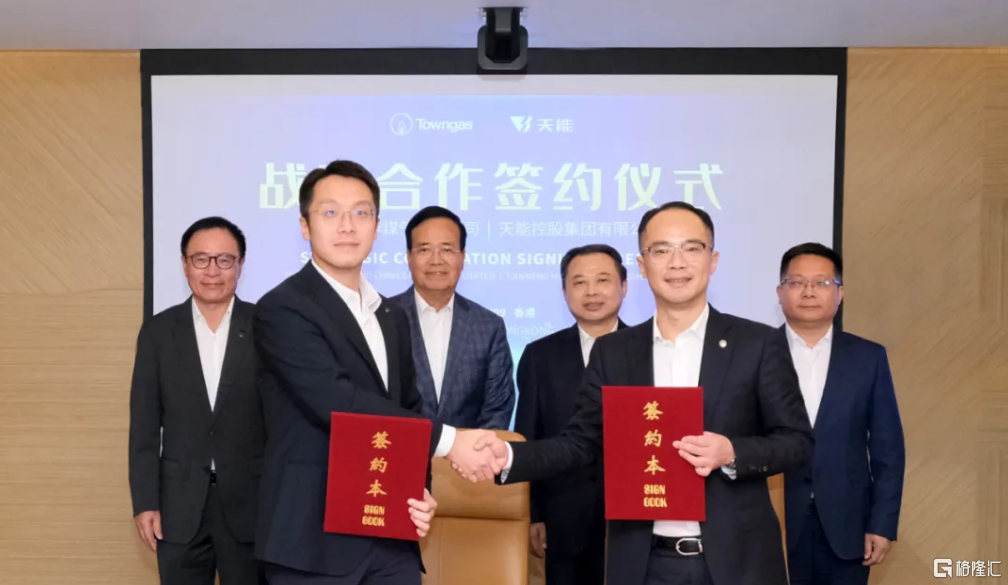
Core Viewpoint - Hong Kong and China Gas and Tianneng Holding Group have established a strategic cooperation to promote the integration of renewable energy and the green economy, aiming to inject new momentum into the green transformation of the energy industry [1] Group 1: Strategic Cooperation - The signing of the strategic cooperation agreement marks a significant upgrade in the relationship between the two companies, evolving from a single project collaboration to a comprehensive strategic partnership [3] - Future collaboration will focus on joint project development, investment and financing cooperation, demonstration base construction, and innovation in technology and application scenarios [3][4] Group 2: Company Background and Goals - Hong Kong and China Gas has successfully transformed from urban gas and derivative businesses to smart energy, actively expanding its green fuel business across various sectors [3] - The company aims to create zero-carbon smart industrial parks and low-carbon factories, supporting enterprises in their ESG management [3] - Tianneng Holding Group recognizes the complementary nature of its business with Hong Kong and China Gas and aims to deepen cooperation in smart energy business development, technological innovation, and capital collaboration [4] Group 3: Industry Trends and Future Directions - The collaboration aligns with global energy transition and low-carbon development trends, exploring new sustainable development models [6] - Both companies aim to provide practical examples and industry benchmarks for achieving national "dual carbon" goals through their partnership [6]

晶科科技拟3000万美元参与认购境外私募股权基金投向可再生能源领域
Zhi Tong Cai Jing· 2025-09-11 08:59
Group 1 - The company Jinko Technology (601778.SH) announced its exploration of new application models and scenarios combining renewable energy and IoT blockchain technologies [1] - The company's wholly-owned subsidiary, HongKong Crystal Energy Power Limited, signed a partnership agreement with PUHMERCHANTS LTD. and GaiaDTGuardians Investment Management Limited to invest in a fund [1] - The fund aims to raise up to $300 million, with HongKong Crystal Energy committing to invest $30 million as a limited partner [1] Group 2 - The fund will primarily focus on the renewable energy sector, leveraging blockchain technology to efficiently connect physical assets in renewable energy with global capital [2] - The company, as a long-standing clean energy supplier and service provider, aims to strategically explore the investment value of digitalized renewable energy assets while ensuring stable development of its main business [2] - This investment aligns with the company's light asset development strategy and seeks to explore investment opportunities in the global digitalization process of renewable energy [2]

晶科科技(601778.SH)拟3000万美元参与认购境外私募股权基金投向可再生能源领域
智通财经网· 2025-09-11 08:54
Group 1 - The company, Jinko Technology (601778.SH), announced its exploration of new applications combining renewable energy and IoT blockchain technologies through its wholly-owned subsidiary, HongKong Crystal Energy Power Limited [1] - HongKong Crystal Energy Power Limited signed a partnership agreement with PUHMERCHANTS LTD. and GaiaDTGuardians Investment Management Limited to invest in a fund targeting a maximum fundraising scale of $300 million, with the company committing $30 million as a limited partner [1][2] - The fund will primarily focus on renewable energy, leveraging blockchain technology to efficiently connect physical assets in the renewable energy sector with global capital [2] Group 2 - The investment aligns with the company's strategy of exploring the digital investment value of renewable energy assets while ensuring stable development of its core business [2] - This investment is consistent with the company's light asset development strategy, aiming to explore investment opportunities in the global digitalization process of renewable energy [2]