
多边主义

Search documents
环球圆桌对话:在践行全球治理倡议中汇聚“南方力量”
Huan Qiu Wang· 2025-11-09 22:51
Group 1 - The core idea of the news is the importance of global governance initiatives that emphasize multilateralism and cooperation among Global South countries, aiming to reshape international order and governance systems [2][10][11] - The Global South is not a homogeneous entity; it requires countries to articulate their cultural narratives and seek common ground for cooperation [1][3] - The Global South's rise is characterized by a shift from passive participation in a system designed by others to a proactive stance advocating for a development model centered on national agency [8][9] Group 2 - The global governance initiative proposed by China aims to create a more inclusive and equitable international order, opposing unilateralism and promoting multilateralism [10][11] - The emergence of a Global South consensus is rooted in shared experiences and principles such as independence, fairness, and cooperation, reflecting a collective awakening to the need for reform in the post-war international order [7][12] - Platforms like BRICS and the African Union serve as experimental grounds for new ideas related to justice, innovation, and sustainable development, highlighting the collaborative spirit among Global South nations [6][11]
跨越山海 共赴未来(大使随笔)
Ren Min Ri Bao· 2025-11-09 22:20
中国和西班牙的交往最早可以追溯到2000多年前,古老的陆上丝绸之路将古都长安和西班牙名城塔拉戈 纳联系在一起。16世纪中叶,西班牙开辟了从亚洲到美洲的跨太平洋航线,满载着绸缎、瓷器和白银 的"中国之船"穿梭其间,加深了两国人民的相知相亲。回顾中国和西班牙交往历史,特别是新时代以来 两国共同走过的非凡历程,双边关系不仅历久弥新,而且展现出广阔的发展前景和强劲的内生动力。 坚持相互尊重,筑牢战略互信。1973年,中西老一辈领导人以非凡的历史眼光,在一个中国原则基础 上,作出建立外交关系的战略抉择。半个多世纪以来,双方在涉及彼此核心利益和重大关切的问题上始 终相互理解和支持,中西关系保持健康稳定发展。1978年,西班牙前国王胡安·卡洛斯一世作为国家元 首首次访华。2018年,习近平主席对西班牙进行历史性国事访问,受到费利佩六世国王热情友好接待, 两国发表《中华人民共和国和西班牙王国关于加强新时期全面战略伙伴关系的联合声明》。 今年是中国和西班牙建立全面战略伙伴关系20周年。应习近平主席邀请,西班牙国王费利佩六世将于11 月10日至13日对中国进行国事访问。这是费利佩六世国王登基以来首次对中国进行国事访问,也是西班 ...
共谱亚太开放共赢新篇章(国际论坛)
Ren Min Ri Bao· 2025-11-09 22:01
Group 1 - China has received widespread support for hosting the APEC in 2026, aiming to deepen and solidify an open economy in the Asia-Pacific region, benefiting local populations and promoting a win-win scenario [2][4] - The rise of protectionism and unilateralism, coupled with sluggish global economic growth, has made the recent APEC informal leaders' meeting particularly significant, fostering consensus for enhanced regional cooperation to tackle challenges [2] - APEC has been a crucial mechanism for promoting regional economic integration and trade liberalization since its inception, advocating for open cooperation and mutual benefits [2] Group 2 - China continues to expand high-level openness and uphold multilateralism, injecting strong momentum into the construction of an open world economy, while actively engaging in practical cooperation with other APEC members [3] - The recent signing of the China-ASEAN Free Trade Area 3.0 upgrade protocol signals strong support for multilateralism and free trade, expanding cooperation beyond traditional trade to include digital, green, standards, and supply chain areas [3]

部分国家被曝担忧美国破坏气候谈判,“它会发现自己被孤立了”
Guan Cha Zhe Wang· 2025-11-09 13:57
Core Viewpoint - The upcoming COP30 in Brazil is facing challenges due to the U.S. government's decision not to send high-level officials, raising concerns about potential threats such as tariffs and visa restrictions that could hinder climate negotiations [1][2][5]. Group 1: U.S. Government's Position - The U.S. government, under President Trump, has previously opposed renewable energy transitions and has threatened to impose tariffs on countries supporting climate initiatives [1][4]. - Despite the U.S. not sending officials, it retains the right to send representatives to COP30 until its formal exit from the Paris Agreement in January [2][5]. - Concerns have been raised by various countries about the U.S. potentially using intimidation tactics to disrupt negotiations, similar to actions taken at the International Maritime Organization [4][5]. Group 2: Global Response and Preparedness - Many countries are preparing to counteract potential U.S. disruptions at COP30, with the EU aiming to unite nations against U.S. interference [5]. - Analysts suggest that most countries still wish to maintain the COP process to influence negotiations in their favor, indicating a collective resistance to U.S. threats [5][10]. - Some U.S. lawmakers are encouraging other nations to stand firm against U.S. pressure, emphasizing that yielding would only lead to further demands from the Trump administration [5][10]. Group 3: China's Role and Influence - China's growing influence in renewable energy and climate commitments is highlighted, with significant advancements in clean energy technology and manufacturing [6][8]. - Reports indicate that China has become a major supplier of renewable energy products, which could fill the void left by the U.S. absence at COP30 [6][8]. - The Chinese government expresses a commitment to constructive engagement in climate negotiations, aiming to support the COP30 outcomes and promote global cooperation [9][10].
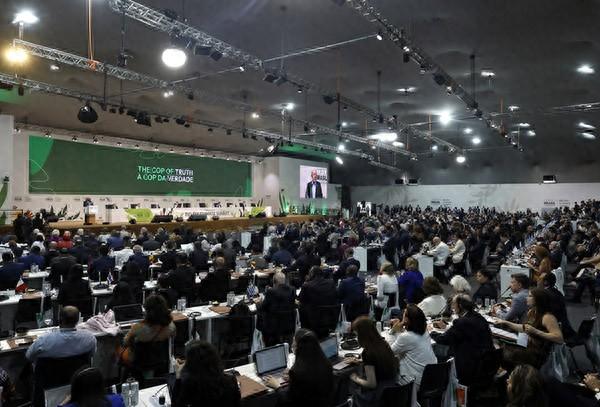
COP30候任主席强调本届气候大会三个优先事项
Xin Hua She· 2025-11-09 03:52
Core Points - The 30th Conference of the Parties to the United Nations Framework Convention on Climate Change (COP30) will be held in Belem, Brazil from November 10 to 21 [2] - André Correa do Lago, the incoming president of COP30, emphasized the need for enhanced cooperation among governments and institutions to address climate change, highlighting three priority areas for the conference [1] Group 1 - The conference aims to strengthen multilateralism and climate mechanisms under the UN Framework Convention on Climate Change [1] - There is a need to connect climate mechanisms with people's daily lives and the real economy [1] - The implementation of the Paris Agreement will be accelerated [1] Group 2 - Recent reports indicate a lack of ambition, funding, and technology in the international community's response to climate change [1] - The commitment to multilateralism and the Paris Agreement remains strong among various delegations [1] - The expectation is to move from negotiation to coordinated implementation of climate governance on the 10th anniversary of the Paris Agreement [1]
共享制度型开放红利
Jing Ji Ri Bao· 2025-11-08 22:21
Group 1 - The eighth Hongqiao International Economic Forum focused on investment opportunities in China's free trade zones, particularly in the western and border areas, showcasing policy innovations and industry promotion [1] - China's free trade zones contribute approximately 12% to the national GDP and account for 20% of the country's trade volume, highlighting their critical role in promoting trade and investment [1][2] - The 22 established free trade zones in China are tailored to regional needs, with flexible and efficient policy adjustments, providing significant insights for addressing global economic uncertainties [1][2] Group 2 - The western and border free trade zones have demonstrated impressive results, with Chongqing and Sichuan creating a dual-city economic circle and developing trillion-yuan industrial clusters in electronics and equipment manufacturing [2] - The Airbus project in Sichuan free trade zone exemplifies successful policy implementation, establishing the world's first aircraft lifecycle service center, which has serviced over 30 international clients and processed more than 40 aircraft [2] - The McCain Foods in Shaanxi free trade zone benefits from a dual-zone advantage and efficient service mechanisms, enhancing operational efficiency and expanding international market access [2]
北马其顿总统表示坚守一个中国原则
Xin Hua She· 2025-11-07 22:37
Core Viewpoint - North Macedonia values its traditional friendship with China and adheres to the One China principle, expressing a willingness to expand cooperation in various fields including trade, renewable energy, and technological innovation [1] Group 1: Diplomatic Relations - North Macedonia's President, Stevo Pendarovski, emphasized the importance of the relationship with China during the presentation of credentials by the new Chinese Ambassador to North Macedonia, Jiang Xiaoyan [1] - The President expressed a commitment to fully utilize North Macedonia's geographical advantage as a gateway to Europe for enhancing cooperation with China [1] Group 2: Economic Cooperation - North Macedonia aims to expand cooperation with China in trade, renewable energy, and technological innovation, indicating a strategic focus on economic collaboration [1] - China is recognized as North Macedonia's largest trading partner outside of Europe, highlighting the significance of this bilateral trade relationship [1] Group 3: Multilateralism and Global Initiatives - Both parties expressed a desire to uphold multilateralism and maintain the authority of the United Nations, indicating a shared commitment to global governance principles [1] - The Chinese Ambassador reiterated China's willingness to share high-quality development opportunities with North Macedonia, aligning with various global initiatives [1]
联合国“追欠”忙
Jing Ji Ri Bao· 2025-11-07 22:17
Core Points - The United Nations is facing a significant financial crisis that threatens its existence, as Secretary-General António Guterres warns of potential bankruptcy if member states do not pay their dues on time [1][6] - The proposed budget for 2026 is set at $3.238 billion, a reduction of nearly $600 million from the initial draft and a 15.1% decrease from the 2025 approved budget, marking a new low in recent years [2] - The budget cuts will impact the UN's human resource capabilities, reducing the number of positions from the planned 13,800 to less than 11,600, affecting core areas such as human rights, sustainable development, and humanitarian aid [2] Financial Situation - The UN has already cut nearly $600 million in spending but still anticipates a deficit of over $450 million by the end of 2025, which will deplete almost all of its liquid reserves [1] - In the next two years, the UN will need to refund a total of $900 million to member states, further complicating its financial situation [1] Membership Dues - A significant factor in the crisis is the long-standing issue of unpaid dues by member states, with nearly one-third of the almost 200 member countries failing to pay their 2025 dues on time [2] - The United States, as the largest economy, has notably not paid any dues for 2025 and has over $3 billion in unpaid dues, which is equivalent to the entire 2026 regular budget [2][4] Structural Issues - The financial crisis highlights structural flaws in the UN's budget system, which cannot issue bonds or currency and struggles to enforce penalties on member states for unpaid dues [3] - The budget approval process requires consensus among all member states, which can lead to certain countries using unpaid dues as leverage for political pressure [3] U.S. Strategy - The U.S. approach to unpaid dues appears to be a strategic move to reshape the multilateral system to better align with its interests, rather than a result of financial constraints [4][5] - The U.S. has historically used unpaid dues as a diplomatic tool, keeping its debts below the threshold that would result in losing voting rights while maintaining influence over UN agendas [4] Global Governance Implications - The UN's struggle to collect dues reflects broader fractures in the global governance system, emphasizing the need for member states to recognize their international responsibilities [6] - Addressing this crisis requires a collective effort from all member states to enhance cooperation and reform mechanisms to revitalize the UN as a core platform for multilateralism [6]
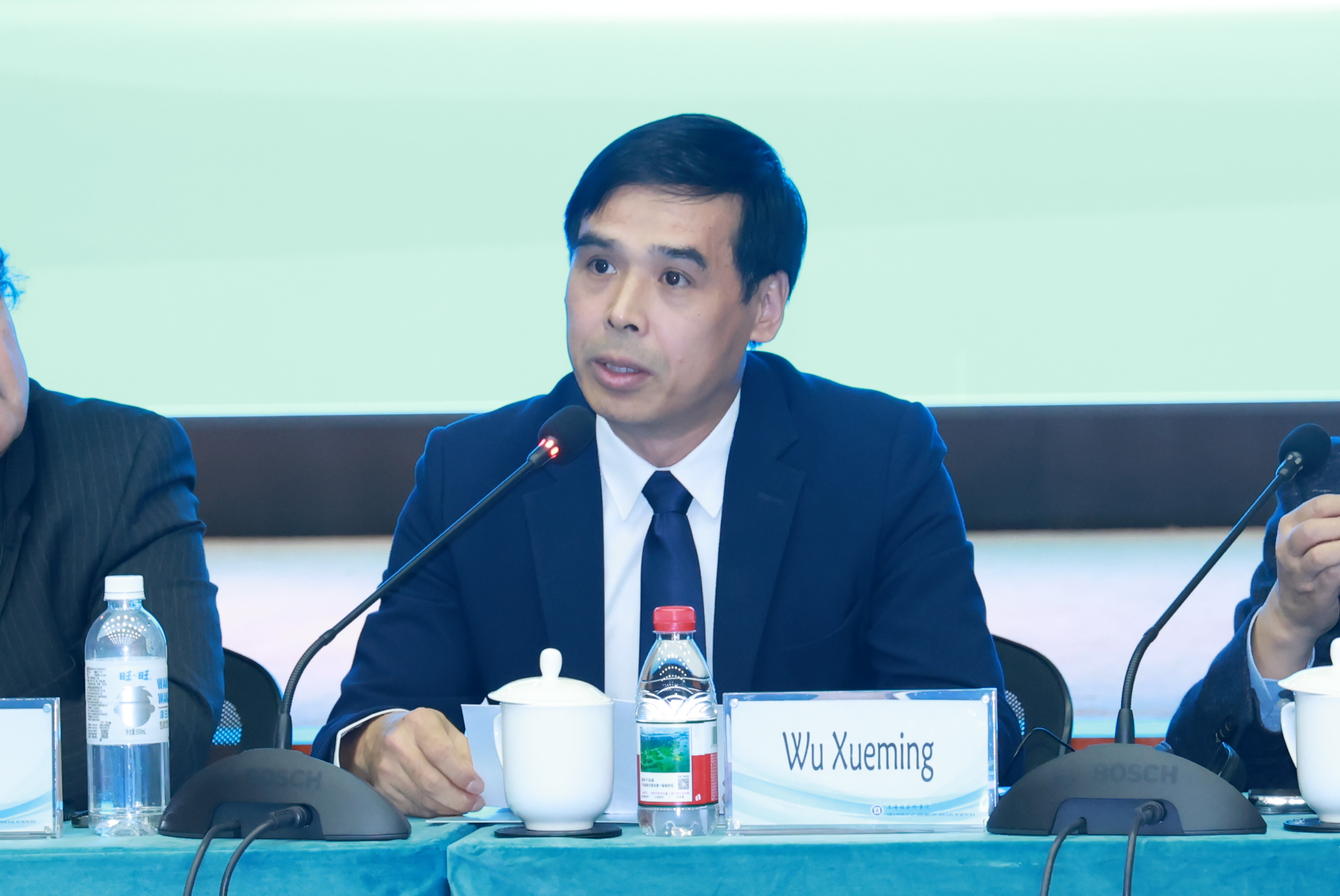
上海社会科学院副院长吴雪明:中拉经贸合作机遇广阔
Shang Hai Zheng Quan Bao· 2025-11-07 14:54
Core Insights - The current China-Latin America economic and trade cooperation shows significant potential, bolstered by China's development blueprint for the next five years, which aims to inject certainty and strong momentum into global economic growth and bilateral relations [3] - The trade volume between China and Latin America is projected to reach $518.47 billion in 2024, reflecting a year-on-year growth of 6.0% [3] Group 1 - The rise of unilateralism and trade protectionism poses substantial challenges to global economic trade, but China and Latin American countries are committed to genuine multilateralism and pragmatic cooperation [3][4] - Geographical distance and weak infrastructure in some regions increase logistics costs, impacting the scale and depth of bilateral economic cooperation [4] - Differences in investment in digital infrastructure hinder the rapid development of new business models such as cross-border e-commerce [4] Group 2 - It is essential for government officials, think tank scholars, and business leaders from both sides to enhance dialogue and explore pathways to promote economic cooperation [5] - The principle of equality, mutual trust, and win-win cooperation should guide the relationship, leveraging the wisdom of think tanks, insights from academia, and the vitality of enterprises to strengthen the China-Latin America community of shared destiny [5]
外交部:坚持真正的多边主义,推动全球绿色低碳发展
Xin Hua She· 2025-11-07 09:33
Core Viewpoint - China is actively implementing the United Nations Framework Convention on Climate Change and the Paris Agreement, achieving significant results in its 2030 Nationally Determined Contributions (NDCs) and committing to a green and low-carbon development path [1][2] Group 1: China's Climate Commitments - China has achieved significant results in its 2030 NDCs, having completed its targets for wind and solar power capacity and forest carbon stock ahead of schedule [1] - President Xi Jinping announced China's 2035 NDCs at the UN Climate Change Summit, which includes absolute reduction targets for all greenhouse gases, demonstrating China's commitment and efforts [1] - The 20th National Congress of the Communist Party of China approved the "14th Five-Year Plan" to promote the construction of a beautiful China and accelerate the green transformation of economic and social development [1] Group 2: Global Climate Cooperation - Climate change is a global challenge that requires collective efforts, with developed countries expected to take historical responsibility and lead significant emission reductions while providing support to developing countries [2] - China will continue to uphold true multilateralism, maintain the climate multilateral process, and promote global green and low-carbon development [2]