合成数据

Search documents
模型训练最重要的依然是 Scaling —— 对话阿里通义千问 Qwen 多语言负责人杨宝嵩 | Open AGI Forum
AI科技大本营· 2025-06-25 06:49
Core Viewpoint - The article discusses the rapid rise of large model technology globally, emphasizing Alibaba's Tongyi Qwen model's international success and its strategic focus on multilingual capabilities to cater to a global audience [2][3]. Group 1: Multilingual Strategy - Tongyi Qwen supports 119 languages, with a core strategy prioritizing multilingual data optimization from the outset to ensure equitable access to AI technology for global users [2][3]. - The team has developed a complex cultural annotation system to address the challenges of multilingual safety and cultural alignment, covering thousands of detailed categories to ensure compliance and effectiveness across different regions [3][12]. - The current industry faces a "multilingual reasoning challenge," where models often mix languages during processing, leading to inconsistencies. The team has adopted a compromise strategy to use native languages for strong languages and English for low-resource languages to maintain output stability [3][16]. Group 2: Scaling Law and Knowledge Density - The article highlights the importance of scaling model size and data volume while also focusing on increasing "knowledge density," which refers to the concentration of useful knowledge within the training data [19][20]. - Recent trends show that smaller models with higher knowledge density can outperform larger models, indicating a shift in focus from merely increasing data volume to refining data quality [20][21]. - The team is exploring data synthesis methods to enhance training data quality, which includes generating new knowledge and filtering redundant data to improve knowledge density [22][23]. Group 3: AI Integration and Future Prospects - The integration of AI models into various devices, such as smart glasses and earphones, is a growing trend, with the company planning to release smaller model versions optimized for these applications [28][30]. - The article discusses the potential for AI to enhance user experiences in everyday tasks, such as real-time translation and contextual assistance, although challenges remain in achieving seamless integration [30][32]. - The company acknowledges the importance of balancing the use of synthetic data with human-generated content to maintain diversity and avoid narrowing the model's knowledge base [25][26].



具身机器人赛道融资多热?宁德时代领投11亿创纪录|热财经
Sou Hu Cai Jing· 2025-06-24 12:26
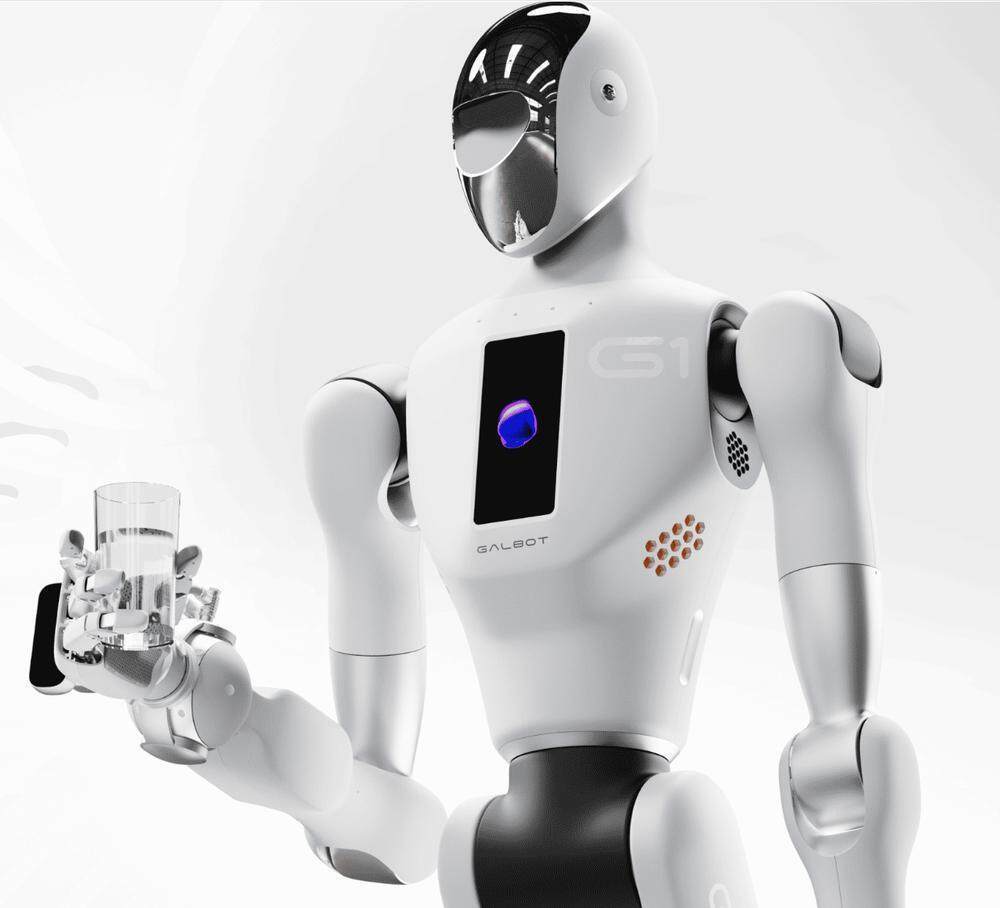
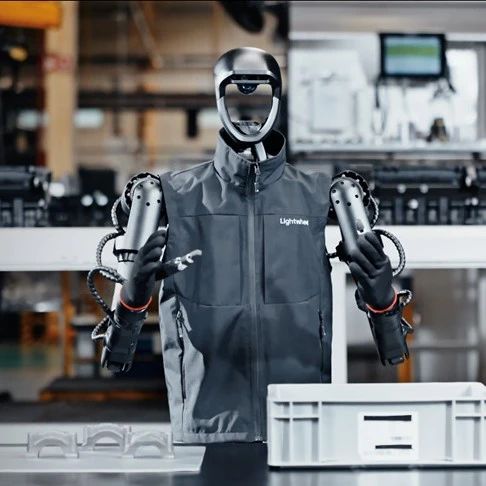
Group 1 - Beijing Galaxy General Robotics Co., Ltd. has completed a new round of financing amounting to 1.1 billion yuan, led by CATL and Puxuan Capital, bringing total funding to over 2.4 billion yuan within two years [1][9] - The company plans to open 100 robot retail stores this year, with nearly ten stores already operational in Beijing [1][6] - The Galbot (G1), a humanoid robot, was officially launched last June and has demonstrated various tasks such as shelf picking and inventory management at the World Robot Conference [3][4] Group 2 - The founder and CTO of Galaxy General, Wang He, emphasizes the importance of industrialization for embodied intelligence to create new productivity [4][8] - Galbot's ability to perform tasks in complex environments without individual parameter adjustments indicates its potential for various applications in industrial and retail settings [6][8] - The use of synthetic data has been identified as a key technology for the rapid evolution of Galbot, enabling the development of a foundational model for end-to-end grasping [6][7] Group 3 - The market for Galbot is substantial, particularly in retail and industrial sorting applications, with potential demand for hundreds of thousands of units [8][9] - The financing trend in the humanoid robot sector reflects a broader investment surge, with companies like Zhiyuan Robotics and Yushu Technology also securing significant funding [9][10] - Concerns about potential market bubbles exist, but industry leaders believe that competition will lead to both failures and successful innovations [12]


英伟达(NVDA.US)加持AI制药革命 SandboxAQ合成数据破解药物筛选难题
智通财经网· 2025-06-18 13:46
Core Insights - SandboxAQ, an AI startup spun off from Alphabet and supported by Nvidia, has launched a large-scale synthetic dataset aimed at accelerating global drug development by simulating interactions between drug molecules and proteins [1][2] - The company has raised nearly $1 billion in funding and seeks to overcome traditional laboratory research limitations by reconstructing the underlying logic of drug screening through computational power [1] Group 1: Technology and Innovation - SandboxAQ uniquely integrates computational chemistry with artificial intelligence, utilizing Nvidia's high-performance chips to create an algorithmic platform that solves quantum mechanics equations to generate 5.2 million three-dimensional molecular structures not yet observed in reality [1][2] - The synthetic dataset significantly enhances predictive efficiency, allowing researchers to quickly identify potential candidate molecules for drug targets, which traditionally would take years to synthesize and test [2] Group 2: Market Impact and Business Model - The innovative approach is reshaping the early stages of drug development, particularly in oncology, where the time and cost of developing new drugs can be drastically reduced from years to weeks [2] - While the synthetic dataset is freely available for academic use, the company commercializes the AI predictive models trained on this data, creating a hybrid model of "data open-source + model charging" that fosters foundational research while establishing a sustainable technological barrier [2]

热捧与嘲讽交织中 人形机器人公司“顶流”摸索短期出路
Nan Fang Du Shi Bao· 2025-06-09 14:08
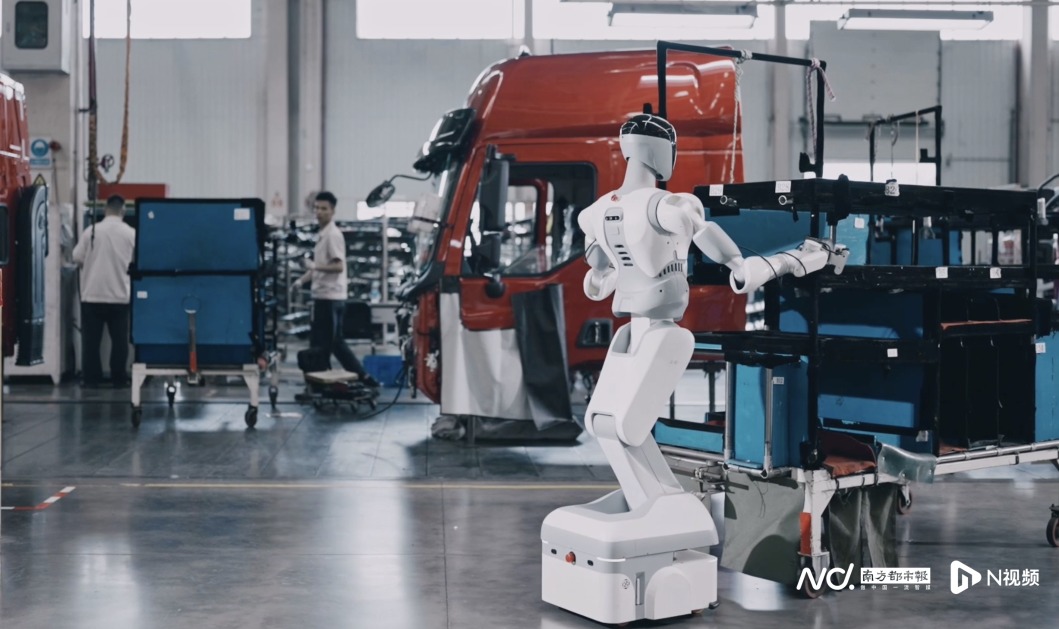
Group 1 - The core viewpoint of the articles revolves around the mixed public perception of humanoid robotics, highlighting both the enthusiasm and skepticism surrounding the industry's current capabilities and future prospects [1][2][3] - The term "flower fists and embroidered legs" is used to question the practical significance of current humanoid robot demonstrations, as many companies focus on showcasing their hardware capabilities rather than practical applications [2][4] - Companies like Zhizhong and Yusheng are actively engaging in "show-off" projects, with events planned to demonstrate the limits of their robots, indicating a strategy to build credibility and market presence through entertainment [4][5] Group 2 - The automotive industry is seen as a potential early adopter for humanoid robots, with several companies exploring applications in manufacturing, although there are concerns about the maturity of the technology [6][8][9] - Companies such as UBTECH and Galaxy General are collaborating with major automotive manufacturers to test humanoid robots in production lines, indicating a growing interest in integrating these technologies into traditional industries [8][9] - Despite the enthusiasm, there are significant challenges related to the complexity of automotive tasks and the high costs associated with humanoid robots, which currently exceed the budgets of many manufacturers [9][10] Group 3 - The shortage of training data for embodied intelligence models is a critical bottleneck in the development of humanoid robots, with companies exploring various strategies to overcome this challenge [11][12] - The reliance on synthetic data for training humanoid robots is highlighted, with companies like Galaxy General focusing on creating large datasets to improve the robots' operational capabilities [12][13] - The practical application of humanoid robots in settings like smart pharmacies is being tested, with the potential for significant cost savings compared to human labor, although challenges remain in executing complex tasks [13][14]
未来智造局|“突围”具身智能数据难题
Xin Hua Cai Jing· 2025-06-06 07:18
Group 1 - The core viewpoint of the articles highlights the challenges and advancements in the field of humanoid robots, particularly focusing on the need for training data to enhance their capabilities [1][2][3] - Humanoid robots are gradually demonstrating autonomy in complex scenarios, but they still face limitations in precision, speed, and generalization due to insufficient training data [1][3] - Major companies like Tesla and Google are actively working on creating training datasets, but they encounter high costs and long timelines in the process [2][3] Group 2 - The scarcity of training data for embodied intelligence models is a significant bottleneck, with estimates suggesting a million-fold difference compared to text data [2][3] - The largest datasets currently available for humanoid robots are only in the millions, which is inadequate compared to the billions of data points generated in the automotive sector [3] - The lack of sufficient data hampers the training of effective models, leading to a slow iteration cycle and limited real-world application [3] Group 3 - Synthetic data is emerging as a viable solution to the data scarcity issue, utilizing generative AI techniques to create data that mimics real-world scenarios [4][5] - Companies like Galaxy General Robotics are demonstrating the potential of synthetic data with models trained on datasets exceeding one billion entries, which are already being deployed in operational settings like 24-hour unmanned pharmacies [4][5] - Despite its advantages, synthetic data has limitations, particularly in generating multi-modal data such as tactile and auditory information, and concerns exist regarding the effectiveness of synthetic data in real-world applications [5][6] Group 4 - The "simulation to reality" transfer process is crucial for training embodied intelligence models, requiring a reduction in the gap between simulated and physical environments [6][7] - The National and Local Joint Innovation Center for Humanoid Robots is exploring ways to enhance data interoperability across different robot architectures to avoid redundant training efforts [7] - The center has developed a platform that collects data from over 100 robot configurations, aiming to facilitate better data sharing and training efficiency within the industry [7]
企业级AI迈入黄金时代,企业该如何向AI“蝶变”?
Sou Hu Cai Jing· 2025-06-05 14:34
Group 1: Microsoft and AI Business Development - Microsoft showcased significant progress in enterprise AI at its recent all-hands meeting, highlighting a deal with Barclays Bank for 100,000 Copilot licenses, potentially worth tens of millions annually [1] - Microsoft’s Chief Commercial Officer, Judson Althoff, revealed that several major clients, including Accenture, Toyota, Volkswagen, and Siemens, have internal Copilot user bases exceeding 100,000 [1] - CEO Satya Nadella emphasized the importance of tracking actual usage rates among employees rather than just sales figures, indicating a strategic focus on the enterprise AI market [1] Group 2: Trends in Enterprise AI Applications - The value of generative AI is expected to manifest more prominently in enterprise applications, with a notable shift from consumer-focused applications to enterprise-level integration by 2025 [3] - Generative AI has vast potential across various business functions, including HR, finance, supply chain automation, IT development, and data security [3] - Industries such as finance, healthcare, legal consulting, and education are anticipated to be early adopters of mature generative AI applications [3] Group 3: AI Integration Strategies - Current enterprise AI application methods include embedded software, API calls, and building dedicated enterprise AI platforms [5] - Building a proprietary enterprise AI platform is seen as the most effective long-term strategy for companies to enhance competitiveness and differentiation [6] - Despite the potential, generative AI applications in enterprises are still in the early stages of development [6] Group 4: Challenges in Generative AI Adoption - The "hallucination" problem of large models poses a significant barrier to the adoption of generative AI in enterprise settings, where accuracy and security are paramount [7] - Current large models primarily excel in text and document processing, with limitations in areas requiring high logical reasoning and accuracy, such as specialized language and visual recognition [8] - Data security remains a critical concern for enterprises, necessitating robust measures to protect sensitive information during AI model training [8] Group 5: Data and Application Readiness - High-quality data is essential for the successful implementation of enterprise AI applications, with companies increasingly recognizing data as a vital asset [10] - The concept of data assetization is gaining traction, enabling better data sharing and application development across different business units [11] - Synthetic data is emerging as a crucial resource for training large models, especially as real-world data becomes scarce [11] Group 6: Future of Enterprise AI - The integration of AI capabilities through platformization is crucial for scaling enterprise AI applications [17] - The next decade is expected to see significant advancements in AI, with breakthroughs in addressing the hallucination issue, enhancing multimodal capabilities, and improving data security frameworks [18] - The convergence of technological innovation and industry demand is poised to usher in a golden era for enterprise AI, redefining efficiency and value creation in the business landscape [18]


辛顿、杨立昆等 AI 先驱都源自信号处理——对话 IEEE 首位华人主席、美国双院院士刘国瑞 | 万有引力
AI科技大本营· 2025-06-04 05:42
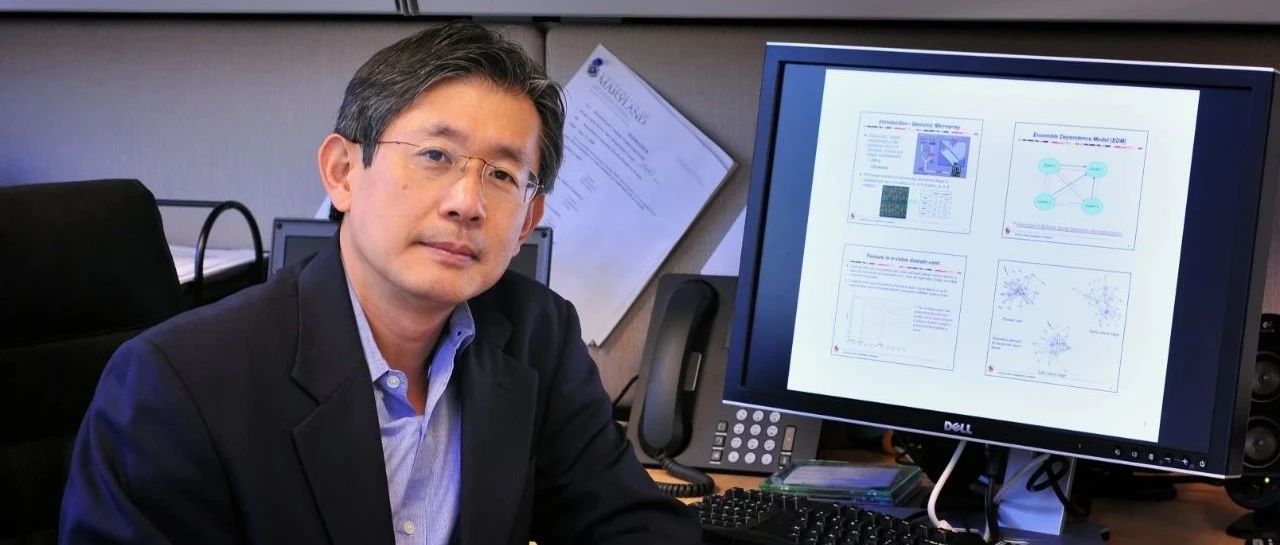
Core Viewpoint - The article highlights the journey and achievements of K. J. Ray Liu, emphasizing his contributions to the field of wireless sensing and AI, as well as his philosophy of pursuing dreams and maintaining one's original intentions in life and career [2][15][40]. Group 1: Personal Journey - K. J. Ray Liu was born in Taiwan and showed early interest in communication and signal processing, which became his lifelong profession [2][4]. - He faced challenges during his academic journey, including a difficult transition to studying in the U.S. and overcoming biases as a Chinese scholar [5][6]. - Liu became the first Asian president of IEEE in 2022, implementing significant reforms during his tenure [6][9]. Group 2: Contributions to Education - Liu has mentored over 70 doctoral and postdoctoral students, many of whom have achieved notable success in academia and industry [11][30]. - His teaching philosophy emphasizes the importance of independent thinking and problem discovery among students, rather than merely solving assigned problems [31][32]. Group 3: Transition to Industry - Liu retired from academia to pursue entrepreneurship in wireless AI, believing that practical applications require real-world data and environments [39][40]. - His company, Origin Wireless, focuses on utilizing wireless signals for environmental sensing, which has significant implications for health monitoring and safety [41][42]. Group 4: Vision for Wireless AI - Wireless AI aims to leverage ubiquitous wireless signals to perceive and understand human activities and health conditions without the need for wearable devices [41][42]. - The technology has already been deployed in various regions for remote monitoring, demonstrating its potential to save lives and improve health outcomes [42].
【钛晨报】反对“内卷式”恶性竞争,中国汽车工业协会发布重要倡议;香港《稳定币条例》正式成为法例;特朗普称将把进口钢铁关税从25%提高至50%
Tai Mei Ti A P P· 2025-06-02 23:42
Group 1 - The core viewpoint of the article emphasizes the importance of maintaining fair competition in the Chinese automotive industry, particularly in the rapidly growing electric vehicle sector, where new car sales of electric vehicles have exceeded 40% [2][3] - The China Association of Automobile Manufacturers (CAAM) has issued an initiative urging all companies to adhere to fair competition principles and avoid monopolistic practices that harm other businesses [2][3] - The initiative highlights that the recent decline in industry profitability is largely due to chaotic price wars, which disrupt normal business operations and threaten the safety of the supply chain [2][3] Group 2 - The CAAM's initiative calls for companies to conduct self-examinations and rectifications in accordance with national laws and regulations, particularly regarding pricing strategies and advertising practices [2] - The association warns that the ongoing price wars, initiated by a specific automaker's significant price cuts, could further squeeze profit margins and negatively impact product quality and after-sales service [2][3] - The initiative stresses the need for continuous investment in product after-sales service and innovation to ensure the healthy development of the industry [2][3]


驱动具身智能的数据基石——光轮智能联合创始人兼总裁杨海波
财富FORTUNE· 2025-05-20 13:08
在全球具身智能的浪潮中,数据被视为推动AI技术革新的"新石油"。在这一变革的背后,合成数据扮演 着至关重要的角色,成为AI进入物理世界的桥梁。光轮智能,这家专注于合成数据的创业公司,凭借 独特的技术视角和商业模式,吸引了全球目光。光轮智能联合创始人兼总裁杨海波,他深入分析了合成 数据在AI发展中的核心作用,并分享了公司在具身智能领域的战略布局及成就,以及对未来数据革命 的洞察。 从体制内到创业:选择充满挑战的人生 杨海波,在早年间的十年政府工作中,深度参与基层治理、宏观调控和组织管理,深谙中国政策体系与 资源调配机制;主导创建多个国家级、北京市级社会组织的经历,使其积累了丰富的资源整合与协同发 展经验;在美团负责公共事务期间,结合市场需求,将政策洞察转化为企业发展动能。2023年,看到 AI迈入智能涌现阶段、数据瓶颈凸显的机遇,杨海波与他人联合创立光轮智能。这种横跨政府、社会 组织与企业的多元履历,让他既懂政策导向,又谙市场规律,是深刻立足国情、着眼科技创新的资深专 家。 "我的人生理念就是要拥抱和享受不确定,只有不断追求变化,才是真正的成功。" 杨海波坦言,"相比 过去在不同政府机关部门、各类社会组织和大厂 ...
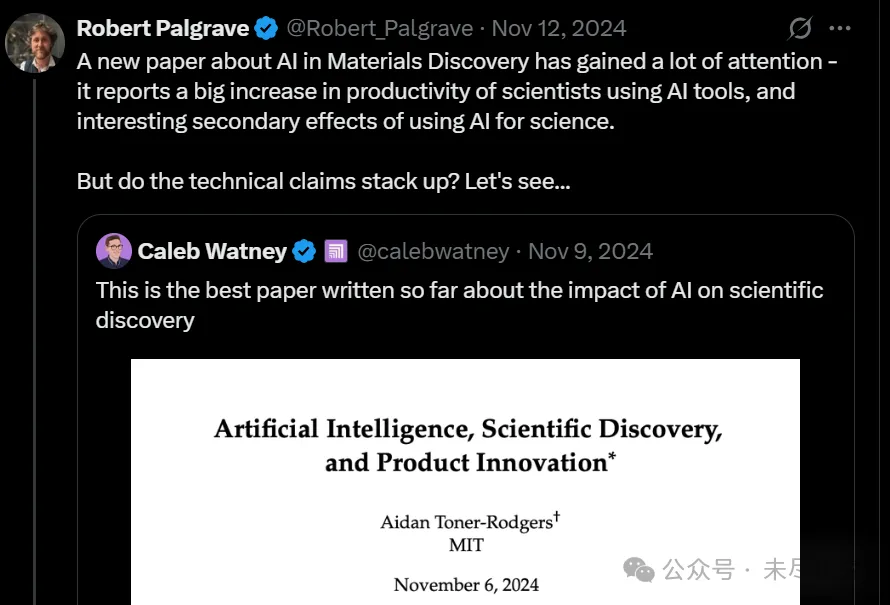
关于MIT博士论文造假:相信并加大质疑AI声称的最美好的东西
Hu Xiu· 2025-05-18 23:51
Core Viewpoint - The case of MIT PhD student Aidan Toner-Rodgers' paper fraud has sparked significant reactions across AI, economics, research, policy, and media circles, similar to the initial uproar it caused six months ago [1] Group 1: Paper Withdrawal and Reactions - MIT concluded after an internal review that the paper must be retracted, which was set to be published in one of the top economics journals, The Quarterly Journal of Economics [2] - The paper's advisors, Nobel laureate Daron Acemoglu and Professor David Autor, publicly requested its retraction [2] Group 2: Research Topic and Implications - The preprint paper titled "Artificial Intelligence, Scientific Discovery, and Product Innovation" addresses the critical question of AI's contribution to economic growth, particularly in corporate R&D and innovation [3] - A breakthrough paper proving AI's significant efficiency enhancement in fields like new materials discovery would be akin to achieving a small research holy grail [4] Group 3: Expert Criticism and Concerns - Concerns were raised by experts like UCL Professor Robert Palgrave, who has been skeptical about AI's role in discovering new materials [6][8] - Critics argue that many of the materials proposed by Google's DeepMind, which claimed to predict 2.2 million new crystals, lack novelty and utility, questioning the validity of AI-generated findings [12][14] Group 4: Broader Implications for AI in Research - The incident highlights the potential for AI to disrupt scientific research, raising concerns about the integrity of academic work in the era of large language models (LLMs) [24][29] - Experts emphasize the need for interdisciplinary collaboration in AI research, particularly when it involves fields outside the researcher's primary expertise [25][26] Group 5: Future Considerations - The case raises fundamental questions about the distinction between synthetic, simulated, and fraudulent data in research, especially in non-physical domains [27][28] - The proliferation of preprint papers, particularly during the COVID-19 pandemic and the rise of generative AI, has led to concerns about the reliability of unreviewed research [29][30]