
教育强国建设

Search documents
培育大国良师 建设教育强国
Ren Min Ri Bao· 2025-09-14 22:03
Core Points - The importance of strengthening the teacher workforce is emphasized as a foundational aspect of building an education powerhouse in China [2][3] - The "Special Post Teacher Program" and "Strong Teacher Project" are highlighted as key initiatives to support teacher development in underdeveloped regions [6][7] - The role of normal universities in cultivating high-quality teachers is underscored, with a focus on their mission to enhance teacher education and support national educational reforms [3][4] Group 1: Teacher Workforce Development - The central government prioritizes the construction of a high-quality, professional teacher workforce as essential for educational advancement [2][3] - Normal universities are identified as the main force in teacher education, responsible for training a high-quality teaching staff [3][4] - Initiatives like the "National Training Program" and "Excellent Teacher Program" aim to equip teachers with advanced educational concepts and methods [2][4] Group 2: Support for Underdeveloped Regions - There is a call for increased support for education in western and rural areas, with specific emphasis on teacher training and resource allocation [4][6] - The "Strong Teacher Project" is designed to create a comprehensive support system for teacher development, focusing on recruitment, training, and post-service support [5][6] - The implementation of targeted training programs for teachers in impoverished counties is a key strategy to improve educational quality in these regions [5][6] Group 3: Innovative Educational Practices - Normal universities are encouraged to explore new pathways for teacher training and development, including online and offline training models [5][6] - The establishment of a teacher education alliance aims to foster collaboration among institutions to enhance teacher training quality [5][6] - The "Strong Teacher Online" platform is introduced to provide accessible professional support to a large number of teachers [5][7] Group 4: International Influence and Experience Sharing - The "Special Post Teacher Program" is recognized as a unique educational poverty alleviation initiative that can serve as a model for other developing countries [7] - The establishment of a global teacher development academy aims to share China's educational practices and successes on an international stage [7][8] - The focus on international communication seeks to enhance the global influence of China's teacher education initiatives [7][8]
人才培养如何跟上社会需要(政策问答·回应关切)
Ren Min Ri Bao· 2025-09-14 22:03
Group 1 - The article emphasizes the importance of aligning talent cultivation with the needs of the economy and society, highlighting recent government policies aimed at improving this alignment [1][2][3] - A national big data platform for talent supply and demand has been initiated by the Ministry of Education, which has gathered 4.07 billion data entries to enhance the precision of talent supply and demand matching [1] - The "Action Plan for Adjusting and Optimizing Higher Education Disciplines and Majors (2025-2027)" has been issued to optimize academic disciplines in response to national strategic needs, focusing on urgent disciplines and optimizing existing ones [2] Group 2 - The article discusses the need for dynamic monitoring of talent cultivation to anticipate changes in supply and demand, including the development of analysis reports at various levels [2][3] - It highlights the importance of tracking employment status and linking it with enrollment plans and talent cultivation, encouraging collaboration between local governments and enterprises to provide personalized employment guidance [3] - The Ministry of Education plans to implement comprehensive reforms in the talent cultivation supply-demand matching mechanism to support the optimization of academic disciplines and talent training models driven by technological development and national strategic needs [3]
山西财政多举措助力高素质教师队伍建设
Zhong Guo Fa Zhan Wang· 2025-09-12 08:12
Group 1 - The core viewpoint emphasizes the importance of strengthening the teacher workforce as a fundamental task in building a strong education system in China, as highlighted by President Xi Jinping [1] - Shanxi Province has actively implemented financial policies to enhance teacher welfare, ensuring that teachers' salaries in compulsory education are not lower than the average salary of local civil servants [1][2] - The province has introduced various support measures for rural teachers and special post teachers, benefiting 16,000 rural teachers and over 7,600 special post teachers annually [1] Group 2 - Continuous training and support for teachers are being prioritized to improve their teaching capabilities, with financial assistance provided for training-related expenses [2] - The province is increasing funding for normal education programs, raising the per-student funding standard for normal education majors to 1.3 times the basic standard [2] - Future plans include a strong financial backing for the development of a high-quality, professional teacher workforce in line with the Shanxi Province Education Strong Province Construction Plan (2024-2035) [3]
全国政协副主席蒋作君,出任华侨大学董事会董事长
Sou Hu Cai Jing· 2025-09-12 07:11
Core Points - The first meeting of the ninth board of directors of Huaqiao University was held on September 11, with Jiang Zuojun appointed as the chairman [1][3] - The new board aims to enhance the university's development and uphold its traditions while leveraging professional and resource advantages [1][3] - Huaqiao University has made significant progress over its 65 years, aligning closely with the nation and overseas Chinese [1] - The board emphasizes the importance of implementing Xi Jinping's directives and enhancing educational quality and service to national strategies [3][4] Summary by Sections Board Composition and Leadership - The ninth board consists of 66 members from various sectors, including prominent figures from both domestic and overseas [4] - Jiang Zuojun, the new chairman, expressed commitment to collaborative efforts for the university's advancement [1][3] Educational Goals and Responsibilities - The board is tasked with strengthening political direction, enhancing educational quality, and serving national and local development needs [3] - The university is recognized as a national base for Chinese language education and cultural quality education [5] Historical Context - Huaqiao University was established in 1963 and has been under the leadership of the State Council Overseas Chinese Affairs Office since its inception [5] - The first board meeting was held in January 1980, with the board's role being to assist in the university's governance [5]

笔谈 | 找准高校政治监督着力点
Zhong Yang Ji Wei Guo Jia Jian Wei Wang Zhan· 2025-09-11 00:33
Group 1 - Strengthening political supervision in higher education institutions is essential for the development of socialism with Chinese characteristics and is a key guarantee for implementing the fundamental task of moral education [1] - Higher education institutions must recognize their role under the leadership of the Party, focusing on the mission of nurturing talent for the Party and the country, and aligning supervision with the strategic goals of educational development [1][2] - Emphasis on a people-centered approach in education, ensuring that supervision addresses areas of dissatisfaction among students and faculty [1] Group 2 - Focus on key areas such as enhancing the Party's leadership, building an education powerhouse, and implementing major reforms, while promoting talent cultivation and addressing critical challenges in research and development [2] - Strengthening supervision of key individuals, particularly university leaders, through responsibility lists, warning education, and daily reminders to ensure accountability [2] - Concentrating on important issues like ideological education and optimizing teaching methods, while fostering a positive political and academic environment [2] Group 3 - Promoting a coordinated approach between the Party's responsibilities and the supervisory roles of disciplinary bodies to ensure comprehensive governance [3] - Establishing regular communication between university Party committees and disciplinary inspection bodies to address issues related to political ecology and integrity risks [3] - Utilizing advanced technologies like big data and artificial intelligence to enhance supervision and create an integrated information platform for better coordination among departments [3]
以教育家精神铸魂强师 谱写教育强国建设华章 各地各校开展庆祝第41个教师节活动
Zhen Jiang Ri Bao· 2025-09-10 23:37
Group 1 - The core theme of the Teacher's Day celebrations is to honor educators and promote the spirit of education, contributing to the construction of a strong educational nation [1][2][3] - Various activities were held, including award ceremonies, gratitude expressions, and artistic performances, to create a strong atmosphere of respect for teachers [1][2] - New teachers participated in an oath-taking ceremony, emphasizing their commitment to the education cause and the implementation of quality education [1] Group 2 - The province's Jiangsu Zhongxue held a ceremony to honor male teachers with 30 years of service and female teachers with 25 years of service, highlighting the importance of long-term dedication in education [2] - Celebratory events included sharing experiences from veteran teachers, showcasing the school's development, and recognizing outstanding educators through awards [2][3] - Students expressed their appreciation for teachers through creative projects and performances, reinforcing the bond between students and educators [3]
以教师之名
Xin Hua She· 2025-09-10 07:54
Group 1 - The article emphasizes that education is a multifaceted process that unfolds throughout life [2] - It highlights the importance of educators in making knowledge accessible and engaging [2] - The message conveys a sense of appreciation for teachers and their role in building a strong educational foundation for the country [2]

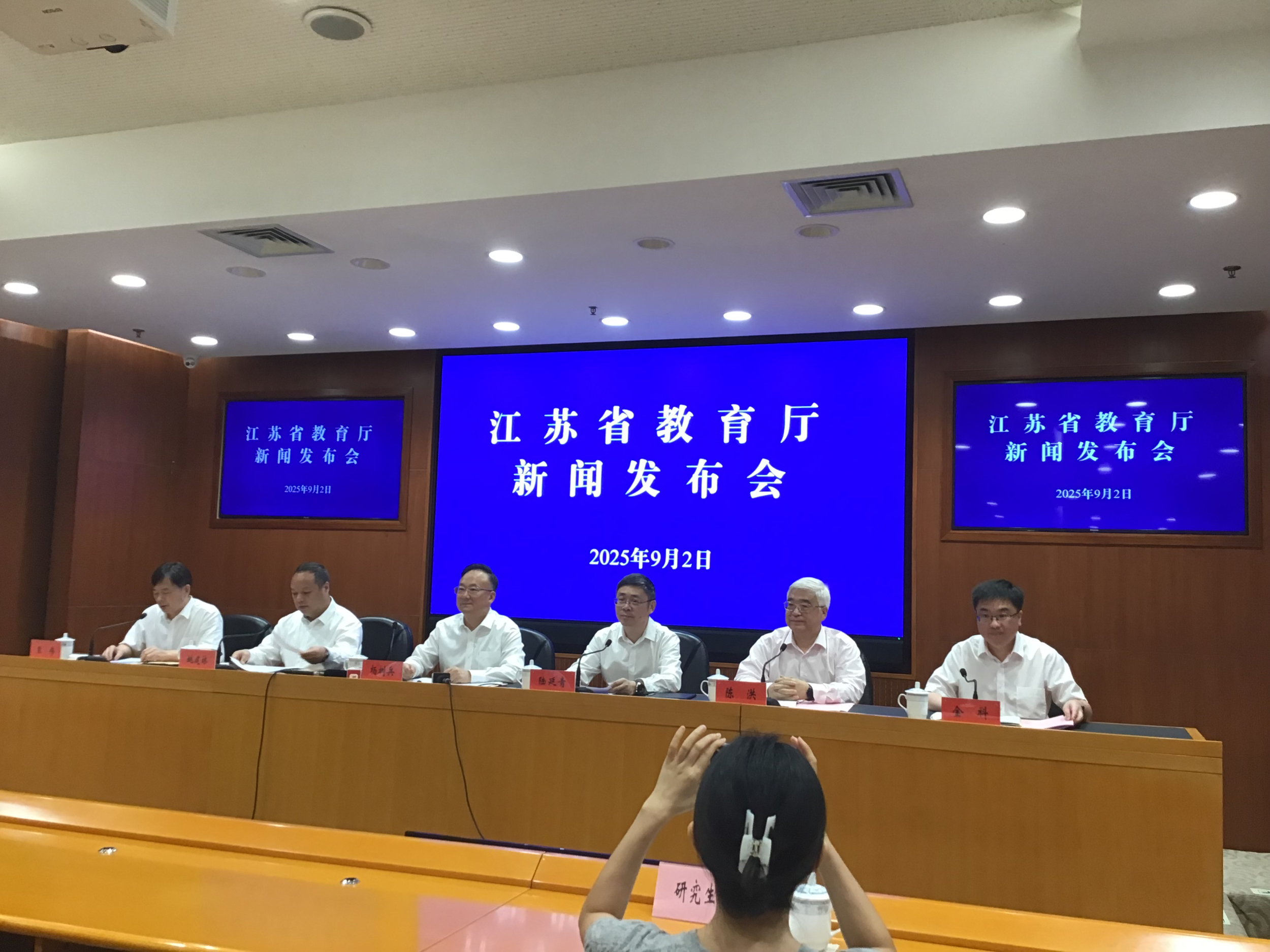
江苏省启动高校学科专业设置调整优化改革 服务国家战略与区域发展
Zhong Guo Fa Zhan Wang· 2025-09-05 08:33
Core Viewpoint - Jiangsu Province is implementing a comprehensive reform of higher education discipline and major structures to align with national and regional development strategies, aiming to enhance the quality of talent cultivation [3][4]. Group 1: Reform Background - The adjustment and optimization of disciplines and majors are essential to serve national strategies, respond to industrial innovation, and promote high-quality development in higher education [4]. - Jiangsu has rich educational resources and a strong industrial foundation, but faces issues such as misalignment between professional settings and industrial needs, prominent homogenization, and lagging interdisciplinary construction [4]. Group 2: Main Goals and Key Actions - By 2027, over 85% of newly added majors in Jiangsu's universities will belong to urgently needed fields, with a target of 60% for degrees in science, engineering, agriculture, and medicine [5]. - By 2030, the goal is to achieve full coverage of disciplines related to Jiangsu's "1650" modern industrial system, establishing a robust academic framework to support a strong educational, technological, and talent province [5]. - Four key actions will be prioritized: 1. Urgent discipline layout action, establishing a dual empowerment mechanism between industry demand and academic supply [5]. 2. Excellence enhancement action for discipline classification, focusing on top disciplines, foundational disciplines, emerging interdisciplinary fields, and cultural heritage disciplines [6]. 3. Talent cultivation model update action, promoting the establishment of specialized colleges and an honors education system [6]. 4. Deepening reform of discipline and major development mechanisms, innovating collaborative and project-based training models [6]. Group 3: Support Measures and Next Steps - Jiangsu will strengthen the leadership of the Provincial Education Work Leading Group, enhance departmental collaboration, and ensure policy support while holding universities accountable [7]. - The next steps include phased implementation of reform pilots, strengthening process management, and ensuring smooth execution of reforms [7].
财政部:将继续把教师队伍建设作为教育投入的重点予以优先保障
Zhong Guo Xin Wen Wang· 2025-09-05 06:36
Core Viewpoint - The Ministry of Education held a press conference to discuss the progress in teacher workforce development over the past year, highlighting various initiatives and financial support aimed at enhancing the quality and capabilities of teachers across the country [1][2]. Group 1: Teacher Training and Development - The government is focusing on improving teacher quality from the source by increasing financial support for normal universities, raising the per-student funding standard, and enhancing funding for teacher education [1]. - During the "14th Five-Year Plan" period, a total of 4.2 billion yuan has been allocated to support the implementation of public-funded education policies for normal students, aiming to attract talented youth to pursue teaching careers [1]. - In 2024, a policy will be introduced to elevate the training level of public-funded normal students from undergraduate to graduate [1]. Group 2: Teacher Training Programs - There is a strong emphasis on continuous teacher training, with a five-year, 360-hour training system established for primary and secondary school teachers to enhance their capabilities and reduce disparities [2]. - The central government has allocated over 11 billion yuan for national-level training projects, training more than 5 million principals and key teachers through targeted programs [2]. Group 3: Support for Underdeveloped Areas - The government is investing 1.8 billion yuan during the "14th Five-Year Plan" to support high schools in key rural revitalization counties through a "team-based" assistance model [2]. - More than 20,000 outstanding and retired teachers are organized annually to provide teaching support in underdeveloped areas, effectively improving local teacher capabilities [2]. Group 4: Future Plans - The Ministry of Finance will continue to prioritize teacher workforce development in educational investments and work with relevant departments to improve the teacher training system [2].
教育强国建设视域下新质人才培养路径
Yang Shi Wang· 2025-08-20 03:33
Group 1 - The core viewpoint emphasizes the urgent need for cultivating new quality talents to support national development and the construction of a strong educational nation, which is crucial for achieving the Chinese Dream of national rejuvenation [1][2][3] Group 2 - New quality talents are defined as individuals with innovative qualities and capabilities, distinct from traditional talents, and are essential for driving new productive forces characterized by innovation and high technology [2][3] - The main types of new quality talents include high-end, professional, and operational talents, categorized based on social development and the requirements of new productive forces [2][3] Group 3 - Cultivating new quality talents is vital for supporting national strategic transformation and ensuring the safety and upgrading of industrial chains in the face of global challenges [3][4] - The cultivation process should lead to deep reforms in the education system, focusing on interdisciplinary approaches and practical training to meet the evolving demands of the economy [3][4] Group 4 - The curriculum must be restructured to align with the qualities of new quality talents, emphasizing cross-disciplinary integration and practical learning experiences [4][5] - A collaborative mechanism involving government, universities, enterprises, and research institutions is essential for effective talent cultivation [5][6] Group 5 - The integration of digital and intelligent technologies is crucial for enhancing the efficiency and quality of new quality talent cultivation [5][6] - A new evaluation mechanism should focus on the comprehensive quality of talents, aligning with the unique characteristics of new quality talents [6]