
无人配送

Search documents
新石器完成逾6亿美元D轮融资 北京AI基金等联合领投
Bei Ke Cai Jing· 2025-10-23 09:43
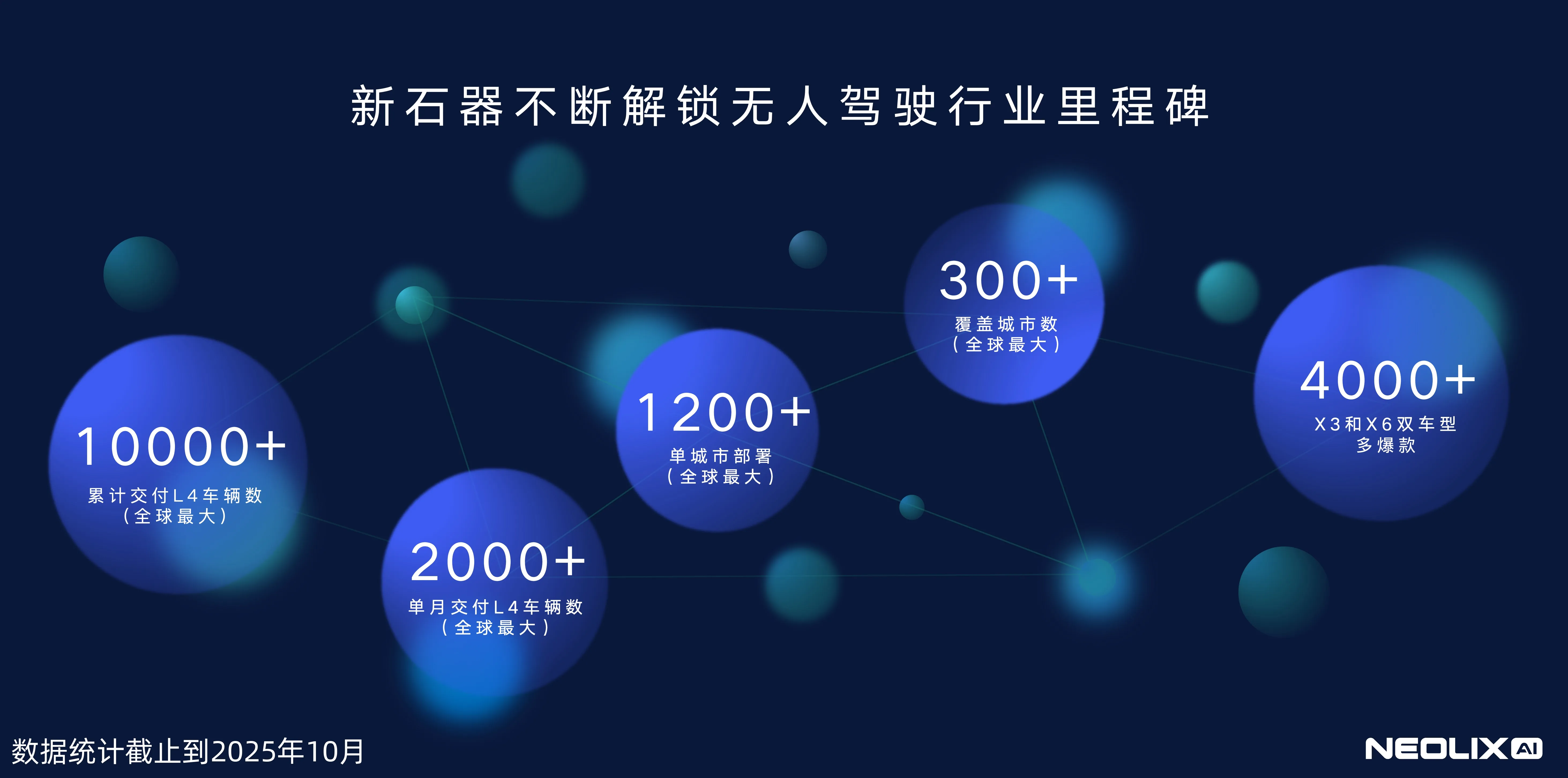
Core Viewpoint - Neolix has successfully completed a Series D funding round exceeding $600 million, led by Stone Venture, with participation from various prominent investors, aiming to enhance its technology and market competitiveness in the autonomous delivery vehicle sector [1][3]. Group 1: Funding Details - The Series D funding round was led by Stone Venture and included significant contributions from investors such as Gaocheng Investment, Xincheng Capital, and others, with existing shareholders like Yunqi Capital also increasing their stakes [1]. - The funds will be utilized for algorithm and technology research and development, product expansion for different commercial scenarios, and improving service networks to enhance user experience [1]. Group 2: Company Achievements - Since its establishment in 2018, Neolix has delivered over 10,000 L4 autonomous vehicles, becoming the first company globally to exceed 2,000 monthly deliveries [2]. - The company has deployed vehicles in over 300 cities, making it the autonomous driving company with the widest city coverage [2]. - Neolix has achieved over 50 million kilometers of cumulative L4 autonomous driving mileage [2]. Group 3: Market Outlook - Neolix has announced key advancements in its autonomous driving technology, with its self-developed L4 level no-map autonomous driving technology starting commercial delivery [3]. - The market for autonomous delivery vehicles is expected to experience exponential growth, with a projected demand of over 100,000 vehicles by 2027 in both domestic and international markets [3]. - Major cities like Beijing, Shanghai, and Guangzhou are anticipated to have thousands of autonomous delivery vehicles operating within three years, indicating significant industry potential [3].
新石器宣布完成超6亿美元D轮融资 鼎晖云启资本等参与投资
Sou Hu Cai Jing· 2025-10-23 09:16
Core Insights - Neolix, a provider of L4 level RoboVan solutions, announced the completion of over $600 million in Series D financing, marking the largest private equity financing in China's autonomous driving sector to date [2][3] Financing Details - The financing round was led by Stone Venture and included participation from various investors such as Gaocheng Investment, Xincheng Capital, and several others, including existing shareholders [2] - This financing is one of the largest in China's private equity sector this year [2] Company Growth and Milestones - Since its establishment in 2018, Neolix has delivered over 10,000 L4 autonomous vehicles, becoming the first company globally to deliver over 2,000 vehicles in a single month [5] - The company has deployed over 1,200 vehicles in Qingdao and has achieved over 50 million kilometers of cumulative L4 autonomous driving mileage [5] Technological Advancements - Neolix has developed a "visual-action" foundational model, Neolix-VA, enabling its RoboVan fleet to integrate into complex traffic environments efficiently [7] - The company has introduced a no-map autonomous driving technology that reduces reliance on high-precision maps, cutting related costs by over 90% [7] Market Position and Expansion - Neolix holds over 60% of the market share in the RoboVan industry, with a monthly shipment share exceeding 70% and a sales share of over 80% [8] - The company has established partnerships with major logistics firms, including SF Express and JD Logistics, covering a wide range of delivery scenarios [10] Future Outlook - Industry experts predict a significant growth period for autonomous delivery vehicles, with sales expected to exceed 30,000 units by 2025 [14] - Neolix aims to create a "smart transportation network" that enhances logistics efficiency across society [14] Strategic Partnerships - Neolix has secured the first RoboVan license in the UAE and plans to expand its operations in the Middle East [11] - The company has also signed strategic agreements with local governments in Japan and South Korea to promote RoboVan deployment [11]

传新石器获腾讯等超5亿美元PreIPO融资 或将冲击港股上市
Zhi Tong Cai Jing· 2025-10-23 07:20
Core Insights - Neolix, a leading Chinese autonomous delivery company, has completed over $500 million in Pre-IPO financing and is initiating its IPO process in Hong Kong [1] - The company has attracted notable investors including Tencent and Gaocheng Capital, along with several national AI funds and Middle Eastern funds [1] - Neolix specializes in L4 autonomous commercial vehicle development, focusing on logistics applications and has launched models X3, X6, and X12 for urban delivery [1] Group 1 - Neolix was established in 2018 and aims to implement L4 autonomous driving in logistics, achieving over 50% cost reduction for clients [1] - The company has developed its own L4 autonomous driving system for public road scenarios, capable of 50 kph on motorways, supported by proprietary hardware and vehicle platforms [1] - As of December 2024, Neolix has obtained public road rights in 93 regions across 11 provinces and has delivered over 2,400 autonomous vehicles globally, making it the largest autonomous delivery fleet [1] Group 2 - On October 14, Neolix entered a strategic partnership with K2 Group, a state-owned AI technology company in the UAE, to accelerate the application of autonomous driving technology in the Middle East [2] - The collaboration aims to enhance logistics efficiency in the UAE and develop a smart city ecosystem [2] - In September, Neolix celebrated the delivery of its 10,000th vehicle, becoming the first company in the autonomous delivery sector to reach this milestone, with commercial validation in over 100 cities in China [2]
新石器完成逾6亿美元D轮融资 创中国自动驾驶领域融资记录
Cai Jing Wang· 2025-10-23 06:57
Core Insights - Neolix, the world's largest L4-level RoboVan solution provider, has completed over $600 million in Series D financing, marking the largest private equity financing in China's autonomous driving sector to date [1][2] - The funding will enhance Neolix's technological capabilities and market competitiveness in the unmanned urban distribution sector, accelerating the commercial application of autonomous vehicles [2][6] - Neolix aims to leverage this financing to invest in algorithm and technology development, expand product offerings for various commercial scenarios, and improve service networks [1][2] Financing Details - The financing round was led by Stone Venture and included participation from several prominent investors such as Gaocheng Investment, Xincheng Capital, and others [1] - This financing is a significant milestone for Neolix, reflecting strong market recognition of its technology and business model [1] Technological Advancements - Neolix has made key advancements in autonomous driving technology, including the commercial delivery of its L4-level mapless autonomous driving solution, becoming the first in the unmanned delivery industry to do so [4] - The company has developed a foundational model called Neolix-VA, which integrates visual and action capabilities, allowing its RoboVan fleet to operate efficiently in complex traffic environments [4][5] - The mapless technology reduces reliance on high-precision maps, saving over 90% in related costs and significantly lowering hardware expenses [4] Market Position and Growth - Since its establishment in 2018, Neolix has delivered over 10,000 L4 autonomous vehicles, leading the RoboVan industry [2][6] - The company has achieved a market share exceeding 60% in cumulative shipments and over 70% in monthly new shipments, dominating the unmanned delivery sector [6][7] - Neolix has expanded its service to over 300 cities and has partnered with major logistics companies, covering a wide range of clients [6][7] Expansion and Future Outlook - Neolix is not only leading in the domestic market but has also made significant strides in international markets, including obtaining the first RoboVan license in the UAE [8] - Industry experts predict a rapid growth phase for unmanned delivery vehicles, with expectations of over 30,000 units sold by 2025 [9] - The company envisions a future where unmanned delivery vehicles will form an intelligent logistics network, enhancing overall logistics efficiency [9]
新石器宣布获逾6亿美元D轮融资,高成、鼎晖VGC等联合领投
Xin Lang Ke Ji· 2025-10-23 06:43
Core Insights - Neolix, a provider of L4-level autonomous delivery solutions, has completed a Series D funding round exceeding $600 million, led by Stone Venture from the UAE, with participation from several prominent investors [1][2] Funding Details - The funding round includes contributions from investors such as Gaocheng Investment, Xincheng Capital, Dinghui VGC, Chaoxi Capital, Beijing AI Industry Investment Fund, and a major internet company, along with continued support from existing shareholders like Junlian Capital and others [1] Company Vision and Strategy - Neolix aims to solidify its technological capabilities and market competitiveness in the autonomous delivery sector, accelerating the commercial application of autonomous vehicles to meet the growing demand in domestic and international markets [2] Product and Market Achievements - Neolix has delivered over 10,000 L4 autonomous vehicles, becoming the first company globally to achieve this milestone, with monthly deliveries surpassing 2,000 units [2] - The company has deployed over 1,200 vehicles in Qingdao, making it the city with the highest number of autonomous vehicles globally [2] - Neolix's X3 and X6 models have each surpassed 4,000 units in cumulative deliveries, establishing the company as the only one in the industry to achieve large-scale delivery of multiple popular models [2]
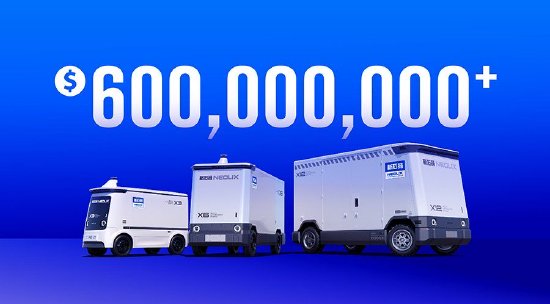
新石器完成逾6亿美元D轮融资,此前已突破1万台交付门槛
Feng Huang Wang· 2025-10-23 06:39
Group 1 - Neolix, a provider of L4 level autonomous delivery solutions, has completed over $600 million in Series D financing, marking the largest private equity financing in China's autonomous driving sector to date [1][2] - The financing round was led by Stone Venture, with participation from several notable investors including Gaocheng Investment, Xincheng Capital, and others, indicating strong interest in the autonomous delivery market [1] - The funds will enhance Neolix's technological capabilities and market competitiveness in the unmanned urban delivery sector, aiming to accelerate the commercial application of autonomous vehicles [2] Group 2 - Neolix has achieved a significant milestone by delivering over 10,000 L4 autonomous vehicles, becoming the first company globally to reach this delivery volume [2] - The company has announced key advancements in its autonomous driving technology, with its self-developed L4 level unmapped autonomous driving solution beginning commercial delivery and limited application [2] - Neolix's CEO emphasized the importance of unmanned delivery as a critical component of future urban logistics, aiming to improve efficiency and digital transformation in the logistics industry [2]
腾讯参投新石器完成超5亿美元融资,或将赴港IPO
Xin Lang Ke Ji· 2025-10-23 05:31
Core Insights - Neolix, a leading company in the unmanned delivery sector in China, has completed over $500 million in Pre-IPO financing, with participation from Tencent and other notable investors [1][1][1] - The financing round is expected to exceed $500 million as additional funds are still being processed [1][1][1] - Following this funding, Neolix plans to enhance its monthly production capacity to approximately 2,000 vehicles, a significant increase from just over 1,000 vehicles delivered in the previous year [1][1][1] - Neolix is anticipated to initiate preparations for an IPO in Hong Kong soon after the completion of this financing round [1][1][1] Company Developments - Neolix recently announced the delivery of its 10,000th vehicle, marking a transition from technology validation to large-scale commercialization in the unmanned delivery industry [1][1][1] - The involvement of multiple state-backed AI funds and Middle Eastern funds in the financing round indicates strong investor confidence in the company's growth potential [1][1][1]

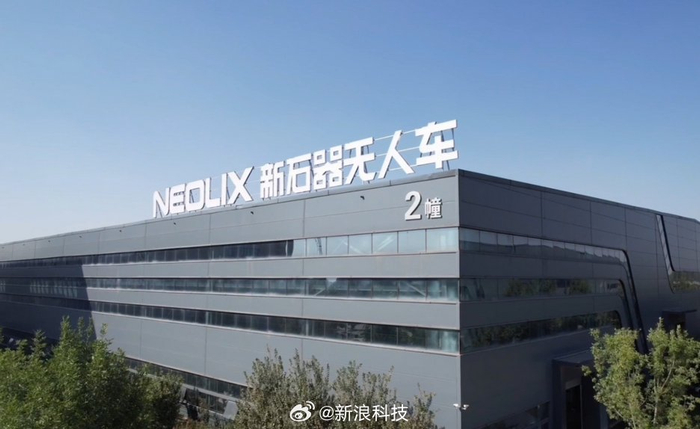
无人配送大规模上路有望实现
Ke Ji Ri Bao· 2025-10-22 23:37
Core Insights - The urban-level unmanned transport network has been officially launched, providing standardized and scalable solutions for urban unmanned delivery scenarios [1] - The domestic unmanned delivery market is experiencing an explosive growth rate of 60% annually, with expectations to exceed 500 billion yuan in scale over the next three years [1] - The unmanned transport network is centered around the Chongqing Intelligent Connected Vehicle Demonstration Zone, featuring four core platforms to meet safety and regulatory needs [1] Summary by Sections Unmanned Delivery Market - The unmanned delivery market in China is projected to grow at an annual rate of 60%, potentially reaching over 500 billion yuan in the next three years [1] - Current implementations are limited to small areas, primarily in parks, necessitating advancements in safety compliance and precise control for large-scale deployment [1] Technology and Infrastructure - The platform is developed collaboratively by Chongqing High-tech Zone, universities, and automotive companies, utilizing a three-tier testing system of "platform + closed site + open road" [2] - The testing framework incorporates complex road conditions specific to Chongqing, such as long tunnels and steep slopes, to ensure accurate road operation rights and licensing for unmanned vehicles [2] Logistics Optimization - The platform addresses end logistics challenges by integrating resources across people, vehicles, routes, and goods, which helps reduce logistics costs by over 10% and shortens delivery times by one-third [2] - A comprehensive solution has been established in the Chongqing Intelligent Connected Vehicle Demonstration Zone, with plans for continued promotion to enhance the smart connected vehicle industry and smart city development [2]
头部企业再获融资无人配送赛道趋热
Shang Hai Zheng Quan Bao· 2025-10-22 18:09
Core Insights - The article highlights the recent $100 million Series B4 funding round completed by Jiushi Intelligent, led by Ant Group, bringing the total funding in the B round to $400 million. This reflects a growing trend of significant investments in the autonomous delivery vehicle sector, indicating a shift towards commercialization and scalability in the industry [1][2]. Funding and Investment Trends - Jiushi Intelligent focuses on L4 autonomous delivery vehicles, aiming to provide standardized transportation solutions for logistics, retail, and express delivery sectors. The recent funding will enhance R&D in autonomous driving technology and accelerate global market expansion [2][3]. - The funding landscape for the autonomous delivery sector has seen a surge, with several leading companies securing substantial investments. For instance, New Stone Unmanned Vehicle raised $1.5 billion in February, and Jiushi Intelligent previously secured $300 million in April [2][3]. - As of Q3 2025, the financing scale in the domestic autonomous delivery vehicle sector reached approximately 8.97 billion yuan, indicating a shift from pilot testing to large-scale replication [2]. Market Growth and Projections - The market for autonomous delivery vehicles is experiencing rapid growth, with New Stone Unmanned Vehicle's monthly sales increasing from 200-300 units to nearly 2,000 units within a year. The company achieved its target of delivering over 10,000 vehicles ahead of schedule [4]. - Jiushi Intelligent has expanded its operations to over 300 cities in China, with a total of over 10,000 vehicles delivered and a safe driving mileage exceeding 50 million kilometers [4][5]. - The demand for autonomous delivery vehicles is expected to grow significantly, with projections indicating that by the end of 2025, the industry will be in the early stages of large-scale commercialization [5]. Industry Challenges and Considerations - The advancement of autonomous delivery vehicles is contingent upon the establishment of unified management and access regulations at the provincial and national levels. The industry is currently facing challenges in achieving full automation and integration with existing logistics systems [6][7]. - Balancing vehicle reliability and cost in complex traffic scenarios remains a significant challenge. The industry must address issues related to extreme scenario recognition and response, as well as the need for high-quality components to meet commercial vehicle standards [7]. - Public acceptance and safety concerns are critical factors for the successful integration of autonomous delivery vehicles into urban environments. Companies are focusing on demonstrating the value of these vehicles in enhancing logistics efficiency and promoting sustainable development [7].
顺丰同城(09699.HK):即时配送大平台 打造消费新基建
Ge Long Hui· 2025-10-22 12:12
Core Viewpoint - The company is positioned to benefit from the rapid growth of the instant delivery industry, driven by multiple factors including the diversification of demand, expansion of food delivery services, and the digital retail boom in lower-tier markets [1][2]. Industry Summary - The instant delivery industry is expected to experience a CAGR of 18.9% from 2023 to 2028, with order volume projected to grow at a CAGR of 14.5% during the same period [1]. - The demand for high-quality instant delivery services is increasing as merchants seek better logistics solutions amid the rapid growth of the instant retail sector [3]. Company Summary - The company, as the largest independent third-party instant delivery service platform in China, has achieved comprehensive coverage of four main consumption scenarios: food delivery, local retail, near-field e-commerce, and near-field services [2]. - The company reported a net profit of 0.51 billion yuan in 2023, marking its first profit after losses, and is projected to achieve a net profit of 1.3 billion yuan in 2024, representing a year-on-year growth of 159% [2]. - The company is leveraging its independent third-party status and collaboration with SF Group to expand its customer base and enhance profitability through scale effects [3]. - The company is investing in smart delivery solutions, including unmanned delivery and AI technologies, to improve delivery efficiency and service quality, which is expected to optimize cost structures and enhance profitability [3]. Financial Projections - The company is expected to achieve net profits of 3.09 billion yuan, 5.85 billion yuan, and 8.91 billion yuan from 2025 to 2027, with year-on-year growth rates of 133%, 89.4%, and 52.4% respectively [4]. - The company's PE valuation for 2025-2027 is projected to be below the average of comparable companies, indicating potential for investment [4].