智能化技术

Search documents
爱玛科技: 爱玛科技2025年半年度报告
Zheng Quan Zhi Xing· 2025-08-22 16:24
Core Viewpoint - Aima Technology Group Co., Ltd. reported significant growth in revenue and profit for the first half of 2025, driven by its focus on electric two-wheeled vehicles and a diversified product range [1][3]. Financial Performance - Revenue for the first half of 2025 reached approximately 13.03 billion RMB, a 23.04% increase compared to the same period in 2024 [3]. - Total profit amounted to approximately 1.43 billion RMB, reflecting a 27.37% increase year-on-year [3]. - Net profit attributable to shareholders was approximately 1.21 billion RMB, up 27.56% from the previous year [3]. - The company proposed a cash dividend of 0.628 RMB per share, totaling approximately 545.76 million RMB, which represents 45.01% of the net profit for the first half of 2025 [1]. Business Overview - Aima Technology has been focused on the research and manufacturing of electric two-wheeled vehicles since 2004, establishing itself as a leading player in the industry [3][4]. - The company's product offerings include electric bicycles, light motorcycles, and electric motorcycles, catering to various transportation needs [4][5]. - Aima operates multiple production bases across China and has expanded its international presence with factories in Indonesia and Vietnam [4][5]. Industry Context - The electric two-wheeled vehicle industry is experiencing rapid growth, driven by increasing demand for sustainable transportation solutions and regulatory support [7][8]. - The market is becoming more concentrated as smaller players exit, leading to higher market share for established companies like Aima [7][8]. - The industry is transitioning towards high-quality, intelligent, and diversified products, with a focus on user-centric service models [7][8]. Product Development and Innovation - Aima emphasizes technological innovation, focusing on core components such as motors, controllers, and batteries to enhance product performance [11][12]. - The company has developed a modular product architecture to streamline development processes and reduce costs [9][10]. - Aima is also investing in smart technology integration, enhancing user experience through features like smart control and interactive systems [12][13]. Sales and Marketing Strategy - Aima is enhancing its sales and service integration, focusing on channel capability upgrades and user value [14][15]. - The company employs a grid-based market management approach to improve service quality and responsiveness to consumer trends [14][15]. - Aima is actively expanding its brand presence through various marketing initiatives, targeting younger demographics and enhancing its international footprint [18][20].

长安汽车财报上半年营收同比下降5.25%,净利润降19.09%,新能源汽车销量增长49.1%
Hua Er Jie Jian Wen· 2025-08-22 13:59
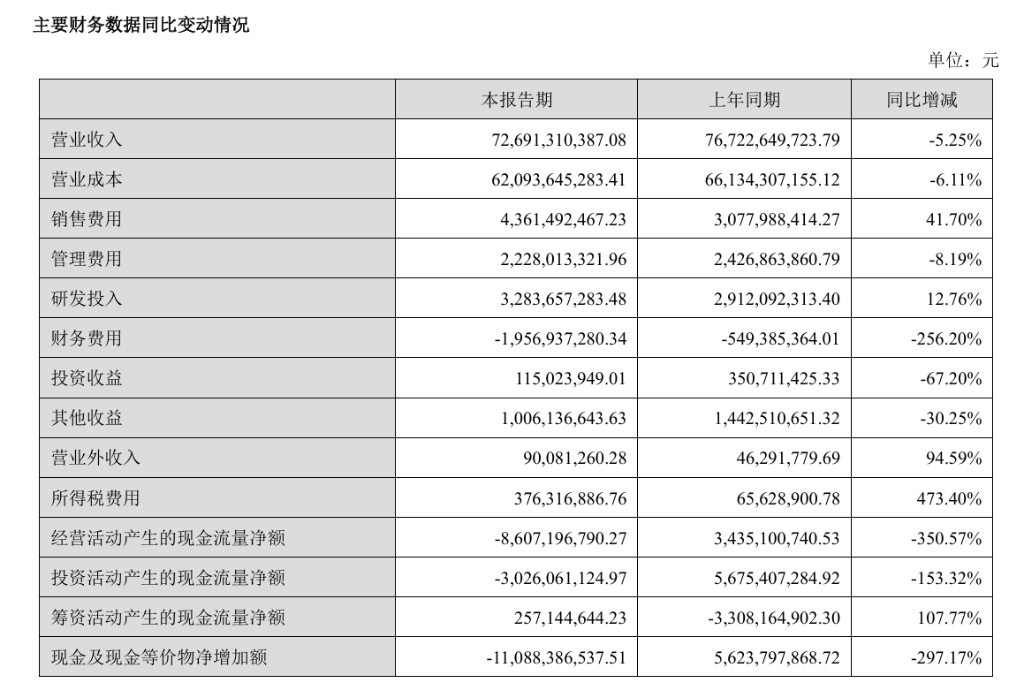
Core Insights - Changan Automobile reported a revenue of 72.69 billion RMB for the first half of 2025, a decrease of 5.25% year-on-year, and a net profit of 2.29 billion RMB, down 19.09% year-on-year [1][2] - The company achieved a record high in automobile sales for the same period, with a 1.6% increase year-on-year, totaling 1.355 million units sold [2][3] - New energy vehicle (NEV) sales reached 452,000 units, marking a significant growth of 49.1% year-on-year, with June alone surpassing 100,000 units sold [1][2] Financial Performance - Operating income for the first half of 2025 was 72.69 billion RMB, down 5.25% from the previous year, primarily due to weak overall demand in the automotive industry and intense price competition [2][3] - The gross profit margin improved from 13.80% to 14.58%, indicating a positive trend in product structure optimization [3] - The net cash flow from operating activities showed a significant outflow of 8.61 billion RMB, compared to a net inflow of 3.44 billion RMB in the same period last year [2][3] Strategic Developments - The company is actively executing its globalization strategy, with the opening of a factory in Thailand and successful product launches in Europe and the UAE, contributing to an overseas sales increase of 5.1% to 299,000 units [3] - Changan has established three smart electric vehicle brands: Avita, Deep Blue, and Changan Qiyuan, covering a range from high-end to mainstream markets [4] - The company has made significant investments in R&D, totaling 3.28 billion RMB, a 12.76% increase year-on-year, reflecting its commitment to technological innovation [3][4]


长安汽车财报上半年营收同比下降5.25%,净利润降19.09%,新能源汽车销量增长49.1% | 财报见闻
Hua Er Jie Jian Wen· 2025-08-22 12:04
Core Viewpoint - Changan Automobile reported a revenue of 72.69 billion RMB in the first half of 2025, a year-on-year decline of 5.25%, while net profit decreased by 19.09% to 2.29 billion RMB. However, the company achieved a 1.6% increase in total vehicle sales, marking the highest sales in nearly eight years, with a significant 49.1% growth in new energy vehicle sales [1][2][4]. Financial Performance - Revenue for the first half of 2025 was 72.69 billion RMB, down 5.25% from the previous year [1][4]. - Net profit was 2.29 billion RMB, a decrease of 19.09% year-on-year [1][4]. - The company reported a non-GAAP net profit of 1.48 billion RMB, reflecting a 26.36% increase, indicating improved core business profitability [2][4]. - Gross margin improved from 13.80% to 14.58% [4]. - Operating cash flow showed a net outflow of 8.61 billion RMB, compared to a net inflow of 3.44 billion RMB in the same period last year [2][4]. Sales Performance - Total vehicle sales reached 1.355 million units, a 1.6% increase year-on-year, achieving the highest sales in nearly eight years [5]. - New energy vehicle sales amounted to 452,000 units, representing a 49.1% year-on-year growth, with June sales exceeding 100,000 units [1][5]. - Overseas sales reached 299,000 units, up 5.1% year-on-year [3][5]. Strategic Developments - The company is actively executing its globalization strategy, with the launch of the Rayong factory in Thailand and the introduction of Deep Blue vehicles in the UAE, creating new growth opportunities [3]. - R&D investment totaled 3.28 billion RMB, a 12.76% increase, accounting for 4.5% of revenue, demonstrating a commitment to technological innovation [3]. - The establishment of three smart electric vehicle brands—Avita, Deep Blue, and Changan Qiyuan—provides comprehensive market coverage from high-end to mainstream segments [3].
滨海投资拟向天水智城注资合计1036.51万元
Zhi Tong Cai Jing· 2025-08-22 09:25
Core Viewpoint - Binhai Investment (02886) announced a capital injection agreement with Tianjin Water Conservancy and Tianshui Smart City, totaling RMB 10.3651 million, to acquire a 49% stake in Tianshui Smart City, aiming to enhance its operations and develop a professional gas engineering platform [1] Group 1 - The capital injection consists of RMB 9.6078 million for increasing registered capital and RMB 757,300 for capital reserves [1] - Tianshui Smart City is a wholly-owned subsidiary of Tianjin Water Conservancy, which is affiliated with the company [1] - The strategic cooperation aims to raise funds for Tianshui Smart City's operational and expansion needs [1] Group 2 - After the capital injection, the ownership structure will be 49% for Tai Cheng Clean Energy and 51% for Tianjin Water Conservancy [1] - The partnership will allow Tianshui Smart City to participate in project planning and construction, enhancing control over project progress, quality, and safety [1] - The company can leverage centralized procurement and large-scale construction to reduce costs and maximize project returns [1] Group 3 - Tianshui Smart City will utilize intelligent technology to develop an emergency management platform for gas engineering, improving operational safety and resilience [1] - The collaboration is expected to enhance the company's ability to secure funding from government agencies while ensuring compliance with regulations [1] - The integration of IoT monitoring and smart warning technologies will inject innovation into the company's business operations [1]
预报名!2025医疗器械研发创新论坛
思宇MedTech· 2025-08-17 00:10
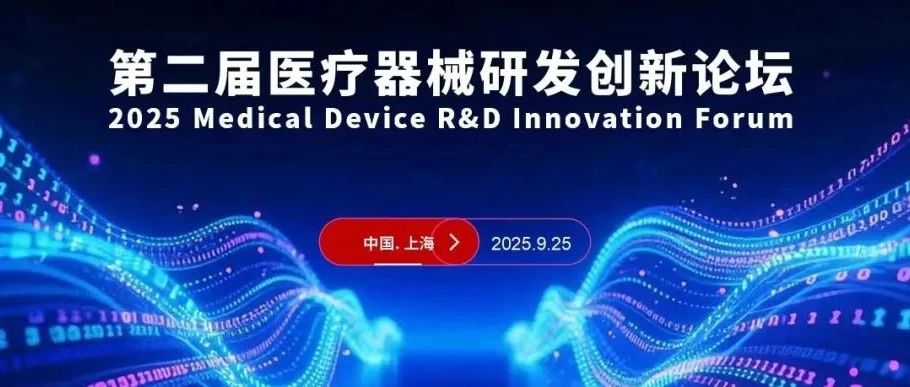
Core Viewpoint - The interventional medical device industry is undergoing unprecedented transformation driven by advancements in intelligent technology, emphasizing the need for innovation to meet growing clinical demands and patient expectations [2]. Group 1: Event Overview - The Second Medical Device R&D Innovation Forum is organized by Siyu MedTech in collaboration with Informa Market's Medtec China team, aiming to explore new opportunities and challenges in the industry [2]. - The forum is scheduled for September 25, 2025, at the Shanghai World Expo Exhibition and Convention Center, with an expected attendance of 120 participants [4]. Group 2: Morning Session Topics - The morning session will focus on intelligent technology empowering interventional medical device R&D, discussing applications of intelligent devices such as robots, navigation technology, and smart sensors in interventional surgeries [3][7]. - A comprehensive innovation approach will be explored, covering AI-assisted preoperative planning, integration of intelligent devices with traditional instruments during surgery, and remote monitoring and data analysis post-surgery [3][7]. - Innovations in materials and processes for interventional medical devices will be highlighted, focusing on high-performance materials and bio-absorbable materials, as well as surface modification techniques and biocompatibility research [3][7]. Group 3: Afternoon Session Topics - The afternoon session will include a roundtable forum discussing future opportunities and challenges for interventional medical devices, with industry experts sharing insights and strategies for navigating the evolving landscape [5][7]. - Clinical application cases of interventional devices will be shared, emphasizing personalized treatment plans and the integration of intelligent technologies in clinical settings [7]. Group 4: Participation and Engagement - Industry and clinical experts are invited to participate as speakers, with a call for interested professionals to contact Siyu for involvement [3][8]. - Pre-registration for attendees is encouraged through a provided link or QR code [5].
上半年营收超1500亿元创新高,吉利汽车仍自揭三点不足
Guan Cha Zhe Wang· 2025-08-14 13:44
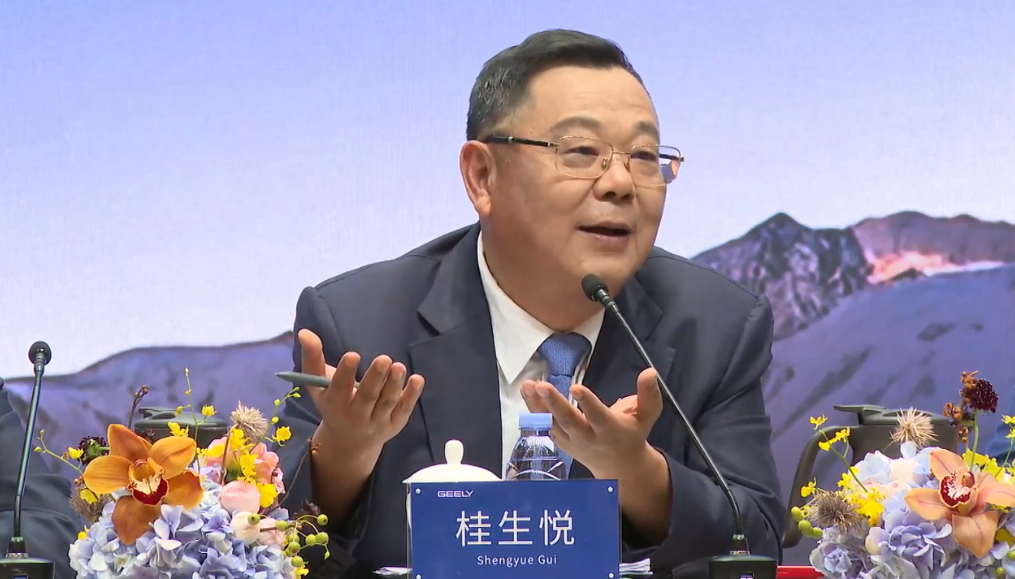
Core Viewpoint - Geely Automobile reported a record revenue of 150.285 billion yuan for the first half of 2025, a 27% year-on-year increase, driven by significant growth in vehicle sales [1][7]. Financial Performance - Total revenue reached 150.285 billion yuan, marking a historical high [1]. - Vehicle sales amounted to 1.4092 million units, a 47% increase year-on-year, also a record [1]. - Profit attributable to shareholders was 9.29 billion yuan, a 14% decline year-on-year, while core net profit grew by 102% to 6.657 billion yuan [1]. Cash Position - As of June 30, 2025, total cash levels reached 58.8 billion yuan, an increase of 12.2 billion yuan from the end of the previous year [2]. Market Performance - Geely's market share in the domestic market reached 10.4%, ranking second in China, with a gap of 4.37 percentage points from the first place [7]. - New energy vehicle sales reached 725,200 units, a 126% increase, accounting for 51.5% of total sales [7]. Brand and Export Challenges - The company acknowledged shortcomings in brand building and user experience, emphasizing the importance of consumer trust [4][5]. - Export sales declined by 8% to 184,100 units, with a significant drop in the Eastern European market [5][14]. Product Development and R&D - R&D investment for the first half of 2025 was 7.328 billion yuan, a 21% increase, focusing on new energy and intelligent technology [13]. - New models launched include the Geely Galaxy Star 8 and the Zeekr 007GT, with plans for more releases in the second half [18][19]. Strategic Outlook - Geely aims to increase its full-year sales target by approximately 11%, from 2.71 million to 3 million units [21]. - The company is focused on enhancing its global presence and localizing production capabilities [19].

《煤矿安全规程》新修订,将于2026年2月1日起施行
Xin Hua Cai Jing· 2025-08-14 01:00
Group 1 - The revised "Coal Mine Safety Regulations" will be implemented starting February 1, 2026, consisting of 777 articles, with 56 new additions and 353 substantial modifications compared to the previous version [1] - The new regulations significantly reduce the number of underground gas inspectors and the frequency of inspections due to advancements in coal mine safety monitoring technology and the development of inspection robots [1] - Major disaster prevention remains a key focus, with the new regulations incorporating the assessment of gas levels, impact pressure, coal seam self-ignition tendencies, coal dust explosiveness, and open-pit coal mine landslide risks into safety detection and inspection [1] Group 2 - New provisions for groundwater management in coal mines have been added, specifying how to conduct safety verification and effectiveness assessment after ground pre-treatment of pressurized water [1] - The application of automation and intelligent technology is emphasized across various stages, including geological exploration, underground operations, monitoring, and open-pit mining, with clear directions and specific requirements outlined in the new regulations [1]
志高机械北交所IPO网上路演在全景路演成功举行
Quan Jing Wang· 2025-08-13 04:44
Core Viewpoint - Zhigao Machinery successfully held an online roadshow for its public offering of shares to unspecified qualified investors and listing on the Beijing Stock Exchange on August 4, 2025 [1] Group 1: Company Overview - Zhigao Machinery is a national high-tech enterprise and a "little giant" enterprise recognized for specialization and innovation, focusing on the research, production, and sales of rock drilling equipment and air compressors [5] - The company offers over 400 products, including integrated drilling rigs and industrial screw compressors, widely used in mining and construction [5] - Zhigao Machinery has a robust R&D system and core technologies, with its technology center recognized as a "Zhejiang Provincial Enterprise Research Institute" [5] Group 2: Market Position and Strategy - The company is one of the few domestic manufacturers that possess the capability to produce core components for hydraulic rock drills and screw compressors, demonstrating strong technical strength and market competitiveness [7] - Zhigao Machinery's products are extensively used in national key projects and are actively expanding into overseas markets under the "Belt and Road" initiative, enhancing its market reputation and brand influence [7] - The company aims to enhance its brand influence and market competitiveness through this public offering, supporting continuous innovation and high-quality development in high-end manufacturing [5][11] Group 3: Financial Performance - The company's revenue for the reporting period was 795.04 million yuan, 840.37 million yuan, and 888.44 million yuan, showing steady annual growth [10] - R&D expenses were 31.65 million yuan, 30.22 million yuan, and 30.99 million yuan, maintaining a stable proportion of revenue [10] - The gross profit margin for the main business increased from 23.57% to 26.75% over the reporting period, indicating improved profitability [10] Group 4: Future Plans - Zhigao Machinery plans to use the funds raised from the public offering for capacity expansion and the construction of a research and development center [10] - The company is committed to enhancing its overseas business, which has become a significant factor in revenue and profit growth, by improving its sales network and increasing product customization [9] - The company aims to become a leading domestic and internationally recognized manufacturer of rock drilling equipment and air compressors, focusing on sustainable development and long-term investment value [11]

跃升:我国新能源汽车产业加速提质向新
Zhong Guo Jin Rong Xin Xi Wang· 2025-08-12 10:08
Core Viewpoint - The development of new energy vehicles (NEVs) is essential for China to transition from a major automotive country to a strong automotive nation, with significant advancements in technology and market presence since the 14th Five-Year Plan [1][2]. Industry Growth - By 2024, the number of NEVs in China is expected to reach 31.4 million, a more than fivefold increase from 4.92 million at the end of the 13th Five-Year Plan [2]. - NEVs have become the dominant force in China's automotive market, indicating a steady progression in the electrification transformation [2]. - In the first seven months of 2025, NEV production and sales exceeded 8.2 million units, with a market penetration rate rising to 45%, surpassing the target set in the New Energy Vehicle Industry Development Plan [2]. Systematic Breakthroughs - The NEV industry has achieved comprehensive breakthroughs across the entire value chain, focusing on pure electric vehicles, plug-in hybrid vehicles, and fuel cell vehicles [3]. - Key technological advancements include innovations in power batteries, management systems, and intelligent connectivity, enhancing the supply chain for critical components [3]. Innovation and Technology - Innovations such as lightweight composite materials and advanced battery technologies are improving energy density and safety in NEVs [4]. - The introduction of programmable cockpit technology allows users to customize their driving experience, reflecting a shift towards more intelligent vehicle systems [4]. - The 14th Five-Year Plan emphasizes the need for breakthroughs in high-safety power batteries and intelligent vehicle technologies [4]. Automation and Smart Manufacturing - The implementation of AI and automation in manufacturing processes has reached 100% in certain facilities, enhancing product quality and consistency [5]. - The integration of smart technologies across various stages of NEV production signifies a trend towards increased intelligence in the industry [5]. Strategic Industry Reforms - The establishment of new central enterprises in the automotive sector aims to optimize resource integration and enhance organizational efficiency [7]. - Recent government initiatives focus on fostering competitive and sustainable development within the NEV industry, including measures to regulate competition and support smaller enterprises [7]. Future Directions - The automotive industry is shifting from scale development to value creation, emphasizing the need for high-quality technological supply and original research [8]. - Strengthening innovation in areas such as chips and artificial intelligence is crucial for overcoming bottlenecks in high-quality development [8].

预报名:2025医疗器械研发创新论坛(上海)
思宇MedTech· 2025-08-10 13:10
Core Viewpoint - The interventional medical device industry is undergoing unprecedented transformation driven by advancements in intelligent technology, emphasizing the need for innovation to meet growing clinical demands and patient expectations [1]. Group 1: Event Overview - The Second Medical Device R&D Innovation Forum is scheduled for September 25, 2025, at the Shanghai World Expo Exhibition and Convention Center, with an expected attendance of 120 participants [3]. - The forum will feature discussions on intelligent technology empowering interventional medical device R&D, clinical translation and application, and a roundtable on future opportunities and challenges in the field [4][5]. Group 2: Forum Agenda - Morning Session: Focus on intelligent technology's role in enhancing interventional medical device R&D, including applications of intelligent devices such as robotics, navigation technology, and smart sensors [5][6]. - Afternoon Session: Discussion on clinical translation and application of interventional medical devices, including case studies and personalized treatment plans [4][6]. Group 3: Key Topics of Discussion - Intelligent technology-driven innovations in interventional medical devices will be explored, including real-time monitoring capabilities through smart sensors and precision operations using robotics [6]. - Full-process innovation in interventional medical devices will be discussed, covering AI-assisted preoperative planning, integration of smart devices during surgery, and remote monitoring and data analysis post-operation [6]. - Innovations in materials and processes for interventional medical devices will be highlighted, focusing on high-performance materials, bio-absorbable materials, surface modification technologies, and research on long-term stability and biocompatibility [6].