深空探测

Search documents
从无到有 走出独特产业路径合肥:青年逐梦空天信息产业
Zhong Guo Qing Nian Bao· 2025-10-23 00:27
Group 1: Urban Air Mobility - The vision of convenient intercity air travel is accelerating in Hefei, with the unveiling of the VT35 eVTOL aircraft, capable of a range exceeding 200 kilometers, designed for urban environments [2][3] - Hefei is a pilot province for low-altitude airspace management reform, having established the world's first urban air traffic hub and issued the first operational certificate for passenger-carrying unmanned aerial vehicles [2][3] Group 2: Low-altitude Economy Development - EHang Intelligent, a leader in the low-altitude economy, has established its headquarters for the VT35 series in Hefei, while another local company, Zero Gravity Aircraft, is focused on the mass delivery of its eCTOL aircraft [3] - Hefei has integrated various departments to streamline low-altitude affairs and has published a white paper outlining the development goals and scenarios for the low-altitude economy [3][4] Group 3: Space Exploration and Technology - Hefei is focusing on the development of the aerospace information industry, including low-altitude economy, commercial space, and deep space exploration, with significant advancements in technology and application scenarios [4][5] - The Deep Space Exploration Laboratory in Hefei is working on innovative projects, such as a lunar regolith 3D printing system, which could utilize lunar soil for construction on the moon [4][6] Group 4: Industry Collaboration and Growth - The establishment of the International Deep Space Exploration Society in Hefei marks a significant step in international collaboration in the aerospace field [7] - Hefei's aerospace information industry has seen substantial growth, with over 140 companies in the sector, representing more than 90% of the city's aerospace industry [7][8]


从“嫦娥”揽月到“天问”探火 我国开启深空探测新征程
Yang Shi Xin Wen Ke Hu Duan· 2025-10-14 13:39
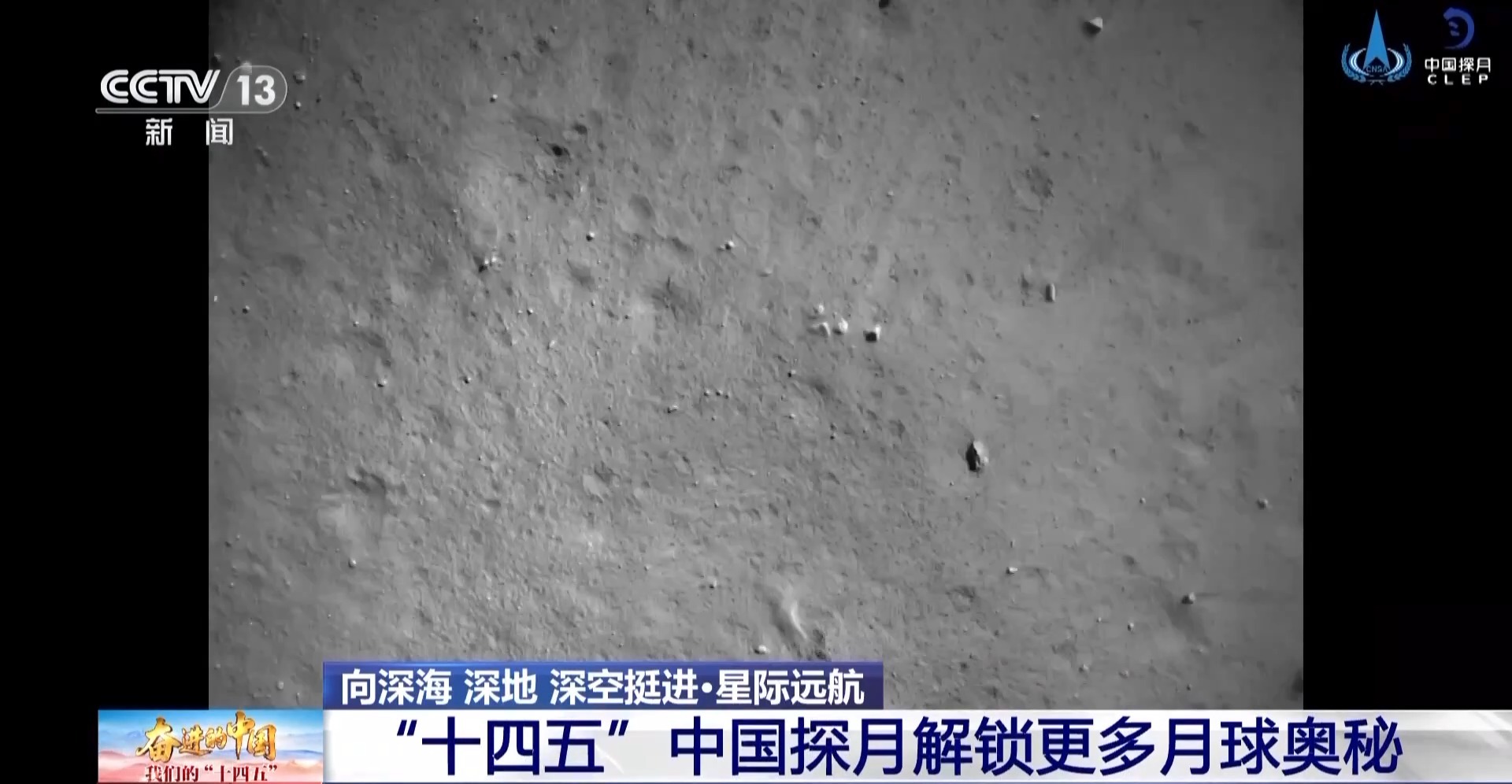
Core Insights - The Chinese lunar exploration program has made significant advancements during the "14th Five-Year Plan" period, achieving historic milestones in lunar sample collection and exploration [2][3][5] - The Chang'e 6 mission successfully collected approximately 1935.3 grams of lunar soil from the far side of the moon, marking the first time humanity has retrieved samples from this region [5][19] - The program has contributed to the global scientific community, with over 1900 research papers published based on data from the lunar exploration missions [7] Group 1: Chang'e Missions - Chang'e 5 returned 1731 grams of lunar samples from the moon's near side, completing China's first lunar sample return mission [3][5] - The Chang'e 6 mission, launched on May 3, 2024, successfully returned with samples from the moon's far side after a 53-day journey [5][19] - The Chang'e program has followed a "orbit, land, return" strategy since its inception in 2004, with significant achievements in lunar exploration [2][3] Group 2: Scientific Contributions - The discovery of a new mineral, "Chang'e Stone," has filled an international gap in lunar mineralogy [7] - Research on the samples collected by Chang'e 6 has revealed that the South Pole-Aitken Basin formed approximately 4.25 billion years ago [7] - The lunar exploration efforts are paving the way for future missions, including Chang'e 7 and 8, which aim to explore the lunar south pole and validate resource utilization techniques [9][21] Group 3: Future Missions and Goals - Chang'e 7 is set to land in the lunar south pole region to search for evidence of water ice, while Chang'e 8 is planned for around 2029 to support the construction of an international lunar research station [9][11] - The ongoing lunar exploration efforts are expected to establish the moon as a potential hub for deep space exploration [21] - The Chinese space program is also planning a kinetic impact demonstration mission to test asteroid defense strategies [25]
校馆弦歌丨哈工大航天馆:探深空奥秘 燃未来之光
Xin Hua She· 2025-10-12 09:15
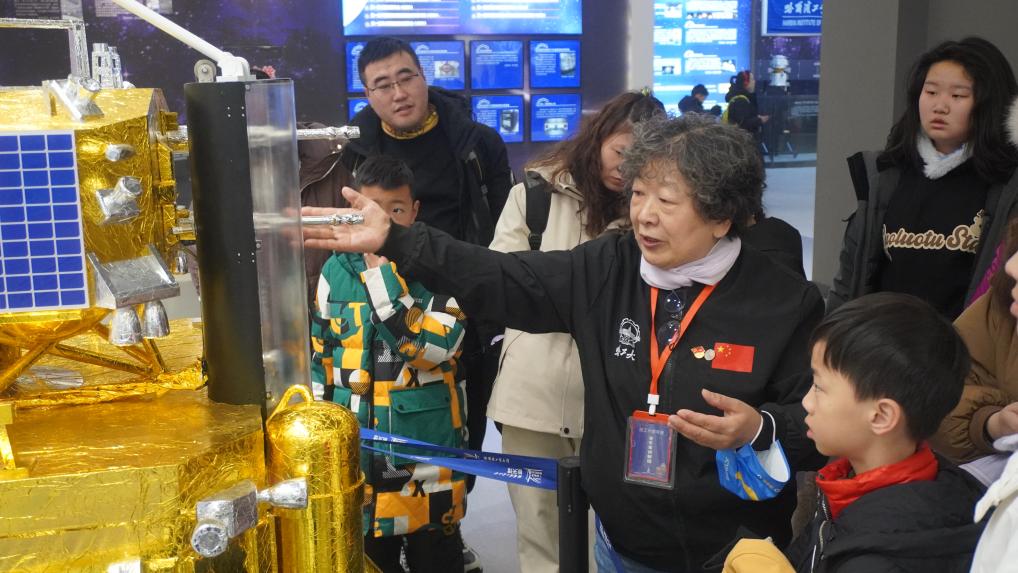
Core Points - The Harbin Institute of Technology's Aerospace Museum showcases significant milestones in China's space exploration history, featuring models of key spacecraft and rockets [1][3][4] - Established in 1986, the museum is the largest aerospace-themed exhibition hall in Chinese universities, with a rich collection of exhibits [4] - The museum highlights China's advancements in deep space exploration, including the Chang'e lunar missions and the Tianwen-1 Mars probe, reflecting the nation's commitment to pioneering space technology [5] Group 1 - The museum features models of the Long March 1 rocket, Dongfeng 2 missile, and Shenzhou 5 spacecraft, representing China's space achievements [1] - Exhibits include the "Dongfanghong 1" satellite and the "Jianbing 1" return capsule, symbolizing the efforts of Chinese aerospace professionals [3] - The museum's collection includes advanced materials used in space missions, showcasing China's technological capabilities in deep space exploration [5]
不只FAST!中国的射电望远镜分布天南地北 最新成果公布
Huan Qiu Wang Zi Xun· 2025-10-12 06:24
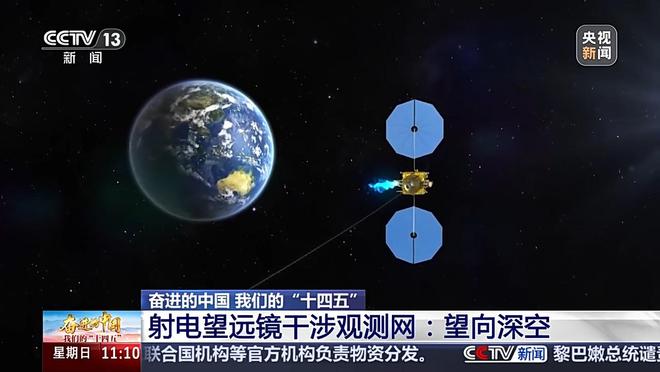
Core Insights - The article highlights the advancements in China's radio astronomy, particularly through the use of multiple radio telescopes that form a vast observational network, enhancing deep space exploration capabilities [1][14]. Group 1: Radio Telescope Network - China has a network of six radio telescopes, which, while not as large as the FAST telescope, collectively have an effective aperture equivalent to the size of the country's land area [1]. - This network plays a crucial role in spacecraft tracking and positioning, providing more accurate navigation for deep space missions [1]. Group 2: Tianwen-2 Mission - The Tianwen-2 spacecraft, developed by China, has been in orbit for 125 days as of October 1, with its primary mission being to sample a near-Earth asteroid and return the samples to Earth [3]. - The radio telescopes located in various regions, including Jilin, Xinjiang, Tibet, and Shanghai, are involved in the observation tasks for the Tianwen-2 mission [6]. Group 3: Black Hole Discoveries - Recent observations have led to new findings regarding black holes, with significant changes noted in the latest images released by scientists [10]. - The collaboration among multiple radio telescopes has enhanced the clarity and distance of observations, similar to the efforts seen in the 2019 black hole image [8]. Group 4: Public Engagement and Tourism - The Tianma Radio Telescope in Shanghai not only contributes to scientific research but has also become a popular destination for science tourism, attracting astronomy enthusiasts and visitors [13]. - The surrounding area has developed into a "Tianma Starry Sky Village," offering various activities and experiences that blend technology with nature [13]. Group 5: Future Prospects - The distribution of radio telescopes across China signifies the rapid development of radio astronomy in the country, with future missions expected to enhance China's position in the field of space exploration and astronomy [14].
10月10日晚间央视新闻联播要闻集锦
Yang Shi Xin Wen Ke Hu Duan· 2025-10-10 13:57
Group 1 - Xi Jinping congratulated Kim Jong-un on the 80th anniversary of the Workers' Party of Korea [5] - Xi emphasized the importance of advancing China's space exploration and innovation during the "14th Five-Year Plan" period, highlighting significant achievements in deep space exploration [6] - Li Qiang met with Kim Jong-un and paid tribute to the Chinese People's Volunteer Army martyrs [7][8] Group 2 - The "14th Five-Year Plan" period has seen advancements in inclusive, foundational, and safety net social welfare construction in China [3][12] - The government has introduced new regulations for the clinical research and application of biomedical technologies, effective from May 1, 2026 [9]
经济发展取得新成就(新时代画卷·决战决胜“十四五”)
Ren Min Ri Bao· 2025-10-01 22:30
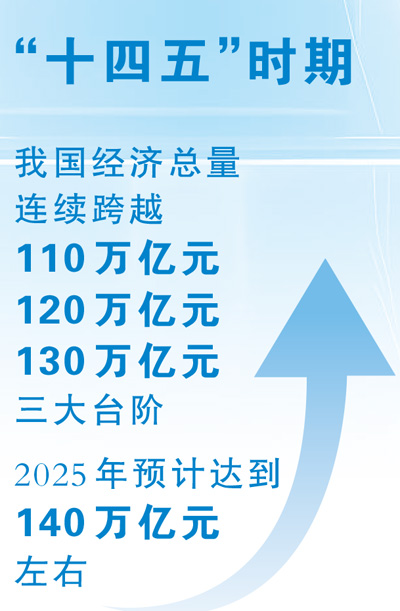
Economic Growth and Development - China's economy has crossed significant milestones, reaching over 110 trillion yuan, 120 trillion yuan, and 130 trillion yuan during the "14th Five-Year Plan" period, with an expected growth to around 140 trillion yuan by 2025 [19] - The innovation capability is continuously improving, with R&D investment intensity projected to reach 2.68% in 2024, surpassing the average level of EU countries [19] - The three major economic regions—Beijing-Tianjin-Hebei, Yangtze River Delta, and Guangdong-Hong Kong-Macau Greater Bay Area—account for over 40% of the national economy in 2024 [19] Green Development - National forest coverage has reached 25.09%, an increase of approximately 2 percentage points since 2020 [19] - By 2024, the energy consumption per unit of GDP is expected to decrease by 11.6% compared to the end of the "13th Five-Year Plan," making China one of the fastest countries in energy intensity reduction globally [19] - The installed capacity of renewable energy generation has historically surpassed that of coal power, establishing the world's largest clean power system [19] Trade and Openness - The number of free trade pilot zones in China has reached 22, covering all regions [19] - China has become one of the top three trading partners for 157 countries and regions [19] - In 2024, the total import and export volume with countries involved in the Belt and Road Initiative is projected to reach 22.07 trillion yuan, accounting for over 50% of China's total trade [19] Social Development - Resident income growth is in sync with economic growth, and the income gap between urban and rural areas has further narrowed [19] - By the end of 2024, the urbanization rate of the permanent population is expected to reach 67%, an increase of 3.11 percentage points since the end of 2020 [19] - The scale of employed population from poverty alleviation efforts has remained stable at over 30 million for four consecutive years [19]
新发展理念引领高质量发展
Ren Min Ri Bao· 2025-10-01 22:03
Economic Growth and Development - China's economy has crossed significant milestones, reaching over 110 trillion, 120 trillion, and 130 trillion yuan during the "14th Five-Year Plan" period, with an expected GDP of around 140 trillion yuan by 2025, indicating substantial economic strength [1] - The country has achieved historic accomplishments in social and economic development under the new development philosophy of innovation, coordination, green, openness, and sharing, marking a solid step towards high-quality development [1] Innovation and R&D - Research and development (R&D) investment intensity is projected to increase to 2.68% in 2024, surpassing the average level of EU countries, with the total number of R&D personnel being the highest in the world [1] - China has made significant advancements in fields such as artificial intelligence, quantum technology, manned spaceflight, and deep space exploration, achieving multiple global "firsts" [1] Regional Development - By 2024, the economic output of the Beijing-Tianjin-Hebei, Yangtze River Delta, and Guangdong-Hong Kong-Macau Greater Bay Area regions is expected to account for over 40% of the national economy [1] - The integration of eastern region advantages in industry, technology, and capital with western region resource endowments is emphasized, with the "West-East Power Transmission" capacity exceeding 300 million kilowatts and the "East Data West Computing" hubs accounting for over 70% of national computing power [1] Green Development - National forest coverage has reached 25.09%, an increase of approximately 2 percentage points since 2020 [1] - By 2024, energy consumption per unit of GDP is expected to decrease by 11.6% compared to the end of the "13th Five-Year Plan," making China one of the fastest countries in terms of energy intensity reduction globally [1] - The installed capacity of renewable energy generation has historically surpassed that of coal power, establishing the world's largest clean power generation system [1] Openness and Trade - The number of free trade pilot zones in China has reached 22, covering all regions of the country [2] - China has become one of the top three trading partners for 157 countries and regions, with imports and exports to Belt and Road Initiative countries totaling 22.07 trillion yuan in 2024, accounting for over 50% of China's total trade [2] Social Development and Income Growth - Resident income growth has kept pace with economic growth, and the income gap between urban and rural areas has further narrowed [2] - By the end of 2024, the urbanization rate of the permanent population is expected to reach 67%, an increase of 3.11 percentage points since the end of 2020 [2] - The number of employed individuals from poverty alleviation efforts has remained stable at over 30 million for four consecutive years [2]
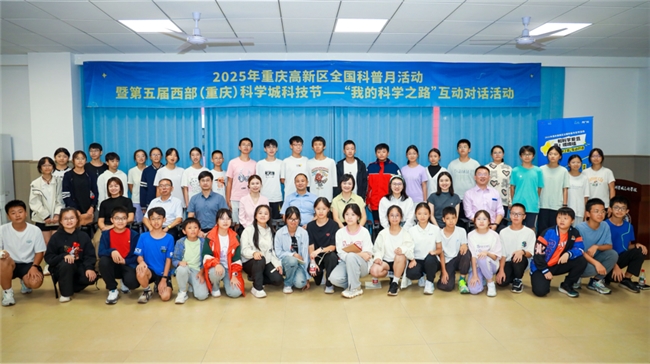
我们能不能登上月球?高新区青少年对话科学家
Sou Hu Wang· 2025-09-26 09:44
Core Insights - The event "My Scientific Journey" successfully took place in Chongqing Science City, featuring interactions between students and three experienced scientists from the fields of instrumentation, medicine, and aerospace [1][17] - The initiative aimed to inspire middle school students by focusing on the personal growth stories of scientists, encouraging critical thinking and dialogue [2] Group 1: Event Overview - The event was organized by the Chongqing High-tech Zone Science Association and other local organizations, differing from typical science popularization activities by emphasizing personal growth perspectives [2] - Students from grades 7 and 8 participated, engaging in a Q&A session where they submitted questions about life sciences, cosmic mysteries, and academic challenges [5] Group 2: Scientist Presentations - Dr. Xie Lei shared his journey in scientific exploration, using engaging multimedia to illustrate the significance of meaningful research and the importance of a solid educational foundation [9] - Dr. Long Yanyan discussed cancer prevention and treatment strategies, emphasizing lifelong learning and sharing clinical research cases to motivate students to contribute to medical science [12] - Academician Xie Gengxin highlighted the milestone of growing the first leaf on the moon, discussing how deep space exploration could transform future living and encouraging students to dream big [12] Group 3: Interactive Dialogue - The interactive session saw students asking thought-provoking questions about lunar exploration and the impact of a positive mindset on cancer recovery, to which the scientists responded earnestly [13] - Dr. Xie Gengxin confirmed China's plans for a manned moon landing by 2029, instilling hope in students about future opportunities [16] - The event concluded with heartfelt messages from the scientists, encouraging students to embrace learning and pursue their dreams [16][17]
商业航天重要一环,“深空经济”站上风口
Xuan Gu Bao· 2025-09-07 23:44
Industry Insights - The third International Conference on Deep Space Exploration was held in Hefei, focusing on "asteroid detection, defense, and resource utilization" [1] - The Chinese lunar exploration chief designer emphasized that asteroids represent not only risks but also valuable economic resources, which are of significant interest to major space-faring nations [1] - The future of deep space resource development includes minerals, water, ice, and atmospheric resources, which are crucial for sustainable human exploration and can reduce mission costs while enhancing the efficiency of deep space activities [1] Market Opportunities - The commercial space sector is shifting from merely entering space to utilizing and residing in space, with expectations of large-scale low Earth orbit internet, navigation enhancements, and high-resolution Earth observation satellite constellations in the next 1-5 years [1] - Over the next 5-10 years, the space industry is anticipated to expand from low Earth orbit to medium and high orbits, as well as deep space, promoting the sustainable growth of the space economy and forming a substantial industry scale through efficient resource utilization [1] Company Developments - Tianao Electronics reported that its timing products have been involved in major space missions, including manned spaceflight, lunar exploration, deep space exploration, and space station projects [3] - Shaanxi Huada's products, including electrical connectors and interconnects, are utilized across various aerospace fields, covering high and low orbit satellites, manned spacecraft, cargo spacecraft, space stations, rockets, and deep space exploration [3] Economic Projections - A report indicates that the global deep space economy is expected to reach a trillion-dollar scale by 2040, encompassing ten key industry directions such as deep space resource development, deep space internet, and deep space tourism [2]
【早报】央行连续第10个月增持黄金;商务部:原产于欧盟的进口猪肉及猪副产品存在倾销
财联社· 2025-09-07 23:10
3、公募基金销售费用管理新规出台,年降费约300亿元。 4、深圳出台楼市新政。 5、央行出手增持黄金,连续10个月买买买。 宏 观 新 闻 早 报 精 选 1、 易会满被查,证监会表态。 2、特朗普签署行政令,调整关税政策生效范围。 2、国家外汇管理局统计数据显示,截至2025年8月末,我国外汇储备规模为33222亿美元,较7月末上升299亿美元,升幅为 0.91%。我国经济运行稳中有进,展现出强大韧性和活力,为外汇储备规模保持基本稳定提供支撑。 3、中国8月末黄金储备7402万盎司,7月末黄金储备报7396万盎司,为连续第10个月增持黄金。 4、9月6日,中国证监会党委召开会议,传达中央纪委国家监委对易会满涉嫌严重违纪违法进行纪律审查和监察调查的决定。驻证监 会纪检监察组有关同志参加会议。与会同志一致表示,坚决拥护党中央决定,坚决拥护中央纪委国家监委决定。证监会党委书记、主 席吴清主持会议。 5、商务部9月5日公布对原产于欧盟的进口相关猪肉及猪副产品反倾销调查的初步裁定。调查机关初步认定,原产于欧盟的进口相关 猪肉及猪副产品存在倾销,国内产业受到实质损害,而且倾销与实质损害之间存在因果关系。 行 业 新 闻 ...